From the Yamaha-built V6 of 1989 to the twin-turbo EcoBoost comeback of 2010, the high-performance Taurus and the cars that carried its name.
The SHO, short for Super High Output, was a performance Taurus built from 1989 to 1999 and revived for 2010 until 2019. Its engines ran from a 220 hp Yamaha-built V6 to a 365 hp twin-turbo EcoBoost V6 in the final generation, the only Taurus offered with that engine.
The Ford Taurus SHO was the high-performance version of the Taurus, with the name standing for Super High Output. It was built for the first three generations of the Taurus, covering the 1989 to 1999 model years, then returned for 2010 and stayed on sale until the Taurus line ended in 2019.
Its engines began life with Yamaha, and the final version was the only Taurus ever sold with a twin-turbocharged EcoBoost V6 rather than the naturally aspirated units that powered the early cars.
What was the Taurus SHO and why did it exist?
The Taurus SHO was a performance version of Ford's family sedan, and its Yamaha-built V6 set it apart from ordinary Tauruses from its first year. The model was originally conceived as a limited-production car, yet it survived three generations before a long break.
The Super High Output name marked the car as the performance model of the range, and the badge carried through each rebirth. Its story is a series of restarts, with each generation reworking the car around the engine and styling of its day.
The first three generations were assembled at Atlanta Assembly in Hapeville, Georgia. The fourth generation came from Chicago Assembly in Chicago, Illinois, which was a change of plant for the revived car.
A badge that began as a limited performance option and came back with a 365 hp twin-turbo V6.
Where did the SHO engine come from?
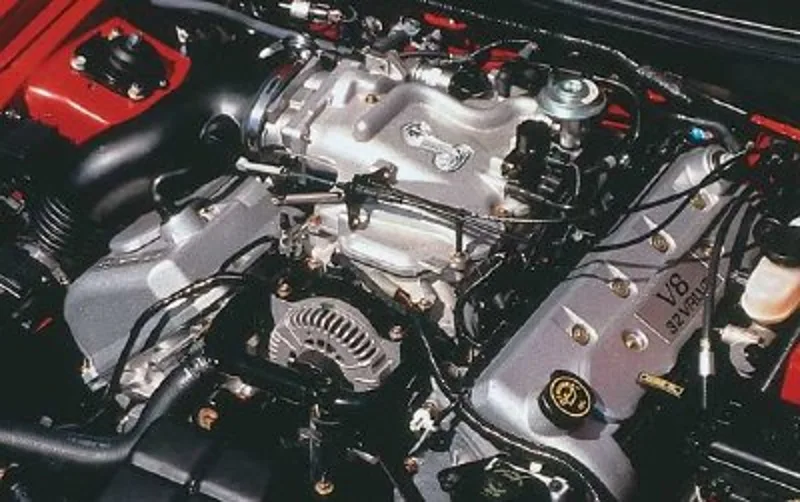
The SHO engine began with a 1984 contract between Ford and the Yamaha Motor Corporation to develop a compact 60-degree DOHC V6. The unit was based on the existing Vulcan engine and was designed for transverse fitting in a front-wheel-drive car.
Confusion surrounds the engine's first purpose. A mid-engine sports car codenamed GN34 was once thought to be its target, but patents and prototype SHO installations in Taurus bodies suggest that the front-wheel-drive car came first, with GN34 to follow.
The GN34 project was later cancelled, though a few prototypes were built. Most used standard Vulcan engines, with some other factory swaps, and one of them was a SHO Ranger.
What made the first-generation SHO stand out?
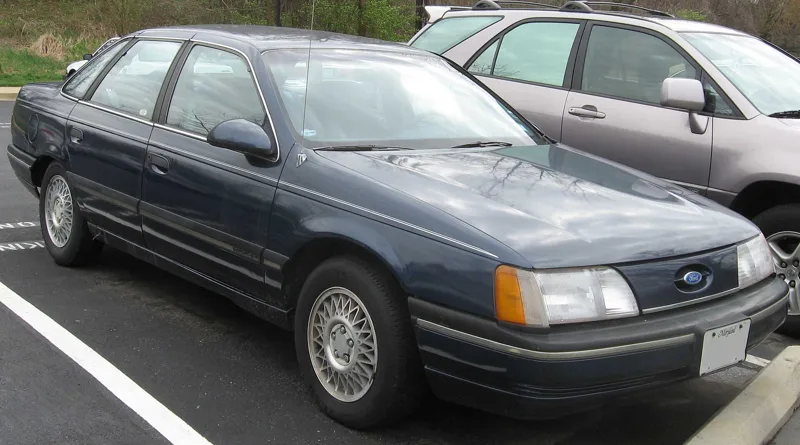
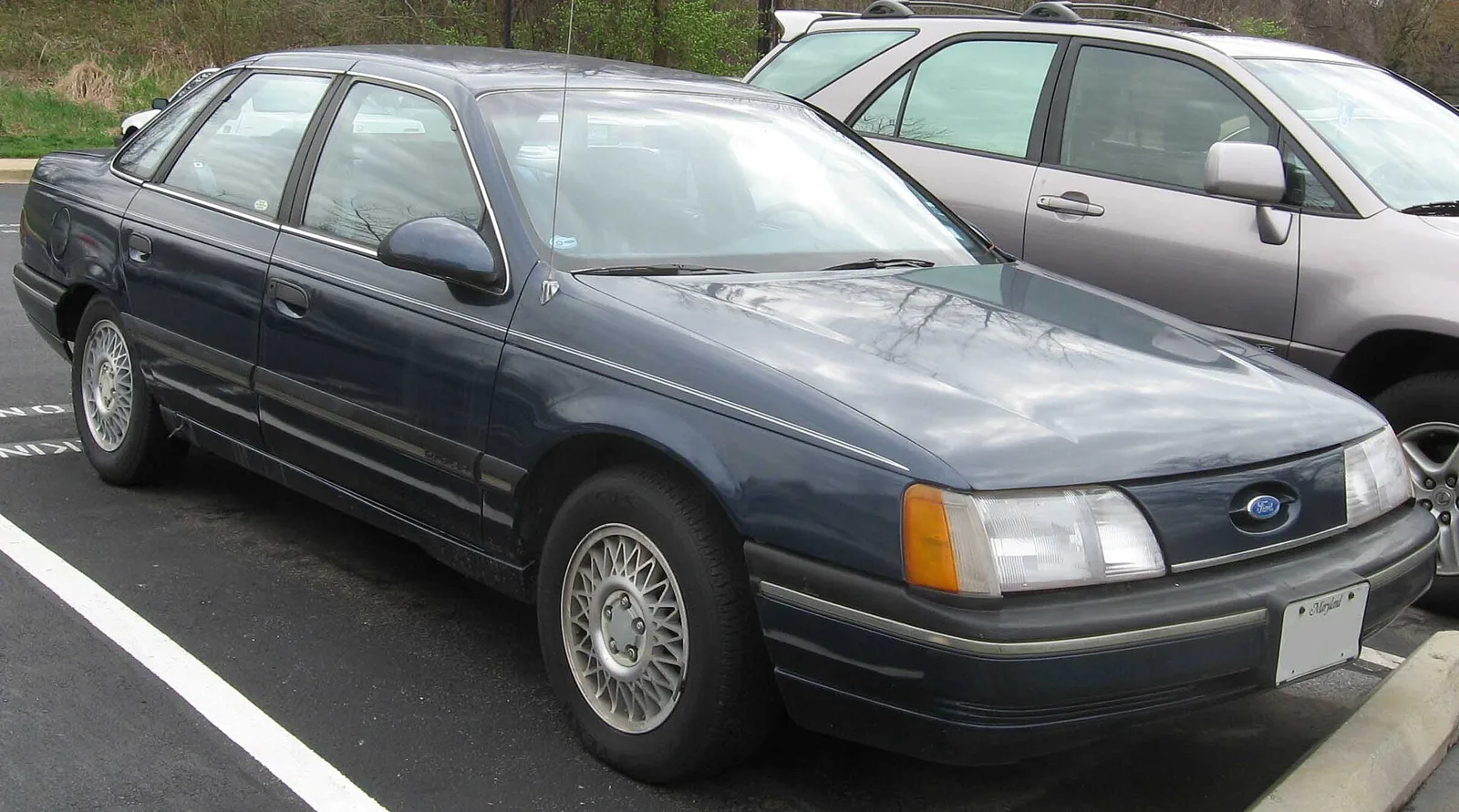
The first-generation SHO, built from 1989 to 1991, looked different from the regular Taurus, with a Mercury Sable hood, new bumpers, side cladding and fog lamps. Under the bonnet was a 220 hp (160 kW) Yamaha-built V6 that redlined at 7,000 rpm, and it came with a manual gearbox.
The cabin had sports seats and an 8000 rpm tachometer. Mazda designed and made the manual gearbox, and its final drive ratio was 3.74. It was the only Taurus with a manual gearbox in that year, after the four-cylinder MT-5 was discontinued.
The SHO took 6.6 seconds to reach 0-60 mph, and its quarter-mile times fell between 15.0 and 15.2 seconds. Car and Driver recorded 143 mph (230 km/h) as the top speed in its December 1989 issue.
What was the Plus package?
The Plus package arrived in late 1990 as option package #212A and gave the SHO a more distinctive look. Among its features were a hood with a Power Bulge in plastic, window trim in chrome, a spoiler without the third brake light and a TAURUS badge in body colour.
Other Plus details included a body-coloured stripe in the lower cladding, black mirrors and black B and C pillars, plus a rod shifter upgrade. Some cars received only part of the package, which the community calls a partial Plus.
Those partial cars were really regular SHOs that received extra options because Ford needed to use up the parts before the body change of 1992. White painted Plus cars could take white painted slicer wheels. Mocha Frost was offered only in 1991, and Deep Jewel Green Clearcoat Metallic was available that year only with the Plus option.
How did the second-generation SHO change?
The second-generation SHO arrived for 1992 with Mercury Sable front fenders, hood and headlights, a different bumper and a unique rear bumper. It kept the Yamaha V6 and a five-speed manual, so the main changes were in the body and the trim.
The 1992 cars can be identified by the missing trunklid spoiler and the downturned exhaust tips. They also had only a driver's side airbag, because later models added a passenger airbag as well. In 1993 the rear brakes were changed to solid discs in place of vented discs of almost identical size.
Without an automatic option, sales suffered, so Ford added one for 1993. The 3.2 L V6 gave 220 hp (164 kW) and 215 lb-ft (292 N-m), which was 15 lb-ft (20 N-m) more than the 3.0 L engine, although enthusiasts later found that Ford had fitted less aggressive intake camshafts to hold horsepower steady.
The automatic used the AX4S transmission, previously called AXOD-E. For 1993 the car also gained a trunklid spoiler with an integrated centre high-mount stop lamp, and Italian Slicer wheels that made the left and right wheels specific. The two model years that followed changed subtly, losing their chrome window trim and black colour option.
Did Car and Driver build a SHO station wagon?
Yes. At the request of Car and Driver, its staff and Ford engineers built a SHO station wagon from a production Taurus wagon. They fitted the SHO bodywork and drivetrain, and they recreated the sedan's high-specification interior before taking the car on a cross-country trip.
The magazine and Ford both said the wagon was a just-for-fun exercise rather than a serious production plan. Another example was made for brake testing.
Rear tyre clearance was the main obstacle to a production version, because Ford could not justify changing the rear body shell. The wagon remains a curiosity rather than a catalogue model.
Why is the second-generation SHO so well known?
The second-generation SHO became part of American pop culture through the comedian Conan O'Brien, who used a green 1992 model he owns in several comedy sketches. Few sedans in the Taurus family have had that kind of exposure. That kind of television exposure is rare for a family sedan.
In a 2009 sketch he joked that he had pushed Ford towards bringing the nameplate back. In it he reviewed the 2010 SHO alongside a Ford employee.
What did the third-generation SHO offer?
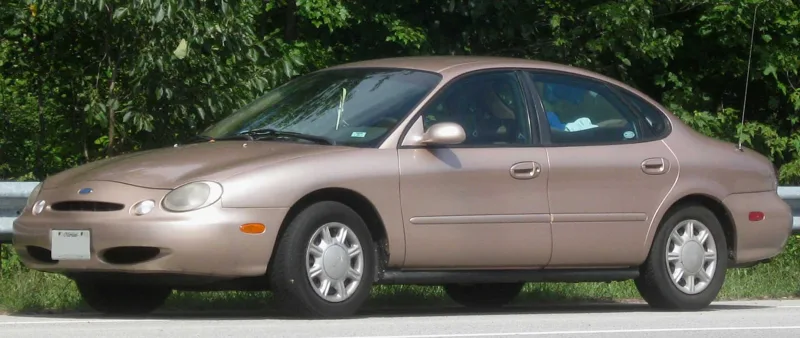
The 1996 SHO was more refined than its predecessors, using less radical bodywork and a V8 engine. Its styling was distinct from the regular Taurus, with different seats, alloy wheels and bumpers. The bodywork was a step back from the dramatic styling of the earlier cars.
A wind deflector on the driver's side wiper kept the blade on the windscreen at high speeds. The car was also the only Taurus generation with a V8 engine, which made it a different proposition from the earlier V6 models.
Sales were lower than before, with the peak reaching 9,000 units in 1997. Ford ended the SHO in the years before the name returned in 2010.
What engine did the 1996 SHO use?
The third-generation SHO used a 235 hp (175 kW) aluminium 3.4 L V8, with cylinder heads from Yamaha and a block from Cosworth. The manual option disappeared, and the car shared its four-speed transmission with the LX. It was the only V8 the SHO ever received.
The engine has a known weakness. Its camshafts can separate from their sprockets, often somewhere near 80,000 km (50,000 miles), and this has been linked to a growing number of failures. About 1,200 failures were documented from about 20,000 engines, and other cases probably exist.
The fix is to have the camshafts welded in place. The transmission for 1996 and later models was the AX4N, which kept the gearsets and ratios of the AX4S but had better torque capacity and shift quality, including smoother 3-2 downshifts.
Why was there no SHO for the 2000 model year?
The 2000 model year skipped the SHO. Some believed Jac Nasser, then Ford's president, steered designers away from one because his attention was on the Premier Automotive Group, a group covering Lincoln, Jaguar, Volvo, Land Rover and Aston Martin. Its brands were the focus of the company at the time.
The reasoning was that a SHO would draw sales away from that division of Ford.
How did the SARC suspension work?
From 1996 the V8 SHO used the Semi-Active Ride Controller, or SARC, which changed the hardness of the suspension according to speed. When it was energised at low speed the damping was fully soft, while at high speed or under hard braking, with no power applied, it went fully hard.
Each corner could be in either mode and act independently, which eliminated dive under heavy braking and reduced squat on acceleration. The shock solenoids and the steering solenoid responded to suspension sensors and speed detection based on the ABS sensors.
Sensors on all four wheels were fitted to the 1996 and 1997 cars, while the 1998 models had sensors on only the front wheels. The option was deleted for 1999, when the SHO used the same struts as the standard Taurus from 1996 to 2007, though it kept the adjustable power steering.
How did the fourth-generation SHO return?
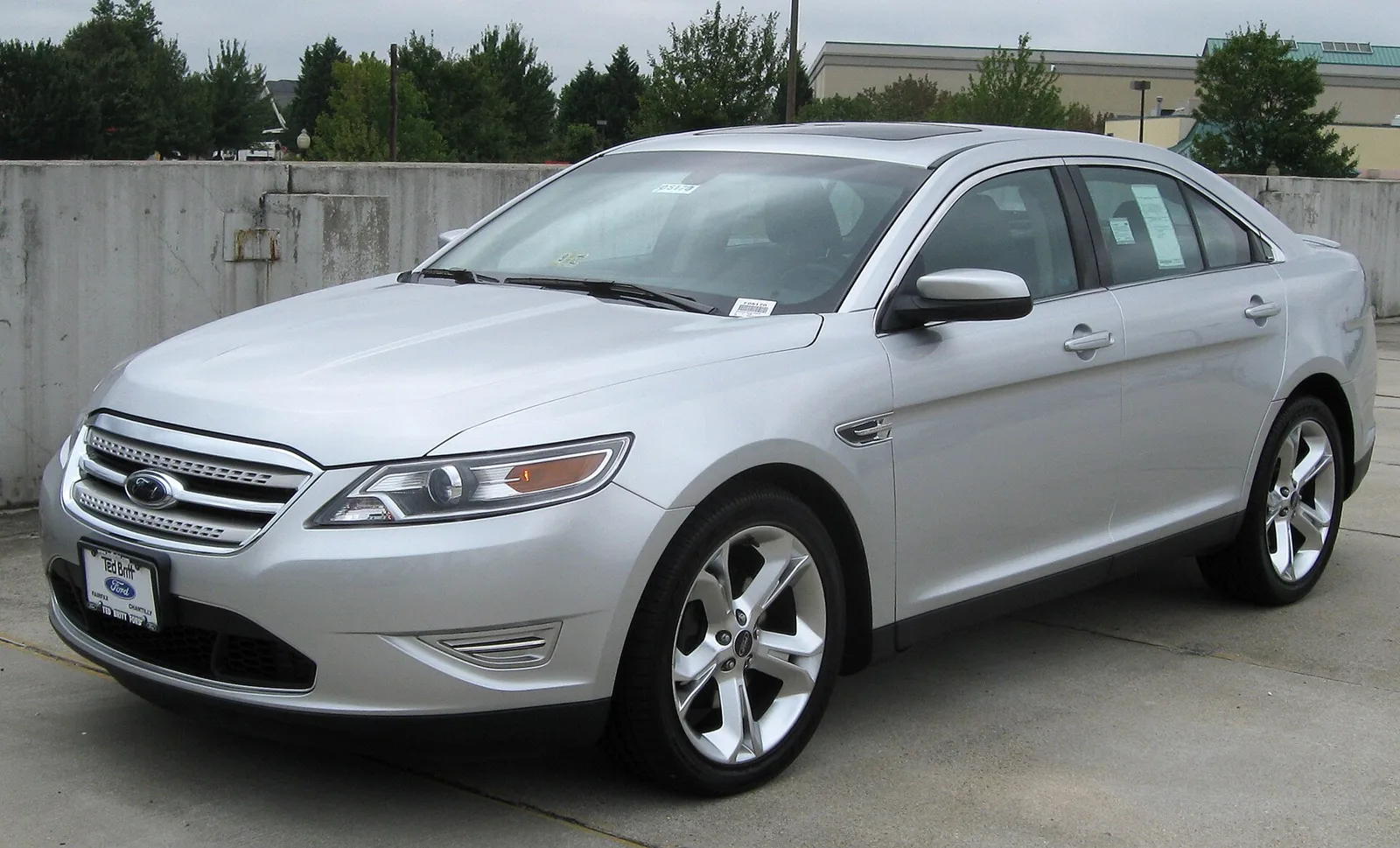
Ford revived the SHO name at the 2009 Chicago Auto Show, and the car reached showrooms in summer 2009 as a 2010 model. For the first time under this nameplate, permanent all-wheel drive with GKN torque vectoring was standard. It was also the first SHO with standard all-wheel drive.
Two Garrett GT1549L turbochargers boost the 3.5L V6 to 365 hp (272 kW), and the peak torque of 475 N-m (350 lb-ft) is available from 1500 to 5250 rpm. Ford's 6F55 six-speed SelectShift automatic handled the gear changes, with paddles or a console-mounted manual mode.
The fourth-generation car used Ford's new SR1 suspension, with MacPherson struts at the front and a multi-link rear. It had SHO-specific shock absorbers, springs, stabiliser bars and strut mount bushings.
What was the Performance Package?
The Performance Package was an option on the fourth-generation SHO. It added better brake pads, retuned steering, a sport setting for stability control and extra cooling, and a final drive of 3.16 to 1, a shorter ratio. Buyers could choose it as an option on the standard car.
The package also included summer tyres, a spare-tyre delete, a mobility kit with a tyre inflator and sealant, and an Alcantara-wrapped steering wheel. Buyers who wanted adaptive cruise control had to forgo the package.
Several package parts, the powertrain among them, also appeared in the EcoBoost version of the 2013 to 2019 Ford Police Interceptor Sedan. That link is one of the clearer signs of how the SHO fed into Ford's other vehicles.
How did the fourth-generation SHO look?
Visually the fourth-generation SHO stayed close to the regular Taurus. The 2010 to 2012 cars had a three-bar chrome grille, a SHO C-pillar logo and five-spoke wheels, while the 2013 to 2019 cars had a black grille with a honeycomb-style mesh.
From 2013 the cars wore 19-inch wheels, or optional 20-inch flower-design wheels, along with SHO fender badges. The rear end carried a decklid spoiler made for the SHO, polished stainless steel twin exhaust tips and an EcoBoost badge.
A 2012 SHO was the official car of the MIB agents in the film Men in Black 3. The film put the revived SHO on a large screen.
What changed in the final years of the SHO?
The 2013 to 2019 SHO changed little, but 2017 brought Ford SYNC 3 with Apple CarPlay and Android Auto as standard, along with a revised Sony audio system and two new 20-inch wheel choices. Production ended on March 1, 2019, when the whole Taurus range was dropped.
The final change came in 2019, when the power rear sunshade was removed.
Esquire magazine gave its Car of the Year title to the 2010 Taurus SHO.
What were the Taurus SHO specifications?
| Specification | Detail |
|---|---|
| Production | 1989 to 1999; 2010 to 2019 |
| Assembly | Atlanta, Hapeville, Georgia (generations one to three); Chicago, Illinois (generation four) |
| First-generation engine | 220 hp (160 kW) Yamaha-built V6, 7,000 rpm redline |
| Third-generation engine | 235 hp (175 kW) 3.4 L aluminium V8 |
| Fourth-generation engine | 3.5L twin-turbo EcoBoost V6, 365 hp (272 kW) at 5500 rpm |
| Fourth-generation torque | 475 N-m (350 lb-ft) from 1500 to 5250 rpm |
| 0-60 mph, first generation | 6.6 seconds |
| Top speed, Car and Driver 1989 | 230 km/h (143 mph) |
| Final drive, first generation | 3.74 |
| Final drive, Performance Package | 3.16 to 1 |