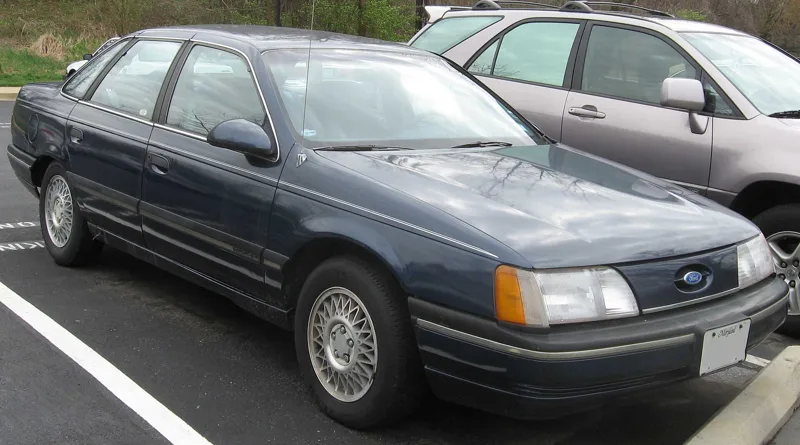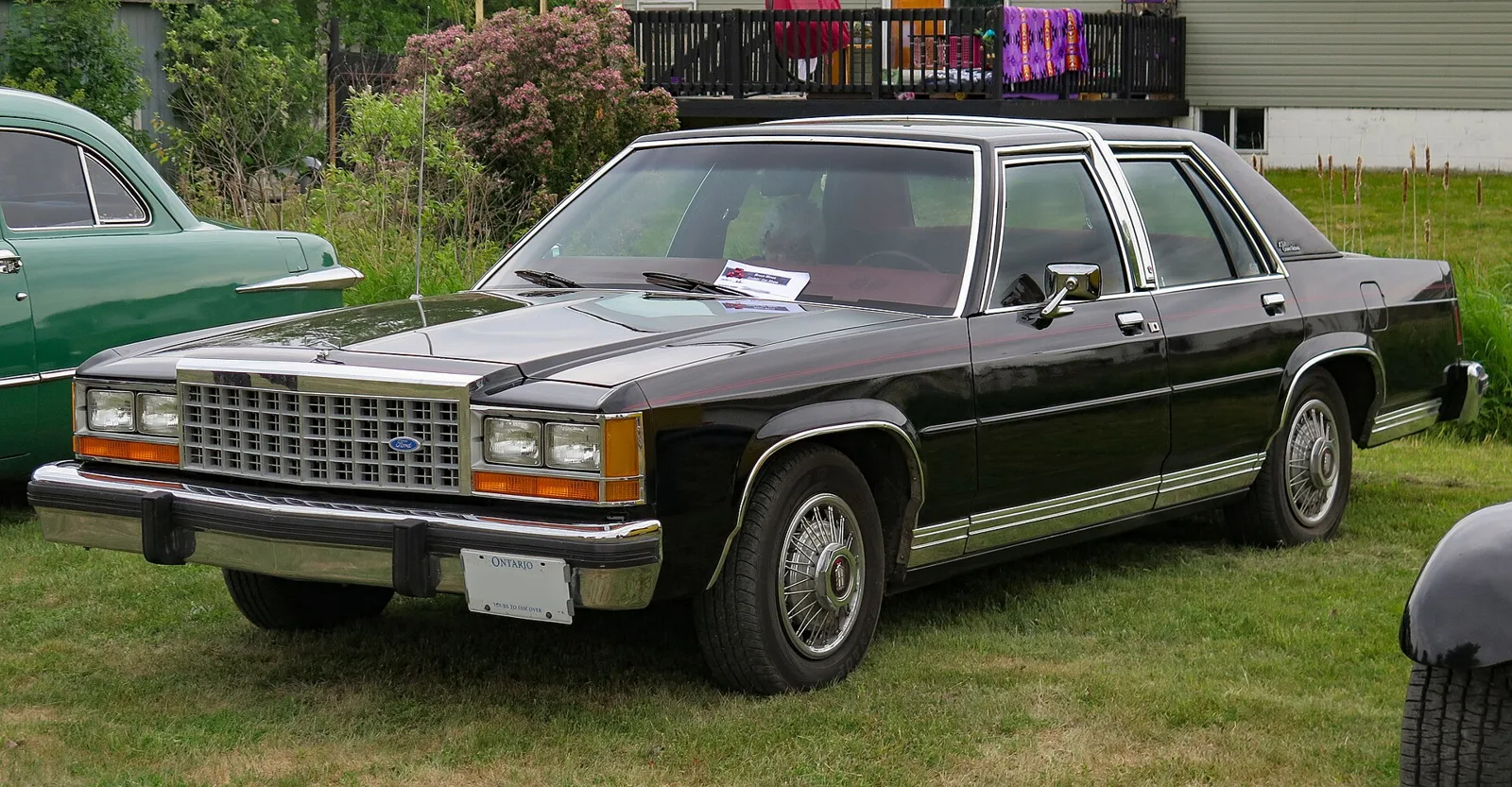
The Taurus replaced the slow-selling mid-size LTD and changed the way Ford built cars, while the LTD Crown Victoria kept the full-size flag until both met head to head in 2007.
The Ford Taurus launched in 1985 as a front-wheel drive mid-size car that replaced the LTD, while the LTD Crown Victoria stayed on as a full-size rear-wheel drive sedan from 1980 to 1991. The Taurus became the best-selling car in the United States from 1992 to 1996, and in 2007 it moved to full size, where it faced the Crown Victoria across the same showroom.
The Ford LTD Crown Victoria and the Ford Taurus were both Ford sedans of the 1980s and 1990s, but they came from different corners of Ford's range. The LTD Crown Victoria was a full-size rear-wheel drive car from 1980 to 1991. The Taurus was a front-wheel drive mid-size car from 1985 that grew into a full-size car in 2007, which is when the two finally met head to head in the same class.
Where did the LTD Crown Victoria and the Taurus come from?
The Taurus was launched in 1985 as a 1986 model and replaced the slow-selling mid-size Ford LTD. The full-size LTD Crown Victoria remained in the Ford line-up, so the two shared a showroom without directly competing for the same size of car.
The Taurus was the first Ford car designed and built using the statistical process control ideas of W. Edwards Deming, the statistician that Ford consulted to build a culture of quality. It came after a period in which Ford had lost US$3 billion between 1979 and 1982, and it was the first Ford model to come from that new approach.
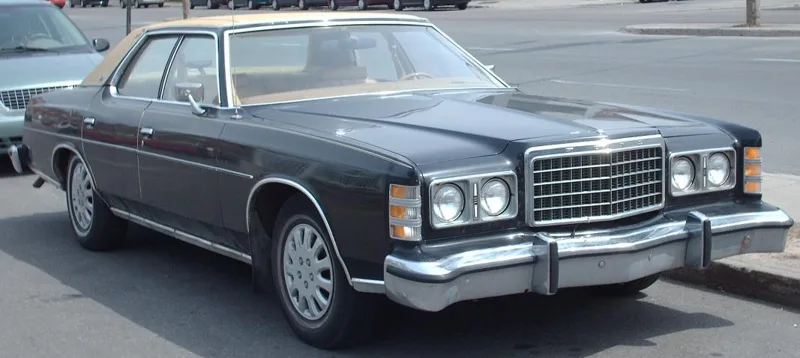
The LTD Crown Victoria was the flagship of the LTD range, and it replaced the LTD Landau as the top-level LTD trim for 1980. It took its name from the Fairlane Crown Victoria of 1955 and 1956, and it was the full-size Ford sedan from 1980 until 1991.
In 1980 Ford Chairman Donald E. Peterson started a new team approach to designing and building cars, which eventually produced the Taurus. Ford's Corporate Quality Director, Larry Moore, was charged with recruiting Deming to start a quality movement.
Deming told Ford that management actions were responsible for 85 per cent of the problems in developing better cars, so management was made responsible for car quality.
A full-size Ford that kept its rear-wheel drive V8 to the end, and a mid-size revolution that eventually grew into its size class.
Why did the Taurus change the market?
When the Taurus appeared, Ford had been producing mainly rear-wheel drive cars, while Chrysler and General Motors offered more front-wheel drive models. The Taurus was a clear step towards front-wheel drive, following the Escort and the Tempo.
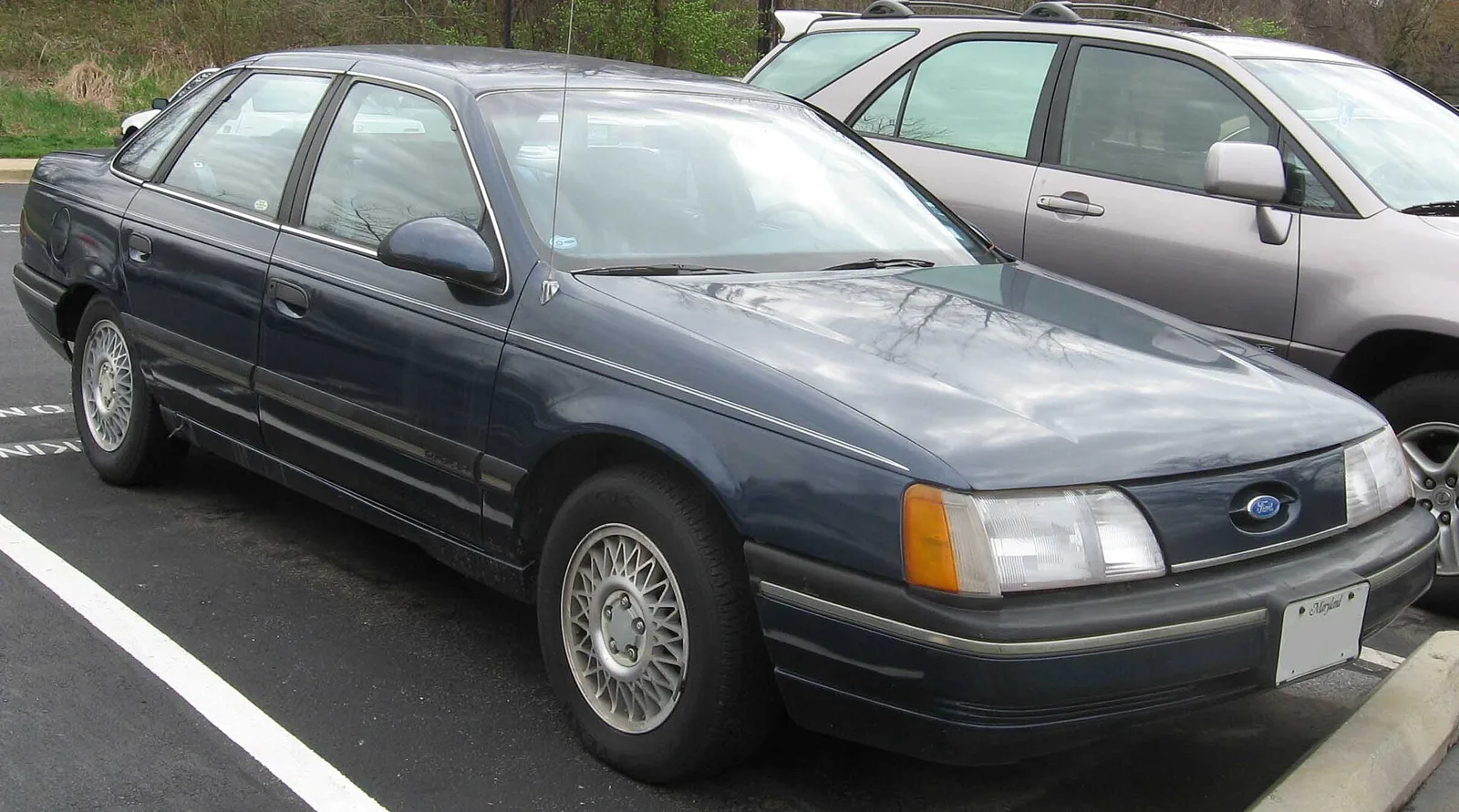
The Taurus's rounded shape was often likened to a jelly bean or a flying potato. Its nose had no traditional grille, and the design was an updated version of the ponton styling that was used from the late 1940s to the early 1960s. It was inspired by the Audi 5000 and by Ford's European Sierra, and it used a grille-less bottom-breather nose. Its aerodynamic design helped it meet the corporate average fuel economy standards of the day.
The Taurus was also praised for its interior. Its controls could be recognised by touch, so drivers could work them without taking their eyes off the road. The switches for the power windows and locks were shaped so that each function could be identified by feel. Many of the features first seen in the Taurus remain common in cars today. The interior ran from spartan to luxurious trim, with several seating layouts that were extended to the Sable and, from 1988, the Lincoln Continental. Models with a manual gearbox came with bucket seats and a floor-mounted shifter.
The first-generation Taurus interior had a dashboard that curved around the driver to create a cockpit feel, with its main controls grouped within easy reach. The base L had an AM radio and a front cloth bench seat, while the LX came with more standard features.
The Taurus's second generation gained an optional passenger-side airbag before dual airbags became standard for 1994.
Which engines did each car use?
The first-generation Taurus was available with a V6 or an inline four, and with a manual MT-5 or an automatic transmission. The Mercury Sable, its twin, never offered a manual gearbox in any version.
The LTD Crown Victoria was a V8 car throughout. The 1980 model had a 4.9-litre V8 at 130 hp as standard and a 5.8-litre V8 at 140 hp as an option. By 1986 the 5.0-litre had multi-port injection and 150 hp, and in 1991 the 180 hp 5.8 was offered for fleets and in Canada.
The Taurus and the Crown Victoria therefore took very different engineering routes. The Taurus was a front-wheel drive family car with V6 power, while the Crown Victoria kept the traditional American rear-wheel drive V8 layout.
How were the cars built and sold?
The Taurus was assembled by Chicago Assembly on Chicago's South Side for all of its generations. Atlanta Assembly also built the Taurus and the Sable until its closure in 2006. From its 1985 launch until its first withdrawal after the 2007 model year, Ford assembled 7,519,919 Taurus examples.
The LTD Crown Victoria was built at several plants, and by 1982 Oakville was its sole assembly location. Production moved to St. Thomas Assembly in Ontario for Canadian 1984 models, and it became the exclusive site a year later.
The Taurus was the fifth best-selling Ford nameplate in North America, behind the F-Series, the Escort, the Model T and the Mustang. Between 1992 and 1996 it was the best-selling car nameplate in the United States, a title it lost in 1997 to the Toyota Camry.
How did the cars win recognition?
The Taurus was named the 1986 Motor Trend Car of the Year and appeared on the 1986 Car and Driver Ten Best List. Production topped 200,000 in the 1986 model year, the millionth Taurus was sold in 1989, and first-generation production exceeded two million by the end of the 1991 model year.
The LTD Crown Victoria earned a more modest record, with a steady career as a full-size police and taxi car. Its 1987 sales showed the shift in demand, with only 5,527 two-door sedans sold against 105,789 four-doors.
The second generation reached 1.4 million production before it ended in 1995. The third generation's sales in 1996 leaned heavily on rental fleets, with about 51 per cent of Taurus sales going to them, unlike the Honda Accord and Toyota Camry, which sold mostly to private buyers.
How did the Taurus design evolve?
The second-generation Taurus was a major facelift with several inches of extra length and over 200 pounds of extra weight. It was marketed solely with V6 engines and automatic transmissions, and it became the first mid-size sedan sold in the United States with standard dual airbags in 1994.
The third-generation Taurus, for 1996, was a more extensive restyling. Its oval rear window was controversial, and Ford found that customers disliked the oval-shaped exterior. The interior was completely redesigned, with a centralised oval console for the radio and climate controls.
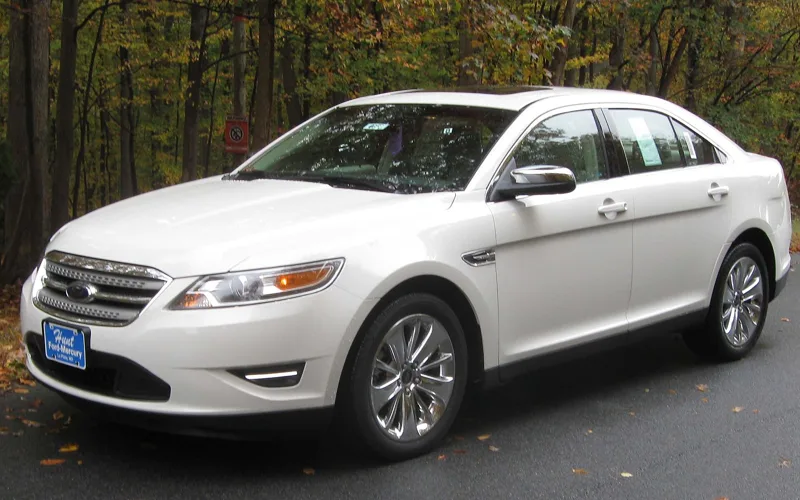
The fourth generation, for 2000, replaced many of the oval design elements with sharper creases and corners, reflecting Ford's New Edge styling. The sixth generation of 2010 revived the SHO name, which had also been used on the Taurus performance models from 1988.
The third-generation Taurus shared its underpinnings with the redesigned Lincoln Continental and the all-new Windstar. The Taurus and the Sable were given separate rooflines, and the station wagons used the doors of the Sable sedan.
The Taurus replaced the Thunderbird in NASCAR for the 1998 season and became the first four-door sedan approved for competition. Dale Jarrett won the Winston Cup championship in a Taurus, and Greg Biffle took the Busch Series title.
The LTD Crown Victoria's standard trim came with a landau-style vinyl padded roof, targa-style trim and wire wheel covers, with full carpeting and a cloth bench seat.
What did the Taurus and the LTD share on the road?
The LTD Crown Victoria used the rear-wheel drive Panther platform, with a double wishbone front suspension and a coil-sprung live rear axle. It shed 18 inches of length and nearly 1,000 pounds from the earlier LTD Brougham and Landau.
The Taurus was front-wheel drive from 1985 to 2007, built on the DN5 platform and later the DN101 and D186 variants. In 2007 it became a full-size car on the Volvo-derived D3 platform, offering front-wheel or all-wheel drive.
The two cars therefore represented opposite engineering philosophies for a time, and the Taurus's later full-size move brought it close to the Crown Victoria in size and price.
How did the cars end their runs?
Taurus output stopped on October 27, 2006, and the car was withdrawn after the 2007 model year. Ford had planned for the Five Hundred and the Fusion to take over from the Taurus and the larger Crown Victoria. The Taurus nameplate was revived in 2008 as a mid-cycle revision of the Five Hundred.
The LTD Crown Victoria ended with the 1991 model year, when it was replaced by the Ford Crown Victoria, which dropped the LTD prefix and the station wagon body. The Crown Victoria remained in production until 2011, and the 2013 Police Interceptor Sedan was introduced as its successor for police use.
The Taurus itself came back in 2010 as a sixth generation, which marked a more substantial model update, with the SHO returning in the same year.
For the 1988 update the LTD Crown Victoria's fascias were restyled and the headlamps and turn signal lenses were integrated into a single assembly, while the Taurus's Freestyle wagon was renamed the Taurus X as a crossover after 2007.
Side-by-side comparison
| Point | Ford LTD Crown Victoria | Ford Taurus |
|---|---|---|
| Years | 1980 to 1991, then Crown Victoria to 2011 | 1985 to 2019 |
| Size | Full-size throughout | Mid-size to 2007, full-size from 2007 |
| Drive | Rear-wheel drive Panther platform | Front-wheel drive, all-wheel drive from 2007 |
| Engines | V8 only, 4.9 L at 130 hp in 1980 | V6 or inline four, MT-5 manual or automatic |
| Body styles | Two-door and four-door sedan, wagon | Four-door sedan, wagon 1986 to 2005 |
| Production | Not given for the LTD alone | 7,519,919 from 1985 to 2007 |
| Sales milestone | 5,527 two-door sales in 1987 | Best-selling car in the United States from 1992 to 1996 |
| Recognition | Police and taxi use | 1986 Motor Trend Car of the Year |
| Successor | Ford Crown Victoria from 1992 | Sixth generation in 2010 |