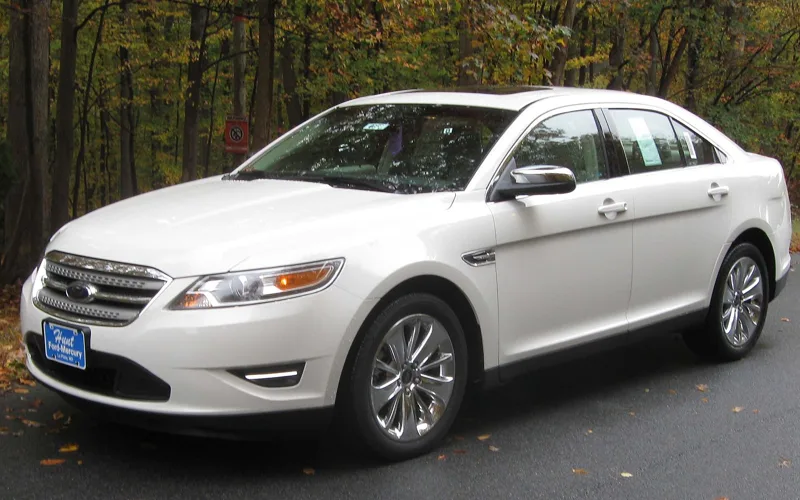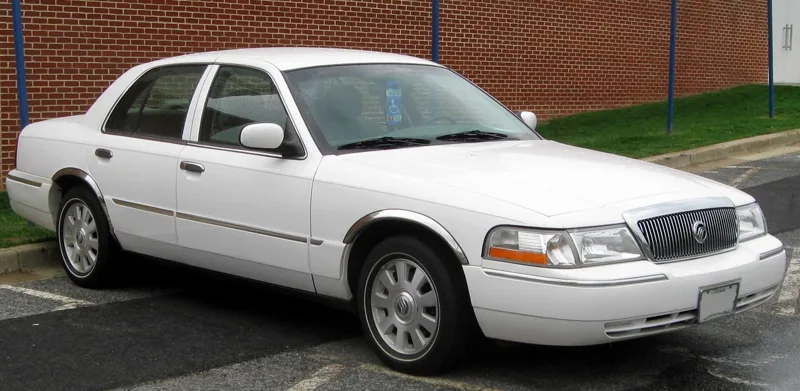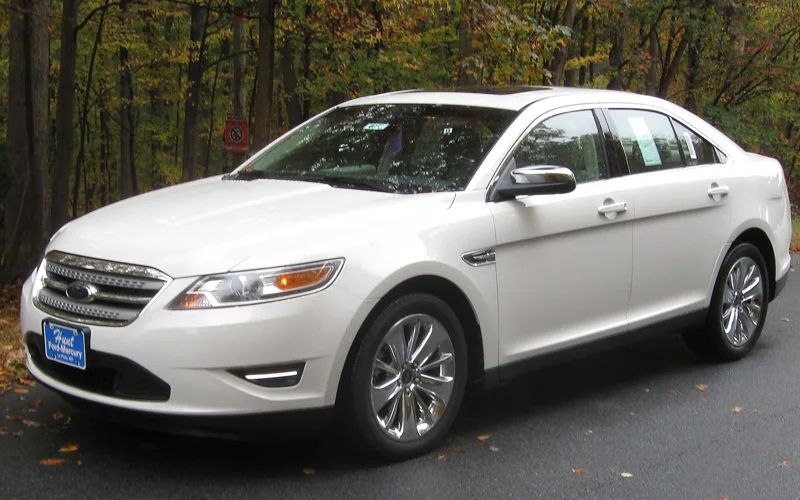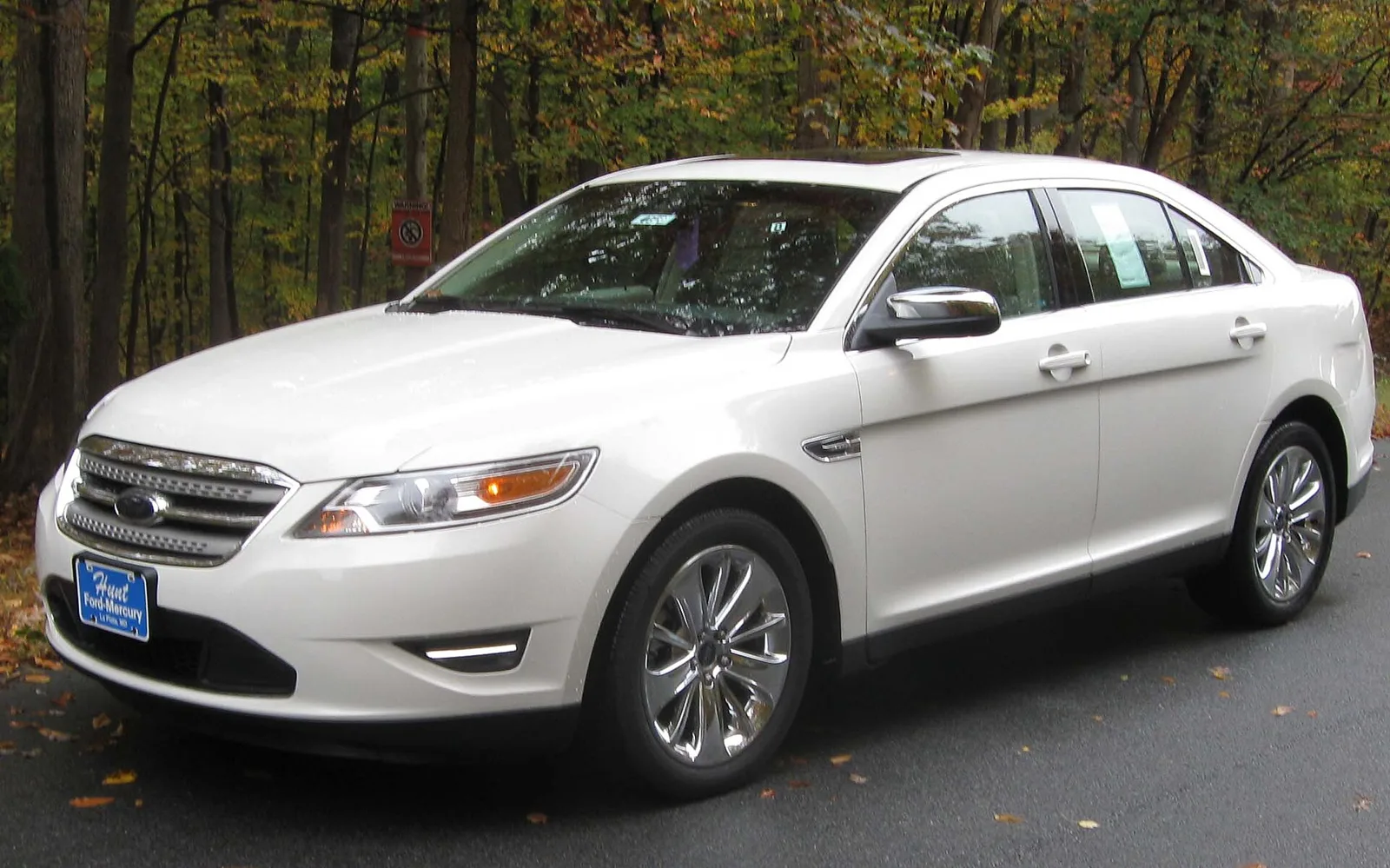
Ford's sixth-generation Taurus and Mercury's long-running Grand Marquis shared a market and a Ford family, and the Taurus took over the job of matching full-size rivals.
The sixth-generation Ford Taurus was a full-size sedan sold from 2010 to 2019 on a Volvo-derived platform. The Mercury Grand Marquis was a traditional big sedan produced from 1975 to 2011, reaching 2.7 million units and the longest-running Mercury nameplate.
The sixth-generation Ford Taurus and the Mercury Grand Marquis were both full-size American sedans, and for a short time in 2010 and 2011 they were on sale together. The Taurus was a new design built on a Volvo-derived platform, while the Grand Marquis was a rear-wheel-drive Panther car that had been around since 1975. The comparison shows how Ford's full-size sedan changed hands as Mercury's line wound down.
Were the Ford Taurus and Mercury Grand Marquis rivals?
Yes, in the full-size segment, although the Taurus was never branded as the Grand Marquis's successor. Ford matched the sixth-generation Taurus against the full-size competitors that the Grand Marquis had faced, and in that role the Taurus superseded it.
The two cars overlapped only at the end of the Grand Marquis's life. The Taurus began production on June 15, 2009, for the 2010 model year, and the final Grand Marquis was built in January 2011 at St. Thomas Assembly in Ontario.
The Taurus was also the first version of the car developed without a Mercury Sable counterpart. Mercury was paring back its model line, so the Taurus had no Mercury sister car.
A full-size sedan that was never called a successor, yet ended up covering the ground the Grand Marquis had held for decades.
When did each car go on sale?
The sixth-generation Taurus was sold from the 2010 model year to 2019, and Ford discontinued it in North America after that. The Grand Marquis was produced by Mercury from the 1975 to 2011 model years, when it became the final Mercury-branded car.
The Taurus was presented at the 2009 North American International Auto Show at Cobo Hall. Ford showed it at three dealers in Buffalo, Tampa and Houston in May 2009 to build anticipation before sales began.
The Grand Marquis had started life as a flagship sub-model of the Mercury Marquis in 1975, and it became a stand-alone line in 1983. It was the sedan counterpart of the Mercury Colony Park station wagon up to 1991.
How were the two cars built?
The Taurus used the Volvo-derived Ford D3 platform, sharing its 112.9-inch wheelbase with the Lincoln MKS and the Five Hundred. It had front-wheel drive, with optional all-wheel drive that was standard on the SHO, and it used four-wheel independent suspension.
The Grand Marquis used the rear-wheel-drive Ford Panther platform, which it shared with the Ford Crown Victoria and, from 1980, with the Lincoln Town Car. The Grand Marquis kept a live rear axle and a double wishbone front suspension, with coil springs at all four wheels.
The Panther chassis meant the two cars were close relatives for decades. For over three decades, Ford and Mercury sedans built on it were functionally identical.
What are the Ford Taurus and Mercury Grand Marquis specifications?
| Specification | Ford Taurus (sixth generation) | Mercury Grand Marquis |
|---|---|---|
| Years | 2010 to 2019 model years | 1975 to 2011 model years |
| Body | Full-size sedan; SHO flagship | Four-door sedan for nearly its whole run; two-door hardtop from 1975 to 1987 |
| Drive | Front-wheel drive, optional all-wheel drive | Rear-wheel drive, Panther platform |
| Wheelbase | 112.9 inches | not recorded |
| Launch engine | 3.5-liter V6, 263 hp (196 kW) | 4.9 L (302 cu in) V8, 130 hp (97 kW) at first, 150 hp (112 kW; 152 PS) from 1986 |
| Top engine | SHO: twin-turbocharged V6, 365 hp (272 kW) | not recorded beyond the 4.9 L V8 |
| Transmission | Six-speed automatic | Four-speed AOD overdrive automatic |
| Trims | SE, SEL, Limited and SHO | Base, GS, LS (1980s) |
| Price | SHO from US$37,995 including destination | not recorded |
| Volume | Sales projected at 50,000 to 75,000 a year | 2.7 million units over its life |
| Assembly | Chicago Assembly, Illinois | St. Louis, Missouri (1979 to 1985); St. Thomas, Ontario (1986 to 2011) |
| Final build | March 1, 2019 | January 4, 2011 |
What changed in the sixth-generation Taurus design?
The sixth-generation Taurus was a complete redesign that dropped the New Edge design language for Ford's Kinetic Design. The 2013 facelift added a new front fascia, LED taillamps and revised rear spoiler, while the SHO kept true dual exhaust.
Chief designer Earl Lucas led the team, and the Ford Interceptor concept influenced the grille, rear fascia, taillamps and roofline. The car also introduced Ford Sync, push-button start and heated seats front and rear.
Multi-Contour Seats, a first for Ford when they arrived in 2010, used air cushions to pad the back, with an Active Motion massage on the bottom cushion designed to ease back pain on long trips.
How powerful were the engines?
The sixth-generation Taurus launched with the 263 hp (196 kW) 3.5-liter V6 retained from the previous car, and it rose to 288 hp (215 kW) in 2013. The SHO used a twin-turbocharged version of the same engine, rated at 365 hp (272 kW), and that engine was shared with the Lincoln MKS and MKT.
In 2014 a turbocharged 2.0-liter four-cylinder with 240 hp (179 kW) became an option on the SEL and Limited models. It was the first four-cylinder Taurus since 1991, and it was dropped after the 2017 model year.
The Grand Marquis took a different route. From 1975 it came with a 460 cu in (7.5 L) V8, then a 400 cu in (6.6 L) V8 became standard for 1976 and 1977 and a 351 cu in (5.8 L) V8 for 1978. In the first generation the 4.9 L V8 became the sole engine through 1991.
How did the Taurus SHO compare with the Grand Marquis?
The SHO was the performance flagship of the Taurus range, with a turbocharged V6, six-speed automatic with paddles and torque-sensing all-wheel drive. It was unveiled at the 2009 Chicago Auto Show and went on sale in the summer of 2009.
The Grand Marquis had no direct performance flagship in the same sense. Its selling points were interior and luggage space, and the 1979 downsizing left it 17 inches shorter and nearly 1,000 pounds lighter than the car it replaced.
The Taurus SHO's performance position is therefore not matched by the Grand Marquis, which was a more traditional full-size cruiser.
What trims did each car offer?
The sixth-generation Taurus came in the base SE, mid-level SEL and luxury Limited trims, with the high-performance SHO as the flagship. The SE was designed for rental and fleet use, with a 3.5 L 24-valve Duratec V6 and AdvanceTrac stability control.
The SEL added a SelectShift automatic with paddles, optional all-wheel drive, dual-zone climate control and a leather-wrapped steering wheel. The Limited featured heated and cooled leather seats, ambient lighting with seven colours, and a six-disc in-dash CD changer.
The Grand Marquis had trims of its own. The 1988 update made the standard-trim car the GS, and the LS was the top trim across the Mercury line during the 1980s. In the first generation the sedan was sold with a front bench seat, while the LS offered a JBL stereo and a heated windshield.
How did the first-generation Grand Marquis look?
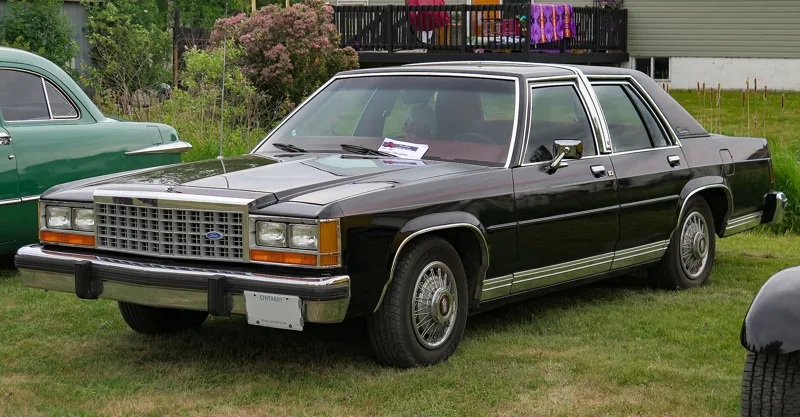
The first-generation Grand Marquis, built from 1979 to 1991, was styled nearly identically to the Ford LTD Crown Victoria, though it was slightly longer. Its dashboard was trimmed in brushed stainless steel, with square pods for the gauges in place of a horizontal speedometer.
The 1990 update brought a driver-side airbag, a steering column that combined the turn signal and wiper controls onto one stalk, and the horizontal speedometer used by Ford. Mercury's full-size model line had been downsized in 1979 and was reshaped again for the 1990s.
The second generation was unveiled on November 28, 1990, for the 1992 model year. The chassis was kept, but the body was all-new, and it was the most extensive change the Panther cars had seen since 1979.
Which car sold more?
The Grand Marquis has the larger total record, with 2.7 million units produced over 36 years of continuous production. It was the longest-running Mercury nameplate, with the Cougar next at 34 years.
The Taurus was not built to match the old volumes. Ford projected sales of 50,000 to 75,000 vehicles a year, far below the 1990s peak of nearly 400,000 vehicles a year when the Taurus was the highest-selling nameplate in the United States.
Ford also tried to protect resale values by avoiding fleet sales, although the Taurus replaced the Crown Victoria as the Police Interceptor sedan. A Police Interceptor Sedan based on the Taurus came in 2013, and it was sold as a fleet-only car that was not branded as a Taurus.
Why did the Taurus end production in 2019?
Ford moved its line-up away from cars and towards utility vehicles and light trucks at the end of the 2010s. It discontinued the Taurus in North America after the 2019 model year, alongside the Fiesta, Focus and Fusion.
The last Taurus was built in the United States on March 1, 2019, at Chicago Assembly, ending a 34-year American production run. The nameplate remained in use by Changan Ford, which marketed a rebranded Ford Mondeo for the Middle East.
The Grand Marquis ended in a similar way. Ford announced the discontinuation of the Mercury brand in 2010, and the last Grand Marquis was produced on January 4, 2011, at St. Thomas Assembly in Ontario.
Which car suits which buyer?
The Taurus suits a buyer who wanted a modern full-size sedan with a choice of V6, turbo V6 or four-cylinder power and a range of trims up to the SHO. The Grand Marquis suits a buyer who wanted a traditional rear-wheel-drive American cruiser with a long production history.
The figures do not settle which car was the better buy, because they were built in different periods for different buyers. The Taurus had the newer design and the performance range, while the Grand Marquis had the longer record and a simpler, older rear-drive layout.