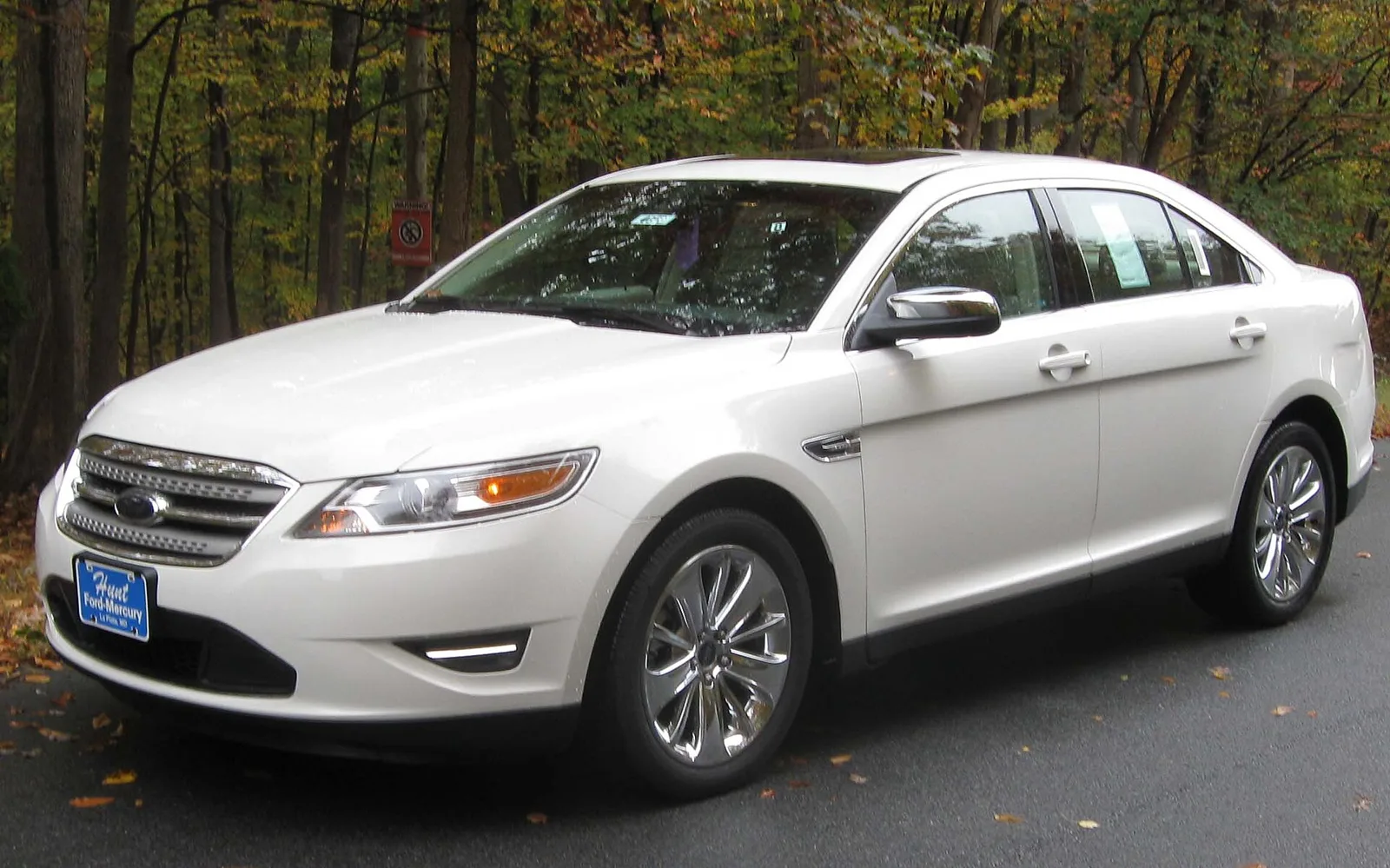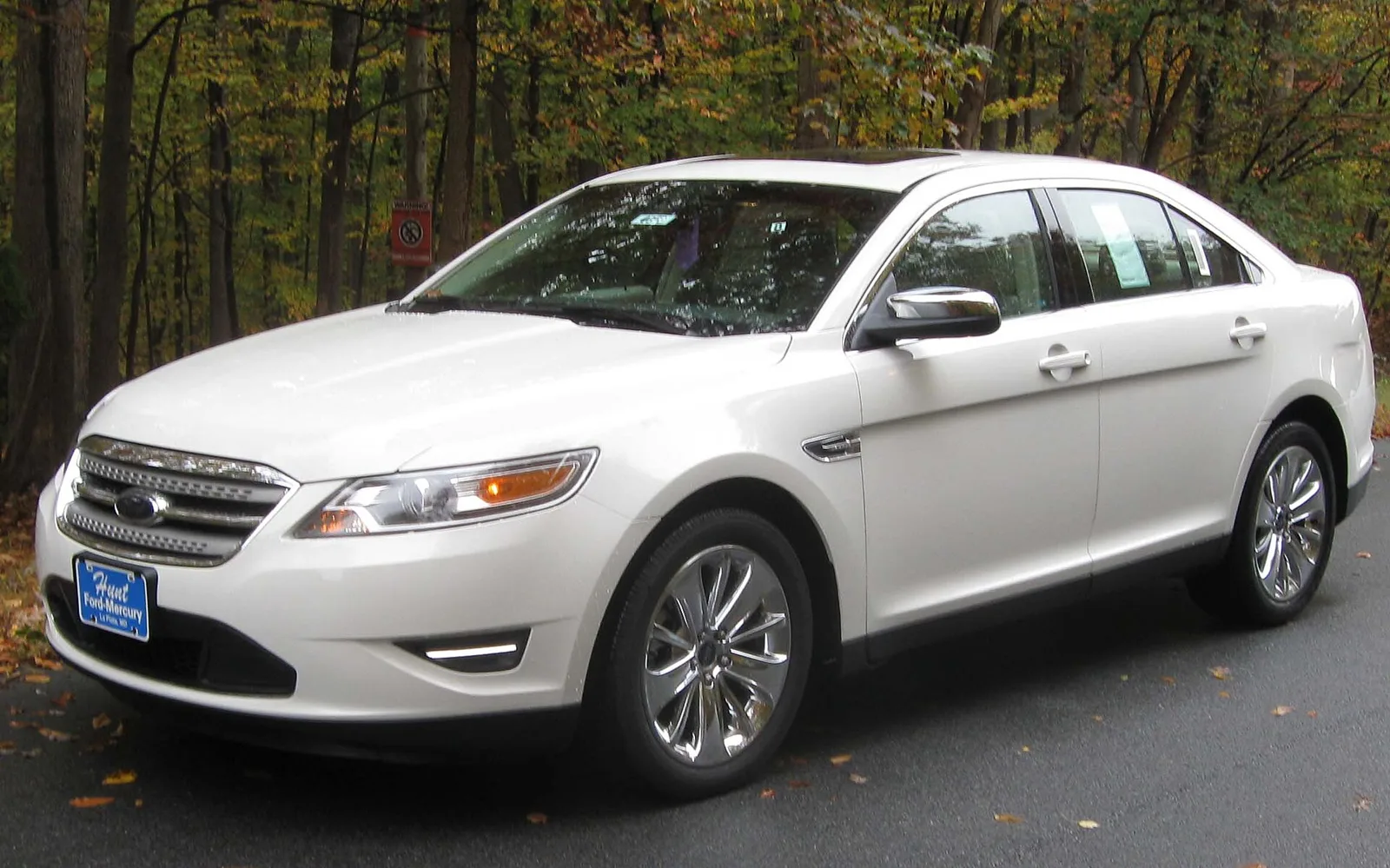
Kinetic Design styling, a V6 and turbo line-up, the SHO and Police Interceptor models, and the end of the Taurus in North America.
The Ford Taurus sixth generation was a full-size sedan built for the 2010 to 2019 model years in North America. It introduced Kinetic Design styling, brought back the turbocharged SHO and spawned a fleet-only Police Interceptor Sedan before production ended in March 2019.
The sixth-generation Ford Taurus was a wholesale rethink of the full-size family sedan, launched for 2010 and built in North America until 2019. It ditched the New Edge styling of earlier cars for Kinetic Design, and it revived the SHO as the first turbocharged Taurus.
The generation brought a mild facelift in 2013, a run of V6 and turbo engines, a police variant that lasted until 2019, and a water pump problem that led to a class action lawsuit.
Why did Ford redesign the Taurus for 2010?
Ford planned the sixth-generation Taurus as a 2010 model after the fifth generation's styling stayed close to its predecessor and its handling trailed rivals. The company treated it as a full redesign. Assembly began on June 15, 2009, ahead of the 2010 model year.
Alan Mulally, the former Boeing chief executive who had taken over at Ford in late 2006, called the car the one the company should have built the first time. Mulally had already renamed a facelifted Five Hundred as the fifth-generation Taurus for the 2008 model year, so the new car was a second attempt at a proper replacement.
A full-scale prototype mockup leaked online in April 2008, well before the car's debut at the North American International Auto Show in 2009. Ford also expected far less volume than the nameplate once delivered.
The 1990s peak had nearly 400,000 vehicles a year, while the company projected 50,000 to 75,000 a year for this car. The Taurus had once been the best-selling name in the American market, so the drop was deliberate. It was also the first Taurus without a Mercury Sable counterpart, because Mercury was being phased out by the end of 2010. Ford also avoided fleet sales to protect the car's resale value.
A full-size sedan rebuilt around Kinetic Design, with a turbo SHO, a fleet-only police variant and a run that ended in 2019.
What changed in the design of the sixth-generation Taurus?
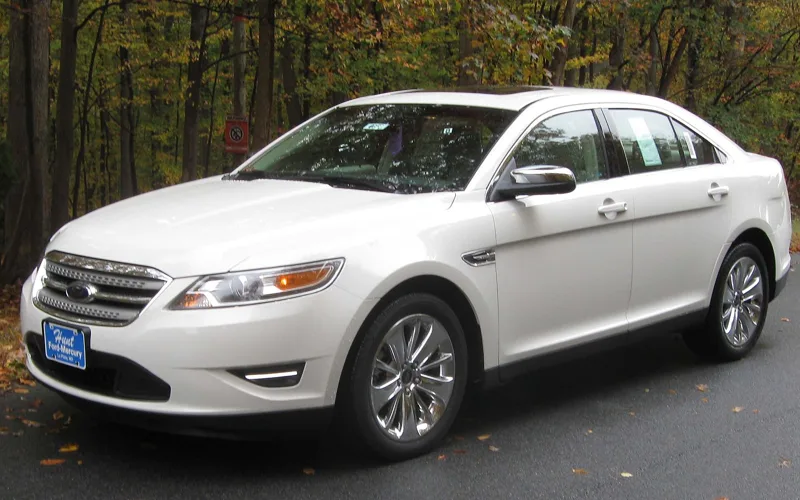
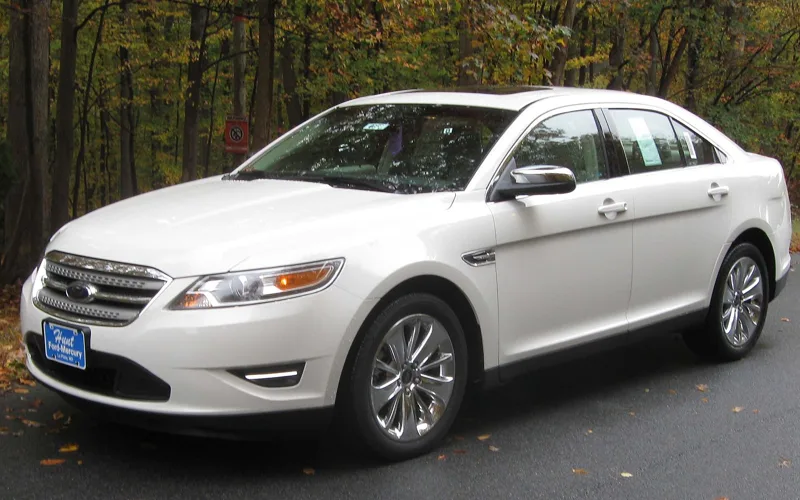
The car was a complete redesign of its exterior and interior, and it adopted the Kinetic Design language Ford was rolling out across its range. Chief Designer Earl Lucas led the team, and the 2007 Ford Interceptor concept influenced the grille, rear end, taillamps and roofline. The result was a big, muscular shape.
Inside, the car brought Ford Sync, a push-button start and heated seats in the front and rear. The Multi-Contour Seats were a first for Ford when they arrived in 2010, with air cushions that pad the back and a bottom cushion that adds a subtle continuous massage on long trips.
What changed with the 2013 facelift?
The 2013 facelift applied Kinetic Design details across the car. It gave the front a trapezoidal upper grille and restyled headlamps, while rear LED taillamps joined a revised trunklid. Engine choices grew as well, with the standard V6 rising to 288 hp.
Ford also offered a heated steering wheel, automatic high beams and a reversing camera, plus an optional 8-inch touch screen in the MyFord Touch system. Lane keeping assist joined the Driver Assist package in 2014, alongside new wheel designs. For 2013 the Taurus also became Ford's full-size offering in the Middle East, replacing the Crown Victoria there.
The software changed again later. MyFordTouch gave way to Sync 3 for the 2017 model year, and 2016 cars could take the Sync 3 update by software download. That was the last substantial change made to the Taurus.
What engines and gearboxes did the Taurus offer?
The standard engine at launch was a 3.5-liter V6 rated 263 hp that carried over from the previous Taurus. The SHO used a twin-turbocharged 3.5-liter EcoBoost V6 at 365 hp, and a 2.0-liter turbocharged four-cylinder rated at 240 hp arrived in 2014.
The four-cylinder was the first four-cylinder Taurus since 1991 and the smallest engine ever fitted to one, but it was dropped after the 2017 model year. Every version used a variant of the six-speed 6F automatic, and front-wheel drive was the base layout.
All-wheel drive was optional on most models and standard on the SHO. Torque Vectoring Control and Curve Control were available on all-wheel-drive cars, working alongside AdvanceTrac, which combined traction and stability control on every model.
What trims and safety features could buyers choose?
Buyers could choose the base SE, the mid-range SEL or the luxury Limited, with the performance SHO as the flagship above them. Safety options included the Blind Spot Information System, adaptive cruise control, forward collision warning and lane keeping assist, which sat in the Driver Assist package.
The base SE was designed for rental and fleet use. It came with a 3.5-liter V6, a six-speed automatic, a tilt and telescoping steering wheel with cruise control, and AdvanceTrac stability control, but no all-wheel drive.
The mid-range SEL added paddle shifters on its SelectShift automatic, optional all-wheel drive, dual-zone climate control and a leather-wrapped steering wheel. The Limited finished the range with perforated, heated and cooled leather seats, ambient lighting in a choice of colours and a rear view camera.
How quick was the Taurus SHO?
The SHO was the performance flagship of the range, pairing a 365 hp EcoBoost V6 with all-wheel drive as standard. Ford rated its Performance Package at 5.2 seconds from 0 to 60 mph, and the base MSRP was $37,995 including destination fees.
The SHO Performance Package added upgraded brake pads, recalibrated power steering and a Sport Mode for the stability control, with an option to switch AdvanceTrac off altogether. Engineers also fitted a 27mm front anti-roll bar in place of the standard 29mm item for more neutral turn-in.
The final drive was shortened to 3.16 to 1 for quicker acceleration. Standard wheels were 19-inch alloys with Goodyear Eagle tyres, while buyers could choose 20-inch wheels with Michelin high-performance tyres. The SHO first appeared at the 2009 Chicago Auto Show.
What was the Police Interceptor Sedan?
The Police Interceptor Sedan was a fleet-only, Taurus-based patrol car that replaced the Crown Victoria Police Interceptor for the 2013 model year. It was co-developed with the LA County Sheriff's Department and Michigan State Police, which also tested it, and it did not carry the Taurus badge.
Unlike the outgoing Crown Victoria, it was not offered with a V8 or rear-wheel drive. The base engine was a 3.5-liter V6 making 288 hp and 254 lb ft of torque, while an optional EcoBoost V6 with all-wheel drive produced 365 hp.
A naturally aspirated 3.7-liter V6 was added shortly after launch and later became the standard engine. It made 305 hp and 279 lb ft of torque, and its aluminium block saved 40 lb (18 kg) over the old unit.
The EcoBoost car was ranked the fastest US police car from 2013 until 2019, with 0 to 60 mph in 5.7 seconds and a 150 mph (240 km/h) ceiling. Standard police kit included a 220-ampere alternator, heavy-duty cooling and a police-calibrated engine control module. The EcoBoost car also shared calibrated electronic power steering and a 3.16 to 1 final drive with the SHO Performance Package.
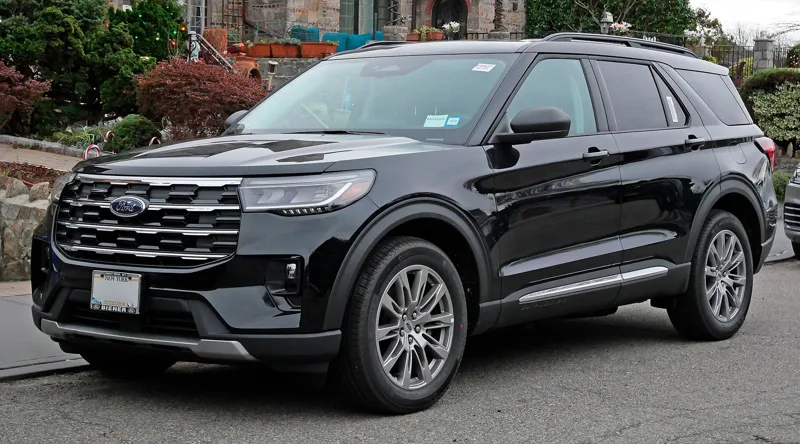
Ford partnered with Whelen Engineering Company to supply factory-fitted emergency kit, sold as the Ready for the Road option. The sedan ended in March 2019, and its replacement was the Explorer-based utility, now in its second generation.
How did critics and buyers respond?
Reviewers liked the test drives and the driver-assist kit, with cross traffic alerts, collision warnings and blind-spot monitoring. The styling divided opinion and the cabin drew complaints about room and sight-lines, while some magazines judged the car overweight and underpowered.
Edmunds argued that the eighth-generation Honda Accord had better driving dynamics and nearly as much interior space. Car and Driver called the sedan overweight and underpowered, and Motor Trend said the stance gave it a leopard look.
Price was part of the pitch. The Taurus started $10,000 lower than the Lincoln MKS, which shared its powertrain and much of its technology.
Why did the water pumps fail on these cars?
The water pump on several V6 engines was mounted inside the engine and driven by the timing chain. If it failed, antifreeze could enter the crankcase, mixing with engine oil and damaging head gaskets and connecting rod bearings. The problem affected 2008-2019 Taurus models and Police Interceptors from 2013 to 2019.
The engines involved were the 3.5L Cyclone V6, the 3.5L EcoBoost V6 and the 3.7L V6. Failures could come without warning, and fixing one might mean removing the engine or replacing it entirely. The issue also led to a class action lawsuit against Ford.
How did the Taurus leave the North American market?
Ford announced on April 25, 2018, that the Taurus would be dropped alongside the Fiesta, Focus and Fusion, so it could focus on trucks and SUVs. The last US-built Taurus, a white Limited, was assembled at Chicago on March 1, 2019, ending 34 years of American production.
Ford ended national and promotional advertising for its sedan range on September 5, 2018. The Taurus had shared the Chicago plant with the Explorer and Lincoln MKS. Outside North America the nameplate lives on in the Middle East, where Changan Ford sells a rebranded Ford Mondeo as the Taurus.
What are the sixth-generation Taurus specifications?
| Specification | Detail |
|---|---|
| Model years | 2010 to 2019 in North America, with a mild facelift for 2013 |
| Platform | Volvo-derived Ford D3, 112.9-inch wheelbase |
| Standard engine (2010) | 3.5-liter V6, 263 hp |
| Standard engine (2013) | 3.5-liter V6, 288 hp |
| Four-cylinder (2014-2017) | 2.0-liter turbocharged, 240 hp |
| SHO engine | 3.5-liter EcoBoost V6, 365 hp; 475 N m, or 350 lb ft, at 1500 rpm |
| SHO base MSRP | $37,995 including destination fees |
| SHO 0-60 mph | 5.2 seconds with the Performance Package |
| Police Interceptor 3.7 L V6 | 305 hp; 279 lb ft of torque |
| Police EcoBoost | 0-60 mph in 5.7 seconds; top speed 150 mph (240 km/h) |
| Transmission | Six-speed automatic (6F family) |
| Last US-built Taurus | March 1, 2019 |