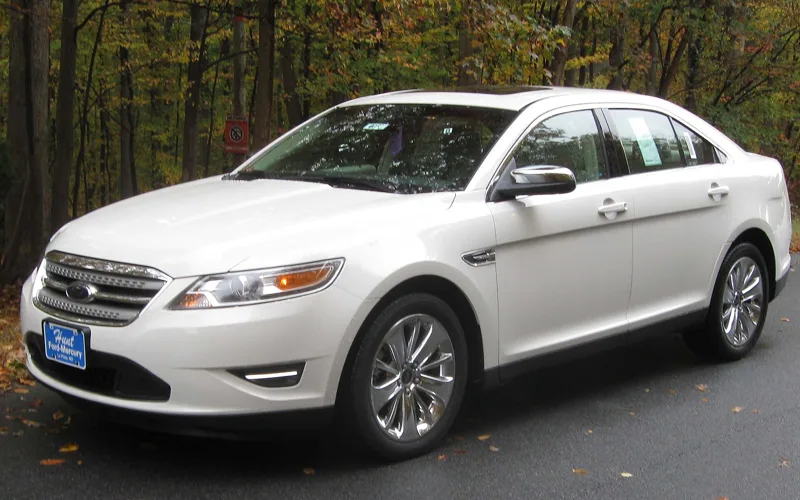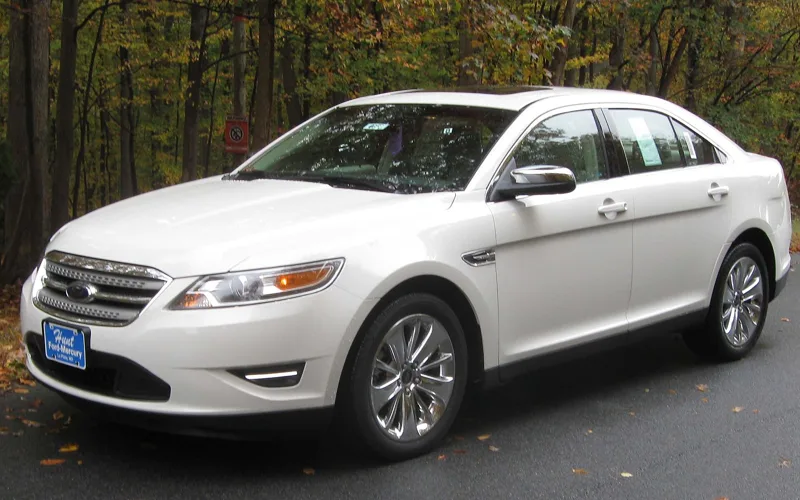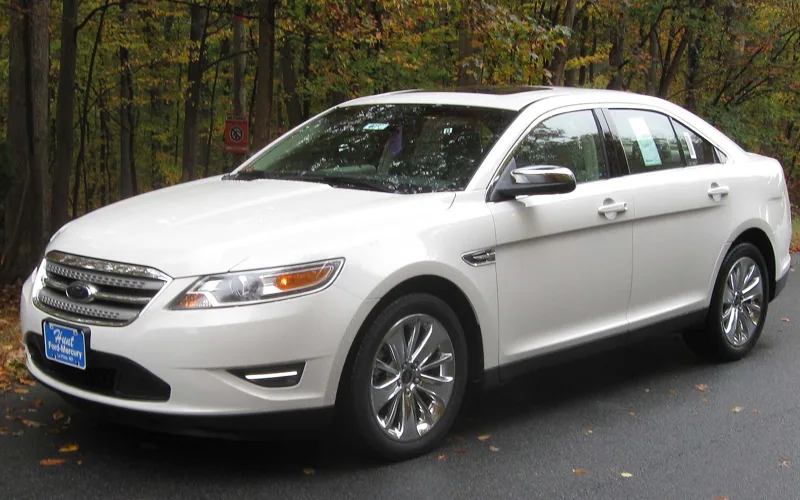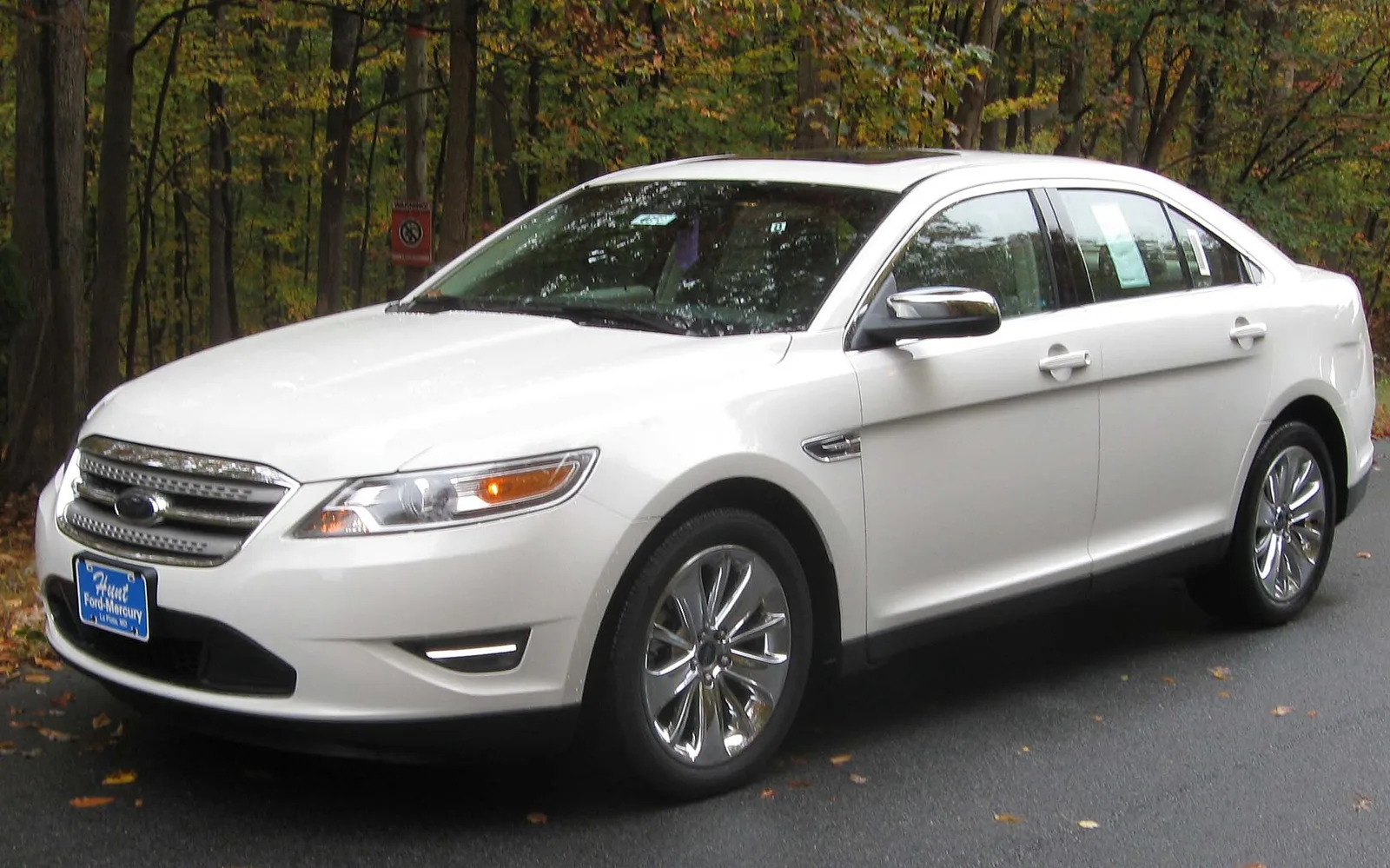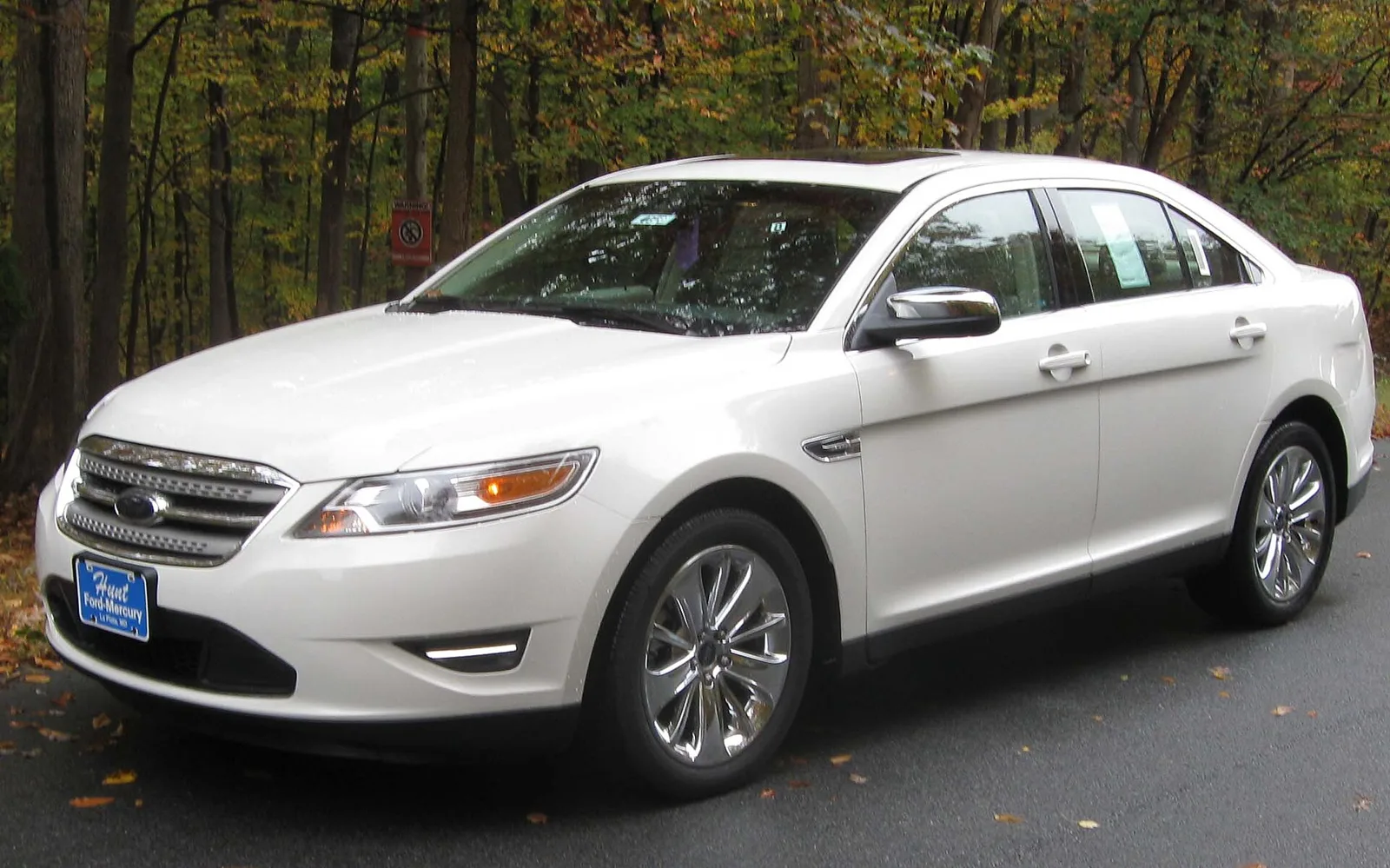
Ford's sixth-generation Taurus and Nissan's Altima were both family sedans from the 2010s and 1990s, but they were pitched at different rivals and different buyers.
The sixth-generation Ford Taurus was a full-size sedan sold from 2010 to 2019 on a Volvo-derived platform. The Nissan Altima was a mid-size car from 1992, and the two were pitched against different rivals in different size classes, so they rarely met in showrooms.
The sixth-generation Ford Taurus and the Nissan Altima were both family sedans sold in the United States, but they sat in different size classes and were aimed at different rivals. The Taurus was a full-size car from 2010 to 2019, while the Altima was a mid-size car whose history began in 1992. Put side by side, they show how the same kind of car could be pitched in two very different ways.
Were the Ford Taurus and Nissan Altima rivals?
Not closely. Ford's full-size Taurus competed more with the Toyota Avalon and the Nissan Maxima than with the Altima, while the Altima was among the competitors of the Ford Fusion, which was the mid-size Ford.
The Taurus was built to take the ground that the Mercury Grand Marquis had held, even though it was never branded as its successor. Ford aimed the car at the full-size competitors of its predecessors, and that placed it above the Altima in the market.
Two family sedans from different size classes, separated by rivals, and by the decade each one was built to answer.
When did each car go on sale?
The sixth-generation Taurus was sold from the 2010 model year until 2019, and Ford discontinued it in North America after that. The first Altima was produced in June 1992 as a 1993 model, and it replaced the Stanza, a Bluebird-based compact.
The Taurus's production began on June 15, 2009, for the 2010 model year. Its counterparts, the Ford Taurus X and the Mercury Sable, ended production in 2009, and the Taurus was the first Taurus without a Mercury Sable twin.
The Altima's later generations followed a steady pattern. The second generation arrived in 1997 for North America and Canada only, and the third generation debuted in 2001 for the 2002 model year.
The second generation's new interior, by designer Diane Allen, brought a revised glove box, cup holders and a folding back seat. For the 2000 model year its engine rose from 150 to 160 horsepower, and the car's acceleration to 60 mph improved from 8.7 seconds to 8.4 seconds.
How were the two cars built?
The Taurus used the Volvo-derived Ford D3 platform, sharing its 112.9-inch wheelbase with the Lincoln MKS and the Five Hundred. It had front-wheel drive, with optional all-wheel drive that was standard on the SHO, and MacPherson struts at the front.
Underneath, the first Altima shared its roots with the Bluebird SSS sold in Japan, but its look was drawn up by Nissan's design studio in California. Later generations moved to Nissan's FF-L platform, which the third-generation car used for the first time and which was unique to North America.
The third-generation Altima grew significantly, with its interior expanding to 118.8 cubic feet (3.36 m3). It also carried the biggest fuel tank in its class, at 20 US gal (76 L; 17 imp gal), and it was the first Altima to offer a V6 engine.
What are the Ford Taurus and Nissan Altima specifications?
| Specification | Ford Taurus (sixth generation) | Nissan Altima |
|---|---|---|
| Size class | Full-size sedan | Mid-size car, larger than the Sentra and smaller than the Maxima |
| Years | 2010 to 2019 model years | Since 1992; first Altima June 1992 |
| Platform | Volvo-derived Ford D3, 112.9-inch wheelbase | FF-L platform from the third generation (2002) |
| Drive | Front-wheel drive, optional all-wheel drive | not recorded |
| Launch engine | 3.5-liter V6, 263 hp (196 kW) | First generation 150 hp (112 kW) KA24DE straight-four DOHC |
| V6 top output | SHO twin-turbocharged V6, 365 hp (272 kW) | SE-R V6, 260 hp (194 kW), 251 lb-ft (340 N-m) |
| Four-cylinder option | 2.0-liter EcoBoost, 240 hp (179 kW), 2014 to 2017 | 2.5-liter four-cylinder on the third generation |
| Transmission | Six-speed automatic across the range | Five-speed manual or four-speed automatic on the first generation |
| Fuel tank | not recorded | 20 US gal (76 L; 17 imp gal) on the third generation |
| Interior volume | not recorded | 118.8 cubic feet (3.36 m3) on the third generation |
| Acceleration | not recorded for the standard car | 0 to 60 mph in 6.1 seconds for the SE-R in Car and Driver testing |
| Price | SHO from US$37,995 including destination fees | not recorded |
| Status | Discontinued in North America after 2019 | Still made by Nissan |
Which car had more power?
The Taurus SHO's 365 hp (272 kW) twin-turbocharged V6 was the most powerful engine in the sixth-generation range, while the standard car started at 263 hp (196 kW) and reached 288 hp (215 kW) in 2013.
The Altima's V6 rose through its life. The 2003 and 2004 3.5 SE was upgraded from 240 hp (179 kW) to 245 hp (183 kW), and the 2005 facelift took the V6 to 250 hp (186 kW) with 249 lb-ft (338 N-m) of torque.
The SE-R was the sharpest Altima, with 260 hp (194 kW) and 251 lb-ft (340 N-m) from its V6 and a six-speed manual. The Taurus SHO offered the more powerful turbocharged engine, at 365 hp (272 kW).
How did the Altima change in the 2000s?
The third-generation Altima grew and gained a V6, and the 2005 facelift added a new front grille, all-red tail lights, a redesigned interior and an optional DVD-based navigation system. The SE-R arrived with a six-speed manual, 18-inch wheels and a stiffer suspension.
Under the skin, the third generation moved to a multi-link rear suspension and four-wheel disc brakes. Its 2003 and 2004 cars received two-tone dash colours, and the 3.5 SE gained horsepower without any change in torque.
Criticism of the 2002 to 2004 interior centred on hard and brittle plastics, and some drivers found the steering too light or abrupt. The turning circle was also wide, because the car's wheelbase had been stretched.
How did the Taurus and Altima differ inside?
The base Taurus SE came with a six-speaker stereo, Ford's MyKey system and AdvanceTrac stability control, while the Limited added heated and cooled leather seats, ambient lighting in seven colours and a six-disc in-dash CD changer.
The 2013 refresh brought MyFord Touch with an 8-inch touch screen, an optional heated steering wheel, a Sony sound system with HD Radio, auto high beams and a rear view camera. In 2017 MyFordTouch was replaced by Sync 3, and 2016 models could be upgraded by software update.
The first Altima's interior was simpler. Trims ran from the stripped XE to the luxury GLE, and the GLE's head-up display of 1993 and 1994 used a mirrored patch on the windscreen to show speed, turn signals and warning lights.
How quick were the Taurus and the Altima?
The sixth-generation Taurus's acceleration for the standard car is not recorded in this comparison, although Ford said the SHO was faster than an Audi A6 4.2 FSI Quattro in straight-line acceleration in its launch material.
The Altima's performance figures are better documented. Car and Driver measured the SE-R at 0 to 60 mph in 6.1 seconds, and a MotorWeek episode recorded an automatic SE-R at 5.8 seconds.
The 2.5-liter four-cylinder took the sedan from 0 to 60 mph in 8.6 seconds. The first generation took 9.4 seconds with the automatic and 8.2 with the manual.
How did the first-generation Altima compare with the Taurus?
The first-generation Altima was a compact-sized car with a 150 hp (112 kW) KA24DE engine and sporty handling for its class. Four adults fit in reasonably well, but a fifth passenger would be a squeeze.
The Taurus was a much larger proposition. Its full-size dimensions were built on the Volvo-derived D3 platform, and its launch engine was a V6 that the company had kept from the previous car.
The two cars therefore had very different starting points. The Altima began as a sporty small family car, while the Taurus was a full-size sedan that was meant to match the size and comfort of its predecessors.
Which car was better received?
The third-generation Altima was well received by the press, and the car's reach into a new class proved important to Nissan. Because the Altima offered the Maxima's performance and space at a lower price, Maxima sales fell, and Nissan became competitive in the mid-size segment for the first time. and critics praised its new style, extra space and handling. It was credited with a turnaround in Nissan's operations, taking the company from debt to one of the industry's most profitable.
Ford's launch videos benchmarked the Taurus against luxury sedans. Its sales target was much lower than the old volumes, with projections of 50,000 to 75,000 cars a year against the 1990s peak of nearly 400,000.
The Altima's 2002 to 2004 interior was criticised for hard and brittle plastics, while the Taurus's record on reception is not recorded in detail here.
What problems did each car have?
The 2002 2.5-liter Altimas had major excessive oil consumption issues, which could lead to serious engine failure. Some of those cases involved owner neglect, and others involved a failing catalytic converter. Most reports came from cars beyond 100,000 miles and more than eight years old.
A class action was filed in April 2015 on behalf of owners of the 2002 to 2006 Altima. It alleged defective floorboards, but a judge dismissed the case in January 2016. The premature rust was largely blamed on front mudguards that were not high enough.
The Taurus's problems are not recorded in this comparison, so no verdict can be given on its reliability.
Which car suits which buyer?
The Taurus suits a buyer who wanted a full-size sedan with a choice of V6, turbo V6 or four-cylinder power and a range of trims up to the SHO. The Altima suits a buyer who wanted a mid-size car with a sporty history and a V6 option in the later generations.
The figures do not settle which is the better car. The Altima had the stronger acceleration figures that are on record, while the Taurus had the larger size and the more powerful top engine.