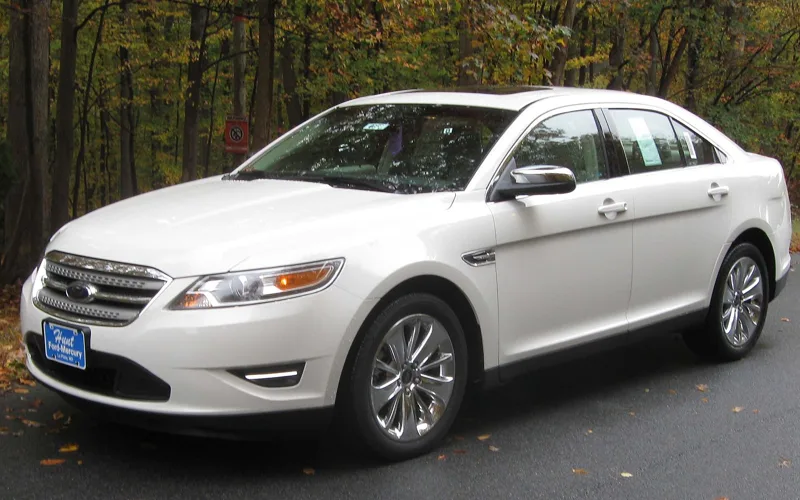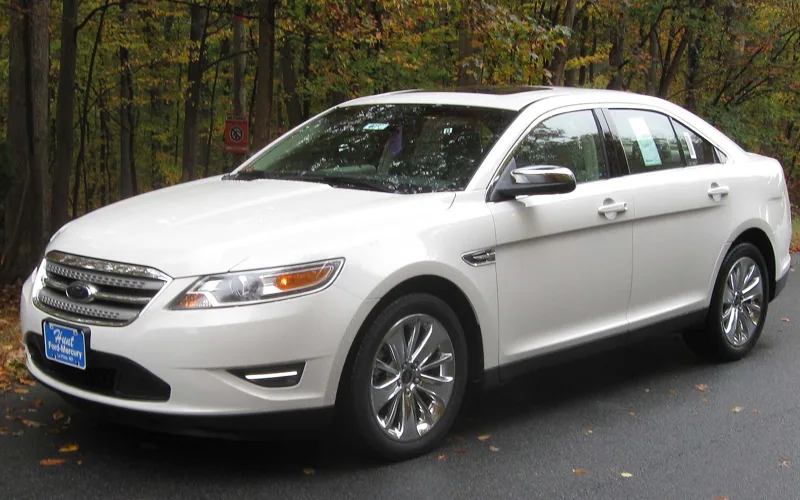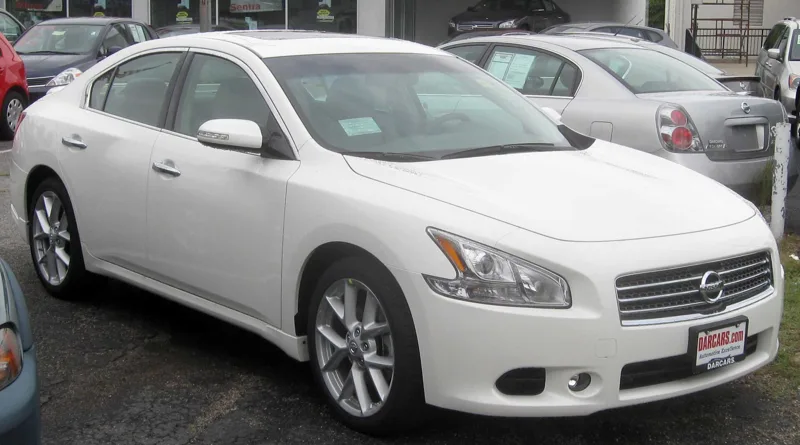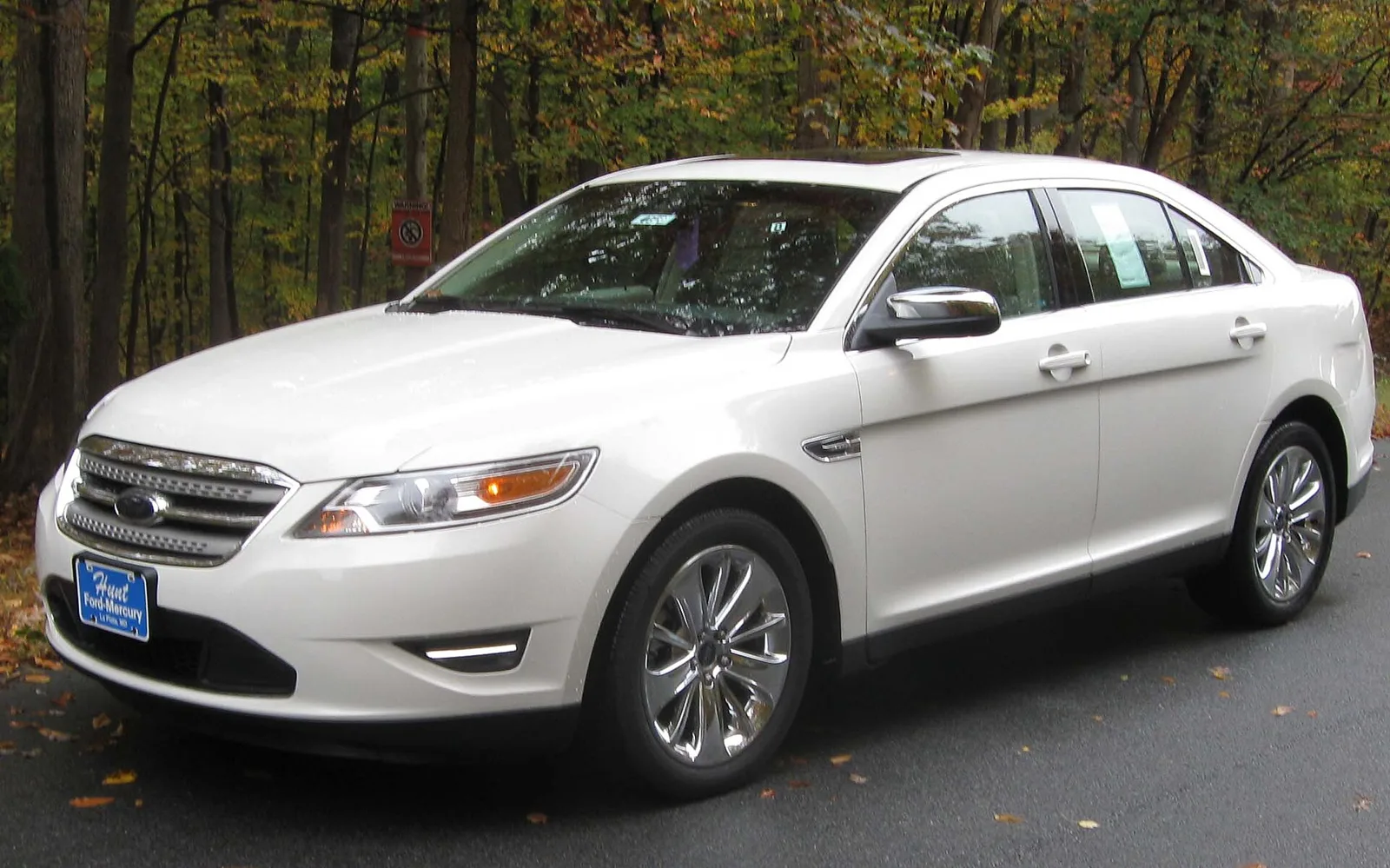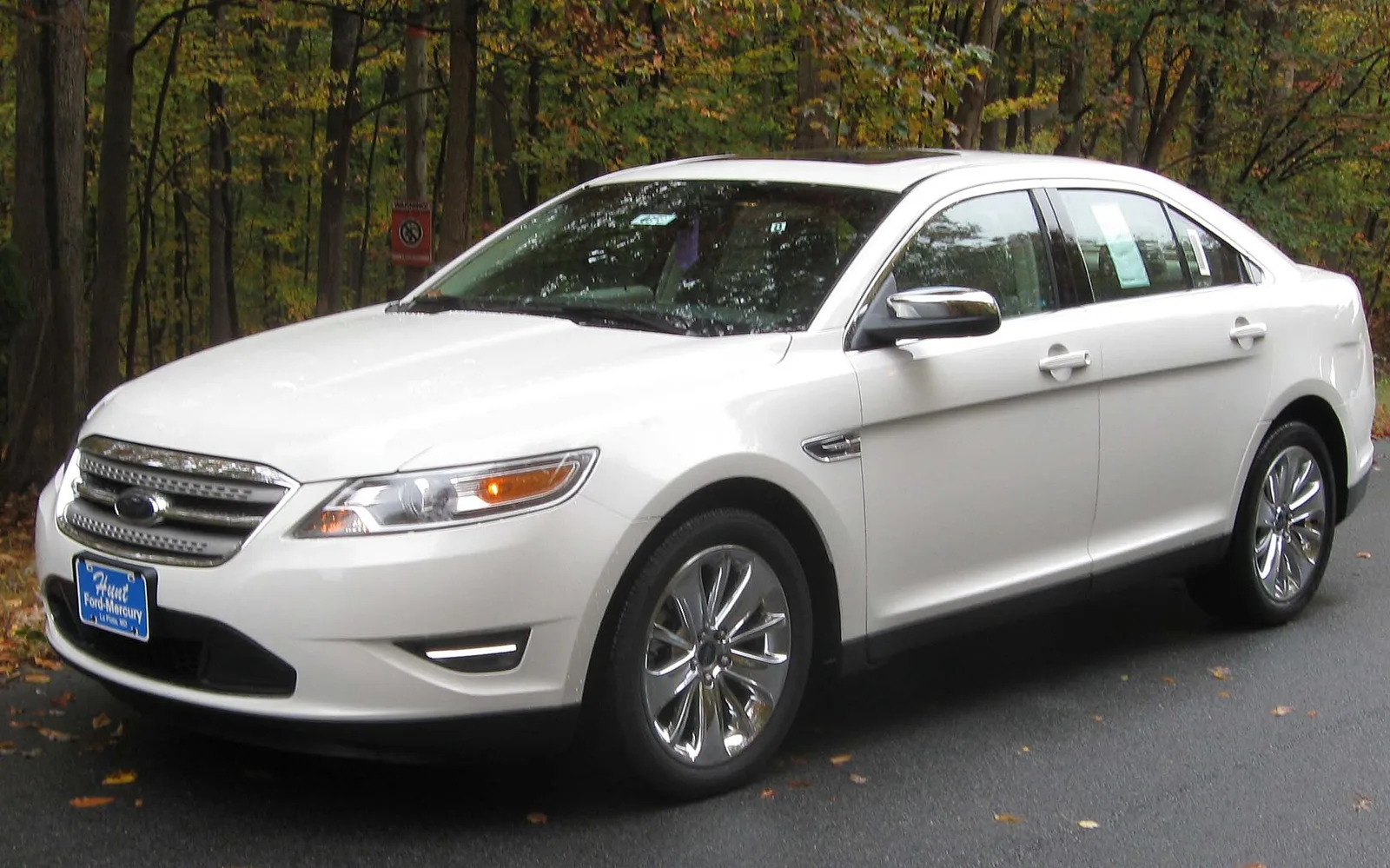
Ford's sixth-generation Taurus and Nissan's Maxima were both full-size sedans, and the Taurus was measured against the Maxima and the Toyota Avalon when it launched.
The Ford Taurus sixth generation was a full-size sedan sold from 2010 to 2019, measured against the Toyota Avalon and the Nissan Maxima. The Maxima was built from 1982 to 2023 across eight generations and was marketed as an upscale alternative to the Altima.
The sixth-generation Ford Taurus and the Nissan Maxima were both full-size sedans, and they were measured against the same rivals. The Taurus launched for the 2010 model year, while the Maxima had already been on sale since 1982 as the Datsun Maxima and went on to eight generations. Their paths met in the full-size market, where the Maxima was one of the cars Ford's Taurus was expected to compete with.
Were the Ford Taurus and Nissan Maxima rivals?
Yes. Ford's full-size Taurus competed more closely with the Toyota Avalon and the Nissan Maxima than with the mid-size cars such as the Camry, Accord and Altima, so the Maxima was one of its named rivals at launch.
The Maxima was marketed as an upscale alternative to Nissan's mid-size Altima, with a premium interior and a V6 engine. That made it a natural comparison for the Taurus, which was built to sit above the mid-size class in size and comfort.
Ford's sales plan reflected that rivalry. The Taurus was built to take the ground that the Mercury Grand Marquis had held, but the company projected sales of 50,000 to 75,000 a year, far below the old peak.
Two full-size sedans measured against the same Toyota, one a Ford launched in 2010 and the other a Nissan flagship with a history back to 1982.
When did each car go on sale?
The Maxima debuted for the 1982 model year as the Datsun Maxima, replacing the Datsun 810. The sixth-generation Taurus was sold from the 2010 model year to 2019, and Ford discontinued it in North America after that.
The Taurus's production began on June 15, 2009, for the 2010 model year. Its counterparts, the Ford Taurus X and the Mercury Sable, had ended production in 2009, leaving the Taurus without a Mercury twin. It was the first version of the car developed without a Mercury Sable counterpart, as Mercury pared down its model line.
The Maxima kept going through eight generations, and US and Canadian production ended in July 2023. The Taurus's final North American car was built on March 1, 2019, at Chicago Assembly.
How were the two sedans built?
The Taurus used the Volvo-derived Ford D3 platform, with a 112.9-inch wheelbase, front-wheel drive and optional all-wheel drive that was standard on the SHO. Its suspension used MacPherson struts at the front and a multilink arrangement at the rear.
The Maxima took a different route. Its first generation was based on the Japanese Bluebird platform, but the second generation became the first front-wheel-drive Maxima, built on the Bluebird U11. The Maxima's own history runs from rear-drive Datsun models to the front-drive cars that later followed.
Oppama, Japan, was the Maxima's main home, and Smyrna, Tennessee, took on North American output from the 2004 model year. The Taurus, by contrast, was assembled at Chicago Assembly.
What are the Ford Taurus and Nissan Maxima specifications?
| Specification | Ford Taurus (sixth generation) | Nissan Maxima |
|---|---|---|
| Class | Full-size sedan | Full-size five-passenger sedan, Nissan's flagship |
| Years | 2010 to 2019 model years | From 1982; US and Canada production ended July 2023 |
| Generations | One sixth-generation car, with a 2013 facelift | Eight generations in total |
| Drive | Front-wheel drive, optional all-wheel drive | Front-engine; front-wheel drive from the second generation |
| Engines | 3.5-liter V6, 263 hp (196 kW) at launch | 2.4-liter at launch in 1981; 3.0-liter VG30E V6, 157 hp (117 kW) from 1985 |
| Strongest engine | SHO twin-turbocharged V6, 365 hp (272 kW) | Third-generation VE30DE, 190 hp (142 kW) on the SE |
| Transmission | Six-speed 6F automatic across the range | Four-speed automatic or five-speed manual on early cars |
| Trims | SE, SEL, Limited and SHO | GL, GXE and SE on the second generation; GLE on the fourth |
| Price | SHO from US$37,995 including destination fees | not recorded |
| Volume | Projected at 50,000 to 75,000 a year | not recorded |
| Built in | Chicago Assembly, Illinois | Oppama, Japan; Smyrna, Tennessee from the 2004 model year |
| Last North American build | March 1, 2019 | July 2023 |
How powerful were the engines?
The Taurus launched with the 263 hp (196 kW) 3.5-liter V6 retained from the previous car, and it rose to 288 hp (215 kW) in 2013. The SHO used a twin-turbocharged version of the same engine, rated at 365 hp (272 kW) at 5500 rpm, with torque of 475 N-m (350 lb-ft).
The Maxima's V6 story was longer. The second-generation VG30E was rated at 157 hp (117 kW), and the third-generation car offered 160 hp (119 kW) from the VG30E before the 190 hp (142 kW) VE30DE took over on the SE from 1992.
The fourth-generation Maxima used the VQ30DE, a 3.0-liter V6 that produced 190 hp (141 kW) and 205 lb-ft (278 N-m). That engine earned a place on Ward's 10 Best Engines list, and the VQ family kept gaining recognition in later years.
What did the early Maxima offer inside?
The early Maxima was a four-door luxury car with a premium interior, and its two trims were the 810 Deluxe and the 810 Maxima. The Deluxe came with a five-speed manual, while the upper-trim 810 Maxima came only with a three-speed automatic.
The sedans had independent rear suspension, while the station wagon kept a leaf-sprung live rear axle with rear drum brakes. The 1981 cars were also the first talking cars sold in the United States, using a phonograph-based voice system that warned of open doors and a key left in the ignition.
The Maxima's introduction followed the success of the Datsun 240Z, and the car used the same engine and transmission family while offering more luxury equipment in a four-door body.
Which car had the stronger top engine?
The Taurus SHO had the stronger top engine, at 365 hp (272 kW) from its twin-turbocharged V6, against the Maxima's best-known V6 at 190 hp (141 kW) in the 1995 model. The Taurus also offered a 2014 four-cylinder EcoBoost option.
The Maxima's VE30DE was a sophisticated engine for its time, with a 24-valve DOHC layout, variable intake valve timing and a limited-slip differential. Its torque peak of 190 lb-ft (258 N-m) came at 4000 rpm, and it revved to 6500 rpm.
The Taurus SHO's advantage is clear on paper. The Maxima's V6 engines were praised, but they did not match the SHO's turbocharged output.
How quick were the Maxima and the Taurus?
The Taurus's acceleration figures for the standard car are not recorded in this comparison. Ford's own launch videos claimed the SHO was faster than an Audi A6 4.2 FSI Quattro in straight-line acceleration.
The Maxima's performance is better documented. The 1995 manual car reached 0 to 60 mph in 6.6 seconds, and it covered the quarter mile in 15.2 seconds at 92.4 mph, with a 142 mph top speed.
The Maxima was therefore one of the quickest Japanese sedans sold in North America at that time. The Taurus SHO's performance was aimed at a different kind of buyer, one who wanted turbocharged power in a larger sedan.
How did the Taurus and Maxima trims compare?
The Taurus's trims ran from the base SE through the SEL and Limited to the SHO. The SE came with a six-speaker stereo, Ford's MyKey system and AdvanceTrac stability control, while the SEL added SelectShift paddles and optional all-wheel drive.
The Limited added heated and cooled leather seats, ambient lighting in seven colours and a six-disc in-dash CD changer. The 2013 refresh brought MyFord Touch with an 8-inch screen, and in 2017 Sync 3 replaced it.
The Maxima had its own luxury features. The second generation's GL and GXE were fitted with power windows, power seats and a voice warning system, and the fourth-generation GLE included a Bose six-speaker sound system.
Which car was better received?
The Maxima was well regarded in the press, and the fourth generation was praised for its quiet and roomy interior. Motor Trend named the 1995 car its Import Car of the Year, and Car and Driver's Ten Best list included the SE in several years.
The Taurus also had a strong launch. Ford's launch videos benchmarked it against production luxury sedans, and one showed the SHO beating an Audi A6 off the line. The standard car's reception is not recorded in detail here.
The Maxima's sales were hurt when the Altima arrived. The Altima offered the performance and space of the upper-market Maxima in a less expensive car, but it made Nissan competitive in the mid-size segment for the first time.
How did the Maxima's rivals change over time?
The Maxima's main rival in the 1980s was the Toyota Cressida, which was rear-wheel drive. The Cressida was discontinued after the 1992 model year, and Toyota replaced it with the front-wheel-drive Avalon, a stretched Camry introduced in 1994.
The Avalon was also one of the Taurus's named rivals, so the Taurus and the Maxima effectively faced the same competitor at different points in their histories. The Taurus was the newer of the two, and it took on the Avalon and the Maxima at once.
That overlap is why the comparison works. Both cars were built for buyers who wanted size, comfort and a V6, and both were measured against the same Toyota.
Which car suits which buyer?
Buyers comparing the two would also weigh the Maxima's longer history against the Taurus's newer platform, a trade-off the figures here show clearly.
The Taurus suits a buyer who wanted a modern full-size sedan with a choice of V6, four-cylinder and turbocharged V6 power and a range of trims up to the SHO. The Maxima suits a buyer who wanted a Nissan flagship with a long history and a V6 that was widely praised.
The figures do not settle which is the better car. The Taurus had the stronger top engine and the newer design, while the Maxima had the longer record and the stronger acceleration figures on record.