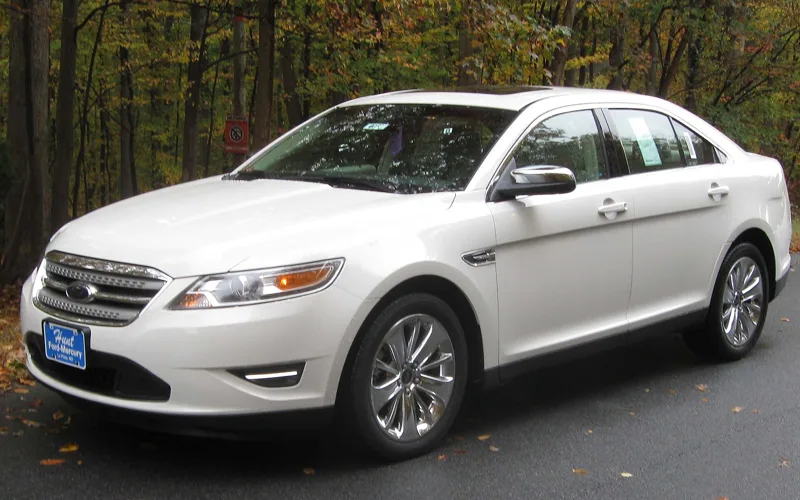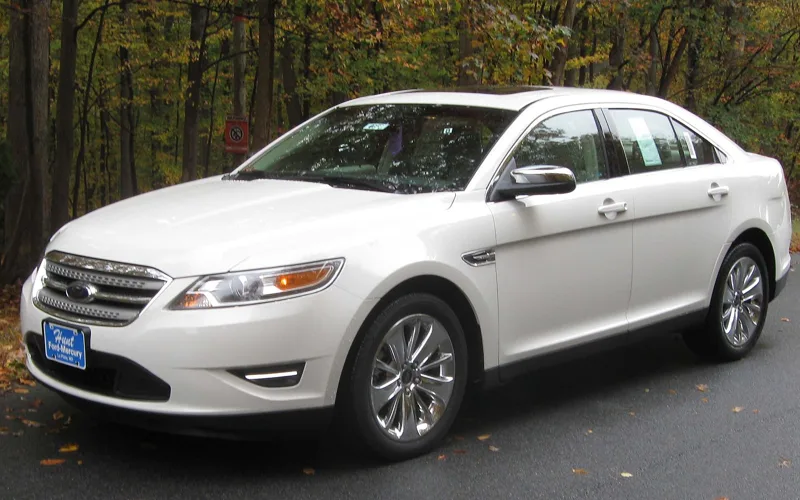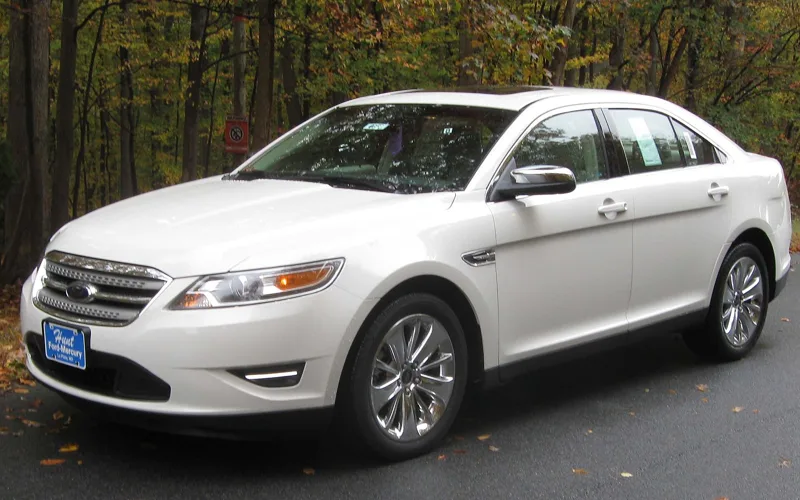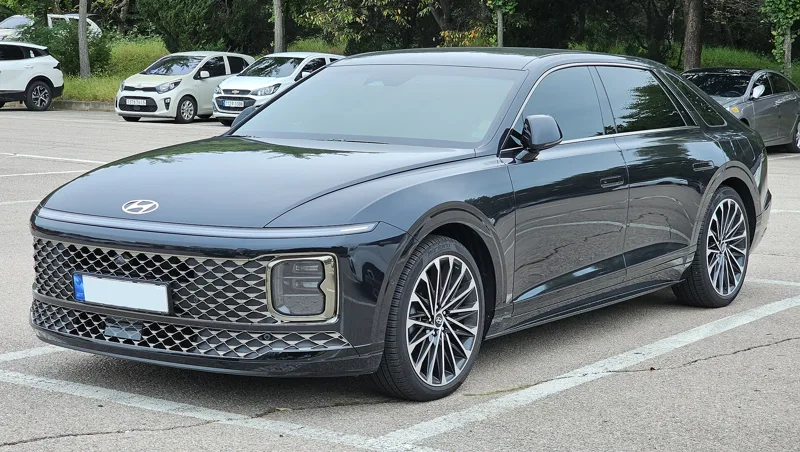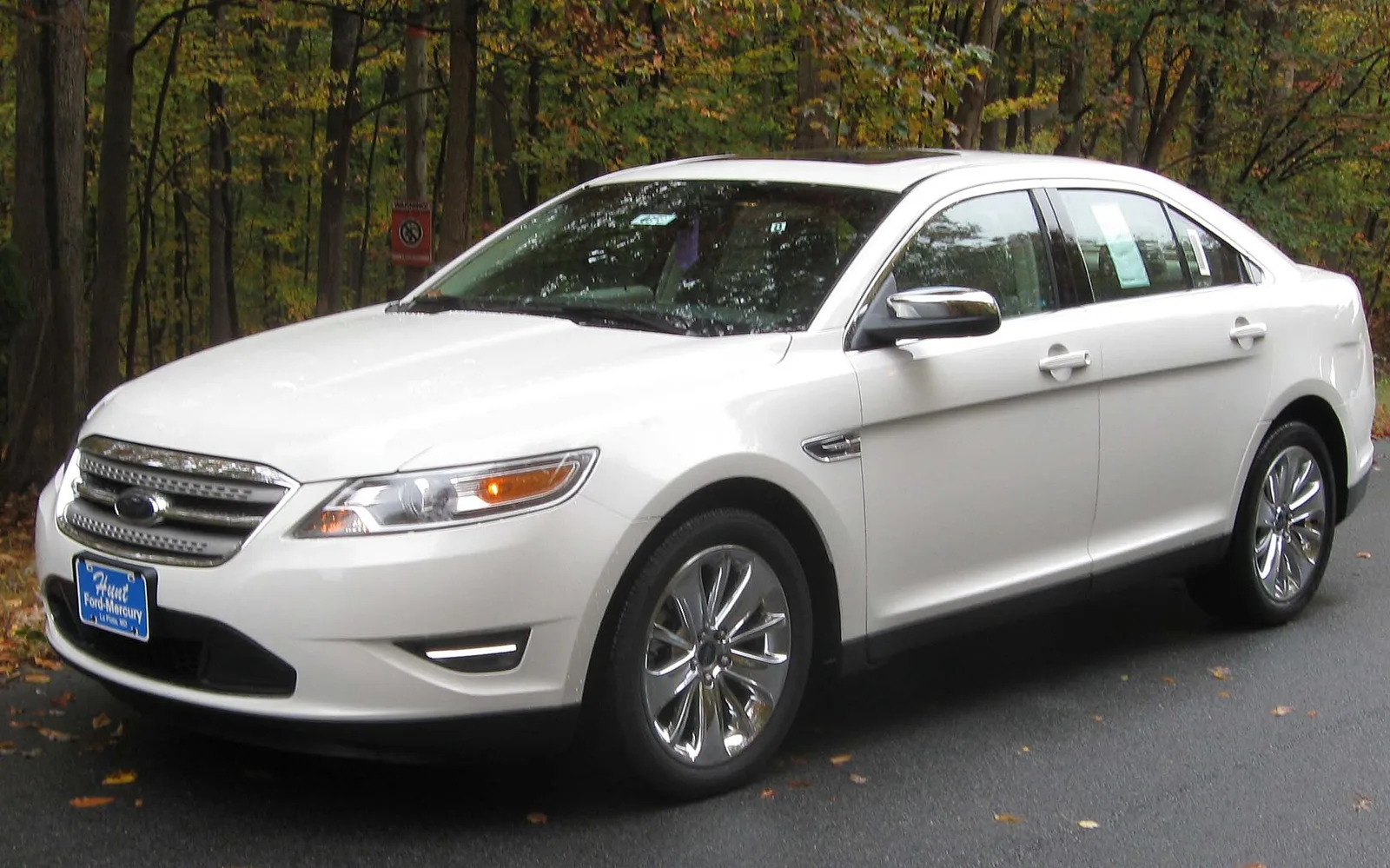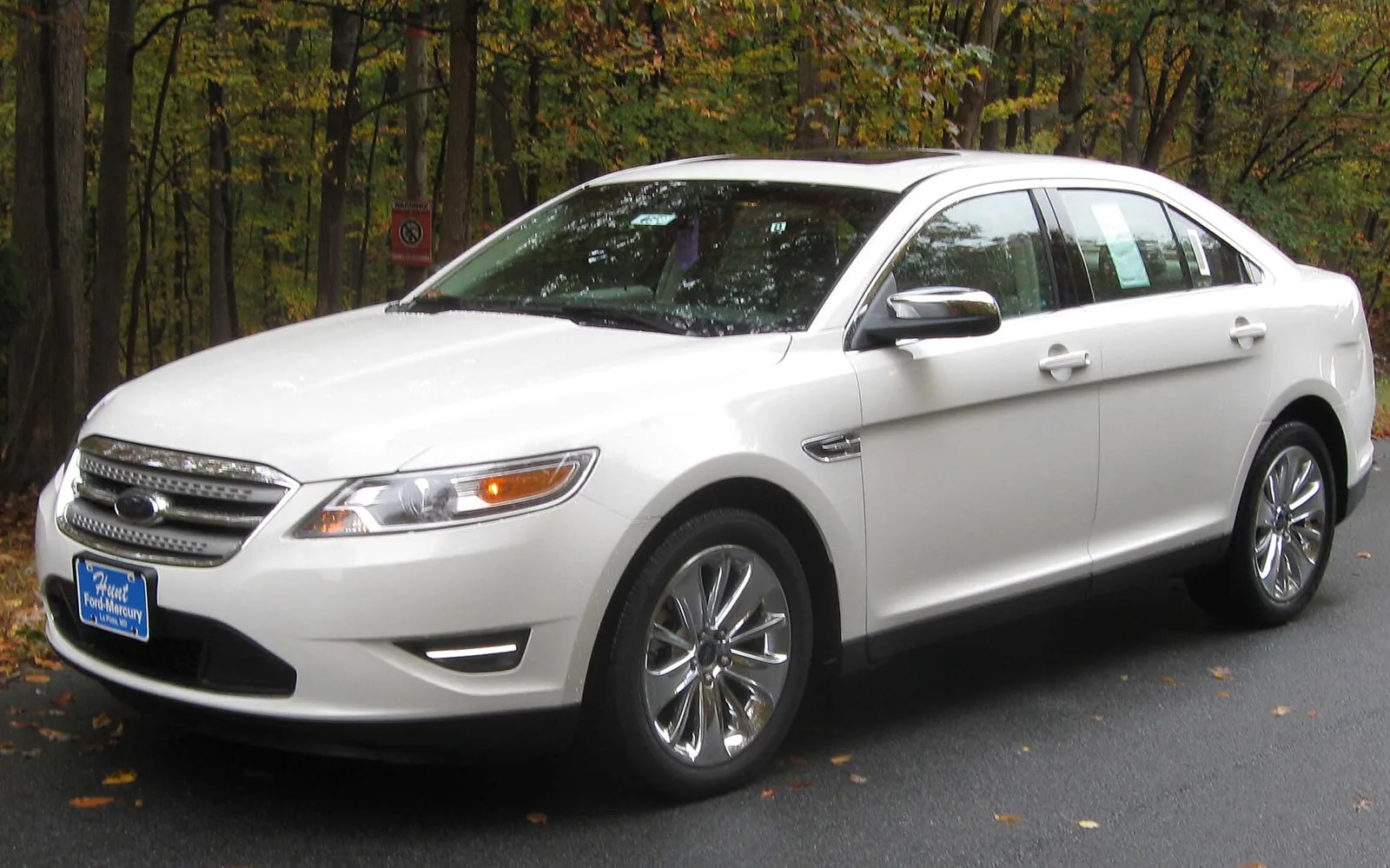
Both cars were front-wheel-drive flagships built for roomy comfort, and the Taurus was measured against the Avalon from the day it launched.
The Ford Taurus sixth generation was a front-drive full-size sedan sold from 2010 to 2019. The Toyota Avalon was a Toyota flagship from 1994 that Ford named as one of the Taurus's main rivals, and both cars were built for roomy comfort.
The sixth-generation Ford Taurus and the Toyota Avalon were both front-wheel-drive full-size sedans built for comfort and space. The Taurus launched for the 2010 model year and sold until 2019, while the Avalon had been a Toyota flagship since 1994. Ford named the Avalon as one of the Taurus's main rivals, which makes this a direct comparison of two cars chasing the same buyer.
Were the Ford Taurus and Toyota Avalon rivals?
Yes. The Taurus competed more closely with the Toyota Avalon and the Nissan Maxima than with mid-size cars such as the Camry, Accord and Altima, so the Avalon was one of its named competitors from the start.
Toyota positioned the Avalon as the front-drive replacement for the rear-drive Cressida, which had been discontinued for the American market in 1992. The Taurus was built to answer the same market, with Ford matching it against the full-size competitors of its predecessors.
The Avalon also shared its platform with the Camry V6 and the Lexus ES, so Toyota sold closely related cars alongside it.
Two front-drive full-size sedans, one a Ford launched in 2010 and the other a Toyota flagship dating back to 1994.
When did each car go on sale?
The Avalon debuted at the Chicago show in February 1994, going on sale later that year as a 1995 model. The sixth-generation Taurus was sold from the 2010 model year to 2019, and Ford discontinued it in North America after that.
The Taurus's production started on June 15, 2009, for the 2010 model year. It was the first Taurus to be built without a Mercury Sable counterpart, because Mercury was paring back its line.
The Avalon kept going through several generations. Its second generation arrived in 1999, its third in 2005, and Toyota discontinued the car in the United States in 2022.
How were the two cars built?
The Taurus used the Volvo-derived Ford D3 platform with a 112.9-inch wheelbase. Front-wheel drive came as standard, with optional all-wheel drive that was standard on the SHO, and the front suspension used MacPherson struts.
The first Avalon was based on a stretched XV10 Camry platform and was built in the same plant as the Camry. Its exterior dimensions were almost exactly the same as the Nissan Maxima, the Mitsubishi Diamante and the Mazda Millenia, its perennial competitors.
In Japan the first-generation car was the largest front-wheel-drive sedan at Toyopet Store locations, and it was classed as a luxury car there because of its large engine displacement.
The Avalon's extended-length chassis gave it extra legroom from the third generation onward. Toyota later moved the Lexus ES onto the same extended platform to match it in 2013.
What are the Ford Taurus and Toyota Avalon specifications?
| Specification | Ford Taurus (sixth generation) | Toyota Avalon |
|---|---|---|
| Years | 2010 to 2019 model years | 1995 model year onward; US sales ended in 2022 |
| Class | Full-size sedan | Full-size front-drive sedan, Toyota's flagship in the US |
| Platform | Volvo-derived Ford D3, 112.9-inch wheelbase | Stretched XV10 Camry platform in the first generation; extended chassis from the third |
| Drive | Front-wheel drive, optional all-wheel drive | Front-wheel drive |
| Launch engine | 3.5-liter V6, 263 hp (196 kW) | 3.0-liter 1MZ-FE V6, 192 hp (140 kW), 210 lb-ft (285 N-m) |
| Later engine | V6 at 288 hp (215 kW) from 2013; SHO EcoBoost 365 hp (272 kW) | 3.5-liter 2GR-FE V6 in the third generation, 280 hp (209 kW) |
| Interior space | not recorded | almost 121 cu ft (3,426 L) in the first generation |
| Acceleration | not recorded for the standard car | 0 to 60 mph in 6.0 seconds for the 2005 V6 |
| Drag coefficient | not recorded | Cd 0.28 in the second generation; Cd 0.29 in the third |
| Transmission | Six-speed 6F automatic | Four-speed automatic in the second generation; five-speed sequential in the third |
| Trims | SE, SEL, Limited and SHO | XL, XLS, Touring and Limited (third generation) |
| Price | SHO from US$37,995 including destination fees | not recorded |
| Built in | Chicago Assembly, Illinois | Georgetown, Kentucky, from 1994 |
The first Avalon was developed under the 299T project code, with development beginning in 1990. It was based on a stretched Camry platform, and the car offered a column shifter and a front bench seat for six passengers.
The second generation grew larger in almost every respect except its wheelbase. Its 3.0-liter V6 with VVT-i was shared with the Camry, the Highlander, the Sienna and the Lexus ES300, and the car came in two trims, the basic XL and the upscale XLS.
The second generation was the first car to carry a built-in 115 V AC inverter. Later Avalons dropped it, while several other Toyota models adopted it.
Which car had more power?
The Taurus's standard V6 started at 263 hp (196 kW) and rose to 288 hp (215 kW) in 2013. The SHO's twin-turbocharged 3.5-liter V6 made 365 hp (272 kW), with 475 N-m (350 lb-ft) of torque at 1500 rpm.
The Avalon's first V6 was a 3.0-liter 1MZ-FE producing 192 hp (140 kW) and 210 lb-ft (285 N-m). By 1997 it had gained 200 hp (150 kW) and 214 lb-ft (290 N-m) after ABS became standard.
The third-generation Avalon's 3.5-liter 2GR-FE V6 offered 280 hp (209 kW) at launch, and the 2006 model year rating was revised to 268 hp (200 kW) under new SAE testing procedures.
How did the Taurus SHO and Avalon compare on performance?
The SHO was the performance flagship of the Taurus range, with its turbocharged V6, six-speed automatic with paddles and torque-sensing all-wheel drive. Ford's launch video showed it beating an Audi A6 in straight-line acceleration.
The Avalon's third-generation V6 reached 0 to 60 mph in 6.0 seconds, the only Avalon acceleration figure recorded in this comparison.
The Taurus SHO's turbocharged power set it apart from the Avalon, whose engines were naturally aspirated V6 units.
How did the first Avalon compare with the Taurus in size?
The first-generation Avalon was the roomiest six-passenger car from a Japanese maker sold in America, with almost 121 cu ft (3,426 L) of interior space. Despite that, it was a little shorter than the Mazda 929 and the Dodge Intrepid, by three and eleven inches respectively.
The Taurus was a full-size car from its launch, and its 112.9-inch wheelbase put it in the same segment as the Avalon.
The Avalon's interior was sold as roomy for its time, and the Taurus was built to compete in the same full-size segment.
How did the two cars compare on safety?
The Taurus carried a long list of driver-assist features, including BLIS blind-spot detection, adaptive cruise control and forward collision warning with brake support, along with lane keeping assist. Dual front airbags, side airbags and curtain airbags were fitted as standard.
The Taurus also had AdvanceTrac on every model, with Torque Vectoring Control and Curve Control optional on the all-wheel-drive versions. Its four-wheel antilock disc brakes completed the standard safety kit.
The second-generation Avalon earned a Good overall rating in the Insurance Institute for Highway Safety frontal crash test, with Good in all six measured categories. In the third generation, Vehicle Stability Control was optional on every trim.
What trims did each car offer?
The sixth-generation Taurus came in the base SE, mid-level SEL and luxury Limited trims, with the SHO as the flagship. The SE had six speakers, Ford's MyKey system and AdvanceTrac stability control, while the SEL added SelectShift paddles and optional all-wheel drive.
The Limited added heated and cooled leather seats, ambient lighting in seven colours and a six-disc in-dash CD changer. The 2013 refresh brought MyFord Touch, and the 2017 Sync 3 system replaced it.
The third-generation Avalon came in four trims, the XL, Touring, XLS and Limited. The XL had 16-inch alloy wheels, while the Limited offered a 12-speaker JBL audio system, air-ventilated seats and a Smart Key System with keyless push-button start.
Which car sold more?
The sales records of the Taurus and Avalon are not recorded in full in this comparison, so a complete sales race cannot be called. What can be said is that Ford deliberately aimed for lower Taurus sales than in earlier years.
Ford projected Taurus sales of 50,000 to 75,000 a year, far below the 1990s peak of nearly 400,000 vehicles a year, when the Taurus had been the highest-selling nameplate in the United States. Ford also avoided fleet sales to protect resale values.
The Avalon's record in Australia was much weaker. Critics called it boring, buyers often preferred the V6 Camry, and Toyota Australia pushed the car at taxi fleets against the Ford Falcon. Elsewhere the Avalon remained Toyota's flagship in the United States, Canada, China and the Middle East.
How did the two cars fare in Australia and Asia?
Toyota built the Avalon in Australia from June 2000, using old tooling from the first generation. The Australian car performed poorly, and its sales were low even after the 2001 Mark II update and the 2003 to 2005 facelift.
Toyota had planned to call the car the Centaur in Australia, but the name was dropped after the hospital ship AHS Centaur was sunk in World War II. The Avalon name stayed, and production in Australia ceased in mid-2005.
In the Middle East the Taurus replaced the Crown Victoria and Grand Marquis as the full-size Ford offering from 2013. The Avalon was sold there too, alongside the United States, Canada, China and South Korea as of 2013.
Which car suits which buyer?
The Taurus suits a buyer who wanted a modern front-drive full-size sedan with a choice of V6, four-cylinder and turbo power and trims up to the SHO. The Avalon suits a buyer who wanted a Toyota flagship with a long history and a roomy first generation.
The figures do not settle which is the better car, because the two were built in different periods. The Taurus had the stronger top engine, while the Avalon had the longer record and the more traditional Toyota character.