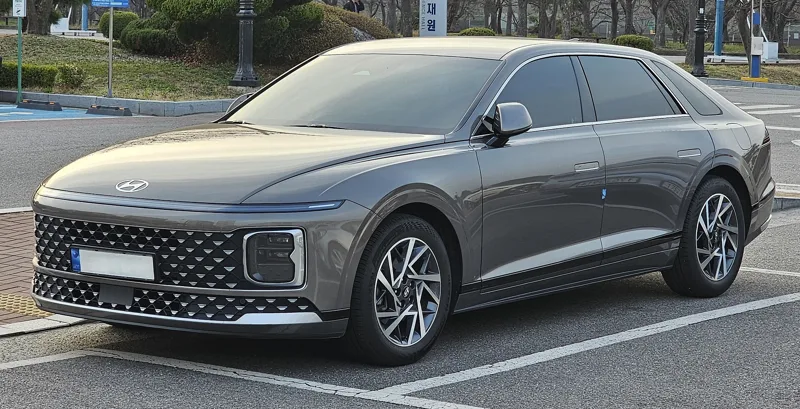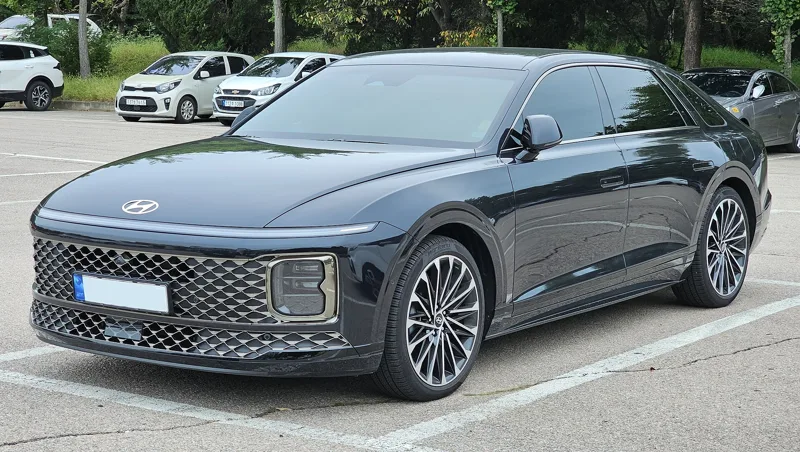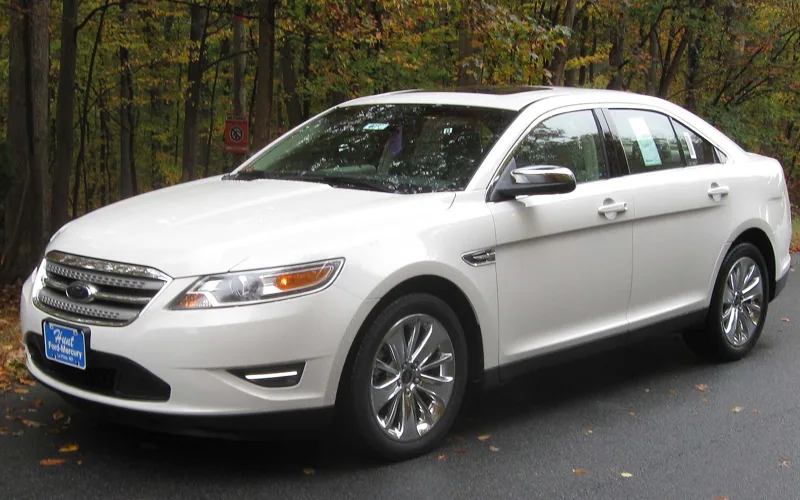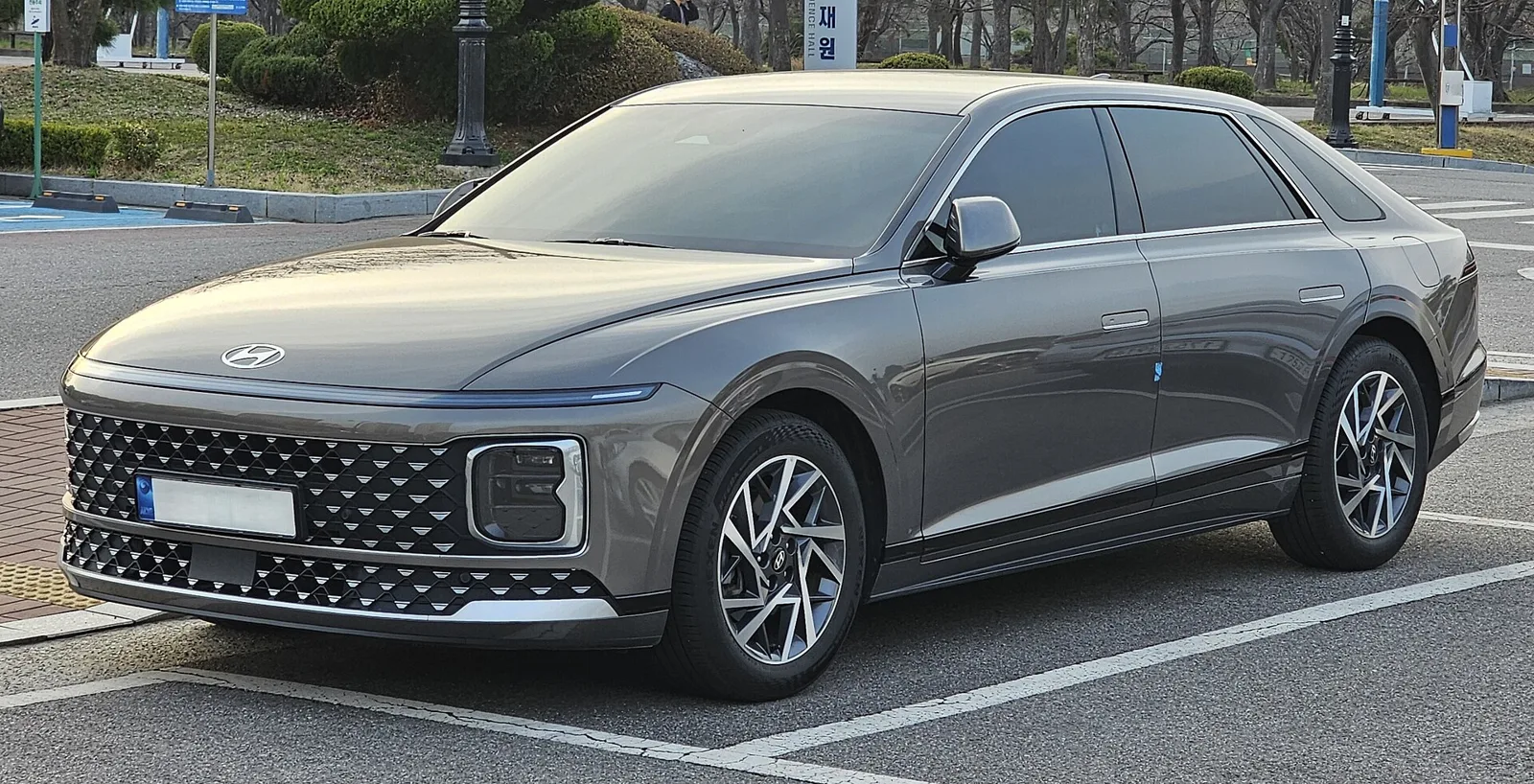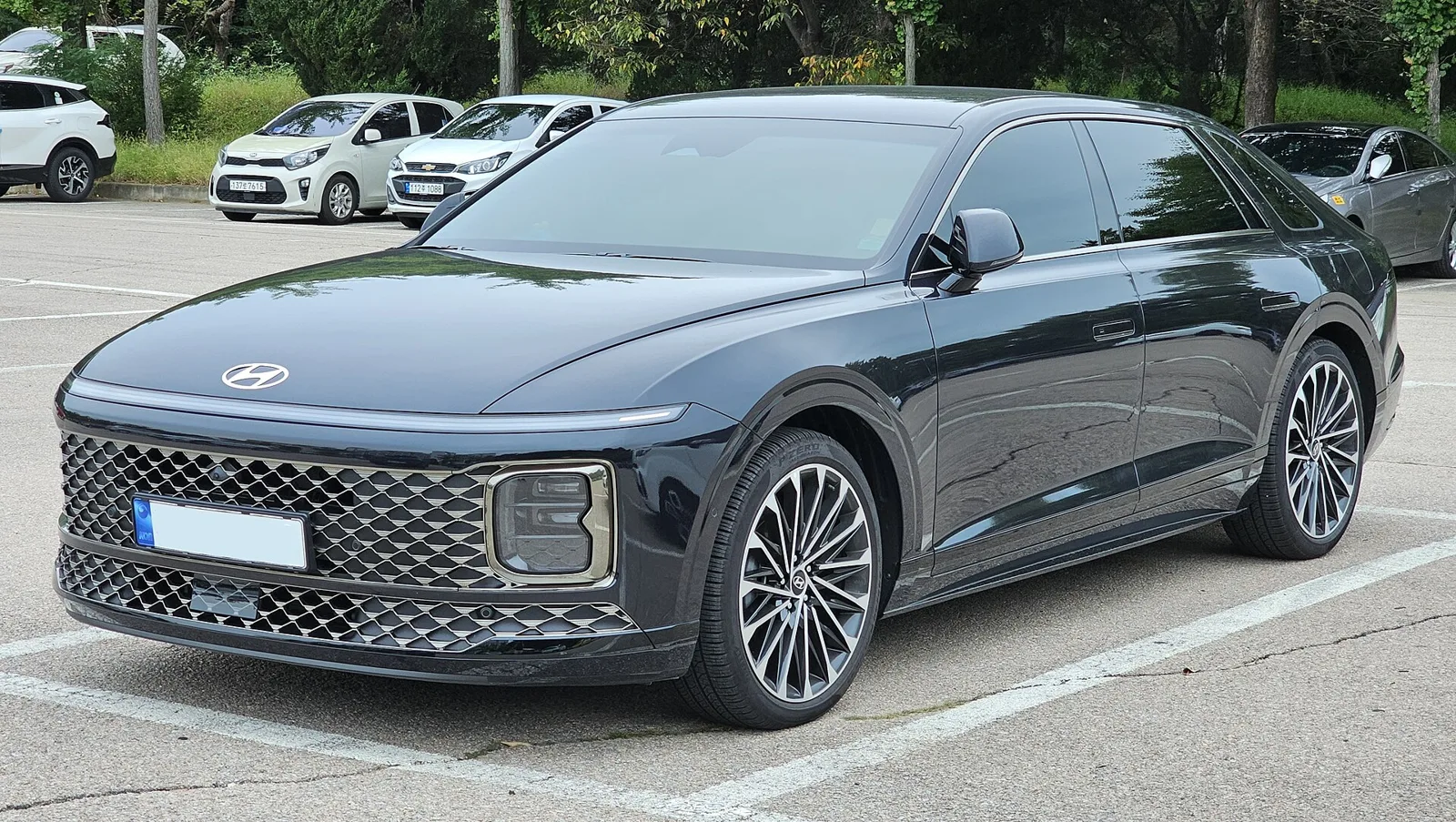
Hyundai's Mitsubishi-based Grandeur and Toyota's Avalon both aimed at the top of their makers' sedan ranges, but they started from very different places.
The Hyundai Grandeur is an executive car that Hyundai has sold since 1986 across seven generations, first as a rebadged Mitsubishi Debonair. The Toyota Avalon is a full-size front-wheel drive sedan that Toyota built from 1994, replacing the rear-drive Cressida in the American market.
The Hyundai Grandeur and the Toyota Avalon were both large front-wheel drive sedans, but they came from different roots. The Grandeur began in 1986 as a rebadged Mitsubishi Debonair and became Korea's best-selling large car, while the Avalon was built to replace Toyota's rear-drive Cressida in the American market.
Where did the Grandeur come from?
The first Grandeur was a Hyundai car built on Mitsubishi engineering and launched in July 1986. Hyundai had wanted its own luxury model, but the Daewoo Royale outsold the Ford Granada Mark II that Hyundai sold, so it took the platform, internal layout and engine from Mitsubishi instead.
Hyundai did the design work, while Mitsubishi handled the internal configuration. The Grandeur was the second front-wheel drive model in Korea after the Hyundai Excel, and it arrived well before the 1988 Seoul Olympics. Its angular styling earned it the nickname Gak-Grandeur, and it succeeded the Granada as Hyundai's flagship.
The early cars came with a 2.0-litre four-cylinder engine and a manual gearbox. A 2.4-litre engine followed in 1987, and a 3.0-litre V6 arrived in 1991, with automatic gearboxes becoming available later. In Japan the same underlying car was sold as the Mitsubishi Debonair V, but it was not competitive against the Toyota Crown and other rivals.
One car began as a licensed Mitsubishi design, the other as Toyota's answer to a rear-drive Cressida.
Where did the Avalon come from?
Toyota introduced the Avalon at the Chicago International Auto Show in February 1994, and it went on sale for the 1995 model year. It was the front-wheel drive successor to the Cressida, an upper-level, mid-size, rear-wheel drive sedan that Toyota dropped from the American market in 1992.
Development began in 1990 under the 299T project code, and design patents were filed in February 1992. The car was based on a stretched XV10 Camry platform and built in the same plant as the Camry, with the first production example arriving in September 1994 at Georgetown, Kentucky.
The name refers to a legendary island from Arthurian legend, which fits Toyota's habit of naming its sedans after crowns and royal themes. The Avalon was also billed as the roomiest six-passenger Japanese car sold in America, with almost 121 cu ft of interior space.
How do the engines compare?
The first Avalon used a 3.0-litre 1MZ-FE V6 rated at 192 hp (140 kW) and 210 lb-ft (285 N-m) of torque. The Grandeur's early engines were a 2.0-litre and a 2.4-litre four, with its first V6 arriving in 1991, so the two makers started from different engine families.
The XG250 of 1999 used a 2.5-litre Delta V6 rated at 165 bhp (123 kW), with a 0-60 mph time of 10.6 seconds. The XG300 had a 3.0-litre Sigma V6 with 181 bhp (135 kW) and reached 60 mph in 9.8 seconds, and the 2002 XG350 pushed the output to 194 hp (145 kW) from 3.5 litres.
Toyota's second-generation Avalon used a 3.0-litre 1MZ-FE V6 with VVT-i, making 210 hp (157 kW) and 220 lb-ft (298 N-m). The third generation switched to the 3.5-litre 2GR-FE V6 with Dual VVT-i, rated at 280 hp (209 kW) with a 0-60 mph time of 6.0 seconds through a five-speed sequential automatic.
The Grandeur TG for the 2006 model year used a 3.8-litre Lambda V6 rated at 265 hp (198 kW), sending power to the front wheels through a five or six-speed automatic. Hyundai claimed 6.0 seconds to 60 mph and a top speed of 155 mph (249 km/h), with four-wheel independent suspension.
| Feature | Hyundai Grandeur | Toyota Avalon |
|---|---|---|
| First launch | July 1986 | February 1994 (Chicago show), 1995 model year |
| Origin | Rebadged Mitsubishi Debonair | Stretched XV10 Camry platform |
| First engine | 2.0-litre SOHC four | 3.0-litre 1MZ-FE V6, 192 hp (140 kW) |
| Later engine | 3.5-litre Sigma V6, 194 hp (145 kW) in 2002 | 3.5-litre 2GR-FE V6, 280 hp (209 kW) in 2005 |
| Drive layout | Front-wheel drive | Front-wheel drive |
| Replaces | Hyundai-built Ford Granada Mark II | Rear-drive Cressida |
| Australia | Fourth generation sold as the Grandeur | Built at Altona, April 2000 to June 2005 |
| North American status | Azera no longer marketed in the US or Canada since 2017 | Discontinued in the United States in 2022 |
How did the Grandeur's generations change?
The first generation was a Mitsubishi-derived car that Hyundai rebadged and sold from 1986. The second generation, built from September 1992 to 1998, was a joint project in which Mitsubishi supplied the powertrain and Hyundai handled the body and trim. Only V6 engines were offered, in 2.0, 2.5, 3.0 and 3.5 litres.
The 3.0-litre and 3.5-litre engines were Mitsubishi designs, because Hyundai could not yet build engines of that size on its own. The second generation was never exported outside Korea, but it became a status symbol used by many politicians and wealthy executives.
The third generation, the XG, arrived in 1998 and was developed entirely by Hyundai. It was marketed as the Hyundai XG in North America and Japan, and the Kia Opirus, sold as the Amanti in North America, shared a modified version of its platform. The XG250, XG300 and XG350 followed in turn. Hyundai developed this generation from the ground up, which allowed the XG to be exported outside South Korea without legal complications.
The fourth generation, the TG, went on sale for the 2006 model year and shares its platform with the Sonata. It is sold as the Azera in North America and as the Grandeur in Europe, except France, as well as in Australia, New Zealand and Japan.
How did the Avalon change across generations?
The second generation arrived in 1999 and grew in almost every dimension except its wheelbase, while staying on the stretched Camry platform. It came in two trims, the basic XL and the upscale XLS, and its built-in 115 V AC inverter was a first for any car.
Optional equipment included JBL audio, Vehicle Stability Control and a front bench seat for six passengers. A mid-cycle facelift for the 2003 model year brought a new grille and modified headlights. In Japan the second generation was sold as the Toyota Pronard from 2000 to 2004, replacing the first-generation car there.
The third generation came for the 2005 model year, unveiled at the January 2005 North American International Auto Show. It dropped the front bench seat option, featured a semi-flat rear floor, and came in four trims: XL, Touring, XLS and Limited.
Toyota reportedly cut development time for this car from 29.5 months to 18 months. It was also the first Toyota to use a single-piece wiper blade and the first to use Dual VVT-i in the US market.
The 2008 model year brought a mild facelift, a six-speed automatic and a built-in remote key. The Limited trim added Smart Key with keyless push-button start and a 12-speaker JBL audio system.
The 2006 model year expanded Vehicle Stability Control to the XL and Touring trims. For the 2007 model year the tyre pressure monitoring system became standard on every trim.
What happened to the Avalon in Australia?
Toyota Australia launched the Avalon in June 2000 as an all-new model with a body identical to the original car. It was built at the Altona plant in Melbourne, where the Camry was also made, and production ceased in mid-2005.
Critics called the car boring, and sales stayed low. Its rivals, the Ford Falcon and Holden Commodore, were rear-wheel drive and offered more body styles and engine options, while the Avalon came only as a front-drive sedan with a 3.0-litre V6 and an automatic.
Many buyers preferred the V6-powered Camry, so Toyota Australia pitched the Avalon at taxi fleets against the Falcon, with a specially developed dual-fuel LPG and petrol engine. The 2003 facelift did not fix the sales problem, and many buyers criticised its new front styling.
Toyota had planned to rename the car the Centaur for Australia. The hospital ship AHS Centaur had been torpedoed and sunk by a Japanese submarine in World War II, so Toyota removed the badges and kept the Avalon name.
The Aurion replaced the Avalon in November 2006 as the XV40. The fourth-generation Grandeur was later sold in Australia under its own name.
How did Korea's flagship role shape the Grandeur?
The Grandeur became Korea's best-selling large car by a considerable margin. Its Mitsubishi-derived engineering and perceived quality helped it become a status symbol, and many politicians and wealthy executives used it. Before the 1988 Seoul Olympics, the Daewoo Royale had dominated the luxury market.
Hyundai used its sponsorship of the 1988 Seoul Olympics to show the Grandeur to executives, dignitaries and other VIPs. The car sat at the core of Hyundai's range, and its status made it a favourite for official use and for senior business figures.
Above the Grandeur sat the Dynasty, introduced in 1996, and the Equus, a flagship luxury sedan introduced in 1999. The Hyundai-Mitsubishi partnership produced the Dynasty and Equus alongside the Mitsubishi Proudia and Dignity.
Hyundai later built all of its own engines, including the 4.6-litre Tau that featured on the Genesis. That shift shows how far the company moved beyond its early reliance on Mitsubishi.
Which market was each car built for?
The Grandeur was built for South Korea and the Middle East, and it was sold as the Azera in North America until 2017. The Avalon held the top spot in Toyota's range across North America, China and the Middle East, and it was also sold in South Korea by 2013.
The Avalon was built at Georgetown, Kentucky, where later generations were also made. On 5 December 2011 Toyota announced that US-built Avalons would be exported to South Korea, shipped from the Port of Hueneme in Oxnard, California.
In Japan the Grandeur's Debonair V counterpart struggled, because the demanding class was already held by the Toyota Crown, Nissan Cedric and Gloria, Mazda Luce and Honda Legend. Toyota did not export the third-generation Avalon to Japan because of poor sales.
Which buyer suits each car?
Neither car has a clear overall winner, so the right choice depends on where the buyer lives. A buyer in Korea or the Middle East could consider the Grandeur family, while a buyer in North America would have chosen the Avalon until it was discontinued there in 2022.
Both cars offered a front-drive V6 with an automatic gearbox, and each had a 3.5-litre engine by the mid-2000s. The Avalon's top trims added Smart Key and a 12-speaker JBL system, while the Grandeur's 2008 navigation system was described as the first with a dual display monitor.
For a buyer who wanted a flagship with a long history in its home market, the Grandeur offered a story that began with a licensed Mitsubishi design and became a status symbol. For one who wanted a Toyota with a clear link to the Camry, the Avalon offered a shared platform and a shared Altona line in Australia. Both cars show how a maker can borrow engineering from a partner and still build a distinct flagship.