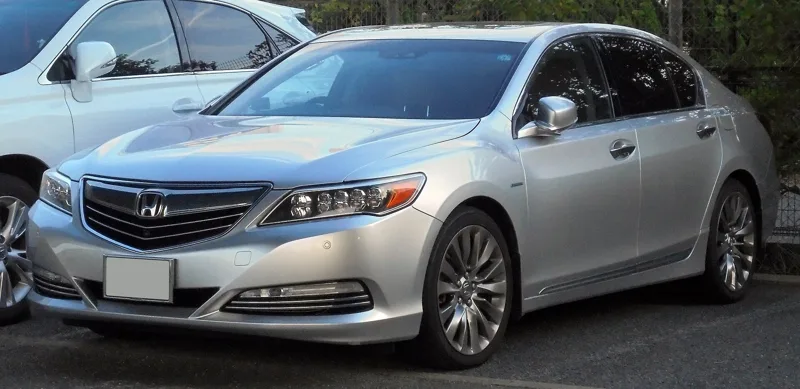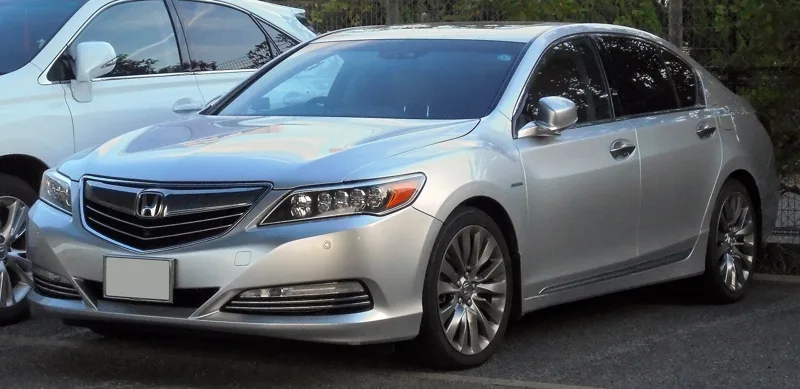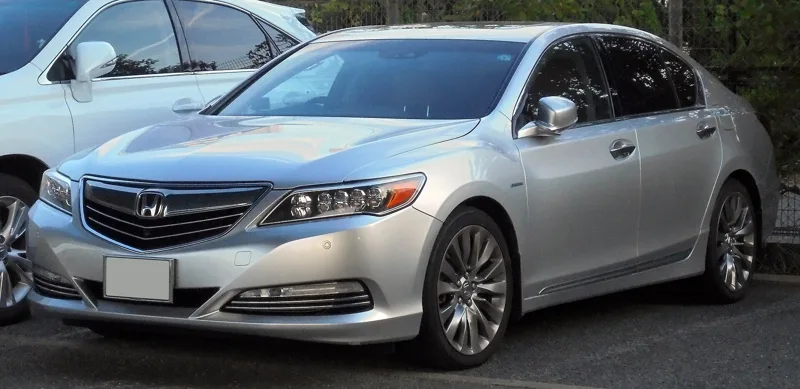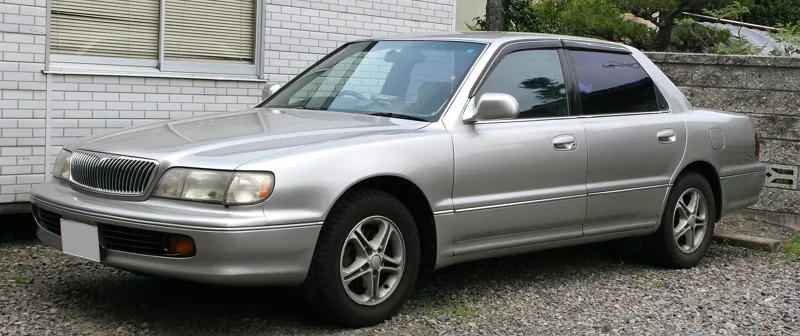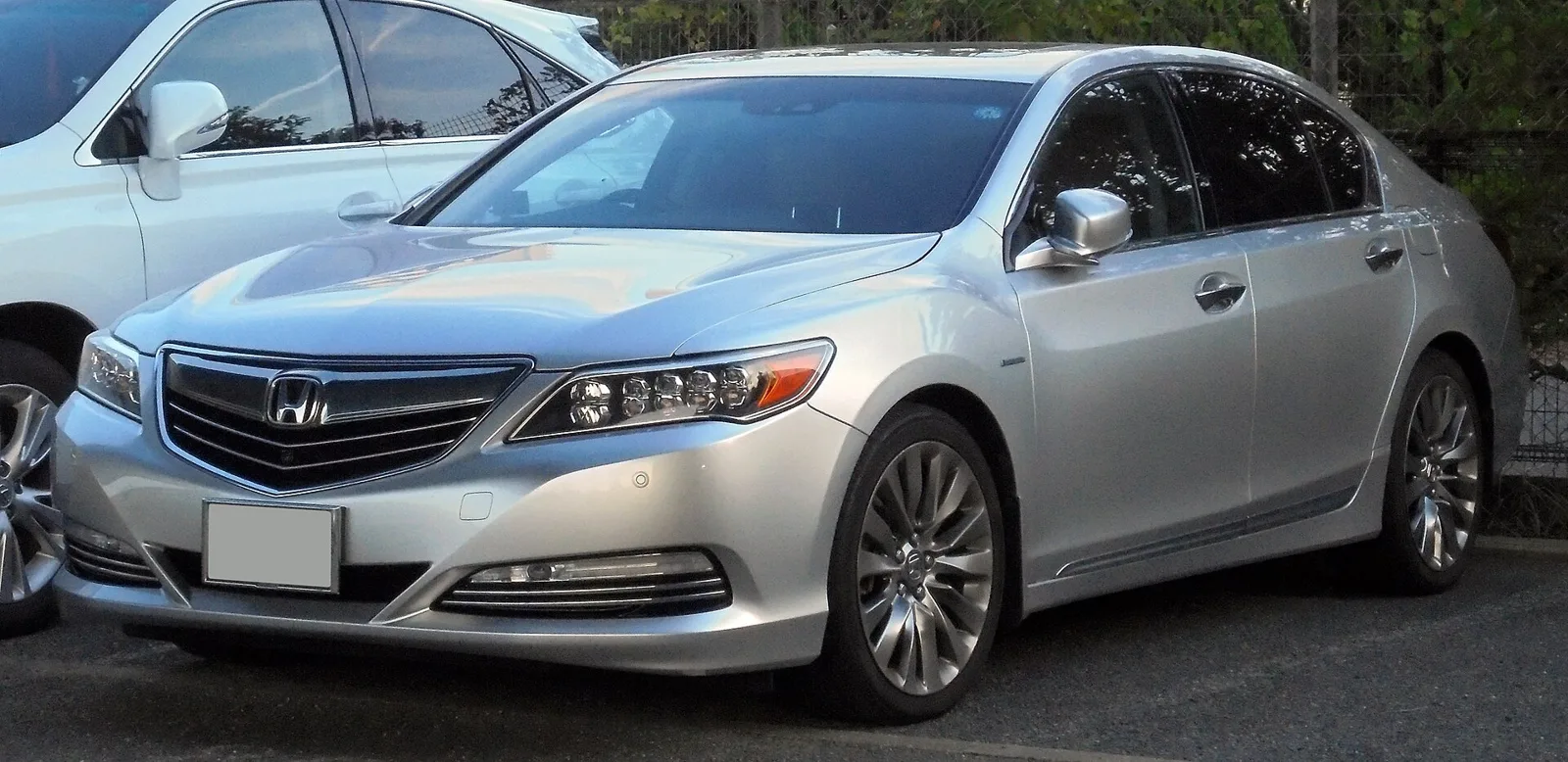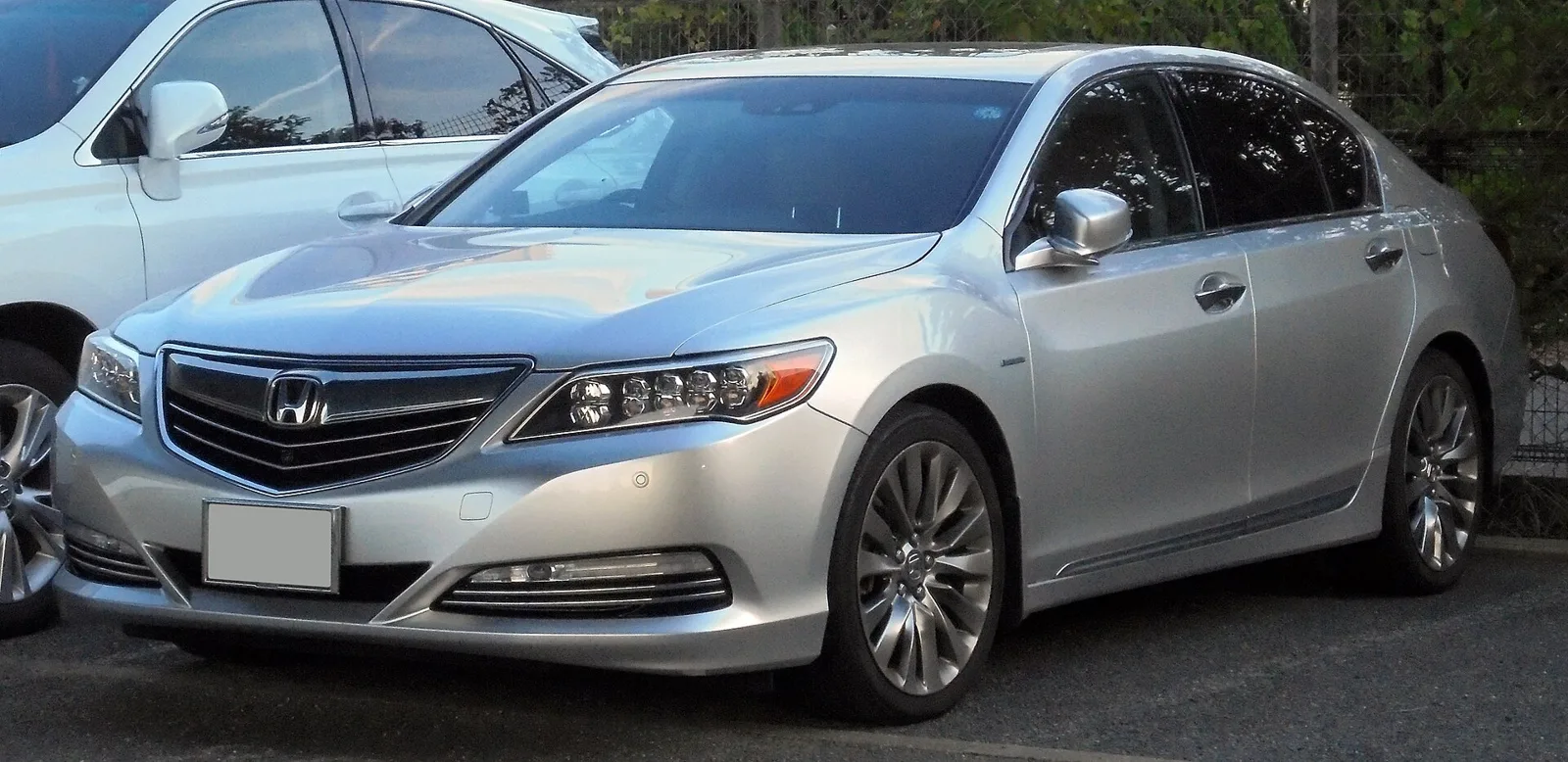
Honda's 1985 V6 flagship and Mitsubishi's long-running Debonair met in the same showrooms, with front drive and V6 power as common ground.
The Honda Legend is a V6 executive car series built from 1985 to 2021, and the Mitsubishi Debonair was a four-door executive sedan built from 1964 to 1999. Both switched to or used front-wheel-drive layouts in the 1980s, and both were aimed at senior buyers in Japan.
The Honda Legend and the Mitsubishi Debonair were both Japanese executive sedans that aimed at the same senior buyer, and they met on the same ground in the late 1980s. The Legend arrived in 1985 as a Honda V6 flagship with front-wheel drive, while the Debonair had been Mitsubishi's flagship since 1964 and switched to front drive in 1986. Put side by side, they show two makers arriving at similar layouts by different routes.
Were the Legend and Debonair rivals?
Yes, though at first the Debonair served a different owner. Its first two generations went mainly to senior people in the Mitsubishi Group, so it worked more as a company car than a showroom luxury model. By 1990 Mitsubishi feared its sedan looked dated beside newer rivals such as the Honda Legend.
That concern led to the Diamante, which was introduced in 1990 as a more modern and sporting executive sedan. The Diamante, also sold as the Sigma, was meant to keep Mitsubishi competitive with the newer luxury sedans, and the Debonair was left to carry the older flagship role for a while longer.
A Honda V6 flagship and a Mitsubishi executive sedan that both ended up with front drive, for very different reasons.
How did the Debonair start out?
The Debonair debuted at the 10th All Japan Motor Show in October 1963, and production began in time for the 1964 Tokyo Summer Olympics. It ranked among the early Japanese luxury sedans, with a 2.0-litre six and dimensions just under the compact-car limits. It was Mitsubishi's biggest sedan to that date.
The first generation kept its shape for a long period, and its mechanicals were updated more often than its body. From 1969 the Debonair was sold through the Galant Shop chain, a separate retail outlet that kept it apart from Mitsubishi's mainstream models. Its first engine was a 1,991 cc six rated at 105 PS (77 kW; 104 hp), peaking at 5,000 rpm, and giving a top speed of 155 km/h (96 mph). From September 1970 the 1,994 cc Saturn 6 lifted power to 130 PS (96 kW; 128 hp), and the car reached 180 km/h (112 mph).
What did the first Debonair look like?
The first Debonair's styling is credited mainly to Hans Bretzner, a former General Motors designer, and its look was influenced by the 1961 Lincoln Continental. Slab sides, squared wheel arches, wraparound front indicators and tapered rear fins gave it a formal, American-inspired presence that suited its executive buyers.
The body changed very little for two decades. Mitsubishi made minor changes through facelifts denoted I through IV, while the mechanicals were updated more often. The car's appearance stayed largely the same from 1964 until 1986, and it was described as dignified when it arrived.
Why did the second Debonair switch to front-wheel drive?
The second generation arrived in July 1986 with a front-wheel-drive layout, which was a cost-effective way to add interior space without spending heavily on a new executive platform. The car shared that layout with the E11 Galant. Mitsubishi also introduced its first V6 engines here, the 2.0-litre 6G71 and the 3.0-litre 6G72 under the Cyclone name.
The front-drive layout allowed more passenger room, and the boot was big enough for two sets of golf clubs. The Debonair was a reasonable success, with 6,230 cars sold in Japan in its first full year in 1987. That figure compares with just 205 units of the old model in 1985.
Honda's Legend came to the same layout earlier, in a sedan that Honda had designed around a front-drive V6 from the start. The Legend's 63/37 front to rear weight split and low, aerodynamic bonnet came from that choice. The Debonair's front-drive conversion was a more practical, cost-driven move, and the two cars took the same route for different reasons.
How did the two cars' engines compare?
The Legend's engines were a 2.0-litre C20A V6 and a 2.5-litre C25A V6, with the larger unit later enlarged to 2.7 litres as the C27A for the 1988 model year. Its Wing Turbo, introduced in October 1988, produced 140 kW (190 PS; 188 bhp) at 6000 rpm, and it ran for just two years.
The Debonair's second-generation range was built around a 3.0-litre V6 rated at 150 PS (110 kW; 148 hp), which could reach 195 km/h (121 mph) before Japan's 180 km/h limiter applied. A supercharged 2.0-litre with 150 PS was added in February 1987. The 2.0-litre engine was later upgraded for more power, and a twin-cam 3.0-litre appeared in 1989 with 200 PS (147 kW; 197 hp).
The Debonair's engines grew steadily in output across the generation. The twin-cam 3.0-litre also became the only engine option for the AMG version, which is covered below. A facelift in May 1991 lifted the 3.0-litre V6 to 210 PS (154 kW; 207 hp). The 24-valve version was quoted at a top speed of 215 km/h (134 mph) by period sources, which put it in the same performance bracket as the Legend's turbo for the time.
Did the Debonair offer limousine and performance versions?
Yes. A full stretch limousine appeared briefly from 1987, built largely by hand by a dealership group in Aichi. The bodies were stretched 600 mm (24 in) between the doors, giving a total length of 5,465 mm (215 in). Unusually for Japan, the company offered a car of that size to buyers who wanted chauffeur-driven prestige.
German tuner AMG worked on a Debonair version that mostly changed the exterior, and it came in a standard length and a longer Debonair V 150 AMG, with 150 mm added to the wheelbase. British apparel maker Aquascutum also designed an interior package for one trim. The Debonair 150 long-wheelbase model followed in July 1993.
A facelift in May 1991 mainly updated the car's passive safety, with light cosmetic changes. Production of the second generation ended by October 1992, as the third generation took over.
How did the Debonair keep its tax bill down?
Japan's road tax rose with engine size, so Mitsubishi held the first Debonair to the 2.0-litre limit. Business use could reduce the liability further, which suited the car's role as a senior company vehicle. The approach kept running costs down for senior users.
The second generation followed the same principle. Cars with the 2.0-litre engine received a shorter and narrower body, achieved with smaller bumpers, so they stayed inside the dimension rules. Honda had faced the same rules with the Legend, and both makers met them by trimming the body rather than the engine.
Side-by-side specifications
| Specification | Honda Legend | Mitsubishi Debonair |
|---|---|---|
| Launch | October 22, 1985, Japan | Show debut October 1963; production 1964 |
| Layout | Front-wheel drive, transverse V6 | First generation rear-drive; second generation (July 1986) front-wheel drive |
| Engines | 2.0-litre C20A V6, 2.5-litre C25A V6, 2.7-litre C27A V6 from 1988 | 2.0-litre and 3.0-litre Cyclone V6 (1986); 24-valve 3.0-litre from 1989 |
| Peak output | 140 kW (190 PS; 188 bhp) at 6000 rpm, Wing Turbo | 150 PS (110 kW; 148 hp) for the 3.0-litre; 200 PS (147 kW; 197 hp) after the 1989 twin-cam |
| Top speed | No figure given | 195 km/h (121 mph) before the Japanese limiter; 215 km/h (134 mph) for the 24-valve |
| Drag coefficient | 0.32 | No figure given |
| Width | 1,695 mm (66.7 in), Japanese 2.0-litre | No figure given for the second generation |
| Body | Pillared sedan | Four-door sedan; long-wheelbase limousine from 1987 |
| Production | 4,409 built in the UK, 1986 to 1988 | 21,703 first-generation cars; 6,230 second-generation sales in Japan in 1987 |
| Export or badge names | Acura Legend in North America | Hyundai Grandeur, badge-engineered in Korea |
| Successor | Second generation in 1990 | Third generation 1992; discontinued in 1999 as the Proudia replaced it |
What changed in the third generation?
The third-generation Debonair arrived in late 1992 and was longer and wider than its predecessors. Its top engine was a 3,496 cc DOHC V6 producing 260 PS (191 kW; 256 hp), and as Mitsubishi's domestic flagship it carried a long list of technology, including four-wheel steering, four-wheel anti-lock brakes, electronically controlled suspension and a GPS-guided navigation system.
The third generation came after the 1990 Diamante had joined the range. Other features included a rear-focused camera, self-closing doors and a Lidar-based distance warning system sold only in Japan. The gearbox was an INVECS five-speed automatic with traction control. A long-wheelbase Debonair 150 joined the range in July 1993, but it was dropped in September 1994 when the lineup was updated.
Which buyer suits each car?
The Legend suits a buyer who wants a Honda V6 with a flat cabin floor and a focus on refinement, and who might seek out the rare Wing Turbo. The Debonair suits a buyer who wants a Japanese executive sedan with a long history, a limousine option and, in later years, a sharper performance edge.
The figures do not settle which is better, so no verdict is given here. The Legend was the more modern design when it launched, while the Debonair's later versions offered more variety in body and engine choice, from limousines to AMG-tuned cars and the long-wheelbase Debonair 150.
What did each car leave behind?
The Legend influenced vehicles from several makers, including the Subaru Legacy, and its Wing Turbo research fed into the VTEC C30A V6 used in the 1990 Honda NSX, a link that ties the car to Honda's sports models. Its owners included Soichiro Honda, founder of Honda, and Ayrton Senna.
In 1990 the Diamante, also sold as the Sigma, gave Mitsubishi a more modern and sporting executive sedan. It arrived during the Japanese asset price bubble that followed the 1985 Plaza Accord, and the Debonair was left as the older flagship.
The Debonair's most unusual legacy is its Korean life. The second generation was badge-engineered as the Hyundai Grandeur, which gave Hyundai a luxury sedan to show foreign dignitaries during the 1988 Seoul Olympics. The Debonair itself ran until 1999, when the Proudia took over the flagship role.