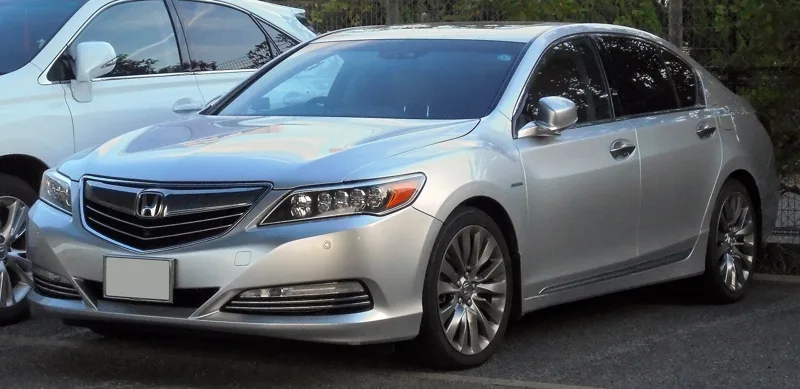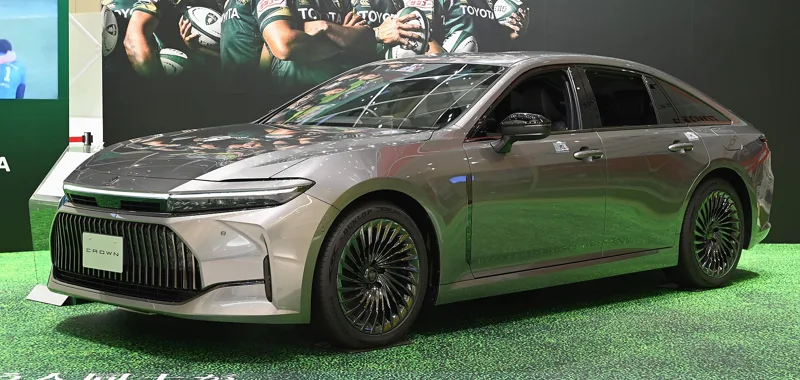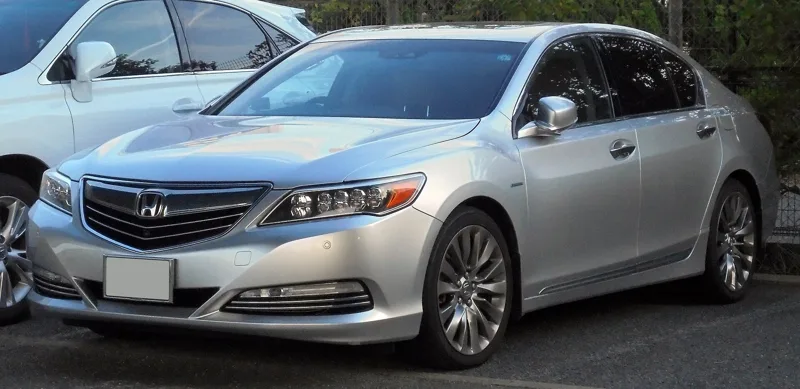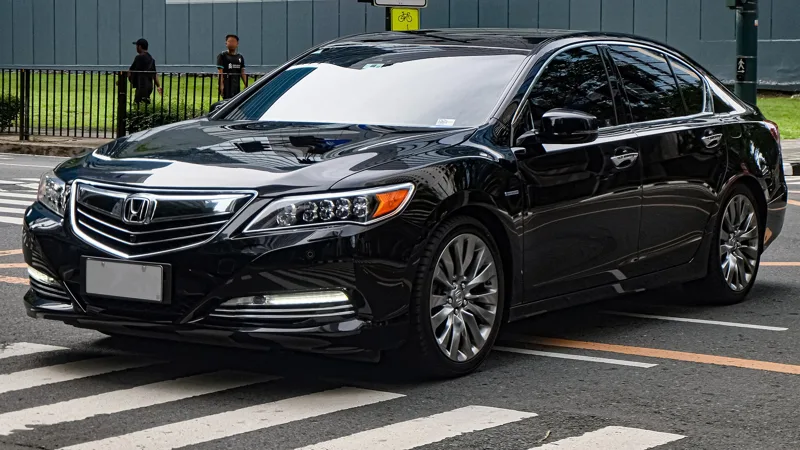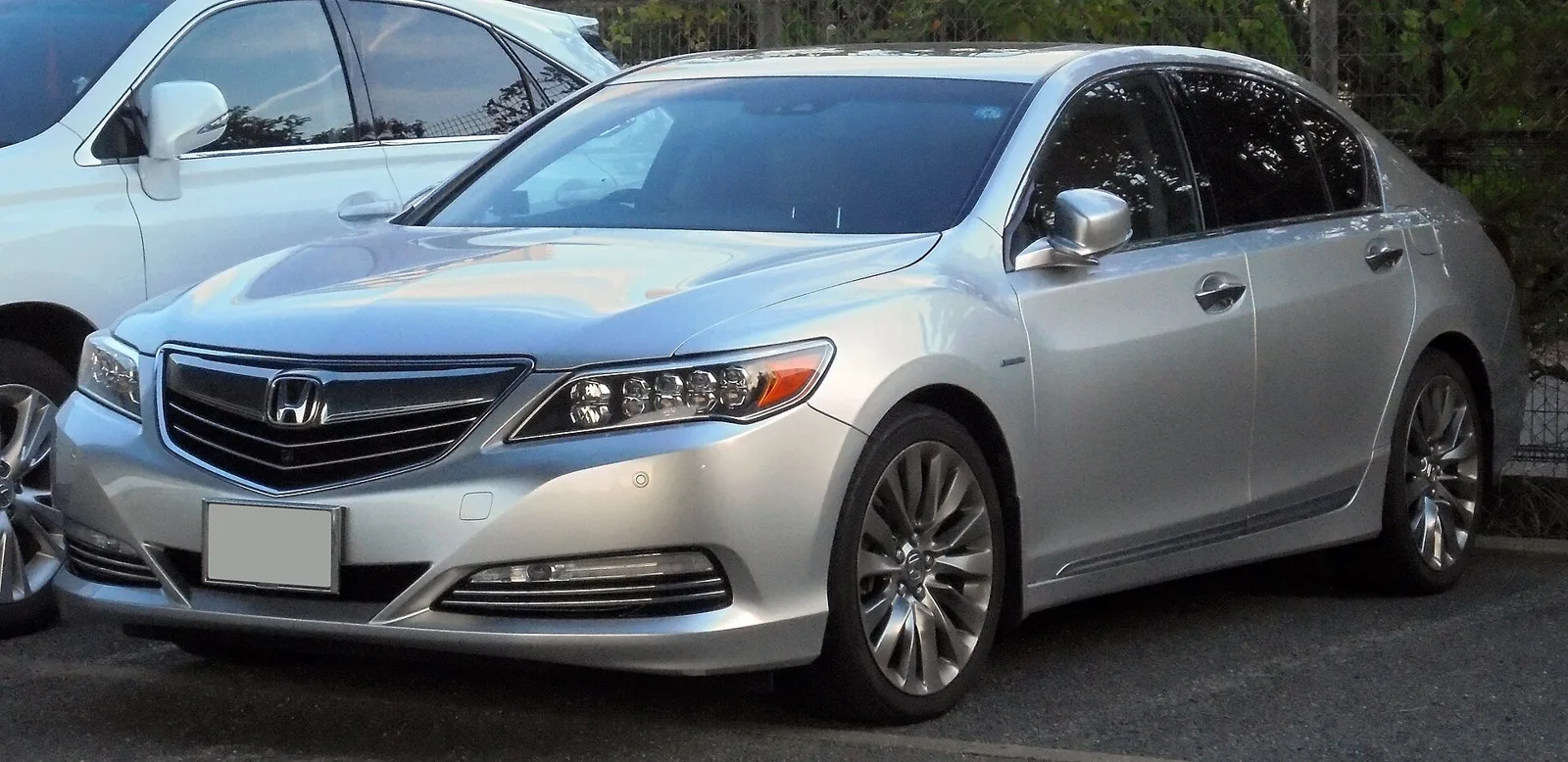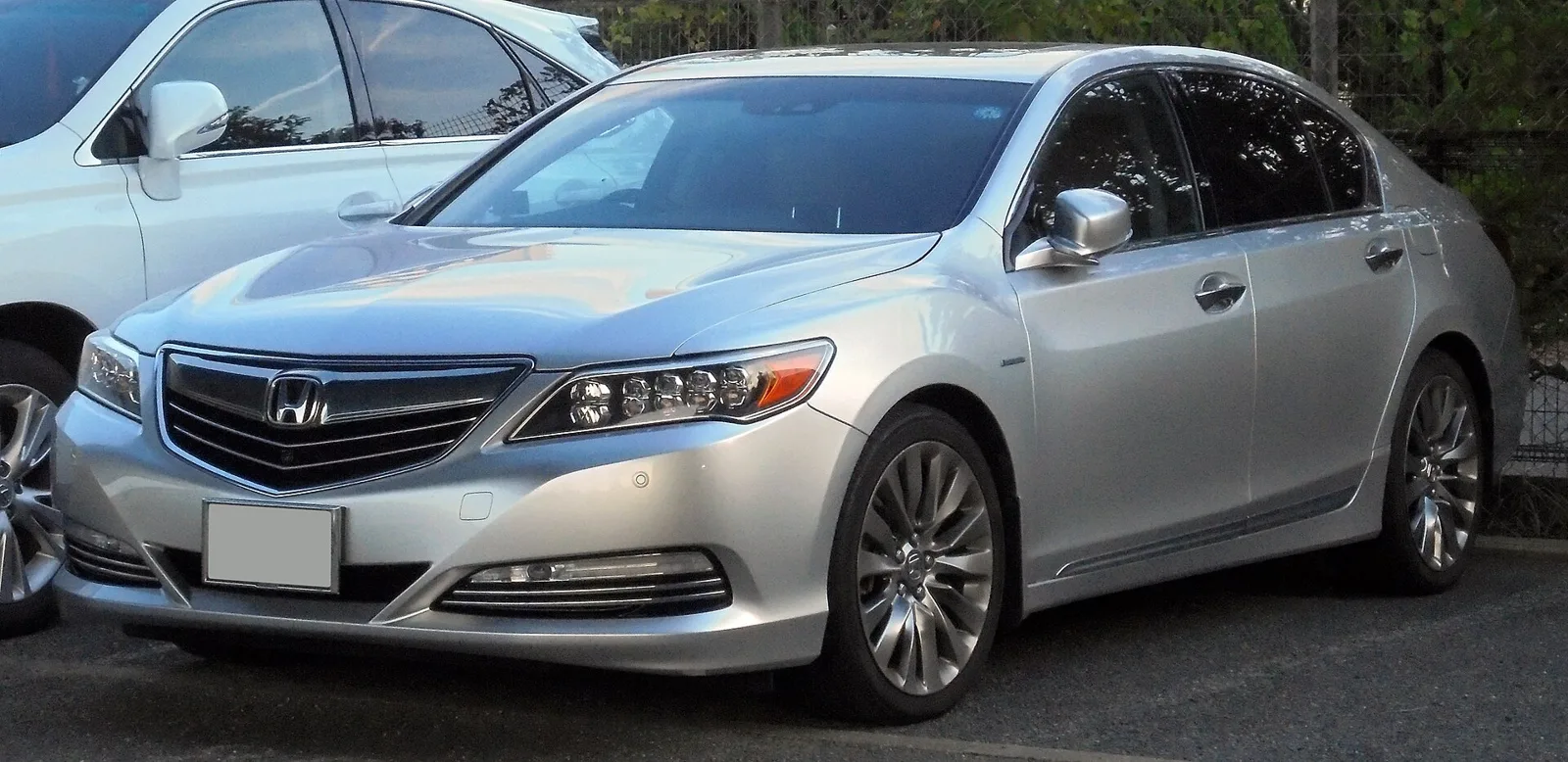
Honda's V6 flagship arrived to take on the Crown, a Toyota executive car that had been the mainstream sedan of Japan since 1955.
The Honda Legend is a V6 executive car series built from 1985 to 2021, while the Toyota Crown is an executive sedan that Toyota has produced in Japan since 1955. The Legend used front-wheel drive and V6 power, while the Crown grew from a 1.5-litre launch engine into one of Japan's longest-running nameplates.
The Honda Legend and the Toyota Crown were rival upmarket sedans in Japan, but they were separated by thirty years of history. The Crown had been Toyota's mainstream executive sedan since its launch in January 1955, while the Legend arrived in October 1985 as a Honda V6 built to take on the established names. Set side by side, the pair show how a long-running nameplate and a newcomer competed for the same buyers.
Were the Legend and Crown rivals?
Yes. The Crown's traditional competitors in Japan and Asia included the Honda Legend, along with the Mazda Luce, Isuzu Bellel and Mitsubishi Debonair. Honda wanted a premium sedan above the Accord for the same wealthy middle-aged buyers who had long bought the Crown.
The Crown had a strong position in Japan. It was popular with government officials, police, companies and taxi operators, which kept it in steady use. The Legend had to win buyers away from that habit, and Honda used front-wheel drive, a V6 and a broad standard equipment list to do it.
A 1985 Honda V6 challenger against a Toyota executive sedan that has been on the road since 1955.
How did the Crown begin?
The Crown was introduced in January 1955 as the Toyopet Crown, sold at Toyota Store dealers. It was intended for private buyers, while a commercial Master sold alongside it as a taxi. Both used a 1.5-litre Type R engine, and the Crown's independent front suspension broke with the leaf-sprung beam axles of earlier Toyotas.
The Crown quickly branched out. A police car version, the Toyota Patrol, received a more powerful 3.4-litre six taken from the BX truck, and Japan's first diesel-engined passenger car, the Crown Diesel, arrived in October 1959 with a 40 PS (29 kW) engine. In October 1960 a larger 1.9-litre 3R engine joined the range, and the 1900 was offered with a two-speed Toyoglide automatic.
How did the Crown fare in the United States?
The Crown was Toyota's first car sent to the United States, with 30 Crown Deluxes shipped in June 1958. The base price was US$2,187, and the steel in the Crown was described as 50% thicker than that of the average American car of the time.
The American story was difficult. Sales were 287 in the first year, rose to 967 in 1959 and then fell to 659 in 1960. The car struggled on faster American highways, and Motor Trend found it so rigid that jacking up one rear wheel lifted the other. By late 1960 the American sales arm had lost $1.42 million. Passenger car imports were then suspended, and the company refocused on the Land Cruiser.
In all, the RS series sold 2,240 units in the United States. Canadian exports ran from 1964 to 1972, Mexican ones from 1959 to 1964, and European exports began in 1964 with a car going to Finland.
How did the Crown's early models develop?
The first generation grew steadily. The Crown Deluxe arrived in December 1955 with a radio and heater fitted, and the RS20 gained hooded headlights in 1958, and the larger 1.9-litre 3R engine joined the range in October 1960. The Crown Diesel followed in October 1959.
Commercial versions were also important. From March 1959 the Masterline name covered an estate wagon and a utility, and the Crown was widely used as a taxi. Toyota showed a six-door Airport Limousine concept at the 1961 Tokyo Motor Show, but it never reached production.
How did Toyota try to win over American buyers?
Toyota Motor Sales USA was set up in October 1957, and the first directly managed dealer opened in February 1958. To show the car's reliability, the company staged a long endurance run across the country, from Los Angeles to New York, but the Toyopet barely reached Las Vegas before the project was called off.
Toyota then tried again. The RS22L and RS32L Crown arrived in July 1960 with the larger 3R engine and changes for high-speed driving, but the American market remained difficult.
The Crown was not an easy design to launch. Toyota worried that the taxi trade might reject the Crown's independent front coil suspension and suicide-type rear doors. The older Super was therefore updated, renamed the Master and sold beside the new car. Once the Crown had proven itself, the Master was dropped in November 1956 after a single year, and its factory space went to the Crown.
What did the Legend bring to the same market?
The Legend launched in Japan with a V6 in 2.0-litre and 2.5-litre forms. It was offered in three Japanese trims, the V6Xi, V6Gi and V6Zi, and the main choice for buyers was between a manual and an automatic gearbox. Much of the luxury equipment came as standard.
The Legend's Japanese body was shorter and narrower than the 2.5-litre models, with a width of 1,695 mm (66.7 in), to keep it inside the size and tax limits. Honda's aim was to compete on equipment and refinement rather than on sheer size.
How did the two cars' engines compare?
The Legend's engines were the 2.0-litre C20A V6 and 2.5-litre C25A V6, with the larger unit enlarged to 2.7 litres as the C27A for the 1988 model year. The Wing Turbo added a variable-geometry turbocharger in October 1988 and produced 140 kW (190 PS; 188 bhp) at 6000 rpm, before its two-year run ended.
The Crown's engines started much smaller, with a 1.5-litre Type R at launch and a 1.9-litre 3R later. Its special-purpose variants were more powerful, and the Patrol used a 3.4-litre six. The 1959 diesel offered 40 PS.
Side-by-side specifications
| Specification | Honda Legend | Toyota Crown |
|---|---|---|
| Launch | October 22, 1985, Japan | January 1955, Japan, as the Toyopet Crown |
| Layout | Front-wheel drive, transverse V6 | Independent front coil suspension and live-axle rear from launch |
| Engines | 2.0-litre C20A V6, 2.5-litre C25A V6, 2.7-litre C27A V6 from 1988 | 1.5-litre Type R at launch; 1.9-litre 3R from 1960; 3.4-litre six in the Patrol |
| Peak output | 140 kW (190 PS; 188 bhp) at 6000 rpm, Wing Turbo | 40 PS (29 kW) in the 1959 Crown Diesel |
| Transmission | Four-speed automatic or five-speed manual | Two-speed Toyoglide automatic on the 1900 from 1960 |
| Drag coefficient | 0.32 | No figure given |
| Width | 1,695 mm (66.7 in), Japanese 2.0-litre | No figure given |
| US market | Sold in North America as the Acura Legend | Exported from June 1958; 2,240 RS series sales in total |
| Production | 4,409 built in the UK, 1986 to 1988 | In production since 1955; sixteenth generation exported to about 40 countries |
| Flagship role | Honda's flagship from launch | Crown Comfort from 1995; Lexus LS took the global flagship role in 1989 |
How did the Crown change in later decades?
The Crown kept its place in Japan through many generations. The Comfort arrived in 1995 as a more affordable alternative, because the price and opulence of the Crown line had risen steadily. The larger Lexus LS became the flagship outside Japan in 1989.
The Crown also continued to find new markets. A small number of fifteenth-generation cars were exported to Indonesia in 2019 for government use, and the sixteenth generation launched in 2022 is sold in roughly 40 countries, with annual volume expected to be around 200,000 units. Toyota also released the Origin, a retro take on the RS series, in November 2000.
How long has the Crown been in production?
The Crown has been produced in Japan since 1955, which makes it the second longest-running Toyota nameplate in Japan after the Land Cruiser. Its long life has been shaped by government, taxi and company use in Japan, a theme that runs through its whole history.
Worldwide it ranks seventh among the longest-running nameplates. Older names include the Mercedes-Benz S-Class from 1954, the Chevrolet Corvette from 1953, the Land Cruiser and Nissan Patrol from 1951, the Volkswagen Transporter from 1950, the Ford F-Series from 1947 and the Chevrolet Suburban from 1935.
Toyota's Discover Crown Spirit Project shows how seriously the company treats that history. Japanese dealers fully restore examples of every Crown generation to show that even the oldest car still works. The Crown name itself had earlier been used by an Imperial limousine made by Chrysler in the early 1950s.
Which buyer suits each car?
The Legend suits a buyer who wants a Honda V6 with a focus on refinement and a rare Wing Turbo model for enthusiasts. The Crown suits a buyer who wants a long-running Toyota with a deep history in government, taxi and company use, and a clear place in Japanese motoring.
The figures do not settle which is better, so no verdict is given here. The Legend offered newer engineering from 1985, while the Crown offered a much longer record of service in Japan. Buyers who wanted the more established name in Japan would find the Crown the safer choice.
What did each car leave behind?
The Legend influenced vehicles from several makers, including the Subaru Legacy, and its Wing Turbo research fed into the VTEC C30A V6 used in the 1990 Honda NSX. The car's influence was felt well beyond Honda's own showrooms. Its owners included Soichiro Honda, founder of Honda, and Ayrton Senna.
The Crown's legacy is its length of service. It has been produced in Japan since 1955, and only the Land Cruiser has a longer run among Toyota's nameplates there. It returned to North America in 2022 with the sixteenth generation.