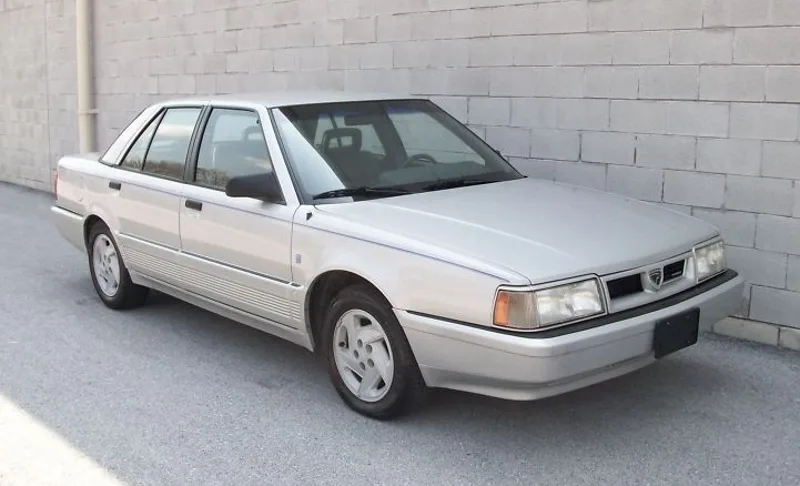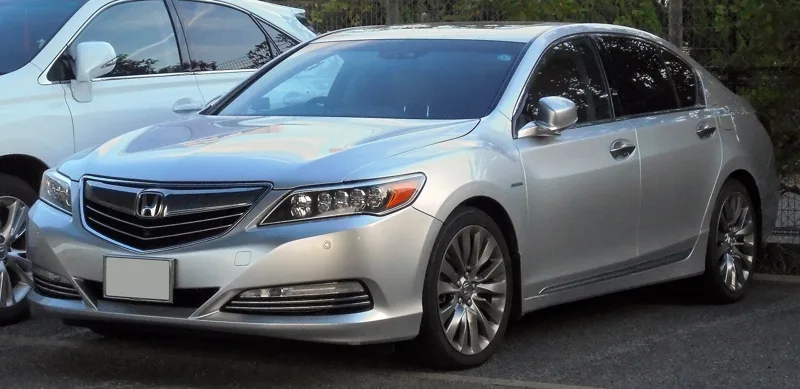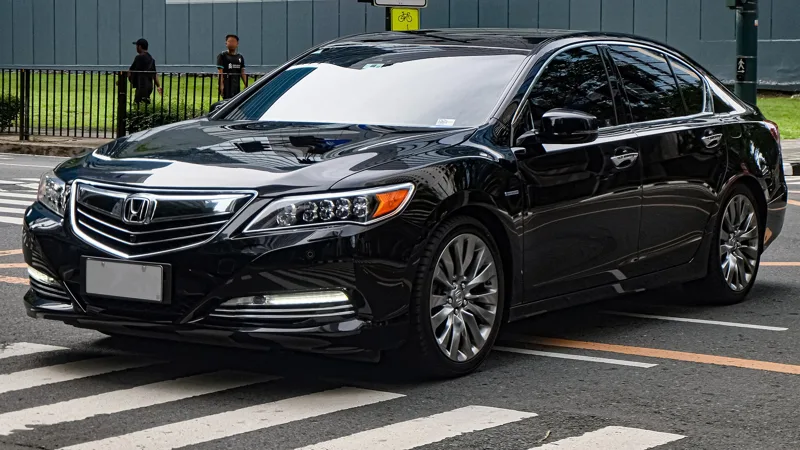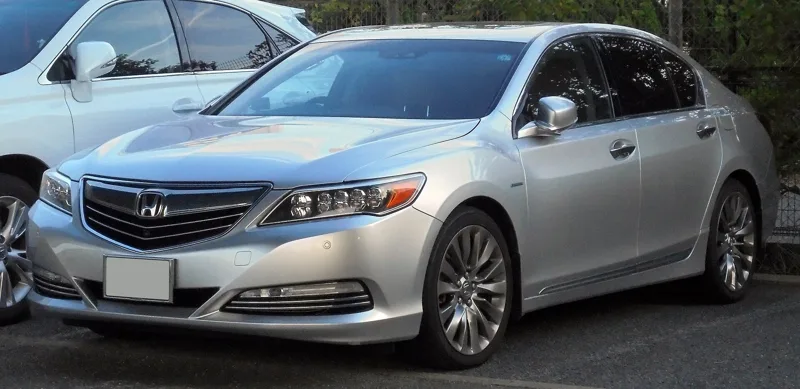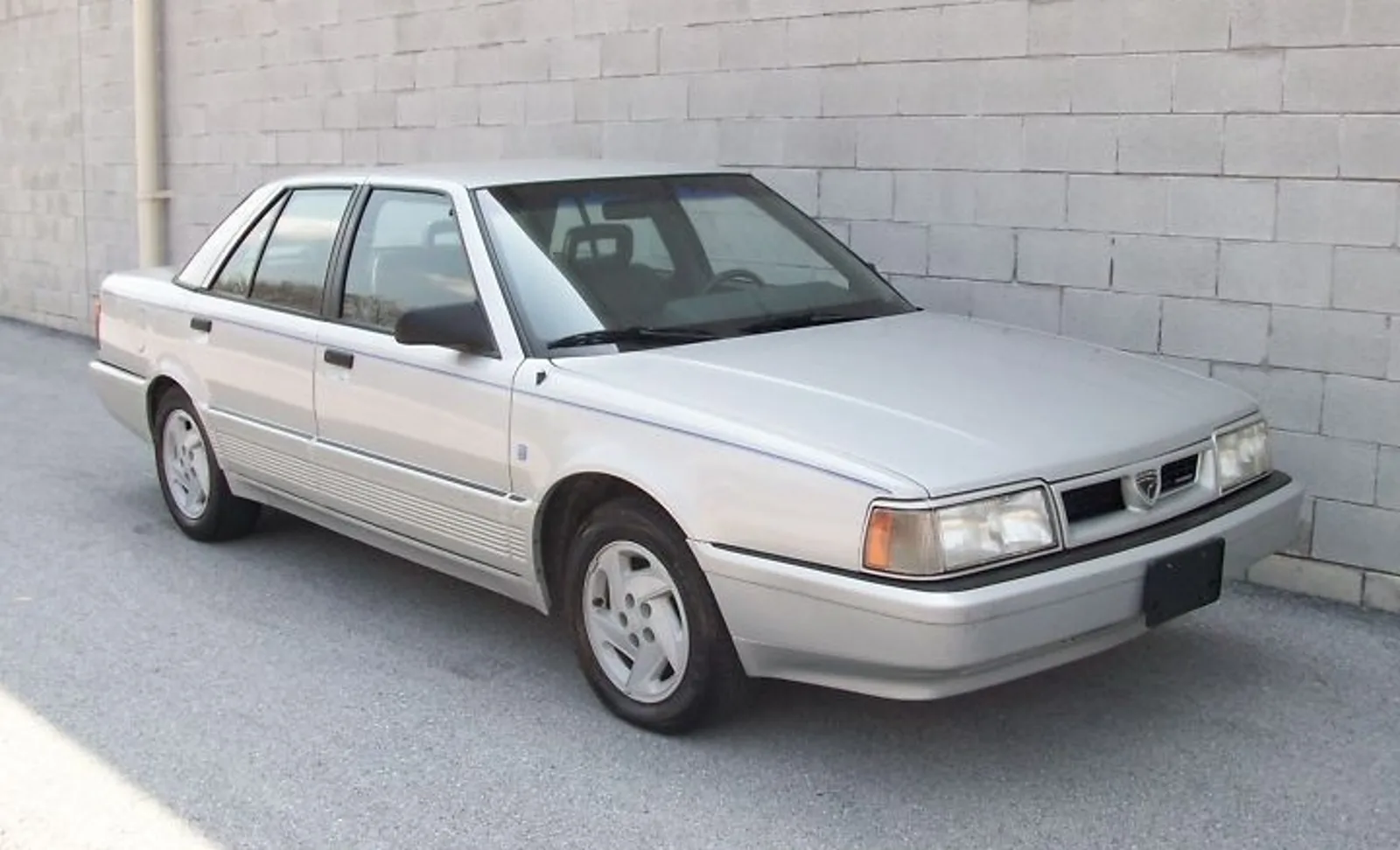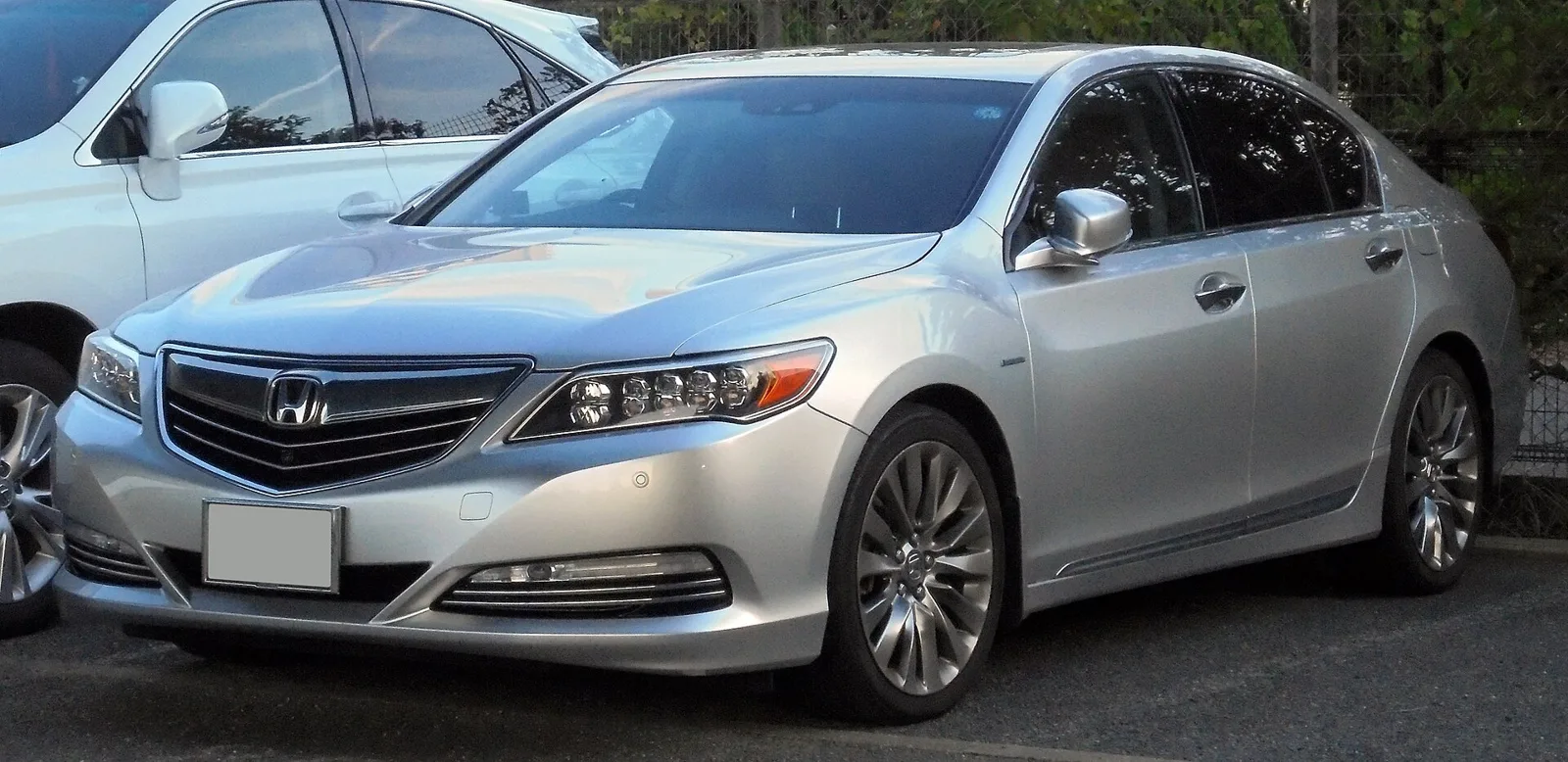
Two Japanese executive cars chasing the same wealthy buyers, one with a Honda V6 and the other with Mazda's piston and Wankel engines.
The Honda Legend is a V6 executive car series built from 1985 to 2021, while the Mazda Luce was a Japanese executive car produced from 1966 to 1991. The Legend used front-wheel drive and V6 power, while the Luce ran piston and rotary engines in a rear-drive family.
The Honda Legend and the Mazda Luce were both upmarket Japanese executive cars, and they competed for the same wealthy, middle-aged buyer. The Legend arrived in 1985 as a front-wheel-drive V6 luxury car, while the Luce had been Mazda's large executive sedan since 1966. Set side by side, the two cars show the difference between Honda's bold layout and Mazda's willingness to try piston and rotary engines in one family.
Why did Honda target the Luce's buyers?
Honda wanted a premium sedan above the Accord, aimed at the wealthy customers who had long bought the Toyota Crown, the Mazda Luce and the Nissan Cedric and Gloria. Honda had already tried a luxury Accord, the Vigor, in 1981, but it decided it needed a larger and more exclusive car with dimensions close to those rivals.
The Legend was therefore pitched directly at the Luce's customer base. Honda's answer was a sedan with a richer equipment list and fewer options, where most luxury items came as standard and the only real choice was between manual and automatic transmission.
A Honda front-drive V6 luxury car against a Mazda family that went from piston sedans to Wankel-powered flagships.
How did the Luce grow into a flagship?
The Luce began as a front-engined, rear-drive four-door sedan. Mazda's production version started in July 1966 and was launched in August, with a higher roofline than the 1965 show car. Its first engine was a 1500 SOHC unit rated at 78 PS (57 kW), with the peak at 5500 rpm.
Later models were fitted with more luxurious equipment and interiors, and the Luce became Mazda's flagship. It was still built to fit Japanese dimension rules, and it was never Mazda's largest sedan in Japan, a title that went to the short-lived Roadpacer. The name Luce comes from the Italian word for light.
An estate version followed in April 1967, sharing the sedan's engine, and an automatic transmission was available, which was unusual for its class. Mazda also considered assembling the Luce in South Africa in 1967, but it dropped the plan in favour of the 1200 Familia and compact pickup trucks.
Which Luce engines did buyers have?
The Luce's early engines grew steadily. A twin-carburettor 1500 SS arrived in June 1967 rated at 86 PS (63 kW), and a larger 1800 followed in December 1968 with 104 PS (76 kW) peaking at 5500 rpm.
The 1800 was a stroked 1.8-litre unit of 1796 cc, and its torque of 152 N-m (112 lb-ft) arrived at 2500 rpm. To fit the taller engine, the bonnet carried a slight bump with an air inlet on its leading edge. Abroad the car was sold as the Mazda 1800, and in Australia the Mark I went out as the Mazda 1500 and 1800.
The Honda Legend's engines were different in kind. Its V6 units were the 2.0-litre C20A and the 2.5-litre C25A in Japan, with the larger engine later enlarged to 2.7 litres as the C27A for the 1988 model year. Honda's top engine, the Wing Turbo, produced 140 kW (190 PS; 188 bhp) at 6000 rpm when it arrived in October 1988.
Could the Luce's rotary cars rival the Legend?
Mazda's rotary cars were a different proposition. The R130 arrived in October 1969 as a front-wheel-drive two-door coupe with a 1.3-litre 13A rotary, producing 126 PS (93 kW; 124 hp). It was styled by Giugiaro, then working for Bertone, and it was similar to the NSU Ro 80. Less than 1,000 were built, so it stays very rare.
The second-generation LA2 Luce, launched in November 1972, was a rotary model that became the RX-4 in most export markets. It was a larger car than the RX-2 and RX-3, with a 13B engine producing 135 PS (99 kW), or 125 PS (92 kW) for export. In the United States the RX-4 was sold from 1974 to 1978, with a base price of $4295.
How did the Luce fare in the United States?
Mazda entered America in 1970 with the small R100 and expanded in 1971, including the 1800 sedan. The 1800 was a flop there. Priced at US$2,280, it offered 98 hp (99 PS; 73 kW), and with the automatic it took 17.5 seconds to reach 0 to 60 mph. The car then disappeared from American showrooms for the 1972 model year.
The rotary cars fared better. The RX-4 was sold in the United States from 1974 to 1978, with a 13B producing 110 hp (82 kW) and a base price of $4295. Road and Track was impressed by its fuel economy and price against the RX-3, and the magazine named it to its Ten Best list for sports sedans in 1975.
Road and Track tested the RX-4 wagon in a 1974 comparison of six wagons, which suggests the model was regarded as a serious contender. The European 1800 was far livelier, reaching 0 to 60 mph in 13.4 seconds with a four-speed manual, a result the Wikipedia account partly blames on higher-octane European fuel.
The LA2 wagon of the second generation was offered with a 13B rotary alongside its piston engines, and and in Japan the wagon also served as a van.
Mazda's piston engines kept evolving too. A 1975 update gave the Luce and 929 a further option, a 1970 cc engine rated at 103 PS (76 kW), which offered more performance without a larger body.
How did the two cars compare on engineering?
The Legend's most important engineering choice was its front-wheel-drive layout, which gave it a 63/37 front to rear weight split and a low, aerodynamic bonnet. Its suspension used double wishbones at the front and an RF strut layout at the rear, later upgraded to double wishbones from the 1988 model year.
The Luce's suspension was more traditional for a rear-wheel-drive car of its era. The RX-4 used a strut-type front suspension with a live rear axle, with discs at the front and drums at the rear. Its rotary engine was the key technical feature.
Honda's Legend also carried a list of firsts that the Luce never matched. Its equipment included a driver side airbag, anti-lock brakes, seat belt pre-tensioners, and traction control, which was the first to appear on a front-wheel-drive car.
How did the two cars perform?
The Legend's engine work drew on Honda's Formula One experience, including the RA271 racer that Honda ran in 1964. The Wing Turbo was the headline performance model, with a variable-geometry turbocharger fitted to the 2.0-litre engine. Honda fitted it to improve fuel economy and cut emissions, and it ran for just two years before the second-generation Legend arrived in 1990.
The Luce's US-market 1800 was not a strong performer. With an automatic gearbox it reached 0 to 60 mph in 17.5 seconds, and the car was dropped from the American range in 1972. In Europe the same engine ran 0 to 60 mph in 13.4 seconds, which was put down partly to a four-speed manual and higher-octane fuel.
Side-by-side specifications
| Specification | Honda Legend | Mazda Luce |
|---|---|---|
| Launch | October 22, 1985, Japan | Production from July 1966; launched August 1966 |
| Layout | Front-wheel drive, transverse V6 | Front-engine, rear-wheel drive (most models); R130 was front-wheel drive |
| Engines | 2.0-litre C20A V6, 2.5-litre C25A V6, 2.7-litre C27A V6 from 1988 | 1500 SOHC and 1800 piston engines, 13A and 13B rotaries, 2.2-litre diesel |
| Peak output | 140 kW (190 PS; 188 bhp) at 6000 rpm, Wing Turbo | 104 PS (76 kW) at 5500 rpm, 1800; 135 PS (99 kW) for the RX-4 13B |
| Drag coefficient | 0.32 | No figure given |
| Width | 1,695 mm (66.7 in), Japanese 2.0-litre | No figure given |
| Body | Pillared sedan | Four-door sedan, hardtop coupe, station wagon |
| Production | 4,409 built in the UK, 1986 to 1988 | 39,401 units of the 1800 sedan, 1968 to 1973 |
| Export names | Acura Legend in North America | Mazda 1500 and 1800 in Australia; 929 in export markets |
| Successor | Second generation in 1990 | Replaced in 1991 by the Sentia |
Which buyer suits each car?
The Legend suits a buyer who wants a front-drive V6 with a focus on refinement and a rare turbo model for enthusiasts. The Luce suits a buyer who likes variety, from a piston four-door sedan to a Wankel-powered coupe or RX-4. The range also ran to hardtop coupes, wagons and vans, which the Legend never offered in the same way.
The figures do not settle which is better, so no verdict is given here, and the comparison offers no detail on running costs or resale for either car. Buyers who valued the Legend's standard equipment and its Honda engineering would be drawn to it, while those who liked Mazda's rotary engines and the RX-4's personal luxury image would be drawn to the Luce family.
What did the Luce leave behind?
The 929 name came about because the Luce's engine sizes were spreading across Mazda's range, and a naming system based on displacement would soon have become confusing. The export name therefore carried the car abroad for the rest of its life, even as the domestic model changed.
The LA4 Luce Legato, introduced in October 1977, was never sold in North America. Japanese authorities would not allow the Legato name, so the car was officially sold as the Luce, although the L suffix stayed on export models, which were sold as the 929L.
The Luce's legacy is a long line of Mazda sedans. It ran from 1966 to 1991 and was exported as the Mazda 929 from 1973 onward, so its name carried into export markets well after its Japanese production had ended.
The Legend's legacy is different. It inspired vehicles from several makers, including the Subaru Legacy, and its Wing Turbo research fed into the VTEC C30A V6 used in the 1990 Honda NSX. Its first-generation owners included Soichiro Honda, founder of Honda, and Ayrton Senna. The V6Xi also served as the pace car at the Suzuka Circuit in 1986.