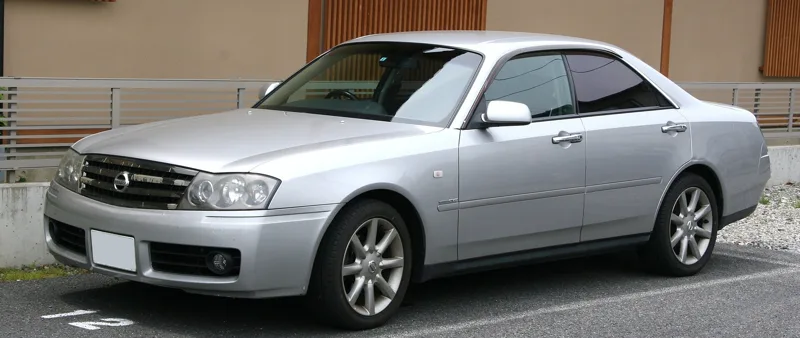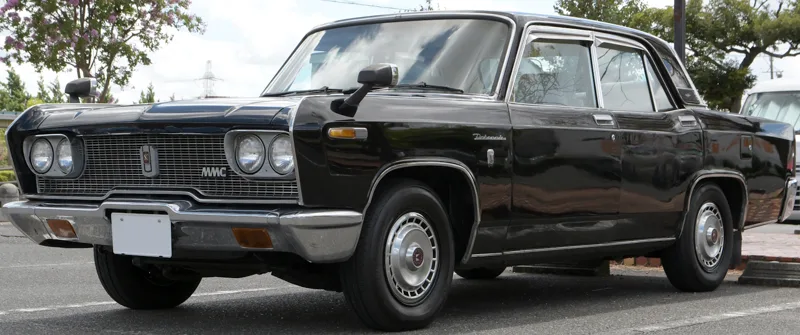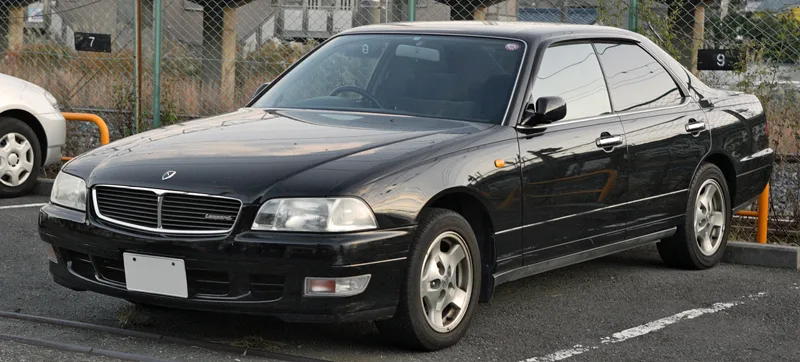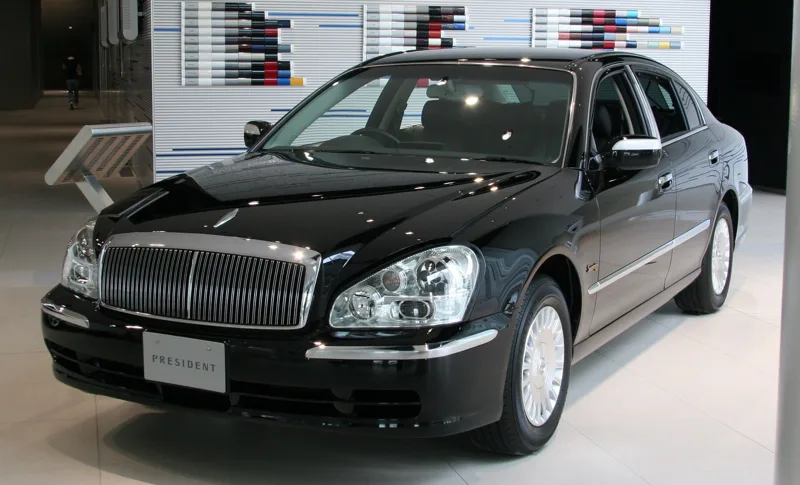
Born in 1960 to compete with the Prince Skyline and Gloria, the Cedric became Toyota Crown's main rival, then spent its last decades as a taxi and fleet favourite.
The Nissan Cedric was a large Japanese car built from 1960 to 2015. It began as a Nissan-badged sedan with a monocoque body, competed with Toyota's Crown through ten generations, and is best remembered in Japan and across Asia as a taxi and fleet car.
For most of its long life the Nissan Cedric was Toyota's chief rival in Japan. In its final decades it became a familiar sight on taxi ranks and in fleet pools across Asia.
Where did the Cedric come from?
The Cedric was developed to offer upscale transport against the Prince Skyline and Gloria. It was named after the main character in Frances Hodgson Burnett's Little Lord Fauntleroy, a choice made by Nissan's chief executive, Katsuji Kawamata. The first generation replaced the Austin A50 that Nissan had been building under licence from the Austin Motor Company.
The Cedric arrived in March 1960 as the 30 series. It was sold only through Nissan Cedric Store dealers in Japan, and it was the first product labelled as a Nissan, although its mechanicals were shared with Datsun products of the period. The car set the tone for the marque's luxury cars for years to come.
The Prince Skyline and Gloria were the early rivals. After Nissan merged with Prince in August 1966, the Skyline became a sports sedan and coupe while the Gloria turned into a sporty version of the Cedric, with the same styling but a different grille and light clusters.
Born as Nissan's upmarket rival to the Prince Skyline, the Cedric spent its later decades as a fleet and taxi favourite.
What were the first Cedric models like?
The 30 series included the Cedric 1500 DeLuxe and Standard, the 1900 Deluxe and Custom, a van and an eight-seat wagon. The 1.9 L (1,883 cc) H-series, with 88 PS (65 kW), was an option, while the Standard's 1.5 L (1,488 cc) G-series straight-four made 71 PS (52 kW).
The car introduced Nissan's first monocoque body and a wrap-around windshield. Its two stacked headlights on either side of a large grille were inspired by a Japanese commuter train of the late 1950s, and the look was used to suggest size and luxury.
Between 1962 and 1965 the H31 series carried the design forward with horizontally mounted quad headlights. A 2.0 L diesel from Nissan Diesel arrived in June 1964, and a three-speed automatic from Borg Warner was offered from July 1964. The car was sold in the United States as a Nissan around 1963 and 1965, though it did not sell well there.
The Cedric Special H50 ran from 1963 to 1965 as a long-wheelbase version with a 2.8-litre K-series straight-six producing 118 hp (88 kW). It competed with the Toyota Crown, Isuzu Bellel, Mitsubishi Debonair and Prince Gloria. Japanese buyers paid higher annual road tax on the larger engine, which added to its exclusivity.
The Cedric Custom served as a torch carrier for the 1964 Summer Olympics held in Tokyo.
How did the P130 change the Cedric?
The P130 introduced Nissan's first OHC engine, the L20, on an all-new dedicated platform with Pininfarina bodywork. It came as a four-door sedan, a five-door wagon and a van, and its engines ranged from the 92 PS (68 kW) H20 to the 130 PS (96 kW) L20 twin-carburettor unit.
In August 1966 Nissan and Prince Motor Company merged, and from 1967 the car was sold in export markets as the Datsun 2000, 2300 and 2400. Nissan built a police car with the Y40 V8, the only V8 the Cedric ever received. The range was unusually varied, with 68 model variations in 1967.
What did the 230 series bring?
The 230 series arrived in 1971 and was built at the Tochigi factory. Front disc brakes were added to some versions, and the car gained the coke-bottle appearance that spread internationally during the 1970s. A two-door coupe joined the range as a personal luxury car, inspired by the Toyota Crown hardtop coupe of 1970.
In August 1972 a four-door hardtop with no B-pillar between the front and rear side windows joined the options list. Its ambient fluorescent lamp and interior dome light were a step up for private buyers.
The 2.4-litre engine was replaced by a 2.6-litre unit to meet emission regulations from April 1973. Fuel-injected cars carried a NAPS badge on the boot lid. In South Africa the car was sold as the Datsun 260C and later, in late 1975, as the Datsun 300C.
Why was the 330 series important?
The 330 series ran from 1975 to 1979 in sedan, wagon, coupe and pillarless hardtop forms. It was sold as the Gloria in Japan, its Brougham top trim debuted in June 1977, and by October 1977 Nissan had produced one million Cedrics.
Emission rules changed the engines in June 1976 under Nissan's NAPS system, and halogen headlights and the fashionable F-series hardtop followed. The fuel-injected 2.8-litre six in the Brougham produced 145 PS (107 kW; 143 hp), against 140 PS (103 kW; 138 hp) for the carburettor version.
The Datsun 220C Diesel was a common taxi in Singapore and Hong Kong, with a front bench seat and column-shifted manual gearbox. Nissan offered column-shifted manuals with three or four speeds and floor-shifted manuals with four or five.
How far did the 430 series go?
The 430 series of 1979 to 1983 was styled with Pininfarina's help and had a six-light design with a small window in the C-pillar. It was the first Cedric with available four-wheel disc brakes, although the cheapest versions kept drums all round. The rear suspension moved to a rigid link coil system.
The turbocharged 2.0-litre L20ET arrived in December 1979, a first for the Japanese market. The naturally aspirated 280E was another first, with electronic fuel injection and the ECCS engine management system. Those firsts helped the Cedric and Gloria win Japan's Car of the Year for 1979.
The 2.8-litre LD28 diesel was also a first for Japan, a quiet six-cylinder that found many private buyers. The coupe was replaced by the Skyline-based Nissan Leopard, and a four-door convertible was made in small numbers for ceremonial government use.
What was the Y30 and the 300C?
The Y30 went on sale in June 1983 with a VG series V6, part of the PLASMA engine family whose design was inspired by Alfa Romeo, with which Nissan had a partnership at the time. It came as a four-door hardtop, a sedan and a station wagon, and the top hardtop trim was the V30 Turbo Brougham VIP.
From 1984 export markets sold the Y30 as the Nissan 300C, with a 3.0-litre V6 and a choice of five-speed manual or four-speed automatic. The sedan had a five-link rear suspension, and the wagon was aimed at Volvo and Mercedes-Benz estate cars.
The June 1985 facelift added a self-levelling rear suspension and the Super Sonic Suspension. A sonar module under the front bumper scanned the road surface and adjusted the struts through actuators, and a switch offered Auto, Soft, Medium and Hard settings. It was fitted only to the V30 Turbo Brougham VIP sedans and hardtops.
What changed with the Y31?
The Y31 was built from June 1987 through 1991 for private buyers, in sedan or hardtop form. It was one of Nissan's most popular series, helped by a robust Japanese economy before the asset price bubble deflated in 1991. Its styling was more rounded under the Project 901 programme, with extra attention to luxury.
The sporty Gran Turismo version had short bumpers with a body kit and the 2.0-litre VG20DET turbo. In June 1989 the Y31 introduced the world's first full-range electronically controlled five-speed automatic, the Jatco 5R01, and the turbo's power rose from 185 to 210 PS (136 to 154 kW) with an intercooler.
A fleet sedan for taxis and rental companies arrived in 1991. The fleet model ended production in 2014 after its last update in June 2012, and the Cedric name stayed on it for commercial users until the end.
What set the Y32 apart?
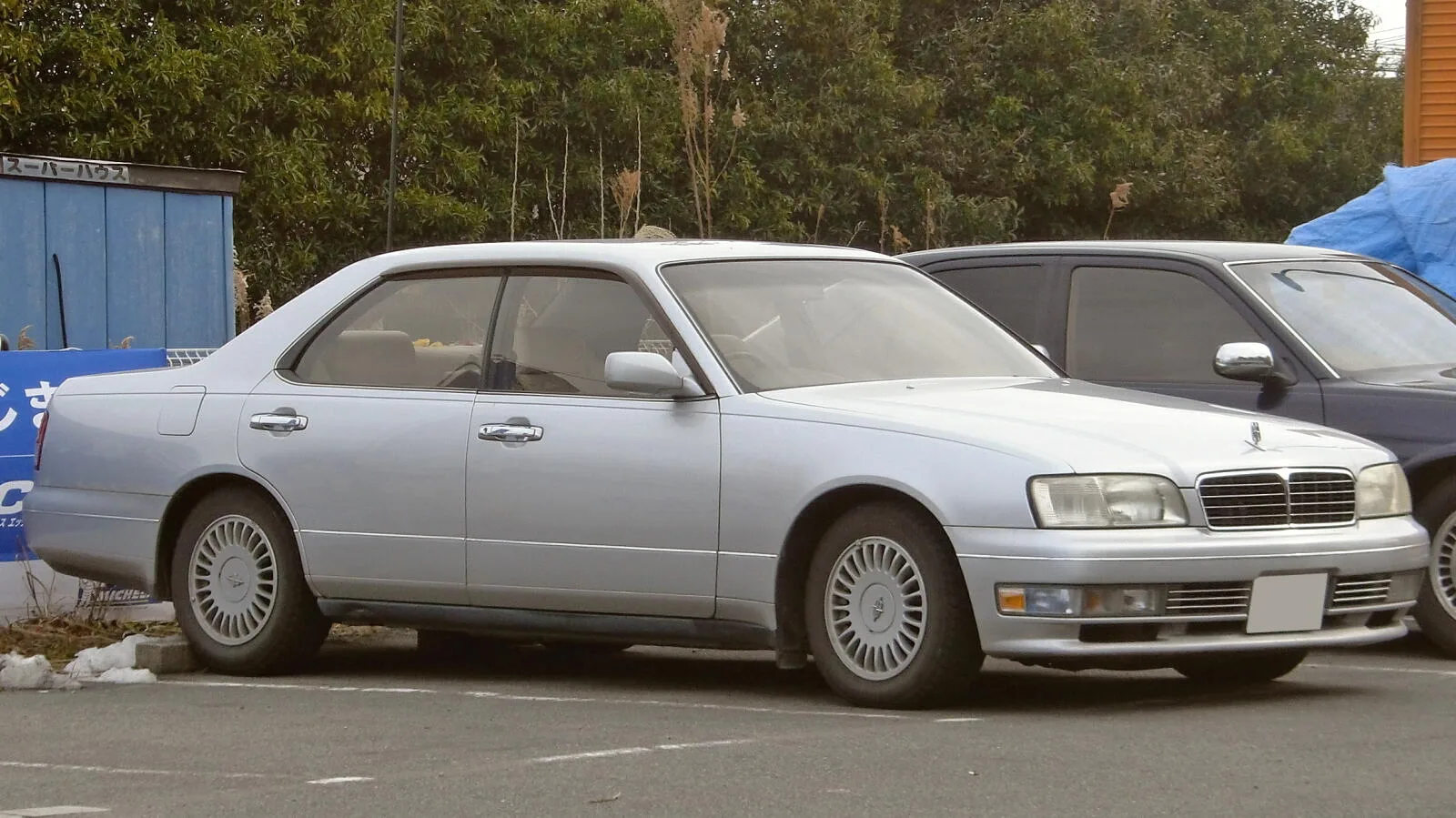
The Y32, built from June 1991 to May 1995, was a hardtop reskin of the Y31 aimed at private buyers. It was never offered with a four-cylinder engine, and manual gearboxes were no longer available. It appealed to an older demographic than the sister Gloria, which was pitched at younger buyers.
The Y32 shared much of its mechanicals with the Cedric Cima, which sold strongly and drew buyers away from the Brougham and Brougham VIP. The Brougham VIP is so rare that fewer than 17 are recorded in Nissan's Japanese database. The Gran Turismo reverted to four round headlights, giving it a look similar to the BMW 7 Series of the time.
What changed with the Y33 and Y34?
The Y33 of June 1995 replaced the VG engine with the VQ series, whose aluminium block and heads cut weight. AWD ATTESA E-TS was added to the options list, and the car was also built left-hand drive for Middle Eastern export.
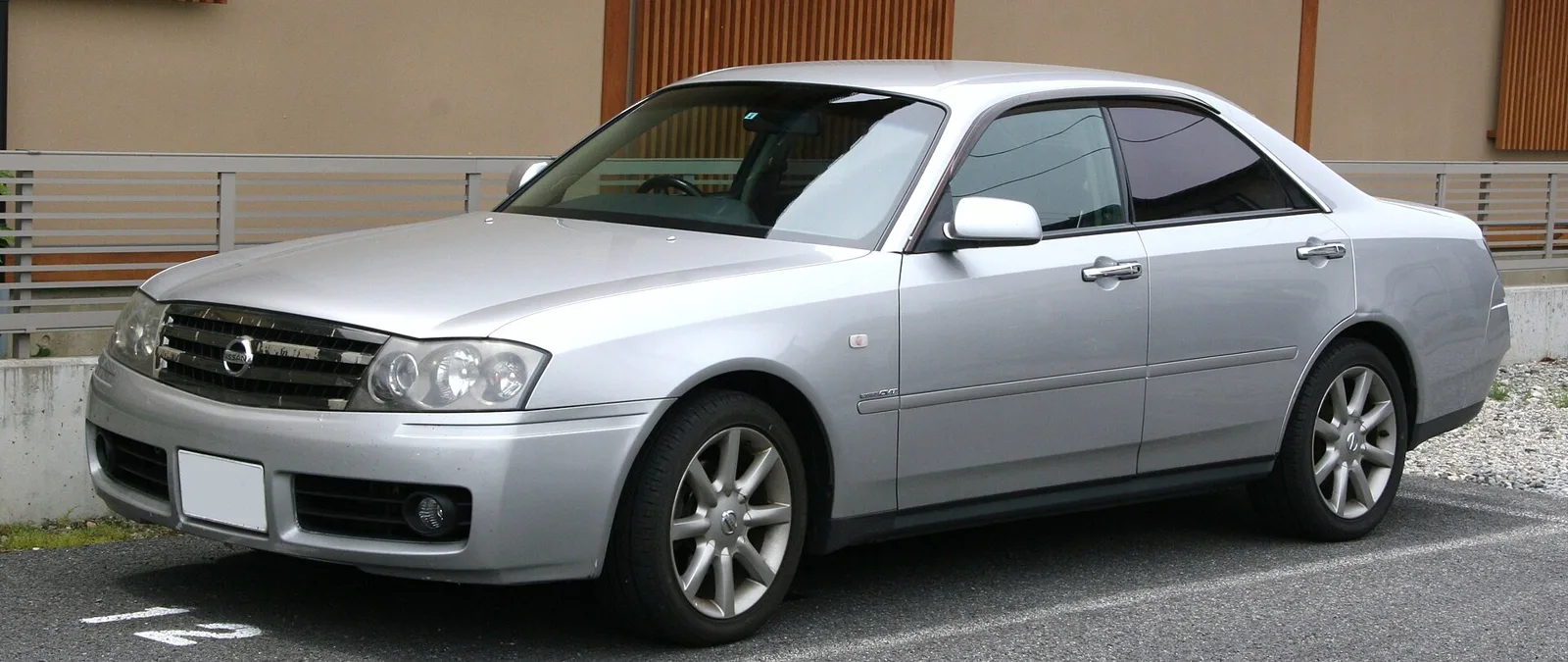
The Y34 arrived on 28 June 1999 with the Gloria. Its range started at the 250 L, with 300 LV and 300 LX and VIP models above it, and prices ran from 3,110,000 yen for the base 250 L to 4,940,000 yen for the 300 VIP. A CVT was offered on the 300 VIP-Z and 300 LX-ZS.
The Y34 won two categories at Japan's Automotive Researchers' and Journalists' Conference in 2000, Car of the Year and Technology of the Year for the Nissan Extroid CVT. Direct injection was added to all the V6 engines, marked by the DD designation.
Why did the Cedric become a taxi?
The Cedric was popular as a taxi across Asia, where diesel versions were used heavily. The Y31 sedan remained a fleet favourite in Japan for many years, and it was the Cedric that competed with the Toyota Comfort in Japanese taxi fleets.
The last Cedric hardtop left the line in October 2004, replaced by the Fuga. The Y31-based sedan kept going for commercial users, and the nameplate's run is usually given as 1960 to 2015.
Where did the Cedric appear on screen?
Older Cedrics played taxis in many Asian films and TV dramas, especially in Hong Kong, and they appeared as police and civilian cars in Japanese crime shows. Seibu Keisatsu, which ran from 1979 to 1984, used the Cedric alongside the Laurel and Gloria, and most of the cars in the show were wrecked.
The 430 series Cedrics were the exception, used as marked police cars rather than wrecked. In the film The Big Steal, a 1963 model is the car the protagonist receives from his parents.
Specifications
| Generation | Years | Key engine or model |
|---|---|---|
| 30 series | March 1960 to 1962 | 1.5 L (1,488 cc) G-series, 71 PS (52 kW); optional 1.9 L H-series, 88 PS (65 kW) |
| H31 series | 1962 to 1965 | Quad headlights; 2.0 L SD20 diesel from June 1964 |
| P130 | 1965 to 1971 | L20 OHC six, 130 PS (96 kW); Pininfarina bodywork |
| 230 series | 1971 to 1975 | 2.6 L L26 six, 140 PS (103 kW) |
| 330 series | 1975 to 1979 | 2.8 L L28 six; Brougham trim from June 1977 |
| 430 series | 1979 to 1983 | 2.0 L L20ET turbo; LD28 2.8 L diesel |
| Y30 | June 1983 to 1987 | VG series V6; Nissan 300C export |
| Y31 | June 1987 to 1991 | VG20DET turbo; 185 to 210 PS (136 to 154 kW) |
| Y32 | June 1991 to May 1995 | VG30DET, 255 PS (188 kW); hardtop only |
| Y33 | June 1995 to June 1999 | VQ series; AWD ATTESA E-TS option |
| Y34 | 28 June 1999 onwards | 250 L to 300 VIP; 3,110,000 to 4,940,000 yen |