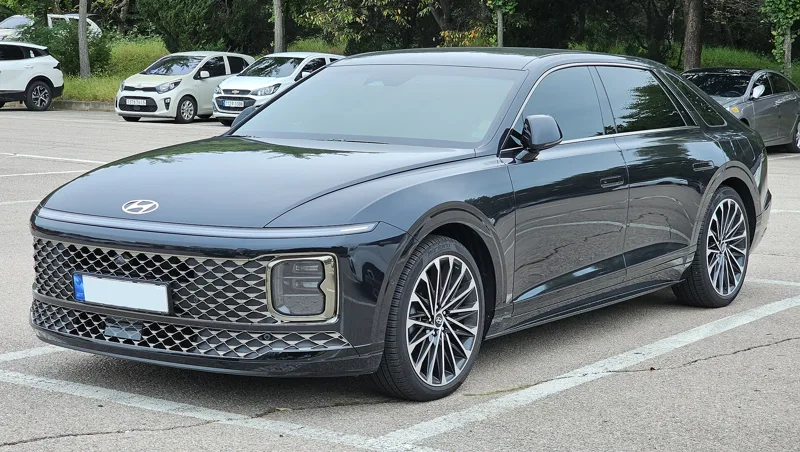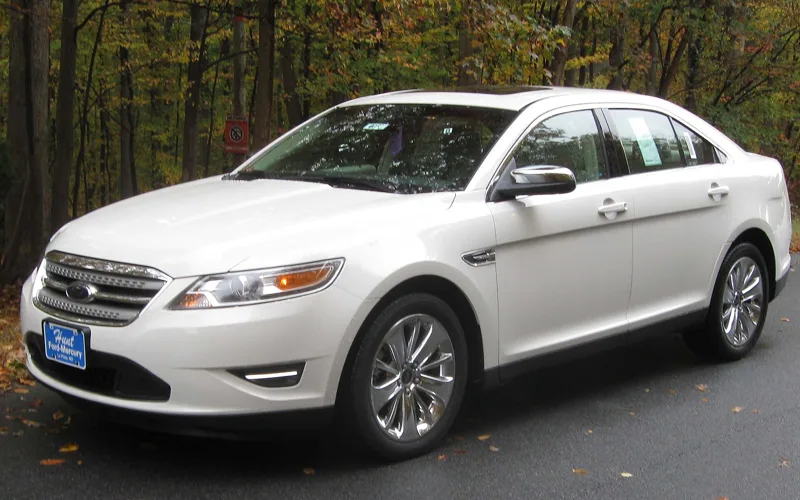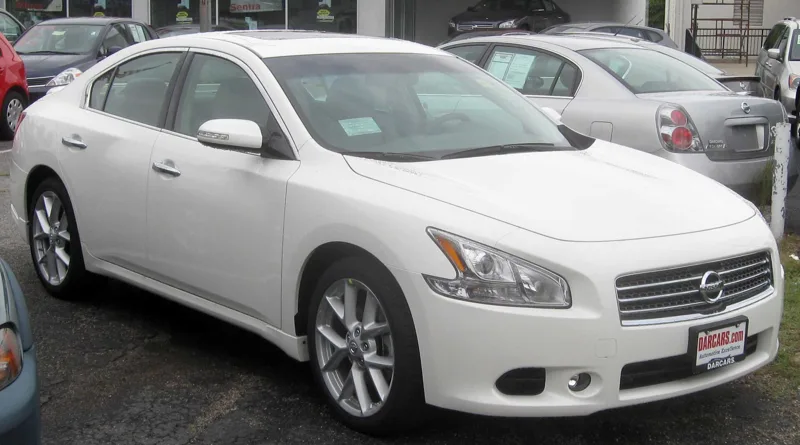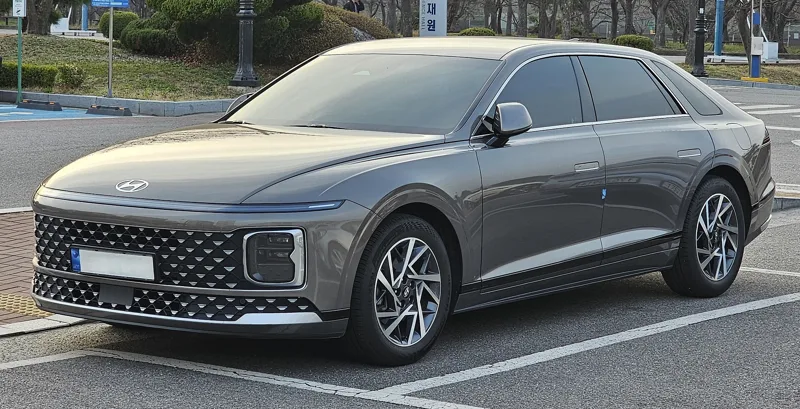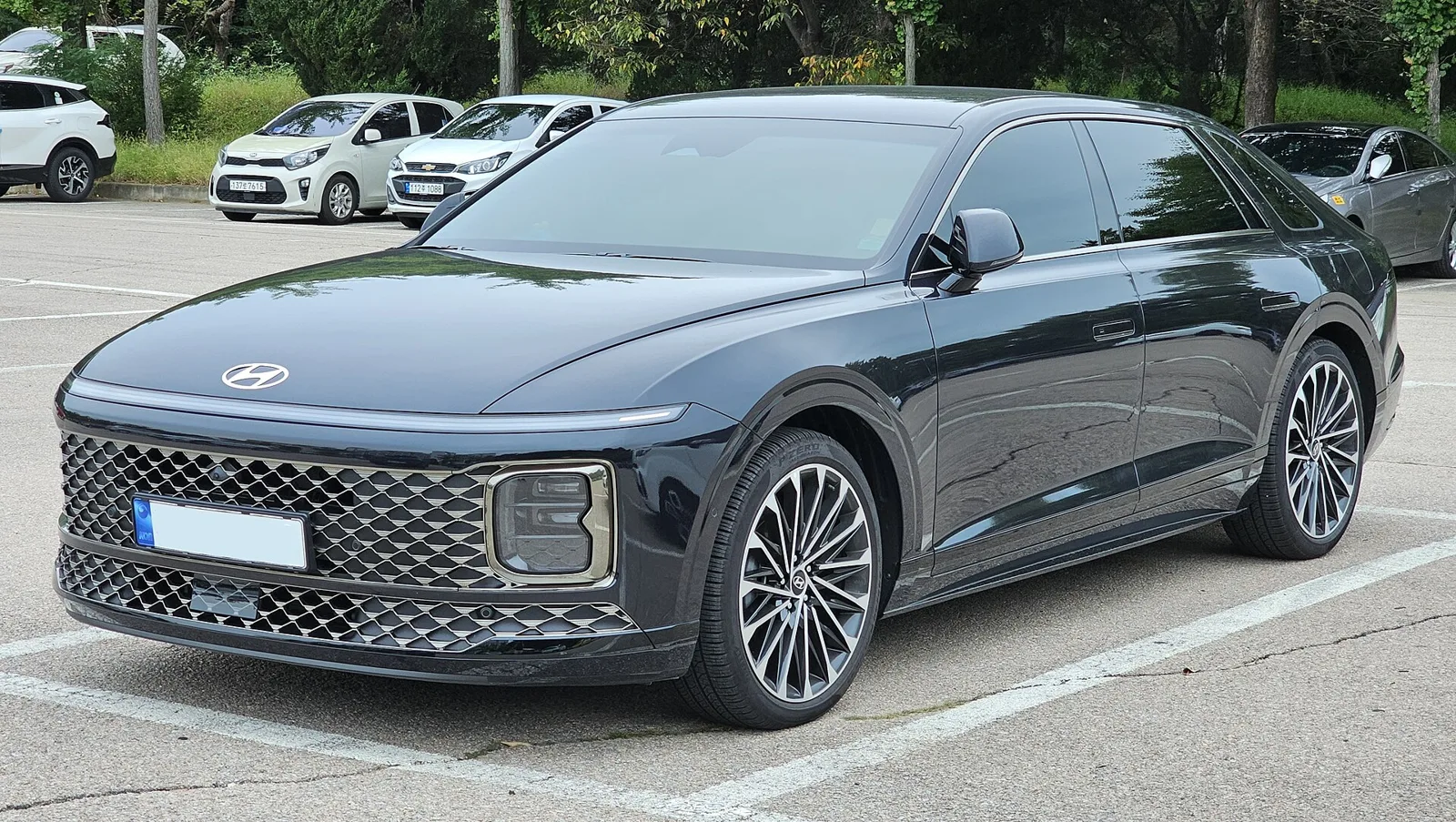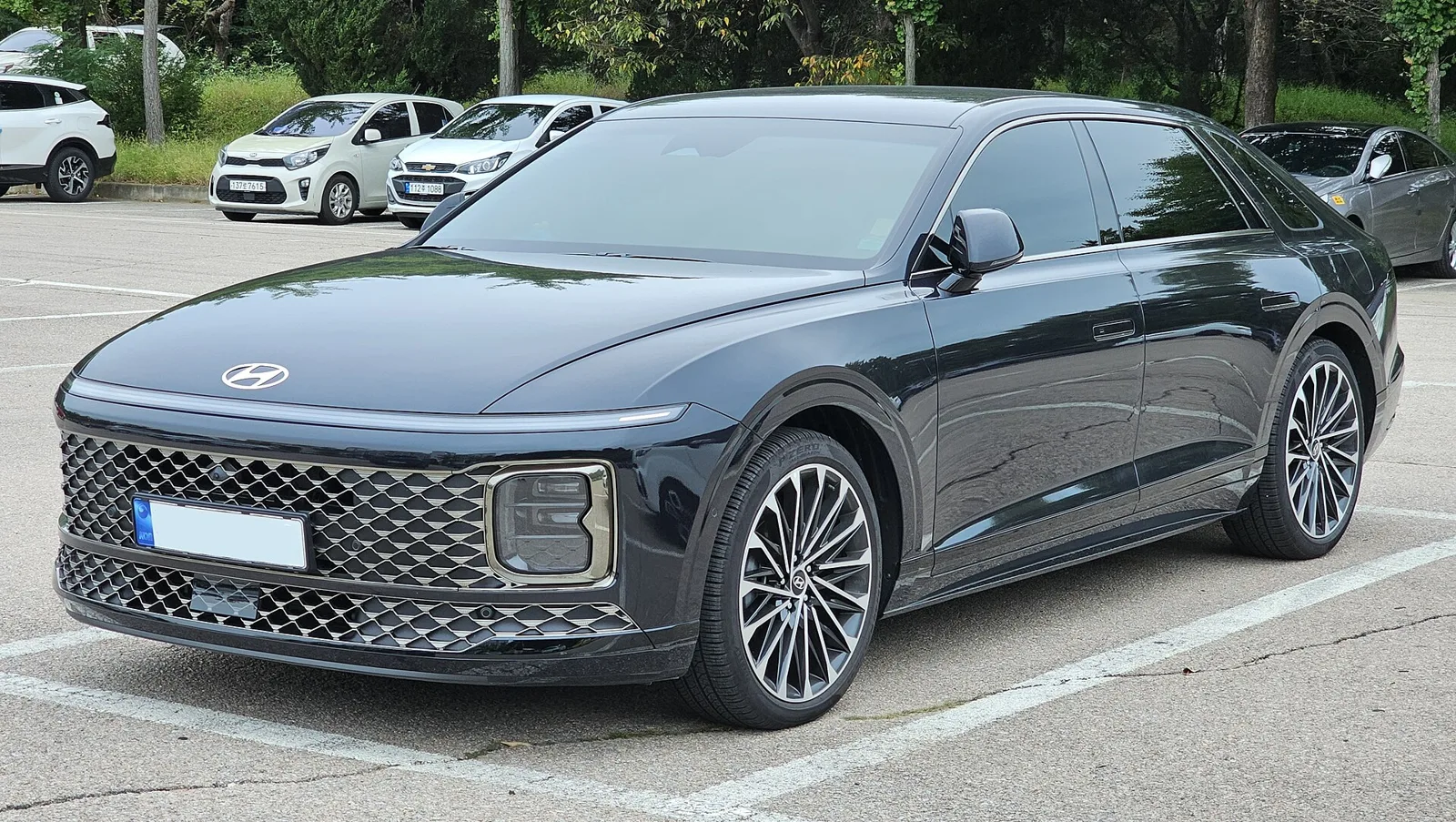
Hyundai's Mitsubishi-based Grandeur and Nissan's Maxima both aimed at the top of their makers' sedan ranges, but they took very different routes to get there.
The Nissan Maxima is a five-passenger full-size flagship sedan that Nissan built across eight generations, debuting for the 1982 model year as the Datsun Maxima. The Hyundai Grandeur is an executive car that Hyundai has sold since 1986 across seven generations, first as a rebadged Mitsubishi Debonair.
The Hyundai Grandeur and the Nissan Maxima were both large sedans that sat at the top of their makers' passenger car ranges, though they were built in different countries and at different times. The Maxima arrived as the Datsun Maxima for the 1982 model year and ran for eight generations. The Grandeur began in 1986 as a rebadged Mitsubishi Debonair, and it grew into a flagship for its home market. Set side by side, they show how a Japanese flagship evolved on its own path while a Korean one leaned heavily on licensed engineering.
Where did the Maxima and Grandeur come from?
The Maxima took the place of the Datsun 810. Its first model was a Datsun 810 with an extended wheelbase, and it was sold in North America as the upscale alternative to the Altima. It shared its engine and transmission with the Datsun 240Z, while offering luxury content on four doors.
The Grandeur was a product of Hyundai's search for a flagship. It had tried its own luxury car, abandoned the plan when Daewoo's Royale outsold the Granada, and turned to Mitsubishi for a platform, technology and an engine. The first Grandeur was launched in July 1986 and was in effect a rebadged Mitsubishi Debonair.
A Japanese full-size flagship that evolved for decades against a Korean flagship that began as a licensed Mitsubishi.
How did the two cars' layouts differ?
The early Maxima was a rear-drive car. The first front-wheel-drive Maxima did not arrive until October 17, 1984, for the 1985 model year, when it was based on the Bluebird U11. That change let Nissan build a roomier car around a transverse V6.
The Grandeur was front-wheel drive from the start. It was described as only the second front-drive model in Korea after the Hyundai Excel, and its design was done by Hyundai while Mitsubishi handled the internal configuration.
Which engines did each car use?
The first Maxima used the 2.4-litre engine from the 240Z, and the second generation raised output to 120 hp (89 kW). A 2.8-litre LD28 diesel six sold in the US between mid-1981 and 1983, mated to a manual or an automatic.
The 1985 front-drive Maxima introduced a 3.0-litre VG30E V6 with 157 hp (117 kW). The third generation kept that engine with 160 hp (119 kW), and the SE gained the 190 hp (142 kW) VE30DE, a 3.0-litre DOHC unit with a 6,500 rpm redline. The fourth-generation VQ30DE made 190 hp (141 kW), with torque of 278 N-m (205 lb-ft), and it won a place on Ward's 10 Best Engines list.
The Grandeur used a 2.0-litre SOHC four at launch, with a 2.4-litre added in 1987 and a 3.0-litre V6 in 1991. Later generations moved to a range of V6 engines, from 2.0 to 3.5 litres in the second generation, and to the 3.8-litre Lambda in the TG of 2006.
Side-by-side specifications
| Specification | Hyundai Grandeur (first generation) | Nissan Maxima (1985 front-drive) |
|---|---|---|
| Launch | July 1986 in Korea | October 1984, for the 1985 model year |
| Layout | Front-wheel drive | Front-wheel drive, transverse V6 |
| Engine | 2.0-litre SOHC four; 2.4-litre from 1987; 3.0-litre V6 from 1991 | 3.0-litre VG30E V6 |
| Output | No figure given for the first generation | 157 hp (117 kW) |
| Gearbox | Four-speed automatic or five-speed manual | Four-speed automatic or five-speed manual |
| Origin of design | Hyundai body; Mitsubishi internal configuration and engine | Nissan, based on the Bluebird U11 |
| Body | Four-door sedan | Sedan and station wagon; wagon offered until the second generation ended |
| Production | 122,074 built before production ended in September 1992 | No figure given |
| Successor | Second generation (LX) from 1992 | Third generation in 1989 with the J30 codename |
| Recognition | Korea's best-selling large car | Ten Best list for the SE in 1990 |
What was the early Maxima's trim structure?
The first Maxima grew from the 810 range, which Nissan sold in two forms: the 810 Deluxe, with a five-speed manual, and the 810 Maxima, which came only with a three-speed automatic. The 1981 cars were essentially a Japanese Bluebird with a longer wheelbase, and the wagon kept a live rear axle with drum brakes while the sedans had independent rear suspension.
By 1984 North American Datsuns carried both a Datsun and a Nissan badge, which marked the transition toward Nissan's own name. The 1985 front-drive model that followed was a bigger step, because it used a transverse V6 rather than the old rear-drive layout.
How did the Maxima's features develop?
The Maxima was early in putting electronics into the car. Its voice warning system used a pre-recorded female voice to reinforce the dashboard lights, and the 1981 models were the first talking cars marketed in the United States. Its alerts included reminders such as a key left in the ignition.
By the late 1980s the Maxima offered the DUET-SS Super Sonic Suspension, which used sonar to read the road ahead and adjust its shocks. The third generation also brought a digital touch entry system that could lower the windows and open the sunroof from outside the car, along with an early head-up display, which projected the car's speed onto the windscreen.
How did the Grandeur's features compare?
The Grandeur had a more conventional feature set in its early years. The taillight design changed in 1989, and anti-lock brakes became available in 1991. Its appeal came from its quality reputation and its Mitsubishi-derived engineering rather than from technology.
Later Grandeurs became more modern. The XG line of 1999 offered V6 choices at 2.5 and 3.0 litres, and the TG of 2006 carried the flagship role forward under the Azera name in North America.
How did the Maxima's generations change?
The third generation arrived in October 1988 as a 1989 model, with the internal designation J30. It was larger than the earlier cars, and its size put it in the mid-size class in North America, behind only the Mazda 929 among Japanese sedans. Nissan marketed it in the United States as a four-door sports car.
The fourth generation was designed between early 1990 and March 1991, and it arrived in May 1994 as the A32 for the 1995 model year. Its independent rear suspension gave way to a lighter multi-link beam system, a sign of the cost-cutting that many Japanese makers adopted after their economic bubble burst. It was praised for its quiet, roomy interior.
How did the third-generation Maxima perform?
The third generation gained a 160 hp (119 kW) VG30E V6, and from 1992 the SE received the 190 hp (142 kW) VE30DE. That DOHC unit had an iron block with aluminium heads, variable intake timing, coil-on-plug firing and a limited-slip differential, and it revved to a 6,500 rpm redline.
Outside North America the car had its own paths. In Europe from 1990 it replaced the Laurel, offered in base, S and SE forms with a single-cam VG30E rated at 170 PS. In Australia from May 1990 it took over from the Skyline sedan and wagon, and in Japan it was a rival to the Toyota Cressida.
How did the Grandeur's generations change?
The second generation ran from 1992 to 1998 and was built jointly with Mitsubishi, which handled the powertrain while Hyundai did the body and trim. Its V6 engines ranged from 2.0 to 3.5 litres, and it was never exported beyond the home market.
The third generation, the XG, was developed by Hyundai alone and was marketed as the Hyundai XG in North America and Japan. The XG250, XG300 and XG350 covered engine sizes from 2.5 to 3.5 litres, and the fourth generation TG arrived for the 2006 model year on a platform it shared with the Sonata.
How did the two cars sell?
The Grandeur became the country's top large car by a wide margin, with 122,074 built before production ended in September 1992. Its success at home gave it the status of a national flagship.
The Maxima's sales story was closely tied to its rival, the Toyota Cressida. Toyota stopped building the Cressida after 1992, and introduced the Avalon in 1994 as its successor. Car and Driver put the SE on its Ten Best list for 1990, which helped its reputation in the United States.
How did Korea's flagship role shape the Grandeur?
In the late 1980s the luxury car market in South Korea was dominated by Daewoo's Royale, which outsold Hyundai's Granada Mark II. The Grandeur's launch was a direct answer to that gap, and its success soon made it the country's leading large car.
Its nickname, Gak-Grandeur, referred to its angular styling. Hyundai used the 1988 Seoul Olympics to present the car to executives and VIP guests, which underlined its place as a national flagship.
How did Hyundai's XG and TG models develop?
The third-generation XG was developed by Hyundai alone and launched in 1998, with the XG250 arriving in 1999 with a 2.5-litre Delta V6. The XG300 followed with a 3.0-litre Sigma V6, and the XG350 became the last of the line in 2005.
The fourth-generation TG arrived as a mid-size car for the 2006 model year, sharing its platform with the Sonata. In North America it was sold as the Azera, which kept the flagship idea alive in a new form.
Which buyer suits each car?
The Maxima suits a buyer who wants a full-size Japanese sedan with a strong engine, a quiet interior and a long line of generations. The Grandeur suits a buyer in Korea who wants a large sedan with Mitsubishi-derived engineering and a flagship badge.
The figures here do not settle which is better, so no verdict is given. The Maxima had the longer run in export markets and more technology in its early years, while the Grandeur's appeal was closely tied to its home market.
What did each car leave behind?
The Maxima left a long line of Nissan flagship sedans and a reputation for interior comfort. Its VQ engine family became a respected powerplant, and its production finally ended in the United States and Canada in July 2023.
The Grandeur left a status name in Korea, which it still carries. Its Olympic showcase in 1988 helped Hyundai introduce the car to foreign guests, and its Mitsubishi-derived origins are part of the Hyundai story.