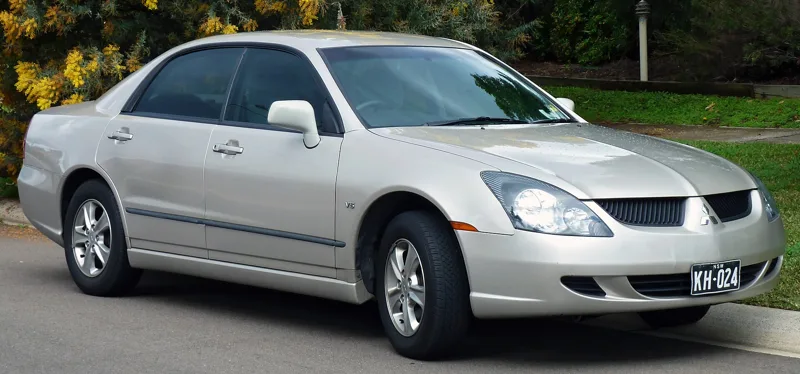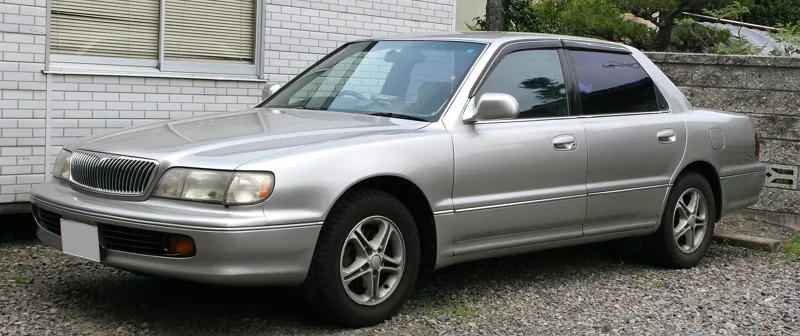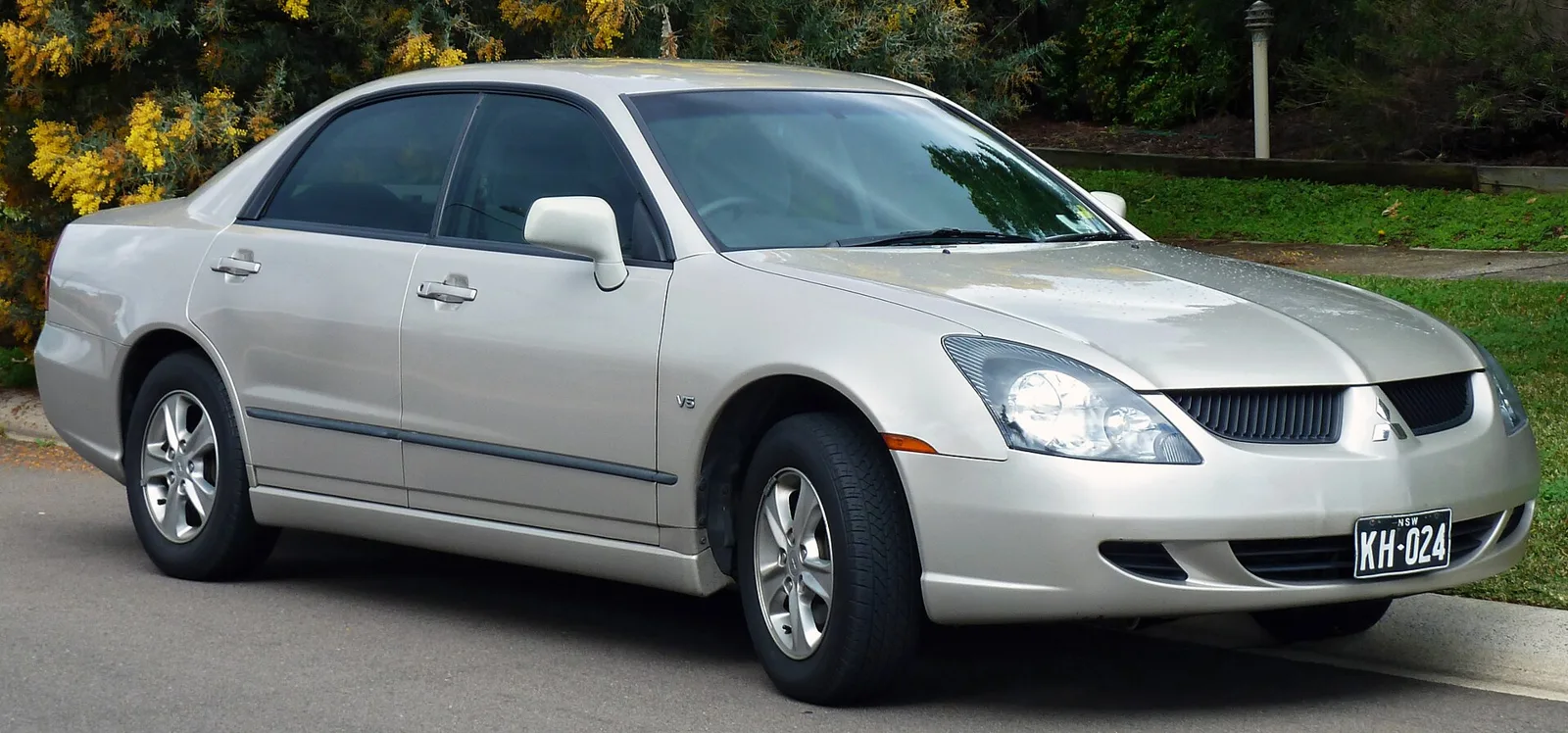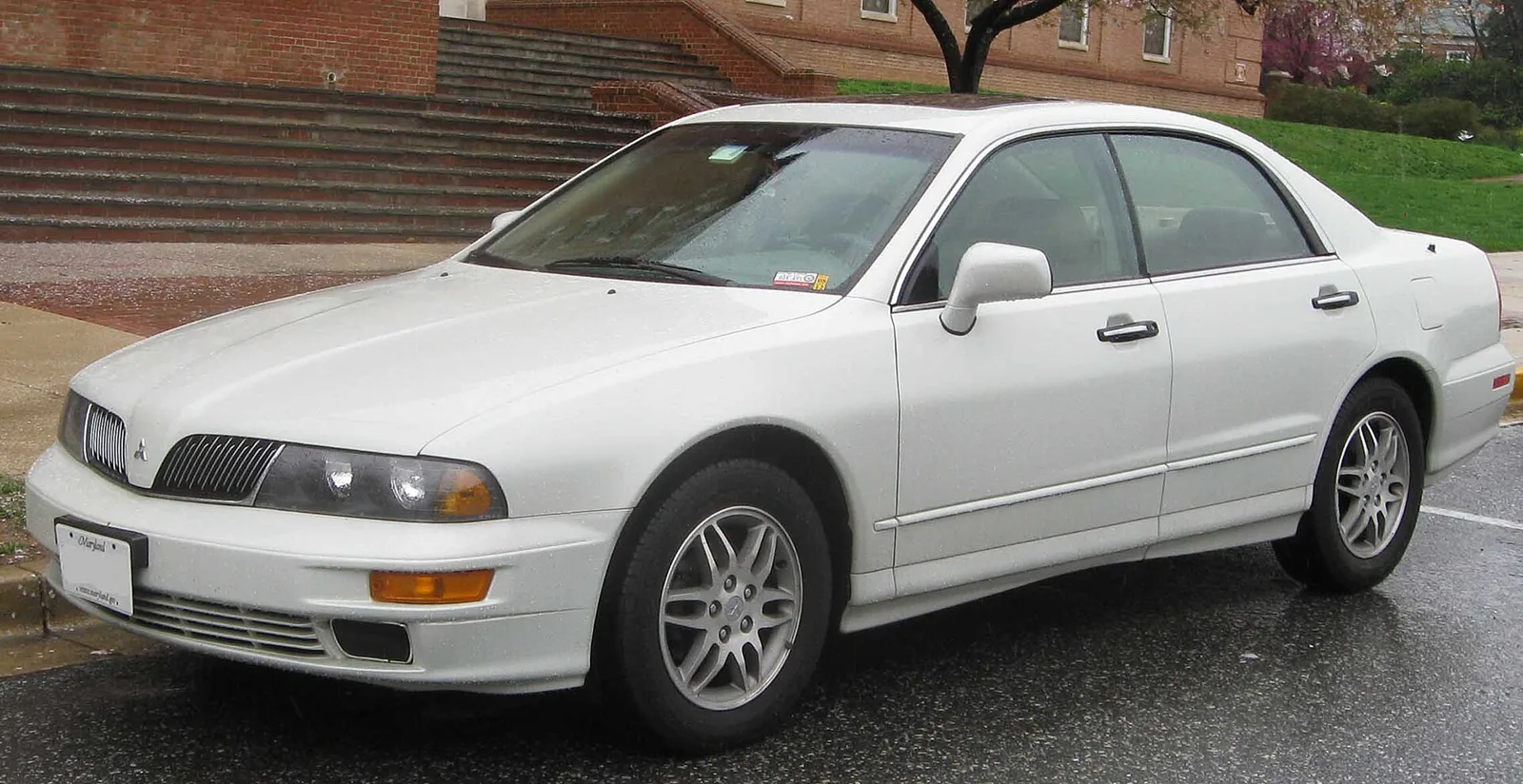
Built by splicing a longer body onto the Galant, the Diamante became a 1990 Japanese sales surprise and later travelled through Australia and North America until 2005.
The Mitsubishi Diamante was a Galant-based executive car built from 1990 to 2005. It was a surprise hit in Japan in its launch year, and later Australian-built Verada and Diamante models took it across export markets, including North America until 2004.
The Mitsubishi Diamante was built from 1990 to 2005 and began as a hardtop made by stretching the Mitsubishi Galant by 6.6 cm (2.6 in). Its surprise success in Japan in 1990 rested on a tax quirk, an executive image and a platform later shared with the sporty 3000GT, and it went on to become an Australian-built car for much of its life.
Where did the Mitsubishi Diamante come from?
The Diamante was built by Mitsubishi Motors from 1990 to 2005, and its first series was a hardtop shown at the 1989 Tokyo Motor Show. It was made by inserting 6.6 cm (2.6 in) into the middle of the Galant, which took Japan's Car of the Year prize in 1987.
Its name is a Romance-language word for diamond, borrowed from Spanish, Portuguese and Italian, and it also honours the three-diamond Mitsubishi badge. In Japan the car was sold through the Car Plaza retail chain, and the platform was also used for the 3000GT.
A stretched Galant with a tax-driven launch, a Japanese electronics showcase and a long Australian second life.
Why did the Diamante nearly miss the Japanese market?
The main reason was tax. Until 1989 the width of a car set its tax class, and the Diamante, which exceeded the 1,700 mm (66.9 in) threshold, faced a large penalty against rivals designed to sit just inside that limit. Tax rules changed in 1989, and the car became a surprise hit in 1990.
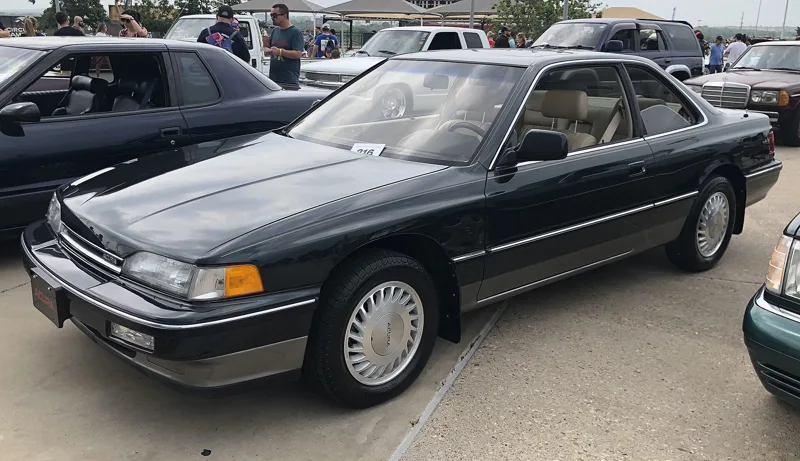
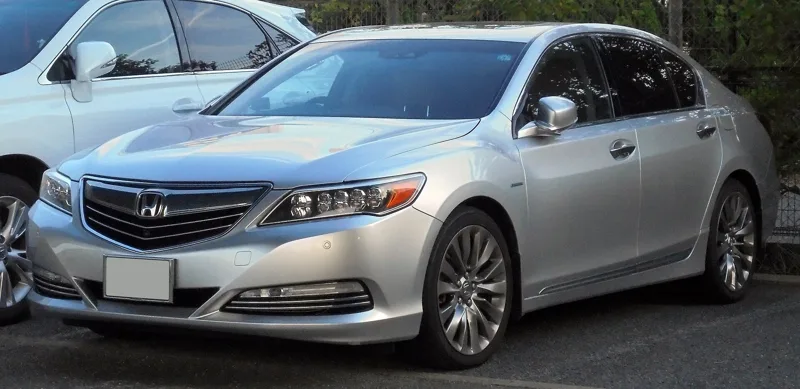
Mitsubishi's image abroad was not ideal for a luxury car, and its priciest car then, the Debonair, was mostly viewed as a corporate car for senior executives. The Diamante was the answer to the Honda/Acura Legend, which surprised manufacturers in 1986 and inspired the Lexus and Infiniti divisions.
Amid Japan's bubble economy, many private owners wanted an executive car, and few new models were on offer that year. The Diamante turned into an unexpected sales success of 1990.
What versions did the first generation come in?
The first generation came in three forms: a four-door hardtop built in Nagoya, the Sigma six-window sedan introduced five months later, and an Australian-built wagon launched at the end of 1992, badged as a 1993 model. The hardtop was sold only in Japan and North America.
The hardtop used frameless windows and advanced electronics, including four-wheel steering on some models. The Sigma had a taller roof, a six-window glasshouse, window sashes and new front and rear styling. It went to Europe, and it became the root of the second-generation Magna, built separately in Adelaide, South Australia.
The Verada was the luxury version of that Australian car. It was intended for the domestic market and for export to North America, although the North American plan never happened, so the longer bumper bars it carried were meant for the stricter crash standards there.
The wagon was designed and built only by Mitsubishi Australia. Every Diamante wagon came from Australia, and Japanese buyers could order them from October 1997.
What did the Japanese hardtop offer?
The Japanese hardtop, built from 1990 until 1995, came as front-wheel drive or all-wheel drive. The range used V6s from the 6G7 family, in 2.0, 2.5 and 3.0-litre sizes, and each engine size raised annual road tax, so the equipment list grew with the price.
Front-drive cars used MacPherson struts up front and multi-link suspension at the rear, with five-speed manual or four-speed automatic transmissions depending on the model. The AWD range had three cars: the 25V 4WD, the 30R 4WD, and the top model, the 30R-SE 4WD. Both front and rear discs were ventilated.
Mitsubishi filled the car with electronics. Preview Distance Control was billed as an autonomous cruise system, a first in the world, and the TCL trace and traction system later became Active Skid and Traction Control, known as ASTC.
Trace control adjusted traction in corners to limit sideways force. It monitored the steering wheel angle, the throttle and each wheel's speed, yet had no yaw sensing, so it was not a full stability control. It also worked with the electronic suspension and four-wheel steering to improve handling.
The Diamante took the Japan Car of the Year award for 1990 and 1991, and its range ran from the base 20E to the 30R-SE.
What was the Japanese model range?
The base 20E used a 2.0-litre V6 with 125 PS (92 kW), and it was joined by the 25E, 25V, 25V-SE, 30V, 30R and 30R-SE. The 25V 4WD was the entry-level all-wheel-drive car, and the 30R-SE 4WD sat at the top of the AWD range.
The 20E's 2.0-litre 6G71 SOHC 12-valve V6 made 125 PS (92 kW), peaking at 5500 rpm, plus 127 lb-ft (172 N-m) at 3500 rpm. It came as a five-speed manual or four-speed automatic on 14-inch steel wheels. In October 1992 the new 24-valve 6A12 replaced it, lifting power to 145 PS (107 kW).
The 25E kept the 20E's equipment with a 2.5-litre 6G73 V6. It produced 175 PS (129 kW), peaking at 6000 rpm, and its 164 lb-ft was reached at 4500 rpm. Its frame number was E-F13A.
The 25V was the 25E with four-wheel steering, identified by the frame code E-F15A. It used a four-speed automatic on 15-inch alloys, with speed-sensitive steering, a leather wheel and ventilated rear discs. The 25V-SE topped the 2.5-litre range, adding ABS, traction control and electric seats, and it was automatic only.
The 30V was the base 3.0-litre front-drive model, with a 3.0-litre 6G72 V6 making 210 PS (154 kW), peaking at 6000 rpm, and 199 lb-ft (270 N-m) at 3000 rpm, in automatic form only. The front-drive wagon used a 160 PS (118 kW) version of the 6G72 at 5000 rpm, with 185 lb-ft (251 N-m) at 4000 rpm.
The 30R sat in the middle of the 3.0-litre range and sold for 40,000 yen more than the 30V. It lacked traction control and ABS, and its only addition over the 30V was a front spoiler. The 30R-SE was the top front-drive model, with active suspension that gave it a 10 mm (0.4 in) ride height.
The 25V 4WD was the entry AWD car, with frame E-F25A. It had cruise control, a leather wheel, alloy wheels, central locking, climate control and a cassette radio. The 30R-SE 4WD, under frame E-F27A, shared the 30R's basic vehicle, and its main extra was a CD player.
How did the Diamante sell in North America?
The Diamante sedan reached the US in spring 1991 as a 1992 model, replacing the Sigma. Its wagon followed in late 1992 as a 1993 model. The base car used a 3.0-litre V6 with 175 hp (130 kW), and the LS a dual-cam version of the same engine with 202 hp (151 kW).
Mitsubishi Motors North America sourced the hardtop sedans from Japan and the wagons from Australia. At first there were two trims, base and LS, both front-wheel-drive automatics. After 1993 the base car carried the ES suffix, and the LS gained alloy wheels, cruise control and ABS as standard.
The 1994 update brought revised taillamps, a four-spoke wheel with audio controls, a passenger airbag and cruise control as standard. The LS gained a CD player, a power sunroof and traction control in place of the manual sunroof option. The LS had ABS as standard, while the ES and wagon could take it as an option.
In 1995 the ES sedan moved to fleet-only sales, leaving the LS sedan and wagon open to the public. By 1996 only the ES and LS sedans remained, sold to rental car companies alone.
What did Australia contribute?
The Australian-built Diamante was made in Adelaide, South Australia, and sold at home as the Verada, a more luxurious version of the mainstream Magna. Both were based on the Japanese Sigma, and the Verada was the only one of the pair also built as a wagon for domestic and export buyers.
Production of the Verada began on 1 July 1996, after which it served as the root of every Diamante sold outside Japan. The Verada, known as the KE series, and the Magna, known as the TE series, both carried the 1996 Wheels car of the year honour.
US sales began in late October 1996 for the 1997 model year. The car sat in the near-luxury class and was pitched on price against the Lexus ES 300. US cars had export-only extras such as keyless entry, but never the all-wheel-drive system offered in Australia and New Zealand.
Compared with the Japanese car, the Australian-built export models had MacPherson front struts rather than multi-link, leather-only trim with cloth on the Verada Ei, and a lever handbrake instead of a foot pedal.
The Japanese car carried extra technology. It had a more advanced traction control system later adopted in Australia, satellite navigation with a centre-console display, a head-up display, and a lane-keeping system using lasers and cameras, a technology first used on the 1992 Debonair. It also had what Mitsubishi called the world's first five-speed automatic in a transverse drivetrain.
What changed in the second generation?
The second generation arrived in Japan in January 1995 and dropped the Sigma sedan. Its body was slightly bigger and gained room overhead. Engines ran from a 2.5-litre lean-burn V6 to a 3.0-litre MIVEC V6 of 201 kW (270 hp).
Poor Japanese sales ended the Sigma. Its strong start faded, as most of the cars ended up as taxis or patrol cars. The 2.5-litre engine produced 175 hp, and the 3.5-litre gave 210 hp (160 kW).
The 3.0-litre MIVEC V6 made 201 kW (270 hp), peaking at 6000 rpm, with 224 lb-ft (304 N-m) reached at 4500 rpm. In its later years the Japanese range narrowed to one engine, a 3.0-litre GDI V6 at 240 hp (180 kW), which pioneered direct injection in such a car, followed by a conventional 2.5-litre V6.
How did the Diamante change in later years?
The exterior was refreshed for 2002, earning a New Zealand Car of the Year title. The 2003 New York show then revealed a sharply restyled car in Mitsubishi's new corporate look.
In Canada the Diamante was sold only from December 2003 as a 2004 model. It was based on the US car, with daytime running headlamps, heated exterior mirrors, English and French labelling, and metric gauges with a trip computer.
The Japanese car stayed in its 1995 narrow body until 2005 and missed the 2002 and 2004 restyles. Mitsubishi said on 15 June 2005 that it would end production of larger sedans in Japan by that December, which covered both the Diamante and the Galant. Production of the Magna and Verada in Australia continued.
What was the VR-X?
The VR-X, first offered in 2002 for North America, was a sportier take on the Australian-built car and carried over into the 2004 restyle. Its exterior came from the top Australian Verada sedan, while its mechanicals and fittings were borrowed from several other Australian models.
- Firmer sports suspension taken from the Verada GTV limited edition, which had borrowed it from the Magna Sports and VR-X sedans.
- 16-inch sporty alloys borrowed from the Magna Sports.
- Electric seats and leather from the Verada Xi.
- A white instrument fascia marked VR-X, taken from the Magna VR-X, in place of the standard electronic instruments.
- Silver console trim and a two-tone steering wheel, both from the Magna VR-X Limited Edition, which dropped the radio remote.
- A bodykit with front arch extensions and side skirts from the Magna VR-X, plus rear arch extensions and a boot-lid spoiler.
The US-only VR-X had a 270-watt, eight-speaker system and a 3.5-litre V6 making 210 hp (157 kW), against 205 hp (153 kW) for the standard car. It did not get the high-output Australian engine, rated at 163 kW (219 hp) in the Verada GTV, which was mated to a five-speed tiptronic transmission.
The 2004 model moved closer to the TL-series Magna. Its rear lamps matched the Magna VR-X, and it used the 16-inch alloys from the Australian Magna VR-X AWD, while the Magna front-drive car had 17-inch wheels. Electric seats and leather stayed Verada-derived, and the two-tone steering wheel was carried over from a 2001 Magna limited edition.
What are the Mitsubishi Diamante specifications?
| Specification | Detail |
|---|---|
| Production | 1990 to 2005 |
| First series launch | Tokyo Motor Show, 1989; on sale in Japan from May 1990 |
| Body stretch | 6.6 cm (2.6 in) added to the Galant |
| Tax breakpoint | 1,700 mm (66.9 in) width, before 1989 |
| 20E engine | 2.0-litre 6G71 SOHC 12-valve V6, 125 PS (92 kW) |
| 25E and 25V engine | 2.5-litre 6G73 V6, 175 PS (129 kW) |
| 30V and 30R engine | 3.0-litre 6G72 V6, 210 PS (154 kW) |
| North American base | 3.0-litre V6, 175 hp (130 kW) |
| North American LS | Dual-cam 6G72, 202 hp (151 kW) |
| Second generation (Japan) | From January 1995 |
| Verada production | From 1 July 1996, Adelaide |
| US VR-X engine | 3.5-litre V6, 210 hp (157 kW) |