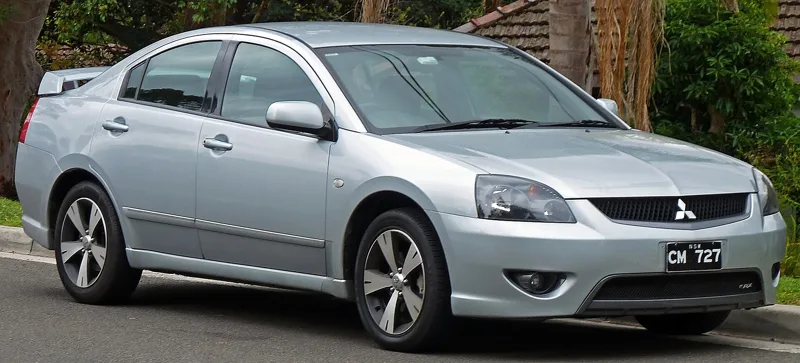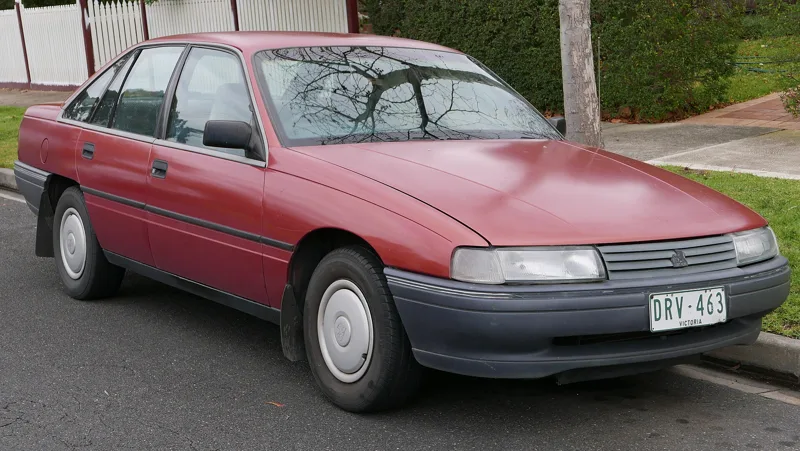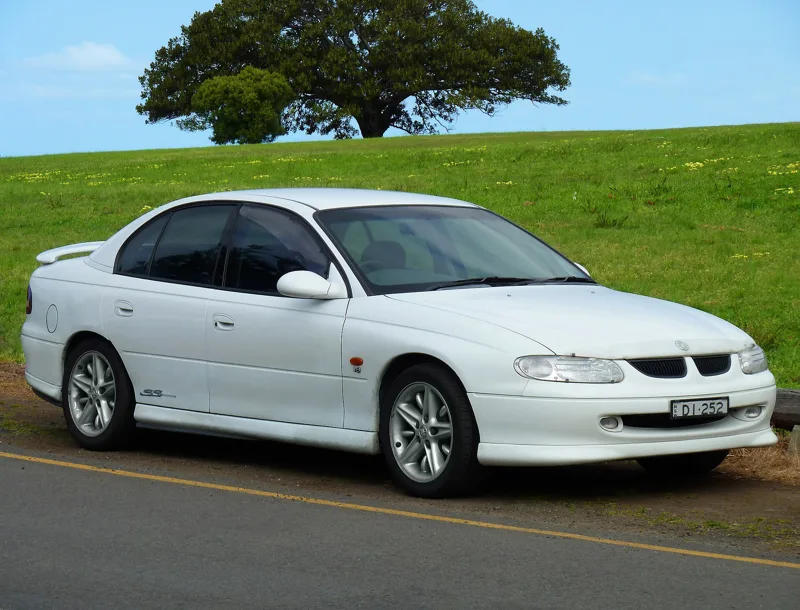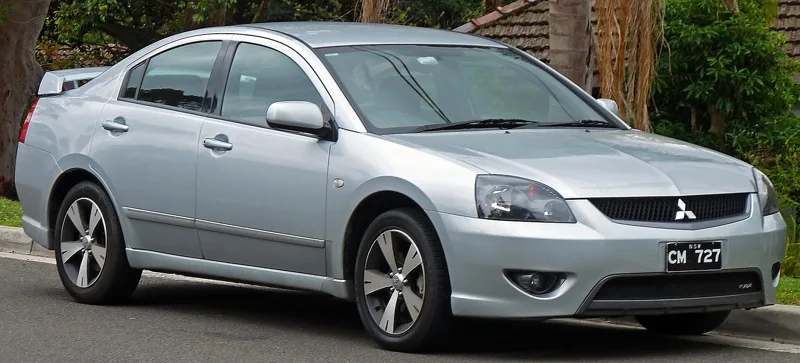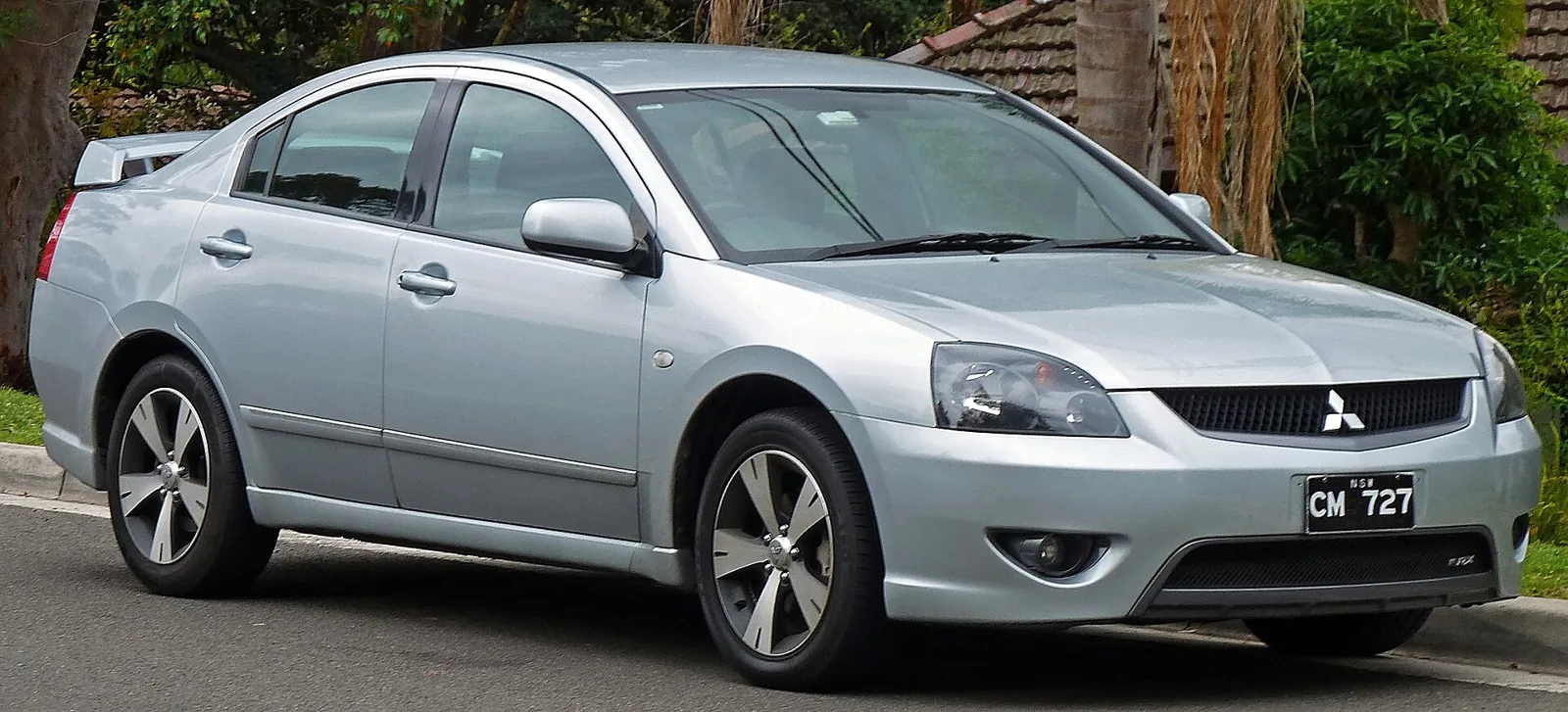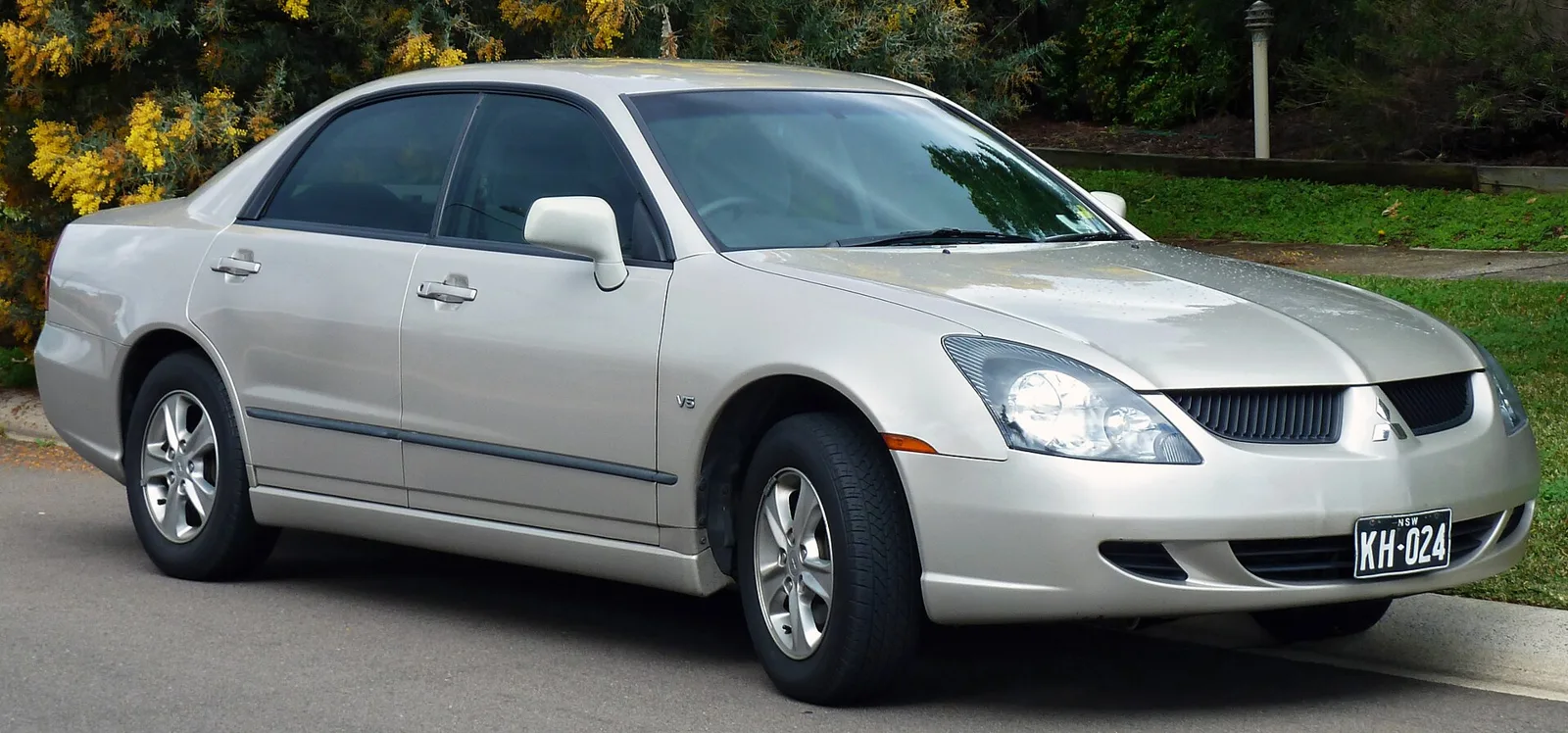
Built by Mitsubishi Motors Australia from 1985 to 2005, the Magna took a widened Galant, grew through three generations and ended with the Mitsubishi 380.
A widened, front-drive Japanese Galant, the Magna was made in South Australia from 1985 to 2005. It moved through three generations, offered V6 power from 1991 and AWD from 2002, and sold almost 209,000 cars in its first five years.
The Mitsubishi Magna was a mid-size car built in Australia by Mitsubishi Motors Australia from 1985 to 2005 across three generations. Its platform was a widened, front-drive Japanese Galant, and it was sold alongside the Verada luxury variant. The Magna was replaced by the Mitsubishi 380 in 2005, and it was the first Australian-made vehicle to be exported worldwide in large numbers.
What was the Mitsubishi Magna?
The Magna was developed as the replacement for the rear-drive Mitsubishi Sigma. Each Magna generation came from a Japanese platform re-engineered for Australian conditions, and the car grew in size with every new series.
The second generation, from 1991, added a luxury variant called the Mitsubishi Verada and a V6 engine. The third generation launched in 1996 and gained all-wheel drive from 2002, before a substantial styling update in 2003.
A widened Japanese Galant that became Australia's first mass-exported locally built car and ran for 20 years before the 380 replaced it.
Why was the first Magna wider than the Galant?
The Magna began as the Galant Sigma, a fifth-generation front-drive Japanese car released in August 1983. Mitsubishi's Australian engineers spliced an extra 65 mm (2.6 in) of width into its body and strengthened it for local roads.
Australian buyers had traditionally favoured large cars, so a wider mid-sized car could compete with the Ford Falcon and Holden Commodore. Mitsubishi codenamed the cars YF and YFW, with the W standing for wide, and the name Magna came from the Latin word for big.
Apart from the wider body, the Magna looked much like its Japanese donor, because the doors, guards and pillars were shared tooling. Its front-drive packaging gave it more interior room than the rear-drive Holden Commodore.
How much did the first generation cost?
Mitsubishi claimed a development cost of A$50 million for the first Magna, which arrived in April 1985 as a sedan. A station wagon followed in June 1987, and the early cars were built at Tonsley Park in South Australia.
Between 1985 and 1990 Mitsubishi sold almost 209,000 Magnas. Sale prices were central to its success, and the value-for-money strengths helped the car win the Wheels Car of the Year value category in 1985.
The first series, marked TM, was marred by quality problems, mainly fragile engine heads and automatic transmissions. Those faults were gradually fixed during the life of the first generation.
What engines did the first Magna use?
The first Magna's engine was the Australian-made 2.6-litre transversely mounted inline-four, codenamed 4G54 and sold as the Astron II. It was an eight-valve single overhead cam design with hydraulic mounts and a Silent Shaft balance system.
Early Astron II engines made 85 kW (114 hp) and 198 N m (146 lb ft), with the peaks arriving at 5,000 rpm and 3,000 rpm. The electronic fuel injection version, called ECI Multi, arrived with the TN series and lifted output to 93 kW (125 hp).
Transmission choices were a five-speed manual or a four-speed ELC automatic with overdrive. Official fuel use for the first generation was 11.0 L/100 km (21.4 mpg-US) in the city and 7.8 L/100 km (30 mpg-US) on the highway.
How did the Magna's first generation evolve?
The first update, the TN series, arrived in April 1987 with a new grille insert and a moved rear plate. A sporty Elante model with fuel injection and tauter suspension arrived in June 1988, along with an Elite wagon.
The TP series came in June 1989 with a further facelift, a revised four-speed automatic and power steering across the range. A Grand Tourer model arrived in September 1990 with a full bodykit and gold striping.
Limited editions helped sales through the early 1990s. The Encore and the Executive Safari wagon were among them, and the final run was 500 Executive Safari wagons, all with fuel injection and automatic transmission.
What did the second generation bring?
The second generation, known as TR and KR, was reengineered from the ground up and launched as a larger sedan in April 1991, with the wagon following in May 1992. MMAL estimated the total investment at A$389 million.
The TR was slightly more aerodynamic, with a drag coefficient of Cd 0.33, but it was about 100 kg (220 lb) heavier. The Astron II became fuel-injected only, giving 98 kW (131 hp) and 212 N m (156 lb ft) on ULP 91 petrol, peaking at 4,750 rpm and 3,750 rpm respectively.
The Verada arrived in July 1991 with a 3.0-litre V6 codenamed 6G72 and marketed as Cyclone. Its output ranged up to 120 kW (161 hp) at 5,500 rpm, and both Magna and Verada used the INVECS automatic.
The V6 reached Magna in 1993 as an option on the Executive, which carried 15-inch wheels and a small V6 badge on the boot. The entire range was facelifted in March 1994 as the TS and KS series, with multi-parabola headlights on the Verada.
Why was the third generation important?
The third generation was launched in April 1996 for the Magna and in July 1996 for the Verada. Both were based on the pillarless Japanese second-generation Diamante, and the project cost around A$500 million.
The cars were bigger, 10 mm (0.4 in) higher and longer than the TS, and 13 percent stiffer, while staying under 20 kg (44 lb) heavier thanks to more aluminium. Both won the 1996 Wheels Car of the Year, and judges praised their value for money.
The Magna's cabin was dominated by dark grey trim and a high waistline, which led to criticism of a claustrophobic bunker effect. Engines included a Japanese-imported 2.4-litre four-cylinder codenamed 4G64-S4, a 3.0-litre V6 for the Magna and a 3.5-litre V6 for the Verada.
Power for the 2.4 was 105 kW (141 hp) with 205 N m (151 lb ft), and the 3.0 V6 offered 140 kW (188 hp) with 255 N m (188 lb ft). The 3.5-litre Verada V6 offered 147 kW (197 hp) with 300 N m (221 lb ft).
The TE was the most aerodynamic car ever built in Australia, with a drag coefficient of Cd 0.28, helped by a sweeping roofline and flag-style mirrors. Its INVECS II automatic used fuzzy logic to pick gears to suit the driver.
How did the Magna's export programme develop?
The Verada formed the base for Mitsubishi's export programme, becoming the Diamante in most world markets. The company planned to export 25,000 units a year to 18 countries, and in the United States the Diamante was positioned in the near-luxury segment.
New Zealand received rebadged Australian Magna and Verada models instead of the Diamante, and the V3000 badge was retired there. The Verada wagon was also imported into Japan as a Diamante, which complemented the Japanese-built model.
By the end of 2001, 19,215 of the TJ and KJ cars had been exported to the US, New Zealand, Puerto Rico and the Middle East. The Diamante was named New Zealand's Car of the Year in the Best Large Car category.
How did the TF and TH series change the car?
The TF/KF series arrived in June 1997 with five Magna models, including the Sports, which had a deck lid spoiler, 16-inch alloy wheels and an optional Tiptronic automatic. The 2.4-litre four-cylinder was offered only on the Executive, making the TF the last Magna offered with a four-cylinder engine.
About 60,000 TF Magnas were built, and more than 5,000 KF Veradas were built for Australian roads. The TF Sports production ceased after September 1998, and it was the first step away from conservative Japanese product planning.
The TH series came in March 1999 at a cost of A$12 million. The imported four-cylinder was dropped, the 3.0-litre V6 became standard and the Verada's 3.5-litre engine became an option. The TH was also the first Australian-made car with four-channel ABS and EBD.
MMAL also became the first Australian maker to offer a switchable traction control system, labelled TCL, which first appeared on the Magna Sports. The final TH run was 1000 Executive LS cars in May and June 2000.
What was the TJ series?
The TJ series launched in July 2000 at a cost of some A$30 million. Its raised bonnet centre ended in a beak above the grille, which led some journalists to call the look a bird of prey, and its tail lights gained circular lit chambers.
The Sports and the new VR-X shared a high-output 3.5-litre V6 rated at 163 kW (219 hp). Other Magnas and Veradas used a 150 to 155 kW (201 to 208 hp) version, and the Executive kept the 140 kW (188 hp) 3.0-litre until the 3.5 replaced it.
Automatic Sports and VR-X models gained a five-speed Tiptronic with TCL, making Mitsubishi the first Australian maker to offer more than four speeds. The wagons dropped manual transmissions, and total TJ and KJ production reached 43,492 units by the end of 2001.
Among the special editions, the VR-X Limited Edition was built with 175 cars in May 2001, and 95 more leather packs followed in November 2001. A panel of motoring journalists named the VR-X the best-value performance car in Australia.
What was the Magna Ralliart?
Mitsubishi showed a Magna Ralliart prototype at the 2001 Sydney Motor Show. The production car used the VR-X as its base, with styling borrowed from the Lancer Evolution range, and it was launched in February 2002 as a limited, individually numbered sedan.
The plan had called for 500 numbered Ralliarts, but budget constraints led to a front-wheel-drive car with simpler fittings. Its 3.5-litre V6 was tuned to 180 kW (241 hp) at 5,500 rpm, with compression raised from 9.0:1 to 9.4:1, and the car was speed limited to 240 km/h (150 mph).
The Ralliart had Enkei alloy wheels measuring 17 by 7 inches, Koni dampers and larger brakes, with 294 mm front and 284 mm rear ventilated discs. Its 14-speaker Fujitsu Ten Eclipse sound system was an upgrade, and the car was the first local Mitsubishi offered with datadot paint technology.
What was the all-wheel-drive Quadtec?
The sedan-only AWD range, marketed as Quadtec, arrived in December 2002 as a development costing $10 million. It made MMAL the first Australian mass-built AWD passenger car, excluding a Ford utility from the 1970s, and the range consisted of Magna AWD, Magna Sport AWD and Verada AWD.
The AWD engine produced 154 kW (207 hp) and 310 N m (229 lb ft), while the Sports AWD had 159 kW (213 hp) and 318 N m (235 lb ft). The hardware added up to 140 kg (309 lb), which cost some performance and fuel economy.
Sales did not match the hopes. The company projected 300 cars a month, but only 150 a month were sold by August 2003, and fleets and rental agencies were the main buyers. A A$500,000 television campaign showing rival rear-drive cars sliding out of control also drew complaints.
How did the TL and KL series look?
The TL and KL series, codenamed XR, reached Australian showrooms in July 2003 after a preview of the KL Diamante at the New York show in April 2003. The project cost over A$70 million, including A$2 million for the new headlights.
The restyle was led by French designer Olivier Boulay, who gave the car a divided grille and swoopy front guards that were not well received by buyers. Sales slowed dramatically, and the car kept its older architecture under the skin.
The range lost the Executive, Altera and Sports models, which were replaced by ES, LS and VR. A Ralliart-accessorised VR and VR-X limited edition appeared in March 2004 with Koni suspension and Enkei wheels borrowed from the Ralliart.
How did the Magna end its life?
The TW series, launched in October 2004, was a minor facelift with Series II badging. The Magna LS sedan disappeared, and the Verada GTVi AWD joined the range. Mitsubishi also introduced a five-year or 130,000 km (81,000 mi) warranty from 1 December 2004.
The company reused a Chrysler-era slogan from Lee Iacocca in an advertising campaign fronted by Tom Phillips. The campaign and the warranty helped cut the stockpile from 5,500 cars in September 2004 to 800 by June 2005, ahead of the 380's launch.
Mitsubishi excluded the Magna name for its replacement, which became the 380. The old Magna did find a second-hand market, where the TL and TW cars became popular for their engineering and reliability.
What are the Mitsubishi Magna specifications?
| Specification | Detail |
|---|---|
| Production | 1985 to 2005, Mitsubishi Motors Australia |
| Generations | 1985 TM; 1991 TR and KR; 1996 TE and KE |
| First generation engine | 2.6-litre Astron II 4G54 inline-four, 85 kW (114 hp) |
| Second generation V6 | 3.0-litre 6G72 Cyclone, 120 kW (161 hp) at 5,500 rpm |
| Third generation Verada V6 | 3.5-litre 6G74, 147 kW (197 hp), 300 N m (221 lb ft) |
| Drag coefficient | Cd 0.36 (first), 0.33 (second), 0.28 (TE) |
| TJ high-output V6 | 163 kW (219 hp) |
| AWD (Quadtec) | 154 kW (207 hp) and 310 N m (229 lb ft) |
| Ralliart | 180 kW (241 hp) at 5,500 rpm, 240 km/h (150 mph) limit |
| Total TJ and KJ output | 43,492 units by the end of 2001 |
| Successor | Mitsubishi 380, launched 2005 |