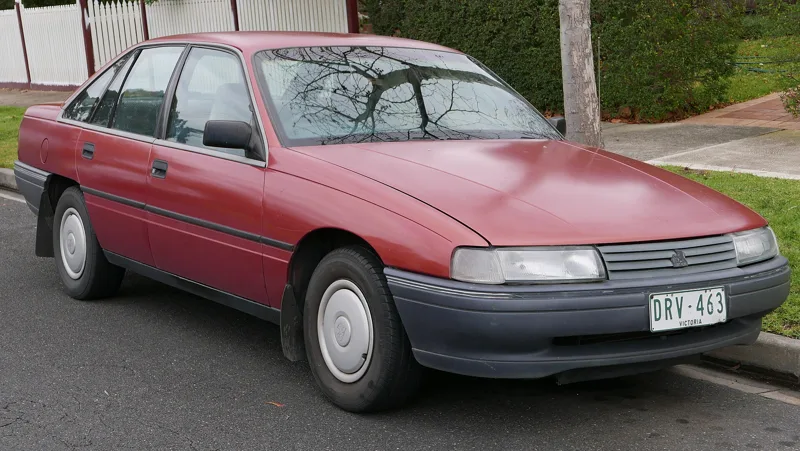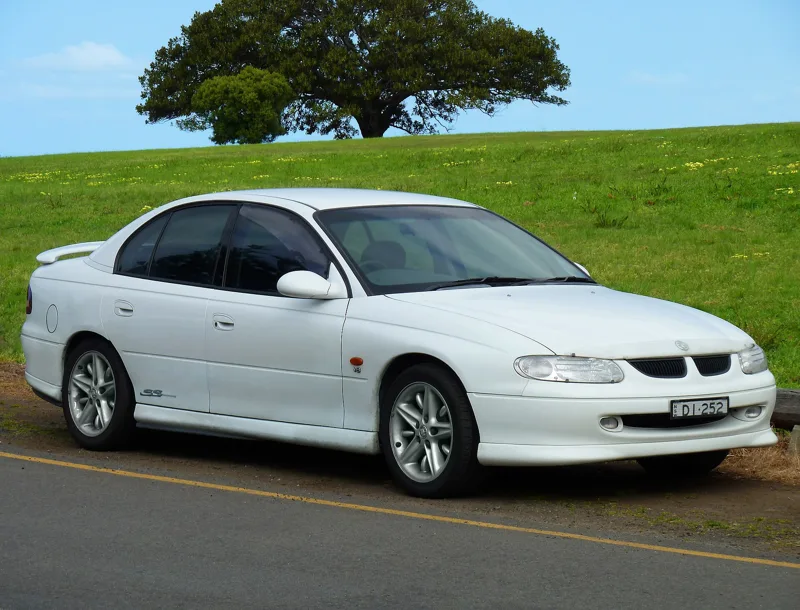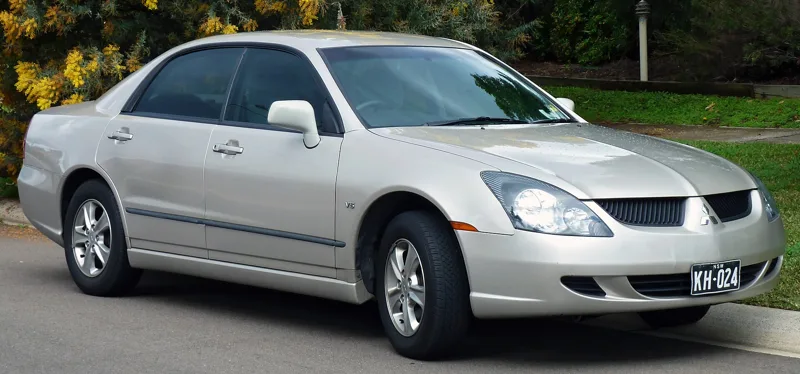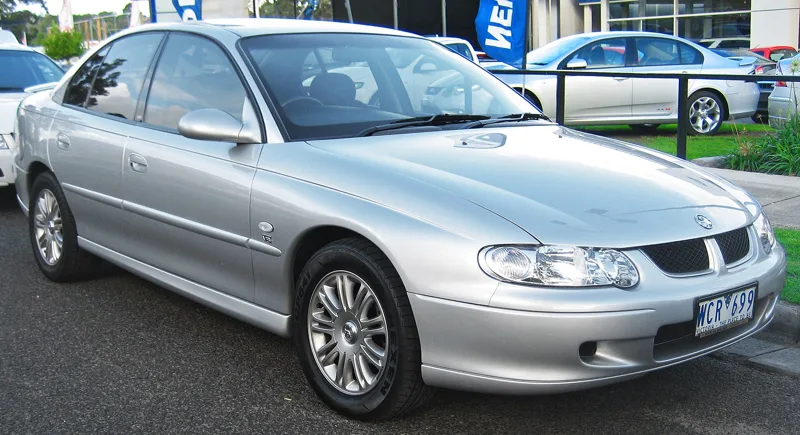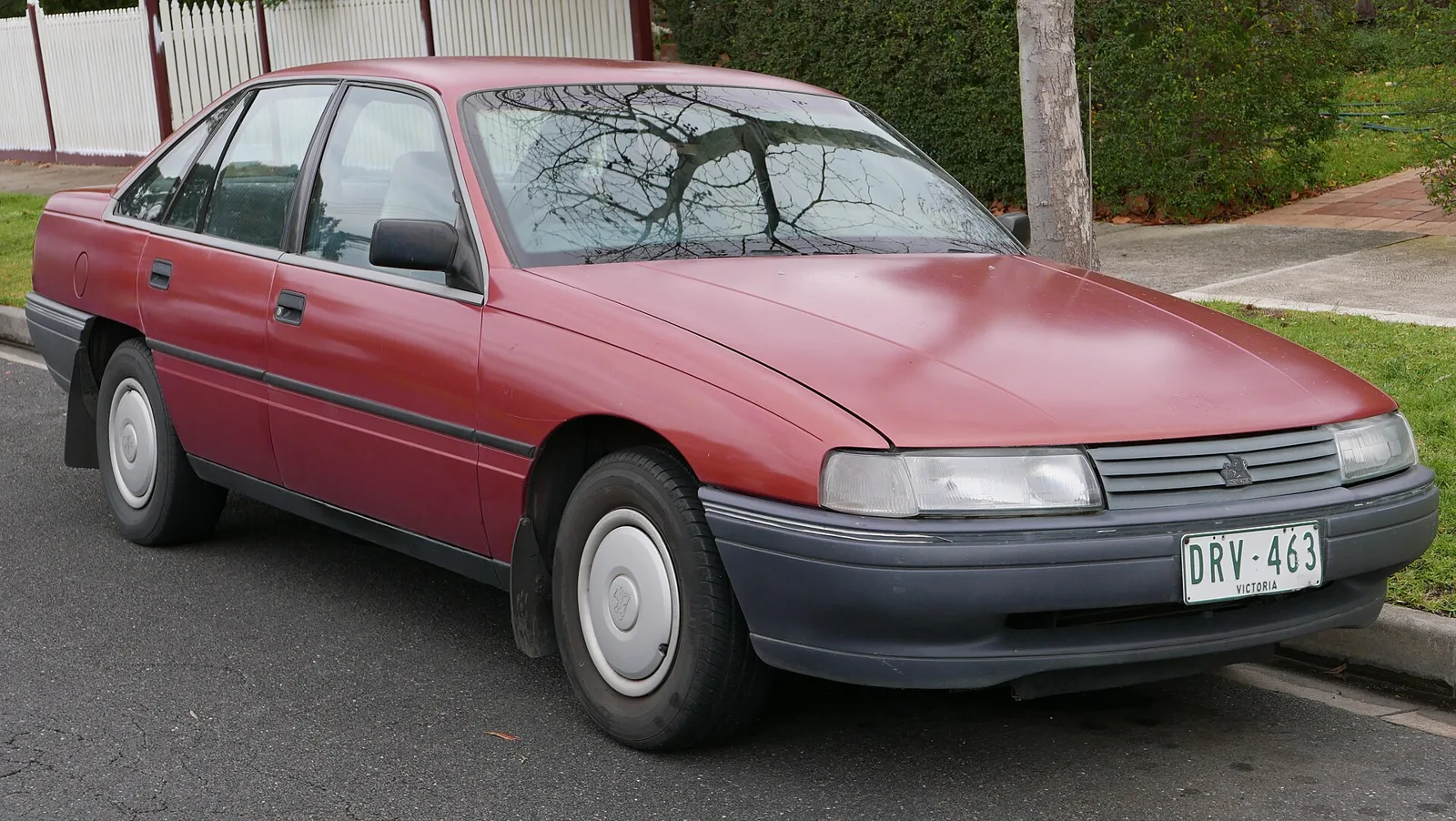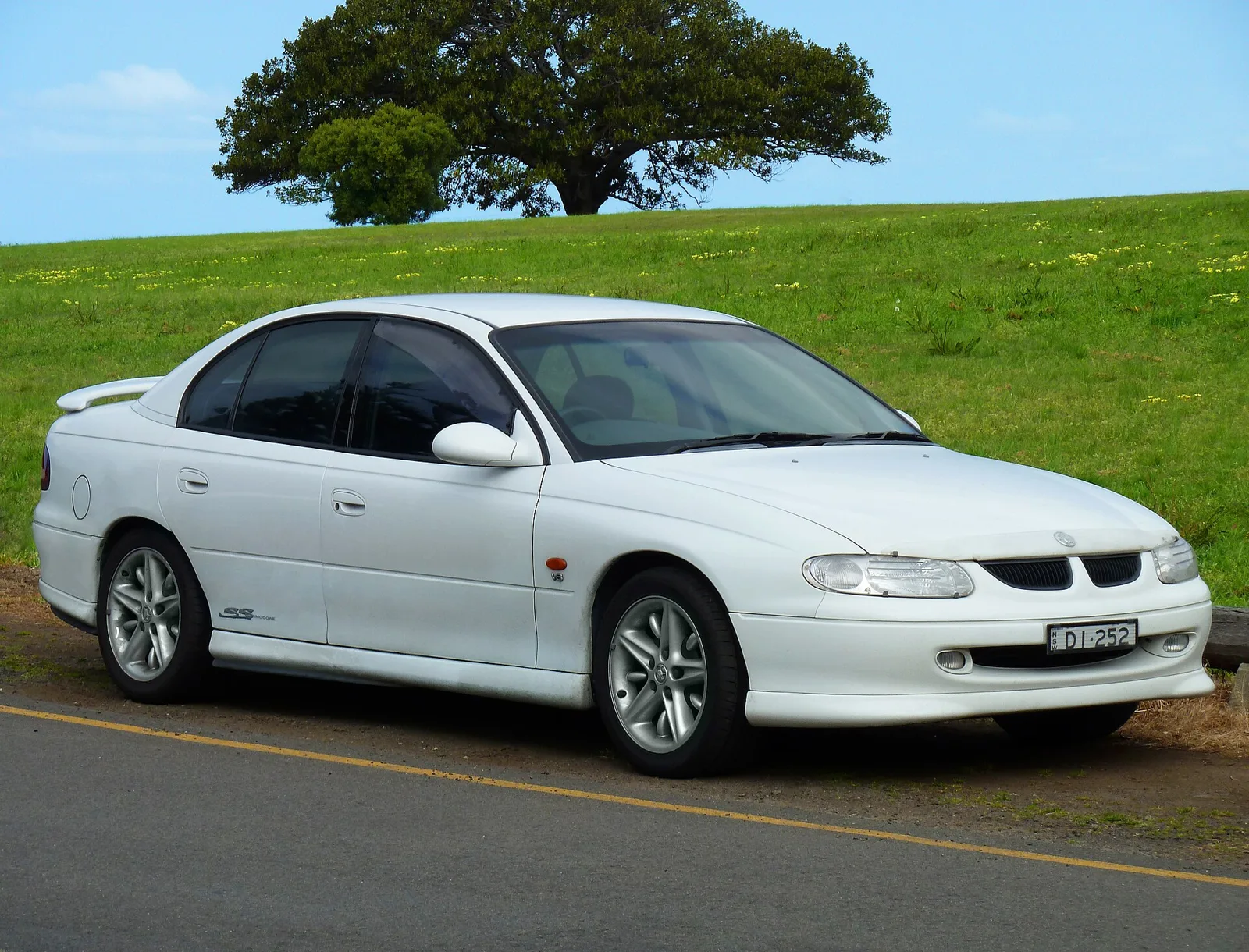
Holden turned an Opel Omega into the VT for A$600 million, while Mitsubishi widened a Galant to take on the big Australian sedans.
The Holden Commodore VT was built from 1997 to 2000 as a full-size, rear-drive car derived from the Opel Omega B. The Mitsubishi Magna was a front-drive mid-size car, first built in 1985 and widened from a Japanese Galant Sigma. The VT became the best-selling Commodore of its time.
The Holden Commodore VT and the Mitsubishi Magna were both built to win Australian family buyers, but they arrived from very different starting points. The VT was Holden's biggest development yet, a full-size car that was widened from an Opel. The Magna was a mid-size Mitsubishi that had been widened from a Japanese car in the 1980s to rival the big Commodore.
Where did the VT and Magna come from?
The VT arrived in August 1997, with showroom stock from 5 September, and it took over from the VS. It opened the third generation of the Commodore and was the last Commodore to use a locally made 5-litre V8. The VT Series II followed on 1 June 1999, and the VX took over in October 2000.
Holden looked to Opel for the platform, as it had with earlier Commodores. Holden used the Omega B as its starting point, widening the body and adjusting the mechanicals for Australian conditions. The alternative was to use the Omega largely unchanged, or to reskin the VN-VS architecture.
The Magna's story began in April 1985, when Mitsubishi introduced it as the replacement for the Sigma. Former Chrysler engineers working for Mitsubishi Motors Australia widened a Japanese Galant Sigma by 65 millimetres and strengthened it for local roads.
Holden spent A$600 million widening an Opel into the VT, while Mitsubishi widened a Galant to take on the same big-car buyers.
Why did Holden widen the Omega for the VT?
Holden started from the Omega B, widening that car and reworking its mechanicals for local use. The program cost A$600 million and ran for more than five years, the largest development effort the company had made.
The VT's body was 30 percent stiffer than the VS it replaced, which helped crash safety. The car also brought more advanced electronic systems, a first for an Australian-built car, and the front windscreen was raked at 63 degrees for a rounder look.
Holden spent A$275 million upgrading the Elizabeth plant, increasing its robots to 130. The main body was spot-welded in 101 seconds, and final assembly time fell by 2.5 hours.
How big were the VT and Magna?
The VT sedan was 23 millimetres longer and 60 millimetres wider than the VS. The new body weighed 166 to 195 kilograms more than the VS, which hurt performance and fuel efficiency, and the sedan's boot was 475 litres, up from 443 litres.
The Magna stayed smaller than its rear-drive rivals. Its front-drive layout gave it more interior room than the Commodore, and its name, taken from the Latin for big, stressed that size advantage over other medium cars.
The Magna's drag coefficient was Cd=0.36,, so its fuel efficiency was not notably better either. The VT's sedan drag coefficient was Cd=0.33, with its styling given a lower priority for aerodynamics.
What engines did the VT offer?
Under the bonnet sat a 3.8-litre Ecotec V6 used since the VS Series II, now with new exhaust manifolds and Bosch EV6 injectors. The supercharged version of that engine was an option on the S, SS and Calais and produced 171 kW (229 hp) in its latest form.
The 5.0-litre Holden V8 was the other option. A programme costing A$2 million gave the V8 13 hp (10 kW) and 10 N-m more than before, and the V8 was the core of the SS.
The Magna's engine was a 2.6-litre inline-four, codenamed 4G54 and sold as the Astron II. It initially produced 85 kW (114 hp) and 198 N-m (146 lb-ft). The TN series introduced ECI Multi fuel injection, which lifted output to 93 kW (125 hp).
On V6 models the VT paired a 4L60-E automatic with four speeds, or a five-speed Getrag 260 manual. V8s could have the five-speed Getrag 290 or the optional six-speed Tremec T56 manual. The VT's transmissions replaced the old Borg-Warner T5 choice on the V6.
How did the suspension and handling compare?
The VT series brought semi-trailing arm independent rear suspension as standard across the range. The European design lost its toe control link in Australian form, and that was prone to distorting camber and toe under heavy loads and causing rear tyre wear. Holden's HSV later re-added the link on the GTS 300.
Overall the VT was regarded as a more neutral handler than the VS. Bosch 5.3 three-channel ABS came as standard across the range, and the wheel sizes ranged from 15 inch to 17 inch on the SS.
The Magna's front suspension used MacPherson struts and its rear used a torsion beam axle, while the TM wagon used a four-link beam axle with coil springs.
What safety and technology did the VT bring?
The VT used more computer simulation than any previous Holden, so only 20 VTs were physically crash tested against 55 for the earlier VR. Driver airbags were standard across the range, and from 1998, buyers of Acclaim and higher models could add side airbags covering the torso and head.
Inside, more than 90 percent of the VT's electrical and heating and ventilation components were new over the VS. The seats used a new bonding method to attach their facings to the foam, which removed the traditional sewing.
Its multiplex communication bus could circulate 330 parameters per second to the major control modules, and it reduced hardwired circuits. The electronic immobiliser gained 16 million extra codes over the VS equivalent.
Standard equipment across the range included independent rear suspension, a driver's airbag, seatbelt pretensioners, an electric seat height and tilt adjuster, and a trip computer. Passenger airbags were optional on the Executive and S for A$510, and ABS was an option on the Executive.
Automatic transmission was optional on all models except the Acclaim, Berlina and Calais. Power steering was standard, with the Calais using a speed-sensitive system called Variotronic that was criticised for its feel.
Holden's US parent had a stake in the VT's development from early on. A left-hand drive Commodore was proposed for the Buick range, and a prototype appeared in 1995 as the Buick XP2000 concept, whose styling formed the basis of the VT. The project was abandoned in early 1994, so Holden exported left-hand drive VTs to Indochina and the Middle East as Chevrolet Luminas and to Brazil as Chevrolet Omegas.
How did the VT's models and prices work?
Six models made up the original 1997 range. The Executive V6 manual started at A$29,760 for the sedan, the Acclaim V6 automatic at A$33,980, and the S V6 manual at A$34,810. The SS V8 manual was the top sports model at A$44,160.
The Berlina V6 automatic started at A$39,800 for the sedan, and the Calais V6 automatic at A$48,760 as the sport luxury package. Traction control was standard on the Acclaim and Calais and optional elsewhere for A$510.
The Magna's first-generation range was the GLX, SE and Elite from April 1985, with the Executive added in August 1986 for fleet buyers. The Elite had an LCD instrument panel and steering side pods that put the main controls within easy reach. Its rear used a torsion beam axle, where the VT relied on independent suspension.
How did the VT and Magna sell?
The VT found ready acceptance in the market. Many buyers steered away from the more radically designed Ford Falcon AU, and the VT became the best-selling Commodore and Holden's number one in Australian sales at its time. It also won the 1997 Wheels Car of the Year award, the fourth Commodore to take the honour.
The Magna sold almost 209,000 cars between 1985 and 1990. It won Wheels Car of the Year's value-for-money category in 1985, and its sales depended on offering a more refined package for less money than its main rivals.
The Magna's first generation had quality-control problems, mainly fragile engine heads and automatic transmissions, which were gradually rectified over its life. The Magna's quality problems were a reminder that a cheap package can fail on reliability, while the VT arrived after a far larger development budget.
Holden Commodore (VT) and Mitsubishi Magna side by side
| Feature | Holden Commodore (VT) | Mitsubishi Magna |
|---|---|---|
| Production | 1997 to 2000 | 1985 to 2005 over three generations |
| Basis | Opel Omega B, broadened for Australia | Japanese Galant Sigma, widened by 65 mm |
| Drive layout | Rear-wheel drive | Front-wheel drive |
| Base engine | 3.8-litre Ecotec V6 | 2.6-litre Astron II four, 85 kW (114 hp) initially |
| Top engine | 5.0-litre V8; supercharged V6 171 kW (229 hp) | Verada 3.0-litre V6 from July 1991 |
| Transmissions | Four-speed automatic; five-speed and six-speed manuals | Five-speed manual or four-speed ELC automatic |
| Sedan drag coefficient | Cd=0.33 | Cd=0.36 (first generation) |
| Entry price | A$29,760 (Executive) | None given |
| Top price | A$48,760 (Calais) | None given |
| Development cost | A$600 million | Claimed A$50 million for the first generation |
| Awards | Wheels Car of the Year, 1997 | Wheels Car of the Year value-for-money award, 1985 |
| Sales | Best-selling Commodore | Almost 209,000 from 1985 to 1990 |
| Facelifts | Series II in June 1999 | TN in April 1987; TP in June 1989 |
| Successor | VX in October 2000 | Mitsubishi 380 in 2005 |
Which buyer suits each car?
The VT suits a buyer who wanted a rear-drive full-size Holden with a choice of V6, supercharged V6 or V8, and who valued the Berlina and Calais luxury levels. The Magna suits a buyer who wanted a front-drive family car with a roomy cabin and a lower price.
Neither car wins outright on the facts given. The VT was the stronger seller, while the Magna's appeal was value and interior space for the money.
A used buyer should check the Magna's engine heads and automatic transmission history, since those were the early weak points. A VT buyer should check which series the car is and whether it has the supercharged V6 or the V8.
In 1999 the VT wagon platform was the basis for the second-generation Statesman and Caprice luxury cars in 1999. The Berlina and Calais had full power electric windows and metallic paint as standard, and cruise control was standard on automatics except the Executive.
Holden's Monaro idea came from the VT too. The Holden Coupe concept shown at the 1998 Australian International Motor Show drew such strong public interest that a production Monaro followed in 2001, based by then on the VX.
What became of the VT and Magna?
The Magna's Astron II engine used Silent Shaft counterbalancing, which Mitsubishi also licensed to other automakers to reduce the vibrations of large four-cylinder engines.
The VT formed the basis for the Monaro coupe, which had been shown as the Holden Coupe concept at the 1998 Australian International Motor Show and reached production in 2001 on the VX platform.
The VX replaced the VT in October 2000, and the VY of 2002 rectified the rounded boot-lid edge that Holden engineers had conceded was not ideal. The Magna's second generation TR arrived in April 1991, and it was re-engineered from the ground up.
The Magna's third generation launched in 1996 and gained all-wheel drive from 2002, before it was replaced by the Mitsubishi 380 in 2005. Much of the car was exported as the Mitsubishi Diamante.