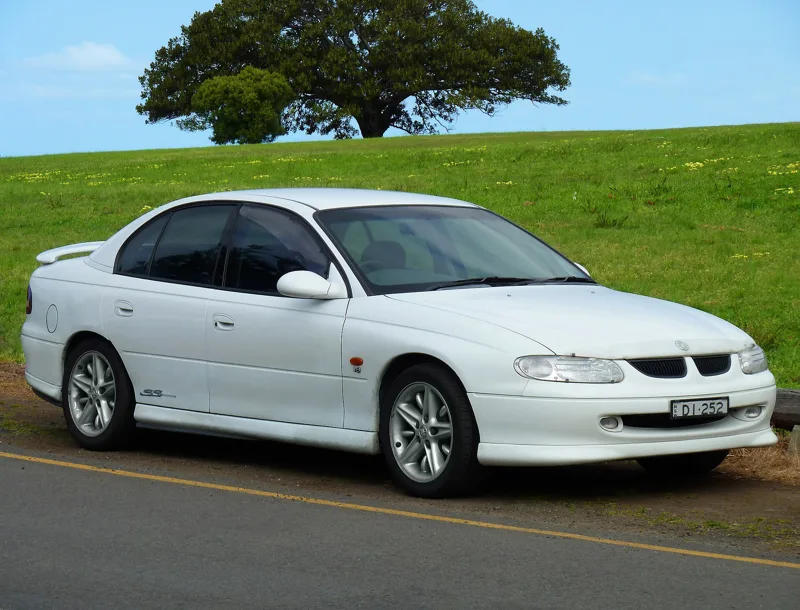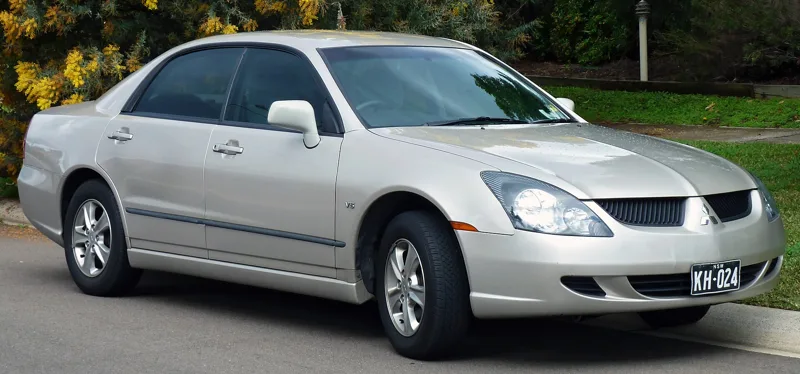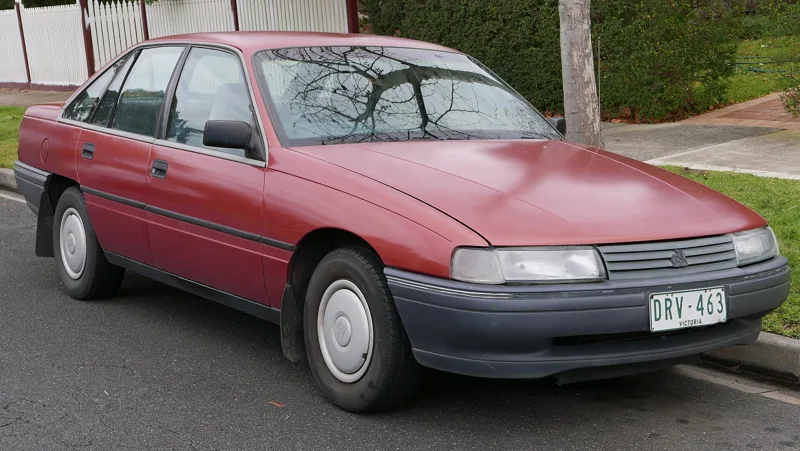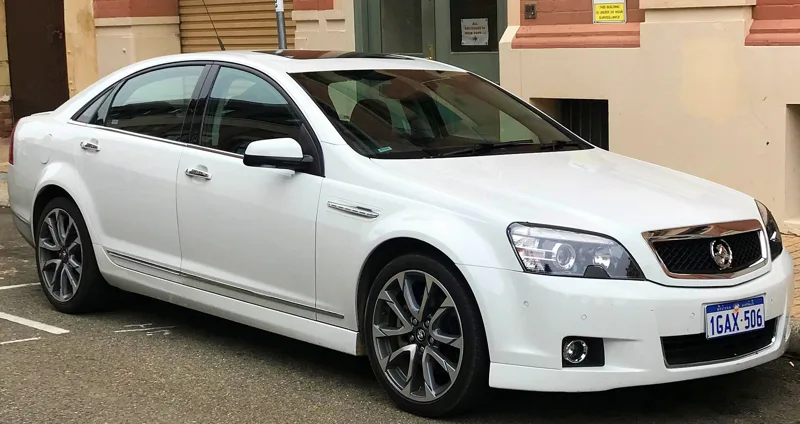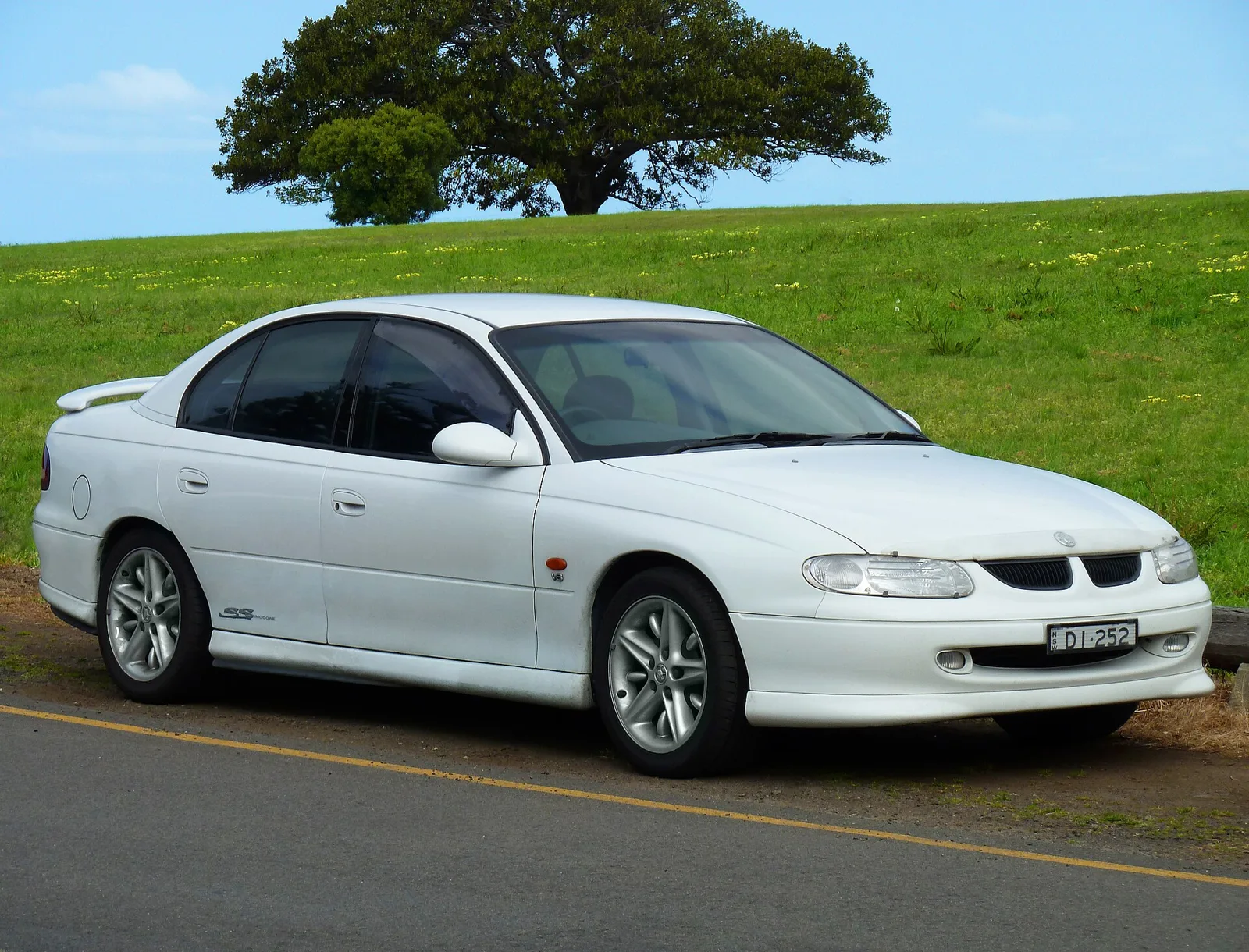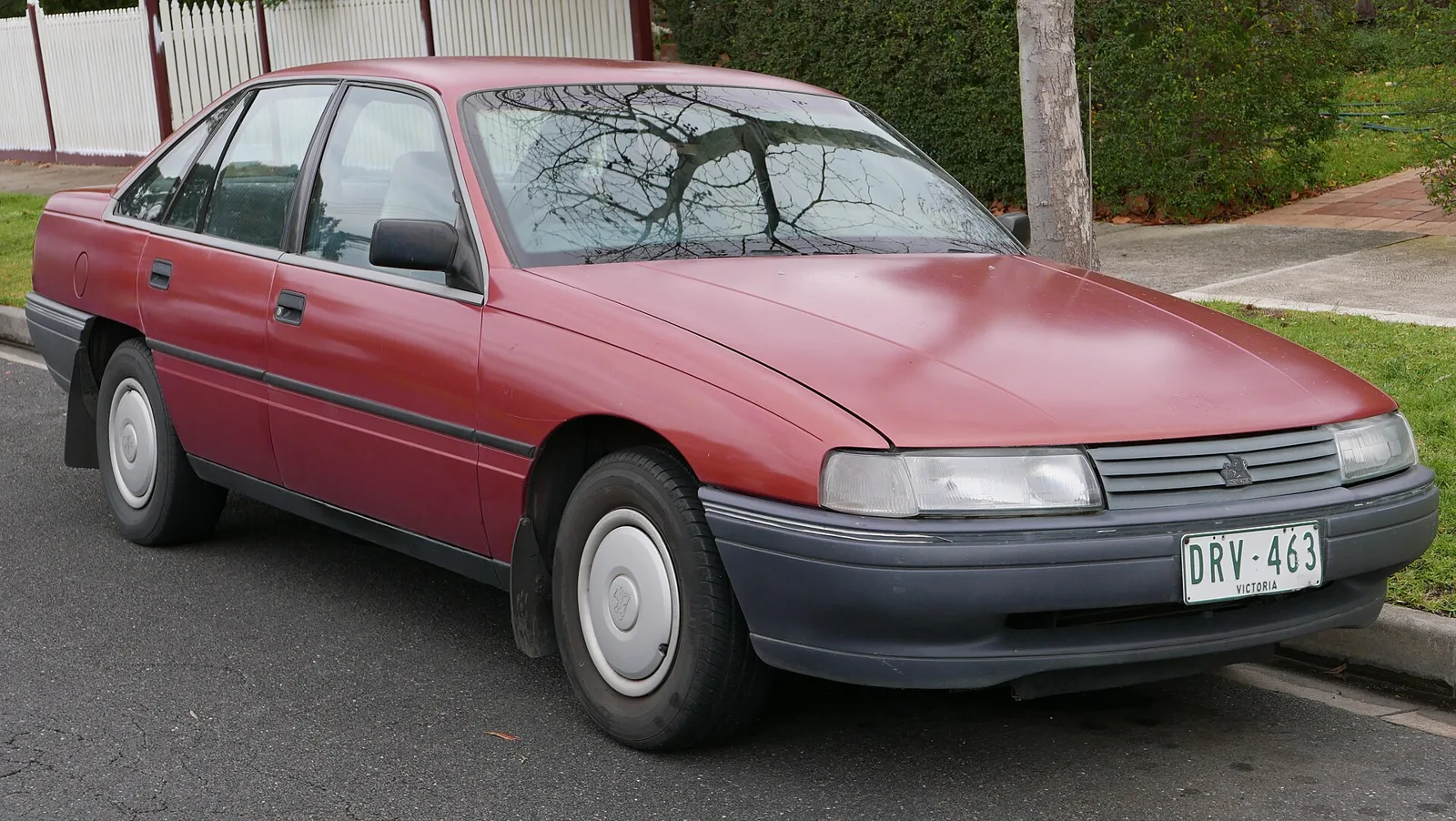
The VN brought Holden a V6 or V8 choice, while the Magna was widened from a Japanese mid-size car to take on the Falcon and Commodore.
The Holden Commodore VN was built from 1988 to 1991 as a full-size, rear-drive car based on Opel underpinnings. The Mitsubishi Magna's first generation ran from 1985 to 1991 as a front-drive mid-size car, widened to challenge the big Australian sedans. The VN sold 215,180 cars in its three-year life.
The Holden Commodore VN and the Mitsubishi Magna were built to fight over the same Australian family buyers. The VN was a full-size Holden that offered a V6 or a 5.0-litre V8, while the Magna was a mid-size Mitsubishi that had been widened specifically to challenge the big Falcon and Commodore. One was a rear-drive large car and the other a front-drive mid-size with a four-cylinder engine.
Where did the VN and Magna come from?
The VN Commodore was released on 17 August 1988 as the first model of the second-generation Commodore, which had previously been a mid-size car. It was built until production ended in September 1991, after a three-year run.
A re-engineered hybrid of the European Opel Omega and Opel Senator, the VN had the Vauxhall Carlton II and Senator II as sister models. The project cost some A$200 million, and the VL floor pan was widened and stretched to create the new car.
The Magna arrived in April 1985 as Mitsubishi's replacement for the Sigma. It was developed by former Chrysler engineers working for Mitsubishi Motors Australia, and it took the body of the fifth-generation Japanese Galant Sigma, a front-drive car released in August 1983.
A full-size Holden with a choice of V6 or V8, and a Mitsubishi that was widened by 65 millimetres to take on the big rear-drive cars.
Why were the VN and Magna rivals?
The VN was meant to match the Ford Falcon for size, and the Magna was meant to beat the big rear-drive cars on interior space. Both targeted the large-car market that Australian buyers had long preferred.
Engineers spliced an extra 65 millimetres (2.6 in) of width into the Galant's body and strengthened it for Australian roads. The Magna was named after the Latin word for big, and it was intended to compete against the Toyota Corona, the Holden Camira, the Nissan Bluebird and the Ford Telstar, as well as the Commodore itself.
The widening approach worked. It also influenced other Japanese makers, which later widened their mid-size cars for international markets, and the widened Toyota Camry of 1991 was one example.
How big were the VN and Magna?
The VN Commodore's stretched floor pan allowed it to match the Falcon for size, and it moved Holden's range firmly into the full-size class. The Magna remained smaller and lighter than its rear-drive rivals, but its front-drive packaging gave it more interior room than the Commodore, which was a selling point. The name Magna, from the Latin for big, was chosen to stress the car's size advantage over other mid-size cars.
Because the Magna was smaller and lighter, it could use a large-bore four-cylinder engine rather than the six-cylinder units favoured by Holden and Ford. Even so, its drag coefficient of Cd=0.36 meant fuel efficiency was not significantly better either. Official figures put city consumption at 11.0 L/100 km (21.4 mpg-US) and highway consumption at 7.8 L/100 km (30 mpg-US).
What engines did the VN and Magna use?
The VN replaced the Nissan engine of the VL with a domestically made version of the Buick LN3 V6, which was adopted from US market General Motors vehicles. The 5.0-litre V8 remained optional and was boosted to 165 kW (221 hp).
Both engines used multi-point GM fuel injection, and the V6 used three coil packs for ignition.
The Executive's standard engine was the 3.8-litre 125 kW (168 hp) V6, and the V6 was praised for its performance at the time, even though it was not known for smoothness or quietness. A fuel-injected 2.0-litre four was offered in export markets such as New Zealand and Singapore.
The Magna's engine was the Australian-built 2.6-litre inline-four, codenamed 4G54 and sold as the Astron II. It initially produced 85 kW (114 hp) and 198 N-m (146 lb-ft). The TN series added Mitsubishi's ECI Multi fuel injection, which lifted output to 93 kW (125 hp).
A station wagon arrived in June 1987. It was engineered and built exclusively in Australia, which broadened the Magna's appeal with private and fleet buyers alike.
Gearbox choices were a five-speed manual or a four-speed ELC automatic with overdrive, and the Executive and Elite were available only as automatics. Its front suspension used MacPherson struts, and the rear used a torsion beam axle.
The TN series of April 1987 brought a new grille insert, a rear licence plate moved to the bumper, better seats and an optional EFI engine upgrade. The Elante sedan, with EFI and sportier suspension, arrived in June 1988 alongside an Elite wagon.
The TP series of June 1989 added a revised grille and rear light fascia, new wheels and an improved four-speed automatic. Power steering became standard across the range during 1990.
What did the VN's Series II change?
In September 1989 the VN Series II arrived with the EV6 engine. Changes included a new cast exhaust manifold, a new camshaft sprocket profile and timing chain, wider conrod bearings and revised throttle uptake, with the automatic recalibrated to suit the new torque curve.
The Series II revisions reduced the V6's initial torque and improved its noise and vibration. The centre high-mount stop light had already been added before July 1989, when Australian rules required it on all new passenger cars.
How did the VN's models and prices work?
The VN range ran from the Executive, priced from A$20,014, through the S and SS sports models to the Berlina and the top Calais. The SS, released in March 1989, came with the 5.0-litre V8 and a limited-slip differential, and it cost from A$25,375.
The Berlina was the entry luxury version at A$24,781, and the Calais was the top of the luxury range at A$31,265. The Calais had climate control from 1990, an alarm and remote central locking, and a leather upholstery option.
The S was the entry sports variant, with a basic bodykit, sports trim, FE2 suspension and an optional Power Pack with power windows, a power antenna and power mirrors. The 1990 Vacationer, a limited edition based on the Executive, came in Alpine White or Azure Blue with air conditioning, electric mirrors and a tachometer.
The SS brought a limited-slip differential, driving lights, FE2 sports suspension and grey and red checked interior fabrics. Its colours were Atlas Grey, Phoenix Red and, later in the life of the VN, Alpine White.
Limited editions helped sales. The LE was a run of 100 sedans sold through the Holden dealer group of New South Wales at the Sydney Motor Show in October 1989 for A$43,200. The LS followed in July 1991 with 300 sedans for Australia at A$28,990.
What were the Magna's early models like?
The Magna launched in April 1985 with the base GLX, the mid-range SE and the high-end Elite. The Executive arrived in August 1986 for fleet buyers, with full plastic wheel covers and power steering as standard.
The luxury models had velour seats, a seven-way driver's seat, rear integrated headrests and an LCD instrument panel on the Elite. Both the SE and Elite used steering side pods, which put the main controls within easy reach of the driver.
The Magna won the value-for-money category of Wheels Car of the Year in 1985. The VN itself was also a Wheels Car of the Year winner, and for the second time, in 1988.
How did the two cars sell?
The VN was a commercial success. Holden built 215,180 VN Commodores over its three-year life,. Its later variants included the VG utility from August 1990 and the VQ Statesman and Caprice from March 1990.
The Magna sold almost 209,000 cars between 1985 and 1990. The TM series had quality-control problems, chiefly fragile engine heads and automatic transmissions, which were gradually rectified during the first generation.
The Magna's sales strength relied on keeping prices low. It offered a more refined and economical package than its main rivals for less money, and that was central to its Wheels Car of the Year award in 1985.
Holden Commodore (VN) and Mitsubishi Magna side by side
| Feature | Holden Commodore (VN) | Mitsubishi Magna (first generation) |
|---|---|---|
| Production | 1988 to 1991 | 1985 to 1991 (sedan), first generation |
| Class | Full-size | Mid-size, widened to compete with the large cars |
| Drive layout | Rear-wheel drive | Front-wheel drive |
| Basis | Opel Omega and Opel Senator, re-engineered | Japanese Galant Sigma, widened by 65 mm |
| Engines | 3.8-litre V6 (125 kW; 168 hp); 5.0-litre V8 (165 kW; 221 hp) optional | 2.6-litre four; 85 kW (114 hp) initially, 93 kW (125 hp) with EFI in TN |
| Transmission | Four-speed automatic or five-speed manual | Five-speed manual or four-speed ELC automatic |
| Entry price | A$20,014 (Executive) | None given |
| Top price | A$31,265 (Calais) | None given |
| Sales | 215,180 over three years | Almost 209,000 from 1985 to 1990 |
| Awards | Wheels Car of the Year, 1988 | Wheels Car of the Year value-for-money award, 1985 |
| Facelifts | Series II in September 1989 | TN in April 1987; TP in June 1989 |
| Successor | Toyota Lexcen rebadge from September 1989 | Second generation TR from April 1991 |
Which buyer suits each car?
The VN suits a buyer who wanted a rear-drive full-size Holden with a choice of V6 or V8, and who valued the Berlina and Calais luxury levels. The Magna suits a buyer who wanted a front-drive family car with a roomy cabin and a lower price.
Neither car settles the question outright. The VN's three-year total of 215,180 was slightly higher than the Magna's almost 209,000 from 1985 to 1990, but the Magna won the value-for-money award in its launch year. The sales figures show different strengths.
A buyer looking at a used Magna should check the engine heads and automatic transmission history, since those were the early weak points. A VN buyer should check which Series the car is and whether it has the V8.
What became of the VN and Magna?
The VN was rebadged as the Toyota Lexcen, launched in September 1989 under the Hawke Government's Button car plan, which cut the number of locally built models and introduced model sharing.
The Magna's second generation TR arrived in April 1991, and the Mitsubishi Verada luxury variant with a 3.0-litre V6 followed in July 1991. The Magna was later exported widely as the Mitsubishi Diamante.
The second-generation Magna was re-engineered from the ground up, with the larger sedan arriving in April 1991 and the station wagon in May 1992. The TR was about 100 kilograms heavier than the first generation, and its Astron II engine now came only with fuel injection.
The Verada shared the Magna body but used its own grille and larger bumpers, along with luxury fittings. Its V6 was the Australian-made 3.0-litre unit that Mitsubishi marketed as Cyclone.
In New Zealand the VN was assembled between 1988 and 1990, and the last locally assembled Commodore came off the line on 21 November 1990, after the Trentham plant closed in late 1990.
The VN was assembled alongside the VL for its first few months in New Zealand, because the VL was slightly smaller and offered Nissan straight-six engines. New Zealand reversed the Australian trim order, so the Berlina there was the four-cylinder car and the Executive matched the Australian Berlina.