From a Holden-free marque in 1971 to the Zeta-platform WM and WN Caprice, the long-wheelbase saloons that ended with the closure of Australian production in 2017.
The Holden Statesman began in 1971 as a separate luxury marque and the Caprice joined it in 1974. Holden revived both names on long-wheelbase Commodores in 1990. The WM and WN Caprice carried the line until October 2017, when Holden closed Australian manufacturing and the last Caprice V was built.
When Holden closed its Australian manufacturing operations in October 2017, the last long-wheelbase saloon it built was a Caprice V, driven by a 6.2-litre V8 borrowed from the HSV Grange. It was the final chapter of a line that began in 1971 as a deliberately un-Holden luxury marque.
The Statesman and Caprice grew from a plain idea: stretch the family car, add equipment and sell it at a much higher price. Over the decades the Holden Statesman and Holden Caprice went from Cadillac-style ride comfort to a Zeta-platform flagship with head-up display, and they outlasted the Ford rivals they were built to beat.
How did the Holden Statesman begin?
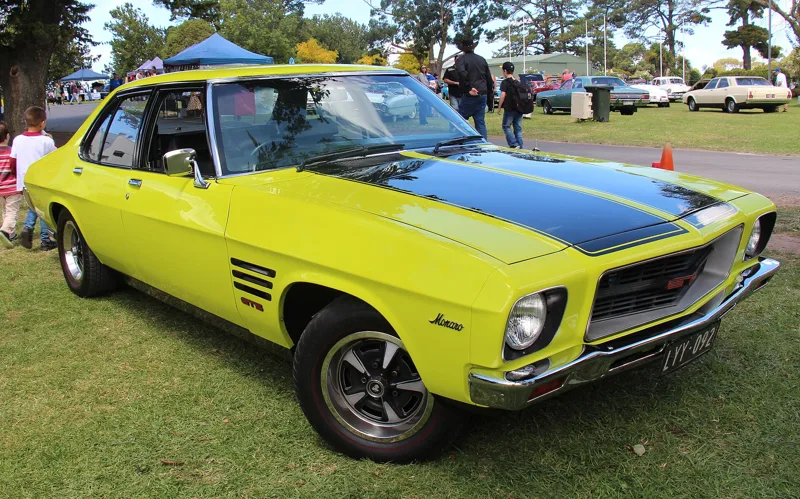
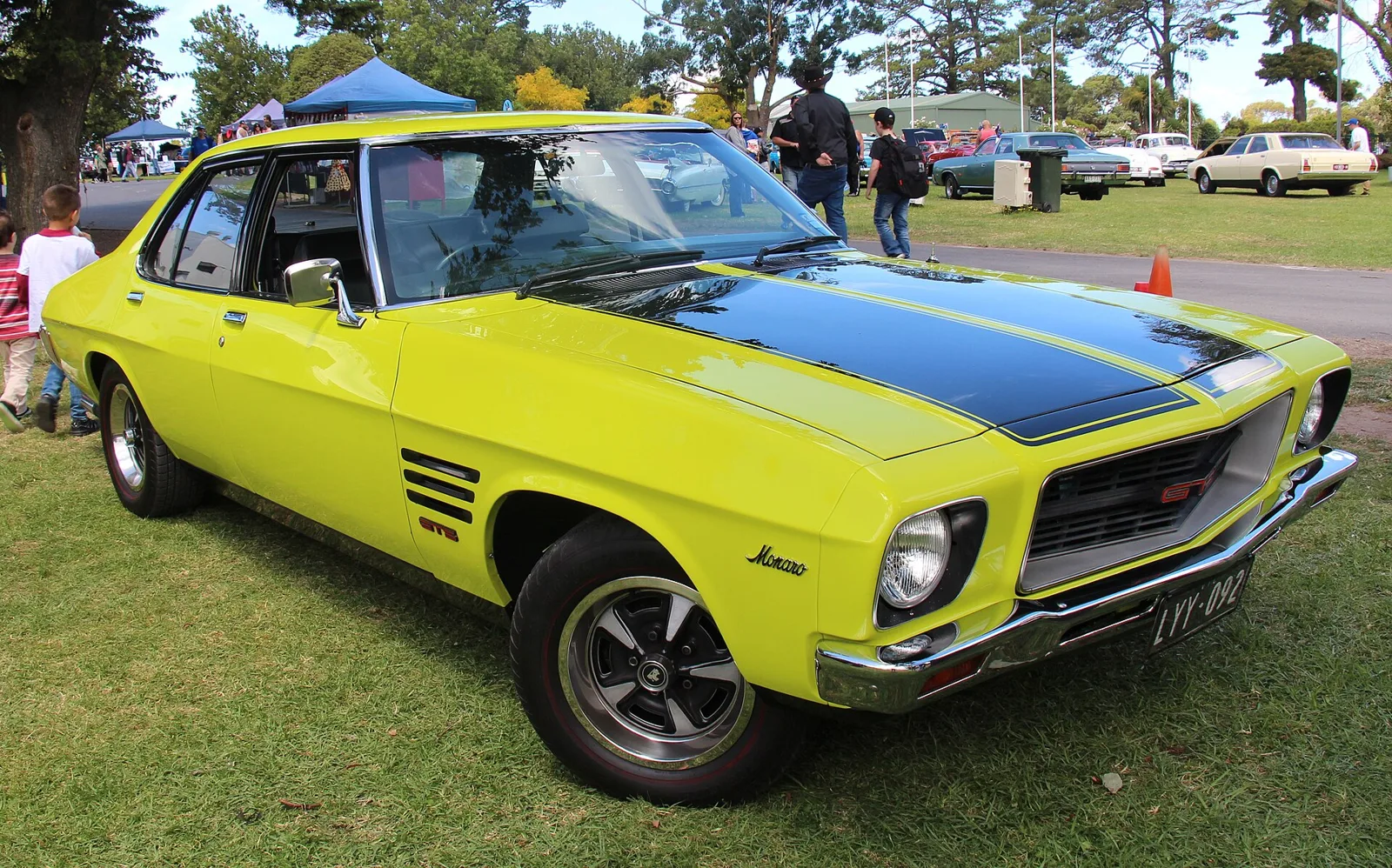
Holden launched the Statesman on 22 July 1971 as a separate marque, sold through General Motors-Holden's dealers with no Holden badges. The HQ series took the place of the Brougham, rode on the longer wheelbase of the HQ station wagon, and was meant to take on Ford Australia's Fairlane. Ford had created a profitable category of Australian prestige car by stretching the Falcon, and Holden wanted a share.
Holden went to some lengths to keep the name out of its advertising, using "General Motors" in sales literature in place of "General Motors-Holden". The wheelbase grew by 3 inches (76 mm) to 114 inches (2,900 mm), with the extra length behind the rear doors for rear-seat legroom. Two versions were offered, the luxury Statesman de Ville and the basic Custom. Engines ranged from a 202 cubic inch (3.3-litre) Red six through a 253 V8, marketed as 4.2 litres, to a 308 V8 (5.0 litres) and a Chevrolet 350 small-block (5.7 litres). Every de Ville came with the 308 V8, and the 350 was optional.
A Caprice for the flagship
The HJ of October 1974 kept the de Ville and added a new flagship, the Statesman Caprice, with air-conditioning, leather, electric locking and power windows, plus 13 interior lamps, all as standard. At that point it was the most luxurious car General Motors offered in Australia. Cadillac-style bumper overriders, fluted hubcaps, whitewall tyres and a bonnet ornament from the Chevrolet Caprice set it apart.
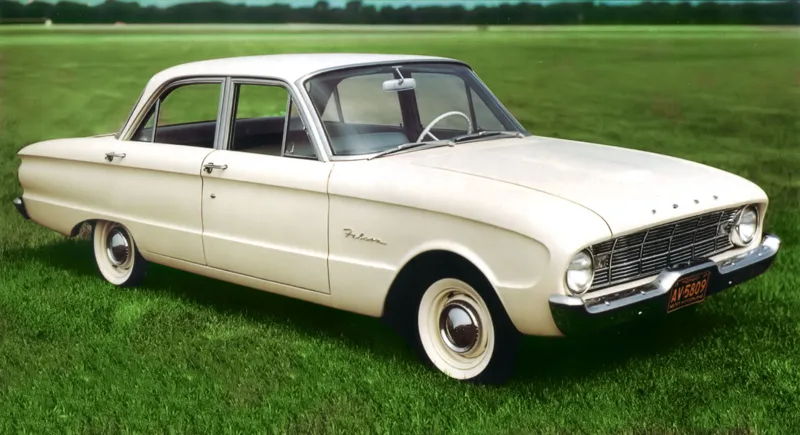
Ford had raised the stakes in 1973 with the LTD, a Fairlane with the wheelbase pushed to 121 inches (3,100 mm), which made it the one Australian car that matched the American full-size class. Holden's answer was the Caprice. Later updates brought more formal grilles for the HX in July 1976 and Radial Tuned Suspension plus four-wheel disc brakes for the HZ in November 1977. George Roberts, the director of Holden engineering and a former chief engineer at Cadillac, had insisted on a ride that favoured comfort over ultimate roadholding, and not everyone liked the Cadillac feel before the HZ.
The final series, the WB of May 1980, used a six-light body with a longer, squared-off roofline by chief stylist Leo Pruneau, built from existing HZ panels to keep costs down. Production was 5,450 de Villes and 3,055 Caprices, then 4,269 and 1,153 for the Series II of September 1983. The WB was never a sales success until Holden announced the end of production in 1984, which produced a rapid rise in orders. The last cars were made in January 1985, and Holden said it intended to leave the big-car market to concentrate on luxury versions of the Commodore.
Statesmans around the world
General Motors New Zealand assembled the HQ at Trentham until 1975, selling it as the Holden Statesman, and also sold a version with the American 350 V8 as the Chevrolet 350. South Africa received the car as the Chevrolet Constantia, and as the de Ville with an imported 5.7-litre V8 priced 33 per cent above a comparable Constantia. In Japan, Isuzu sold it as the Statesman De Ville from 1973 to 1976, and either 246 or 250 were sold. Thailand assembled it from kits as the Chevrolet De Ville.
A modern Caprice can be mistaken for a fully loaded Statesman, but in the past the two were separate Holden models.
How did Holden bring the Caprice back in 1990?
In March 1990, six years after the WB disappeared, Holden brought back the Statesman and Caprice names for a long-wheelbase luxury saloon, the VQ. Demand had persisted. The car now used the long-wheelbase chassis of the VN Commodore wagon, itself a revised and enlarged Opel Omega A, and it ended up 110 mm (4.3 in) longer than the standard Commodore sedan and 64 mm (2.5 in) longer than the wagon.
The VQ tried hard not to look like a Commodore. It had a formal grille, a glasshouse reminiscent of the Oldsmobile Cutlass Supreme, a rear number plate moved to the bumper, and the doors and headlights of the Commodore wagon. Independent rear suspension was standard on both cars, a year ahead of high-end VP Commodores. The 1991 Series II made ABS standard on the Caprice and optional on the Statesman, and the 3.8-litre V6 with 127 kW (170 hp) became an option on the Statesman, with the 5.0-litre V8 standard across the range. Holden Special Vehicles sold uprated versions as the HSV Statesman 5000i, SV90 and SV93.
VR and VS
The VR of March 1994 gave the V6 rolling-element bearings in its rocker arms and a new electronically controlled 4L60-E automatic, lifting power to 130 kW (174 hp). The V6 was standard on the Statesman and an option on the Caprice for the first time, and a driver's airbag became standard. From the VR on, the long-wheelbase cars carried the same two-letter code as the Commodore.
The VS followed in April 1995 with the Ecotec V6, which had 13 per cent more power, an increase of 17 kW (23 hp). The Series II of September 1996 introduced a supercharged L67 V6 officially rated at 165 kW (221 hp), only 3 kW (4.0 hp) shy of the V8. An HSV option for the 5.0-litre V8 produced 185 kW (248 hp). The VS added a passenger airbag, and a Statesman International special edition appeared in October 1995 and again in February 1997. The Monash University Accident Research Centre rated first-generation Statesmans, from VQ to VS, as offering an average level of occupant protection.
In October 1996 HSV released the Grange, a sports Caprice built at Elizabeth in South Australia and finished at Clayton in Victoria. It was the first car to carry the Grange name, with 185i and 215i versions powered by 5.0-litre and stroked 5.7-litre V8s. Standard equipment included 17-inch alloys, a ten-speaker stereo with CD stacker, leather, a memory driver's seat, climate control and a power sunroof, and the 215i had a Hydratrak limited-slip differential.
What did the WH Caprice change?
The WH arrived in June 1999, almost two years after the VT Commodore it was based on, and it returned to a standalone model code. It came as the standard Statesman, the special-edition Statesman International and the flagship Caprice. The wheelbase grew to 2,939 mm (116 in), the track widened, and the brakes were four-channel ABS discs with traction control. Boot space rose to 541 litres.
Engines came from the Commodore: a 3.8-litre Ecotec V6, a supercharged variant, and a new 5.7-litre Generation III V8 making 220 kW (295 hp). The Series II raised the Ecotec by 5 kW (6.7 hp) to 152 kW (204 hp). Since the WH was engineered with left-hand drive in mind as well, the Statesman went to the Middle East badged as a Chevrolet Caprice.
The Caprice earned its place with rear-passenger toys: roof-mounted climate and stereo controls, headphone jacks that let rear seat occupants listen to a different source from the front, a flip-down table in the armrest, Howe leather, a 260-watt 12-speaker audio system and key memory for three drivers. A fine chrome vertical-bar grille marked it out, where the Statesman used a chrome matrix grille. Self-levelling rear air suspension helped with heavy loads and towing, and the car gained side head and torso airbags and pyrotechnic seat belt pretensioners as standard. The WH Grange of June 1999 offered a supercharged 3.8-litre V6 or the 5.7-litre V8 and a Prestige suspension tune with Monroe Sensatrac dampers.
What did the WM Caprice offer on the Zeta platform?
The WM series, launched on 16 July 2006 at the Melbourne Convention and Exhibition Centre alongside the VE Commodore, shared that car's Zeta platform. It was an A$190 million investment on top of the $1.03 billion VE Commodore programme. Holden's main targets were politicians at federal and state level, public servants, business owners and private buyers at home and abroad.
The Statesman came with leather, woodgrain trim, a Blaupunkt sound system, dual-zone climate control, 17-inch alloys and a 3.6-litre LY7 V6. The Caprice added bolstered leather, a rear entertainment system with twin LCD screens, tri-zone climate control, Bose audio, bi-xenon headlights, 18-inch alloys, sports suspension and a 6.0-litre L98 V8. Both had a Holden-developed infotainment system with a 6.5-inch screen and Bluetooth, and neither could be had with a manual gearbox.
Only the windscreen and the front doors looked the same as the VE Commodore. Unlike earlier Caprices, the WM did not borrow its rear doors from the Commodore wagon, and its own elongated doors made getting in and out easier. Rear legroom, already generous, increased again, and the centre dash used real aluminium.
| Engine | Fitted to | Output |
|---|---|---|
| 3.6-litre Alloytec V6 | WM Statesman, optional on Caprice | 195 kW (261 hp) |
| 6.0-litre L98 V8 | WM Caprice | 270 kW (360 hp) |
| 6.0-litre L77 V8 | WM from 2009, then WN | 260 kW (349 hp) |
| 3.6-litre SIDI V6 | WM Series II | 210 kW (282 hp) |
| 3.6-litre LPG V6 | Optional from 2012 | 180kW and 320Nm |
| 6.2-litre LS3 V8 | WN Series II | 304 kW (408 hp) |
Series II, WN and the final car
The 2009 update brought a direct-injected V6 for the Statesman and the L77 V8 with Active Fuel Management cylinder deactivation, which could also run on E85 fuel. In August 2010 the WM Series II dropped the Statesman, along with its own wheels, styling and woodgrain, and split the Caprice into a decontented base car meant to replace it and a flagship Caprice V. A new iQ infotainment system brought USB connections, streaming, navigation with traffic alerts and a reversing camera.
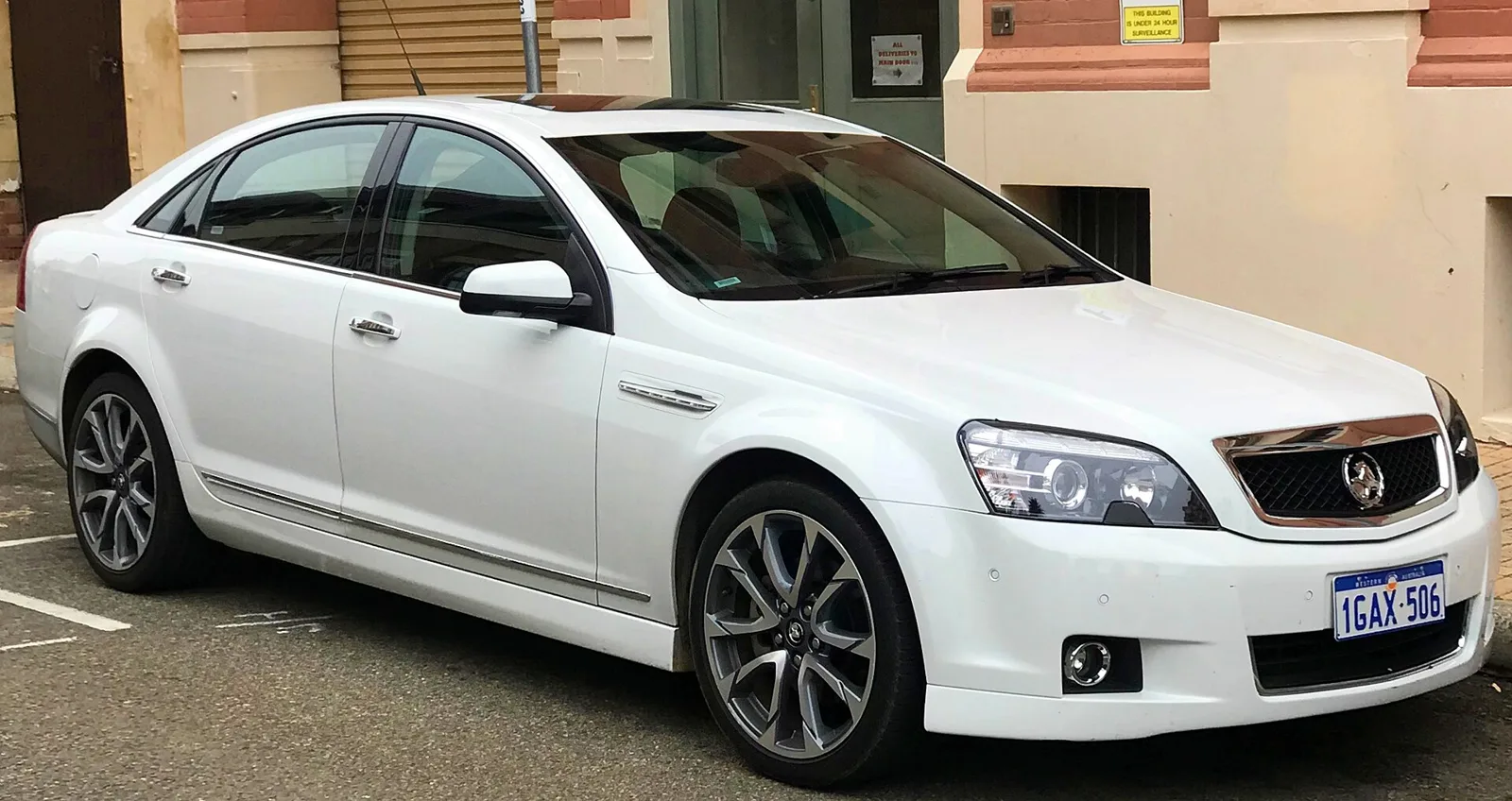
The WN Caprice V of July 2013 took the dashboard, steering wheel and MyLink infotainment from the VF Calais. The rear-seat screens now folded into the seat backs, but the tri-zone climate system disappeared. Outside, almost nothing changed apart from 19-inch wheels. New technology included trailer stability control, rear cross traffic alert, blind-spot monitoring, lane departure warning, forward collision alert, a head-up display, an electric park brake, automatic parking and keyless entry. An LPG V6 was optional on the Caprice V for just one year, 2014 to 2015, and the base Caprice, which came only with the LPG V6 and was aimed at fleets, was dropped in 2015.
The last revision, the WN Series II of September 2015, left one trim and one engine. The 6.2-litre LS3 V8 from the HSV Grange arrived, detuned to 304 kW (408 hp), along with a lip spoiler and dual exhaust tips in place of quad ones. From the 2016 model year the plain Caprice was gone and the Caprice V became the only Australian long-wheelbase saloon. Holden announced in 2014 that its Australian production would end, and the Caprice ceased in 2017.
What separated the Caprice from the Statesman?
The Statesman and Caprice are essentially long-wheelbase Commodores, and the main difference is equipment. The Caprice usually had the V8 where the Statesman had a V6, and unique trim such as the grille insert. Its suspension tended to be sportier in later years, starting with the 2003 WK series. A modern Caprice can be mistaken for a fully loaded Statesman, but in the past the two were separate Holden models.
Their rivals were the Ford Fairlane and LTD, in that order. Ford dropped both in 2007, leaving the Chrysler 300C as the only direct competitor at the price until the Hyundai Genesis in 2015. Holden's own safety work on the WM began with the largest virtual crash modelling programme it had undertaken, and Bosch stability control, traction control, ABS and front, side and curtain airbags were standard.
Where else did the cars go?
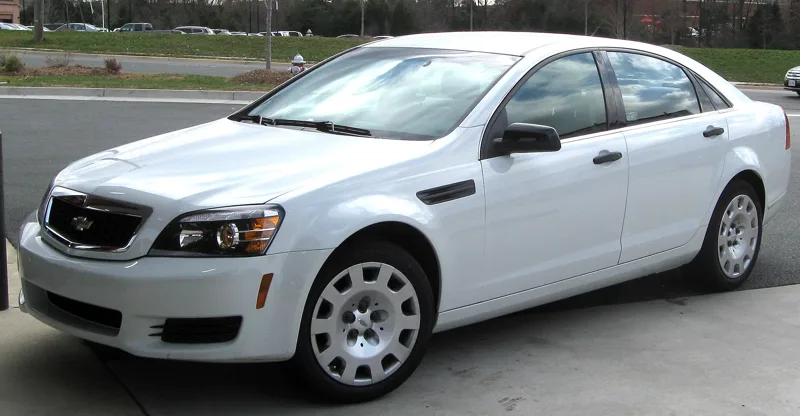
The WM Caprice went to the Middle East from 2007 to 2017 as a Chevrolet, sold across the Gulf states, from Kuwait and Qatar to the UAE, and making up the majority of exports. The trims were the LS, LTZ, SS and Royale. The SS carried an Impala badge on the boot lid instead of a Chevrolet one. In the United States the WM and WN were sold from 2011 to 2017 as the Chevrolet Caprice PPV, a Police Patrol Vehicle strictly for police use and not legally available to the public as a new car.
Elsewhere the cars were rebadged as the Buick Royaum, the Daewoo Statesman and the Chevrolet Caprice. Two other cars grew from them: the Buick Park Avenue built in China, and Germany's Bitter Vero, a rebodied version.
The HSV Grange to the end
The WM Grange appeared in May 2007 with a 307 kW (412 hp) LS2 V8, later replaced by a 6.2-litre LS3 with 317 kW (425 hp). The WM III Grange of September 2010 raised that to 325 kW (436 hp), and the WN Grange of 2013 made 340 kW (456 hp). A limited Grange SV was released in 2016, and the HSV Grange ended production in 2017, the same year as the Caprice.