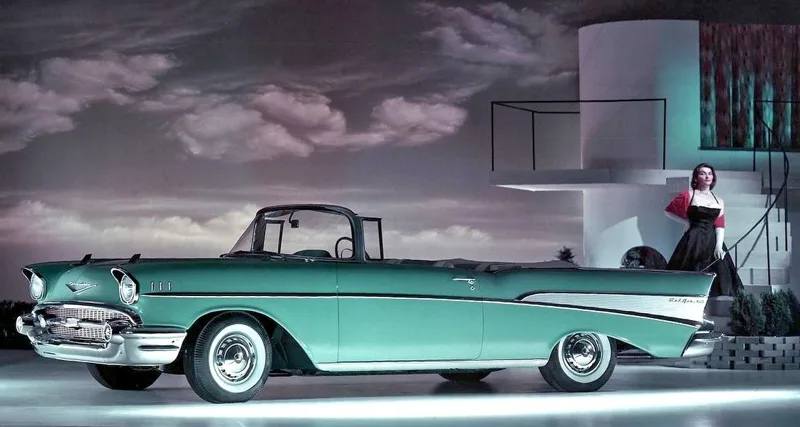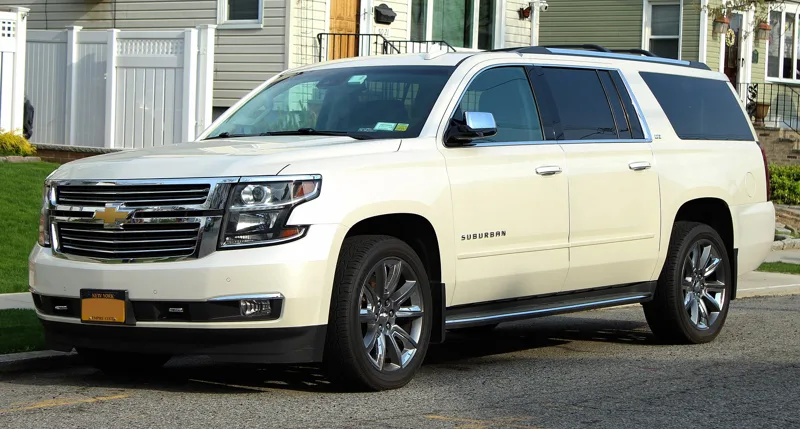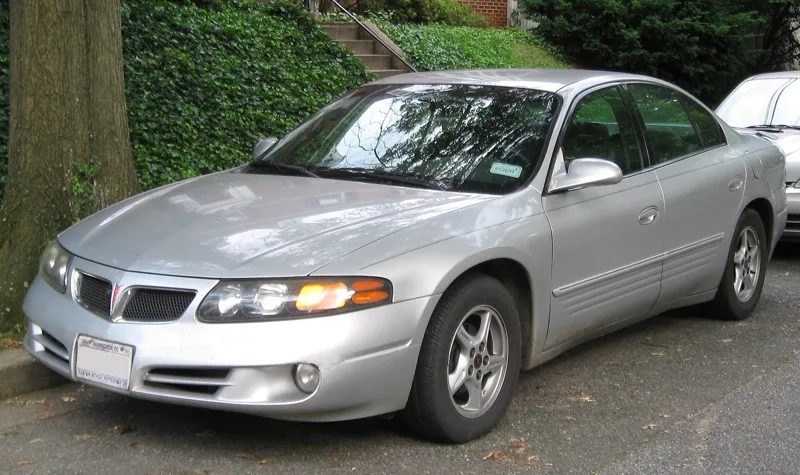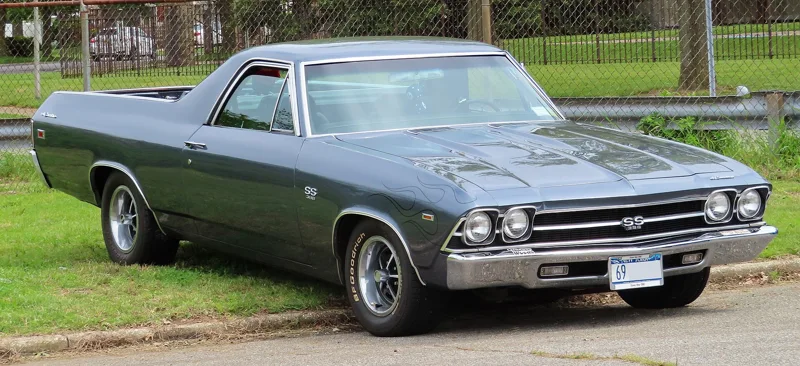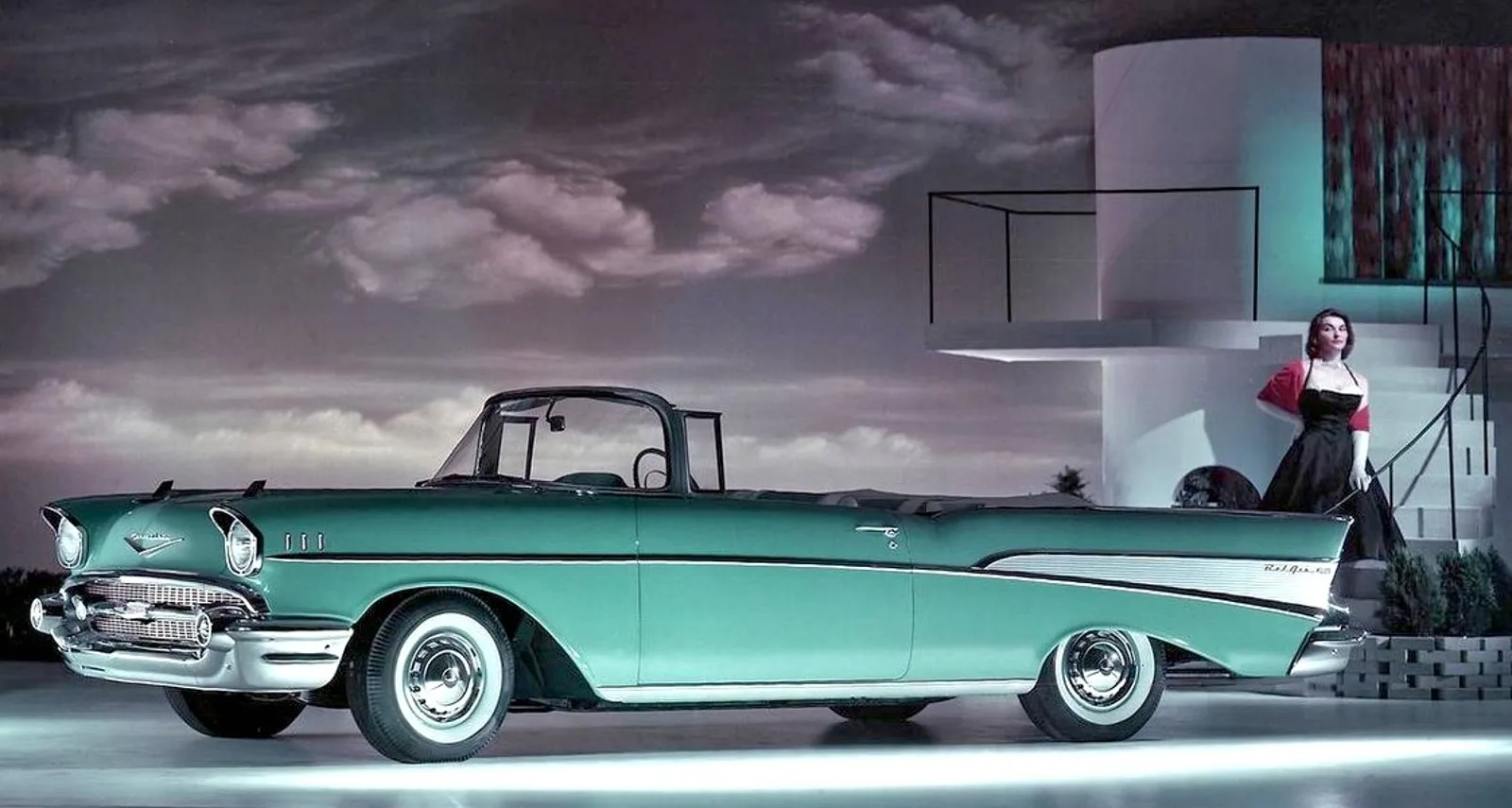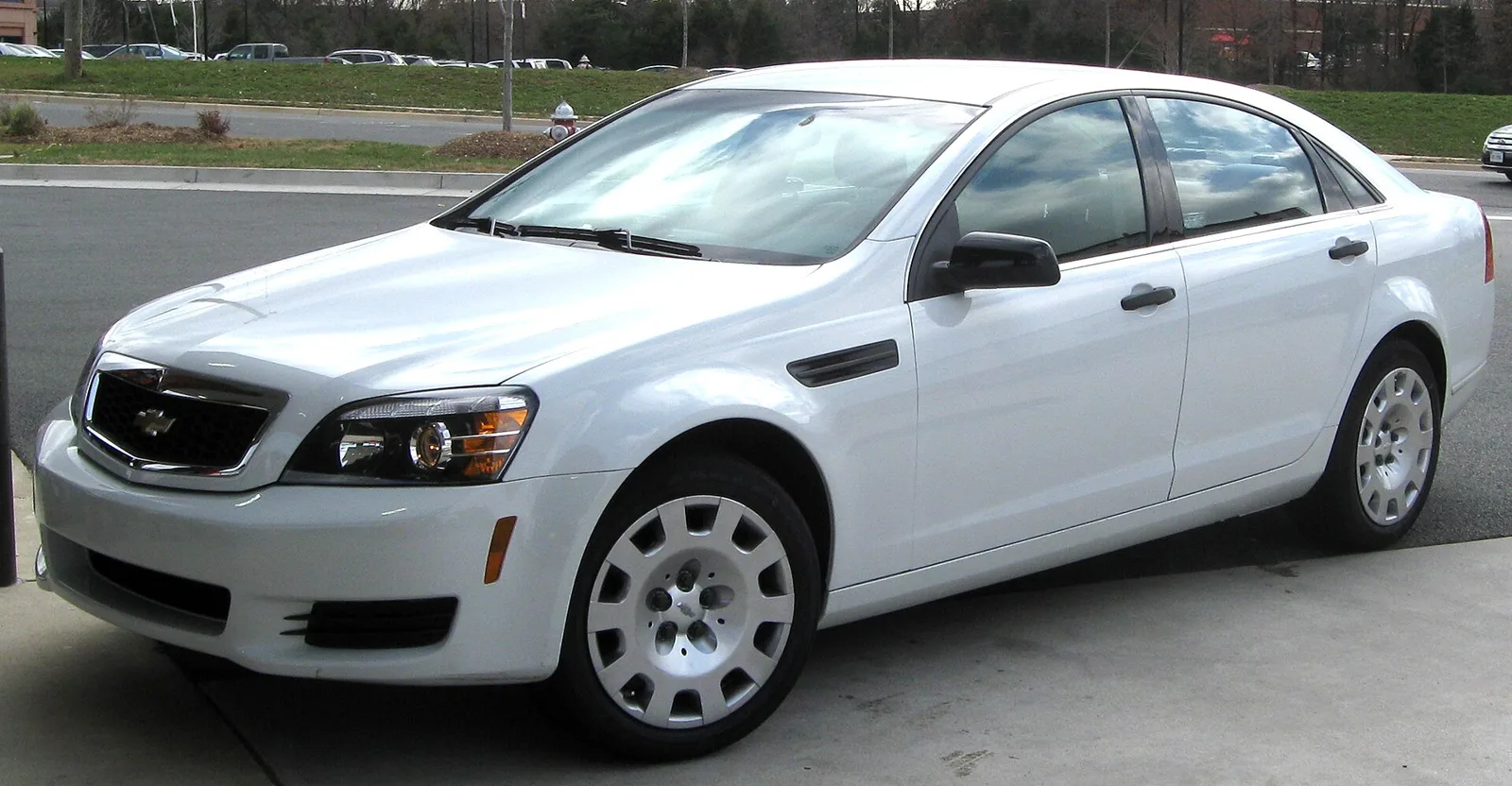
A $200 option on the Impala became the Caprice, the Biscayne sat below as the stripped fleet car, and the 9C1 code turned Chevrolets into police cruisers.
The Chevrolet Caprice began in 1965 as a $200 luxury option on the Impala, became the top full-size Chevrolet in 1966 and ended in 1996. The Biscayne was the cheap fleet model below it. The 9C1 code marks Chevrolet's police-package vehicles, including the Caprice, Impala and later Tahoe.
A Chevrolet Caprice cost $200 more than an Impala in 1965, because it started as an option package, not a model, ticked on the four-door hardtop. By 1986 by 1986 the Caprice was replacing the Impala in the retail, taxi and police markets.
The Chevrolet Caprice, the cheaper Biscayne beneath it and the 9C1 police package that put so many full-size Chevrolets into patrol work span three decades of the American big car. Over a million full-size Chevrolets of all kinds sold in 1965 alone, and through the 1960s and early 1970s the range was the most popular in the United States.
Where does the Caprice name come from?
Nobody agrees. One account credits Bob Lund, general sales manager at Chevrolet, who borrowed the name from a classy New York restaurant he liked. Another says it honours Caprice Chapman, daughter of the auto executive James P. Chapman. Either way, the name arrived in mid-1965 as a package, not a model.
The Caprice began as an option box ticked on an Impala and stayed in patrol service long after production ended.
How the Caprice began as an Impala option
The Caprice Custom Sedan, option code Z18, was offered on the 1965 Impala four-door hardtop for $200 on top of a $2,742 price. For that money the buyer got a heavier frame, suspension changes, a black-accented grille and rear trim panel, slender sill mouldings, fleur-de-lis emblems on the roof quarters and colour-keyed side stripes. The wheel covers matched that year's Super Sport, except that a bowtie replaced the SS badge.
Inside, the Caprice added higher-grade cloth and vinyl trim, thicker carpet, faux walnut on the dash and doors, pull straps and extra courtesy lights. A full vinyl roof was optional. The standard engine was a 195 hp (145 kW) 283 cu in (4.6 L) V8 with a column-mounted three-speed manual gearbox. It was aimed at the Ford LTD, Plymouth VIP and AMC Ambassador DPL, all of which promised wood-look trim, deeper carpet and sound insulation.
The Chevrolet Caprice from 1966 to the end in 1996
The package became a series for 1966 and the top-line full-size Chevrolet, offered as a four-door hardtop, a six- or nine-passenger wagon and a two-door hardtop. That coupe had a squared-off formal roofline, unlike the fastback of the Impala SS Sport Coupe. The Custom Estate wagon, with simulated woodgrain, was the first Chevrolet styled that way since the real-wood Bel Air wagon of 1954.
The 283 V8 was standard, and the options ran to a 325 hp (242 kW) 396 cu in (6.5 L) Turbo Jet and a 425 hp (317 kW) 427 cu in (7.0 L) with solid lifters. Rectangular taillights replaced the triple round lamps Impalas had worn since 1958, bar 1959. Options included Comfortron air conditioning, which held a constant temperature all year, and a tilt and telescopic wheel that adjusted in six positions.
The 1965-70 GM B platform underneath is the fourth best-selling in history, behind the Volkswagen Beetle, Ford Model T and Lada Riva. A light blue metallic 1967 Caprice coupe was the 100 millionth GM car built in the United States, assembled on 21 April 1967 at Janesville, Wisconsin; counting Canadian plants, GM had passed that mark in March 1966 with an Oldsmobile Toronado.
Restyles followed. The 1967 car had rounder lines and a dual-master brake cylinder, with front discs optional. In 1968 hidden headlamps joined the list and the Astro Ventilation system replaced vent windows on coupes. That year the Impala Custom Coupe took on the Caprice's formal roofline and became the best seller in the range, and a 200 hp (150 kW) 307 cu in (5.0 L) V8 became standard. The 1969 car kept the 119-inch (3,023 mm) wheelbase of 1965, renamed the wagon the Kingswood Estate and gained headrests. For 1970 power front discs became standard, and a new 454 cu in (7.4 L) Turbo Jet offered 345 or 390 hp.
The 1971 car was a clean sheet. It rode on a 121.5-inch (3,090 mm) wheelbase with bold fuselage styling, a Cadillac-like egg-crate grille and flush door handles, a feature that had first appeared on the 1970 1/2 Camaro and Pontiac Firebird. Station wagons grew to a 125-inch (3,200 mm) wheelbase. The 1971 to 1976 cars are the largest Chevrolets ever built.
After that, the Caprice shrank. The downsized 1977 model and the restyled 1991 model were each named Motor Trend Car of the Year, and production ended in 1996.
What was the Chevrolet Biscayne?
The Biscayne was the cheapest full-size Chevrolet, apart from the Delray of 1958 alone. Built from 1958 to 1975, it took its name from a 1955 Motorama show car and from Biscayne Bay near Miami, a coastal name in the style of the Bel Air and the later Malibu, and it was sold mainly to fleets. The slightly dearer Bel Air offered more trim for a price well below the Impala and Caprice.
Most Biscaynes had a six-cylinder engine through the late 1960s, while V8s became the usual choice by the early 1970s. The car came as a two- or four-door sedan, with a four-door wagon from 1962 to 1968 and again after 1973 in Canada only. Otherwise the equivalent wagon was the Brookwood. Two taillights per side tell a Biscayne from an Impala or Caprice, which have three, and the interior was spartan, with lower-grade upholstery and rubber mats. Even so, a customer could order any of the high-output big-block V8s on the Chevrolet list and the floor-mounted four-speed with Hurst shifter, even though power windows were off the list.
Biscayne and Impala prices compared
| Year | Biscayne | Impala |
|---|---|---|
| 1959 | $2,365 (Fleet Master $2,295) | $2,772 |
| 1965 base two-door | $2,472 | $2,728 |
| 1970 base model | $2,897 | $3,150 |
Those performance Biscaynes were built in very small numbers and are now sought by collectors. A 1967 two-door with a 427 and a three-speed manual reached 0-60 mph in 6.1 seconds and covered the quarter mile in 14.6 seconds. Baldwin Chevrolet of Long Island, New York, sold a 1968 coupe called the Street Racer Special with a dealer-fitted 427 and heavy-duty suspension, and enthusiasts nicknamed fast Biscaynes "Bisquick". Only 142 of the new 409 V8s were built in 1961, and a few went into the stripped Fleetmaster for drag racing.
That Fleetmaster, sold for 1960 and 1961, left out the cigarette lighter, door armrests and passenger sun visor, and fewer than 5,000 were made. A 1960 Biscayne even served as a presidential car in South Korea.
Three things killed the Biscayne. Government pressure for fuel-efficient cars did not suit it, it overlapped in price with the Bel Air and the Pontiac Catalina, and Chevrolet was losing money to imports and wanted to put effort into the Vega and Chevette. US production ended for 1972, though it was still available to fleets, and the name lingered in Canada to 1975 with a 350 V8 standard from 1974.
What is the Chevrolet 9C1 police package?
9C1 is a Chevrolet production code for a car, or car-based vehicle, meant for police or emergency work. Cars with it are sold as Police Pursuit Vehicle or Police Patrol Vehicle models, competing with the Ford Police Interceptor and the Dodge Charger and Durango Pursuit.
The package changes by platform, but the theme is durability and wiring for emergency equipment. Heavy-duty parts include a full-perimeter steel frame, oversized sway bars, a high-output alternator, four-wheel disc brakes, quick-ratio steering, oil coolers, stiffer body mounts, true dual exhaust, anti-stab plates in the front seat backs and a certified digital speedometer. Whether the Caprice 9C1 frame is thicker than the civilian one is debated, because the replacement part numbers are the same. General Motors treats it as a fleet product with a Special Equipment Options code, not a Regular Production Option, and the code is on the sticker in the glove box.
Chevrolet has offered factory police versions since the mid-1970s, from the Nova, Malibu, Celebrity, Impala, Caprice and Lumina to the Tahoe, Silverado and Blazer EV. The Nova 9C1 ran from 1975 to 1979 and began as a 1974 prototype for the Los Angeles County Sheriff's Department. A 9C1 Malibu with the LT1 350 V8 from the Z-28 Camaro finished 13th of 47 in the 1979 Cannonball Run.
How the Caprice 9C1 took over police work
From 1986 the Caprice took the Impala's place for retail, taxi and police buyers, using the third generation that launched in 1977. It was facelifted in 1987 and stayed the same until 1990, with a V6 or a V8.
The fourth generation arrived in 1991 with two V8s, a 5.0 and a 5.7, and a digital instrument cluster that civilian cars lacked. The V6 returned only for the 1992-93 9C6 taxi packages. Police liked the car more after the rear fender skirts disappeared in 1993, because the skirts had been unpopular. From 1994 to 1996 a detuned 260 hp (190 kW) LT1 350, from the Corvette, was a popular option, while the 4.3-litre V8 was the standard choice for departments wanting better fuel economy. The Impala SS, Buick Roadmaster and Cadillac Fleetwood used the same engine, but none of them was offered with the 9C1 option.
When General Motors ended the fourth-generation Caprice in 1996, many police departments in the United States and Canada kept theirs in service far longer than other patrol cars of the time. They could not find a replacement with decent fuel economy for the size, strong performance, an affordable price and reliability. The Ford Crown Victoria Police Interceptor and the Dodge Charger Pursuit filled the gap. A related package, the 9C3, covers unmarked and supervisor cars, with a more consumer-oriented interior, and it was first offered on the Lumina in 1992.
The Impala 9C1 in between
| Impala 9C1 | Engine | Power | 0-60 mph | Top speed |
|---|---|---|---|---|
| Eighth generation, 2000-2005 | 3.8L Buick V6 | 200 hp | 9.2 seconds | 124 mph |
| Ninth generation, from 2006 | 3.9L V6 | 242 hp | 8.4 seconds | 139 mph |
| Ninth generation, from 2012 | 3.6L LFX V6 | 300 hp | 7.2 seconds | 150 mph |
Designed in 1999, the front-wheel-drive Impala 9C1 carried police work from 2000 to 2016, and it was very popular with big city forces such as the New York City Police Department. The eighth-generation car had a button called Surveillance Mode that switched off the interior lights so officers could hide, plus stab-proof seat backs and a 100 amp power point in the trunk. Traction control was not available. Output of the later 3.9L engine slipped to 233 hp in 2007 and 224 hp in 2009, but the 2012 update brought the 3.6L unit, a six-speed automatic and, for the first time, standard electronic stability control. The 9C1 Impala ended in 2016.
The Caprice PPV from Australia
The Caprice name came back for 2011 on the Caprice PPV, a left-hand-drive Holden WM/WN Caprice built in Australia and sold in North America only to law enforcement. The 9C1 version deleted the centre console, to make room for police computers, and swapped the handbrake for a footbrake. In 2012 a 3.6L V6 became standard, with a 6.0L V8 optional, the first time a V6 had been offered in a Caprice since 1990.
From 2011 to 2013 an unmarked 9C3 version used the Middle East Caprice LS as its base. When the WN Caprice arrived for 2014, every PPV took the 9C1 package and gained a column-mounted shifter. Production ended after the 2017 model year, when General Motors closed its Australian manufacturing, and the Caprice had no successor. Some early examples reached private owners as used cars, from factory demonstrators, surplus dealer stock and one-time purchases by fleet upfitters.
The Middle East story ran in parallel. The Caprice 9C1 name was revived in 1999 for the region on the Holden WH Statesman/Caprice, and Holden's own Commodore 9C1 ran from the 1997 VS to the 2004-2006 VZ, sold in the Middle East as the Lumina and mostly delivered in white.
9C1 on the Tahoe, Silverado and Blazer EV
The 9C1 code now covers more than sedans. The Tahoe PPV received it for the first time in 2021, with Brembo brakes, 20-inch steel wheels, rear-wheel drive as standard and four-wheel drive as an option. In 2022 Chevrolet announced a Silverado PPV, the first pursuit-rated Chevrolet pickup, as a 2023 model, and said a Blazer EV PPV would follow in 2024, with skid plates and a Protected Idle function for long periods of idling.