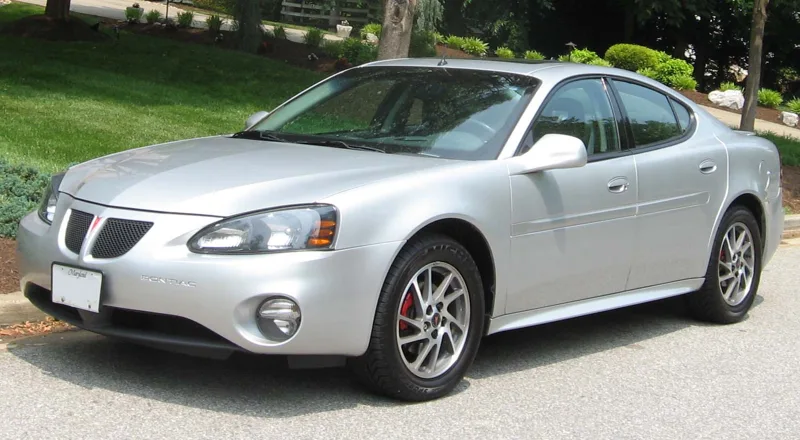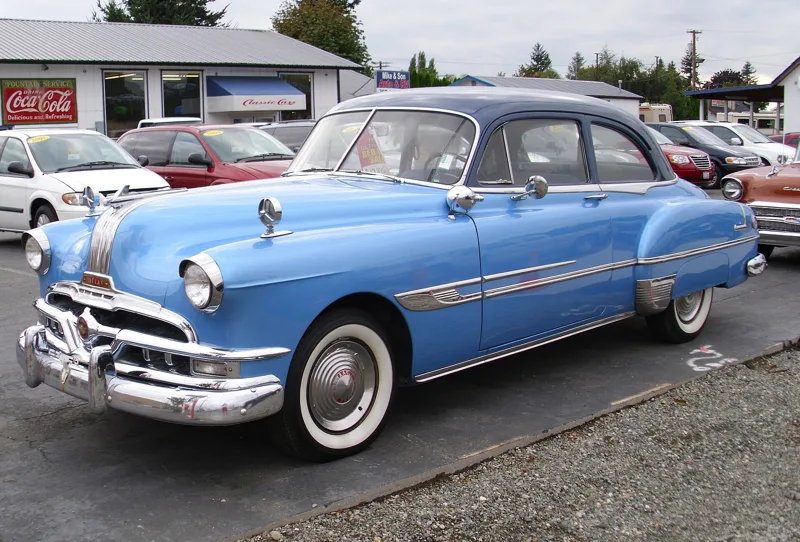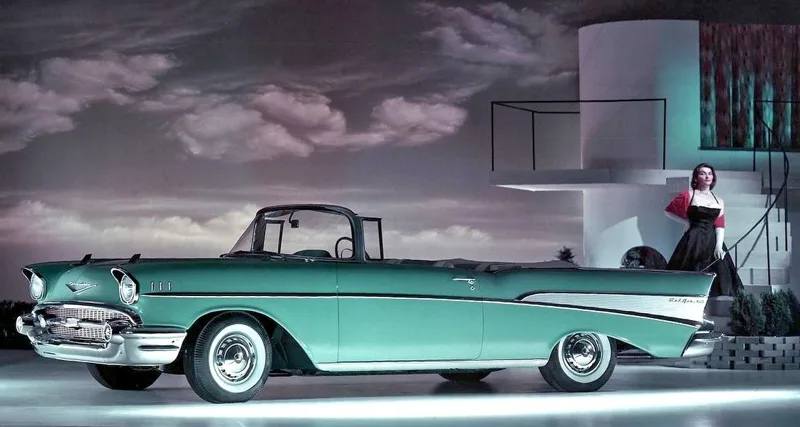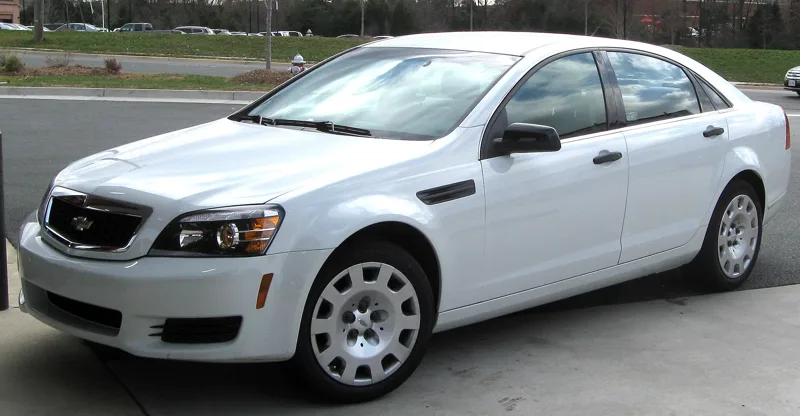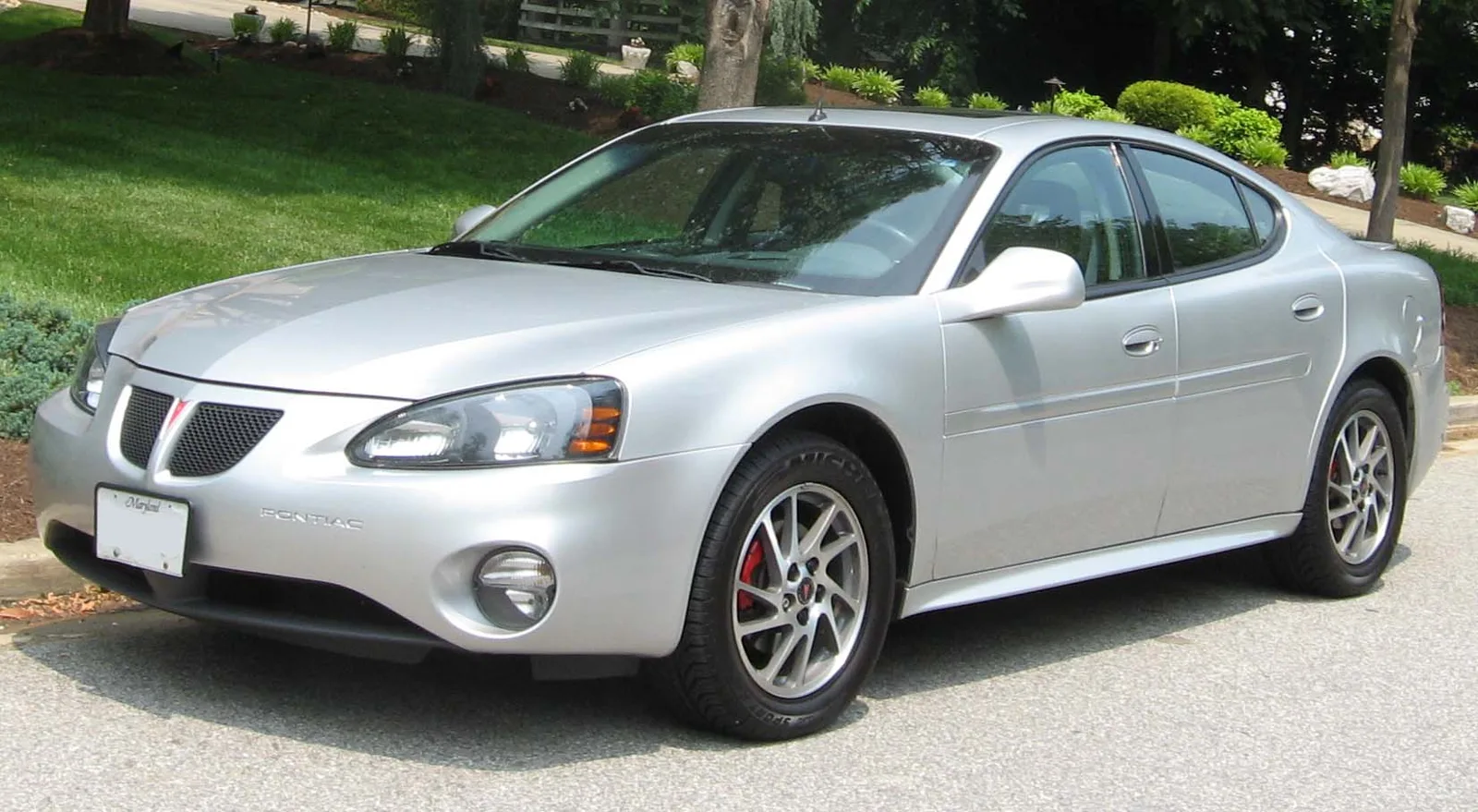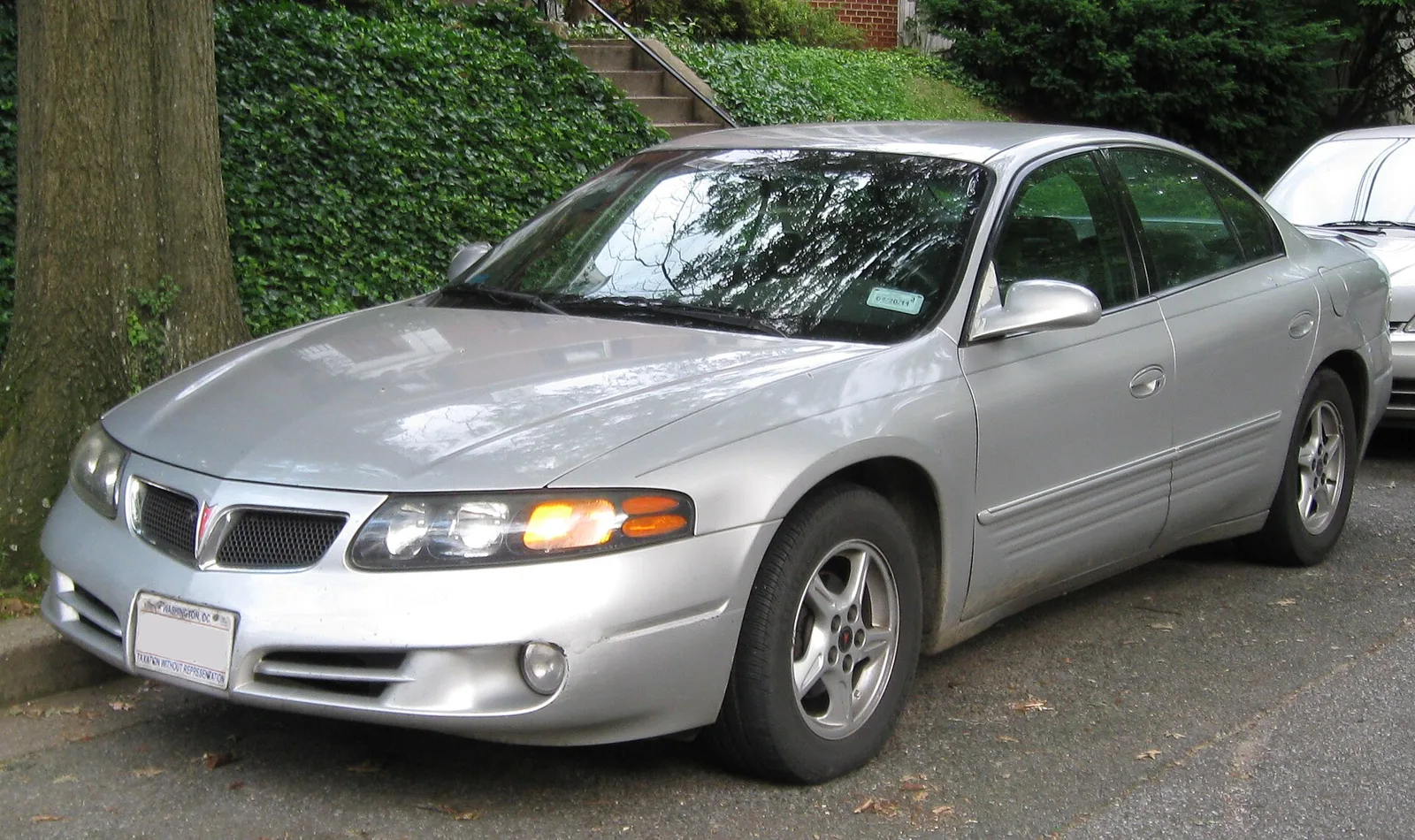
A fuel-injected convertible founded the Bonneville line in 1957, while the Star Chief, Catalina and Canada's Chevrolet-based Parisienne filled in beneath it.
Pontiac's full-size range was led by the Bonneville, which began in 1957 as a $5,782 fuel-injected convertible and became the senior series in 1959. The Star Chief was the earlier prestige model, the Catalina the entry-level car, and the Parisienne the Chevrolet-based top Pontiac in Canada.
In 1957 a fully equipped Pontiac Bonneville could cost more than the entry-level Cadillac Series 62. The car was a fuel-injected luxury convertible priced at $5,782, more than double the base price of the Chieftain it was built on, and Pontiac built only 630 of them.
That strange flagship set the pattern for Pontiac full-size cars for the next quarter century. Around it sat a prestige model called the Star Chief, an entry-level Catalina that sold in the greatest numbers, and in Canada a car named Parisienne that wore Pontiac clothes over Chevrolet mechanicals. Pontiac Bonneville history cannot be told without the other three.
Pontiac Star Chief, the prestige model before the Bonneville
The Star Chief arrived in 1954 as the top trim on the Chieftain, and it was Pontiac's prestige model until 1957. Every one carried star-like trim, in sets of three or four chrome stars. Pontiac gave it a longer 123.5 in (313.7 cm) wheelbase than its other cars, which shared 122 in (309.9 cm), by adding 11 in (28 cm) toward the rear of the frame.
It came in Deluxe and pricier Custom trim, with the top hardtop called the Catalina. In 1954 it also offered air conditioning with every component under the hood, a first for the price class, and its straight-eight engine made 127 hp (95 kW). The 1955 car brought a new Strato Streak V8, twin Silver Streaks along the hood and an amber plastic Indian hood ornament that lit up with the headlights. Pontiac built 203,404 Star Chiefs that year, at an average price of $2,594. A red-and-white 1955 convertible even starred in the I Love Lucy trip to California, when General Motors sponsored the show.
The Star Chief Safari, a two-door hardtop wagon in the mould of the Chevrolet Bel Air Nomad, appeared on 31 January 1955. In January 1957 a four-door Custom Safari Transcontinental wagon followed.
The decline was quick once the Bonneville took the crown. For 1958 Star Chief sales fell by around 60%, while Pontiac's overall sales dropped by more than a third. By 1959 it was limited to sedans and hardtops and made 17.97% of Pontiac's sales. The Ventura of 1960 left the Star Chief as a four-door only, equipped much like the cheaper Catalina, with an electric clock as the main extra. Pontiac renamed the car the Star Chief Executive for 1966 as the first step toward retiring a dated name, and dropped Star Chief for United States sales in 1967.
Pontiac's Canadian flagship wore Pontiac-styled panels over Chevrolet mechanicals, and full-size Pontiacs took third place in Canada behind Chevrolet and Ford.
Why did the 1957 Bonneville cost more than a Cadillac?
Pontiac loaded it with everything except air conditioning and the fashionable continental kit: leather, a power seat, power windows, steering, brakes and a power top. It also carried the company's first fuel injection, built by Rochester, and Pontiac pitched it against the Chrysler 300C. That put the price in Cadillac territory.
The name came from the Bonneville Salt Flats in Utah, an early home of American racing and many world land speed records, and from a pair of bubble-topped Motorama concepts called the Bonneville Special, shown in 1954. Those cars began a Pontiac habit of French model names. The injected engine used a mechanical Rochester system similar in principle to the Ramjet on the Chevrolet Bel Air. Pontiac published no power rating and said only that it made more than 300 hp (224 kW). Road tests suggested it lagged the Tri-Power engines, although it was more economical.
In 1958 the Bonneville became its own model, as a two-door hardtop or convertible, and paced the Indianapolis 500. The convertible fell to $3,586 because most of the luxury equipment moved to the options list, and a 255 hp (190 kW) V8 of 369.4 cu in (6,053 cc), marketed as the "370", became standard. Fuel injection stayed as a $500 option, poor value beside the $93.50 Tri-Power with three two-barrel carburettors. Pontiac rated the Tri-Power at 300 hp and the injected engine at 310 hp (231 kW) at 4800 rpm, with 400 lb-ft (542 N-m) of torque. Only about 400 cars were built before the injection system was quietly dropped, and the Bonneville would not offer it again until the eighth generation in 1987.
Wide Track and the senior Bonneville, 1959 to 1976
For 1959 the Bonneville became Pontiac's senior series, gaining a four-door hardtop and the Safari wagon, while the Catalina took the junior role. That was the year of the split grille and the Wide Track slogan. Pontiac set the front tread at 63.7 in (1,618 mm) and the rear at 64 in (1,626 mm), against 61 in (1,549 mm) for other General Motors cars, and the wheels sat further out toward the fenders than anyone else's. The slogan was more than advertising: the cars were considered the best-cornering full-size models in the industry.
Through the 1960s the Bonneville remained the senior Pontiac and helped lift the company to third place in sales from 1962 to 1970. Compared with the Catalina and Star Chief, it had richer interiors, with upgraded cloth and Morrokide vinyl, genuine leather in convertibles, walnut veneer and carpeted lower door panels. The 1964 Brougham package added a Cordova vinyl roof and centre armrests. Standard power came from 389 or 400 cu in V8s rated from 303 to 340 hp (226 to 254 kW), and the Tri-Power setups reached 376 hp (280 kW) through 1966. In 1963 only, a 421 cu in (6.9 L) Super Duty with two four-barrel carburettors made 425 hp (317 kW) for a $2,250 option price against a $3,349 base car.
The 1965 restyle brought fastback coupes, "Coke bottle" fender lines and a new 124-inch wheelbase that made the car 8 inches longer. That year Pontiac won the Motor Trend Car of the Year award, and the new Turbo-Hydramatic 400 replaced the older fluid-coupling Super-Hydramatic, which also gave the cleaner P-R-N-D-S-L shift pattern. The 1967 car added a dual-circuit master cylinder and optional discs, and 400 and 428 cu in engines replaced the 389 and 421. By 1969 the 428 made 360 hp as standard, and a 455 cu in (7.5 L) V8 became standard for 1970.
The 1971 car was demoted when the Grand Ville became the top-line series. The Bonneville and Grand Ville were among the largest Pontiacs ever built: wagons reached just over 230 inches (5.8 m) long and weighed 5,000 pounds (2,300 kg) or more. The Grand Ville ended after 1975, and a Bonneville Brougham took over in 1976.
Pontiac Catalina, the entry-level full-size car
Catalina began in 1950 as a trim level on Chieftain hardtops and was added to the Star Chief in 1954. It was named after an upscale Southern California community, just as Bel Air was. Early Catalinas were called "hard-top convertibles" because they dropped the pillars between the windows for a sporty, airy feel without the drawbacks of a real convertible. From 1950 to 1958, every Pontiac hardtop was a Catalina except the 1958 Bonneville.
In 1959 it became a separate model and Pontiac's entry-level full-size car. It was also the best seller, and the donor platform for the Grand Prix, the 2+2, the Ventura and the Safari wagon. Lessons from the Grand Prix led to the GTO on the second-generation Tempest in 1964.
General Motors priced the Catalina in an overlapping ladder, a step below the Buick LeSabre and Oldsmobile 88 in trim and about $100 to $200 cheaper. Yet it came with more standard equipment than a Chevrolet: a 389 cu in V8 against the Chevrolet six, 283 or 348, and a four-speed Hydra-Matic against a two-speed Powerglide. Even the glovebox door held a snack bar, two cup indents that opened up for drive-in restaurants.
The 1959 car sat on a new GM B-body, with a 122 in wheelbase against 124 in for the Star Chief and Bonneville. Its split grille came about by accident, when a stylist cut a design for a conventional oval grille in two and swapped the halves. A chassis 5 inches wider moved the wheels toward the fenders, which created the "wide track" feel Pontiac used in advertising for years.
| Name | Run | Place in the line-up | Wheelbase |
|---|---|---|---|
| Catalina | 1950 to 1981 | Entry-level full-size car from 1959 | 122 in in 1959 |
| Star Chief | 1954 to 1966 | Prestige model until 1957, then middle | 124 in in 1959 |
| Bonneville | 1957 to 2005 | Senior model from 1959 | 124 in in 1959 |
| Parisienne | Canada 1958 to 1986, United States 1983 to 1986 | Top Canadian Pontiac, Chevrolet underneath | 119-inch Chevrolet X frame |
Engines changed with the model years. The 1959 Catalina made 235 hp (175 kW) from a 389 with a two-barrel carburettor, or 280 hp (210 kW) with the Hydramatic. A 215 hp Economy V8 ran on regular gasoline and could manage more than 20 MPG on the highway. For 1962 a Super Duty 421 with 405 hp (302 kW) cost $2,250 when a base Catalina listed at $2,725, and the racing version of that engine was dropped after General Motors ordered Pontiac and Chevrolet to stop factory-supported racing in February 1963. The Catalina name was dropped in 1981, after the 1977 downsizing left it unable to match the sales of its divisional siblings.
Pontiac Parisienne, a Chevrolet under Pontiac panels
The Parisienne was the Canadian top-of-the-line Pontiac. It began in 1958 as a sub-series of the Laurentian line, became its own model in 1959 and was sold in the United States only from 1983 to 1986. Its name is the French word for a woman from Paris.
Underneath, it was a Chevrolet. GM of Canada used the economical Chevrolet chassis, a 119-inch X frame, and the same engines and gearboxes, from 230 and 250 cu in sixes to V8s up to 454 cu in, topped with Pontiac-styled panels. American Pontiacs used a full perimeter frame and their own engines. The cars were built in Oshawa, Ontario, in parallel lines: the Strato Chief matched the Biscayne, the Laurentian the Bel Air and the Parisienne the Impala, while the Grande Parisienne from 1966 matched the Caprice. A 1958 option called Power Chief fuel injection was simply the Chevrolet Ramjet under another name.
It worked. Full-size Pontiacs took third place in Canada behind Chevrolet and Ford, typically selling 70,000 or more a year. The heavier, thirstier American Pontiacs would have struggled in a market with a tenth of the population, lower incomes and higher taxes and gasoline prices.
Right-hand-drive Parisiennes went to Australia, assembled from kits at Holden's Dandenong plant, where amber lenses were drilled into the rear bumper because red rear turn signals were illegal. New Zealand cars were finished at the Petone plant. Exports ended after 1968 when General Motors in the United States ordered the end of right-hand-drive shipments, so the Australian and New Zealand 1969 cars are in fact 1968 models assembled a year later.
The 1977 downsizing shed hundreds of pounds and several inches while keeping interior space, but the American Catalina and Bonneville could not match the sales of their siblings and were dropped in 1981. For 1982 the Bonneville name moved to the smaller G-body, a car previously called the LeMans, because it carried higher recognition. Pontiac dealers then asked for a big rear-drive car again, and the Parisienne, imported from Oshawa for the 1983 model year, filled the gap as a rebadged Chevrolet Impala with a Caprice nose and Pontiac grille in its first two years. A base model and a Brougham with velour upholstery sold alongside a Safari wagon, and production ended in 1986.
Reading the badges on an old Pontiac
The names tell you where to look. A Star Chief carries its chrome stars, and the 1961 to 1962 cars hold three on the rear fender. A Canadian Parisienne has Pontiac looks but Chevrolet engines, so a 1960s car may hold a Chevrolet 409 or 427 where an American Pontiac would have a 389 or 421. Detachable rear wheel skirts distinguished the Parisienne from the Caprice in 1985, and wagons never wore them.
Rarity is real in places. Only 630 of the 1957 Bonneville were built, and about 400 injected cars followed in 1958. The 421 Super Duty was a dealer-installed specialty in 1961, and on the heavy 1962 Star Chief sedan it was probably never ordered.
How the Pontiac names ended
The Catalina left in 1981 and the Parisienne in 1986, though its wagon carried on as the Safari until 1989. The Bonneville ran until 2005, rear-drive until 1987 and front-drive afterwards. The Wide Track slogan and the split grille stayed part of Pontiac's image until the brand ended.