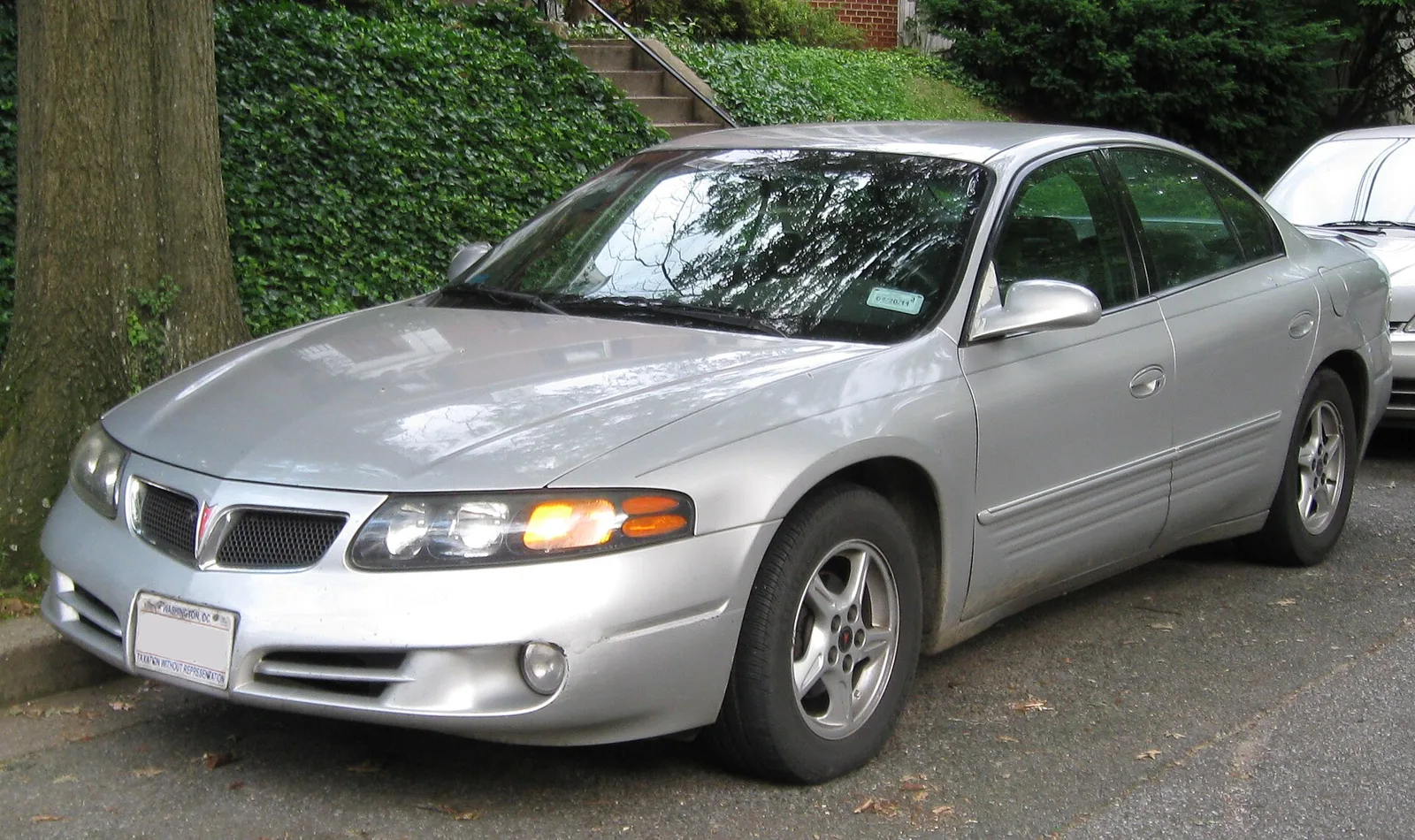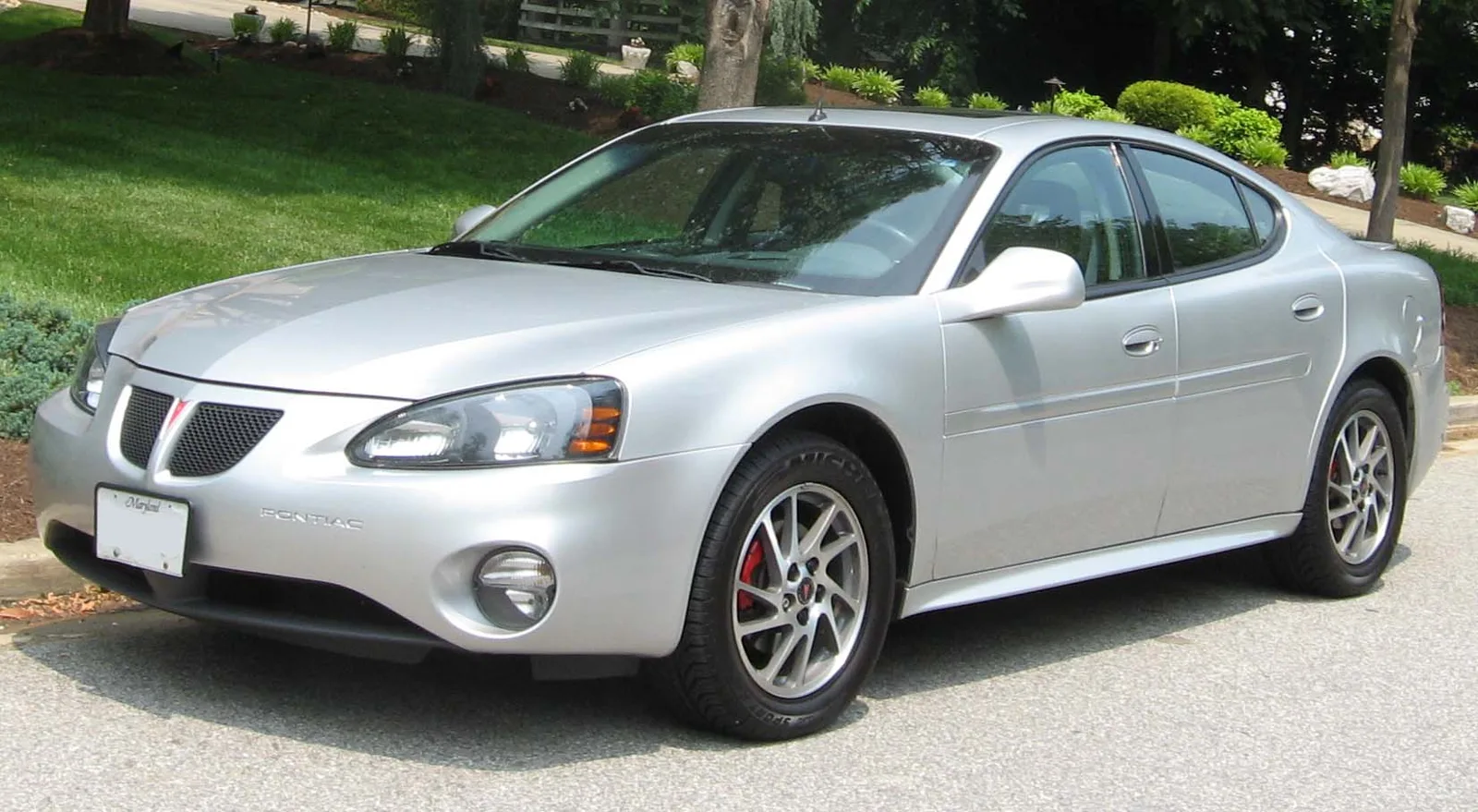
A 1962 performance coupe, an American answer to European sports saloons and a final mid-size named as the sixth Grand Am.
Pontiac's Grand Prix began in 1962 as a performance coupe and became a mid-size car. The Grand Am combined Grand Prix luxury with Trans Am performance for 1973, and the G6, introduced for 2005, replaced the Grand Am and was named as its sixth generation.
The Pontiac G6 was named to be the sixth generation of the Grand Am, and the Grand Am had itself been named by welding together the Grand Prix and the Trans Am. Three names, borrowed from one another, carried Pontiac's mid-size cars from a 1962 performance coupe to a model that rolled off the line as the last car the brand ever built.
The Grand Prix began as an expensive personal-luxury coupe, the Grand Am tried to be an American answer to European sports saloons, and the G6 was a mid-size sold as a sedan, a coupe and a folding-hardtop convertible. Each had its own era.
How did the Pontiac Grand Prix, Grand Am and G6 connect?
Pontiac built the Grand Prix from 1962 as a coupe and from 1989 to 2008 as a four-door sedan, the Grand Am from 1973 to 2005 in three spells, and the G6 for the 2005 to 2010 model years. The Grand Am name came from Grand Prix luxury and Trans Am performance, and the G6 replaced the Grand Am.
The Grand Prix moved over time from full-size performance coupe to intermediate personal luxury car and then to the mid-size segment. The Grand Am was first a rear-drive mid-size car on the LeMans A platform and, from 1985, a front-drive compact. When Pontiac introduced the G6 in 2004, it also set up a two-digit naming scheme, with the G8 a class above and the G5 a class below. The final Pontiac was a white G6, built when the brand closed in 2010.
G6 was meant to read as the sixth generation of the Grand Am, a name that was itself half Grand Prix and half Trans Am.
What was the first Pontiac Grand Prix?
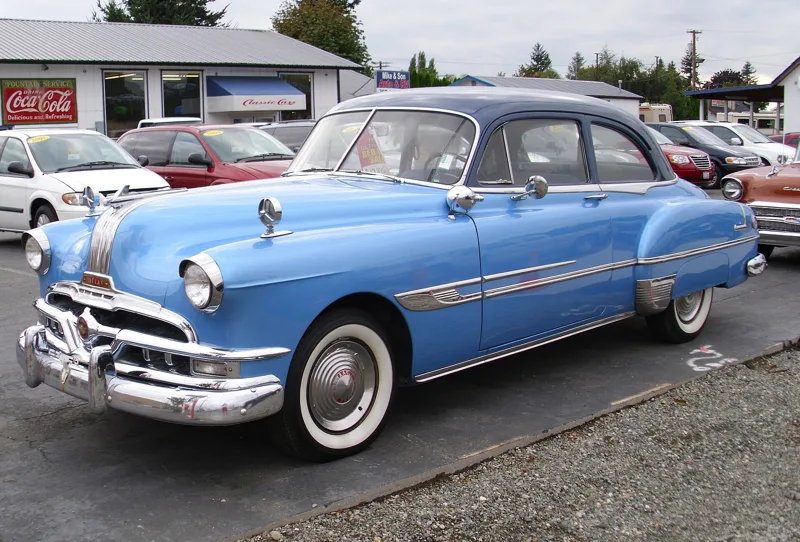
The 1962 Grand Prix was a brand-new personal luxury car with a performance bent, built from the Catalina two-door hardtop, with its own bucket-seat interior and a centre console. It was the most expensive Pontiac when introduced, at $3,490 before options, and effectively replaced the Ventura.
Buyers got vinyl-trimmed bucket seats, a tachometer, dual exhausts and a 3.42:1 rear axle as standard. The standard engine was the 303 hp Trophy version of the 389 cubic-inch V8 with a three-speed manual, while a Tri-Power version made 318 hp and other 389s offered 333 and 348 hp. Pontiac also sold a 421 cubic-inch Super Duty V8 with two four-barrel carburettors and 405 hp as a $2,250 option. John DeLorean, then running Advanced Engineering at Pontiac, had a hand in both the Grand Prix and the GTO.
For 1963 the car gained a squared-off roofline with a concave rear window, a split grille with stacked headlights and hidden taillights, plus real walnut trim and options such as cruise control and a seven-position tilt wheel. The 421 HO with Tri-Power reached 370 hp. The 1964 update was minor, with GP logos and a new Muncie four-speed gearbox replacing the Borg-Warner T-10.
How did the Grand Prix change through the 1960s?
The 1965 Grand Prix was restyled with Coke-bottle lines, a wheelbase of 121 inches and fender skirts, while keeping its squared-off roof. A new Turbo Hydramatic replaced the old fluid-coupling automatic, and the 389 now made 333 hp with a manual gearbox. The 1966 car brought Strato bucket seats and ended Tri-Power, because GM banned multi-carburettor options on every car but the Corvette from 1967.
The 1967 model brought a one-year convertible, concealed headlights and wipers, ventless front windows and new V8s: a 400 with 350 hp and a 428 with 360 hp, or 376 hp in HO form. It also had a dual master-cylinder brake system, optional front discs and a collapsible steering column. The 1968 car carried a beak-nose grille and no convertible, as the last full-size B-body Grand Prix.
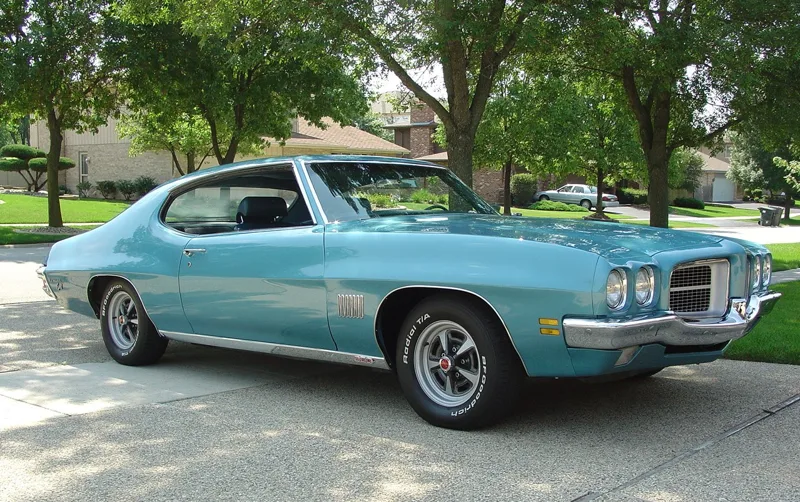
For 1969, Pontiac general manager John Z. DeLorean ordered an all-new car on a stretched version of the intermediate A platform, called the G-Body. Work began in April 1967, and borrowing mechanicals from the Tempest, Le Mans and GTO cut development from the usual 36 months to under 18. The wheelbase was 118 inches, three inches shorter than the Catalina, and the hood was the longest Pontiac had ever built. The SJ trim borrowed its name from the Duesenberg Model SJ. Engines ranged from a 265 hp 400 to the 390 hp 428 HO, and a major facelift followed in 1971.
Why did Pontiac create the Grand Am?
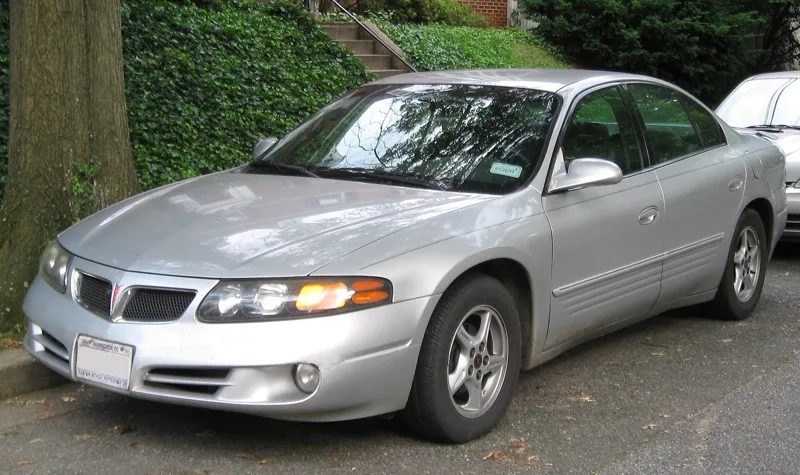
Pontiac executives saw Mercedes, BMW, Toyota and Nissan moving into the American market with cars that mixed luxury and sport, which American makers rarely did. The Grand Am was the answer: Pontiac hybridised the Grand Prix with the Trans Am on the LeMans A-body, and it began life as the intended next GTO.
The first Grand Am went on sale in the fall of 1972 as a 1973 model, as either a Colonnade sedan with four doors or a Colonnade coupe with two, and 43,136 were built in the first year. The standard engine was a 400 cubic-inch V8 with 170 hp, and a 455 with 250 hp was optional. A Turbo-hydramatic 400 came standard, and the four-speed manual that Pontiac offered was not popular. The engine size was shown in litres on the boot lid to stress the car's supposedly European character.
The Endura nose was made of flexible urethane that could be squeezed and return to its shape after a minor collision. Radial Tuned Suspension with radial tyres and sway bars was standard, which made the Grand Am one of only three GM cars of 1973 so equipped, with the Oldsmobile Cutlass Salon and Chevrolet Monte Carlo S. Strato bucket seats had recliners and adjustable lumbar support, and the dash used African mahogany trim until delamination problems led to a simulated finish in 1974. A coupe listed at $4,264, above the Firebird Trans Am. In a Popular Mechanics owners survey, 67 percent rated the build quality good to excellent and 79 percent liked the handling, but 22.1 percent disliked the fuel economy.
The 1973 oil crisis hurt. Buyers wanted either total luxury or total economy, and the Grand Am sat in between. Sales fell by more than 50 percent in 1974, with only 17,083 cars built, and 1975 brought a catalytic converter, a compression ratio as low as 7.6 to 1 and only 10,679 sales. A planned move to rectangular headlights would have forced an expensive redesign of the Endura nose, and Pontiac dropped the car after 1975.
The Grand Am returns
The name came back for 1978 on a downsized intermediate using the Grand Prix's G platform, with a 301 cubic-inch V8 making 140 hp as standard. Where Pontiac V8s were unavailable in California, Chevrolet engines stood in. By 1979 a Buick 3.8-litre V6 with a floor-mounted three-speed manual was the base powertrain. The intermediate Grand Am was cancelled in 1980 and replaced by the Pontiac 6000.
A compact Grand Am on the N platform followed in 1985, replacing the Phoenix, and became Pontiac's best-selling car. All Grand Ams from 1985 to 2005 were built at the Lansing Car Assembly plant. The G6 was its eventual successor.
What was the Pontiac G6?
The G6 arrived in 2004 as a 2005 model, a mid-size car meant to take over from the Grand Am. It used the GM Epsilon platform, which also underpinned the Chevrolet Malibu and Saab 9-3, and its name marked it as the sixth generation of the Grand Am.
The concept appeared at the 2003 Detroit show with a supercharged 3.5-litre V6 making 285 hp. The production car came in V6 and GT trims, both with a pushrod 3.5-litre V6 producing 200 hp and 220 lb ft and a four-speed automatic. The GT added TAPshift manual gear selection. Standard kit on the base model included power locks, windows and mirrors, a six-speaker CD stereo and air conditioning, and the GT added an eight-speaker Monsoon stereo, ABS, traction control and remote start.
For 2006 the G6 added a coupe and a retractable hardtop convertible, plus a base four-cylinder with a 2.4-litre engine making 169 hp and a high-performance GTP. The GTP used a 3.9-litre V6 with variable valve timing and 240 hp, with a no-cost six-speed manual. By 2007 the GT's 3.5 had variable valve timing and 224 hp, and the GTP received a 3.6-litre DOHC V6 with 252 hp at 6300 rpm. The GTP became the GXP for 2008, and the 3.9 became an option only on the convertible, with power down to 222 hp.
The 2009 model year added 2.4-litre engines to the coupe and a six-speed automatic from the Malibu, followed by a 2009.5 update with new fascias and a Bluetooth radio. Coupes and convertibles stopped at the end of 2009. After General Motors entered bankruptcy the sedan was scheduled to end in 2010, but fleet demand kept it in production while the brand was wound down. Buick's revived Regal took over from the G6 in North America.
The G6 hardtop convertible
Karmann engineered the G6 power-operated retractable hardtop at its Pontiac, Michigan office, and delivered it as a roof module to GM's Orion Assembly plant. Early prototypes failed durability testing after fewer than 10,000 cycles, although the top needed to survive 16,000 to 20,000, and they also fitted poorly between deck lid and rear fenders. Those problems delayed the launch. Production tops passed 12,000 cycles in testing, about twice what a typical convertible endures in its life.
The two-piece metal roof took 30 seconds to stack in the boot, cutting cargo space from 5.8 cubic feet to 1.8. Autoweek noted considerable cowl shake and squeak-and-rattle issues in 2006, and Karmann supplied a revised top in 2008. With quality problems, a late launch and slow sales, the convertible was dropped after the 2009 model year. The Opel Cascada, sold as a Buick in the United States from early 2016, replaced it.
Oprah, racing and recalls
As part of a $110 million publicity campaign, the fall 2004 premiere of The Oprah Winfrey Show handed 276 G6s to people in its audience. The winners later learned they had to collect their cars from Pontiac dealerships, and one couple sold theirs because of the tax implications.
On the track, Pratt and Miller built the G6 GXP.R to replace the GTO.R in the GT class of the Rolex Sports Car Series, with an LS2 V8 making about 450 hp (340 kW). A G6 GXP also raced in NHRA Pro Stock for Warren Johnson Racing. The road car had four formal recalls. A 2012 action covered 473,841 vehicles including the Malibu, G6 and Saturn Aura with four-speed automatics, because cars could roll while in park.
How do the three Pontiac names compare?
| Name | Years | Layout | Role |
|---|---|---|---|
| Grand Prix | 1962 to 2002 coupe; 1989 to 2008 sedan | Full-size rear-drive, then G-Body intermediate from 1969 | Personal-luxury coupe, later mid-size |
| Grand Am | 1973 to 1975, 1978 to 1980, 1985 to 2005 | Rear-drive A and G platform, then front-drive N platform | American luxury-sport answer to European cars |
| G6 | 2005 to 2010 model years | Epsilon platform | Mid-size sedan, coupe and hardtop convertible |
What took over when Pontiac closed?
Pontiac ended with the G6 in 2010. Its role in North America passed to the revived Buick Regal, and the G6 convertible's place went to the Opel Cascada, sold as a Buick from early 2016.