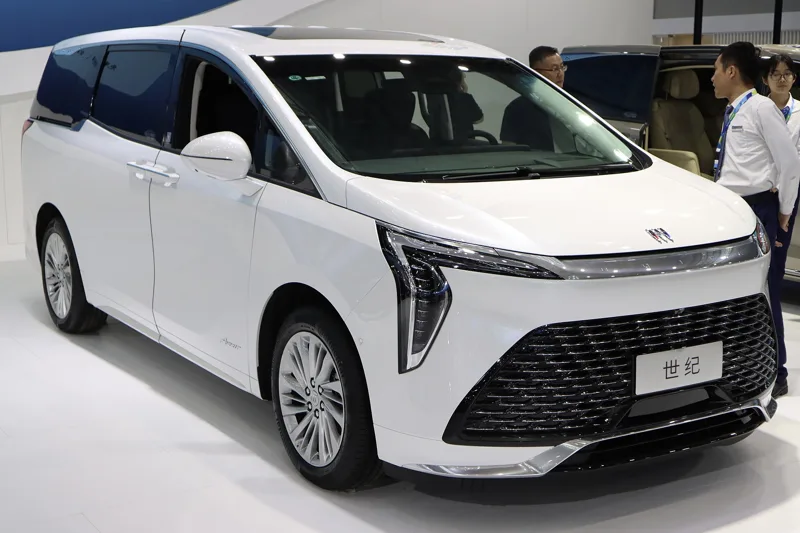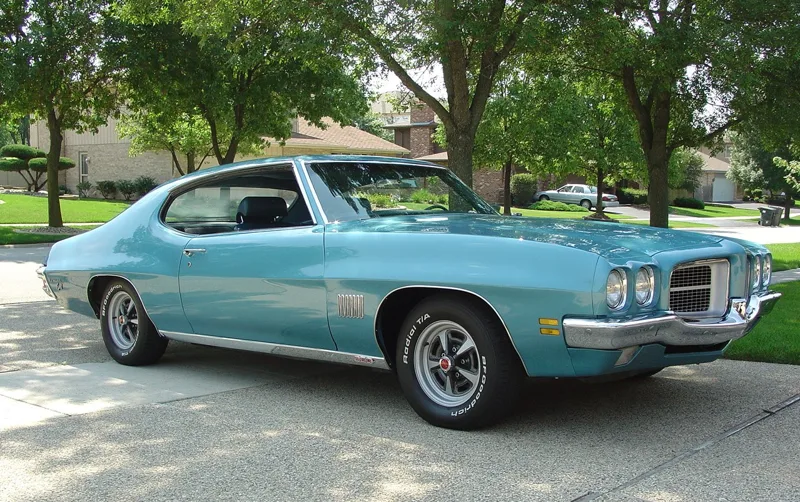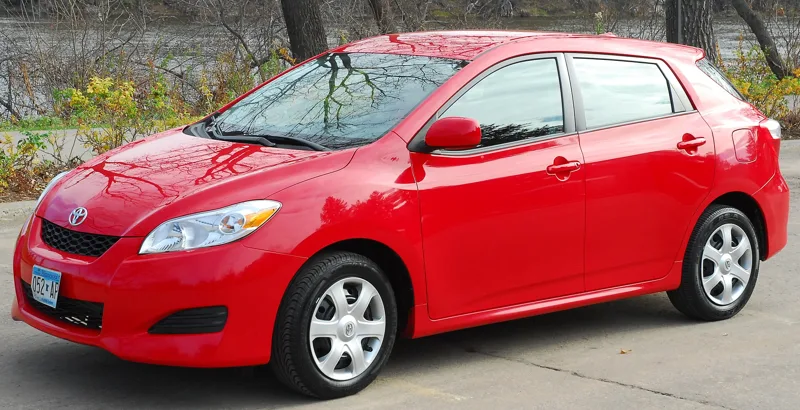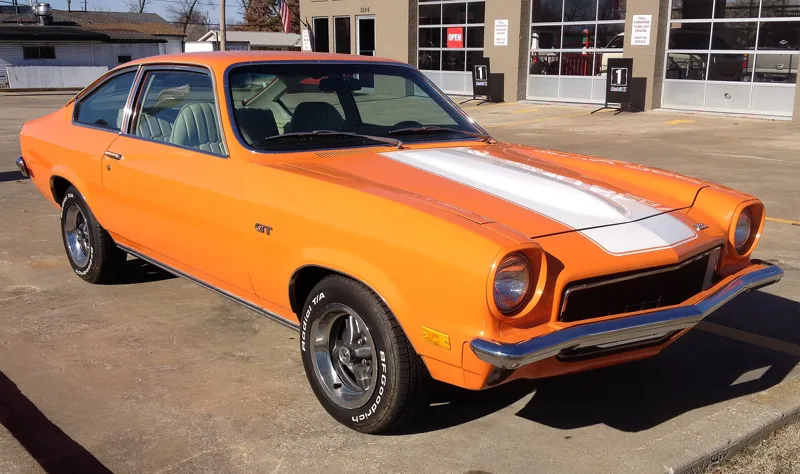
A Vega-derived small car, a front-drive mid-size sedan with a Fortune cover to its name, a minivan nicknamed for a vacuum cleaner and a Toyota built in California.
The Pontiac Sunbird was a small car sold from 1976 to 1994, the 6000 a front-drive mid-size car from 1982 to 1991, the Trans Sport a minivan from 1990 to 1999 and the Vibe a Toyota-built compact wagon from 2003 to 2010. All four sold under Pontiac, which GM discontinued in 2009.
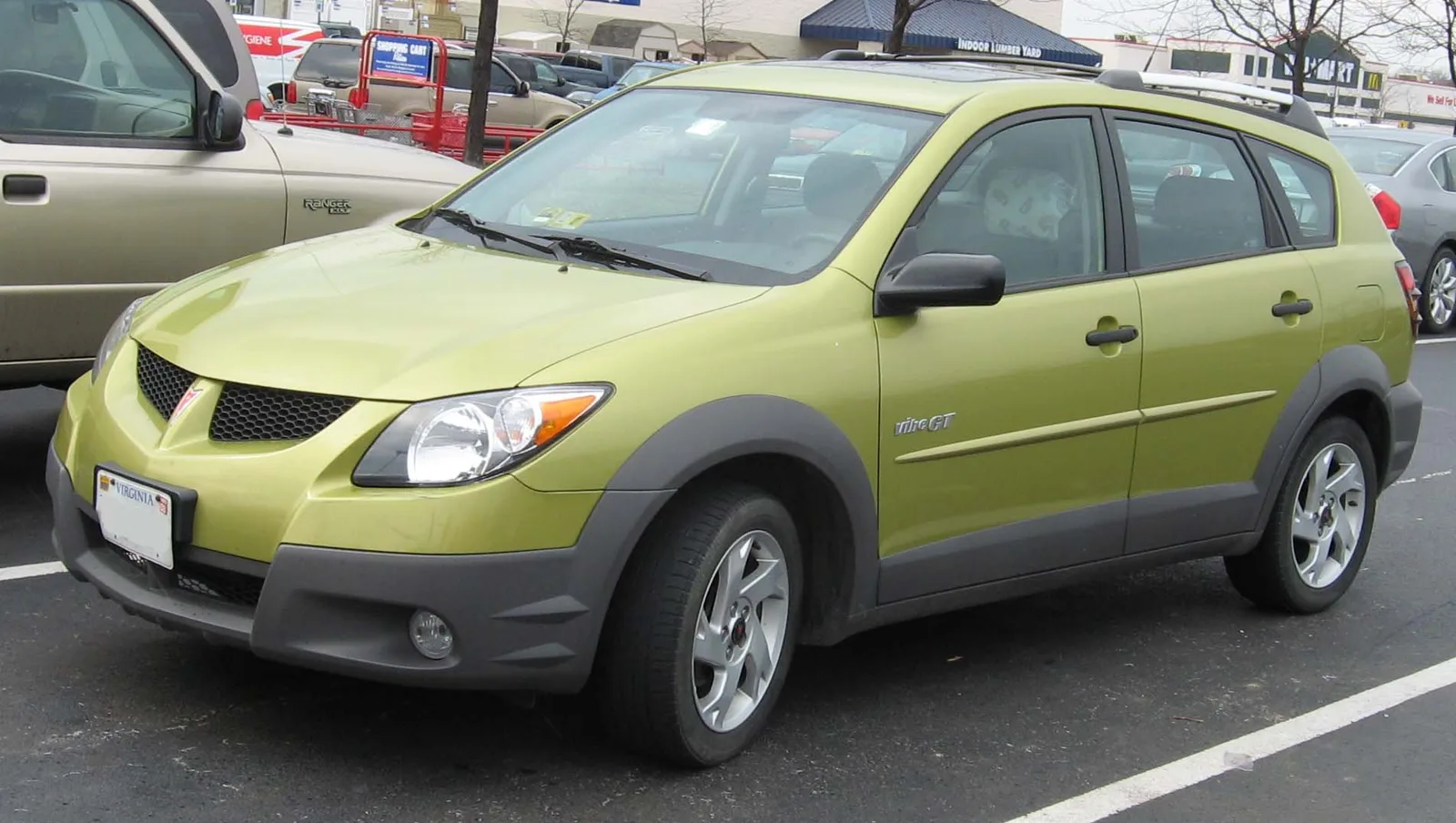
Pontiac's last new model was a Toyota. The Vibe, which arrived for the 2003 model year and was redesigned for 2009, shared its platform with the Toyota Matrix, was derived from the Toyota Corolla, and was built in Fremont, California, by a General Motors and Toyota joint venture. In Japan, the same car with different badges was a Toyota Voltz. Pontiac had long been GM's performance division, and the Vibe was how the brand ended.
The Sunbird, the 6000 and the Trans Sport trace the road from there back through the 1970s, 1980s and 1990s: a small car born from a Chevrolet, a mid-size sedan that embarrassed its maker on a magazine cover, and a minivan with a space-age concept behind it.
Pontiac Sunbird: from rebadged Vega to Sunfire
Pontiac built the Sunbird, also sold as the J2000 and the 2000, for the 1976 to 1994 model years. Its name loosely borrowed from the Firebird, and it was meant to succeed the Pontiac Astre, which it replaced entirely in 1978 as Pontiac's smallest car. In all, Pontiac used the nameplate for 17 model years, skipping 1981, restarting as the J2000 in 1982 and bringing back the Sunbird name for 1984. For 1995 the car was substantially updated and renamed the Sunfire.
Pontiac Sunbird first generation: 1976 to 1980
The first Sunbird went on sale in September 1975 for the 1976 model year. It rode on the rear-wheel-drive H platform with a 97-inch wheelbase, shared with the Astre, the Chevrolet Vega and the Chevrolet Monza, of which it was a direct variant. It competed against the Ford Mustang II, the Mercury Capri, the Toyota Celica and the Volkswagen Scirocco. Production reached 479,967 across the 1976 to 1980 model years.
The 1976 car came as a two-door notchback coupe only, with a 2.3-litre Chevrolet four-cylinder making 78 hp (58 kW), or 87 hp (65 kW) with an optional two-barrel carburettor. A 110 hp (82 kW) Buick 231 cubic-inch V6 was also optional. Pontiac added a hatchback in 1977, together with the Iron Duke four-cylinder at 90 hp (67 kW), and a two-door wagon in 1978, when a Chevrolet 305 cubic-inch V8 became an option on the coupe and hatchback. For 1980 the wagon and the V8 both left the range.
Front-wheel drive: J2000 to Sunbird GT
For 1982 the Sunbird gave way to a front-wheel-drive compact called the J2000, offered as a sedan, coupe, wagon or hatchback. Its J-body underpinnings were common to the Cavalier, Firenza, Skyhawk and Cadillac Cimarron. The 1.8-litre overhead-valve four made 88 hp (66 kW), and a single-overhead-cam 1.8 imported from GM of Brazil joined it during the year with throttle-body fuel injection and 84 hp (63 kW). The J prefix went in 1983, to market the car as a smaller version of the 6000.
That year Pontiac also introduced a convertible, the 2000 Sunbird. It was the brand's first convertible outside its full-size range since 1972. In 1984 the whole J-body line took the 2000 Sunbird name, and a turbocharged 1.8 with a Garrett T25 and port fuel injection arrived with 150 hp (110 kW). It was popular, and more powerful than many rival V6 engines. The GT of 1986 added fender flares, hidden headlamps and the turbo as standard, in sedan, coupe, hatchback or convertible form. Fewer than 5,000 GT sedans were sold, and fewer than 1,300 GT convertibles, which makes the latter the rarest Sunbird of all.
The 1987 model year brought enlarged 2.0-litre engines, with 96 hp (72 kW) for the base car and 165 hp (123 kW) for the turbo, whose speedometer now read to 120 mph (190 km/h) instead of 85 mph (137 km/h). The third generation, from 1988 to 1994, had a redesigned rear end, a semi-fastback coupe roof and base, SE and GT trims. The convertible GT ended in 1989 and the turbo after 1990, and for 1991 the Cavalier's 3.1-litre V6 with 140 hp (100 kW) took the turbo's place, quicker to respond and smoother. In 1992 the base four-cylinder gained multi-port injection and rose from 96 to 110 hp (82 kW). Most Sunbirds were built at Lordstown, Ohio, and Ramos Arizpe, Mexico. In Mexico, the Chevrolet Cavalier adopted the Sunbird body for 1993.
The last new Pontiac was a Toyota Matrix with a Pontiac face.
Pontiac 6000: a mid-size car that became a cautionary tale
The Pontiac 6000 replaced the LeMans as Pontiac's mid-size car and ran from 1982 to 1991. Offered at first as a two-door or four-door notchback, it gained a five-door wagon in 1984. Pontiac was moving towards numeric model names in the 1980s, and the 6000 became the largest line to carry one. It sat on GM's front-drive A platform alongside the Buick Century, Chevrolet Celebrity and Oldsmobile Cutlass Ciera, and took its roofline from the Ciera.
In 1984 it was the best-selling Pontiac line, with over 122,000 sold. The A-bodies also became shorthand for GM's habit of rebadging. Fortune magazine put them on its cover on 22 August 1983 as examples of uniformity, which embarrassed the company and led it to recommit to design leadership. Oshawa, Ontario, built the 6000 from 1981 to 1988, and Oklahoma City afterwards. It was dropped for 1992 as the Grand Prix four-door took over, and the 1991 6000 Safari was the last station wagon Pontiac ever made. The last 6000 was assembled on 22 July 1991.
6000 engines year by year
The 1982 car came in 6000 and LE trims with a 2.5-litre Tech IV four-cylinder, 90 hp (67 kW), or optionally a 2.8-litre V6 at 112 hp (84 kW) or a 4.3-litre Oldsmobile diesel V6 at 85 hp (63 kW). The diesel proved unpopular and was dropped after 1985. The 2.8 gained multi-port injection in the STE for 1985, with 135 hp (101 kW), and reached the base and LE models in 1986 at 125 hp (93 kW). In 1988 the coupe was dropped, and a white Olympic edition appeared in Canada to tie in with the Calgary Winter Olympics. For 1990 a 3.1-litre V6 replaced the 2.8 everywhere, and passive front seatbelts arrived.
6000 STE: Pontiac's sport sedan
The 6000 STE, for Special Touring Edition, arrived for 1983 as a sport-tuned four-door. Pontiac was rediscovering its 1960s role as GM's performance brand, and the STE was meant to take on similar cars from BMW, Audi, Toyota and Nissan, even though it used older technology than they did: a carburetted engine and, at first, no tachometer. It had five-passenger seating with front captain's seats, power windows and a High-Output 2.8-litre V6 making 135 hp against the usual 112. The 1984 car added a digital gauge cluster with a bar-graph tachometer and a driver information center, and Road & Track named it one of the top twelve enthusiast cars that year. A tuned steering rack, a self-levelling rear air suspension, four-wheel disc brakes and Goodyear Eagle GT tyres gave handling that matched European cars.
Car and Driver put the STE on its 10Best list from 1983 to 1985. The 1986 model brought anti-lock brakes and steering-wheel audio controls, the first of their kind, and in 1988 an optional all-wheel-drive system arrived with the new 3.1-litre V6, the first production use of GM's Generation II 3.1. The STE cost upwards of 75 percent more than the cheapest 6000, yet it made up 10 to 15 percent of 6000 sales. The name moved to the Grand Prix in 1990 and ended there after 1993.
Pontiac Trans Sport: the Dustbuster minivan
Pontiac's first minivan, the Trans Sport, covered the 1990 to 1999 model years. It marked the start of a wider shift away from sedans and wagons as family cars. General Motors had answered the Chrysler minivans of 1984 with the Chevrolet Astro and GMC Safari, but those were heavier-duty vehicles that never took as much market share. To compete more closely, GM developed a front-wheel-drive minivan, with the Trans Sport aimed at buyers who wanted sport and style, the Chevrolet Lumina APV as the value option and the Oldsmobile Silhouette for premium buyers.
The 1986 concept
The name came from a concept car shown at the 1986 Chicago Auto Show. Built on the chassis of the Pontiac 6000, it stood almost 6 inches lower than a contemporary Plymouth Voyager. It had blacked-out A-pillars, a gull-wing door in place of a sliding one, and a glass roof, and its taillamps added amber for deceleration. Inside were a heads-up display on the windscreen, a steering wheel with multiple controls, an early form of what became OnStar, a digital mirror and even a Nintendo Entertainment System for the rear passengers. A 235 hp turbocharged 2.9-litre V6 intended for a Fiero that never appeared powered it, on 17-inch wheels.
First generation: 1990 to 1996
The production Trans Sport had far less than the concept. It used a single-box shape like the Ford Aerostar and Toyota Previa, with the hood sloping into the windshield. The long front overhang was poorly received, and the nickname Dustbuster, after the handheld vacuum cleaner, stuck to it and to two other minivans from different brands. Underneath was a galvanised steel space frame with plastic side panels, similar in idea to the Fiero and the Saturn, and only the roof was steel.
The interior broke from tradition with five individual rear bucket seats, which could be arranged as five-seat, six-seat or seven-seat layouts. The standard engine was a 3.1-litre V6 with 120 hp (89 kW) and a three-speed automatic. A 3.8-litre V6 with 170 hp (127 kW) and a four-speed automatic came in 1992, and a 3.4-litre V6 with 180 hp (134 kW) replaced both for 1996. Anti-lock brakes became standard in 1992, and traction control was optional on the 3.8 in 1994.
The 1994 revision answered the criticism of the looks. Designers took three inches off the body length, fitted a new hood, restyled the cladding and added a larger vertical grille, and darker rear glass helped the car look longer from the side. The Trans Sport, with its APV siblings, introduced a power-operated sliding door as a market first, delayed from 1993 to fix quality-control issues. The steering wheel gained a driver airbag, and integrated child seats became optional in the second row. The last first-generation Trans Sport was built on 27 June 1996, and the North Tarrytown plant closed soon after.
Second generation and the Montana
The 1997 Trans Sport answered the controversy with a shape modelled on the third-generation Chrysler minivans. It abandoned the space frame for a conventional steel unibody on the GMT200 platform, and it grew, with a standard 112-inch wheelbase and a 120-inch extended version. The 180 hp (134 kW) 3.4-litre V6 carried over with a four-speed automatic. It sat between the Chevrolet Venture and the Oldsmobile Silhouette, took a conservative two-box form like the Dodge Caravan, and was built in Doraville, Georgia, at a plant that closed on 26 September 2008.
A Trans Sport Montana appearance package proved so popular that Pontiac renamed the whole minivan line Montana. Reports differ on timing: the renaming is placed in the 1998 model year in one place and in 1999 (2000 in Canada) in another.
Pontiac Vibe: the Toyota in a Pontiac suit
Pontiac sold the Vibe, a compact car, from the 2003 to the 2010 model years. It was the first Pontiac sold only as a wagon since the Safari, and the fourth and last GM-branded vehicle to come from the NUMMI joint venture. It followed the Chevrolet Nova and the Geo and Chevrolet Prizm as a Corolla-based GM car. NUMMI assembled it in Fremont, California, beside the Matrix, Corolla and Tacoma, and the Toyota Voltz sold in Japan from 2002 to 2004 was built there too, with just over 10,000 sold.
The first generation was unveiled in November 2001 and came in base, all-wheel-drive and GT versions. A Toyota-built 1.8-litre four-cylinder made 126 hp (94 kW) in the base car, 118 hp in the all-wheel-drive car, and 164 hp (122 kW) with VVTL-i in the GT, which came only with a six-speed manual. Early model years carried higher claimed outputs, up to 180 hp (134 kW) for the GT, until Toyota retested its engines in 2006. The GT and all-wheel drive both ended for 2007 because of poor sales and new federal emissions rules. For a time the Vibe was the most fuel-efficient GM vehicle sold in North America, until revised EPA testing in 2008. Pontiac restyled the grille in 2005 to resemble the Solstice's, where the 2003 and 2004 cars had looked more like the Aztek.
The second-generation Vibe debuted at the December 2007 Los Angeles Auto Show as a 2009 model. It brought back the GT and all-wheel-drive options and offered two new fours: a 1.8-litre with 132 hp (98 kW), and a 2.4-litre with 158 hp (118 kW). Passenger volume was 91.4 cubic feet (2.59 m3), and with the rear seats folded flat the total reached 111.5 cubic feet (3.16 m3). The cargo area was 30 inches high and 40 inches wide, enough to take a standard North American washing machine or dryer.
Why the Vibe ended
On 27 April 2009 GM announced the end of the Vibe along with all other Pontiac models, and the last one left the assembly line on 17 August 2009. It was the brand's last new model, and for 2010 the only Pontiac car still on sale. Toyota had to scramble to move the Matrix tooling elsewhere. GM did not build a direct successor, choosing to bracket the Vibe's territory with the Chevrolet Sonic hatchback and the Buick Encore crossover. In Canada it followed with the Chevrolet Orlando, and a Cruze hatchback reached North America in 2016.
Vibes were caught in the 2009 and 2010 Toyota recalls over unintended acceleration, because they shared components with the Matrix, and in a floormat recall in autumn 2009. In August 2010 a further recall covered 2005 to 2008 two-wheel-drive cars with the 1ZZ-FE engine, because of a cracking engine control module, and in October 2014 faulty Takata airbags prompted another.
Pontiac model lines side by side
| Model | Model years | Class | Platform | Engine range |
|---|---|---|---|---|
| Sunbird | 1976 to 1994 | Subcompact, then compact | GM H, then J | 78 hp 2.3 L four to 165 hp turbo; 140 hp V6 in 1991 |
| 6000 | 1982 to 1991 | Mid-size | GM A | 90 hp 2.5 L four to 135 hp 2.8 L V6 in the STE |
| Trans Sport | 1990 to 1999 | Minivan | GMT199, then GMT200 | 120 hp 3.1 L V6 to 180 hp 3.4 L V6 |
| Vibe | 2003 to 2010 | Compact wagon | GM S (Toyota MC) | 126 hp 1.8 L to 164 hp GT; 158 hp 2.4 L |
Which of these Pontiacs are the scarce or notable ones?
A Sunbird GT convertible is the scarce one, with fewer than 1,300 sold. The 6000 STE is the car to look for if you want a period sport sedan, and all-wheel drive was offered on the 6000 only from 1988 to 1990. Because the Vibe was a Matrix underneath, much of its mechanical hardware is shared with the Toyota, and first-generation Vibe odometers cannot roll past 299,999. Trans Sport buyers will find that the 1994 revision took three inches off the body and added a driver airbag, so later first-generation cars differ from earlier ones.