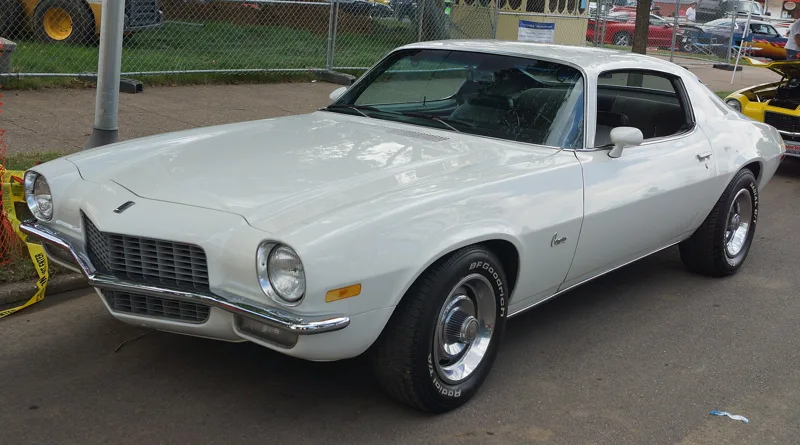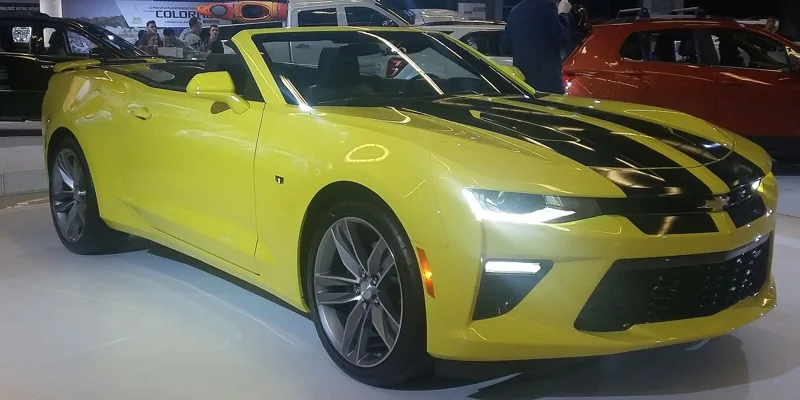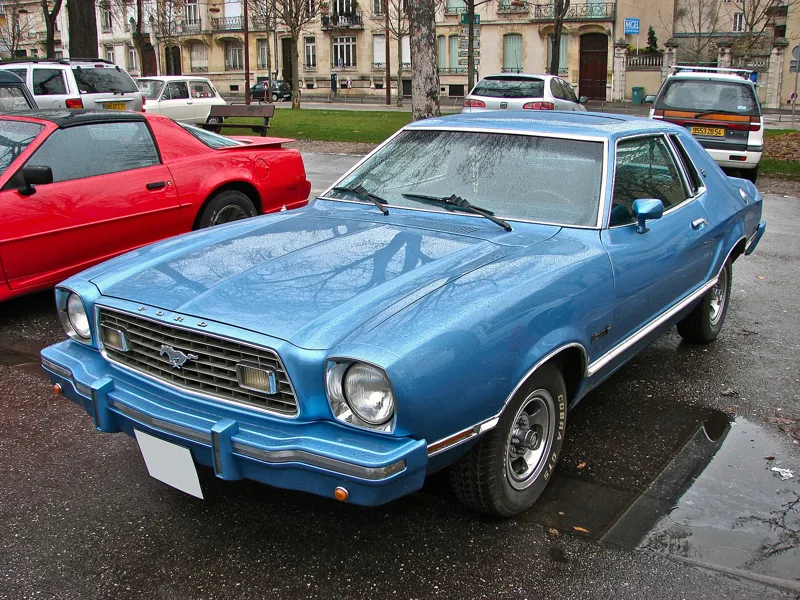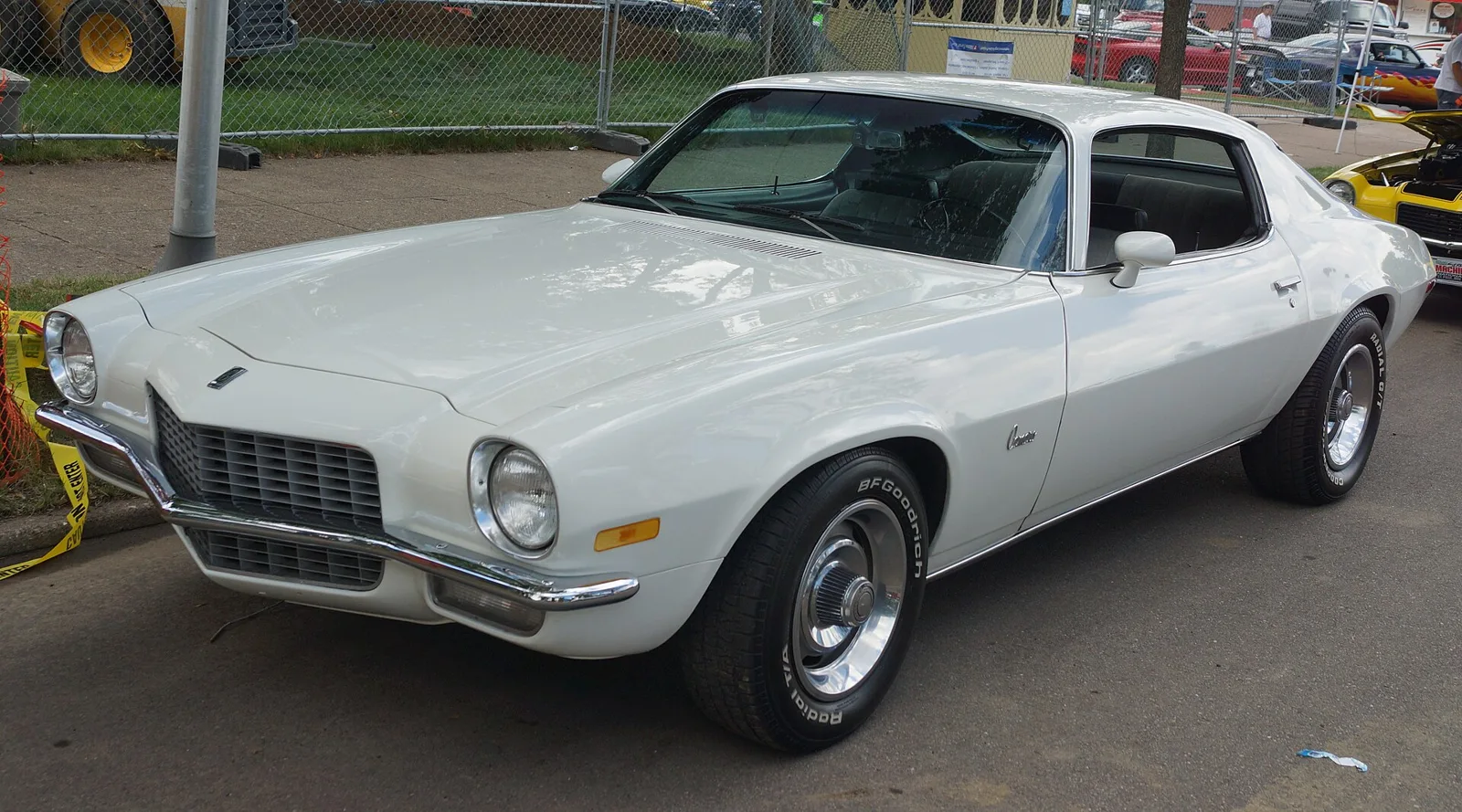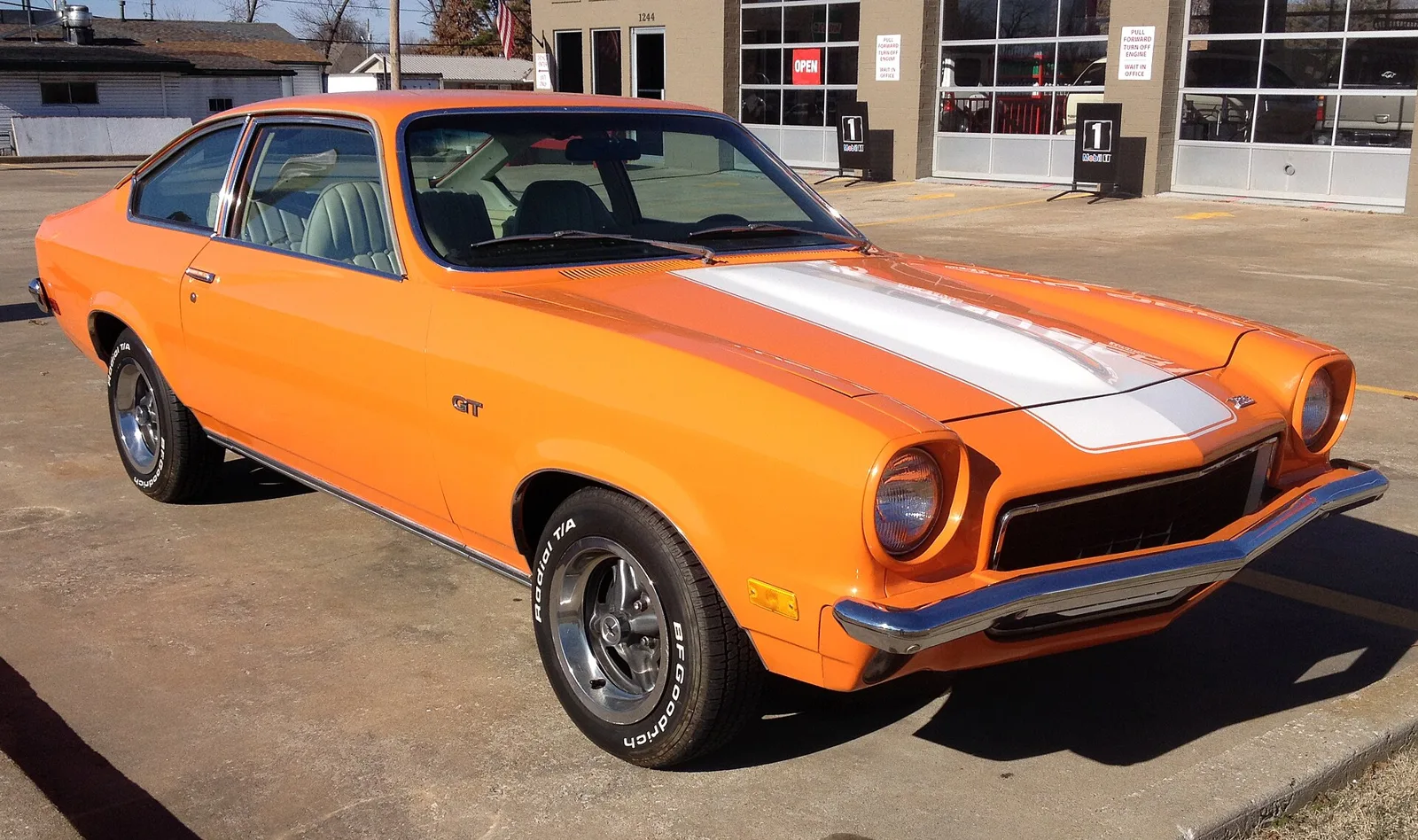
Two Motor Trend winners, an oil-crisis special and a front-drive replacement: four different answers to the small-car problem.
Chevrolet tried four times to win the small-car market. The Vega of 1970 and its Monza spin-off used Vega engineering, the Chevette of 1975 answered the oil crisis on the T platform, and the front-wheel-drive Cavalier replaced the Monza for 1982.
The Chevrolet Vega won Motor Trend's Car of the Year award for 1971, then became a byword for rust, engine trouble and recalls that tarnished General Motors as a whole. In 1975 its descendant the Monza won the same award, and two more cars, the Chevette and the Cavalier, followed with different answers to the same question: how does a big American maker beat the imports at their own game?
Each of the four was shaped by a different threat. The Vega was rushed out against the small imports, the Monza dressed the Vega up as a sporty coupe, the Chevette responded to the oil crisis and new fuel-economy rules, and the Cavalier finally moved the small Chevrolets to front-wheel drive.
How did General Motors decide to build the Chevrolet Vega?
Ed Cole, a GM executive vice-president, took his small-car programme to the president in 1967, and management chose it over rival proposals from Chevrolet and Pontiac. In 1968 chairman James Roche announced that GM would build the car in the United States within two years.
Cole wanted a car that would beat the world within 24 months. Roche said stylists, researchers and engineers had been on the project, code-named XP-877, for years, though John DeLorean later said no prototypes existed before the announcement. A design team under James G. Musser Jr., who had worked on the Chevy II, the Camaro and the Turbo-Hydramatic gearbox, took charge. Fifty engineers worked on the whole car, and the new aluminium die-cast engine block was tested over 6,000,000 miles, with a Fiat 124 serving as a test bed for the block and Opel sedans for the drivetrain.
The first plan in October 1968 called for a single notchback body, one engine and a two-speed automatic. By December the hatchback, wagon and panel delivery had joined it, and buyers rewrote the forecasts. The L11 two-barrel performance engine, predicted at 20 percent of production, took 75 percent, while air conditioning expected at 10 percent was chosen 45 percent of the time. Production began on 26 June 1970, and the Vega reached showrooms on 10 September 1970. Cars magazine said in 1974 that customers, not proving-ground engineers, had done much of the testing.
Every one of the four was built because something outside Detroit changed: imports, oil prices or front-wheel drive.
What was wrong with the Vega engine?
The 2.3-litre aluminium-block four was a joint effort by GM, Reynolds Metals and Sealed Power, and it suffered vibration, noise and a tendency to overheat that were not rectified until 1974. Cole himself insisted at one stage that the engine needed no radiator, and after many prototype failures a small one was fitted.
Inside GM the engine became known as the world's tallest, smallest engine because of its tall cylinder head. The rest of the car was better regarded. Weight distribution was 53.2 percent front and 46.8 percent rear, lateral grip reached 0.90 g, and the chassis engineers aimed for full-size American ride with European handling. Front discs and rear drums followed an Opel design.
The hatchback, lower in the roof and with a rear seat that folded down, made up nearly half of Vega sales. The sedan, renamed Notchback, was the only one with an enclosed boot and had the lowest price. The Kammback wagon had a swing-up liftgate, and the panel express carried a truck classification that allowed a low-back driver's seat.
The Vega year by year
For 1973 Chevrolet announced 300 changes, and on 17 May 1973 the millionth Vega, an orange GT hatchback, left the Lordstown plant. The 1974 model year was the high point, with 460,374 sold, and the same year thousands of front fenders were replaced under warranty and plastic liners were added. A 16-US-gallon tank replaced the 11-gallon unit.
In March 1975 the Cosworth Vega arrived with an all-aluminium 2.0-litre engine and electronic fuel injection, a first for a Chevrolet passenger car, and Vega sales for the 1975 model year fell to 206,239. The 1976 car took the Monza's upgraded chassis parts and galvanized fenders and rocker panels. The Cosworth was cancelled in July after 1,446 of the 1976 models were built, and the Vega ended with the 1977 model year.
What was the Chevrolet Monza?
The Monza was a subcompact sold for the 1975 through 1980 model years, built on the Vega's wheelbase, width and standard four-cylinder engine. Chevrolet designed it to take the GM-Wankel rotary engine, but poor fuel economy and emissions problems ended that plan and a V8 option took its place.
The Monza 2+2 was 4 inches longer than the Vega and weighed 180 lb (82 kg) more, and John DeLorean nicknamed it the Italian Vega because the styling resembled the Ferrari 365 GTC/4. With the Monza Towne Coupe it competed with the Ford Mustang II. Siblings included the Buick Skyhawk, the Oldsmobile Starfire and, from 1976, the Pontiac Sunbird. Motor Trend named the Monza 2+2 its Car of the Year for 1975.
Standard power was the Vega's 140 cubic inch four, rated at 78 horsepower with one carburettor barrel and 87 with two. A 262 cubic inch V8, the smallest Chevrolet had ever offered, produced 110 horsepower, and California cars got a 125 hp 350 in 1975 only. The Monza introduced GM's first torque arm rear suspension, later used on the Cosworth Vega, the 1976 and 1977 Vegas and the third and fourth-generation Camaro.
The Towne Coupe notchback followed in April 1975 to answer the Mustang II notchback. A cheaper S version arrived mid-year. Over the years the range gained the Spyder packages, the 305 V8 with 140 horsepower in 1976 and 145 in 1977, and the 1977 Mirage, a one-year appearance kit sold by an aftermarket firm that produced about 4,097 cars. The Vega engine gave way to Pontiac's 2.5 Iron Duke in 1978, the year the Monza also absorbed the Vega hatchback and wagon bodies with a new front end. Buick supplied V6 engines of 3.2 and 3.8 litres.
By 1979 the lineup was down to four models, with a 90 horsepower four as standard. For 1980 the only option was the 3.8-litre Buick V6, and the wagon was dropped because the Citation hatchbacks offered equal cargo space. Chevrolet ended the Monza after the 1980 model year, with the replacement Cavalier arriving in early calendar 1981.
Why did Chevrolet build the Chevette?
The Chevette took over from the Vega as the cheapest subcompact in the Chevrolet range when it appeared in September 1975. Chief engineer John Mowrey began development on 24 December 1973 in response to federal CAFE standards and the 1973 oil crisis, which pushed buyers towards smaller, more efficient foreign cars.
The car used GM's global rear-drive T platform, developed jointly by Opel and Isuzu in 1973. The Brazilian Chevette launched first, the Opel Kadett C followed six months later, and over 7 million T-cars were built worldwide, under names that included Pontiac Acadian, Vauxhall Chevette, Isuzu Gemini and Holden Gemini.
Because of the Vega's problems with production, reliability and corrosion, the American team reworked the platform so that it shared no body panels with other T-cars, and the underbody was extensively redesigned for corrosion protection. The 1.4-litre iron-block base engine weighed 59 lb less than the Vega's aluminium unit. GM reportedly saved 8 to 12 months by building on the T platform.
The first Chevette Scooter was assembled on 18 August 1975, officially introduced in Washington on 16 September and put on sale on 2 October. Early forecasts of 275,000 sales in the first year were halved when the price of oil stabilised. Production reached 2,793,353 over 12 model years, ending on 23 December 1986, and no small car sold better in the United States than the Chevette in the 1979 and 1980 model years. It was also the first American car designed in metric measurements, and the first to carry a diagnostic plug.
Early cars were two-door hatchbacks with a 1.4-litre or 1.6-litre OHV four making 52 to 60 hp and a standard four-speed manual. The EPA rated the 1.4 at 28 mpg city and 40 mpg highway, and Chevrolet claimed a turning circle of 30.2 feet (9.2 m). Critics were not always kind. The New York Times welcomed it at launch, yet in 2011 judged it poorly made, sparsely trimmed and underpowered.
The stripped Scooter at $2,899 caused a row, with critics saying it existed only to allow a low advertised price. Lee Iacocca announced a Ford Pinto Pony MPG that undercut it by $4 and included a back seat. GM said the Scooter was a genuine urban utility car, and sold 9,810 of them against 178,007 regular hatchbacks.
A four-door hatchback arrived in 1978 and ultimately made up over half of nearly 300,000 sales. Sales topped 451,000 in 1979, second in the GM range only to the new Citation. In August 1981 an Isuzu 1.8-litre diesel with 51 hp became an option, Pontiac added the T1000, and sales fell from 433,000 in 1981 to 233,000 in 1982. The Chevette CS appeared in 1983.
Where does the Chevrolet Cavalier fit?
The Cavalier replaced the Monza and was the second Chevrolet line to use front-wheel drive, after the Citation. It was among the first cars on GM's J platform, a world car shared with Opel, Vauxhall and Holden, and three generations were sold in North America from the 1982 to 2005 model years.
Development began in the late 1970s, when Chevrolet wanted a front-drive car sized between the Chevette and the Citation. The Chevette had been competing with the Honda Civic, Datsun B210 and Toyota Corolla, and the arrival of the Dodge Omni and Ford Fiesta pushed American makers toward front-wheel drive. The Cavalier name came from Vauxhall. Sister cars included the Pontiac J2000, Oldsmobile Firenza, Cadillac Cimarron and Buick Skyhawk, and the Cavalier was mostly sold alongside the Pontiac Sunbird.
The first generation went on sale in May 1981 as a 1982 model, with the 1.8-litre L46 four as the only engine at first and body styles that included a coupe, a hatchback, a sedan and a wagon. A 2.0-litre fuel-injected four and a five-speed manual arrived for 1983, together with a convertible built by American Specialty Cars, the first Chevrolet convertible since the Caprice version ended in 1975. For 1984 5,161 Olympic-themed cars were built, a 2.8-litre V6 was added for 1985, and the Z24 package arrived for 1986.
The second generation, from 1988 to 1994, dropped the hatchback and offered VL, RS and Z24 trims. The base 2.0-litre four made 90 hp and the 2.8-litre V6 made 125 hp. In 1990 the base engine grew to 2.2 litres with 95 hp and the V6 became a 3.1 with 140 hp. The convertible was dropped to make room for a Beretta convertible that was shelved at the last moment, and it returned in mid-1991. The 1992 car gained standard anti-lock brakes and a 110 hp four.
The third generation of 1995 to 2005 was a total redesign with Camaro-inspired details. The wagon disappeared, the V6 was dropped, and a 2.4-litre DOHC four with 150 hp arrived for the sportier models in 1996. By 1997 it was the best-selling car in the GM lineup. A four-speed automatic planned for the 1995 launch slipped to 1996 because of a GM cash shortage, and a natural gas bi-fuel option was sold to fleets from 1998 to 2004. The Cobalt replaced it in 2005.
How do the four small Chevrolets compare?
| Car | Years | Layout | What it answered |
|---|---|---|---|
| Vega | 1970 to 1977 | Rear-drive, aluminium-block 2.3 four | Imported subcompacts |
| Monza | 1975 to 1980 model years | Rear-drive, Vega-based 2+2 and Towne Coupe | Ford Mustang II and sporty coupes |
| Chevette | 1976 to 1987 model years | Rear-drive T platform | CAFE standards and the 1973 oil crisis |
| Cavalier | 1982 to 2005 model years | Front-drive J platform | Replacing the Monza with a front-drive compact |
What became of the Cavalier name
The Cavalier name outlived its North American run. SAIC-GM built a version for China from 2016 to 2021 and another for Mexico, sold since the 2019 model year.