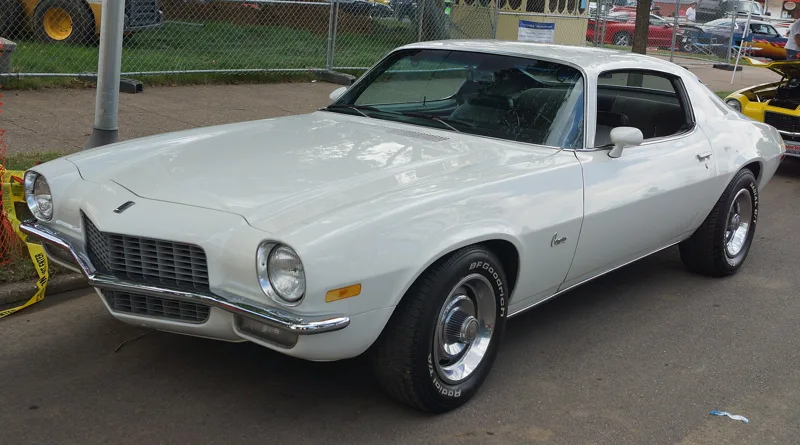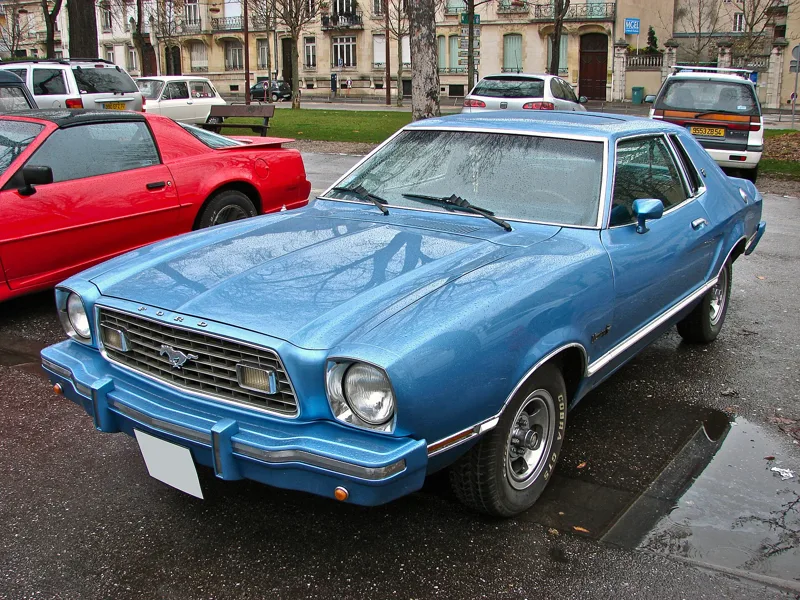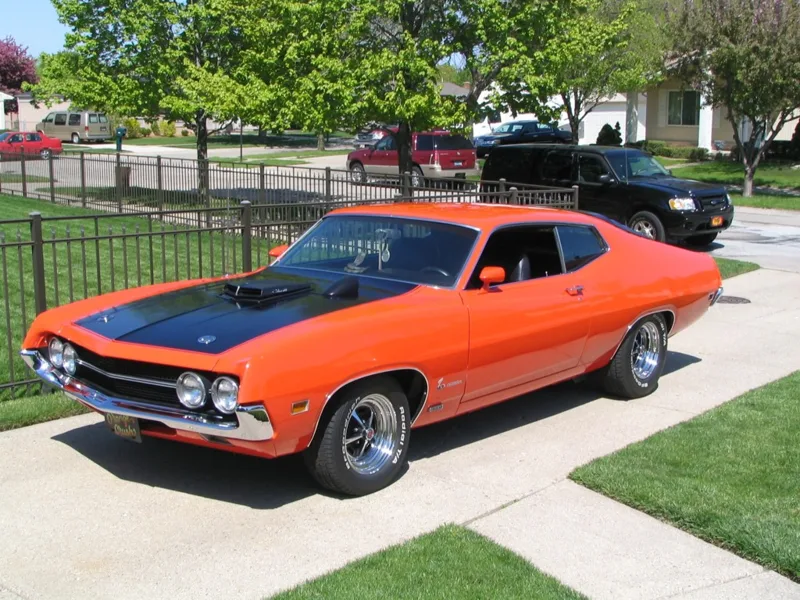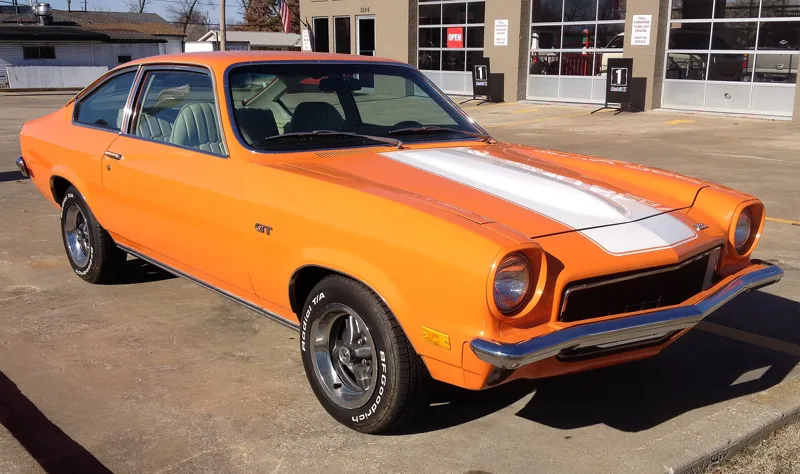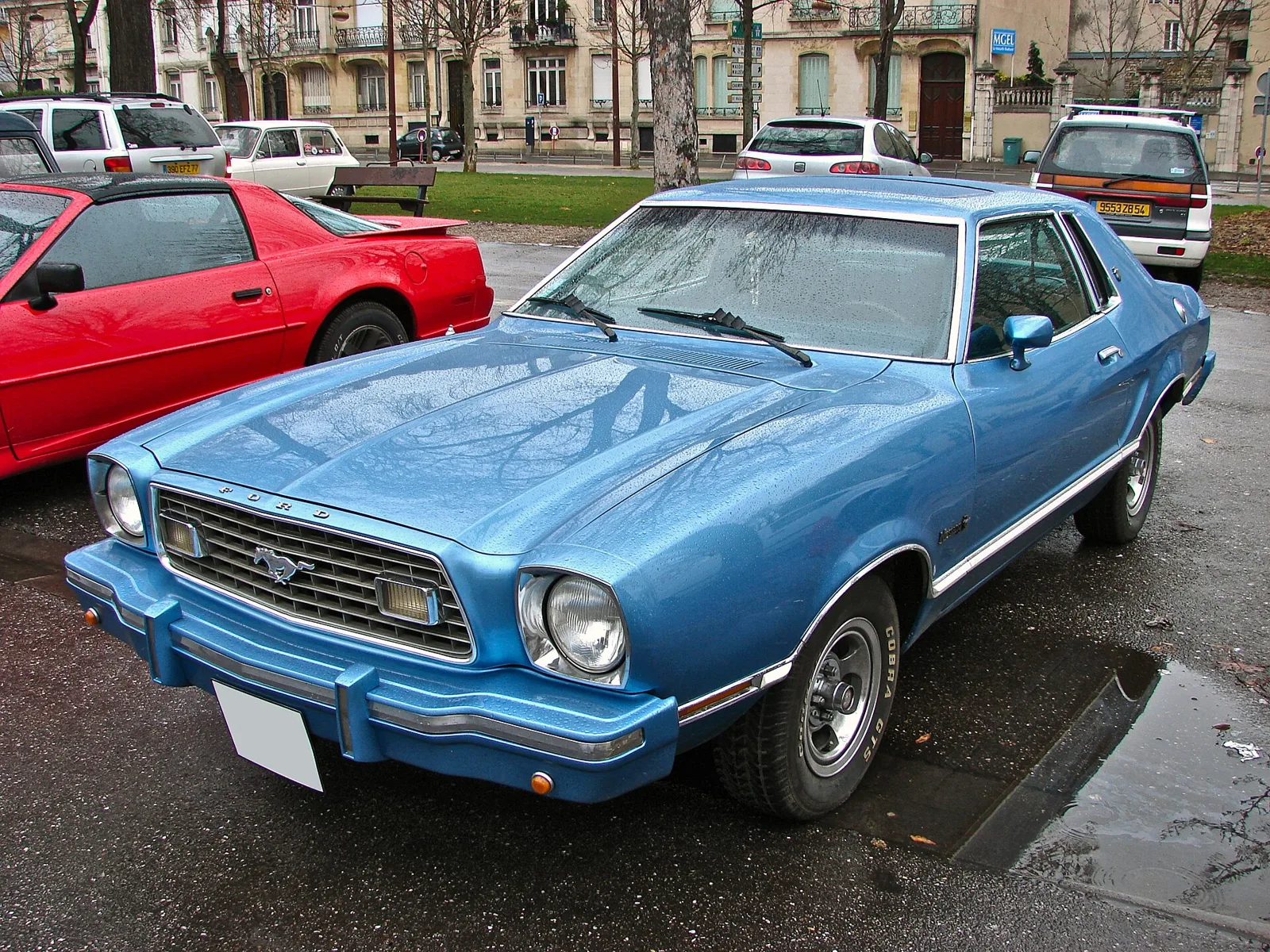
A Pinto-based pony car, a 302 V8 from 1975 and more than 1.1 million cars built from 1974 to 1978.
The Ford Mustang II was a pony car built from 1973 to 1978 on the Pinto subcompact platform. It was introduced for the 1974 model year, and its 2.3 L four, 2.8 L V6 and later 4.9 L V8 sat under a body almost 19 in (483 mm) shorter than the 1973 Mustang.
The Ford Mustang II arrived in September 1973 as a 1974 model, at about the same time as the oil embargo. Ford had shrunk the pony car onto the Pinto platform, and the first model year alone produced 385,993 cars.
The car was a commercial success that critics never fully forgave. Reviewers attacked its power, handling and build quality, yet buyers bought it in big numbers, and that is why it still gets a hearing today.
Timing shaped the car from the start. It was introduced on September 21, 1973, alongside the oil embargo, which made a smaller pony car look sensible rather than like a retreat.
Why did Ford shrink the Mustang?
Buyers were drifting toward cheaper, thriftier compacts, and the 1973 Mustang had grown far larger than the original. Lee Iacocca, who had become Ford president on December 10, 1970, ordered a smaller car for 1974, and the oil embargo made the timing look shrewd.
The decision was timed to a market already moving away from big cars. The oil embargo simply confirmed the direction that buyers had been heading.
The first plan used the compact Ford Maverick as its basis. That was dropped in favour of a smaller car built on the subcompact Pinto platform.
The Mustang II was 490 lb (222 kg) lighter than the 1973 car and almost 19 in (483 mm) shorter. Those were not small gains, and the new body reflected an era of high gas prices.
The downsizing was not Ford's alone. GM considered ending the Camaro and Firebird after 1972, Chrysler dropped the Barracuda and Challenger in 1974, and the whole pony car segment was shrinking across Detroit.
Smaller, thriftier and built on Pinto parts, the Mustang II sold in huge numbers and was never loved by critics.
Rivals, imports and sister cars
The Mustang II competed with sporty subcompacts such as the Buick Skyhawk, Oldsmobile Starfire, Pontiac Sunbird and Chevrolet Monza. Imports were just as dangerous, and the Toyota Celica, Datsun 240Z and Mazda RX-3 were rivals in the same space.
Volkswagen's Scirocco arrived from Germany in 1974, adding another challenger. Ford took the opposite route with the Mercury Cougar, which was upsized to the Torino platform.
Imports sold under 100,000 cars in 1965, but demand had grown by 1972. That growth was the prize the Mustang II was built to chase, and the car was pitched squarely at the buyers who had been moving toward those imports.
A Mercury Capri version of the Mustang II was considered and then shelved. From 1979 the Mercury Capri took over as Mustang's American-built twin, on the new Fox platform.
How was the Mustang II styled?
Young Ford designer Howard Buck Mook produced the initial production design, which Lee Iacocca personally selected. The result came in two body styles, a two-door notchback coupe and a three-door 2+2 hatchback. Its body also borrowed from the Italian coachbuilder Ghia, which Ford had acquired.
A folding rear seat was optional on the notchback coupe and standard on every hatchback. The long-hood, short-deck proportions carried over from the original Mustang.
Fixed rear windows and a chrome B pillar replaced the old pillarless body. The car looked like a hardtop, although it was a coupe, and Ford promoted the notchback as a Hardtop in its advertising.
Ford's link to Ghia went beyond styling, because the Italian studio was part of the company by then. That ownership explains why the Ghia name appears on the luxury trims through the Mustang II's run.
The front-heavy balance mattered too. A 1974 V6 car carried 58 percent of its weight over the front wheels.
Iacocca set a demanding standard for finish. He expected a high level of fit and finish, which suited a car meant to show that a smaller Mustang need not feel cheap.
Chassis and steering
The Mustang II was the first American car with power-assisted rack and pinion steering, a notable step for a mainstream model.
The rear suspension used a Hotchkiss-type layout, with a live hypoid axle held in place by semi-elliptic multi-leaf springs. Front suspension used compression struts with lower trailing links and coil springs.
Rack and pinion steering was a meaningful upgrade in a car of this size, and it gave the Mustang II a more direct connection to the road than older systems offered.
Front brakes measured 9.3 in (236 mm) across, and the rears measured 9.0 in (229 mm).
Which engines did the Mustang II offer?
The base engine was a 140 cu in (2.3 L) SOHC four-cylinder, and a 171 cu in (2.8 L) V6 was the only option in 1974. A 302 cu in (4.9 L) V8 arrived for 1975, but no V8 was offered in 1974 outside Mexico.
The four-cylinder had its own distinction. It was the first fully metric-dimensioned engine built in the U.S.,
Power on paper stayed modest across the range until the V8 arrived.
The V6 was the logical step up from the four. In 1974 it was the only option, so buyers chose between economy and a little extra power on the same body.
The V8 arrives in 1975
The V8 used a two-barrel carburetor and was rated 140 hp (104 kW; 142 PS).
Road & Track recorded 0-60 mph in 10.5 seconds for the V8 car, along with a top speed of 106 mph (171 km/h). Those figures were modest even for the period.
Edmunds listed the outputs year by year. The 1974 base engine made 88 hp (66 kW; 89 PS), the V6 made 105 hp (78 kW; 106 PS), and catalytic converters cut the 1975 figures to 83 and 97 hp.
The 1976 four-cylinder made 92 hp (69 kW; 93 PS) and the V6 made 102 hp (76 kW). The 1977 engines made 89 and 93 hp (69 kW; 94 PS), so power drifted down again as the decade wore on.
Did the MPG model save fuel?
The 2.3 L MPG model arrived mid-way through 1975 with a catalytic converter and a 3.18:1 rear axle ratio. City economy stood at 23 mpg-US (10 L/100 km; 28 mpg-imp), while highway figures reached 34 mpg-US (6.9 L/100 km; 41 mpg-imp).
The 3.18:1 ratio was tied to the MPG model specifically, which is why the economy claims depended on that particular car rather than the whole range.
The MPG badge was a clear signal that Ford was chasing efficiency, the same demand that had shaped the car from the start.
How well did the Mustang II sell?
Sales were strong early on. First-year production reached 385,993 units, and combined 1974 to 1978 production exceeded 1.1 million. Over five years the car recorded four of the ten top Mustang sales years.
Measured against the original, the Mustang II had a strong first year. The 1973 Mustang had reached 134,867 units, while the original Mustang's 12-month record stood at 418,812 units.
The 1975 model was ninth best among Mustangs with 199,199 sold, though Consumer Guide said sales had fallen nearly fifty percent from 1974 levels. The 1974 model is ranked sixth among all Mustangs with 296,041 units.
Production then slid. The 1976 figure was 187,567, a mere 1,019 fewer than in 1975, and 1977 production dropped about 18 percent to 153,117 cars.
A 1978 recovery followed. Production climbed to 192,410 units, and sales rose 25 percent over 1977.
The late-decade rebound did not restore the 1974 peak. The car ended its run with a mixed record of early triumph followed by steady erosion in volume.
Special editions from Cobra II to King Cobra
Ford kept the Cobra name alive on the Mustang II with the Cobra II appearance package from 1976, which added racing stripes and a hood scoop. It was a visual statement rather than a performance upgrade.
The Stallion appearance group was offered in 1976 only. The Mach 1 remained the top-of-the-line V6-powered model, and buyers could add an All-Black Sport Group or a Rallye Package that year.
Ghia kept its luxury role. The Silver Luxury Group arrived for 1975, the Ghia Luxury Group replaced it in 1976, and the Ghia Sports Group followed for 1977 in black or tan paint.
The Ghia badge tied the car back to its styling roots, so the luxury trims were never just a colour scheme on the same car.
The T-top option for the fastback arrived for 1977. The King Cobra came only with the V8 from 1978, and 4,313 units were produced that year.
A Fashion Accessory Package for 1978 added Fresno cloth seats, along with enhanced interior lighting and special pinstriping.
Making the King Cobra V8-only was a deliberate step to bolster the car's performance image. Its 4,313 units were a small fraction of the 192,410 cars built in 1978.
What did the critics say?
Reviews were mixed from the start. Motor Trend named the Mustang II its 1974 Car of the Year, but Consumer Reports said better subcompacts existed and recommended the AMC Gremlin instead. Road & Track found it neither fast nor especially well handled.
Those verdicts pulled in different directions. A Car of the Year title and a bottom-of-class ranking can both belong to the same car, and the Mustang II collected both within a few years.
Consumer Guide was harsher. It ranked the 1976 four-cylinder Ghia at the bottom of its class, and it placed the 1978 Cobra II very low for handling and ride.
Journalist Michael Lamm called the Mustang II the best idea of the year. Mustang Monthly later called it the right car at the right time for its moment.
Few cars of the period drew such a divided verdict, and the Mustang II's critics and defenders rarely agreed on anything except that the car mattered.
Later reappraisal
Later writers have been less generous. Edmunds, writing in 2003, called the 1974 base engine dismal, and the New York Times faulted the steering and a Pinto-style fuel tank in 2006.
Both complaints point at the same weak spot, the basic hardware. The Pinto underpinnings were hard to hide, and a car built on them could not escape comparison with the Pinto itself.
Enthusiasts have long regarded the car as the odd one out in the family.
Ford held the first National Mustang II Reunion in 2016.
Mustang II key figures
| Specification | Detail |
|---|---|
| Built by Ford | 1973 until 1978, marketed as Mustang II |
| Introduced | September 21, 1973, for the 1974 model year |
| Base engine | 140 cu in (2.3 L) SOHC four-cylinder |
| V6 option | 171 cu in (2.8 L), the only option in 1974 |
| V8 | 302 cu in (4.9 L) from 1975, rated 140 hp (104 kW; 142 PS) |
| Weight saving | 490 lb (222 kg) lighter than the 1973 Mustang |
| Length | Almost 19 in (483 mm) shorter than the 1973 Mustang |
| Brakes | 9.3 in (236 mm) front; 9.0 in (229 mm) rear |
| Rear axle, MPG model | 3.18:1 |
| MPG model economy | City 23 mpg-US (10 L/100 km; 28 mpg-imp); highway 34 mpg-US (6.9 L/100 km; 41 mpg-imp) |
| First-year production | 385,993 units |
| 1978 production | 192,410 units |