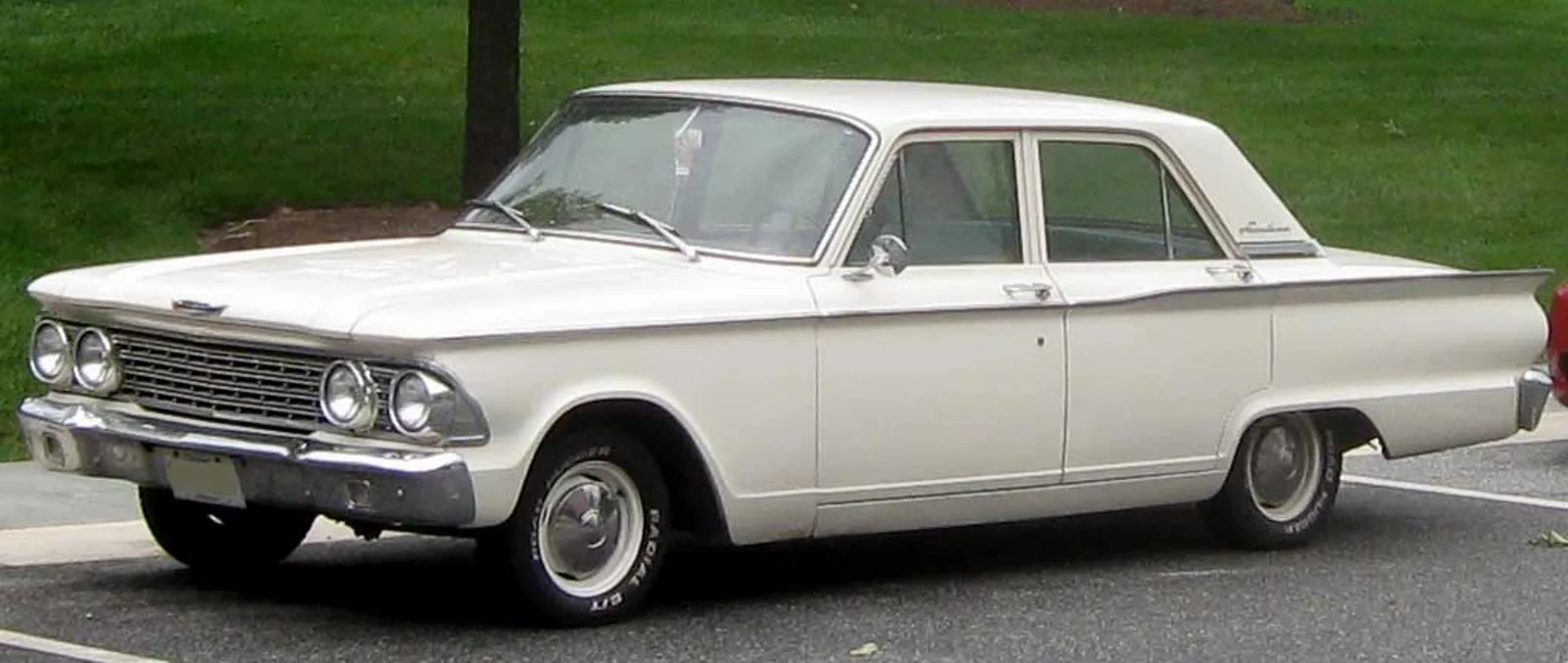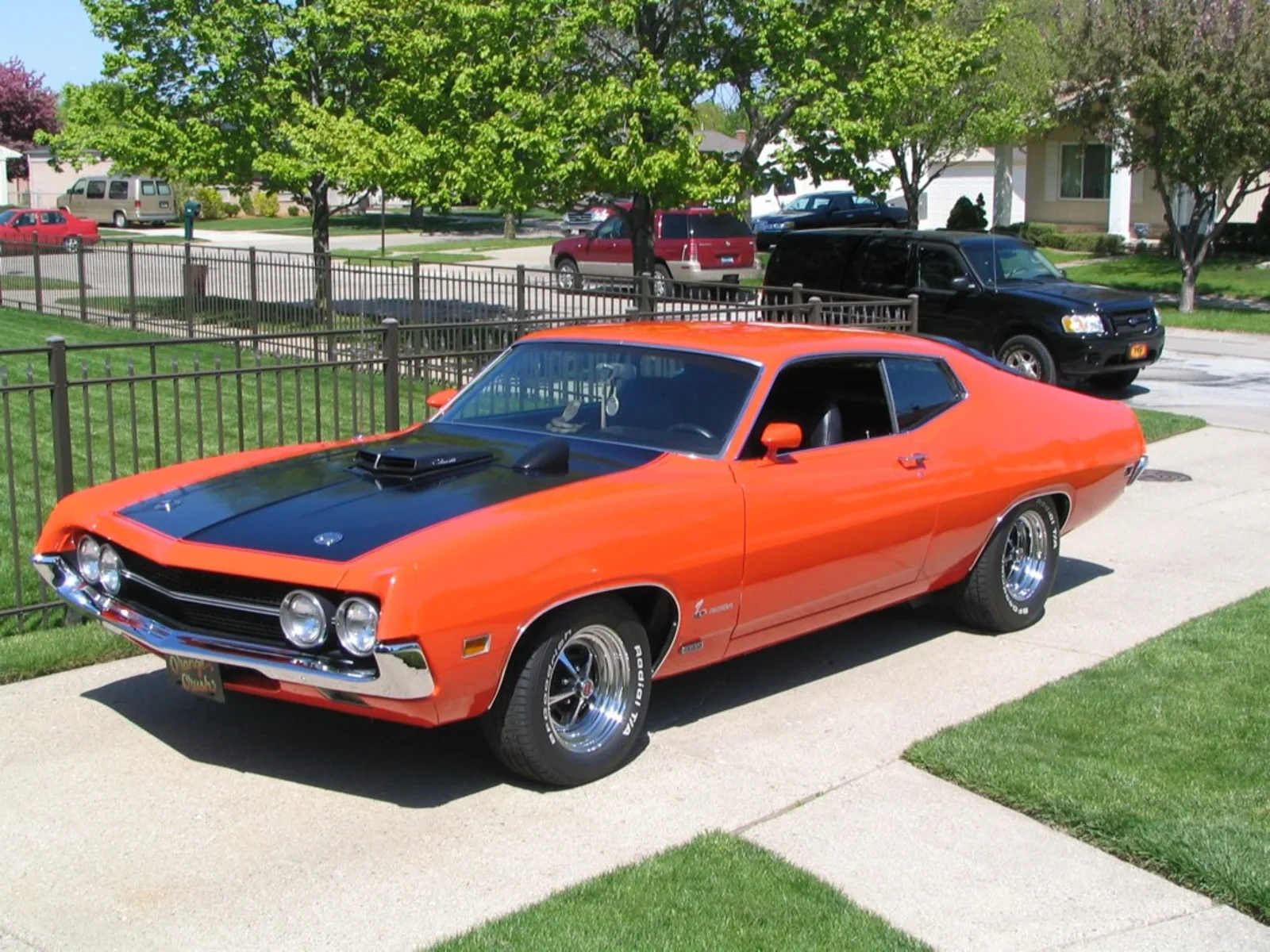
Built from 1968 to 1976, the Torino grew from an upscale Fairlane into a Cobra muscle car, a NASCAR contender and a 1970s luxury coupe.
Ford's Torino ran from 1968 to 1976 as a Fairlane-derived intermediate, sold as a twin to the Mercury Montego. It went from family sedans through Cobra and Talladega muscle to the 1974 Elite luxury coupe.
Ford's Torino was a North American intermediate that ran from 1968 to 1976. It was essentially a twin to the Mercury Montego, and it began life as an upscale version of the Fairlane before becoming the name for Ford's whole intermediate line.
Its story runs from conventional family cars through hot muscle-car editions and NASCAR-inspired specials to a 1970s luxury coupe. A famous TV car and a 2008 film keep it in the public eye.
Where did the Torino come from?
For 1968 Ford reworked the Fairlane range and added the Torino as a premium subseries, named for Turin, which was known as the Italian Detroit. Wheelbases carried over from the year before: 116 in (2,946 mm) for two- and four-door cars, and 113 in (2,870 mm) for wagons.
The name had been one of several proposed for the Mustang during development. By 1970 Torino was the main name for the intermediate line, with Fairlane demoted to a sub-series, and the Fairlane name vanished in 1971.
Starting as a premium Fairlane, the Torino became a muscle car, a NASCAR contender and a TV star.
What did the 1968 Torino look like?
The 1968 car was drastically restyled, with a full-width recessed grille, horizontal quad headlights at the outer edges and smooth body sides with a single crease. A new two-door fastback called the SportsRoof brought a gently sloping roofline that ran to the edge of the trunk lid.
That fastback shape gave the Fairlane and Torino excellent aerodynamics, a benefit that would later pay off on the racetrack. The interior was all new, with four round pods on the dash holding warning lights, a speedometer and a fuel gauge rather than a full set of gauges.
How many models made up the 1968 line-up?
Ford offered 14 intermediate models in 1968. The base Fairlane came as a two-door hardtop, a four-door sedan and a four-door wagon, while the mid-level Fairlane 500 added a two-door SportsRoof and a convertible. The Torino series sat on top, with a notchback hardtop, a four-door sedan and the Squire wagon.
The GT was the sporty version of the Fairlane 500 range, sold as a formal hardtop, a SportsRoof hardtop and a convertible. A six-week UAW strike forced a switch from standard bucket seats to a bench in the GT.
Which engines were available in the 1968 cars?
Every model but the GT started with a 200 cu in (3.3 L) six, and the GT's standard V8 was a 302 cu in (4.9 L) small block. Further options were a 390 cu in (6.4 L) and a 427 cu in (7.0 L), though no 427 cars were actually built in 1968.
The 428 Cobra Jet arrived on April 1, 1968 as the most potent engine, usually rated at 335 hp (250 kW). Because it came in mid-year, these cars are very rare. The three-speed manual came as standard, and buyers could pick either of two Cruise-O-Matic automatics or a four-speed.
How did reviewers rate the Torino GT?
Car Life timed a 390-4V SportsRoof at 7.7 seconds from 0 to 60 mph, and at 15.8 seconds for the quarter mile at 90 mph (140 km/h). A 428 Cobra Jet car tested by Car and Driver posted a quarter mile of 14.2 seconds at 98.9 mph (159.2 km/h).
What were the 1968 station wagons like?
Wagons came as the Fairlane, Fairlane 500 and Torino Squire. Every wagon had Ford's two-way Magic Doorgate, and an optional rear-facing third seat lifted capacity from 6 to 8 people. The Squire had simulated woodgrain panels and Torino-level trim. They suited families who needed the extra room.
How did the 1969 models change?
The 1969 models looked much like the 1968 cars, with a more prominent centre divider in the grille and restyled taillights on non-fastback models. Ford's line grew from 14 to 16 models with the arrival of the Cobra, a muscle-car package built to rival the Plymouth Road Runner.
What engines and Super Cobra Jet options did the 1969 models have?
The base engine became a 250 cu in (4.1 L) six, with options including the 302, the 351 Windsor, the 390 and the 428 Cobra Jet. The 428 Super Cobra Jet superseded the Cobra Jet as the top engine, a drag-racing unit sold within the Drag Pack option.
The Super Cobra Jet package added cast pistons, a nodular iron crank, an oil cooler and a 9 in (230 mm) rear axle with 3.91:1 gears. Ford kept its advertised 335 hp (250 kW) rating for the unit, and the Detroit Locker and oil cooler were industry exclusives to Ford.
What was the Torino's look for 1970?
In 1970 the Torino took over as the main model, with the Fairlane as a sub-series. The boxy full-size look gave way to a coke-bottle shape drawn from supersonic aircraft, and the body was longer, lower and wider than before.
The car grew about 127 mm (5 in) in length, on a 117 in (2,972 mm) wheelbase, and weight rose by at least 45 kg (100 lb) for most models. Track width grew to 60.5 in (1,537 mm) up front and 60 in (1,524 mm) at the back.
How big was the 1970 line-up?
The 1970 range began with 13 models, including the Fairlane 500 base, the mid-level Torino, the Torino Brougham and GT, and the Torino Cobra SportsRoof. Mid-year the Falcon name was added as a price leader, and a Torino SportsRoof came as a lower-priced alternative to the GT, bringing the total to 17 models.
The Falcon compact could not meet federal standards from January 1, 1970, so its name moved to the new entry-level intermediate. It was the only intermediate with a rubber floor instead of carpet.
What performance did the 1970 models deliver?
The 250 cu in (4.1 L) six became standard on most models, and a 429-4V V8 was standard on the Cobra. The 429 Thunder Jet was rated at 360 hp (270 kW), the 429 Cobra Jet at 370 hp (276 kW) and the Super Cobra Jet at 375 hp (280 kW).
Motor Trend's GT SportsRoof, with a 429 CJ, C-6 automatic and 3.50:1 gears, hit 60 mph in 6.0 seconds and its quarter mile took 14.4 seconds at 100.2 mph (161.3 km/h). A Super Cobra Jet Cobra managed 5.8 seconds to 60 mph in Motor Trend's test.
How did the 1970 wagons and towing packages work?
All wagons used the Magic Doorgate tailgate, and the Torino Squire came with a 302-2V V8 and power front disc brakes. A power rear window, a rear-facing third seat and a roof rack were all optional. Buyers could tailor each wagon to their needs.
How did the 1970 Torino sell and win praise?
Motor Trend named the Torino its Car of the Year for 1970. Ford built 230,411 Torinos that year, with 110,029 Fairlanes and 67,053 Falcons, a total of 407,493 units. The line was a strong one for the year. Ford's intermediate range was clearly selling well.
What changed for the 1971 model year?
For 1971 Ford kept changes minor, most notably by dropping the Fairlane and Falcon names. The line-up totalled 14 models, and the Cobra dropped to a 351-4V as its standard engine. The grille kept a vertical centre bar, except on the Cobra.
The Cobra's 351-4V was rated at 285 hp (213 kW). Super Stock and Drag Illustrated found a 370 hp (280 kW) 429 CJ underwhelming, managing about 15 seconds at 97 mph (156 km/h). Cars magazine did better, covering the quarter mile in 14.5 seconds at 102 mph (164 km/h) in a 4,100 lb (1,900 kg) car.
Production for 1971 reached 326,463 units. Just 1,613 Torino GT convertibles and 3,054 Torino Cobras were built.
Why was the 1972 Torino a redesign?
For 1972 the Torino was redesigned, keeping the long-hood, short-deck look and some coke-bottle elements. The range fell from 14 models in 1971 to nine, the mid-level Torino 500 became the Gran Torino and the GT became the Gran Torino Sport.
The big change was a switch from unibody to body-on-frame construction, with a perimeter chassis that gave a quieter, more isolated ride. Front disc brakes became standard on all Torinos, something no other American intermediate offered in 1972 except the Mercury Montego.
What did the 1972 wagons and performance models offer?
The 1972 wagons had a rated capacity of 2,364 L (83.5 cu ft) and could carry a 4 by 8 foot sheet of plywood flat with the tailgate down. The Gran Torino Sport came with an integrated hood scoop and the Rallye Equipment Group, which bundled the performance options.
The 351 Cobra Jet was the only performance engine for 1972, with a special intake manifold, a 750 CFM Motorcraft carburettor and dual exhaust. Car and Driver timed a four-speed 351 CJ Gran Torino Sport at 6.8 seconds to 60 mph.
How did the 1972 Torino sell?
Ford built 496,645 units in 1972, making the Torino the best-selling intermediate that year. It was the first time Ford had outsold the Chevrolet Chevelle since the Chevelle's 1964 introduction, and Consumer Guide chose the Torino as a Best Buy.
A 1972 Gran Torino Sport SportsRoof later featured in the 2008 film Gran Torino, which Clint Eastwood directed and starred in.
What changed for the 1973 model year?
A 5 mph (8.0 km/h) front impact rule drove a new fascia that protected lamps and the fuel system. The Torino's front end was new from the firewall forward, with a blunt, squared-off fascia replacing the old pointed prow. Rear bumpers changed only slightly.
The model line grew from nine to 11 models, with the Gran Torino Brougham added as a two-door hardtop and four-door sedan. Radial tyres joined the options list, and rear drum brakes were enlarged to 254 mm (10 in) by 64 mm (2.5 in).
A 1973 Gran Torino Sport SportsRoof tested by Car and Driver needed 7.7 seconds for 0 to 60 mph and 16.0 seconds at 88.1 mph (141.8 km/h) over the quarter mile. The test car weighed 1,954 kg (4,308 lb), against 1,799 kg (3,966 lb) for the 1972 car.
What luxury content did the 1973 Torino offer?
The Gran Torino Brougham had the most premium upholstery in the line, with nylon cloth and leather-like vinyl. Ford also introduced the Luxury Decor Package in March 1973, which added a halo vinyl roof, radial tyres and cut-pile carpet to two-door Gran Torinos.
The year was another strong one, with 496,581 units sold. Torino remained the number one intermediate, outselling the Chevelle by more than 168,000 units even against GM's new Colonnade intermediates.
What did the 1974 model year bring?
For 1974 the rear bumpers had to meet the 5 mph (8.0 km/h) standard, so the bumpers grew, and the tail lights became beveled wraparound units. The Gran Torino grille was revised into eight vertical sections. The fuel filler moved behind an access door in the taillight panel.
The Gran Torino Elite debuted as a two-door hardtop with Thunderbird-inspired styling, aimed at Chevrolet's Monte Carlo. It shared its body shell with the Mercury Montego and Mercury Cougar, and it came with a 351-2V V8, automatic transmission and a vinyl roof with twin opera windows.
How many Torinos and Elites were built in 1974?
Torino production reached 426,086 units in 1974, including 96,604 Gran Torino Elites. The 429-4V was replaced by a 460-4V with more power and torque, equipped with dual exhaust. Elites were the new luxury coupe that year, and buyers took to them quickly.
What happened to the Torino in 1975?
The Gran Torino Elite became an independent model, the Ford Elite. Solid-state ignition, radial tyres, power steering and power brakes became standard on all Torinos, and a Fuel Sentry vacuum gauge joined the options list. The Elite stood apart as its own car from then on.
Catalytic converters, fitted to meet the Clean Air Act, cut power, so the base engine became the 351-2V and the Cruise-O-Matic became standard. Sales fell sharply: Ford made 195,110 Torinos plus 123,372 Elites, for a total of 318,482.
Which Torino was the Starsky and Hutch car?
The 1975 Gran Torino two-door, painted bright red with a large white vector stripe, was the car of choice for the TV series Starsky and Hutch. Aluminium 5-slot mag wheels, larger rear tyres and air shocks gave it an aggressive rake.
Ford built 1,000 replicas in spring 1976, starting in March at its Chicago plant. The replicas were essentially a special paint option, painted white and then masked for the bright red of the 1972 to 1975 models.
The series became hugely popular, and a 6-cylinder Torino later took the lead role in the 2004 film Starsky and Hutch.
What did the 1976 model year bring, and how did the Torino end?
The 1976 Torino had no major changes, with the Gran Torino Sport discontinued and nine separate models left. New options were a power trunk release and an automatic parking brake release, and the standard rear axle became 2.75:1. There were no styling changes that year.
The 1976 Torino totalled 193,096 units, a little under 1975. It was the final year for the Ford Torino, and the chassis lived on under the LTD II, Thunderbird, Ranchero and Cougar through 1977 to 1979.
How did the Torino race?
The fastback roofline of the 1968 and 1969 Torinos dominated NASCAR superspeedway racing, and in 1969 Dodge responded with the Charger 500. Ford answered with the Torino Talladega, a limited edition with a front fascia about 127 mm (5 in) longer and a flush grille to reduce drag.
The Talladega came only as a SportsRoof in Wimbledon White, Royal Maroon or Presidential Blue, with a 428 Cobra Jet and a 3.25:1 axle. Only 743 were produced, and they could not be ordered with extra options.
The 1970 King Cobra never raced or reached showrooms. NASCAR raised its homologation minimum from 500 to 3,000 cars, and new Ford president Lee Iacocca dropped the project, leaving three prototypes.
How collectible is the Torino today?
The 1970 to 1971 Cobras, the 1969 Talladega, the 1970 King Cobra and the 1968 to 1971 GT convertibles are the most collectible. The 1972 body style was boosted by the 2008 film Gran Torino and the 2009 film Fast and Furious, while the 1974 to 1976 body was popularised by the TV series.
Torinos suffered chassis and body corrosion, and in salt-belt areas they were reported to rust badly within the first 5 years of ownership. The 1969 to 1973 cars also had paint-peeling problems, which left Torinos with the lowest resale value of any American intermediate in the 1970s used-car market.
What are the main Torino specifications?
The table lists the wheelbases, engine outputs and wagon and towing figures across the Torino's generations. Metric values come first where the published figures give them, and each row names the year or model it covers. Figures are as published.
| Specification | Detail |
|---|---|
| Production span | 1968 to 1976 |
| Platform twin | Mercury Montego |
| 1968 two- and four-door wheelbase | 2,946 mm (116 in) |
| 1968 wagon wheelbase | 2,870 mm (113 in) |
| 1970 wheelbase | 2,972 mm (117 in) |
| 1972 two-door wheelbase | 2,896 mm (114 in) |
| 1972 four-door wheelbase | 2,997 mm (118 in) |
| 1968 428 Cobra Jet | 250 kW (335 hp) |
| 1970 429 Cobra Jet | 276 kW (370 hp) |
| 1970 429 Super Cobra Jet | 280 kW (375 hp) |
| 1972 wagon capacity | 2,364 L (83.5 cu ft) |
| 1970 Class II towing | 1,588 kg (3,500 lb) |
| Final-year production (1976) | 193,096 units |
Frequently asked questions
Was the Torino related to the Mercury Montego?
Yes. The two cars were built as near-identical siblings through the same years.
Did Ford build the Torino outside North America?
Venezuela built the Torino but sold it under the Fairlane name. The de luxe model was the Fairlane 500, which used the base Torino grille until 1974 and then matched the US Gran Torino.
What was the Torino Cobra?
The Cobra was Ford's muscle-car package for 1969, offered as a SportsRoof and a hardtop with the 428 Cobra Jet. It answered the Plymouth Road Runner, and by 1971 it had moved to a 351-4V as standard.
What is a King Cobra prototype worth?
A King Cobra with the Boss 429 engine appeared on eBay in May 2014 with a buy-it-now price of $599,999, roughly $780,833 in 2024 money.