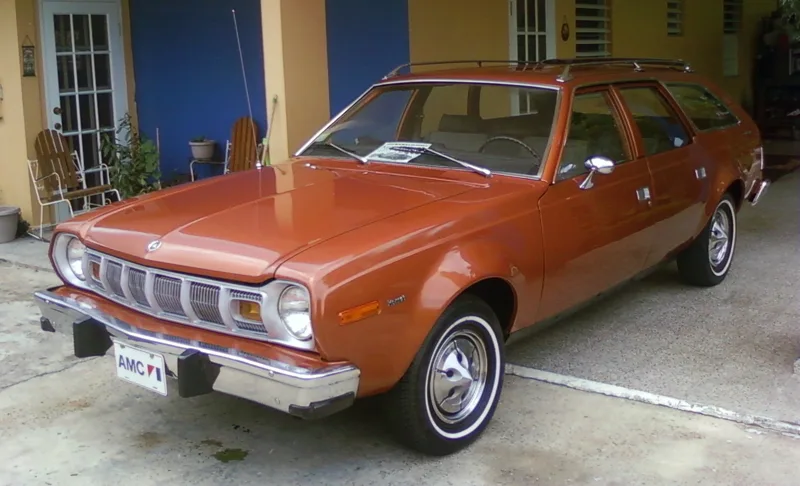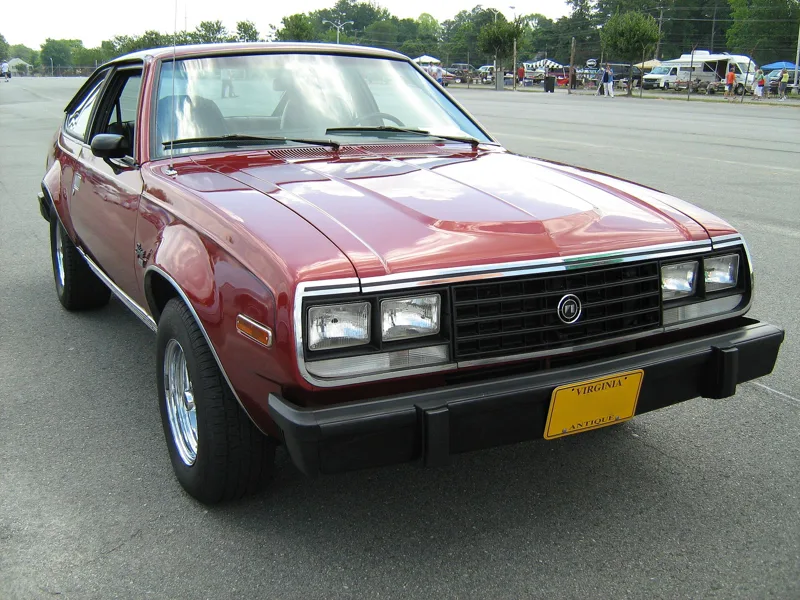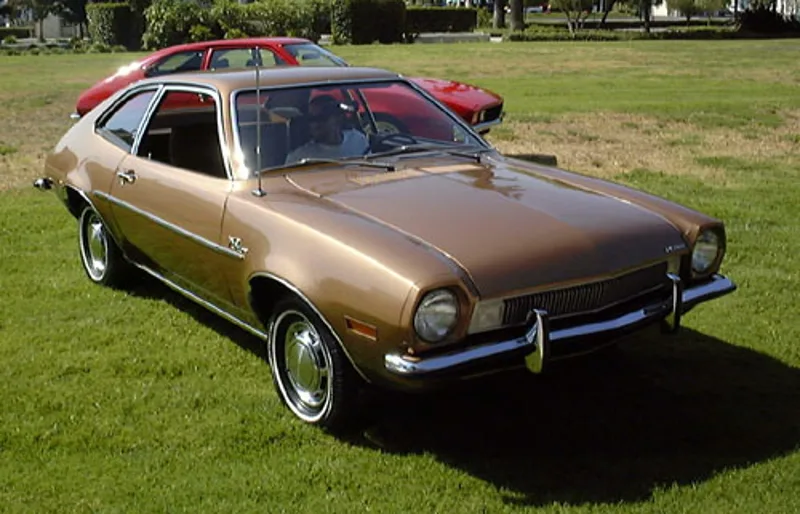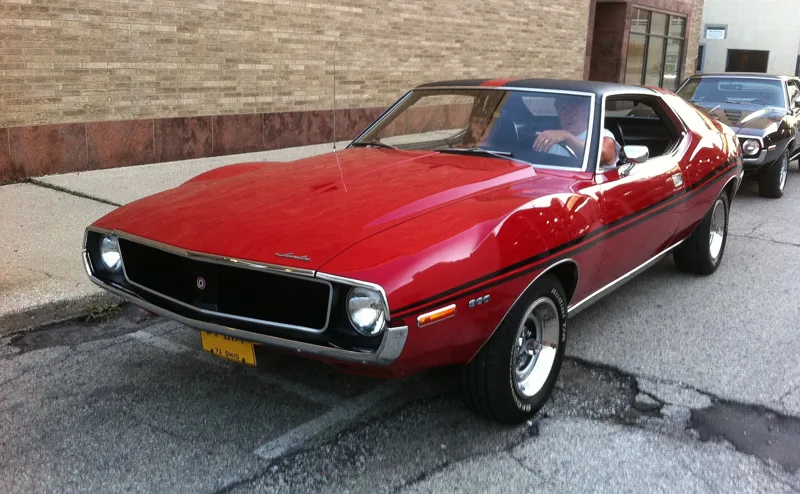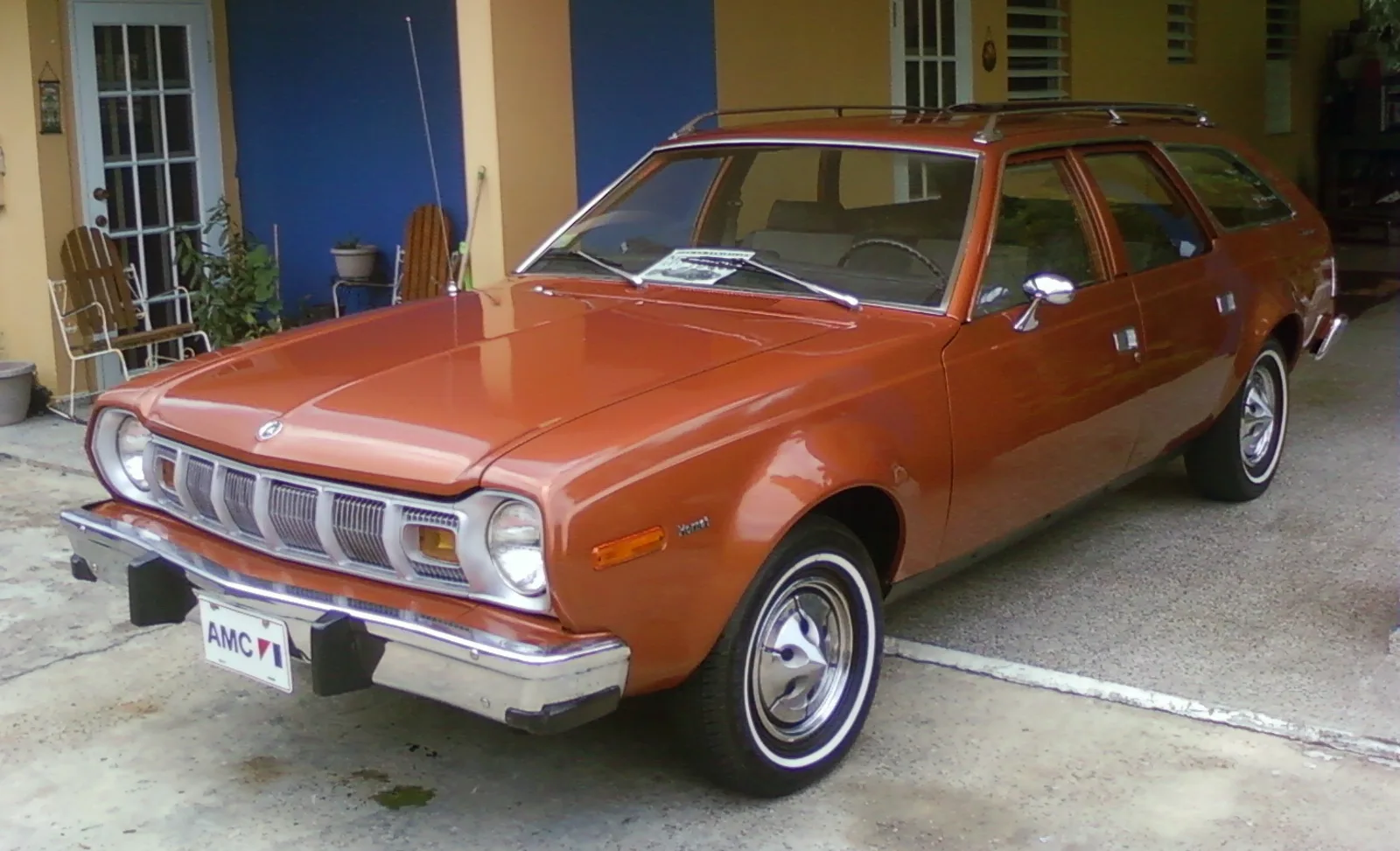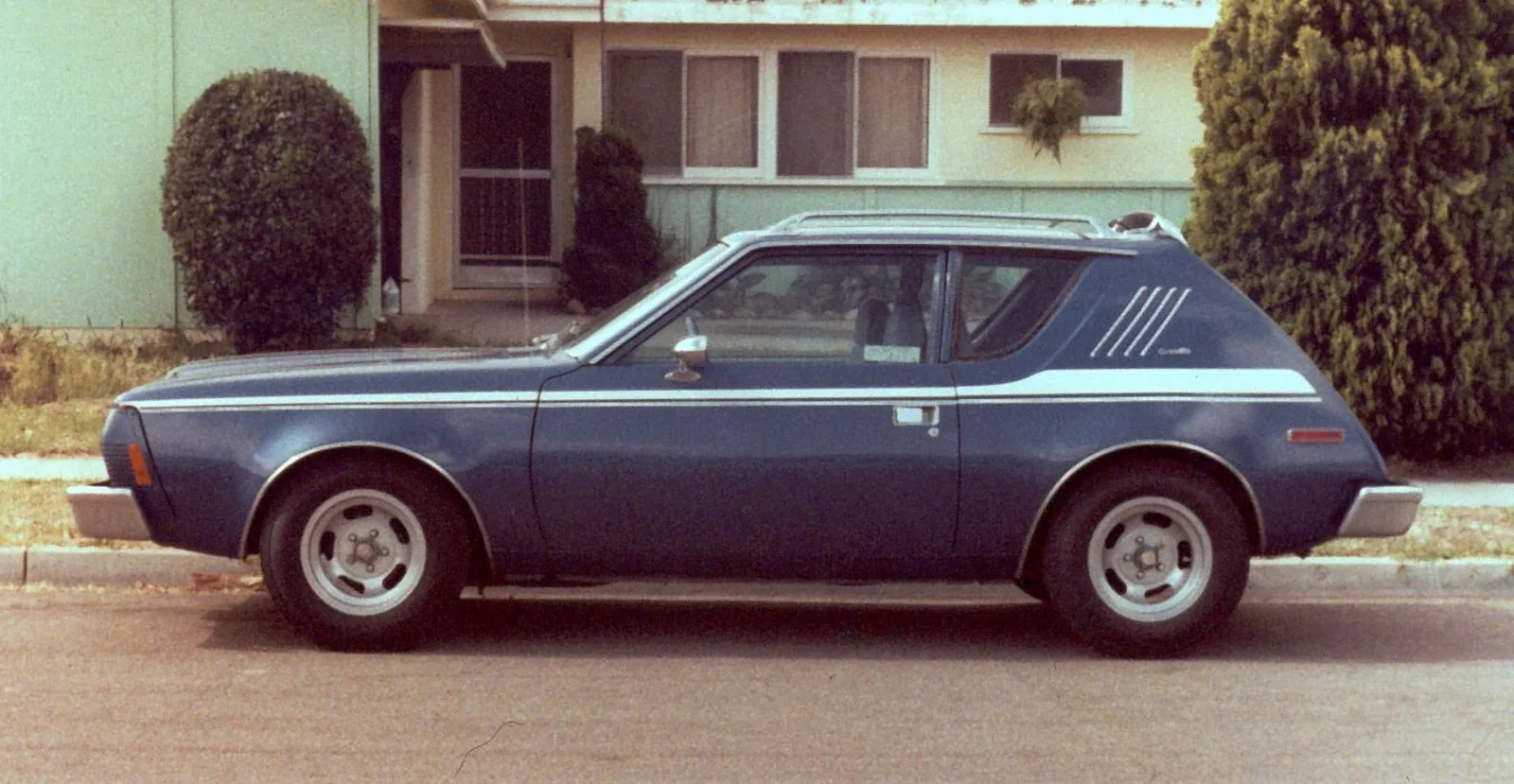
A Hornet-based two-door with a kammback tail, a V8 option, a warranty first and a 1970-1978 run that outlived several rivals.
The AMC Gremlin was a two-door subcompact built by American Motors from 1970 to 1978, based on a shortened Hornet with a kammback tail. It sold 671,475 cars in one generation and was succeeded by the AMC Spirit in 1979.
The AMC Gremlin was a subcompact two-door built by American Motors Corporation from 1970 to 1978, with a Mexican version made by VAM from 1974 to 1983. Based on a shortened Hornet, it had a kammback-style tail and sold 671,475 examples in its single generation. The company advertised it as the first American-built import.
Where did the Gremlin come from?
The idea for a subcompact in AMC's range dates from 1966, when design chief Dick Teague and stylist Bob Nixon discussed a shortened version of the company's compact car. Teague's answer was to cut off the tail of a Javelin, and the shape was sketched on the air sickness bag from a flight. Nixon, who had joined AMC at 23, produced the first formal sketches in 1967.
AMC lacked the money to compete with a wholly new subcompact, which Ford and General Motors were reported to be developing for the 1971 model year. A Javelin-based concept, the AMX-GT, was shown in New York in April 1968 but never reached production. Instead Nixon, who later became AMC's chief of design, based the new subcompact on the Hornet, a compact car.
The Gremlin was introduced on 1 April 1970. It was essentially the Hornet from the front to the B-pillars, but its wheelbase fell from 108 to 96 inches (2,743 to 2,438 mm) and its overall length from 179 to 161 inches (4,547 to 4,089 mm). It was 50 mm (two inches) longer than a Beetle yet shorter than the Pinto and the Vega.
A chopped-tail subcompact that AMC called the first American-built import and that outsold most of its rivals for four years.
How was the Gremlin's body designed?
Its upright tail was the car's signature. It helped interior space and was aerodynamically efficient, and it was a shape that later manufacturers copied by lengthening or shortening the trunk on a single compact platform, as Volkswagen did with the Jetta and Golf.
Time said the long hood over the front-mounted engine made the car seem longer than its small difference from the Beetle suggested. Its wider stance gave a steady ride for the two front passengers, who had more width, seat room and legroom than was usual for a small car. The rear seat was only suitable for small children.
Luggage space was six cubic feet behind the rear seat, and folding the seat tripled that to 18 cubic feet (509.7 L). The base model had a two-passenger layout with no rear seat and a fixed rear window, priced at $1,879 at launch, while the four-seat hatchback with an opening rear window cost $1,959.
How did AMC sell the Gremlin?
Teague designed and named the car to look either cute or controversial, depending on the viewer, and American Motors did not worry that the name might carry negative connotations. Time noted the dictionary definition of a gremlin as a small gnome blamed for equipment faults, and AMC's own version, a pal to its friends and an ogre to its enemies.
AMC promoted the car as cute and different, and that approach drew more than 60 percent of purchasers under the age of 35. AMC called it America's first subcompact, a claim that overlooks the Nash Metropolitan.
What engines did the Gremlin have?
The launch engine was AMC's 199 cu in (3.3 L) I6, a seven-main-bearing unit rated at 128 hp (95 kW; 130 PS). The 232 cu in (3.8 L) I6, rated at 145 hp (108 kW; 147 PS), was the option. AMC also said the car returned the top fuel economy of any American-built production model.
In 1971 the 232 moved to standard fitment and the 258 became the optional stroker. Gross ratings were 135 hp (101 kW; 137 PS) for the 232 and 150 hp (112 kW; 152 PS) on the 258.
In 1972 AMC restated the ratings as SAE net figures, giving 100 hp (75 kW; 101 PS) for the 232, 110 hp (82 kW; 112 PS) for the 258, and the new 304 cu in (5.0 L) V8 at 150 hp (112 kW; 152 PS). The Chrysler-designed TorqueFlite replaced the Borg-Warner automatic that year.
Did the Gremlin come with a V8?
Yes. The 304 V8 arrived in 1972, and it made the car something of a poor man's Corvette, able to spin its rear tyres at will and outrun some larger and more expensive pony cars. Its price left it, in the words of contemporary reviewers, as the only real performance car available under $2,200.
Demand fell, and the V8 option was downgraded to 120 hp (89 kW; 122 PS) before it was cancelled at midyear in 1976 after only 826 installations. In total 40,994 Gremlins were fitted with the V8 between 1972 and 1976.
What did the four-cylinder bring in 1977?
For 1977 AMC offered a carbureted Volkswagen/Audi 2.0-litre, 122 cu in four-cylinder, which was also used in fuel-injected form in the Porsche 924. It was lighter by 250 pounds (113 kg) than the six, and it gave better economy at the cost of power. EPA ratings reached 21 mpg-US in the city and 33 mpg-US on the highway.
AMC could not afford to make the four standard, because the rights to the engine were expensive. It was therefore limited to the Custom model. Of the 46,171 Gremlins built for 1977, only 7,558 had the new engine.
How did the Gremlin perform on the road?
Motor Trend timed a 232-engined Gremlin to 60 mph (0 to 97 km/h) in 12.6 seconds, while the Pinto and the VW Beetle were in the 18-second range. Fuel economy with the small six was 28 to 30 mpg-US (8 L/100 km; 34 to 36 mpg-imp), compared with 35-plus mpg for the Beetle.
Tom McCahill, writing in Mechanix Illustrated, ran an automatic 232 Gremlin to 60 mph in 11.9 seconds and saw 100 mph (161 km/h) on the Daytona straightaway. Car and Driver also recorded 11.9 seconds with a 232 car. Popular Mechanics found the four-cylinder car only about a second slower than the six to 60 mph and in the quarter mile, at 16 seconds against 15.
Compared with rivals, the body was heavier yet stronger, the engines more potent and the drivetrains more dependable, with fewer recalls. The Beetle, its main import rival, handled less well. Designer Richard Teague compared the Beetle, whose basic design dated from the late 1930s, to a Ford GT40 next to the Hindenburg.
How did sales develop?
Sales began with 25,300 for the abbreviated 1970 model year and reached 53,480 in 1971, the first full year. In 1972 the figure rose to 61,717, a 15 per cent gain, and in 1973 it jumped to 122,844, nearly 30 per cent more. The peak came in 1974 with 171,128 cars, up nearly 40 per cent on 1973.
The 1975 total fell 67 per cent to 56,011, as the Gremlin lost ground to the new Pacer that AMC launched in mid-February 1975. Sales slipped only slightly to 52,941 in 1976, then fell to 46,171 in 1977 and 22,104 in 1978, a drop of 52 per cent in the final year.
The two-seat base model was discontinued after selling 3,017 units in 18 months. Production still totalled 671,475 cars by the time the line stopped.
What changed in the Gremlin year by year?
In 1972 AMC introduced what it called the Buyer Protection Plan, a 12-month or 12,000-mile bumper-to-bumper warranty, which was the first of its kind in the automobile industry. It included a toll-free number and a free loaner car when a warranty repair ran overnight.
For 1973 the bumpers were strengthened to withstand a 5 mph (8 km/h) front impact and a 2.5 mph (4 km/h) rear impact. A Levi's interior trim used spun nylon styled to look like denim, because fire regulations banned real cotton denim. That year Consumer Reports also named a 1973 Gremlin top among six subcompacts tested.
The 1974 model year began just as the Arab oil embargo took hold, and the Gremlin's back seat was improved. A deeper front fascia made the car look longer, and a larger bumper sat on self-restoring telescoping cylinders. NHTSA rules then required front and rear bumpers to share a uniform height.
For 1975 all American Gremlins used catalytic converters and unleaded fuel, with overdrive offered on manual cars. The 1976 facelift brought oval headlight bezels, a stretched hexagon grille and a Custom trim line. The 1977 model was the first with redesigned sheet metal, with a front end shortened by four inches (102 mm). For 1978 the GT package added a front spoiler, flared wheel openings and an aluminium overlay on the instrument panel, and fewer than 3,000 were built.
Did the Gremlin race?
The Gremlin raced at many venues, including endurance, oval and road events, and it was widely used in drag racing because its cheap, strong structure was easy to modify. In the International Motor Sports Association RS series for compact sedans, the factory-backed team was Team Highball from Raleigh, North Carolina. Its 232 cars gave a useful torque advantage on fast tracks such as Daytona, where they often matched the BMW 2002 and Alfa Romeo GTV.
Amos Johnson, who drove for Team Highball, was the 1973 series co-champion, and independent driver George Alderman took the 1974 title. Starting in 1970, Wally Booth led AMC's Pro Stock efforts, with engines built by Dick Arons, in the red, white and blue livery AMC used on its race cars. Booth later switched to a Hornet body in 1973 after the Gremlin's aerodynamics limited top speed in testing.
In 1972 Randall AMC, a dealership in Mesa, Arizona, was endorsed to build 401 cu in (6.6 L) V8 Gremlins, starting from 304 cu in cars. The Randall 401-XR, priced at $2,995, ran 13.90-second quarter-mile passes at 103 to 106 mph. Around twenty street cars and one strip car were built between 1972 and 1974, and the Randalls built a 22nd car in 2012.
At the 2006 World Power Wheelstanding Championships, a 1974 Gremlin with a 485 cu in (7.9 L) AMC V8 producing 1,300 hp took second place. The Gremlin body was also a favourite with NASCAR modified teams in the north-east of the United States from the 1970s to the early 1990s.
How was the Gremlin sold outside the United States?
American Motors built an assembly plant in Brampton, Ontario, in 1961 for Canadian and American production, and Canada kept building the Gremlin and Hornet through the 1970s. Late models built there had speedometers reading in kilometres per hour, as Canada moved to the metric system.
In Mexico, Vehiculos Automotores Mexicanos (VAM) built the Gremlin under licence, with AMC holding a 38 per cent equity share. The model debuted in 1974 as the third VAM car not to carry the Rambler name, and VAM's Mexican Gremlin used the front clip of the 1974 U.S. Hornet. Its introductory year produced 2,137 cars.
VAM Gremlins took 9 per cent of the Mexican market in 1975, with production doubling to over 4,200 cars. Sales passed 6,000 in 1976 and reached about 6,800 in 1977. The Mexican model name continued on VAM's version of the Spirit sedan until 1983.
Outside North America the car made smaller appearances. An evaluation Gremlin went to Australia in 1970 and was converted to right-hand drive, and Swiss importer J.H Heller imported AMC cars from 1970. In Britain, only left-hand drive Gremlins were sent, and C.T. Wooler of Andover converted them.
Which experiments used the Gremlin?
The Gremlin was a popular testbed for alternative fuels and power. In 1972 a team from the University of California, Los Angeles won a national Urban Vehicle Design Competition with a Gremlin converted to run on hydrogen. The car carried a 100-litre (26.4 US gal) hydrogen tank, which gave a range of 160 miles (257 km), and the team claimed it could meet the 1976 emissions standards while cleaning the air it took in.
A 1970 Gremlin ran on methanol for ten years and 46,250 miles (74,432 km), and the US Department of Energy tested 1977 Gremlin X cars on a wide range of fuels. The Electric Fuel Propulsion Company built the X-144 electric Gremlin in 1973, with a 20 hp (15 kW) motor and a top speed of 60 mph (97 km/h). Another inventor sold modified electric Gremlins through dealers between 1973 and 1978, with a top speed of 50 mph (80 km/h).
The Hurst Rescue System 1 was based on the Gremlin for emergency crews from 1972 to 1974. It carried a rescue tool, winch, stretcher and firefighting supplies, and it cost between $11,000 and $13,000.
What concept cars came from the Gremlin?
AMC explored the Gremlin's future in several show cars. In 1972 the Gremlin Voyager had a slide-out rear shelf, and in 1974 the Gremlin XP added a larger glass hatchback and side quarter windows. The G-II of the same year took a Hornet front end and a full fastback roofline.
In 1977 American Motors presented six show cars, three of them new subcompacts: Concept I, Concept II and Concept Grand Touring. Concept II had integral soft bumpers, headlamps hidden behind flush sliding doors and a glass hatchback, and design elements from it and the Grand Touring reached the Spirit in 1979.
Why is the Gremlin remembered?
The Gremlin is seen as a defining car of its decade. It was among the cars that many people who were in high school in the late 1970s and early 1980s would recognise, because it was often one of their first cars and common in student car parks. Changing Times listed it first among the best subcompact used cars, based on the views of top mechanics.
Not everyone agreed. A 2007 Time article placed it among The 50 Worst Cars of All Time, describing the car as an AMC Hornet with its tail snapped off. Popular Science, in the same year, picked the 13.4-foot (4.1 m) Gremlin as one of six historic cars that pointed toward a smarter future.
Collectors now value the car. In 2007 Business Week reported rising interest in 1970s cars, and an insurer for collector-car owners reported rising values. The Gremlin also offered a cheap alternative to the muscle cars of the period, and AMC's claim that it was the best gas mileage of any American production car was matched by a 21-US-gallon (79 L; 17 imp gal) tank that gave 500 miles (805 km) between fill-ups.
Which future presidents drove the Gremlin?
Two former US presidents drove AMC Gremlins in their younger days. Bill Clinton drove a green Gremlin around north-west Arkansas during his 1974 campaign for a seat in Congress. In 1973 George W. Bush drove an AMC Gremlin with a Levi interior, owned by the family of George H. W. Bush, while studying for his MBA.
What are the AMC Gremlin specifications?
| Specification | Detail |
|---|---|
| Built | 1970 to 1978 by American Motors; VAM in Mexico 1974 to 1983 |
| Total production | 671,475 Gremlins |
| 1970 standard engine | 199 cu in (3.3 L) I6, 128 hp (95 kW; 130 PS) |
| 1970 option engine | 232 cu in (3.8 L) I6, 145 hp (108 kW; 147 PS) |
| 1972 V8 | 304 cu in (5.0 L), 150 hp (112 kW; 152 PS) SAE net |
| 1977 four-cylinder | Volkswagen/Audi 2.0 L (122 cu in) I4, 250 lb (113 kg) lighter than the six |
| Wheelbase | 96 inches (2,438 mm), down from 108 inches (2,743 mm) |
| Overall length | 161 inches (4,089 mm), down from 179 inches (4,547 mm) |
| Fuel tank | 21 US gal (79 L; 17 imp gal) |
| Acceleration, 0-60 mph | 11.9 to 12.6 seconds on 232-engined cars in contemporary tests |
| Peak sales | 171,128 in 1974 |
| Successor | AMC Spirit, 1979 |