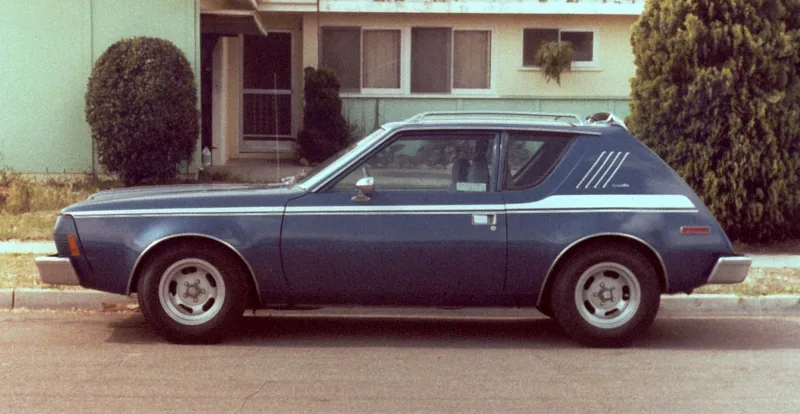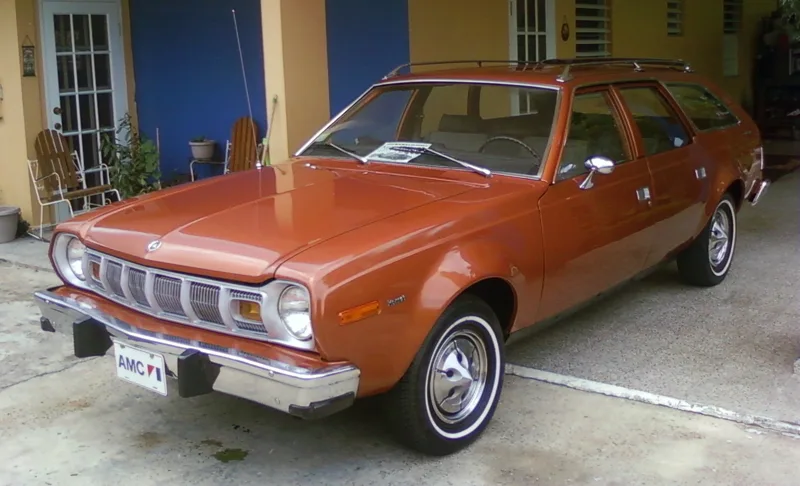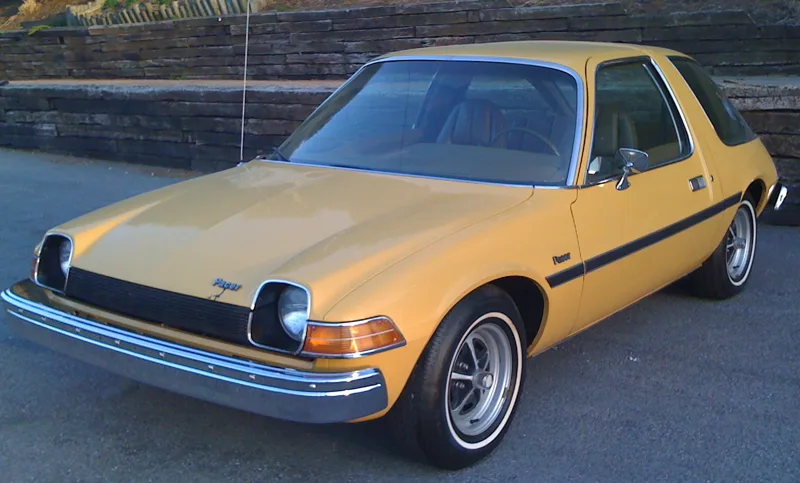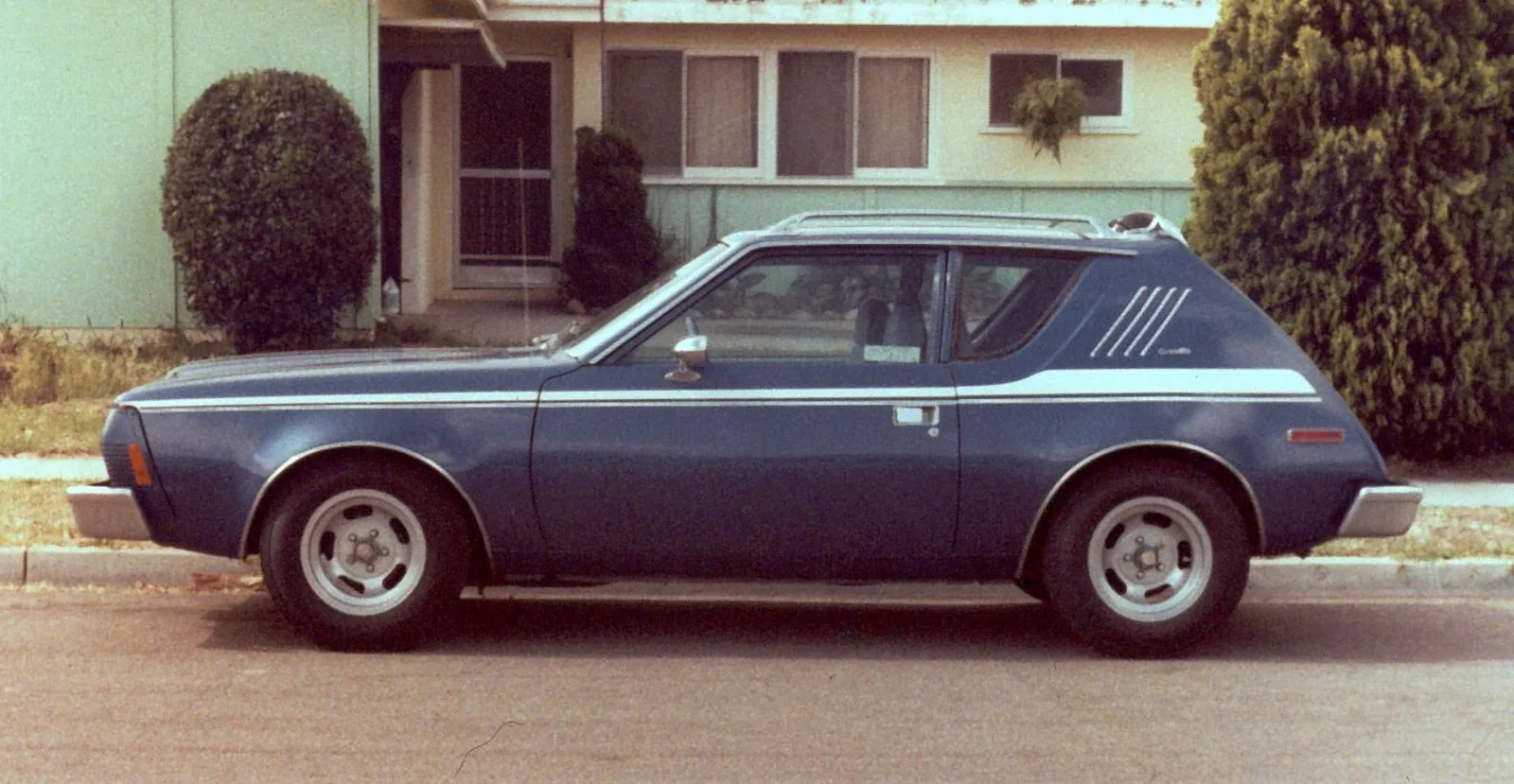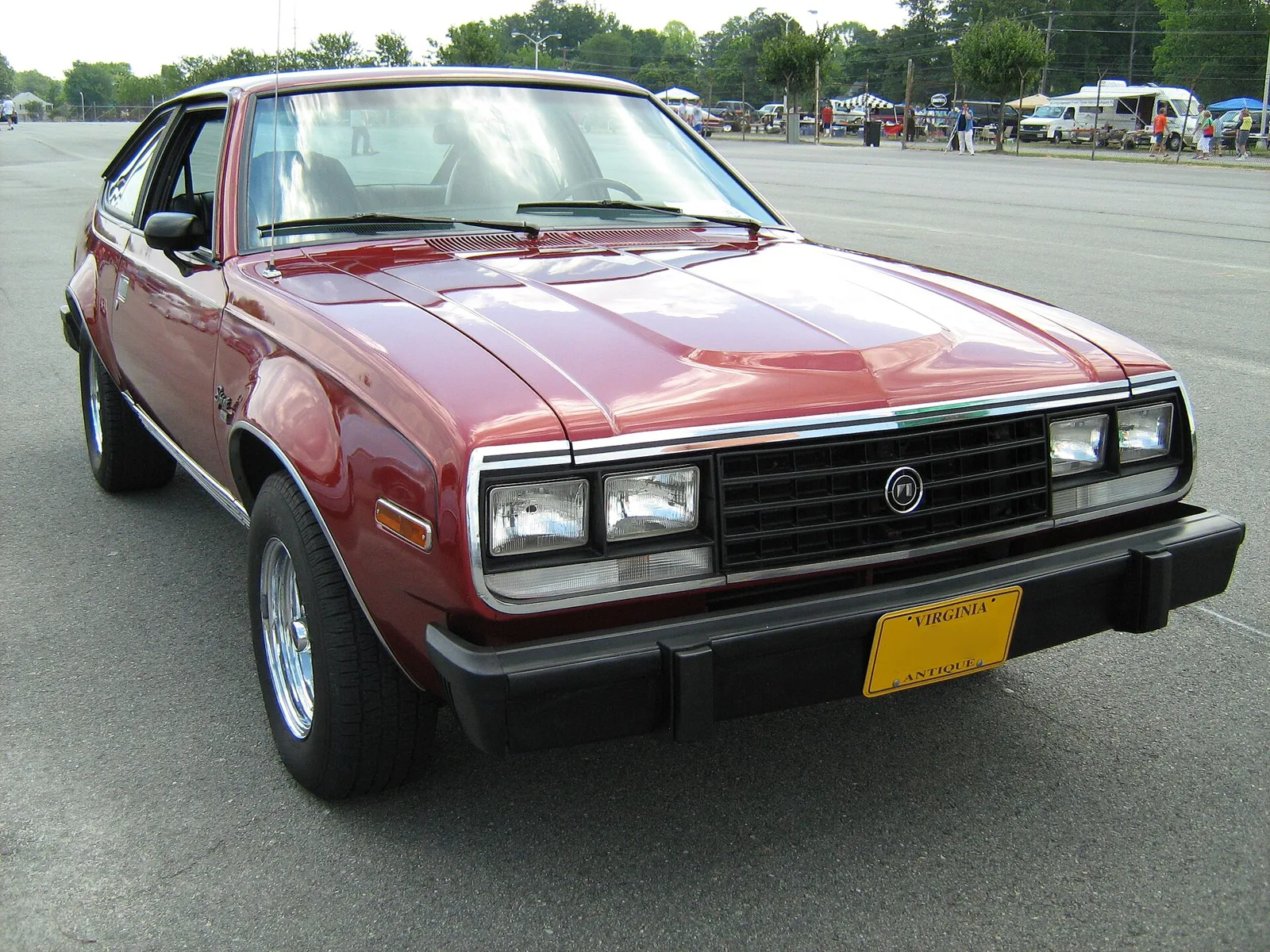
A rebodied Gremlin with a liftback, the last factory V8 AMX and a one-two class finish at the Nurburgring.
The AMC Spirit was a subcompact car from American Motors Corporation, built from 1979 to 1983 on the Gremlin platform. It came as a liftback or Kammback sedan, with four-cylinder, six and V8 engines, and spawned the AMX, Eagle SX/4 and Mexican VAM models.
The AMC Spirit was a two-door subcompact that American Motors Corporation sold from 1979 to 1983. It replaced the Gremlin on the same underpinnings, came as a sedan-style Kammback or a sloping liftback, and was the last rear-drive subcompact AMC built before the front-wheel-drive Renault Alliance arrived.
What was the AMC Spirit?
The AMC Spirit was a subcompact car built by American Motors Corporation between 1979 and 1983. It was a restyled version of the Gremlin, offered as a Kammback sedan and a liftback coupe, and AMC also sold a four-wheel-drive crossover version based on its bodywork.
AMC called one body the Kammback sedan and the other the liftback coupe, although both were two-door hatchbacks in practice. The liftback had a sloping roof that reduced rear headroom, and its rear licence plate hid the fuel filler cap.
The Spirit bodywork also formed the basis of a four-wheel-drive crossover, sold as the Eagle SX/4 from 1981 with a shorter-lived Eagle Kammback alongside it. The cars were built in Wisconsin and Ontario, while the Mexican company VAM assembled its own licensed versions.
A restyled Gremlin that gave AMC a liftback, the last factory V8 AMX and a one-two class finish at the Nurburgring.
Why did the Spirit share the Gremlin's platform?
The Spirit reused the Gremlin's floorpan, powertrains and many other parts because the budget was tight. AMC restyled the body, added a liftback and upgraded the trim, which gave the car a fresh look without a new platform. Standard equipment rose too, so the Spirit came with more than the Gremlin had offered.
The Gremlin had been built from 1970 to 1978, and the engineering upgrades introduced on the 1978 Concord carried over to the Spirit. Those included extra sound-deadening, better corrosion protection and lightweight aluminium bumpers.
The suspension was revised with soft-ride mountings for the front coil springs, while the rear kept a live axle on leaf springs. Dick Teague designed the new liftback, and Popular Science praised the car's looks against its price, describing AMC's engineers as among the cleverest in Detroit.
How did the Spirit change between 1979 and 1983?
The Spirit launched for 1979 as a restyled Gremlin with DL and Limited trims, and it gained rust protection and a five-year warranty for 1980. Galvanised steel went into every exterior panel for 1981, a five-speed manual arrived in 1982, and the sedan was dropped for 1983.
The 1979 model brought larger rear quarter windows and a revised interior with wood accents. The DL carried upgraded trim and bucket seats, while the top Limited added leather, air conditioning and a full centre console.
The 1979 GT package on the liftback included a rear spoiler, rally gauges and a rally-tuned suspension, positioning the car against the new Fox-platform Ford Mustang. AMC pitched the Spirit as one tough economy car with a galvanised body.
Ziebart rust protection arrived for 1980, backed by a five-year No Rust Thru warranty. In 1982 AMC ran a television campaign that dropped a Spirit into 30 feet (9 m) of saltwater to show off its rustproofing.
Which engines did the Spirit use?
The Spirit began with a 2.0 litre Audi-supplied four-cylinder and a 4.2 litre six, with a 5.0 litre V8 available in 1979. A 2.5 litre Pontiac-built four replaced the original engine in 1980, and the six was lightened for 1981.
The 1979 four-cylinder shared its cast parts with the Porsche 924, but AMC assembled it in Indiana with a two-barrel carburettor rather than fuel injection. It was offered with a three-speed TorqueFlite automatic or a four-speed manual.
The 4.2 litre six remained the most popular engine after 1980 and was the only engine in the AMX. It was redesigned for 1981, saving 90 pounds (41 kg), and it weighed 445 lb (202 kg), which AMC described as the lightest inline six in the domestic industry.
Fuel economy was a priority. The 2.5 litre Spirit was rated 6.4 L/100 km (37 mpg-US; 44 mpg-imp) on the highway for 1982, helped by low-drag front disc brakes that became standard that year.
What were the Spirit's key specifications?
| Specification | Detail |
|---|---|
| Built | 1979 to 1983, two-door liftback or Kammback sedan |
| Wheelbase | 2,438 mm (96 in) |
| Fuel tank | 21 US gallons |
| Engines, 1979 | 2.0 litre four, 4.2 litre six, 5.0 litre V8 (AMX only) |
| Engines, 1980 to 1983 | 2.5 litre four (to 1982), 4.2 litre six |
| Transmission | Four-speed manual, three-speed TorqueFlite automatic; five-speed manual from 1982 |
| Six-cylinder weight | 202 kg (445 lb) from 1981 |
| Highway economy, 1982 | 6.4 L/100 km (37 mpg-US; 44 mpg-imp) for the 2.5 litre car |
| AMX 1979 acceleration | 0-60 mph in 10.6 seconds; quarter-mile in 17.6 seconds |
| AMX 1979 top speed | 160 km/h (100 mph), just over |
| Price, 1983 | US$5,995 DL; US$6,495 GT |
What was the Spirit AMX?
The Spirit AMX was a liftback offered for 1979 and 1980 that revived the name of the original two-seat AMX. Its features included fibreglass wheel flares, a rally-tuned suspension and white-letter tyres on alloy wheels, with the V8 or 4.2 litre six available.
The 1979 AMX V8 was the last AMC passenger car with a factory V8. Motor Trend judged the performance not bad for the day, with a top speed just over 100 mph (160 km/h), 0-60 mph in 10.6 seconds and the quarter-mile in 17.6 seconds.
For 1980 the V8 was dropped, and the six became the only engine in the AMX. The car also lost its simulated aluminium dash overlays, while the flared body stayed and the rally suspension remained a major part of its appeal.
The AMX was discontinued after two model years and replaced by the four-wheel-drive Eagle SX/4. It remains a favourite with AMC enthusiasts, and many owners fit larger AMC engines because the swap is straightforward.
Did the Spirit race at the Nurburgring?
Yes. In October 1979, two Spirit AMXs entered the FIA Group One 24-hour race at the Nurburgring, sponsored by B.F. Goodrich. They were the first American entries in the race, and they finished first and second in their class.
Team Highball, a North Carolina outfit run by Amos Johnson and Dennis Shaw, supplied the drivers. Factory Mazda driver Jim Downing and actor James Brolin were among the lineup, and the team had only a short window to prepare two street-stock cars before the transport ship sailed.
Practice was cut short by fog, and the cars qualified 20th and 21st overall. In the race the number 1 car suffered broken front shock absorbers and a slipping clutch, while the number 2 car lost much of its braking. Even so, the cars reportedly reached about 140 mph (230 km/h) on the straights.
Despite the handicaps, the cars covered nearly 2,000 miles (3,219 km) and ended up 25th and 43rd overall in a field of 120. Both ran on BFG T/A radials, the quickest street tyres in the field, and neither suffered a tyre failure.
The number 1 car served as a showcar for a few months and then spent about 25 years in storage. It has only about 4,000 miles (6,400 km) on its odometer.
How did Spirits perform in IMSA and drag racing?
Spirits also campaigned in IMSA events, including the Champion Spark Plug Challenge, with Team Highball preparing the cars. One won the six-hour race at Daytona International Speedway in 1979, and other owners raced them in drag events.
The Daytona 6-hour event was run on 1 June 1979, and Dennis Shaw and Don Whittington took the Spirit to the chequered flag after 151 laps at an average of 155.101 km/h (96.375 mph). That same year a Spirit finished third out of 49 cars at the Talladega 6 Hours.
A Spirit AMX also ran 84 laps in the GTX class at the 1980 Sebring 12 Hours. Drag racers used AMC hardware to modify their cars, and one modified Spirit ran the quarter-mile in 12.8 seconds at 180 km/h (110 mph) while costing only about US$10,000 to build.
Was the Spirit used to test Stirling engines?
Yes. Under the Automotive Stirling Engine programme, a Spirit carried a Stirling engine developed with the United States Department of Energy and NASA. One P-40 powered car averaged up to 28.5 mpg-US (8 L/100 km; 34 mpg-imp) over 50,000 miles (80,467 km).
A 1981 Spirit fitted with a 53-kW Stirling engine was judged too slow, weighing 3,250 lb (1,474 kg). Acceleration took 36 seconds with the early engines and 26 seconds with the upgraded Mod I unit.
Testers found that the Stirling engine struggled with warm-up time, changing speed and fuel efficiency. It suited constant power running better than the internal combustion engine, which made it a possible fit for an extended-range electric vehicle.
Funding cuts and limited automaker interest ended any chance of commercialisation. The P-40 engine was removed from the Spirit, and the car was sold at a government surplus auction.
How did VAM build the Spirit in Mexico?
Mexican maker VAM built sedan and liftback Spirits under licence with AMC, from 1979 for the sedan and 1980 for the liftback, until 1983. Local content rules required at least 60% Mexican parts, and the cars were renamed Gremlin and Rally.
The VAM Gremlin sedan kept the sporty Gremlin X as a higher trim level, while the Rally liftback became the company's top performance model. The Rally AMX ran a 4.6 litre six making 132 hp, and the Rally GT had a high-performance 172 hp version of the same engine.
Economic trouble and a ban on imported luxury accessories hit the Rally line in 1982, and VAM withdrew the GT that year. The Lerma was a separate model that used the Concord sedan chassis with Spirit liftback rear panels.
Renault bought VAM from the Mexican government in February 1983 and reduced its passenger car output, which left the remaining cars to clear existing inventory.
What replaced the Spirit?
The Spirit was replaced by the front-wheel-drive Renault Alliance, which AMC introduced for 1983. The Alliance was more modern, more space-efficient and more fuel-efficient than the rear-drive Spirit, whose platform was 14 years old by then.
The Renault Fuego, a front-wheel-drive sports coupe, also reached AMC showrooms as a rival option to the Spirit GT. On the highway it managed 39 mpg-US (6.0 L/100 km; 47 mpg-imp) according to the EPA figure, and the Alliance-based Encore hatchbacks followed for 1984.
Chrysler took over AMC in 1987, and later used the Spirit name for the Dodge Spirit, a four-door compact sedan from 1989 to 1995. That car was a different model and is unrelated to the AMC Spirit.