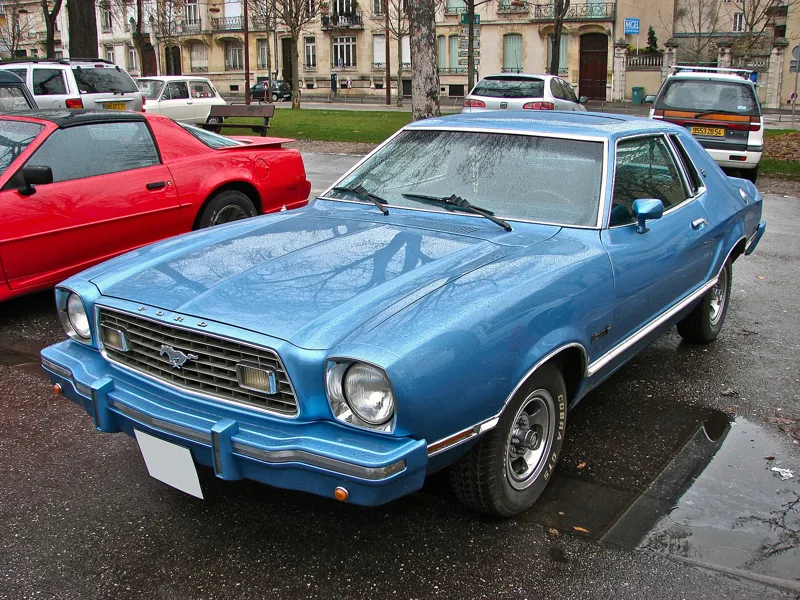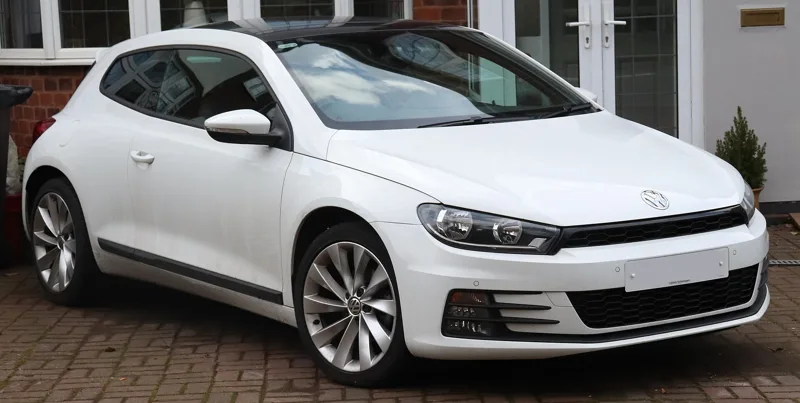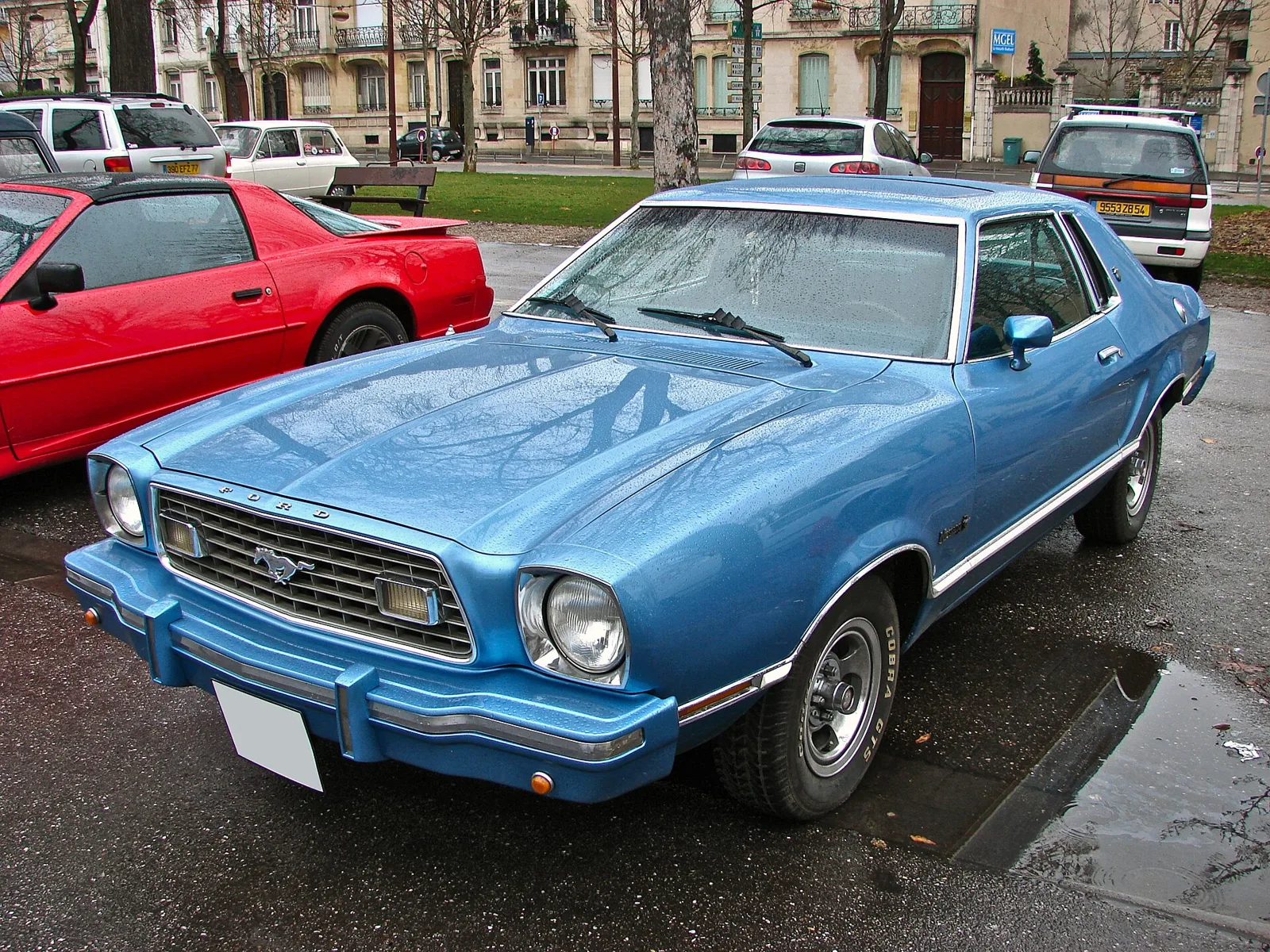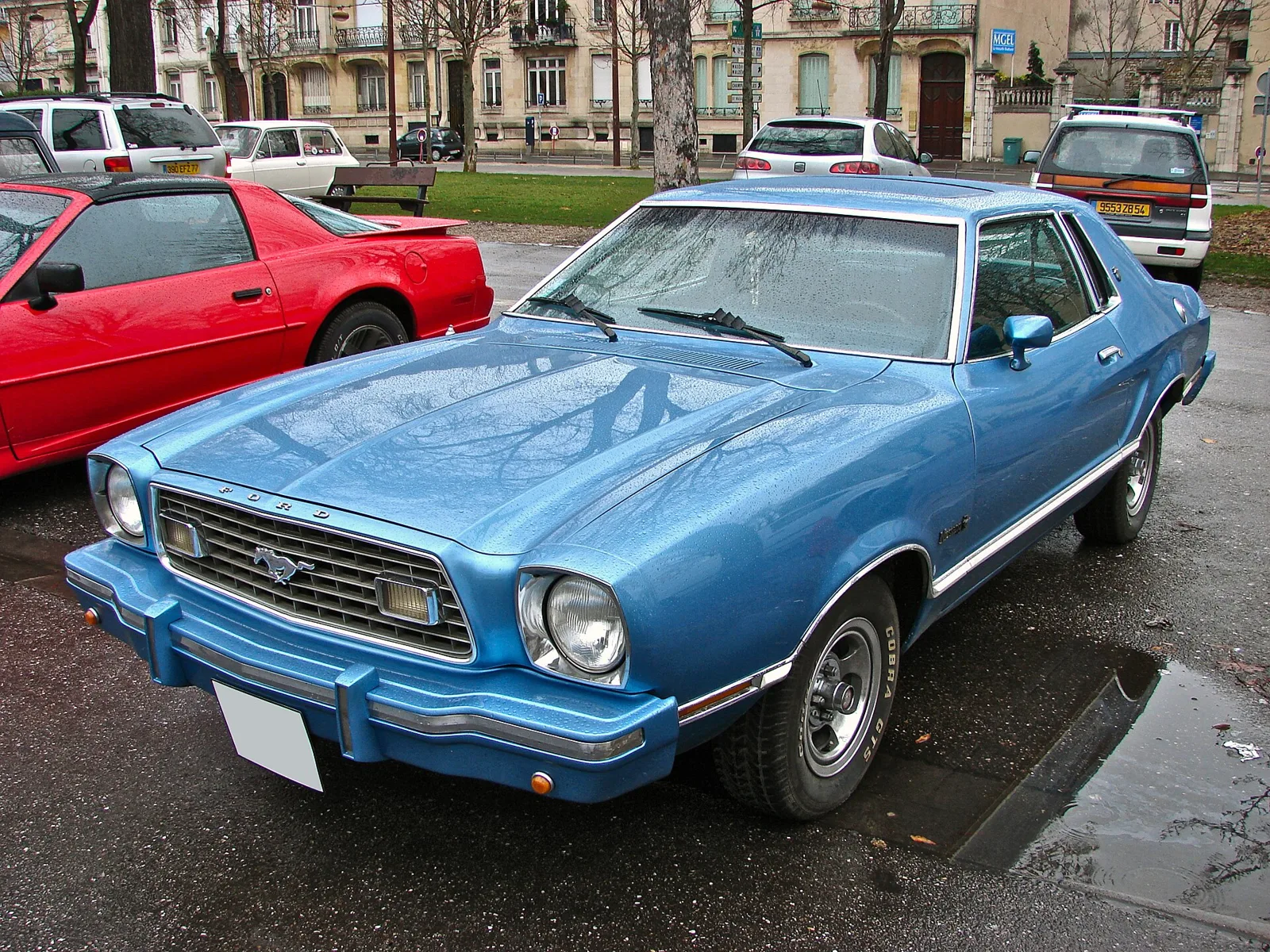
Ford shrank the Mustang onto subcompact parts as petrol prices climbed, while Volkswagen gave the Golf a sporty three-door body, and the two cars met in the same showrooms.
The Ford Mustang II arrived for 1974 on a Pinto-derived platform and was 490 lb lighter than the 1973 car. The Volkswagen Scirocco shared its Golf platform, debuted in 1973 and reached North America in 1975, with a 1.6-litre GTi from 1976.
The Ford Mustang II and the Volkswagen Scirocco were both compact sporting cars built for the fuel-conscious mid-1970s. The Mustang II was a pony car reduced to a smaller size on subcompact parts, while the Scirocco was a three-door hatchback that grew out of the Golf. Both were sold in the same showrooms, and both appealed to buyers who wanted a sporty shape without the bulk of a large coupe.
Why did the Mustang II shrink?
The Mustang II was Ford's answer to the oil embargo and to a pony car market that had lost interest in large coupes. It reached showrooms in September 1973 as the 1974 model, and it was built on the Pinto platform.
The result was a car 490 lb (222 kg) lighter than the 1973 Mustang and almost 19 in (483 mm) shorter.
The project began with Lee Iacocca, who took over as president of Ford in December 1970 and asked for a smaller Mustang. Early plans for a Maverick-based car were dropped in favour of a subcompact base. Ford's engineers gave the car an exclusive front subframe, which isolated the suspension and engine mounts from the body, and it used rack-and-pinion steering.
One car shrank the American pony car onto subcompact parts, the other gave the Golf a sporty body, and both were tested by the fuel crisis.
Specifications side by side
| Specification | Ford Mustang II | Volkswagen Scirocco |
|---|---|---|
| Launch | September 1973, for the 1974 model year | Geneva Motor Show, 1973; Europe in 1974; North America in 1975 |
| Body styles | Two-door notchback coupe and three-door 2+2 hatchback | Three-door hatchback |
| Platform | Pinto-derived, with an exclusive front subframe | Golf platform with new styling |
| Base engine | 2.3-litre (140 cu in) SOHC four | Four-cylinder units from 1.1 to 1.6-litre, with two valves per cylinder |
| Top engine | 4.9-litre (302 cu in) V8 with 140 hp net, from 1975 | 1.6-litre GTi with 81 kW (109 hp), from 1976 |
| Steering | Rack and pinion, power assisted | None given |
| Road test | A 10.5-second run to 60 mph (97 km/h), 1975 V8 | None given |
| Recognition | Motor Trend Car of the Year, 1974 | None given for the first generation |
| Sales | Over 1.1 million in four years; 199,199 in 1975 | None given |
| Later generations | Mustang II ended in 1978 | Second generation from 1981; third from 2008 |
How did the Mustang II's engines develop?
The base Mustang II engine was a 2.3-litre (140 cu in) single-overhead-cam four, the first all-metric engine built in the United States. A 2.8-litre (171 cu in) V6 was the only other option, and no V8 was offered for 1974 outside Mexico.
The V8 finally arrived for 1975, after the engine compartment was modified to take it.
That V8 was a 4.9-litre (302 cu in) unit with a two-barrel carburettor, rated at 140 hp net. Road and Track clocked a 10.5-second sprint to 97 km/h (60 mph), and its top speed was 171 km/h (106 mph). Consumer Guide thought the engine sluggish, and the extra weight hurt the handling.
Ford also offered a base model called MPG from mid-1975, with a catalytic converter plus a taller 3.18:1 final drive. It was rated at 23 mpg-US in town and 34 mpg-US on the highway, and every base 2.3-litre Mustang II carried the MPG name after that.
What trims did the Mustang II come in?
The Mustang II came as a base hardtop, a 2+2 hatchback or a Ghia luxury model, with a V6 Mach 1 at the top of the range. For 1975 the Ghia picked up opera windows and a padded vinyl roof section, and a silver luxury group was offered as well.
The 1976 model year brought the Stallion appearance group, with styled wheels, a blacked-out grille and two-tone accent paint. An All-Black Sport Group was added for the Mach 1, and a Rallye Package offered small performance touches.
The Cobra II package was the most striking of the lot. It added a black grille, a simulated hood scoop, front and rear spoilers, louvres on the quarter windows and racing stripes that echoed the Shelby Mustangs of the mid-1960s. Consumer Guide called it an instant success.
How did the Scirocco come to be?
Volkswagen started work on the Scirocco in the early 1970s to replace the ageing Karmann Ghia coupe, and the project was given the internal type number 53. Its floor and running gear came from the Golf, but almost every other part was re-engineered around new styling by Giorgetto Giugiaro, that was sleeker and more sporting than the hatchback's.
The Scirocco was shown at the 1973 Geneva Motor Show and went on sale in Europe in 1974, six months ahead of the Golf, so that early faults could be fixed before the volume car appeared. North American cars followed in 1975, and the name was taken from a Mediterranean wind.
The American version needed four round headlights, because rectangular units were not approved for use there. Many European owners later swapped to round lamps too, which removed the visual difference between the cheaper and the faster cars. The 1976 model year also brought a single wiper that parked on the passenger side.
The Scirocco also went to Japan. Yanase dealerships, which specialised in North American and European cars, sold right-hand-drive examples from 1976, starting with the TS trim and a 1.5-litre engine with a four-speed manual. In 1977 the GTE and LS arrived with Bosch fuel injection, and the GTE could be had with a manual or a three-speed automatic, while the LS was automatic only.
Which special editions did the Scirocco get?
Several special versions carried distinctive paint and trim. The Sidewinder and Sidewinder II, the Champagne Edition and Champagne Edition II, and the S were among the names. The Champagne Edition II was offered only in white, trimmed in black, with a Zender nose spoiler, while the 1980 S came in three colours with Recaro sports seats.
The Storm models were sold in two colours, and 250 cars were built in each one. Steel sunroofs were an option on both the S and the standard car, and they tilted open rather than sliding back, which set them apart from the later Scirocco roofs.
What engines did the Scirocco offer?
The first-generation Scirocco used four-cylinder engines from 1.1 to 1.6 litres, each with one overhead camshaft and two valves for every cylinder. North America also received a 1.7-litre engine. The hottest version, the GTi, arrived in summer 1976 with mechanical fuel injection and 81 kW (109 hp).
The American engine line changed almost every year. The 1975 car had a 1.5-litre engine, the 1976 and 1977 cars used a 1.6 with 76 hp (57 kW), and the 1978 model dropped to 71 hp (53 kW) with a short-stroke 1.5. A 1979 US car had a 1.6 with 78 hp (58 kW), and the 1981 standard engine was a 1.7 of 1,715 cc.
The gearbox followed a similar path. US cars had a four-speed manual from 1975 to 1978, a five-speed became an option for 1979 and 1980, and the five-speed was standard from 1981.
Which car was quicker in a straight line?
The Mustang II had the more powerful engine on paper, with its 302 V8 rated at 140 hp net. The Scirocco GTi produced 81 kW (109 hp) from a much smaller engine. A straight-line test of the Scirocco is not on record for this comparison, so a direct speed contest cannot be drawn.
Consumer Guide ranked the Mustang II low for handling in 1974, near the bottom of its class, so the American car was not a driver's favourite on the evidence of that test.
What changed in the second-generation Scirocco?
The second-generation car, internally called Typ 53B, was shown at the 1981 Geneva Motor Show. It stayed on the A1 platform, but Volkswagen's own design team gave it more front and rear headroom, more luggage room and a lower drag figure. Karmann continued to build it at Osnabruck, in the same factory as the first car.
The engine range grew wide. Oettinger developed a 16-valve head in 1981, and Volkswagen displayed a multi-valve car at the 1983 Frankfurt show, and it reached German showrooms in July 1985, and a catalysed 16-valve model followed in 1986. Displacements ran from 1.3 to 1.8 litres, with outputs between 60 and 112 PS, which is 44 to 82 kW, across the eight-valve and sixteen-valve engines.
American sales continued until 1988, and the Corrado replaced the Scirocco in the Volkswagen line-up, although the Corrado had been on sale since 1988 and aimed further upmarket.
How did the two cars sell?
The Mustang II was the larger seller by a clear margin, and buyers crowded Ford showrooms in 1974 despite its modest performance. It topped a million units in four years, and four of its model years rank among the ten best-selling Mustang years. The Scirocco's own figures are much smaller.
Lincoln-Mercury also imported the Ford Capri from Europe and kept it on sale until 1978. Mercury had planned a Mustang II-based Capri, but the strong sales of the imported car shelved that idea. The Mustang II's own sales fell sharply after its first year, and Consumer Guide noted that 1975 sales were down by nearly half on 1974 levels.
What did the third-generation Scirocco bring?
The third-generation car, internally known as Type 3 and sometimes numbered 137 or 1K8, appeared at the 2008 Geneva show. It was built on the Golf V's PQ35 underpinnings, and production was at the AutoEuropa plant in Palmela, Portugal.
The car received Top Gear's Car of the Year award for 2008 and a five-star Euro NCAP rating.
The range included the Scirocco R, a 2.0-litre TSI with 261 hp (195 kW) at 6,000 rpm and 350 Nm of torque. A 2014 facelift added LED running lights and reworked lamps, and the GTS of 2015 borrowed the engine of the Mk7 Golf GTI. Production of the third generation ended in 2018 without a successor.
Which car suits which buyer?
A buyer who wanted an American pony car with a broad option list, and a V8 that arrived in 1975, had the Mustang II. A buyer who wanted a compact European hatchback with a GTi version and a sporty shape had the Scirocco.
The two cars were rivals in purpose and price, but they came from different traditions, and neither settles the question for every driver.