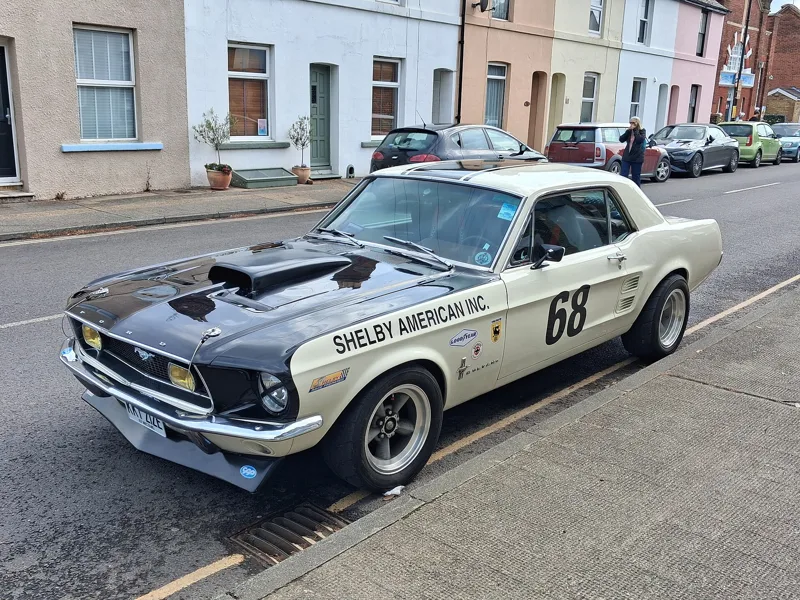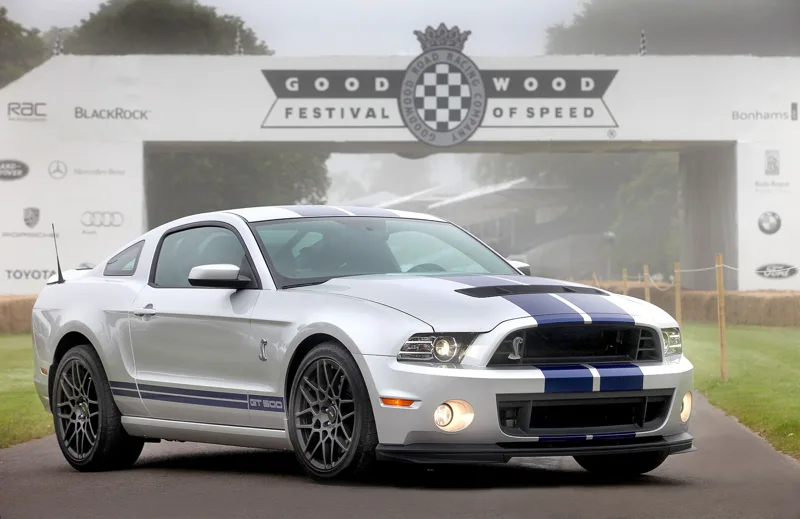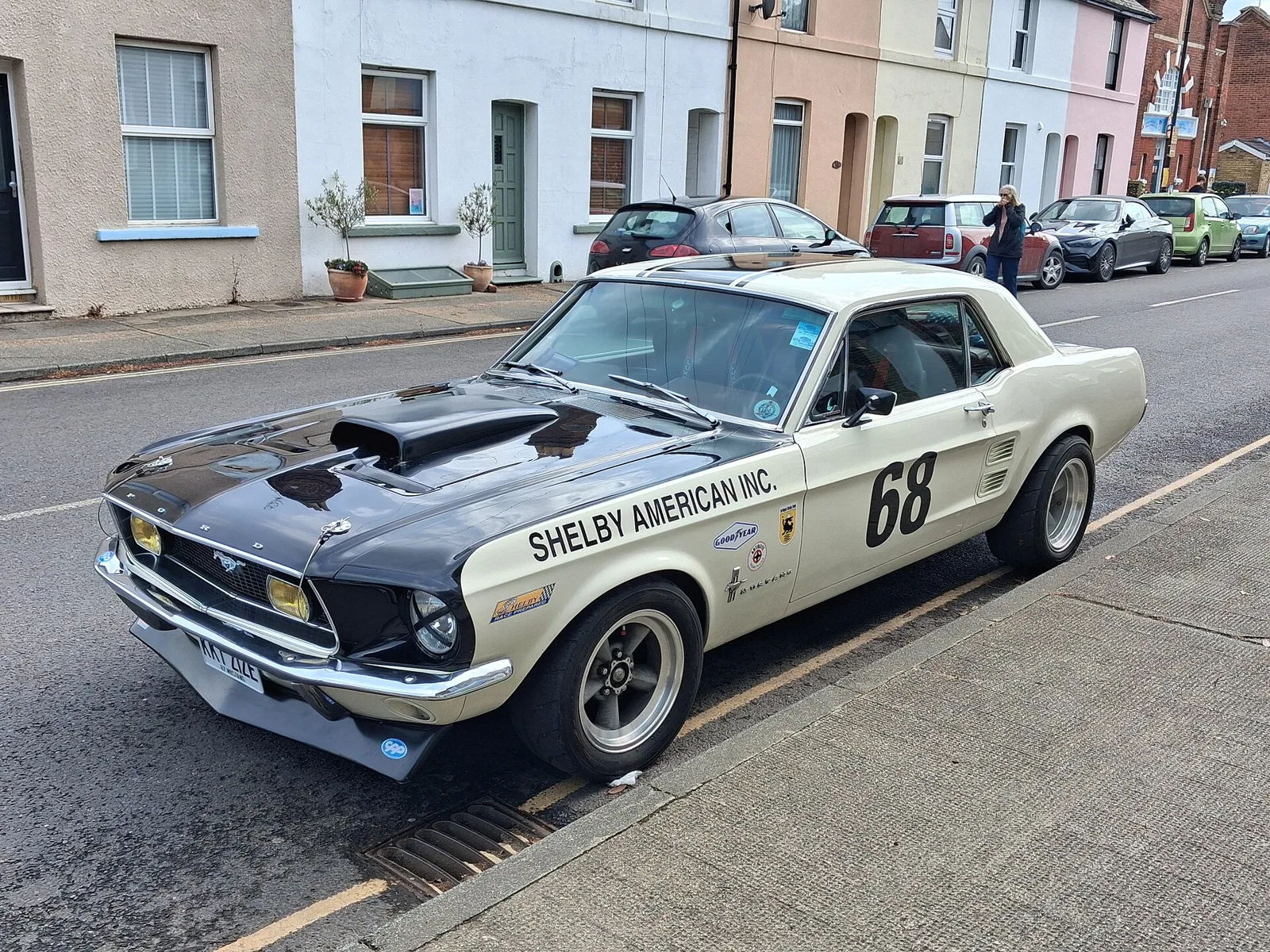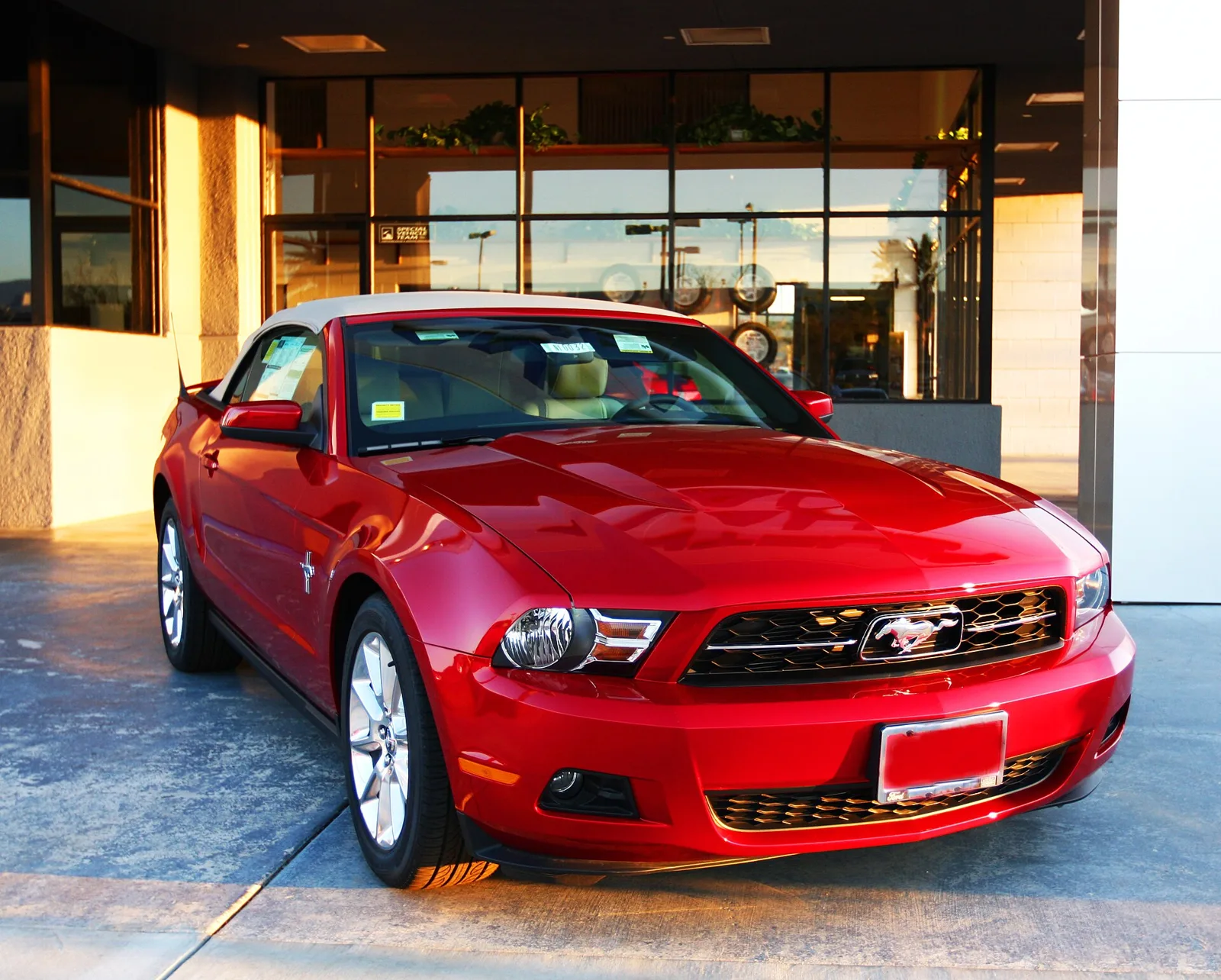
A retro-styled, live-axle pony car that brought Ford's Modular V8 back to the Mustang and led to the Shelby GT500, Bullitt and Boss 302 variants.
A retro-styled pony car on the D2C platform, the S197 Mustang was built from 2004 to 2014 with a live rear axle. V6 and V8 engines were offered, with variants including the Bullitt, Shelby GT500 and Boss 302, and the Coyote 5.0-litre V8 arrived for 2011.
The fifth-generation Ford Mustang, coded S197, was a two-door, four-seat pony car that Ford built from 2004 to 2014 for the 2005 to 2014 model years. It came as a coupe and a convertible, and Ford assembled it at the Flat Rock Assembly Plant in Michigan. The car was revised in 2009 for the 2010 model year.
Where did the fifth-generation Mustang come from?
The design was developed by Sid Ramnarace through late 2001 and finalised in mid-2002. Development on the S197 programme began in 1999 under chief engineer Hau Thai-Tang, and design work started in the second half of that year under Ford design chief J Mays. The design was frozen in July 2002, and the car was previewed by two concept cars.
The concepts were developed between February and November 2002 and presented on 5 January 2003 at the North American International Auto Show. Both later went under the hammer at the 2009 Barrett-Jackson Palm Beach sale, fetching $175,000 each before buyer premium, roughly $247,956 in 2024 money.
A retro pony car with a live rear axle, a Modular V8 and a family of variants that ran from the Shelby GT500 to the Boss 302.
What did the 2003 concepts look like?
The Redline Red convertible had a billet-aluminium showbar, 20-inch wheels, 13.8-inch cross-drilled Brembo brakes and racing-style four-point belts. The Tungsten Silver coupe had a glass roof and functional hood scoops, along with a supercharged 4.6-litre engine rated at 400 hp (298 kW; 406 PS).
Among the other vehicles at the show were the Cadillac Sixteen, the Aston Martin V8 Vantage and the Dodge Tomahawk. AutoWeek described the Mustang concept as the most significant vehicle in the show.
How was the production S197 styled?
At the following year's show, Ford introduced the redesigned Mustang, code-named S197, which had been previewed by the 2003 concept. It was based on the Ford D2C platform, and Sid Ramnarace handled its exterior design under the direction of chief engineer Hau Thai-Tang. The car drew on the 1964 to 1970 first-generation Mustang for its look.
J Mays, Ford's senior vice president of design, described the aesthetic as retro-futurism.
When did the 2005 Mustang go on sale?
Production of the 2005 Mustang started on 7 September 2004, and the first car rolled off the Flat Rock line on 27 September 2004. US deliveries began at the end of October 2004. Production continued until late 2008 for the 2009 model year.
The base car used Ford's cast-iron block 4.0-litre Cologne SOHC V6, which replaced the 3.8-litre Essex OHV V6 used in 2004 and earlier cars. The 2005 V6 produced 210 hp (157 kW), reached at 5,300 rpm, and its 240 lb ft (325 Nm) came in at 3,500 rpm.
How did the V6 Mustang perform?
The V6 came with a Tremec T-5 five-speed manual as standard, while Ford's 5R55S five-speed automatic was an option. A 3.31:1 final drive was standard with either transmission. In a Motor Trend comparison with a Pontiac G6 Convertible, an automatic V6 convertible reached 60 mph (97 km/h) in 7.3 seconds, which was 1.4 seconds quicker than the 2006 G6 convertible.
The suspension used MacPherson struts at the front and a live rear axle with a three-link system and a Panhard rod. The live axle sacrificed some handling but kept cost and weight down. Automotive journalists criticised the choice heavily, and Ford argued at a press conference that independent rear suspension would have carried a $5,000 premium at the showroom.
Standard equipment included power windows, dual power mirrors, keyless entry, dual front airbags, a CD stereo, 16-inch painted aluminium wheels and larger disc brakes than the previous generation. The four-channel anti-lock system with traction control was standard on GT models and optional on the V6.
What was the V6 Standard?
For 2006 Ford introduced a cheaper base Mustang, the V6 Standard, which sat below the V6 Deluxe. It started at US$19,115 for a coupe and US$23,940 for a convertible, each $100 less than its Deluxe counterpart. The only real difference was 16-inch black steel wheels with plastic covers, in place of alloy wheels. Alloys could still be ordered on the Standard, and the model was dropped after 2006, leaving the Deluxe as the base car again.
Several options arrived in the following years, including the Pony Package in 2006, a Pioneer DVD navigation system in 2007, heated seats and Sirius Satellite Radio in 2007, and HID headlamps in 2008. Ambient interior lighting from 2006 used electroluminescence to let drivers choose colours for the instrument cluster, sound system and climate displays.
What was the Pony Package?
The Pony Package for the V6 became available in 2006. It included an upgraded suspension derived from the GT, 17-inch wheels with wider tyres, a distinctive grille with a choice of fog lamps, a rear deck spoiler and unique striping and emblems. Later versions added a stainless-steel exhaust and a power driver's seat.
For the 2007 SEMA Show, Ford Custom Accessories introduced the V6 Appearance Package, with a billet grille, scoops, a spoiler and blackout trim. It was offered in 2008 for $2,398. Only 152 were built by 2008, and 96 by 2009, which made it one of the rarer Mustang options.
What did the GT deliver?
The GT used an all-aluminium 4.6-litre three-valve SOHC Modular V8 with variable camshaft timing and a Tremec TR-3650 transmission. The GT delivered 300 hp (224 kW) by 5,750 rpm, with 320 lb ft (434 Nm) available from 4,500 rpm. It ran the quarter mile in 13.7 seconds at 103 mph (166 km/h) and reached 60 mph in 4.9 seconds.
The GT carried a limited-slip differential with carbon-fibre clutch discs from the 2003 to 2004 SVT Cobra and the 2007 Shelby GT500. Its final drive was 3.55:1 for manual 2005 and 2006 cars, and from 2007 it became 3.31:1, with 3.55:1 as an option. Automatics always used 3.31:1.
The GT had a stiffer suspension than the V6, larger 12.4-inch front discs in place of the V6's 11.4-inch discs, four-channel ABS, a two-piece driveshaft, dual stainless exhausts and grille fog lights. Its wheels were 17-inch, with 18-inch wheels optional from 2006.
Which Shelby and Hertz cars were built?
The 2006 Shelby GT-H was a fleet car for Hertz, with roots in the 1966 Shelby GT350H. It was available only in Hertz's corporate colours of black with twin gold stripes, and it had a billet aluminium grille and a Shelby hood with functional pins. Its Power Pack lifted output to 319 hp (238 kW) and 330 lb ft (447 Nm) of torque. Hertz ordered 500 for 2006, and 500 convertibles were announced for 2007.
The GT California Special arrived in 2006, echoing the original 1968 California Special. It added 18-inch polished aluminium wheels, non-functional side scoops and vinyl striping, and the front fascia sat 1.5 inches (38 mm) lower than the standard GT. In 2010 the GT/CS returned as an option with 19-inch wheels, a carbon-fibre dash and the 2011 Boss 302 front fascia.
What was the Shelby GT500 like?
For 2007 Ford's SVT launched the Shelby GT500, successor to the 2003 and 2004 Mustang SVT Cobra. Its supercharged 5,408 cc V8 had an iron block and aluminium heads, and it produced 500 hp (507 PS; 373 kW) at 6,000 rpm, with 480 lb ft (651 Nm) on tap from 4,500 rpm. A Tremec TR6060 six-speed manual with a 3.31:1 rear ratio went with it.
Not every journalist liked it. Car and Driver praised its horsepower and ride but criticised the weight and the nose-heavy 57.7 percent front and 42.3 percent rear distribution. Even so, the magazine's 2007 Lightning Lap at Virginia International Raceway gave the GT500 a 3:05.9 lap, just behind the Porsche 911 Turbo at 3:05.8 and ahead of the Lotus Elise, Porsche Cayman S and BMW M6.
The GT500KR, short for King of the Road, debuted as a 2008 model and continued for 2009. Its engine made 540 hp (547 PS; 403 kW) at 6,250 rpm, along with 510 lb ft (691 Nm), 40 hp and 30 lb ft more than the GT500. Production was 1,011 cars for 2008 and 712 for 2009, and a carbon-fibre hood and revised exhaust cut its weight by 22 lb (10 kg).
How did the Bullitt Mustang differ from the GT?
The Bullitt returned in February 2008 as a variant of the GT. Its look recalled the Dark Highland Green GT-390 fastback that Steve McQueen drove in the 1968 film. It came in Dark Highland Green or black, with no spoiler, a unique Bullitt fuel cap, a pony-less grille with an aluminium accent, dark argent 18-inch wheels and 3.5-inch exhaust tips.
The Bullitt used the GT's 4.6-litre V8 with a cold air intake and recalibrated engine, plus an exhaust tuned to sound like the film car. Bullitt output was 315 hp (235 kW) at 6,000 rpm, with 325 lb ft (441 Nm) from 4,250 rpm, and its redline rose to 6,500 rpm. The heavier-duty rear axle had a 3.73:1 ratio, and the car sat about 6 mm lower with stiffer springs and struts.
What was the 2009 45th Anniversary edition?
The 2009 45th Anniversary edition marked the original Mustang's launch in 1964. A total of 46,420 were built. It carried 45th Anniversary badging, a Mustang Colt emblem, an optional hood scoop and polished exhaust tips, and the ambient lighting package was standard at no extra cost.
The Iacocca Silver 45th Anniversary edition was a run of 45 cars, named after Lee Iacocca, who helped develop the Mustang. Michael Leone designed it, and the California coachbuilder Gaffoglio Family Metalcrafters built it. It carried factory engine and warranty coverage, and one of the cars later sold at auction for $352,000.
What changed for the 2010 model year?
Ford presented the 2010 Mustang on 18 November 2008, ahead of the Los Angeles show. Production started on 12 January 2009, with sales from March 2009. It was a revision of the 2005 to 2009 cars on the same D2C platform, and Ford said the production exterior reduced drag by 4 percent on V6 models and 7 percent on GT models.
The changes included a restyled emblem, new headlights with integrated indicators, a prominent powerdome hood and three-lens taillights with LEDs that blink in sequence. The V6 fog lights moved to the lower fascia, and the trunk lock lost its keyhole in favour of a remote release. Overall dimensions were nearly unchanged. Ford SYNC became an option on all but the base model, and the generation was the first sold in left-hand drive form in Japan.
The base engine stayed the 4.0-litre V6, and AdvanceTrac stability control became standard. The GT's V8 was upgraded to 315 bhp (235 kW) at 6,000 rpm, with 325 lb ft (441 Nm) of torque, and its dual tips grew to 3.5 inches. The 2010 GT came with 18-inch wheels as standard, and two packages were new for it: a 3.73 axle package and a Track package with GT500 brake pads and stabilisers.
Why did the 2011 Mustang gain the Coyote V8?
From the 2011 model year the V6 was replaced by Ford's Duratec 37 3.7-litre DOHC V6 with twin independent variable cam timing and true dual exhausts. The 2011 V6 made 305 bhp (227 kW) at 6,500 rpm, while 280 lb ft (380 Nm) arrived at 4,250 rpm. The new transmission choices included the Getrag MT82 six-speed manual and the Ford 6R60 six-speed automatic, both more fuel efficient than before.
The GT's engine changed to the all-aluminium 32-valve 5.0-litre DOHC V8 codenamed Coyote, first used in a production Ford in late 2010. It shared its bore spacing and deck height with the 4.6-litre it replaced, but it was a new design with wider bores and a longer stroke. On premium fuel the Coyote made 412 bhp (307 kW) at 6,500 rpm, with torque at 390 lb ft (529 Nm), while regular fuel trimmed it to 402 bhp (300 kW) with 377 lb ft (511 Nm).
The Coyote was about 430 lb (195 kg), roughly 10 lb heavier than the old V8. Piston cooling jets, racing-style tubular headers and optimised coolant flow all came with it. The manual gearbox ran a 3.31:1 axle and the automatic a 3.15:1, and EPA figures for the manual were 17 mpg-US city and 26 mpg-US highway.
What did the Boss 302 bring back?
Ford revived the Boss 302 name for 2012. Its 5.0-litre V8 got an upgraded intake, a forged rotating assembly, CNC-ported heads and revised camshafts, along with an intake taken from the 302R race car. It produced 444 hp (331 kW), 32 hp more than the standard GT, and 380 lb ft (515 Nm) peak torque, paired with the MT-82 six-speed manual.
The Boss 302 used higher-rate springs, stiffer bushings and a larger rear anti-roll bar, with the body lowered 11 mm at the front. Its aero package was almost entirely copied from the Boss 302R, and it rode on 19-inch black alloy racing wheels with Pirelli P-Zero tyres.
What is the Boss 302 Laguna Seca?
The Boss 302 Laguna Seca added Recaro sport seats, a Torsen limited-slip differential, revised suspension and a larger rear stabiliser. It lost its rear seats, which were replaced by a cross-car X-brace that raised structural rigidity by about 10 percent. It rode on 19-inch front and 19-inch rear alloy wheels with R-compound tyres.
The 2012 Laguna Seca came in Black or Ingot Silver with a red roof, and the 2013 colours included School Bus Yellow. Only 750 were built each year over a two-year run, for a total of 1,500, and the model bridged the gap between the Boss 302 and the Boss 302R.
How did the 2010 Shelby GT500 change?
Ford revealed the 2010 Shelby GT500 by press release on 1 January 2009, ahead of its public debut at the 2009 North American International Auto Show. It gained the 2010 Mustang's exterior and interior changes, a new front fascia with larger grilles, Shelby cobra badges and 19-inch wheels, with 18-inch wheels on the convertible. A Gurney flap rear spoiler completed the look.
The supercharged 5.4-litre V8 was tuned to deliver 540 bhp (403 kW) at 6,200 rpm, and 510 lb ft (691 Nm) arrived at 4,500 rpm, 40 bhp and 30 lb ft more than before. The manual gained larger 250 mm clutch discs, and a new 3.55:1 rear axle replaced the 3.31:1. Inside, it had cobra motifs on the steering wheel, shift ball and seats. Inside Line measured 0 to 60 mph in 4.3 seconds, and the car went on sale in spring 2009.
For 2011 the GT500 received a new aluminium engine block with PTWA coated cylinder bores, developed with Flame-Spray Industries. The block was 102 lb (46 kg) lighter than the cast-iron unit, and the car produced 550 bhp (410 kW) at 6,200 rpm. The lighter engine helped the car lose its gas guzzler tax liability.
What did the 2013 GT500 offer?
The 2013 Shelby GT500 used a 5.8-litre Trinity V8 rated at 662 bhp (671 PS; 494 kW) at 6,500 rpm, while torque reached 631 lb ft (856 Nm) from 4,000 rpm, with a claimed top speed of 202 mph (325 km/h). It had twin fuel pumps, larger injectors, a three-row intercooler, a carbon-fibre driveshaft and larger Brembo front brakes with six-piston calipers.
Ford said the aero changes cut drag by 14 percent and raised front downforce by 66 percent. Standard electronic stability control had four modes, and a Performance package added two-mode Bilstein dampers and a Torsen differential, while a track package added cooling for the transmission, differential and engine oil.