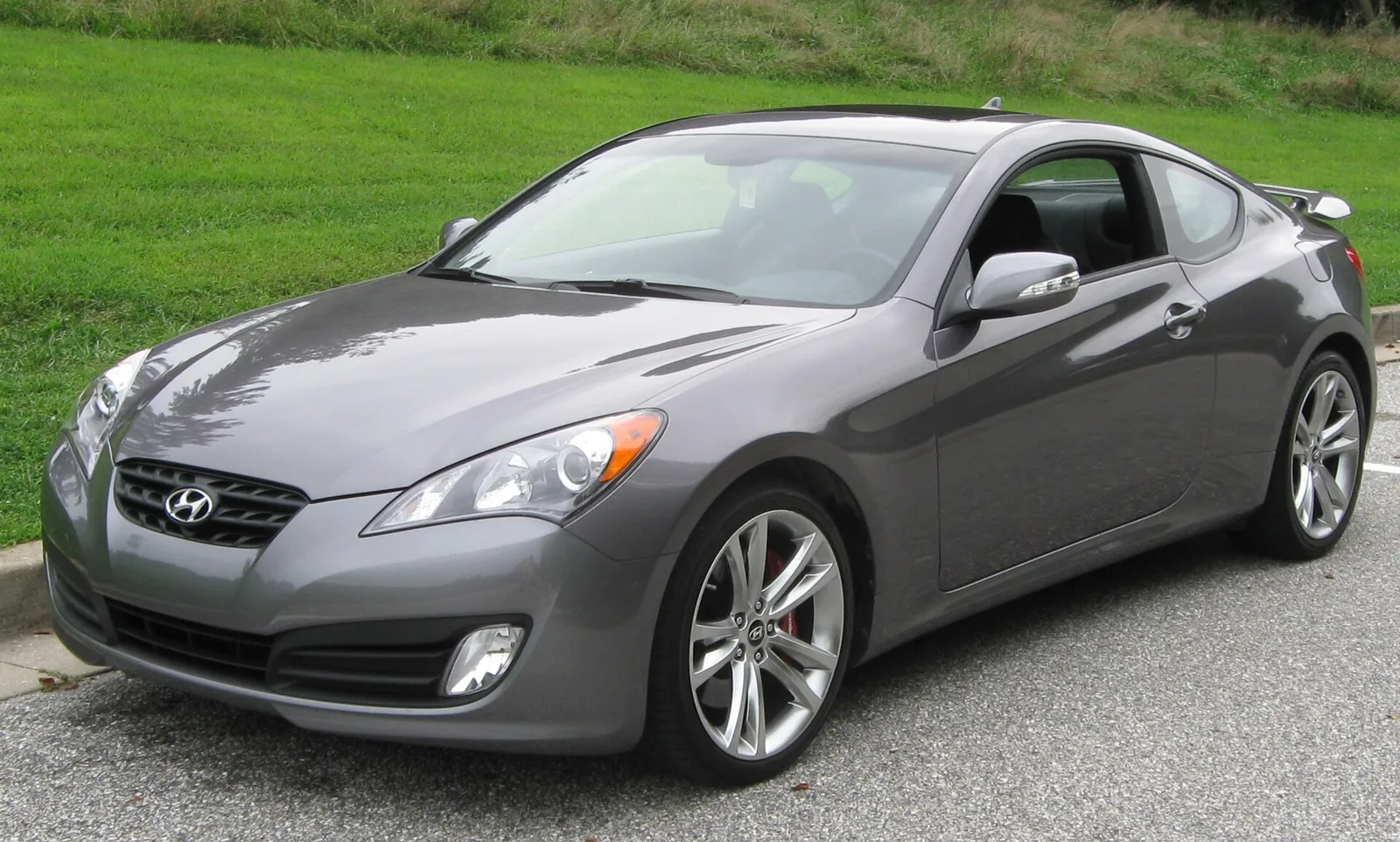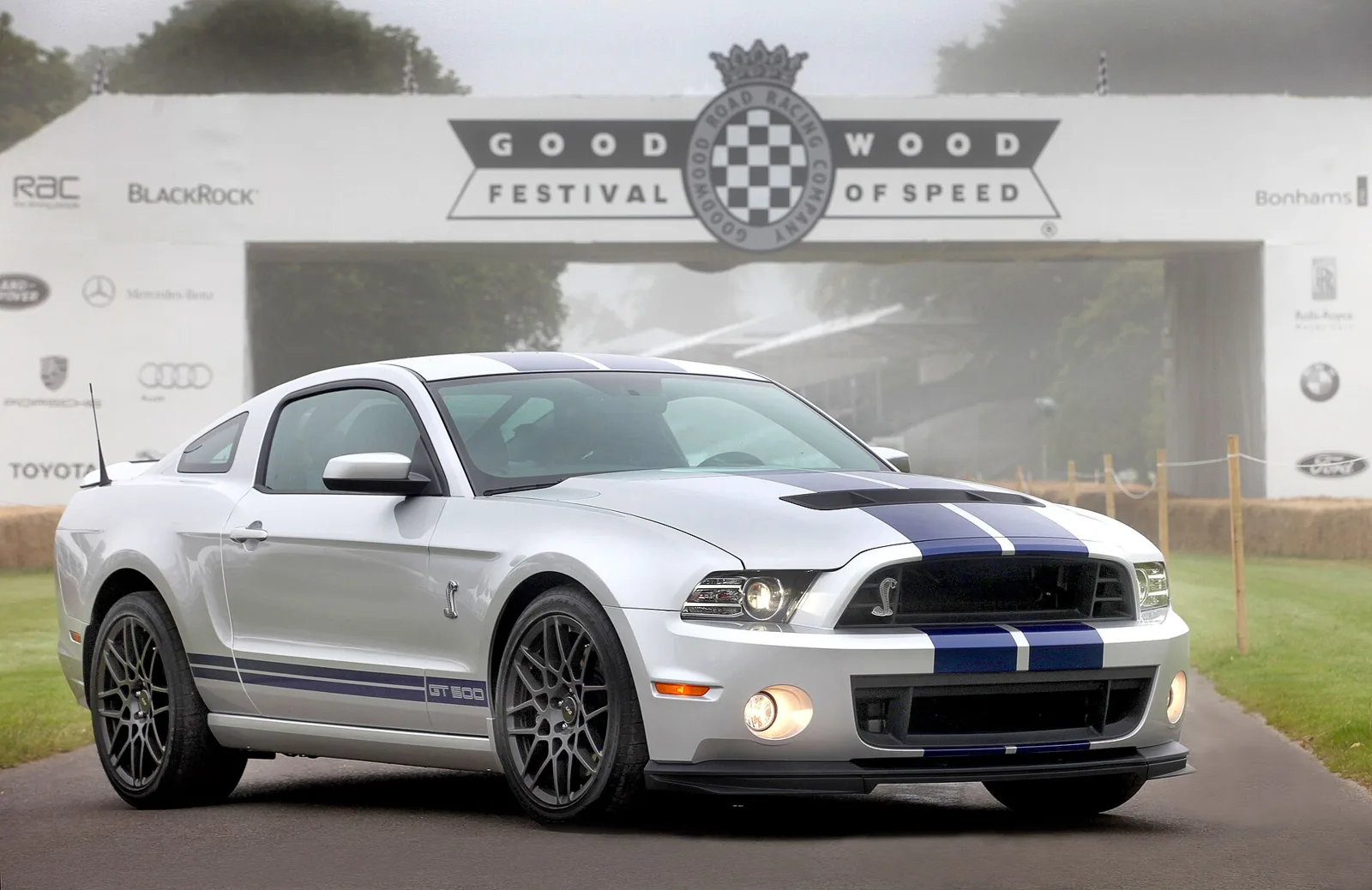
Ford's fifth-generation Mustang carried a famous name and a wide engine range, while Hyundai's Genesis Coupe arrived later as a rear-drive coupe aimed at the same enthusiasts.
The Ford Mustang fifth generation is a two-door four-seat pony car built by Ford from 2004 to 2014, with V6 and V8 engines. The Hyundai Genesis Coupe is a rear-wheel-drive sports coupe from Hyundai, first released in October 2008 and discontinued in 2016.
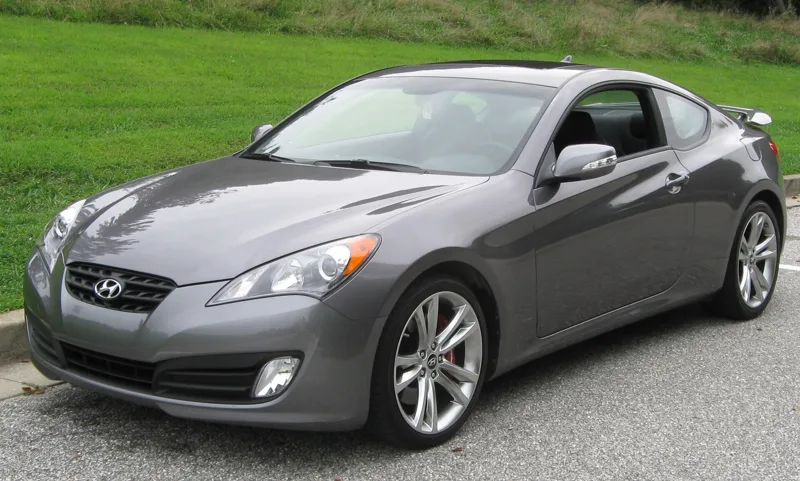
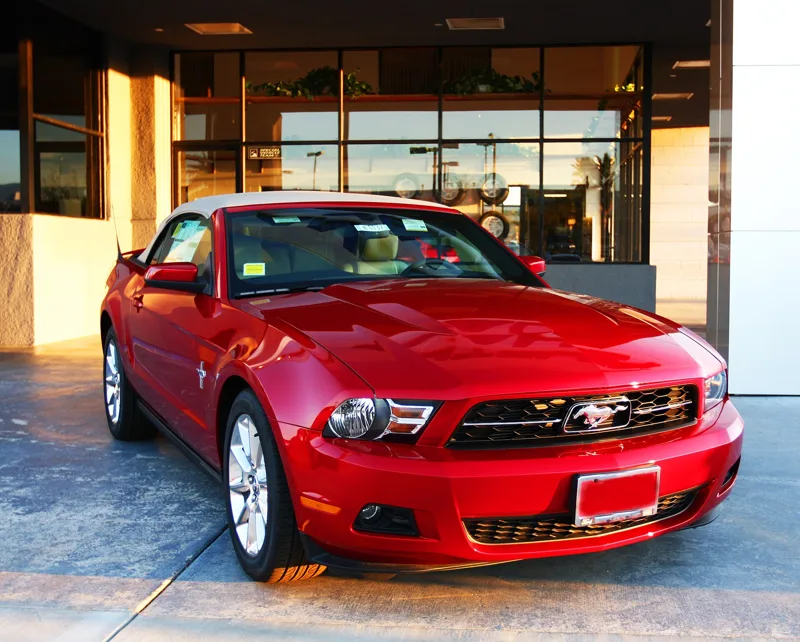
The fifth-generation Ford Mustang and the Hyundai Genesis Coupe were both two-door sports cars aimed at enthusiasts who wanted a lot of performance for the money. The Mustang was a revived pony car with a famous name and a broad range of V6 and V8 engines. The Genesis Coupe was Hyundai's first attempt at a rear-drive sports coupe, and it rode on a platform it shared with the Genesis luxury sedan. Set side by side, the pair show an established American icon against a newcomer from Korea.
How did the Mustang and Genesis Coupe come about?
The fifth-generation Mustang was developed under chief engineer Hau Thai-Tang, and the design froze in July 2002 under J Mays. Two pre-production concepts were presented at the Detroit show in January 2003, and the production car drew on the look of the 1964 to 1970 original. It was built at the Flat Rock plant in Michigan and began with the 2005 model year.
The Genesis Coupe came later and from a different direction, and Korea gave Hyundai a home market test before the car went abroad. Hyundai launched it in Korea on October 13, 2008, and it reached United States dealers in February 2009 as a 2010 model. John Krafcik, then Hyundai USA's acting chief, said it was designed to challenge cars such as the Infiniti G37, which set a clear target for the newcomer.
An American pony car with a famous name and a broad engine range, against a Korean rear-drive coupe built to challenge the Infiniti G37.
Why did Hyundai choose rear-wheel drive?
Rear drive was a deliberate step for a company known for front-drive family cars, and for a brand then building its reputation on value, it was a visible statement of intent. The Genesis Coupe shared its basic platform with the Genesis luxury sedan, and spy photographs taken in 2007 showed a longitudinal engine that pointed to a front-engined, rear-drive layout. Those early pictures also showed a turbocharged four, and speculation ranged from that engine to the Tau V8 from the luxury sedan.
The Mustang had its own rear-drive history, with a live rear axle located by a three-link system and a Panhard rod. Ford said an independent rear would have pushed the showroom price up by $5,000, and that decision drew heavy criticism from the automotive press.
How did the Genesis Coupe reach the public?
Photographs of a heavily camouflaged prototype surfaced online as early as May 2007, and more leaked shots appeared just before the 2007 Los Angeles show. One showed the coupe beside a Ford Mustang, which made the target clear before the car was officially shown.
The production car made its debut at the 2008 New York show, with a red and a silver model and a demonstration of powerslides and burnouts. North American sales began in spring 2009, once the car had been tuned for American roads.
How did the two cars' suspensions compare?
The Mustang used a MacPherson strut front suspension and a live rear axle, a trade-off that cut cost and weight while giving up some handling finesse. Ford defended that choice in its launch material, and the live axle remains a talking point in any comparison of the two cars' handling.
The Genesis Coupe's R-Spec versions added a Torsen limited-slip differential, a firmer suspension, 19-inch wheels and Brembo brakes. The United States suspension was set firmer than the Korean version to suit American buyers and their roads.
Side-by-side specifications
| Specification | Ford Mustang (2005 to 2009) | Hyundai Genesis Coupe (2010 model) |
|---|---|---|
| Launch | 2005 model year, built from late 2004 | Korea in 2008; US as a 2010 model |
| Layout | Front engine, rear drive, live rear axle | Rear drive, platform shared with the Genesis sedan |
| Base engine | 4.0-litre V6, 210 hp (157 kW) | Turbo four or 3.8-litre V6 |
| Top engine | 4.6-litre V8, 300 hp (224 kW), GT | 3.8-litre V6 in R-Spec and Track trims |
| Torque | 240 lb-ft (325 N-m) on the V6; 320 lb-ft (434 N-m) on the GT | No figure given |
| GT acceleration | 0 to 60 mph in 4.9 seconds | No figure given |
| Front brakes | 12.4-inch discs on the GT | Brembo brakes on R-Spec |
| Wheels | 16-inch on the V6; 17-inch on the GT | 18-inch base; 19-inch on R-Spec |
| Transmission | Five-speed manual or automatic | Six-speed manual or automatic; eight-speed after the facelift |
| Seats and doors | Four seats, two doors | Two doors, sports coupe layout |
| End of run | Production ended in 2014 | Discontinued in 2016 |
How did the Mustang's features change after launch?
The 2006 model year brought the Pony Package for the V6, which borrowed suspension from the GT and added 17-inch wheels and a rear deck spoiler. In 2007 Ford added a Pioneer GPS unit that drew its map data from DVD, a power passenger seat, heated seats and Sirius Satellite Radio.
For 2008 the car gained HID headlamps, and its seats used soy-based material, a nod to Henry Ford's thinking. For 2009, Ford Sync could only be added by a dealer, and a glass roof arrived that year too.
What did the Mustang's engine range offer?
The base V6 was a cast-iron 4.0-litre unit that replaced an older 3.8-litre engine, and it made 210 hp (157 kW). In a Motor Trend test an automatic V6 convertible reached 60 mph in 7.3 seconds, 1.4 seconds faster than a Pontiac G6 convertible.
The GT used an all-aluminium 4.6-litre Modular V8 with variable camshaft timing and made 300 hp (224 kW). It reached 60 mph in 4.9 seconds and covered the quarter mile in 13.7 seconds, with a terminal speed of 103 mph (166 km/h).
What did the Genesis Coupe's facelift change?
The Korean facelift debuted at the Korea Speed Festival in Yeongam in 2011, and the North American version followed at the 2012 Detroit show as a 2013 model. The front bumper and hood took on Hyundai's fluidic design language, in the manner of the Veloster.
Hyundai also responded to criticism of materials quality by upgrading the cabin. It added a leather handbrake handle, a red leather trim option, LED accents above the fog lamps, plus LED taillights.
What did the Genesis Coupe's engines offer?
Buyers could choose a turbocharged four or a 3.8-litre V6, and the V6 was the more popular choice among enthusiasts. The 2011 facelift replaced the earlier engine with a direct-injection unit, and an eight-speed automatic with paddle shifters joined the transmission choices.
Tuners pushed the car further. The Cosworth Genesis Racing Series car raised output to 389 hp at 6,400 rpm, and an R-Spec by ARK reached 395 hp at 6,800 rpm. A Rhys Millen Racing RM500 used a 5.0-litre Tau V8 rated at 450 hp.
How did the Mustang's trims and packages develop?
The Mustang grew its line-up steadily, and its option list shows how Ford tried to make a base car feel more special. The 2006 V6 Standard began at US$19,115 for the coupe, with black steel wheels and plastic covers. The Pony Package brought GT suspension, 17-inch wheels and a rear deck spoiler to the V6, and the GT California Special revived a name from 1968 with 18-inch polished wheels.
Options included the Shaker 500 and Shaker 1000 audio systems and a 2009 glass roof priced at US$1,995. A V6 Appearance Package sold for $2,398 in 2008, and only 152 were built by that year, which shows how niche those extras were.
How did the Genesis Coupe's trims compare?
The line-up ran from the 2.0T Base and R-Spec through Premium and Track, with the 3.8 Base, R-Spec, Grand Touring and Track on the V6 side. The R-Spec gave up some comfort features to save weight, and it was priced US$3,000 below the Track models.
The Track trims combined R-Spec hardware with Premium equipment, adding HID headlights, fog lamps with running lights and a rear spoiler. Colour choice was broad, with ten colours at launch, though some were limited to particular trims or markets.
How did each car fare with reviewers?
Hyundai's pitch was a value-focused rear-drive coupe, and the reviews tested that pitch hard.
Reviews of the Genesis Coupe were mixed, and they show how the market measured it against established American rivals. Edmunds called the 3.8 R-Spec the most interesting car Hyundai made, but noted that a V6 Mustang or Camaro could be had for less. Motor Trend placed the 2.0T R-Spec last in a comparison test that included a Mustang V6, and it criticised the car's peaky power delivery.
Car and Driver ran a 2013 3.8 R-Spec at Virginia International Raceway, posting a 3:13.9 time at VIR's Grand West course. That was just 0.1 second slower than a 306 hp 2011 car, although the magazine noted power oversteer and brake fade.
Which buyer suits each car?
The Mustang suits a buyer who wants an American pony car with a famous name, a broad engine range and a large dealer network. The Genesis Coupe suits a buyer who wants a rear-drive coupe at a Korean price, with a turbo or V6 choice and a range of performance trims.
The figures here do not settle which is better, so no verdict is given. The Mustang had the longer history and more trims, while the Genesis Coupe offered a different price position and a fresh package at launch.
What did each car leave behind?
The Mustang left a long line of pony cars, with roots in the first generation of 1964 to 1970. Its GT California Special echoed the original California Special of 1968, and the fifth generation set the stage for later models.
Later Mustangs kept the pony car's rear-drive approach, but the Genesis Coupe's story ended with its 2016 discontinuation. It left a Hyundai performance name that competed in touring car racing. GoGoGear.com Racing won the United States Touring Car Championship in 2014 in a 3.8-litre Genesis Coupe, the first road racing title for a Hyundai in the US.