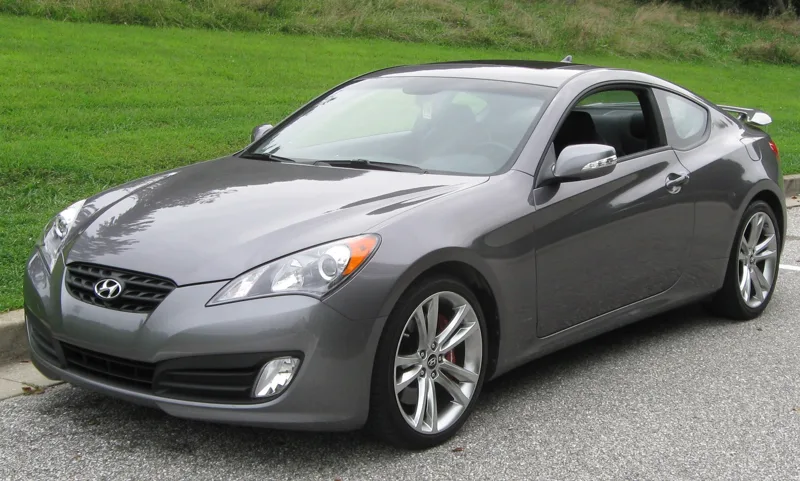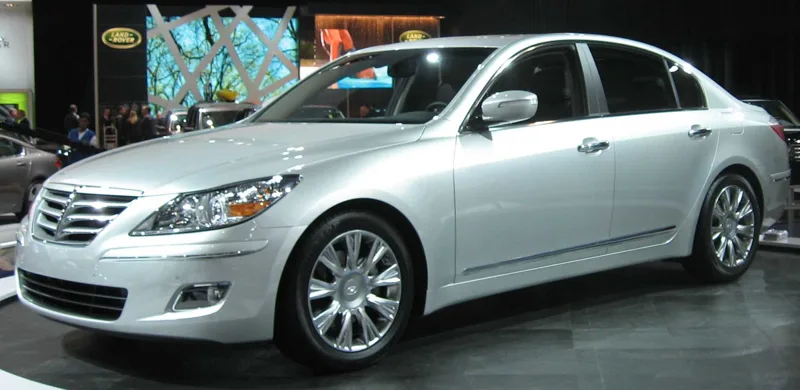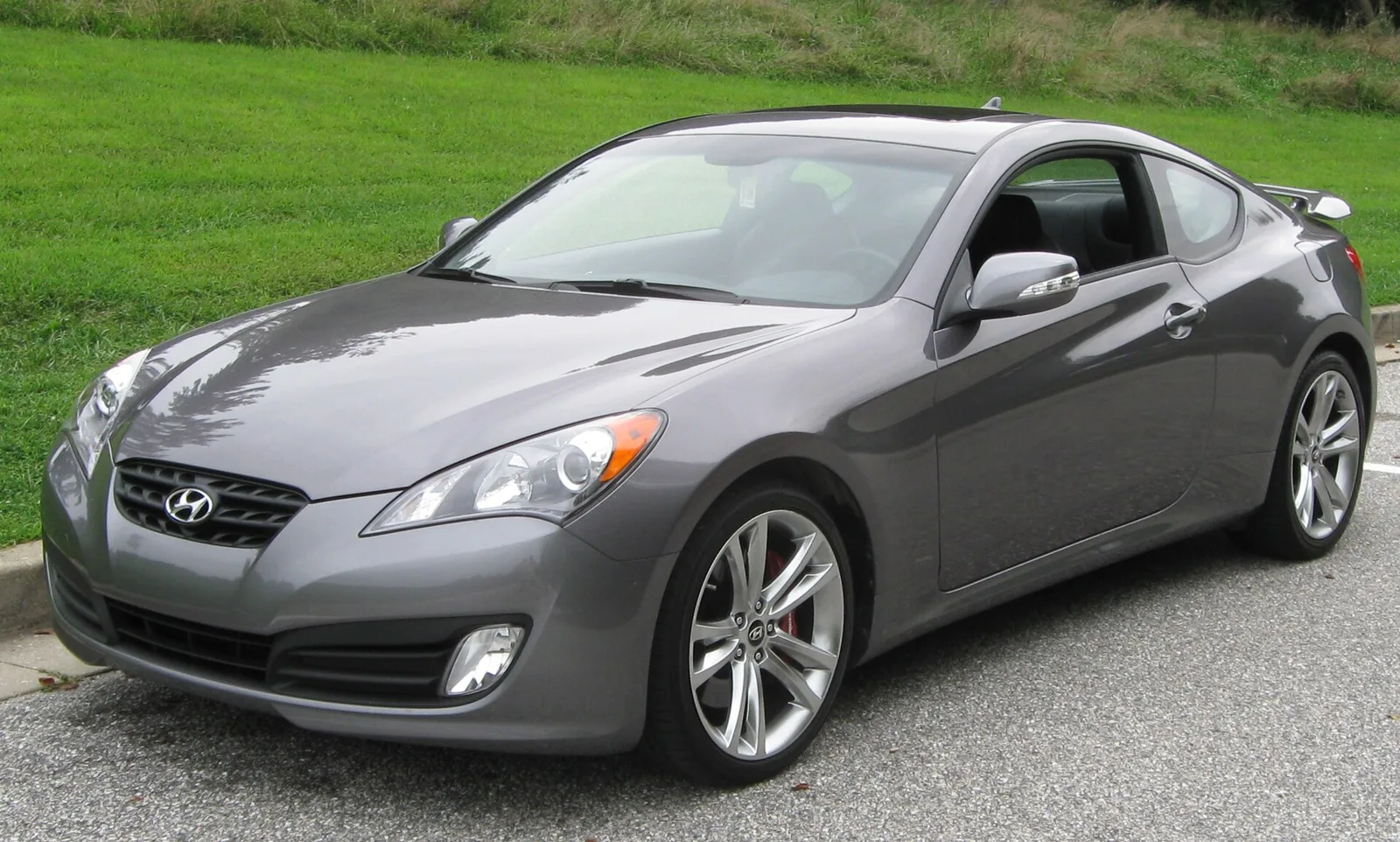
Hyundai's first rear-wheel drive coupe, built on the Genesis sedan platform, grew from a turbo four to a 3.8-litre V6 and a surprisingly serious motorsport following.
The Hyundai Genesis Coupe was a rear-wheel drive sports coupe built by Hyundai from 2008 to 2016. It shared a platform with the Genesis sedan and offered a turbocharged four-cylinder or a 3.8-litre V6. A 2011 facelift brought restyled bodywork and more powerful engines.
The Hyundai Genesis Coupe is a rear-wheel drive sports coupe that Hyundai launched for Korea on 13 October 2008. It was the company's first rear-drive coupe, sharing its basic platform with the Genesis luxury sedan, and it reached North American showrooms in February 2009 as a 2010 model. Hyundai kept the coupe after Genesis became a standalone luxury brand, and it was discontinued in 2016.
Where did the Genesis Coupe come from?
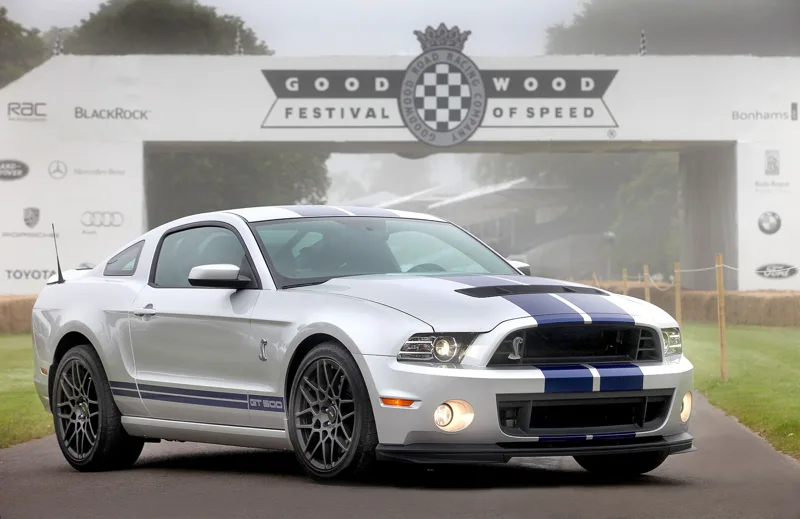
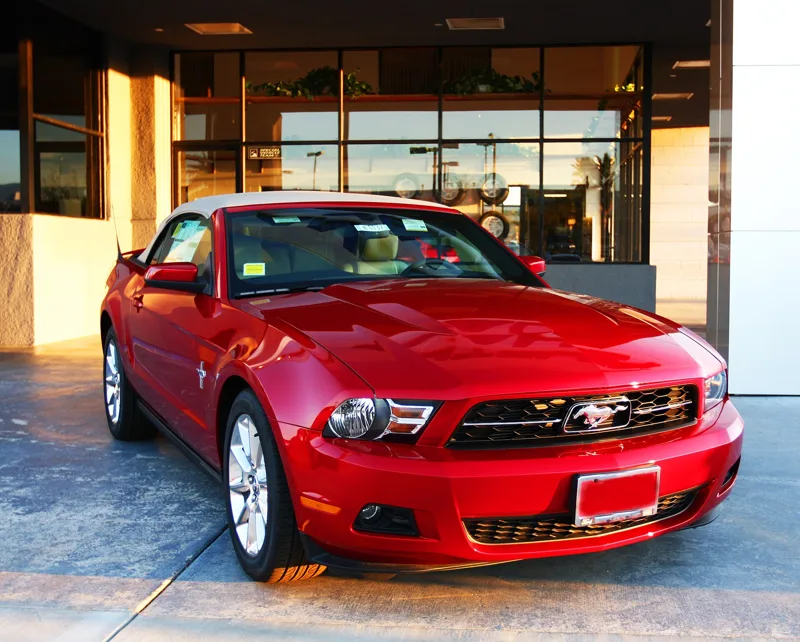
The coupe first surfaced as a heavily camouflaged prototype in May 2007. Its spy photos showed a longitudinal engine and a heat-wrapped turbocharger, pointing to a front-engined, rear-drive car. Leaked photos later showed an uncovered silver model parked beside a Ford Mustang, the rival it was widely expected to target.
The production car was unveiled at the 2008 New York International Auto Show, where it was shown in red and silver. The unveiling was accompanied by a demonstration of the coupe's abilities, including powerslides and burnouts. North American models followed in spring 2009.
Hyundai USA's acting president and chief executive, John Krafcik, described the car as designed to challenge the Infiniti G37. The North American car was tuned differently from the Korean one, with a stiffer suspension to suit American tastes, although the two looked the same.
A rear-drive Hyundai coupe that proved the brand could build a sports car people wanted to drive, race and tune.
What engines did the Genesis Coupe use?
The standard engine was a 2.0T Theta turbocharged four-cylinder making 210 to 213 PS (154 to 157 kW; 207 to 210 hp). The optional 3.8-litre Lambda V6 produced 303 to 316 PS (223 to 232 kW). Both engines came from the Global Engine Manufacturing Alliance, a joint venture between Hyundai, Mitsubishi and Chrysler.
The four-cylinder shared very little with the Mitsubishi Evo X despite the alliance, because Hyundai's engine used a different engine computer from Siemens. The engine also used oil squirters under the pistons to keep them cooler.
The facelift lifted both engines. The four-cylinder rose to 275 to 279 PS (202 to 205 kW) thanks to a larger twin-scroll turbo, while the V6 reached 348 to 353 PS (256 to 260 kW) with gasoline direct injection. The optional automatic was upgraded to an eight-speed unit for both engine choices.
In North America the V6 became the only engine choice from the 2015 model year, once the four-cylinder was withdrawn from the market. Some regions, including the Middle East and the Philippines, kept the older multi-point injection V6 for longer.
How did the Genesis Coupe handle and brake?
Optional equipment included four-piston Brembo brakes with 13.4 in (340 mm) front rotors, packaged with the 19-inch wheels described below. The standard wheels were 18-inch units, and 19-inch wheels were packaged with the Brembo upgrade. The Torsen limited-slip differential was an option rather than standard equipment.
Hyundai said the coupe had 24 percent stiffer bending rigidity than the BMW E46 M3, a claim made by the manufacturer rather than an independent test. The chassis was shared with the Genesis sedan, with a longitudinal engine up front and a rear-wheel drive layout.
The coupe had a wheelbase of 2,820 mm (111.0 in), a length of 4,630 mm (182.3 in) and a width of 1,865 mm (73.4 in). V6 cars weighed 1,537 to 1,639 kg (3,389 to 3,613 lb), while four-cylinder cars weighed 1,494 to 1,550 kg (3,294 to 3,417 lb). The fuel tank held 65 L (17.2 US gal).
Which trims did the Genesis Coupe come in?
The first generation was offered as 2.0T Base, R-Spec, Premium and Track (2010 only), plus 3.8 Base (2010), 3.8 R-Spec (2011 onwards), Grand Touring and Track. The names and equipment changed through the life of the car, so the same trim name could mean different things in different years.
Base cars came with keyless entry, steering wheel audio controls, Bluetooth hands-free, tyre pressure monitoring, cruise control, electronic stability control and 18-inch wheels. The 2010 3.8 Base added black leather and light-up Genesis door sill plates, while the Premium and Grand Touring brought a touchscreen navigation system, push-button start, a power driver seat and leather.
The R-Spec was the enthusiast choice. It came with 19-inch wheels, Brembo brakes, a Torsen limited-slip differential and a stiffer suspension. To save weight it dropped Bluetooth, automatic headlights, cruise control and the trip computer, and it was sold only with the six-speed manual transmission.
Track trims combined the R-Spec's enthusiast hardware with the Premium and Grand Touring features. They added HID headlights, fog lights with daytime running lights and a rear spoiler, and the Track was the only trim to carry all of them at once.
How did the 2011 facelift change the coupe?
The Korean model was unveiled at the 2011 Korea Speed Festival in Yeongam. The North American car followed at the 2012 Detroit auto show as a 2013 model, with the Lambda MPi engine replaced by the Lambda GDi unit that made the big power gains. Speculation before the original launch had ranged from the turbo four to a Tau V8 borrowed from the Genesis sedan, and the prototypes had shown a longitudinal engine layout from the start.
The front bumper and bonnet were restyled to match Hyundai's fluidic design language, which the Veloster had already shown. The taillights became LED units, and LED accents were added above the foglights. Hyundai also responded to reviewers who had criticised the interior materials, and the cabin was upgraded.
The interior gained a red leather option and a leather handbrake handle, and the manual gained carbon-coated synchronizer rings and hill-start assist in 2014. Exterior colours were a feature of the car from the start. At launch it came in ten options, including Karussell White, Bathurst Black, Interlagos Yellow, Tsukuba Red and Nordschleife Grey. Some colours were restricted to particular trims, and the palette changed each model year.
How did the Genesis Coupe perform in motorsport?
In 2009 the coupe competed in Formula Drift, at the Pikes Peak International Hill Climb and in selected Redline Time Attack events. The programme came from a joint venture between Hyundai and the racer Rhys Millen, who drove a Red Bull-sponsored car. Millen's V8 engine kept mostly stock internals and its original 5.0-litre displacement.
Millen set records along the way. In July 2009 he set a new mark for two-wheel drive production-based cars at Pikes Peak, and in June 2011 he set a 2WD Time Attack record with a time of 11:04.912 using the same coupe.
GoGoGear.com Racing started racing a Genesis Coupe in the United States Touring Car Championship in 2012. The team won the championship in 2014 with a 3.8-litre V6 car, which made it the first team to win a road racing championship in a Hyundai in the United States.
Specialist builders produced showpiece versions as well. The RMR Genesis Coupe entered the 2012 Formula Drift series. The RM460 used a 4.6-litre Tau V8 mounted mid-engine, while the RM500 used a 5.0-litre Tau V8 rated at 450 hp. A Bisimoto build reached 1022 horsepower in 2013.
What did critics make of the Genesis Coupe?
Reviews were mixed. Edmunds called the 3.8 R-Spec the most interesting car Hyundai made, and it praised the improved transmission, the stronger engine and a more balanced suspension. Its verdict still noted that a V6 Mustang or Camaro could be bought for less money.
Motor Trend was harder on the 2.0T R-Spec, placing it last in a comparison test. Its rivals included the Ford Mustang V6 and Volkswagen Golf GTI, plus a Scion FR-S, a Subaru BRZ and a Mazda MX-5 Miata. It praised the smooth ride and extra power but criticised the peaky power delivery, a vague shifter and the interior ambience.
Car and Driver took a 2013 3.8 R-Spec to Virginia International Raceway for its Lightning Lap time trial and recorded 3:13.9 around the Grand West layout. The magazine was unsettled by the car's tendency to power oversteer, and it also noted brake fade under repeated hard use.
Where did the Genesis Coupe appear outside the showroom?
Hyundai used a high-profile Super Bowl slot to promote the coupe, with Rhys Millen drifting the car to music by Billy Corgan. A separate campaign let viewers edit their own commercial, and the best entries could be shown on television with a cash prize and a new car.
The coupe also had a television career. Hyundai had a multi-year partnership with the TV series Burn Notice, and the Genesis Coupe appeared prominently in many episodes. It was also a pursuit vehicle driven by Jack Bauer in season eight of 24, and the Genesis sedans appeared in the series Leverage.
Gameloft released a racing game for Android phones in September 2012 under its GT Racing series, featuring the 2011 Genesis Coupe. The same car later appeared in the video game Asphalt 7: Heat.
What are the Genesis Coupe specifications?
| Specification | Detail |
|---|---|
| Layout | Front longitudinal engine, rear-wheel drive |
| Launch | 13 October 2008 for Korea; North America from the 2010 model year |
| Four-cylinder (original) | 2.0T Theta turbocharged, 210-213 PS (154-157 kW; 207-210 hp) |
| Four-cylinder (facelift) | 275-279 PS (202-205 kW) |
| V6 (original) | 3.8 L Lambda, 303-316 PS (223-232 kW) |
| V6 (facelift) | 348-353 PS (256-260 kW), gasoline direct injection |
| Manual transmission | 6-speed, Magna Powertrains-derived |
| Automatic transmission | 5-speed or ZF 6-speed; 8-speed after the facelift |
| Wheelbase | 2,820 mm (111.0 in) |
| Length and width | 4,630 mm (182.3 in); 1,865 mm (73.4 in) |
| V6 curb weight | 1,537-1,639 kg (3,389-3,613 lb) |
| Four-cylinder curb weight | 1,494-1,550 kg (3,294-3,417 lb) |
| Fuel tank | 65 L (17.2 US gal) |
| Rigidity claim | 24% stiffer bending rigidity than the BMW E46 M3, per Hyundai |