How a manual gearbox links engine and wheels, why synchromesh changed everyday driving, and where the stick shift stands today.
Manual gearboxes put gear selection in the driver's hands, using a stick and a clutch pedal instead of an automatic control system. Most current car versions combine constant-mesh gears with synchromesh and provide five or six forward ratios. Automatics, manumatics and dual-clutch units hand varying amounts of the shifting work to the machine.
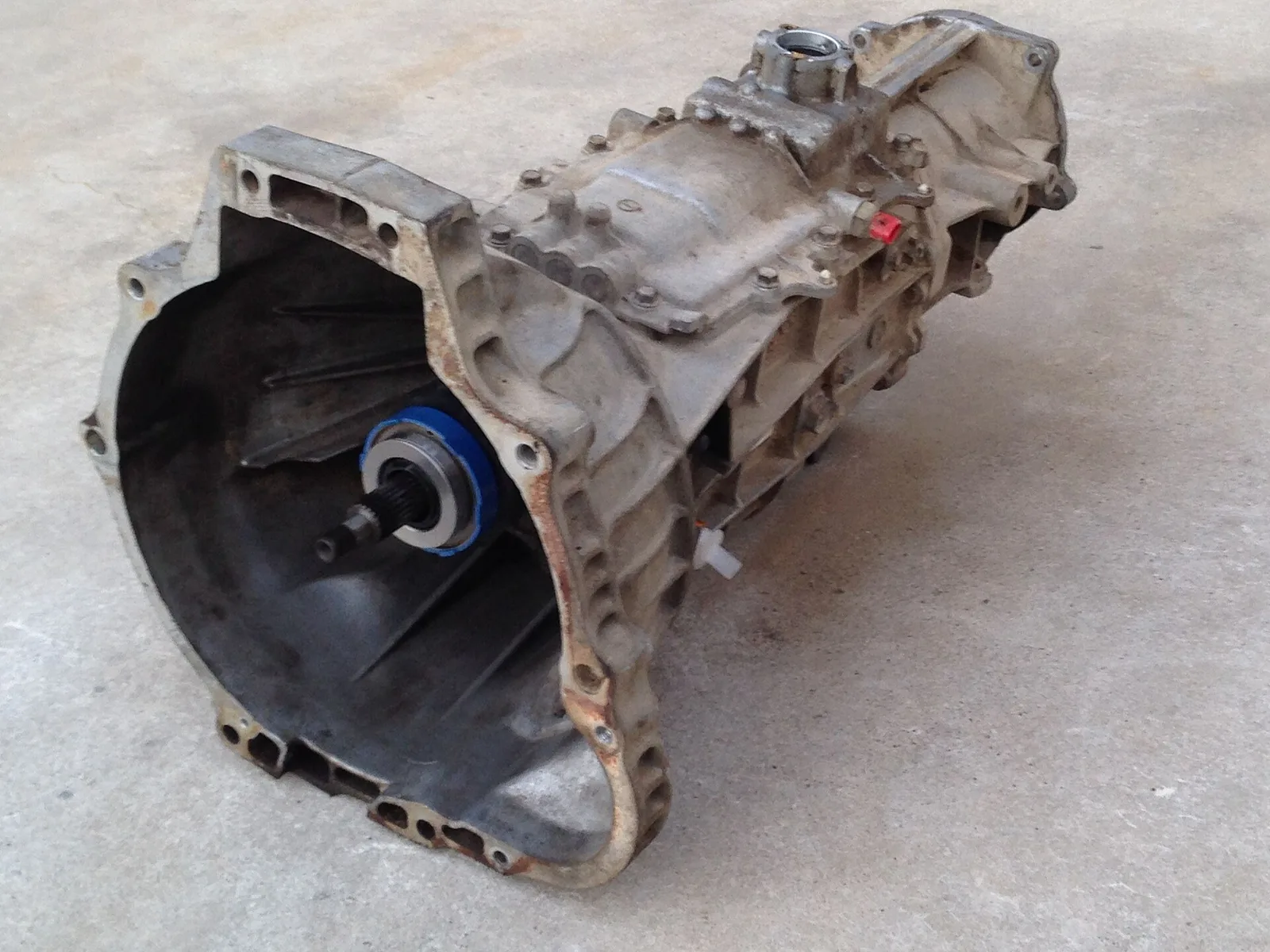
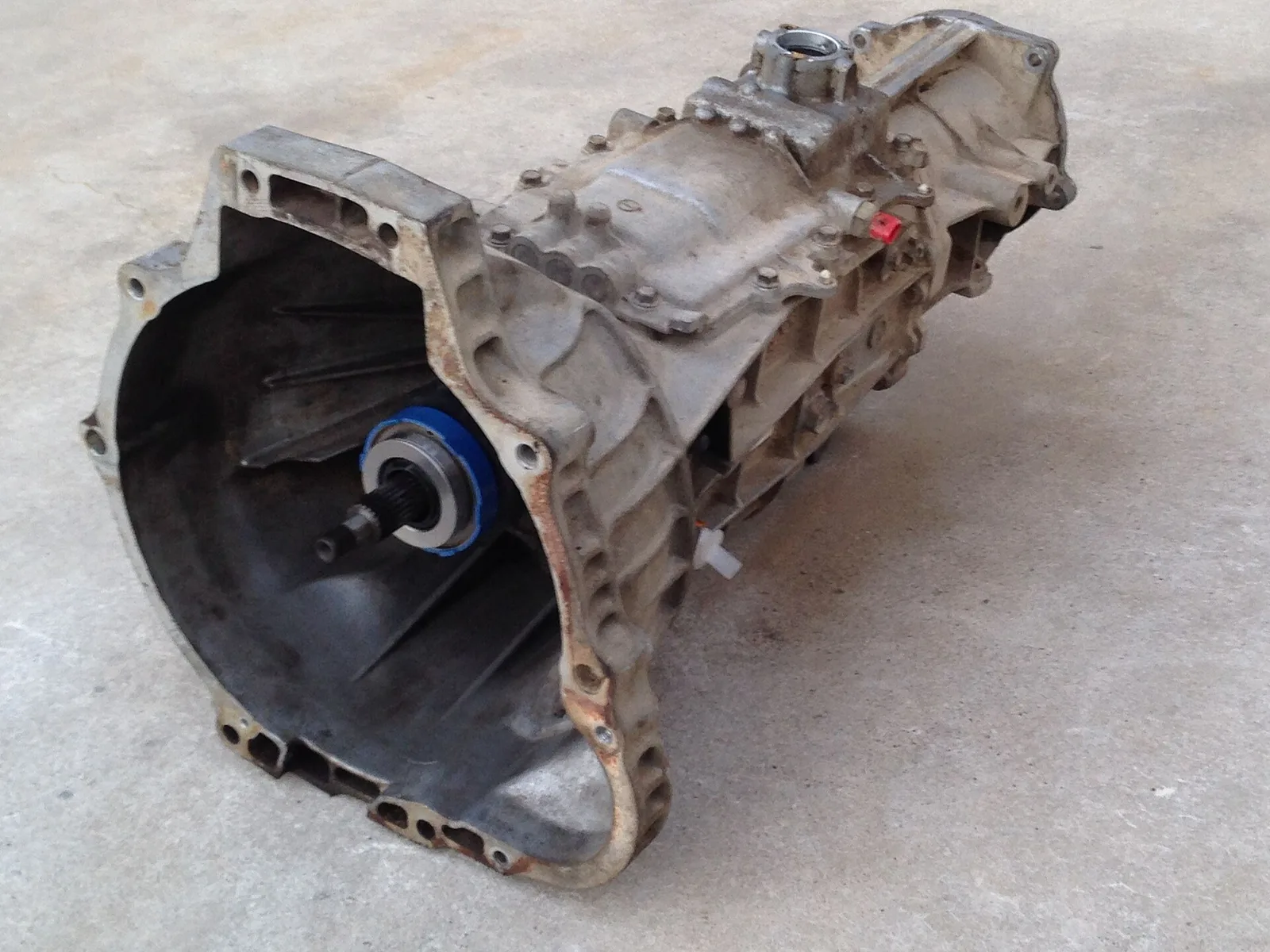
A manual transmission is the gearbox a driver works with a gear stick and a clutch, choosing each ratio by hand. The engineering rests on a simple idea: gear pairs stay meshed while selector hardware locks one pair at a time to the output shaft. Most modern passenger cars still use this constant-mesh layout, typically with five or six forward ratios.
What is a manual transmission?
A manual transmission is a multi-speed gearbox in which the driver selects each gear ratio by hand, using a gear stick and a clutch. In cars the clutch is a foot pedal, while motorcycles use a hand lever. Unlike an automatic, the driver rather than a hydraulic torque converter decides when every shift happens.
Most manual gearboxes for cars let the driver select any ratio at any time, so a move from second to fourth or from fifth to third is normal. Sequential manual gearboxes are different. They are common in motorcycles and racing cars, and they only allow the next higher or next lower gear to be selected. That restriction keeps the mechanism simple and quick to operate under pressure.
The category also includes systems that look like automatics. Manumatic transmissions let the driver choose gears with paddles or plus and minus positions, but the gearbox still does the shifting itself, so they are not considered manual transmissions. Automated manual and dual-clutch units share mechanical principles with the manual, yet they automate some or all of the gear change, which is why they are usually grouped separately.
A simple gear pair and a ring of brass turned the stick shift into an everyday tool.
How does the clutch work with the gear stick?
The gear stick moves selector forks inside the gearbox, while the clutch decides whether the engine turns the gearbox at all. With the pedal up the clutch is engaged and the flywheel drives the transmission. Pressing the pedal disconnects them, which lets the driver change gear, stop or pull away without stalling the engine.
The flywheel is attached to the crankshaft and therefore spins at engine speed. A clutch disc sits between the flywheel and a pressure plate, which is attached to the transmission input shaft. Moving the clutch pedal changes the pressure plate's grip on that disc. Once the clutch is fully engaged, the engine and gearbox turn together, and the driver's job becomes matching throttle, road speed and gear.
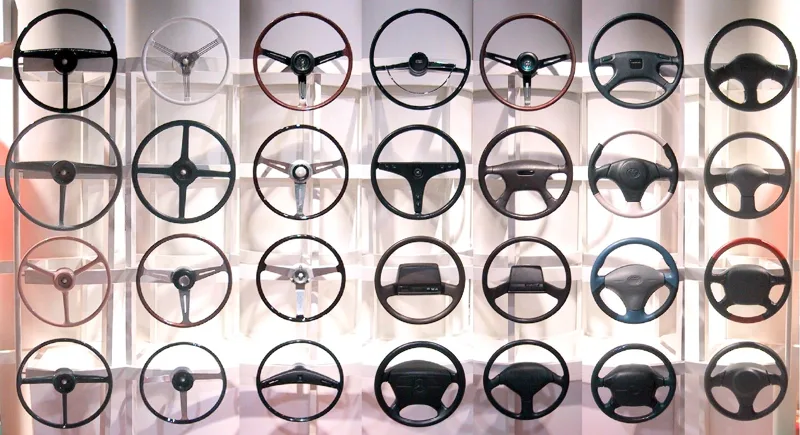
Gear sticks are also called gearshifts, gear levers or shifters. In most cars the stick sits on the floor between the driver and the front passenger, but some designs mount it on the steering column or in the centre console. The stick's movement reaches the transmission through solid linkages or cables, which push the selector forks into place.
How did manual gearboxes develop?
Early manual gearboxes used sliding-mesh gears that had to be moved along their shafts. Drivers needed careful timing and throttle work to make the teeth mesh, and the grinding and crunching earned these units the nickname crash boxes. Synchronised designs replaced them over time, and by the mid-1930s most North American marques had synchronised second and high gears.
The 1891 Panhard et Levassor is often cited as a significant step, because it used a three-speed manual gearbox. Many of the first automobiles were rear-engined and used a simple belt drive that worked as a single-speed transmission. Sliding-mesh designs survived for decades in heavy trucks, motorcycles and racing cars, where designers valued robustness and fast shifts over smoothness.
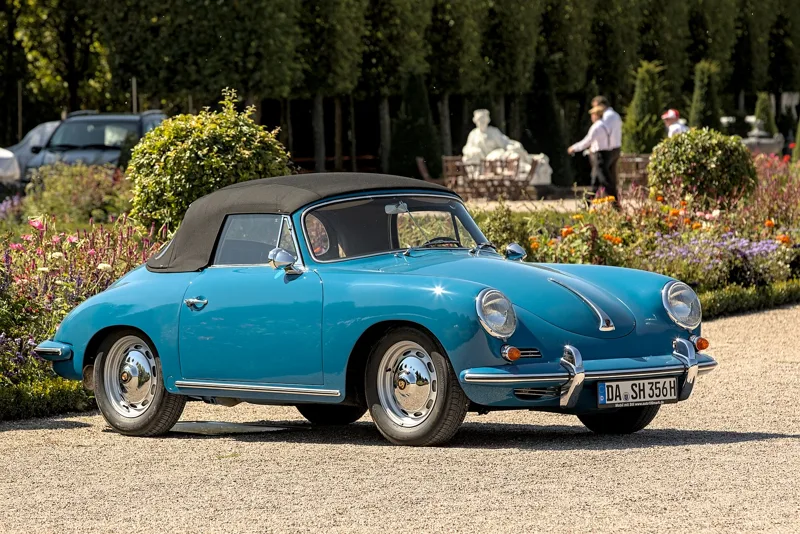
Cadillac first used synchromesh on production cars in 1928. Porsche patented its split ring synchromesh system in 1947, and the 1952 Porsche 356 became the first car with synchromesh on every forward gear. Before that, many cars had synchro only for the shift from third to second, and owners were advised to come to a full stop before moving from second to first.
Up to the late 1970s most transmissions had three or four forward ratios. Five-speed manuals appeared in a few sports cars, including the 1948 Ferrari 166 Inter and the 1953 Alfa Romeo 1900 Super Sprint, but five speeds only became widespread during the 1980s, along with synchromesh on all forward gears.
Milestones at a glance
| Year | Milestone |
|---|---|
| 1891 | Panhard et Levassor uses a three-speed manual gearbox |
| 1919 | Earl Avery Thompson invents the synchromesh transmission |
| 1928 | Cadillac uses synchromesh on production cars |
| 1947 | Porsche patents the split ring synchromesh system |
| 1952 | Porsche 356 gets synchromesh on all forward gears |
| 1967 | Alfa Romeo 33 Stradale introduces the first six-speed manual |
| 1990 | BMW 850i brings a six-speed manual to a performance car |
| 1992 | Ferrari 456 also uses a six-speed manual |
| 2012 | Porsche 911 (991) introduces the first seven-speed manual |
Why does synchromesh matter?
Synchromesh matches the speed of the input shaft to the gear being selected, so the dog teeth can engage without grinding. Cone-shaped brass or steel rings press against each gear and use friction to close the speed gap. Without it, a driver would need to match engine revs by hand on every change, a technique known as double-clutching.
Synchromesh was invented in 1919 by Earl Avery Thompson and first reached production cars from Cadillac in 1928. Today most passenger car forward gears use synchronizer rings, and the action is so quick and smooth that drivers rarely notice it. Reverse gear is often left without synchromesh, because it usually runs in the older sliding-mesh arrangement.
Blocker rings, sometimes called baulk rings, stop the sleeve from bridging the locking rings while speeds still differ. The ring twists slightly under friction and holds the dog clutch off until the speeds match, then releases so the teeth can slot in. Wear is the main enemy: worn rings and sleeves lose their grip on speed, especially when the gap between shaft and gear is large.
What sits inside a manual gearbox?
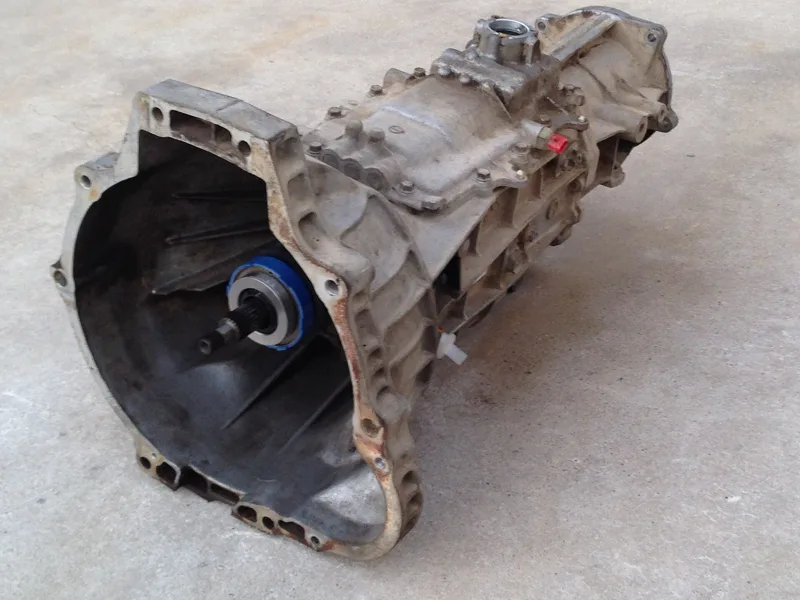
A modern constant-mesh car gearbox usually has three shafts: an input shaft connected to the engine, a countershaft carrying gears of various sizes, and an output shaft that drives the wheels. Gears on the output shaft spin freely on bearings until a collar locks one of them to the shaft. The layout is compact, reliable and straightforward to service.
Rear-wheel-drive cars with longitudinal engines usually place the input and output shafts on the same axis, which reduces twisting forces on the casing. In these designs one shaft sits inside the hollow bore of the other, with a bearing between them. Front-wheel-drive transaxles differ: they often have only two shafts, with an integral differential driven from the end of the countershaft.
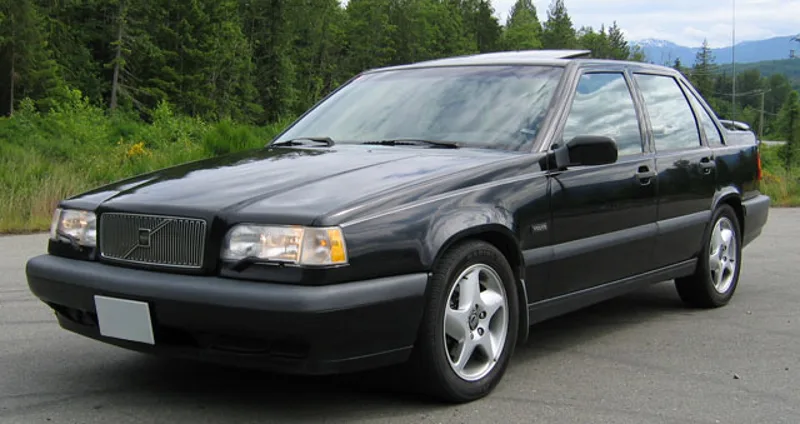
In a modern constant-mesh gearbox the gear teeth stay in contact all the time, and dog clutches choose which pair drives the output. When every dog clutch is disengaged the gearbox is in neutral and every gear spins freely. Some designs, including certain Volvo 850 and S70 models, use two countershafts so the gearbox can be narrower, because each countershaft is shorter.
How do reverse gear and lockouts work?
Reverse gear normally uses an idler gear that slides into mesh with gears on the input and output shafts. Those reverse gears are straight-cut, which produces the familiar whine when the car moves backwards. A lockout collar or extra force stops the lever sliding into reverse by accident while the car is moving forwards.
The input shaft may keep turning after the clutch is pressed or even after the car stops, so reverse needs a way to halt it before the gears meet. Some vehicles fit synchromesh to reverse to prevent crunching, but many do not. Some gearboxes also place fifth and reverse in the same plane, so the driver must select neutral before moving from fifth into reverse.
Where were gear sticks placed?
Gear sticks have been mounted on the floor, on the steering column and occasionally on the dashboard. In America a column shifter with three speeds was called three on the tree, while European and high-performance cars often had four on the floor. Column-mounted manual shifters had disappeared from North American passenger cars by the mid-1980s.
Floor-mounted shifters in front-engined rear-drive cars often connect directly to the transmission. Front-wheel-drive and rear-engined cars usually need a mechanical linkage between the stick and the gearbox. Console-mounted shifters, found on small cars and MPVs in recent years, free up floor space for storage without moving the stick onto the steering column.
Column shifters needed more complex linkage because the lever moved in a vertical plane, but they offered a practical advantage. Drivers could move between second and third without letting go of the wheel. Some vehicles of the 1950s, 1960s and 1970s also carried external overdrive units, operated by a switch or by briefly lifting off the accelerator to make a fuel-efficient highway gear available.
Which driving techniques still need a manual?
Skilled manual drivers use rev-matching, double-clutching, heel-and-toe shifting and block shifting to manage gear changes smoothly. Hill starts can be made with the handbrake or with careful clutch slip, and push starting can bring a car to life when the starter motor fails. These methods depend on the driver's timing and feel rather than on any electronics.
Rev-matching uses the throttle to bring engine speed in line with road speed before the clutch engages, which keeps downshifts smooth. Heel-and-toe shifting lets one foot brake while the other blips the throttle, a method popular in performance driving. Double-clutching was essential on non-synchro gearboxes, where the driver had to go to neutral, blip the throttle and then select the lower gear.
Hill starts are a common test of a manual driver. The traditional method uses the parking brake to hold the car while the right foot moves across to the accelerator. A hill-holder device first appeared on the 1936 Studebaker, and many modern vehicles release an electronic parking brake automatically as the wheels take up drive. Experienced drivers can also slip the clutch just enough to resist rollback.
Licensing rules vary between countries. In some places a licence issued for an automatic does not allow driving a manual, although a manual licence covers both types. Anyone moving between countries should check the local rules before assuming a licence carries over.
How are truck transmissions built?
Light trucks often use a single-lever gearbox with up to six gears and synchromesh. Heavier trucks rely on range, splitter and range-splitter designs that multiply the number of available ratios. Fleet operators commonly use 9, 10, 13 or 18-speed transmissions, and many heavy-duty units skip synchromesh to save weight and cost.
Range transmissions use a regular H pattern through a narrow band of gears, and a range control switches the pattern between high and low sets. Splitter transmissions keep a wide H pattern but split each position into a low and a high step. Range-splitter designs combine both ideas, and the common 13-speed adds a thumb lever for splitting ratios on top of the butterfly range lever.
Heavy-duty transmissions frequently go without synchromesh, because it adds weight that could carry payload and is one more part to fail. Experienced drivers learn to shift without it, and some use float shifting, which changes gears without the clutch. Diesel engines drove much of this change. From 1968 the Maxidyne used turbocharging to widen the power band, so fewer ratios were needed.
How is a manual gearbox lubricated?
Most manual gearboxes run on gear oil, although some vehicles use engine oil instead. Gear oil contains sulfur-bearing anti-wear compounds that reduce the sliding friction on the teeth. Helical gear cuts also help, because they remove the characteristic whine of straight-cut spur gears in forward gears, leaving reverse as the noisiest position.
Motorcycles with wet clutches share their engine oil with the gearbox, so a single oil supply lubricates both. Gear oil has a distinctive smell caused by those additives, and many manual gearboxes need the oil changed periodically, though not as often as the fluid in an automatic.
Are manual gearboxes disappearing?
Manual gearboxes are fading from mainstream showrooms as automatic designs gain ground. Automatic cars now often offer more gear ratios than their manual counterparts, which removes one of the stick shift's traditional advantages. Collectors have begun to value manual cars for exactly that reason, and a 2021 New York Times article covered the shift away from manuals.