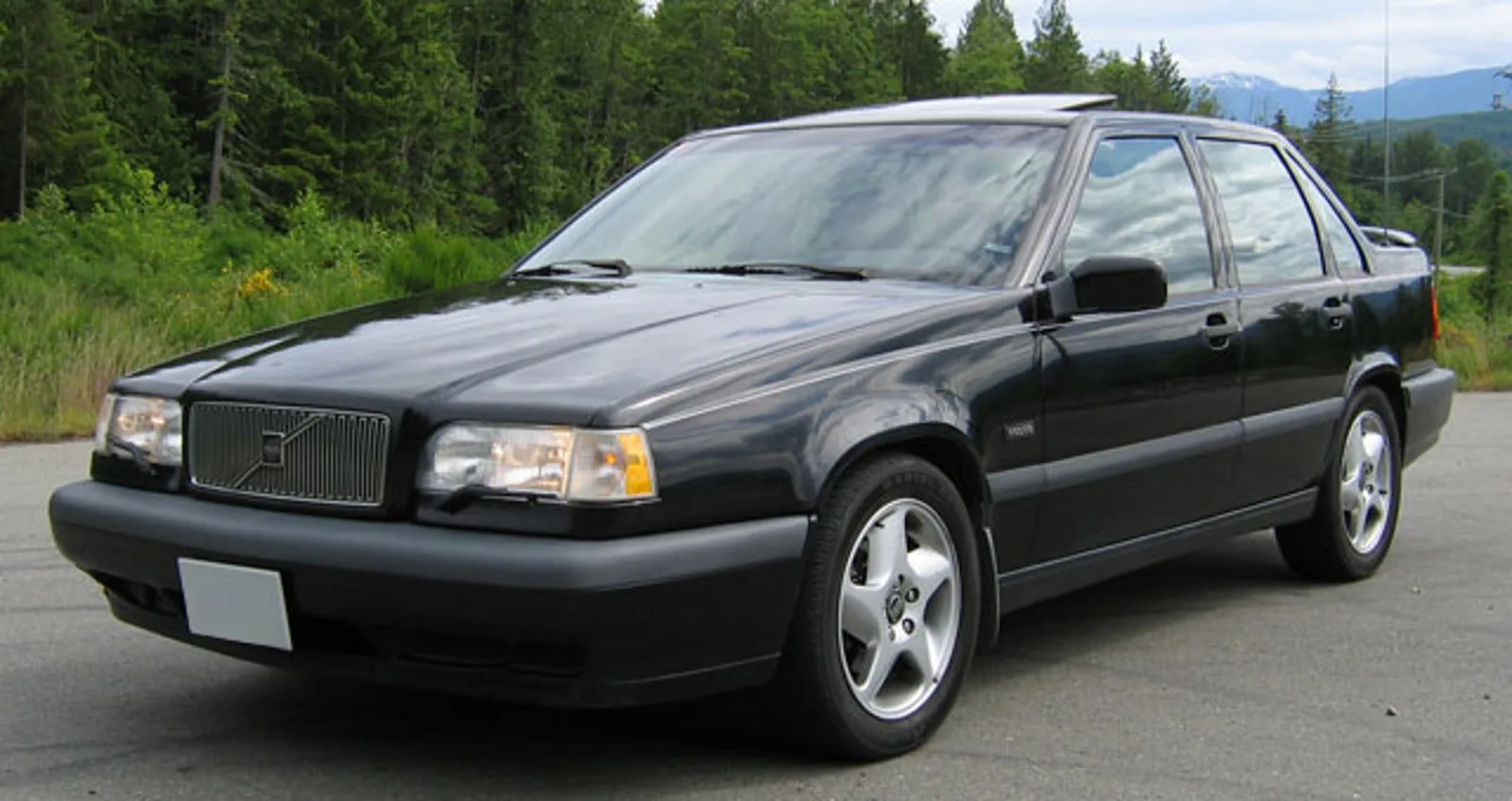
A transverse five-cylinder saloon and estate from 1991 that introduced side-impact airbags to mass production, then gave rise to the T-5R and 850 R performance cars.
A compact executive car from Volvo, built from 1991 to 1997. Its five-cylinder engine was mounted across the car, and it introduced side-impact airbags to mass production. Its front-wheel drive layout set it apart in its class, and the T-5R and 850 R performance versions followed.
The Volvo 850 was a compact executive car produced by Volvo Cars from 1991 until 1997. It was the first Volvo to be fitted with a transverse five-cylinder engine driving the front wheels, and it brought a number of firsts for the company, including side-impact airbags. Its performance variants, the T-5R and the 850 R, became some of the most loved Volvos of the decade.
Where did the Volvo 850 come from?
Development of what became the 800 series began in 1978. The Project Galaxy effort produced the 850 and the smaller 400 series, along with new manufacturing methods and the Modular engine and M gearbox families. By the end, Volvo had spent more on that project than on any other industrial venture in Sweden.
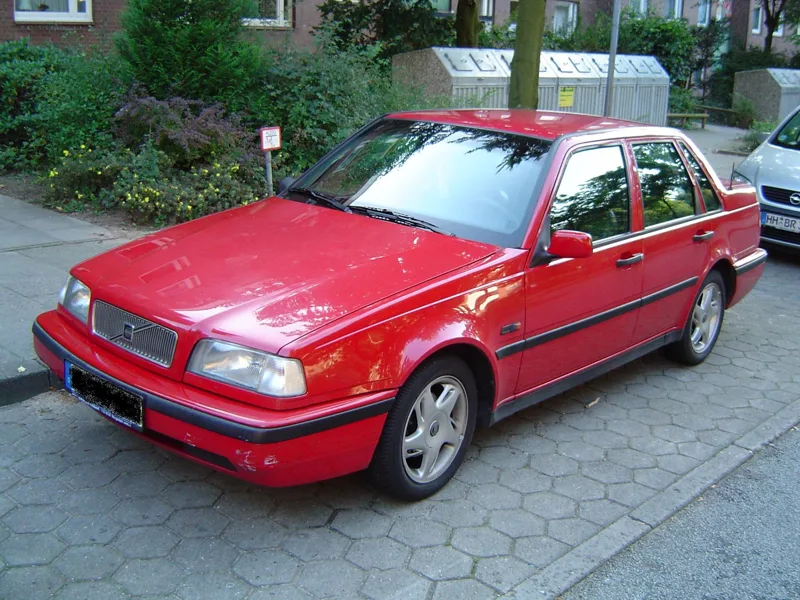
The car was designed by Jan Wilsgaard and shown for the first time in June 1991. It was launched in Europe as a 1992 model year car, and it was introduced first as a saloon, with the estate following later.
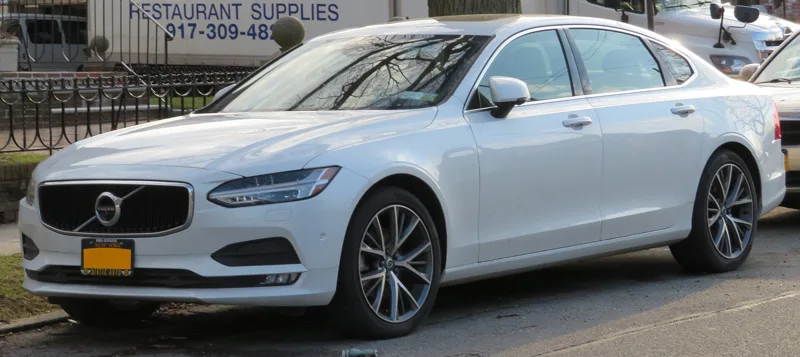
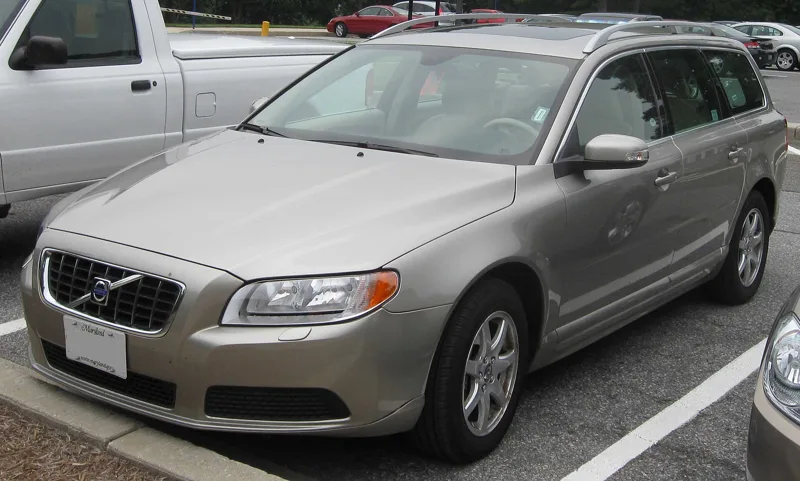
The 850 was later replaced by the Volvo S70 saloon and the V70 estate, which were largely facelifted versions of the same cars.
Each of those successors kept the core idea of a front-drive, five-cylinder family car, updated for a new decade.
A front-drive Volvo with a five-cylinder engine that put side airbags into mass production and spawned the T-5R.
What made the Volvo 850 different from earlier Volvos?
Four headline features defined the launch: a transverse five-cylinder unit, a Delta-link arrangement at the back, SIPS for side impacts and a seatbelt reel that adjusted itself. Volvo promoted the car as a dynamic machine built around them. Each one answered a specific safety or packaging problem.
The five-cylinder engine was the most visible change. Mounting an inline five transversely under the bonnet allowed a compact exterior with a generous cabin, and it gave the car the front-wheel drive layout that Volvo had not previously offered in this class. The layout was a clear break from what the brand had offered before.
Front-wheel drive packs the engine, gearbox and driven wheels into one unit at the front, freeing space at the rear and making the car simpler to build.
Initially the car came with a choice of two engines, including a 2.0-litre 20V unit, both in the saloon badged as the 850 GLT. That line-up gave buyers a clear entry point before the turbo versions arrived.
Offering two petrol engines at launch let Volvo cover both price and performance expectations, while the five-cylinder design gave the car a distinctive sound and character.
How much room did the Volvo 850 offer?
The saloon offered an interior space of 2.80 cubic metres (99 cu ft), which is generous for a car that is reasonably compact outside. The transverse engine made that difference possible. That combination made the saloon roomy for its size.
The 850 also had a tight turning circle of 10.2 m (33.5 ft), which made it easy to manoeuvre in town. Later large Volvos had a turning circle of 11.9 m (39.0 ft), so the 850 was clearly the more agile of the two.
Full power equipment was standard on all 1993 850 models, and the car included a sunroof and a built-in child booster seat in the rear folding armrest. These touches made the car a practical family vehicle as well as an executive saloon.
A child booster built into the rear armrest showed how Volvo thought about family use from the start, which mattered for an executive car that was also expected to carry children.
When did the estate and the facelift arrive?
The estate version went on sale in February 1993 for all markets. It joined the saloon in the range, giving buyers a practical body style alongside the executive saloon. Buyers who needed luggage space found it useful from the first year.
A facelift for all subsequent 850 models arrived in 1994. It subtly altered the car's appearance, with new front and rear bumpers, new headlights and indicators, and new switchgear inside. The same year, the estate received Japan's Good Design Grand Prize from the Ministry of International Trade and Industry.
The 1994 facelift also brought practical changes. Volvo moved from 4-bolt to 5-bolt hubs, made ABS standard in all markets and introduced a new air-conditioning system.
Hub and brake changes like these rarely make headlines, but they improve durability and everyday usability.
How did the 850 Turbo perform?
In August 1994 the 850 Turbo arrived for the 1994 model year, with the T5 rated at 222 hp (166 kW; 225 PS). The 1994 850 Turbo could accelerate from 0-60 mph in 7.1 seconds, a strong figure for a family car of its era.
Buyers could also add traction control, leather upholstery, a glass sunroof and power or heated seats, along with remote keyless entry, climate control and an automatic gearbox. That choice let buyers tailor the car to their needs.
Options like these show how the 850 was positioned between a basic family car and a fully specified executive model.
In 1997 the 850 Turbo was rebadged as the 850 T-5.
Why was the 850 a safety pioneer?
Beginning with the 1995 model year, Volvo introduced the SIPS-Bag on the 850. The airbags were fitted as standard on the 1995 Turbo models and were an optional extra costing $500 on other 850 models. That made the 850 the first mass-produced car with side-impact airbags.
From the 1996 model year, SIPS was fitted as standard across the new Volvo range. The Insurance Institute for Highway Safety placed the 850 fourth among the safest vehicles on sale in 1995.
Side airbags later became a common feature across the industry, but the 850 was the car that brought them into mass production first.
What was the T-5R?
The T-5R was a limited edition offered in 1995 and repeated in 1996. It was based on the 850 Turbo, with a special ECU that added 2 psi (0.1 bar) of boost. The boost change added 18 hp (13 kW; 18 PS), taking output to 243 hp (181 kW), while torque reached 250 lb-ft (340 Nm).
The car was known as a sleeper. Despite its boxy and understated appearance, it had a drag coefficient of 0.29 and could accelerate from 0-60 mph in 5.8 to 6.0 seconds, depending on transmission and body type. A limiter held the top speed at 152.2 mph (244.9 km/h).
The T-5R came with Pirelli P-Zero tyres, which provided lateral grip of 0.88 g. Porsche helped develop the engine tuning, the transmission and some interior parts, including the Alcantara seat inserts, which gave the car a serious feel without a loud look.
Sleeper cars are built to look ordinary while performing well above their appearance, and the T-5R fitted that description closely.
How many T-5Rs were built, and in what colours?
A total of 6,964 T-5Rs were produced worldwide. Germany was the largest market with 1,433 cars, followed by Italy, the United States, Japan, the Netherlands, the UK, Sweden, Spain and Canada. The spread of markets reflects the car's international reach.
The 1995 car came in three exterior colours. Cream Yellow accounted for 2,537 cars worldwide, Stone Black for 2,516 and Olive Green metallic for 1,911. Cream Yellow was sold in Australia as Faded Yellow, a name chosen to suit the country's strong sun.
Some colour choices were limited by country. Norway, for example, received only the yellow version, and a small number of white, aubergine and grey cars were built, including some preproduction examples.
What was the 850 R?
In the spring of 1996 Volvo introduced the 850 R as a new high-performance model. Volvo decided there would be no direct successor to the T-5R, but the car's success led to a new performance model based on it, available as a saloon or a sport wagon.
The manual 850 R was rated at 250 PS (184 kW) and 350 Nm (258 lb-ft), while the automatic gave 240 PS (177 kW) and 330 Nm (243 lb-ft). Government engine-size rules meant the Italian 850 R used the smaller 2.0-litre turbo, rated 211 PS (155 kW).
Engine rules like these were common in Europe during the period, and they shaped which versions each market could buy.
The 850 R also had sport seats, Alcantara door cards and stainless steel kick plates. Its colours included Bright Red, Black Stone and Polar White for the US, and the range was wider in other markets.
Did the 850 race?
Yes. Volvo joined Tom Walkinshaw Racing in 1994 to build an 850 Estate Super Touring Car for the British Touring Car Championship. The estate achieved a best qualifying placing of third and a best race finish of fifth, despite criticism of the concept.
For 1995 TWR built a saloon, because changes to the BTCC rules on aerodynamic aids made the estate uncompetitive. The saloons qualified on pole 12 times and won six races, which put Volvo third in the manufacturers' championship.
Touring car racing in the period rewarded aerodynamics and balance, so a team's choice between estate and saloon had a big effect on results.
In 1996 an improved 850 Saloon achieved five race wins, and Volvo again finished third in the manufacturers' championship. The car also competed in the Super Touring category across Europe and in Australia.
What were the Volvo 850 specifications?
The 850 offered a range of engines and bodies over its life, from the cars of 1991 to the 243 hp T-5R. Figures for the T-5R and 850 R show how far the performance versions moved on from the standard car. The table below sets out the main figures across the model run.
| Specification | Detail |
|---|---|
| Production | 1991 to 1997 |
| Launch engine | Transverse five-cylinder, front-wheel drive |
| Saloon interior space | 2.80 cubic metres (99 cu ft) |
| Turning circle | 10.2 m (33.5 ft) |
| 1994 Turbo T5 | 222 hp (166 kW; 225 PS) |
| T-5R | 243 hp (181 kW); 250 lb-ft (340 Nm) |
| 850 R manual | 250 PS (184 kW); 350 Nm (258 lb-ft) |
| T-5R drag coefficient | 0.29 |
| T-5R 0-60 mph | 5.8 to 6.0 seconds |
What is the Volvo 850's legacy?
The 850 was the car that brought side airbags into mass production and carried front-wheel drive into the brand's executive range. Few cars of its era combined a practical body with that sort of pedigree. It was succeeded by the S70 and V70, which carried the same basic architecture forward.
Its performance variants, the T-5R and 850 R, are remembered as the most enjoyable Volvos of the period. The T-5R's sleeper reputation and its strong sales in Germany and Italy show how much enthusiasm the car generated.