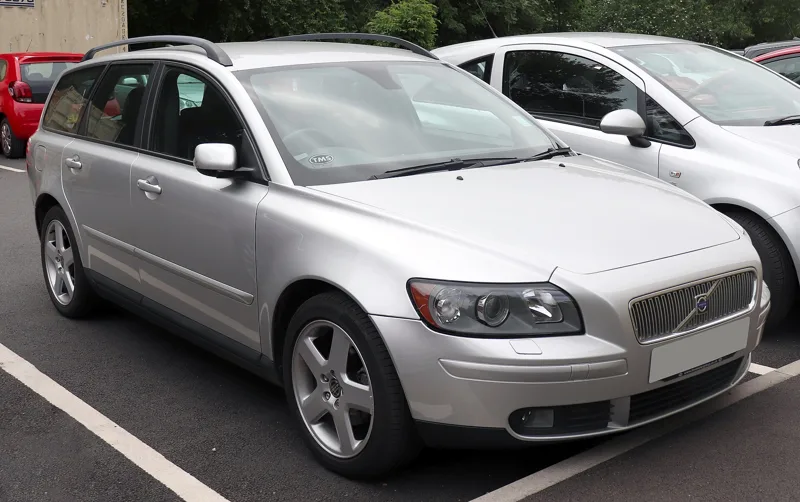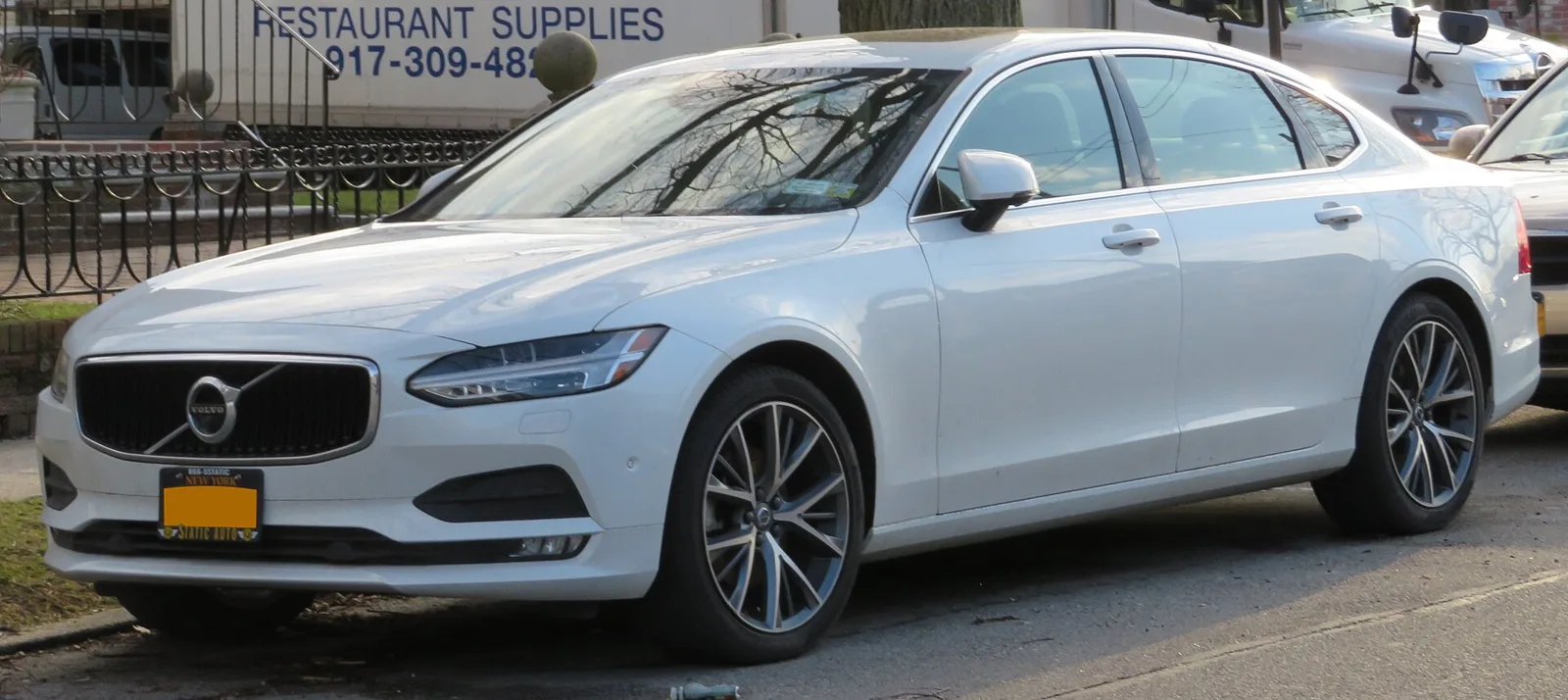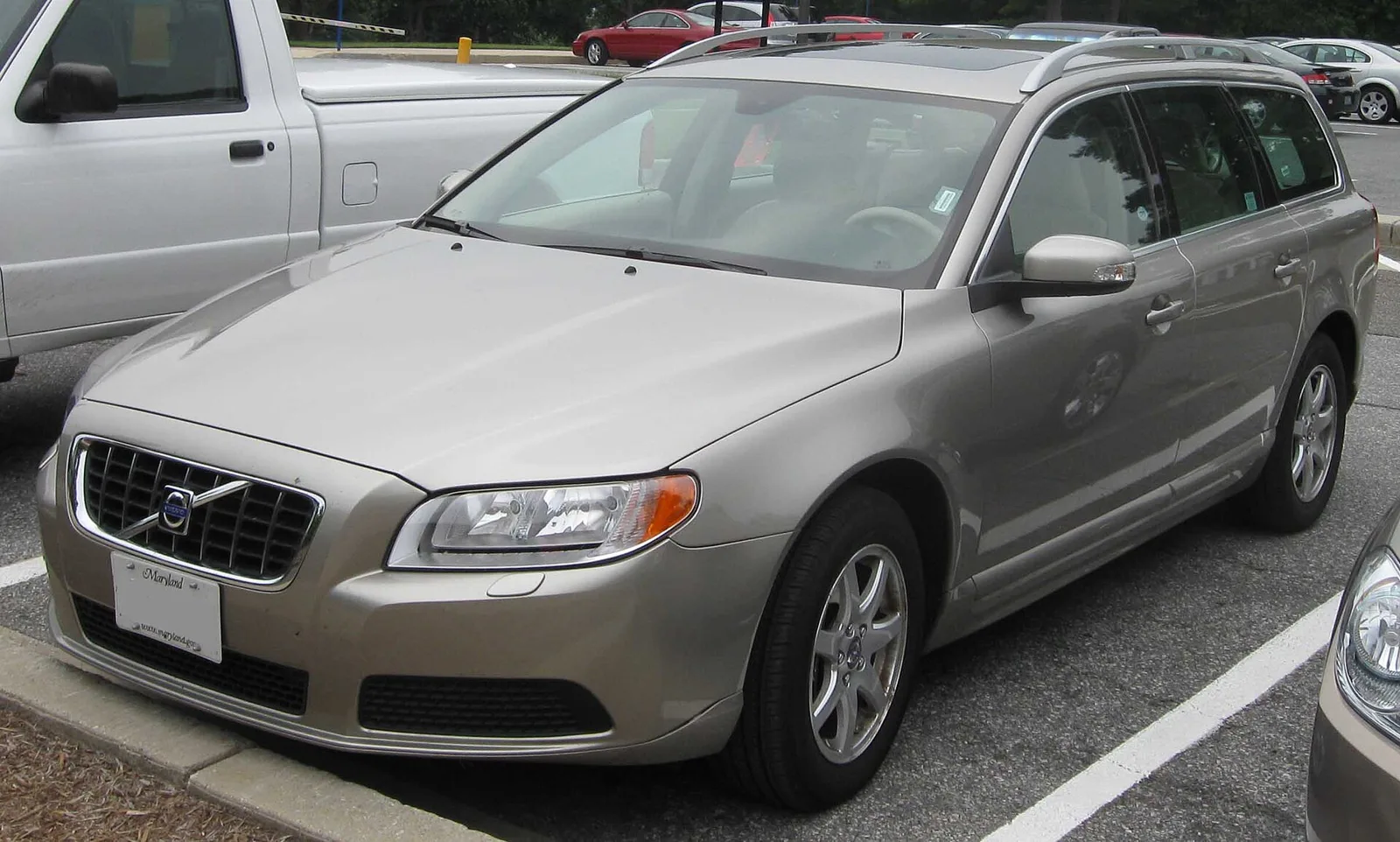
From the 1996 estate built on the 850, through the sporty R models and the Ocean Race editions, to the 2016 finish, the V70 ran for two decades.
Volvo's executive estate ran from 1996 to 2016 across three generations, starting as an updated 850 estate. Along the way it gained the V70 R, the raised XC models and Bi-Fuel gas versions.
The Volvo V70 was an executive estate car built by Volvo Cars from 1996 to 2016 across three generations. It began as an improved version of the 850 estate, and it ended as a larger, more refined wagon with a range of petrol and diesel engines. Along the way it produced the high-performance V70 R and the raised XC models.
What is the Volvo V70?
Volvo marketed the V70 as an executive car, and it went through three generations between 1996 and 2016. The name combines the letter V, standing for versatility, with 70, which denotes the relative platform size.
In size a V70 sits between the smaller V40 and the larger V90. Its sedan counterparts were the S70, the S60 and the S80, which shared platforms and parts with the estate.
An estate that began as an 850 update, grew a sporty R, and ended as the XC70 in 2016.
How did the first-generation V70 begin?
The first generation debuted in November 1996 on the P80 platform, and it was an improved development of the Volvo 850 estate. Its overall design became more rounded, dropping the 850's square edges, and Volvo said 1800 changes were made.
The front end was completely revised, and the bumpers and side trim were fully painted. Clear indicator lenses were fitted all around, and most of the interior was redesigned, with new seats, door panels and dashboard.
Standard kit rose noticeably, with central locking, heated and electrically adjustable mirrors, two front and two side airbags, anti-lock brakes and power windows on every car. The T5 and R were the series high-performance models.
What changed in the first generation's later years?
For the 1999 model year Volvo redesigned the grille badge, replaced the rounded roof rails with square XC-style ones and removed the black edge stickers on the rear doors. The airbags gained dual stage deployment logic for the front, and a whiplash protection system was added as standard.
The petrol turbo models gained drive-by-wire throttles in place of the mechanical throttle. The ABS was upgraded from three channels to four, and the traction control became STC, short for Stability Traction Control.
For the 2000 model year a new 5-speed automatic with adaptive shift logic arrived. It was offered only on non-turbo front-wheel drive models and the 2000 V70 R AWD, and the 2.0 L V70 XC was discontinued.
What were the V70 and V70 AWD?
The standard V70 was front-wheel drive, with an all-wheel drive version badged as the V70 AWD. Some markets received a diesel badged as the V70 TDI, and the range covered a variety of engines and gearboxes.
Special 2.0 litre petrol models were offered in countries such as Italy, where high taxes applied to engines above that capacity. The line-up included a 2.0T and a 2.0 L T5 with slightly less power than the 2.3L variant.
An optional third row seat raised occupant capacity from five to seven, although it reduced the underfloor storage in the boot. Taxi and police versions were also available directly from the factory, with uprated brakes and a certified speedometer.
What was the Bi-Fuel V70?
Volvo continued to offer a factory compressed natural gas car with the V70 Bi-Fuel. A 95-litre tank in the boot gave a claimed range of 250 km (155 mi) on CNG alone, and the bulky tank reduced rear cargo space considerably.
Drivers could choose between petrol and CNG at the touch of a button. On Bi-Fuel models the temperature gauge was replaced by a level gauge for the gas tank, and some options, such as a trip computer, were not available.
The second-generation Bi-Fuel used LPG instead. Its storage capacity was 100 litres across three tanks, and the tanks sat under the car so the boot space stayed available.
What was the V70 XC?
The V70 XC, also called the V70 Cross Country, was introduced in September 1997 at the Frankfurt Auto Show for the 1998 model year. It was a crossover version of the V70 with standard all-wheel drive.
Its ride height was raised 35 mm (1.4 in) overall, which gave 26 mm (1.0 in) more ground clearance than the regular AWD model. Total ground clearance was 166 mm (6.5 in).
Visual differences included a unique front and rear bumper, unpainted side trim and sills, a squarer set of roof rails and a black decal with Cross Country lettering across the tailgate. The two-tone Duo Tone paint option was also available.
What did the V70 R bring?
The V70 R was unveiled in May 1997 as the replacement for the 850 T-5R and 850 R. It featured a unique leather and Alcantara interior with diamond stitching on the seats, along with blue gauge faces and special alloy wheels.
Every R model had the highest performance engine in the line-up. It came in front-wheel and all-wheel drive, with either an automatic or a manual gearbox, and it had a lower ride height and firmer shocks.
The 1998 R with an automatic was rated at 240 PS (177 kW; 237 hp). The manual car had a bigger turbo, which raised power to 250 PS (184 kW; 247 hp) and torque to 350 N m (258 lb ft).
For 2000 the R received a new 2.4L engine rated at 265 PS (195 kW; 261 hp), with a larger turbo and variable valve timing. A dual outlet exhaust, a first for Volvo, was fitted as standard.
How did the 1999 and 2000 V70 R differ?
For 1999 the R was offered only as an all-wheel drive car with a 4-speed automatic, badged V70 R AWD, and power rose to 250 PS. Blue engine covers were introduced for the R models.
The 2000 R gained rear brakes with vented discs unique to the R, and the front spoiler and rear tailgate spoiler were reshaped. The interior could be ordered in a two-tone design with white Alcantara and black leather seats.
Which engines did the first generation use?
Every first-generation engine had five cylinders. The petrol versions belonged to the Volvo Modular Engine family, while the diesel engines were bought from VAG.
The first generation was also fitted with airbags, seatbelt pretensioners and load limiters as standard. Side Impact Protection System airbags supplemented the front seats, and the first-generation range was built to a demanding safety standard for its time.
How did the second generation change the V70?
Volvo released the second generation in early 2000 in most markets, and for the 2001 model year in North America. It rode on the P2 platform, with major mechanical and styling elements in common with the S60 saloon.
The new generation used adhesively bonded construction in key areas instead of spot welding alone. Volvo claimed the new body was 70 per cent more rigid than its predecessor, and it had a drag coefficient of .30 with a frontal area of 2.23 m2.
It was 4 cm (1.6 in) wider and taller than the first generation, and its wheelbase was 5 cm (2.0 in) longer. Its interior gained raised second-row seating and a rear-seat table, and the rear seat backs had a two-position backrest that favoured either cargo or comfort.
Who styled the second-generation V70?
The second-generation V70 was styled by the British designer Peter Horbury. He described the brief as marrying sports car style at the front with the limits of a wagon at the back.
Horbury summed the concept up as a pairing of sports-car nose and van-style tail. The result was a body with a sporty front and a practical rear.
What were the second-generation XC70 and Bi-Fuel models?
The second-generation XC was given a major upgrade at its introduction. It had 210 mm (8.2 in) of ground clearance from a raised suspension, unpainted bumpers and fender extensions, and all-wheel drive as standard.
The XC was 1 cm longer, 6 cm wider and 7 cm taller than the V70. Its engine choices were limited to a 2.4L low pressure turbo petrol or a D5 diesel, and for 2003 the XC was renamed XC70 with a 2.5L low pressure turbo.
The second-generation Bi-Fuel was sold with the non-turbo 2.4L engine, and buyers could choose a 5-speed manual or a 5-speed automatic gearbox.
How powerful was the V70 R of 2003?
The V70 R AWD was based on the PCC2 concept car from 2001 and was unveiled at the 2002 Paris Motor Show. It arrived in 2003 with Haldex all-wheel drive and a 2.5L five-cylinder turbo making 300 PS (221 kW; 296 hp).
Its torque was 400 N m (295 lbf ft), and it reached 0-60 mph (0-97 km/h) in 5.9 seconds. Its electronically limited top speed was 250 km/h (155 mph).
The R came with a six-speed manual or an Aisin five-speed automatic. The 2005 facelift replaced the automatic with a six-speed unit, and it added large Brembo brakes and Volvo's 4C multi-mode suspension developed with Ohlins.
How did the V70 R sell in North America?
A total of 3407 V70 Rs were shipped to North America. Shipments fell from 1,565 in 2004 to 823 in 2005, 674 in 2006 and 345 in 2007.
A 2006 article in The Wall Street Journal, titled The Manwagon, linked the V70 R to a trend for speed-minded buyers with children. It said consumer research had found a surprising number of family men who thought wagons could be cool.
What did the 2005 Ocean Race editions add?
In 2001 Volvo announced Ocean Race editions of the V70 and V70 XC to mark its sponsorship of the Volvo Ocean Race. They arrived for the 2002 model year, painted only in a unique shade of blue, with silver trim and roof rails.
To coincide with the 2005 to 2006 race, Volvo revived the V70 and XC70 Ocean Race Editions in early 2005. They had upgraded equipment, blue interior trim, leather seats with contrast stitching and Ocean Race badges.
What did the 2005 and 2006 facelift changes do?
All P2 platform Volvos received a minor facelift for 2005, with a redesigned front fascia, clear-cover tail and head lamps, and changes to the centre console and dashboard. Some diesel models gained a particle filter, and a new 6-speed automatic was introduced.
Production of the second generation ended with the 2007 model year. The third generation then took over, debuting on 2 February 2007 for the 2008 model year.
How did the third generation differ?
The third generation was based on the P3 platform and shared numerous elements, as well as general styling, with the second-generation Volvo S80. Rear-seat legroom grew by 2 centimetres (0.79 in), and a revised tailgate added 55 L of load volume.
For the first time the V70 came with four- and six-cylinder engines. The high-performance V70 R AWD was dropped, leaving only a largely cosmetic R-Design package.
After the 2011 model year Volvo stopped selling the V70 in North America and marketed only the front-wheel drive XC70 there. A minor facelift for 2012 added a new bumper with chrome accents and LED side mirror indicators.
What was the V70 plug-in hybrid?
Working with the energy group Vattenfall, Volvo converted two V70s into diesel-electric plug-in hybrid demonstrators. They were in field testing in Gothenburg, Sweden, from December 2009.
The test car used an 11.3 kWh lithium-ion battery, and its all-electric range was between 20 and 30 kilometres (12 and 19 mi). Drivers could switch between electricity and diesel power with a button.
Testers said 20 to 30 km was too little, asking for at least 50 kilometres (31 mi). Some wanted 80 kilometres (50 mi), and a few hoped for 150 to 200 kilometres (93 to 124 mi).
The V70 Plug-in Hybrid was never built for sale, and the V60 PIH arrived in 2012 instead. The demonstrators were the closest the V70 came to a plug-in model.
What were the Ocean Race and XC70 editions later?
In 2011 Volvo showed Ocean Race Edition versions of the V70 and XC70, timed for the 2011 to 2012 race. Colours were limited to Ocean Race Blue Metallic or Electric Silver Metallic, and engines were limited to the D5 or T6.
The third-generation XC70 offered hill-descent control, which limits speed when driving down a steep embankment. For 2014 the Ocean Race models were updated with new door sill plates and high gloss black mirror caps.
What were the key V70 figures?
| Specification | Detail |
|---|---|
| Production | 1996 to 2016, three generations |
| First generation engines | Five-cylinder, Volvo Modular petrol, VAG diesel |
| 1998 V70 R automatic | 240 PS (177 kW; 237 hp) |
| 1998 V70 R manual | 250 PS (184 kW; 247 hp), 350 N m (258 lb ft) |
| 2000 V70 R | 2.4L engine, 265 PS (195 kW; 261 hp) |
| XC ground clearance (first generation) | 166 mm (6.5 in) |
| XC ground clearance (second generation) | 210 mm (8.2 in) |
| V70 R (2003) | 300 PS (221 kW; 296 hp), 400 N m (295 lbf ft) |
| V70 R 0-60 mph | 5.9 seconds |
| V70 R top speed | 250 km/h (155 mph), electronically limited |
| Plug-in demonstrator battery | 11.3 kWh lithium-ion |