Volvo's double overhead cam aluminium family, from the B6304F of 1990 to the final five-cylinder turbos, with engine codes explained.
The Volvo Modular Engine spanned four, five and six cylinders on one aluminium architecture. Volvo produced it in Sweden from 1990 until 2016, and its codes encode fuel, cylinders, displacement, valves and induction. Petrol, turbocharged and bi-fuel variants all belonged to the family.
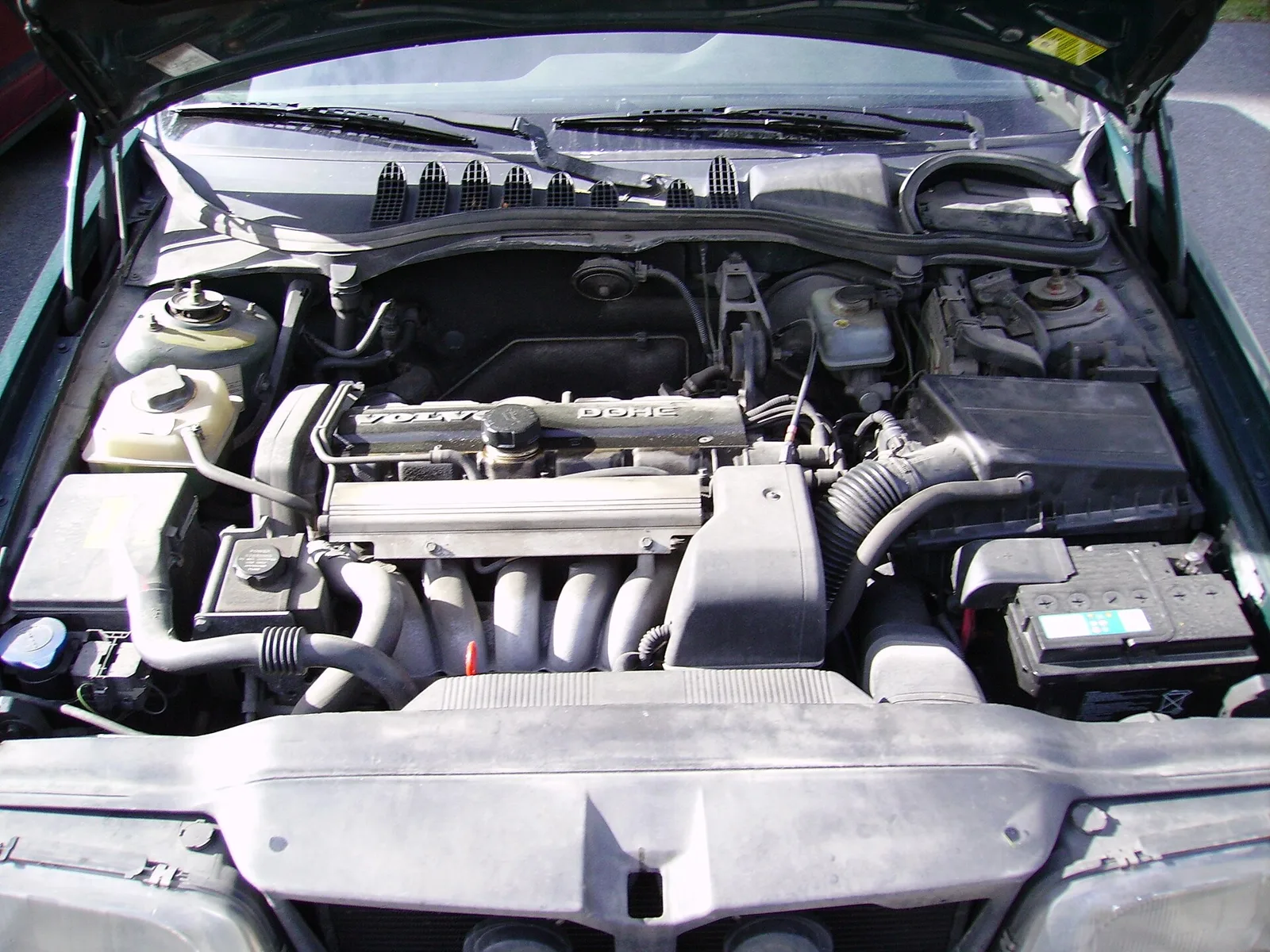
The Volvo Modular Engine was a family of aluminium straight-four, straight-five and straight-six engines built by Volvo Cars in Sweden from 1990 to 2016. Every member used a double overhead cam layout, and the pistons were aluminium. Power outputs varied from market to market, so one engine code could describe several different tunes.
What was the Volvo Modular Engine?
Piston engines with four, five or six cylinders make up the Volvo Modular family. Each member has forged steel rods, aluminium pistons and a double overhead cam layout, and Volvo built the range in Sweden from 1990 until 2016 for saloon, estate and convertible models.
Both the block and the cylinder head are aluminium. The construction is described as sandwich and all-aluminium, a layout the family's four-cylinder prototypes used from the start.
Engine sizes ran from a 1.6 L four up to a 2.9 L six, and the engines reached Volvo's mid-size and large models across the range.
Four, five and six cylinders on one aluminium architecture, built in Sweden for more than two decades.
How did the engine family develop?
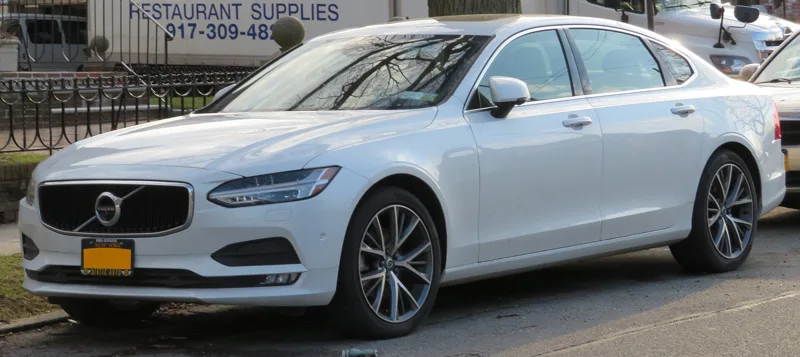
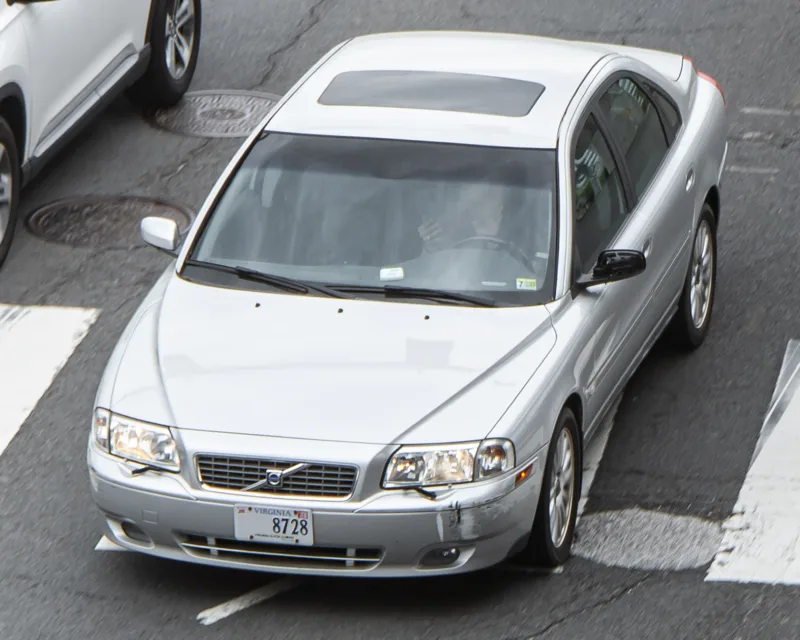
The family grew out of Project Galaxy, a programme that started in the late 1970s. Its X-100 prototypes were four-cylinder units, and the first production engine, the B6304F, made its debut in the Volvo 960 saloon in August 1990. It was a six, not a four, so the family's debut came with a six-cylinder.
The five-cylinder B5254F followed in June 1991 with the Volvo 850. It carried V-VIS, the Volvo Variable Intake System, which sharpened throttle response across the 1500 to 4100 rpm range. V-VIS was available only on naturally aspirated 20V engines running Bosch LH-3.2/EZ-129K management, and the system was dropped after model year 1996.
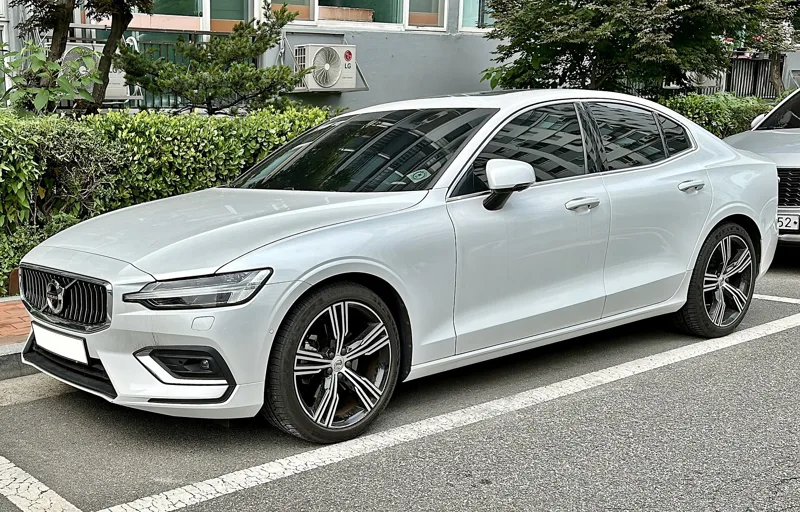
In 1995 the S40 introduced the B4184S and B4204S four-cylinders. Volvo shared the B4204S and B5244S with Renault, which fitted them to the Laguna and Safrane under the names N7Q and N7U.
How do the engine codes work?
The first letter gives the fuel type, with B for petrol, D for diesel and GB for gas and petrol. The second figure is the cylinder count, and the next two digits give the displacement in decilitres, which can be rounded up or down.
Taking B5254T14 as an example, the B means petrol, the 5 means five cylinders, and the displacement digits give roughly 2.5 litres. The valve count is 4, the T marks a turbocharged engine, and the final digits identify the generation or variant.
The fifth character gives valves per cylinder, two or four. The sixth shows induction: S for standard naturally aspirated, T for turbocharged, F for fuel injection with a catalytic converter, G for leaded fuel and SG for engines that can also run on LPG or CNG. The seventh digit is the generation number, which runs up to 11.
A code does not identify one engine. The same code can cover different outputs depending on market, manufacturer and model, so the power figure has to be checked against the car it was fitted to.
Which 4-cylinder engines were built?
The four-cylinder line started with the B4164S at 1.6 L, which peaked at 5500 rpm with 105 PS (77 kW; 104 hp). Larger 1.8 L and 1.9 L engines followed, and the turbocharged B4194T offered 200 PS (147 kW; 197 hp) for the S40 T4 and V40 T4.
The B4164S had a 1,587 cc capacity, an 81 mm bore, a 77 mm stroke and a 10.5:1 compression ratio, and it used Siemens Fenix 5.1 management. The B4164S2 added intake cam VVT and peaked at 5800 rpm with 109 PS (80 kW; 108 hp).
The B4184S2 displaced 1,783 cc, with an 83 mm bore and an 82.4 mm stroke. It also had intake cam VVT, and it peaked at 5800 rpm with 122 PS (90 kW; 120 hp).
The B4194T was a 1.9 L turbo with 8.5:1 compression and a TD04L-14T turbocharger. Its 300 Nm (220 lb ft) of torque was available across a broad band in the low rev range.
The B4204 family brought 1.9 L engines that Volvo usually treated as two-litre units. The B4204T5 produced 200 PS (147 kW; 197 hp), peaking at 5500 rpm, with 300 Nm (220 lb ft) between 2500 and 4000 rpm and a compression ratio of 8.5:1. The B4204T4 used a TD04 12T turbocharger and made 172 PS (127 kW; 170 hp), with torque of 240 Nm (180 lb ft) between 1800 and 5000 rpm.
What did the five-cylinder engines deliver?
The five-cylinder range ran from the 2.0 L B5202S, rated 126 PS (93 kW; 124 hp), up to the 2.5 L B5254T12 and B5254T14, which reached 254 PS (187 kW; 251 hp) and 249 PS (183 kW; 246 hp). Turbocharged units dominated the top of the range.
The 2.3 L B5234T4 was rated at 250 PS (184 kW; 247 hp) and made 350 Nm (260 lb ft) of torque for the 850 R. The B5234T5 carried two power ratings, 225 PS normally and 240 PS with overboost, depending on the car and the gearbox.
The 2.4 L B5244T2 reached 265 PS (195 kW; 261 hp) for the V70 R AWD. The B5244T5 served the S60 T5 and V70 T5, while the 2.5 L B5254T4 powered the S60 R AWD and V70 R AWD at 300 PS.
How did the five-cylinder engines vary by market?
Volvo's five-cylinder engines differed widely by market. The same block appeared in several states of tune, and the power and torque figures depended on local taxes, emissions rules and the transmission fitted to the car. Anyone comparing two cars with the same code should check the market and tax context first.
The B5204T was sold solely in Italy, Taiwan and Iceland because of local tax rules. Its output was 210 PS (154 kW; 207 hp), and torque reached 300 Nm (221 lb ft) in a market where taxes on larger engines ran high.
The B5234T3 with a Mitsubishi TD04HL-16T turbocharger was rated 240 PS (176 kW; 236 hp) when first launched. From model year 2001 its output rose to 250 PS (184 kW; 247 hp), and its engine management moved from Motronic 4.4 to ME7 in 1999.
How did the Bi-Fuel versions run on gas?
Several Volvo engines were built as bi-fuel models that ran on petrol or a gas. The B5244SG was optimised for compressed natural gas, while the B5244SG2 was tuned for LPG, and both kept the basic 2.4 L engine of the petrol range.
On natural gas the B5244SG peaked at 5800 rpm with 140 PS (103 kW; 138 hp), and its torque was 192 Nm (142 lb ft) at 4500 rpm. The petrol torque sat at 3750 rpm, with 220 Nm (160 lb ft) on offer.
The GB5252S ran on petrol or natural gas, with Siemens Fenix 5.2 for petrol and Necam MEGA for gas. It was matched only to the four-speed AW50-42LE automatic, which had three shift modes.
Which Ford and Renault cars used these engines?
Renault used the B4204S and B5254FS in its Laguna and Safrane, badged N7Q and N7U. Ford took the B5254T3 and developed it into its own Duratec-ST and Duratec RS engines, which powered the Focus ST and related models in several markets.
A variant of the B5254T4 with lower compression, stronger connecting rods and dual VVT units sat under the Focus RS Mk. 2 and the RS500. Ford's Kuga 2.5T used the B5254T6 in Australia from 2008 to 2011.
What were the six-cylinder versions?
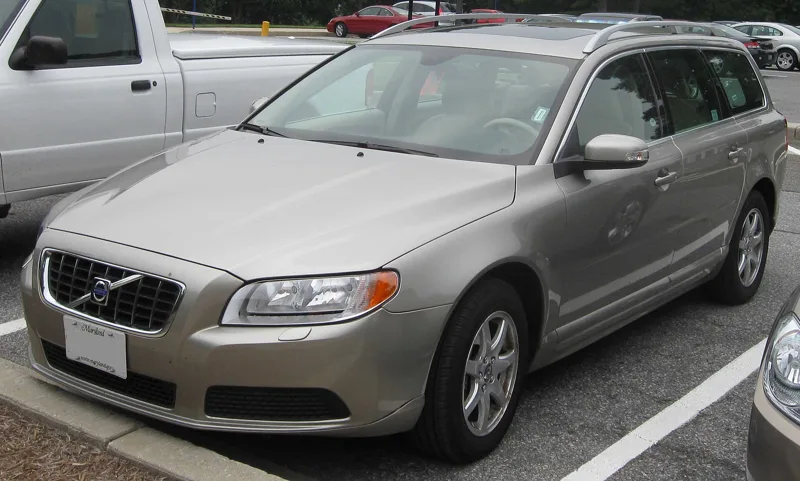
The six-cylinder line began with the naturally aspirated B6244FS at 2.4 L and the B6254FS at 2.5 L, both used in the 960 and the S90 and V90. The twin-turbo B6284T and B6294T carried the flagship S80 T6 and XC90 T6 models.
The B6284T had a 2,783 cc capacity and delivered 272 PS (200 kW; 268 hp) with 380 Nm (280 lb ft) of torque between 2000 and 5000 rpm. The B6294T was a 2.9 L (2,922 cc) twin-turbo with dual VVT, and its output matched the B6284T.
The naturally aspirated B6304S was a 2.9 L with 204 PS (150 kW; 201 hp) and 267 Nm (197 lb ft) at 4100 rpm. Volvo rounded the B6304S3 up to 3,000 cc, although its bore and stroke match the 2.9 L B6294.
The B6304S2 had its output lowered to 180 hp (134 kW; 182 PS) by a revised cam profile, a change made to suit emissions rules, and it kept the camshafts of the B6254S.
What changed with the RN and RNC engines?
The RN, short for revised N, arrived with the 1999 model year S80. It introduced drive-by-wire throttles, coil-on-plug ignition and variable valve timing, and it began to replace the earlier 10-valve engines with detuned 20-valve versions that kept the same family layout.
The RNC followed with the second-generation S40 in 2003. The C stood for compact, and the newer unit came out 25mm shorter and 200mm slimmer than its predecessor. Turbo engines merged the exhaust manifold and turbine housing, and plastic intake manifolds became standard.
RN production ran alongside RNC for a time, and the RN was phased out from the second-generation S80 in 2006. The SI6 engine replaced the six-cylinder variants at the same time, which ended the sixes in the Modular family.
What were the main Volvo Modular Engine specifications?
| Specification | Detail |
|---|---|
| First engine | B6304F, August 1990, Volvo 960 |
| Smallest four | B4164S, 1,587 cc, 81 mm x 77 mm bore and stroke |
| Four compression | 10.5:1 on the B4164S |
| Four peak | 105 PS (77 kW; 104 hp), peaking at 5500 rpm |
| Five peak | 254 PS (187 kW; 251 hp), peaking at 5400 rpm (B5254T12) |
| Five torque | 360 Nm (266 lb ft), 1800-4800 rpm (B5254T12) |
| Six peak | 272 PS (200 kW; 268 hp), peaking at 5400 rpm (B6284T) |
| Six torque | 380 Nm (280 lb ft), 2000-5000 rpm (B6284T) |
| Final five-cylinder | B5254T14, discontinued for model year 2017 |