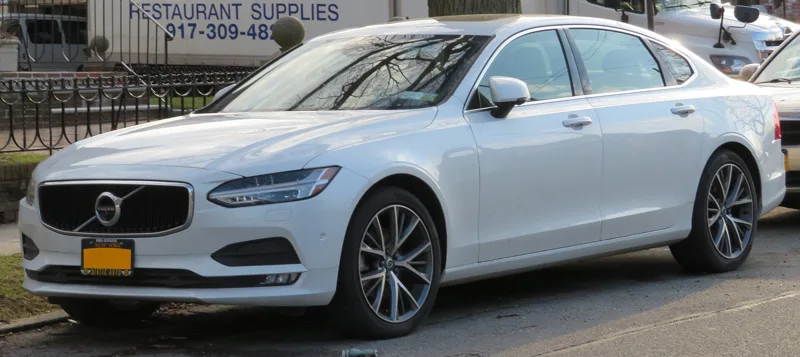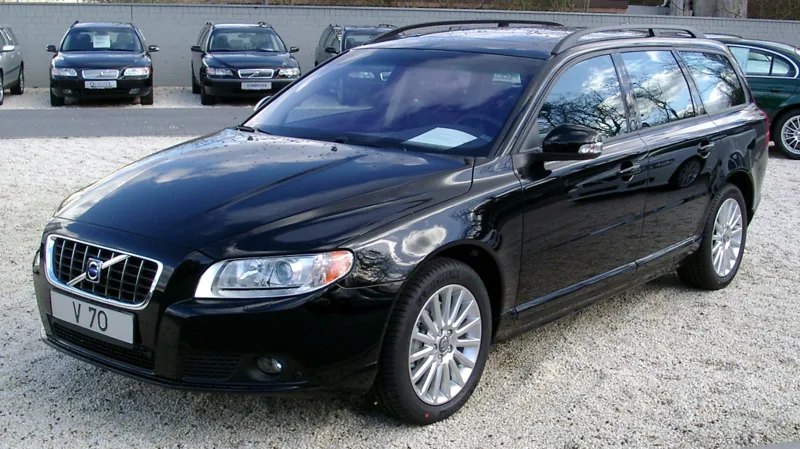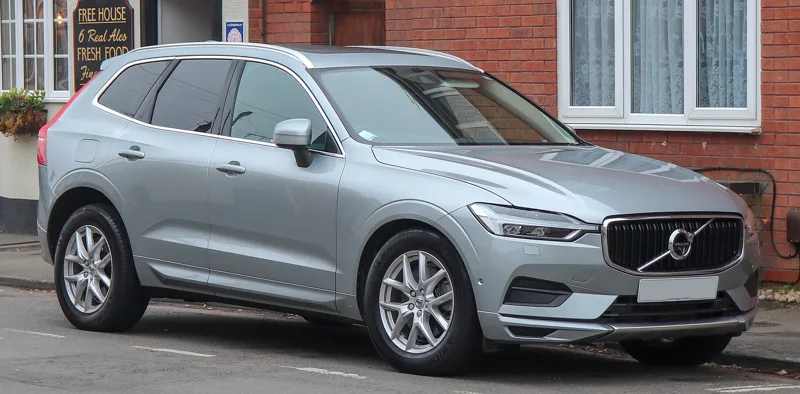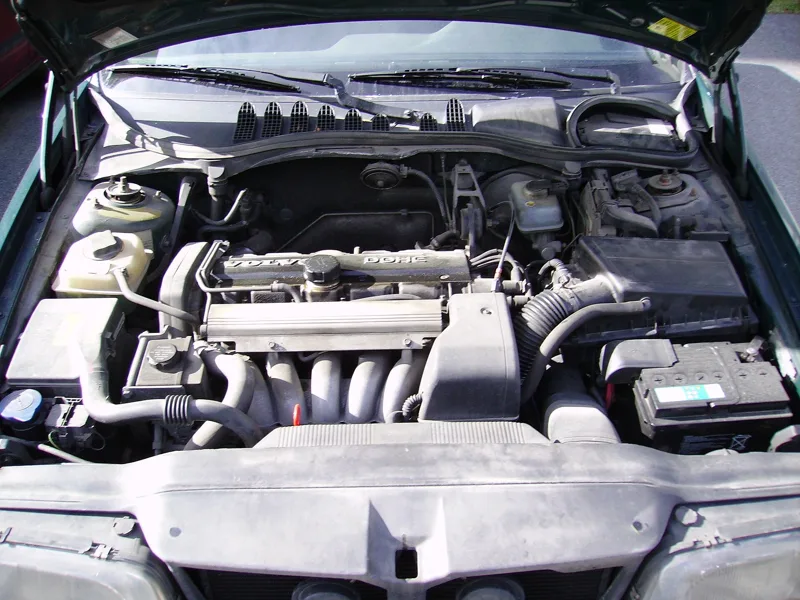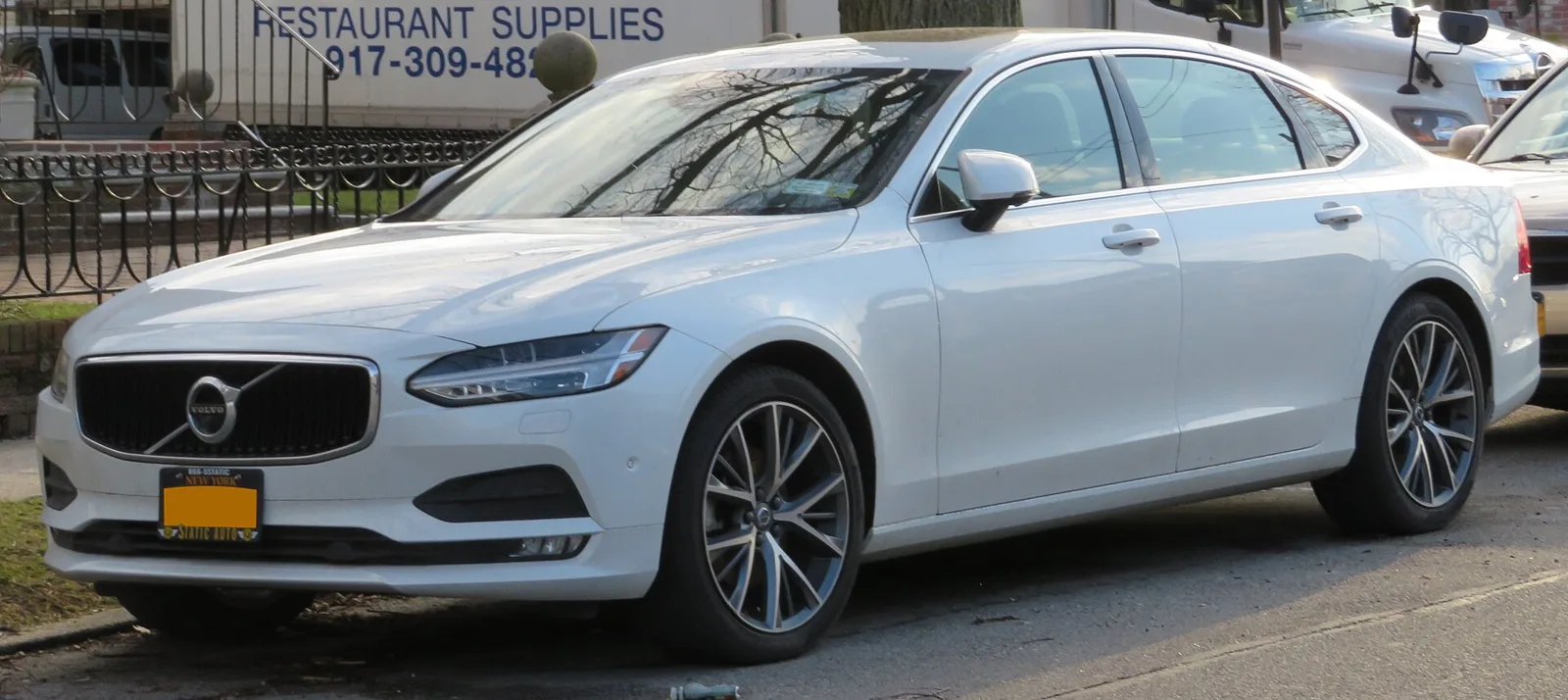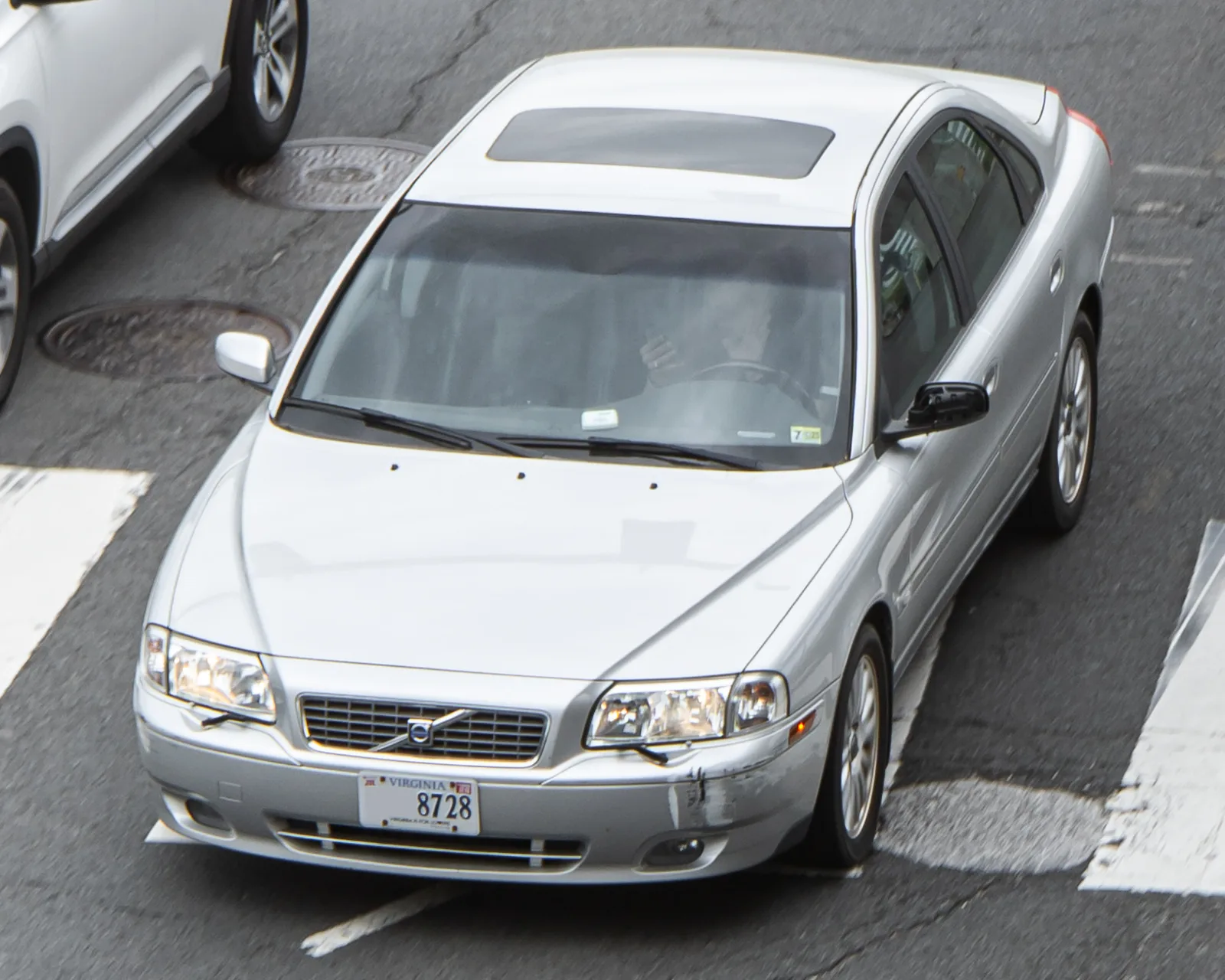
Built from 1998 to 2016 across two generations, the S80 carried Volvo's flagship role from the P2 platform to the P3 car with its V8 option.
Built from 1998 to 2016, the S80 was Volvo's executive saloon and the successor to the S90 as flagship. Its P2 and P3 platforms carried straight-six, five-cylinder, turbo four and V8 engines before the second-generation S90 took over.
The Volvo S80 was an executive saloon that Volvo built from 1998 to 2016 across two generations. The rear-wheel-drive S90 had been the flagship before it, and the S80 took over that role as the company's top sedan, and its first generation rode on the P2 platform before the second generation moved to the P3 architecture. The car is remembered for its six-cylinder and V8 engines, its safety focus and the long run of special-vehicle conversions built on it.
Where did the S80 come from?
The S80 was designed to take the flagship role from the S90, and its styling took cues from the Volvo ECC concept. The first generation was based on the Volvo P2 platform, and it was made available for the 1999 model year. Production was centred on the Torslanda Works in Gothenburg, Sweden.
A few 1999 model year cars for the North American market were built at Volvo's Halifax Assembly plant, but the bulk of production stayed in Sweden. Over 368,000 first-generation S80s were built, making it a substantial seller for a car of its class.
Unlike most Volvo models, the first-generation S80 did not have a station wagon version. The estate role was filled by other models in the range, so buyers who wanted an S80 had to choose the saloon.
The car also carried an environmental specification, with attention paid to allergens from textiles, fuel economy and the car's life from production to dismantling. That focus was a clear part of Volvo's identity at the time.
A Volvo flagship that moved from a straight-six and a five-cylinder to a V8 and a turbo four, and ended as the S90 arrived.
How did the first generation handle safety and comfort?
Volvo continued its safety tradition in the first generation. The car had front and rear integrated crumple zones, dual threshold airbags for the driver and front passenger, and a collapsible three-stage steering column. A Side Impact Protection System was supplemented by side airbags, and a side curtain airbag covered front and rear passengers.
The seats were designed with anti-submarine features, and five padded head restraints carried the Whiplash Protection System, known as WHIPS. Automatic seat belt pretensioners were fitted, and the front belts had height adjustment for the driver and passenger.
Comfort features came with environmental equipment. PremAir was introduced in 2004 as a standard feature on the radiator surface, converting up to 75 percent of ground-level ozone in the cooling air into oxygen. The Interior Air Quality System cleaned the cabin air and recirculated it when outside air was poorer.
The upholstery came in taupe, light sand or graphite, and the leathers were tanned with natural plant materials. The S80 used CAN bus multiplexing, which linked its electronic components and saved weight and complexity.
What engines did the first-generation S80 offer?
The S80 launched with four engines. The entry point was a detuned 2.4-litre five-cylinder rated at 104 kW (141 PS; 139 bhp). The fully tuned version of the same engine produced 125 kW (170 PS; 168 bhp), and it was also offered as a compressed natural gas and liquefied petroleum gas version.
Next came a 2.9-litre six-cylinder with 144 kW (196 PS; 193 bhp). The straight-six was the first engine that needed a new gearbox, because no existing manual unit would fit in the engine bay with six cylinders. Volvo therefore developed its own manual, the M65, for the car.
The T6 used a de-bored twin-turbocharged version of the six, producing 200 kW (272 PS; 268 bhp). For diesel buyers there was a 2.5-litre turbocharged direct-injection engine from Volkswagen producing 103 kW (140 PS; 138 bhp), with the TDI badge marking its origin.
The 2000 model year added the 2.5T at 149 kW (203 PS; 200 bhp), with standard all-wheel drive. Late in 2001 a five-cylinder common-rail diesel, the D5, arrived at 120 kW (163 PS; 161 bhp), which was detuned to 96 kW (131 PS; 129 bhp) in some markets and sold as the 2.4D.
How did the second generation change the S80?
The second generation debuted at the 2006 Geneva Motor Show in late February, and sales began that June. It was offered with newly designed 3.2-litre straight-six and 4.4-litre V8 engines, in combination with available four-wheel drive. It was the first Volvo saloon to use the compact, transversely fitted B8444S V8.
The V8 produced 315 PS (232 kW; 311 hp) and 440 newton-metres (325 lb ft) of torque. Volvo developed the unit jointly with Yamaha, and Yamaha built it in Japan. The engine also used four catalytic converters and advanced electronics, which kept its emissions in check.
Optional Volvo Personal Car Communicator remote control was available on the new car. The second generation rode on the P3 platform, which Volvo shared with the Ford S-Max, the third-generation Ford Mondeo and the Ford Galaxy. The structure used high-strength boron steel for safety, and the car was built to a higher standard of crash protection than its predecessor.
Safety gained a clear emphasis in the second generation. Adaptive cruise control with collision warning and auto brake was available, along with brake support that prepared the system for panic braking. Ready alert brakes could move the pads closer to the discs when severe braking was expected.
The 2006 Instant Traction system used a constant hydraulic pressure to divide traction to the wheels as needed, which replaced the earlier Haldex arrangement on the second-generation car. The S80 also offered a Blind Spot Information System and a lane departure warning that could be turned on from 40 mph (64 km/h). The adaptive brake light, which was standard, could tell normal braking from panic braking.
Which engines did the late S80 use?
The 2010 update also gave the car a lower, longer and wider stance, with more chrome trim and an R-Design interior option. The update brought a choice of a five-cylinder 2.4-litre D5 twin-turbo diesel, a 2.4-litre diesel or a 1.6-litre diesel. The 2.5T and 2.5FT were tuned for more power and lower fuel consumption, and the update marked the last year of the Yamaha-based V8.
The 2014 update brought new bumpers, a lower front fascia, a new grille, a 7-inch infotainment system as standard and an optional digital gauge cluster. For 2015 the base S80 switched to a new turbocharged 2.0-litre four with 240 horsepower, the same output as the 3.2-litre six it replaced. An eight-speed automatic became standard, along with auto start/stop, which turned the engine off when the car stopped to save fuel.
The T4 with the 1.6-litre EcoBoost engine was sold only in Asia and parts of Europe. The 2015 car achieved 25/37 mpg city and highway on the EPA estimate, a clear improvement on the 2014 model's 20/29 mpg. The T6 AWD model had a turbocharged 3.0-litre six producing 300 horsepower, with a six-speed automatic and all-wheel drive as standard.
The 2015.5 update brought better fuel economy from the Drive-E engine, a new eight-speed Geartronic automatic and an ECO+ mode with start/stop, ECO-coast and ECO-climate functions. The 2015.5 car started at $41,450 in the US, while the 2015 model had started at $40,500.
The 2016 model year was the last for the S80. The T6 six-cylinder and all-wheel-drive model were discontinued, and the T5 front-wheel-drive Drive-E started at $43,450 in the US.
How did the S80 perform in crash tests?
The first generation was tested by Euro NCAP from 1998 to 2003. The pedestrian score was the one clear weakness recorded in that testing. The car that was tested was a left-hand-drive four-door saloon registered in 2000, and it scored only 2 stars of 4 for pedestrian safety, because the front end was aggressive toward pedestrians' legs.
Euro NCAP still said that the large Volvo was very safe and gave a good all-round performance, because adult protection in a collision was strong. The first generation's structure and airbag layout were central to that result.
The second generation fared better in the United States. In June 2007 the S80 earned the highest good rating in the Insurance Institute for Highway Safety's frontal, side and rear crash tests, which led to the IIHS Top Safety Pick award.
The IIHS also gave the 2008 Volvo S80 its Top Safety Award in November 2007. The structure rated good, with a strength-to-weight ratio of 4.26, which supported the car's crash performance.
What was the S80L?
The S80L was a long-wheelbase variant designed and sold only in China. Its wheelbase and overall length were increased by 14 cm, and the 2011 version had a wheelbase of 2,975 mm (117.1 in). It was powered by a turbocharged 2.0 or 3.0-litre engine.
The longer body gave the Chinese car more rear legroom than the standard S80. The S80L was one of two Volvo models built under a joint venture with Changan Ford Mazda Automobile. Production began in 2009 and ended in late 2015, when the venture closed. The car was then succeeded by the S90L.
Special versions and armoured cars
The S80 was also used as the base for specialised cars such as lengthened limousines, hearses and ambulances. Nilsson Special Vehicles, based in Laholm, Sweden, produced many of these conversions for both generations.
Ambulance models from Nilsson were built only on the first-generation S80. They received a new body behind the B-pillar, a raised roof and a sliding side door, and the tailgate was enlarged for easier access.
Nilsson built limousines and hearses on both generations, and its conversions also served several heads of state, among them monarchs in Sweden and the Netherlands.
Armoured versions were also available. The first generation could be ordered armoured from the factory, with the armouring done by an outside company. The second-generation armoured version came from Czech specialists SVOS, and no factory armouring was offered.
S80 specification by generation
| Generation | Years | Platform | Notable engines |
|---|---|---|---|
| First | 1998 to 2006 | P2 | 2.4-litre five-cylinder; 2.9-litre six; T6; 2.5 TDI diesel |
| Second | 2006 to 2016 | P3 | 3.2-litre six; 4.4-litre V8 with 315 PS (232 kW; 311 hp); T5 and T6 |
| Final S80 | 2016 | P3 | 2.0-litre turbo four with 240 horsepower |