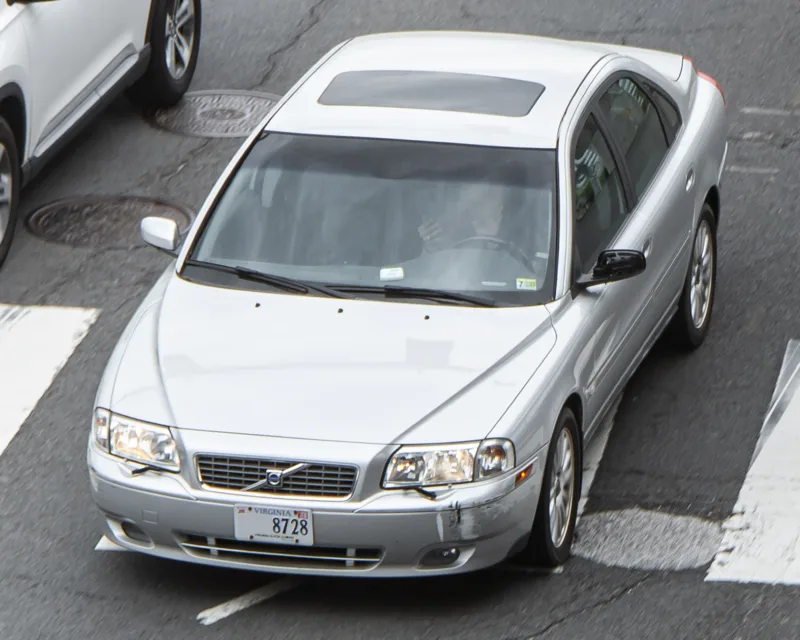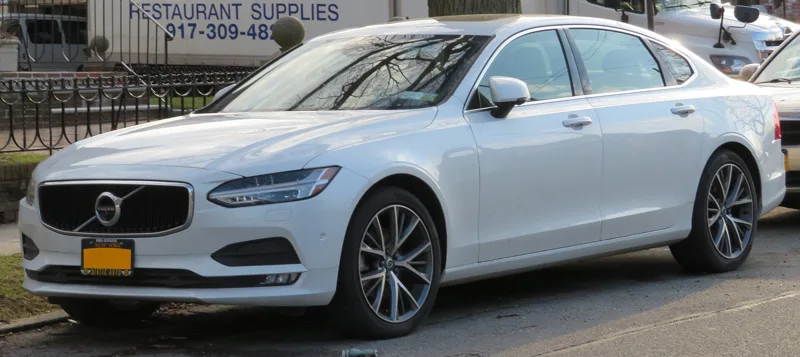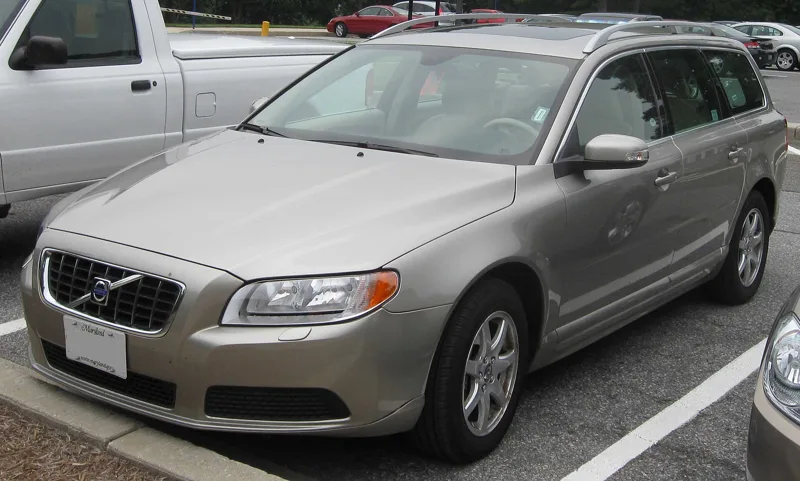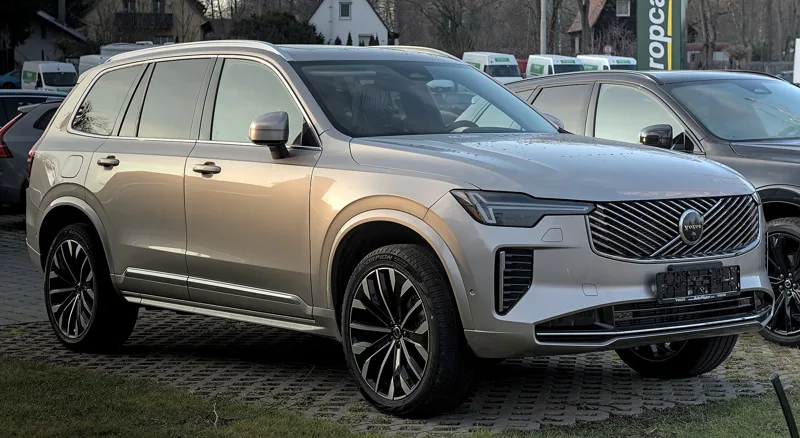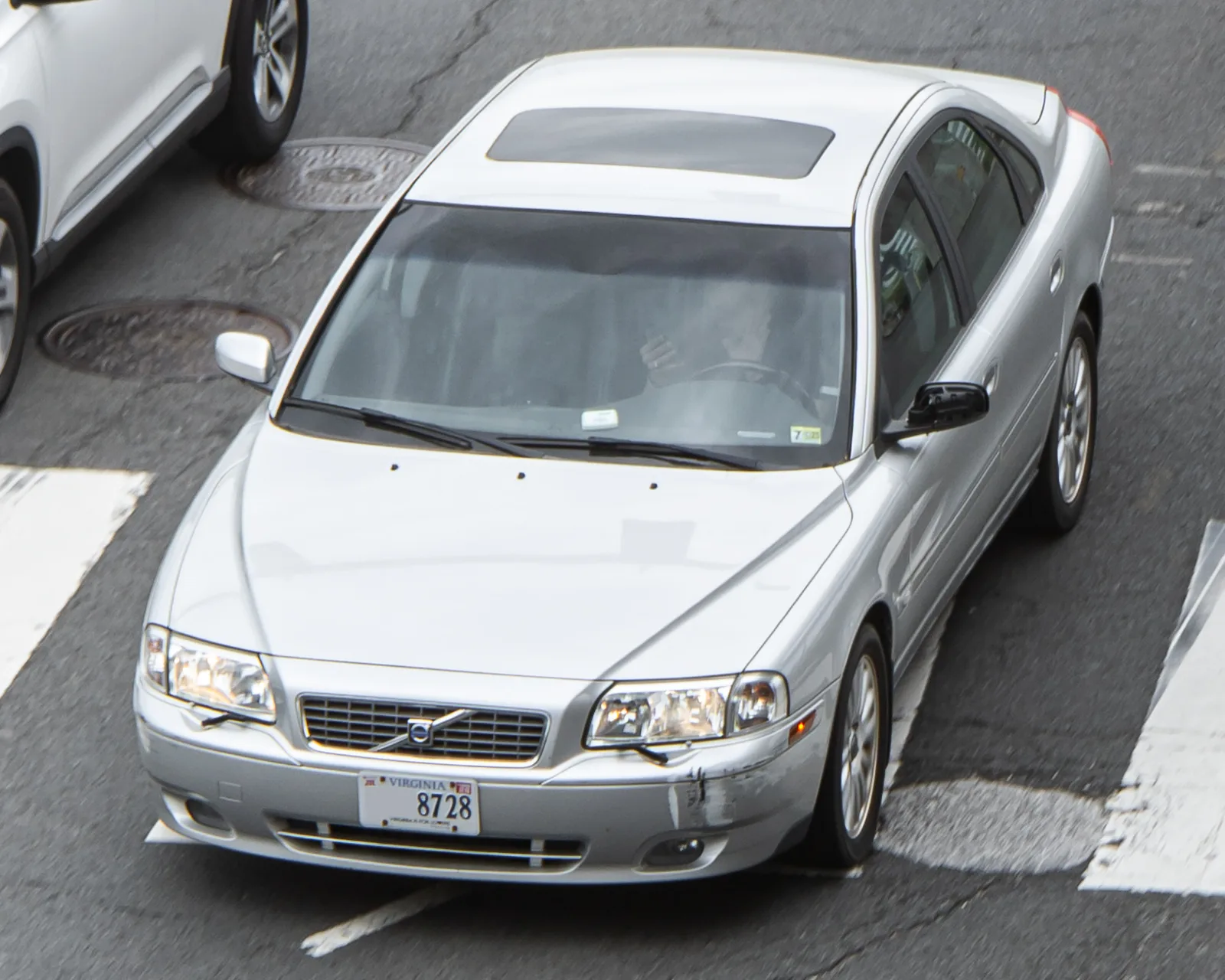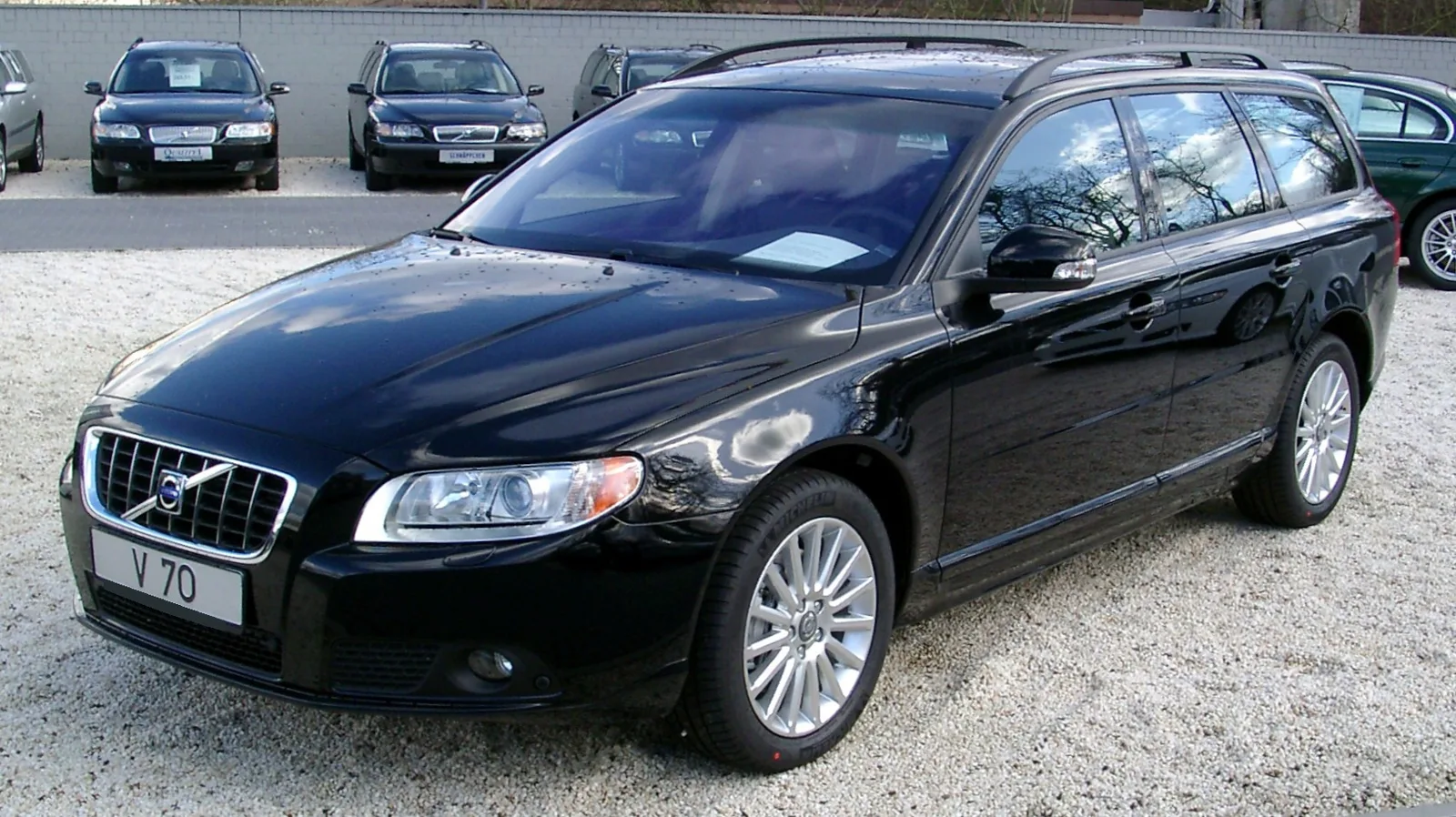
The third-generation V70 estate, built from 2007 to 2016 on the S80's engineering, with a wider engine range than before.
The third-generation Volvo V70 estate ran from 2007 to 2016 and shared its engineering with the S80 saloon. It kept the Volvo look of its predecessor while adding Ford-origin four- and six-cylinder engines beside the familiar five-cylinders. Euro NCAP gave it five stars.
The Volvo V70 III was the third generation of the Gothenburg estate, built from 2007 to 2016. It shared its structure, engines and interior with the S80 saloon, and its engine range was wider than in earlier generations. Four- and six-cylinder units joined the classic Volvo five-cylinders, and later versions added FlexiFuel and an economy-focused DRIVe.
Where did the third-generation V70 come from?
The V70 III was conceived as the estate version of the S80 saloon, even though its name was an awkward fit for that role. Volvo presented the saloon in February 2006 and the estate a year later, in February 2007, and sales in Italy began in September of that year. The two cars were engineered together and shared their structure, engines and commercial offers.
The company's plan changed with the new S60, which would get its own estate, the V60, for the D segment. The V70 III was therefore built as the large family estate of the S80 range rather than of the S60. The second-generation V70 had been closely based on the first-generation S60, taking its structure and design from that car.
The third-generation V70 was an estate built on saloon engineering, with a wider engine range than before.
What did the design change?
The lines are a deep update of the previous series, and most of its signature details survive. Despite bigger dimensions the proportions stay almost identical, so the car remains easy to recognise. The front keeps the classic Volvo grille, with headlights set back as in the earlier car.
The flank keeps the characteristic shoulder under the belt line, although it is less pronounced here. The glasshouse is smaller, especially the third side window, which is shorter. At the rear the tailgate stays upright, with vertical light clusters now partly built into it.
How did the interior change?
The cabin was thoroughly revised while keeping the layout of the previous generation. The centre console is slim and seems to float off the dashboard. It is perfectly symmetrical rather than tilted towards the driver. The handbrake lever was removed from the tunnel, freeing more storage. The pop-up navigation monitor remained an option.
The overall effect is greater elegance, achieved through a search for clean formal lines. Familiar touches stayed, including storage nets, containers and bag holders for comfort on long journeys.
Three trims were offered at launch:
- Kinetic: cloth upholstery, 16-inch alloy wheels, climate control with separate zones for each side, a leather-rimmed wheel and aluminium trim.
- Momentum: fabric and leather seats, 17-inch wheels and body-coloured details.
- Summum: leather seats, wood trim and xenon headlights.
How is the platform and drivetrain laid out?
The car sits on the P3 platform, also known as EUCD, which Ford developed for mid-to-large cars and which debuted with the Volvo S80. The layout is essentially that of the previous V70: a transversely mounted front engine driving the front wheels. All-wheel drive was offered on some versions, and both manual and automatic gearboxes were available.
Compared with earlier generations, the range also took four- and six-cylinder engines from sister Ford models, while the classic Volvo five-cylinders remained. At launch the petrol line-up was a 2.5-litre (152.6 cu in) turbo five-cylinder with 200 PS (147 kW; 197 hp), a 3.2-litre (195.3 cu in) six with 238 PS (175 kW; 235 hp), and the T6, a 3.0-litre (183.1 cu in) turbo six with 286 PS (210 kW; 282 hp) that came only with all-wheel drive.
Specifications at a glance
| Engine | Layout or note | Output |
|---|---|---|
| 2.5-litre (152.6 cu in) turbo petrol | Five-cylinder, launch | 200 PS (147 kW; 197 hp) |
| 3.2-litre (195.3 cu in) petrol | Six-cylinder, launch | 238 PS (175 kW; 235 hp) |
| 3.0-litre (183.1 cu in) turbo petrol T6 | Six-cylinder, all-wheel drive only | 286 PS (210 kW; 282 hp) |
| 2.4-litre diesel | Five-cylinder, launch | 163 PS and 185 PS |
| 1.6-litre (97.6 cu in) diesel DRIVe | Lower-impact version, from 2009 | 109 PS (80 kW; 108 hp), 240 Nm (177 lb ft) |
Which engines followed later?
Late in 2007 came two 2.0-litre (122 cu in) four-cylinders of Ford origin: a 145 PS (107 kW) petrol, not sold in Italy at first, and a 136 PS (100 kW) diesel from the Ford-PSA partnership. In 2008 a FlexiFuel version of the 145 PS petrol arrived, and the 2.5 turbo gained a FlexiFuel variant too.
Volvo dropped the bifuel versions of the previous generation, which had sold poorly. FlexiFuel engines, marked with an F, run on E85 bioethanol instead.
The DRIVe and the 2009 upgrades
In 2009 the V70 DRIVe offered a lower-impact option, though it was not sold in every market. It used the 1.6-litre (97.6 cu in) diesel from the C30, S40 and V50 DRIVe, rated at 109 PS (80 kW; 108 hp) with 240 Nm (177 lb ft) of torque. Volvo claimed more than 20 km/l, helped by closed air intakes, a lowered body, low-rolling-resistance tyres and longer gear ratios.
Other engines were uprated that same year. The 163 PS 2.4-litre diesel rose to 175 PS (129 kW; 173 hp), and the 185 PS version rose to 205 PS (151 kW; 202 hp). The 2.5-litre petrol turbo reached 231 PS (170 kW; 228 hp). In 2010 the T6 gained 19 PS, reaching 304 PS (224 kW; 300 hp), and the detuned 2.4 diesel gave way to a 163 PS 2.0-litre five-cylinder diesel.
Why did the engine range matter?
The third generation kept Volvo's five-cylinder engines and added four- and six-cylinder units from other Ford Group cars. Its launch line-up ran from 200 PS to 286 PS in petrol form, and later versions added FlexiFuel and the DRIVe diesel. That gave the V70 more engine choice than earlier generations had offered.
What safety equipment came as standard?
ABS, front airbags, side airbags known as SIPS, curtain airbags, stability and traction control known as DSTC, the WHIPS whiplash system and adaptive brake lights were standard across the range. Optional extras included BLIS blind-spot monitoring and adaptive cruise control.
Euro NCAP awarded the V70 five stars out of five for adult occupant protection in 2007. It scored 15 out of 16 points in the frontal test and 16 out of 16 in the side test. The pole test returned 1 out of 2, because the curtain airbag deployed incorrectly in both the original test and the repeat. Two more points out of three came for seatbelt reminders, giving 34 out of 37 in total.
That total sat in the five-star band of 33 to 37 points.
Mid-cycle changes and the end of the line
In 2011 the cabin changed most. A new 7-inch central display took over the audio and climate controls, replacing the 5.5-inch screen under the vents, and it also handled navigation in place of the pop-up screen. City Safety and Pedestrian Detection became standard. Externally the mirrors gained LED indicators, and the sills were painted body colour on every version.
The 2011 engine news included new petrol units. Turbocharged T4 and T5 petrols with 180 PS (132 kW; 178 hp) and 241 PS (177 kW; 238 hp) debuted. The 2.4 diesel rose to 215 PS (158 kW; 212 hp), and a 1.6 diesel with 115 PS (85 kW; 113 hp) was added to the Italian price list.
In 2012 the diesel range was reorganised. The previous version was renamed D4, and an intermediate D3 with 136 PS was introduced. Mid-2013 brought a restyling: the grille became more rounded with more chrome, the headlights and bumpers were redrawn, the fog lights turned square, and a digital instrument cluster arrived inside.
Between late 2013 and 2015 the diesels moved to the 2.0-litre VEA-series four-cylinders, giving D2, D3 and D4 versions of 120 PS, 150 PS and 181 PS. Production was halted in 2016, and the Volvo V90 replaced the V70 at the end of that year.