Volvo's compact luxury SUV since 2008, from the first generation through to the 2028 facelift and its plug-in hybrid versions.
The Volvo XC60 is a compact luxury SUV built by Volvo Cars since 2008. The second generation arrived in 2017 on the Scalable Product Architecture, and plug-in hybrid versions followed, with a 2028 facelift revealed in September 2026. Mild hybrid petrol and diesel versions arrived in 2020 as well.
Volvo Cars has produced this compact luxury SUV since 2008, and it has grown into the marque's top seller. The first generation started the line, the second generation arrived in 2017, and two facelifts have followed, the latest revealed for the 2028 model year.
Where did the XC60 come from?
The XC60 started life as a concept at the 2007 Detroit Auto Show, where it showed a glass roof, a newly styled grille and 20-inch wheels. The production car followed at the 2008 Geneva Motor Show and reached Europe in the third quarter of 2008, with North American sales starting in early 2009 for the 2010 model year.
The concept also carried a new shifting mechanism and an electronic bootlid, and it previewed Volvo styling cues that the company later rolled out across its range. The production model slotted into the 60 Series alongside the S60 and V60, and it introduced a new look for that family.
Since its 2017 debut the XC60 has picked up two facelifts and a plug-in overhaul without losing its core identity.
What changed with the first generation?
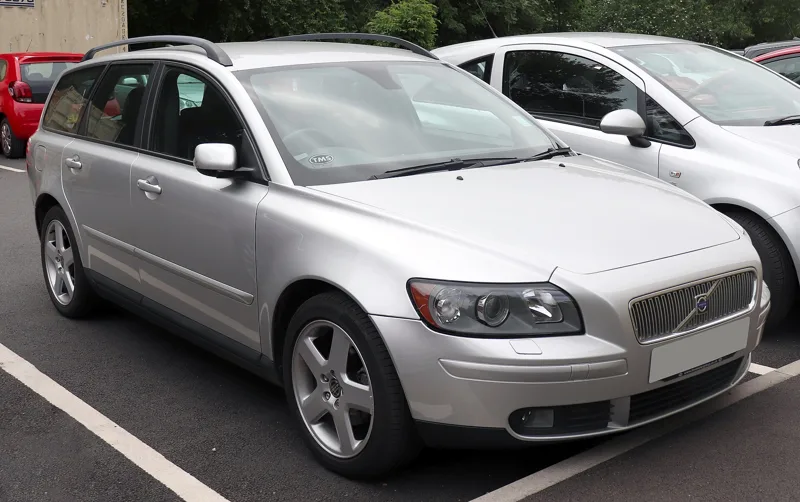
The first generation XC60 used Volvo's P3 platform and was built by Volvo Car Gent in Ghent, Belgium. Ford owned both Volvo and Land Rover during development, so the crossover shared technology with the 2007 Land Rover Freelander, while Volvo handled most of the engineering in Sweden.
Land Rover did the off-road capability work in England, which gave the car its terrain credentials. Volvo's tuning shaped the on-road behaviour, while the off-road abilities came from the Land Rover side of the programme.
In April 2010 an R-Design version arrived with a colour-matching body kit, a stiffer chassis, revised damping and unique exterior and interior trim. That gave buyers a sportier option without changing the basic vehicle.
A refresh came in February 2013 for the 2014 model year. Volvo updated the grille and front driving lights, removed the black cladding along the lower doorsills, and changed the exhaust tips and taillights. Inside, new materials and dashboard trims arrived, a 7-inch display was added, and the T6 model gained paddle shifters. A special blue colour called Ocean Race followed in 2014.
The first generation became Volvo's best selling car from 2009, and sales rose every year after the 2008 launch. In 2009 the brand promoted the model through the film New Moon, with an online contest to win a car identical to the one driven by a lead character.
What did the plug-in hybrids offer?
The plug-in story began with a 2012 concept at the North American International Auto Show. It combined a 270 hp turbocharged four-cylinder, powering the front wheels, with a 70 hp electric motor on the rear axle. The concept claimed 350 hp peak combined output and up to 35 mi (56 km) of electric range, but it never reached production.
The production T8 plug-in hybrid used the T6 engine with a 10.4 kWh battery, of which 9.2 kWh was usable, and a rear electric motor that lifted total output to 407 hp. Volvo increased the battery to 11.6 kWh for the 2020 model year, which lifted the EPA all-electric range to 19 miles (31 km).
The T8 name was dropped for the 2021 model year in favour of Recharge. For 2022 Volvo added the Recharge Extended Range, with an 18.7 kWh battery of which 14.8 kWh was usable, a 142 hp rear motor, total output of 455 hp (339 kW) and an all-electric range of 77 kilometres (48 mi).
The 2028 facelift overhauled the T8 again. Its engine and electric motors still combine for 455 hp (339 kW), but the power split now favours stronger motors and a less powerful engine. Packaging the flat-mounted 41.2 kWh battery left ground clearance and cabin room intact, and it reaches up to 78 miles (126 kilometres). Peak charging power doubled, moving from 3.6 kW to 7.2 kW, so a 0-100% charge now needs 6 hours.
How did the second generation differ?
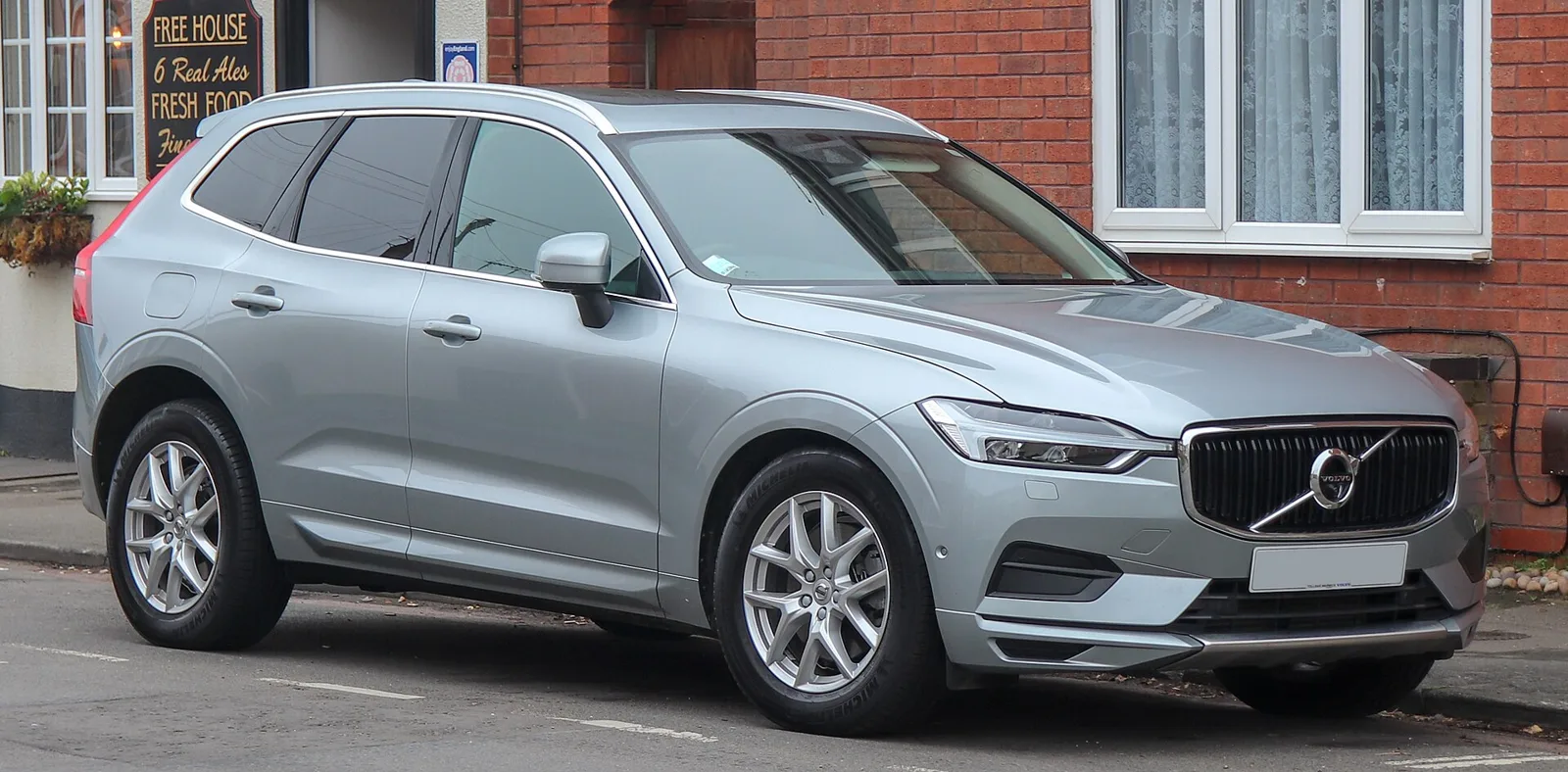
Geneva hosted the 2017 debut of the second generation, which marked the first 60 Series car since Geely took over Volvo. It sits on the Scalable Product Architecture that the 90 Series also uses. Engine choice was the most visible change under the skin.
Volvo was shrinking its engines at the time, so the new car relied entirely on four-cylinder units, offered in several configurations and tunes. The 90 Series models also used these four-cylinder units.
The car earned Car of the Year Japan for 2017 to 2018 and went on to set new sales records for the brand. Its range grew to include petrol and diesel 2.0-litre units with a mild hybrid system, which used an Integrated Starter Generator and a KERS arrangement, launched in 2020 as two variants.
In 2023 Volvo dropped conventional engines as an option for the US market, which made mild hybrids the base engine there. The trim line-up was also reorganised around Core, Plus and Ultimate as part of 2023 name changes.
Where was the XC60 built and sold?
Production of the first generation took place at Volvo Car Gent in Ghent, Belgium. Customers across Southeast Asia, including Indonesia, the Philippines, Taiwan, Thailand and Vietnam, received cars brought in from Volvo's plant at Shah Alam, Malaysia. Those markets therefore received cars shipped from a different factory than the European-built first generation.
In India the facelifted 2026 model was offered in one fully equipped Ultra trim. That version added a front seat massage function and extra soft-touch materials, and the price rose by 1.15 lakh rupees over the pre-facelift car. Buyers there had a simple choice, but every car came with the full equipment list already fitted.
Sales have risen every year since the 2008 release, and the second generation has continued the run of record sales.
How safe is the XC60?
The XC60 has a strong record in crash testing and insurance data. Euro NCAP awarded the first generation five stars in 2008 with 37 of 37 points, and the Insurance Institute for Highway Safety has awarded it Top Safety Pick and Top Safety Pick+ honours across several years.
For adult occupants, Euro NCAP gave full marks in both the front test (16 of 16) and the side test (16 of 16), plus 2 of 2 in the pole test and 3 points for seat belt reminders. The car was one of only three to reach 37 of 37 under that point-based approach at the time.
The XC60 introduced City Safety, a driver support system that aims to prevent or lessen collisions below 30 km/h (19 mph) using a closing velocity sensor. Depending on the speed, the system either prepares the car to brake or applies the brakes itself to avoid or reduce a rear-end collision.
The standard kit covers whiplash protection, side impact protection, roll stability control, stability and traction control, curtain airbags, collision warning with brake support and Volvo's patented structures at the front, sides and rear. Hill descent control is fitted on AWD models only, and active bi-xenon lights are optional on some versions.
In 2011 the Highway Loss Data Institute found City Safety cut property damage liability claims by 27%, bodily injury liability claims by 51% and collision claims by 22% against rival midsize luxury SUVs. The model also recorded fewer insurance claims than other Volvo models that lacked City Safety. Claims data of this kind speaks to everyday ownership costs, which is often what buyers in this segment weigh most, so it gives a practical view beyond crash test scores.
Not every result has stayed on top. The 2024 car lost out on Top Safety Pick+, and its updated side-impact test earned only an acceptable grade. Injury readings on the test dummies, particularly for the driver and the rear passenger, shaped that result.
How did the 2026 and 2028 facelifts change it?
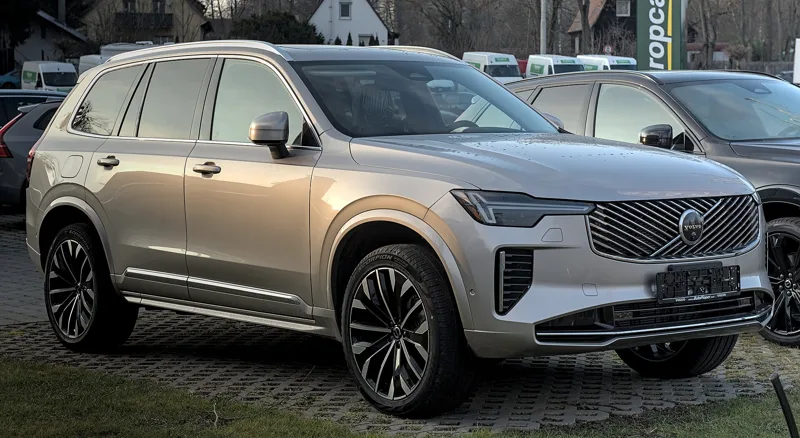
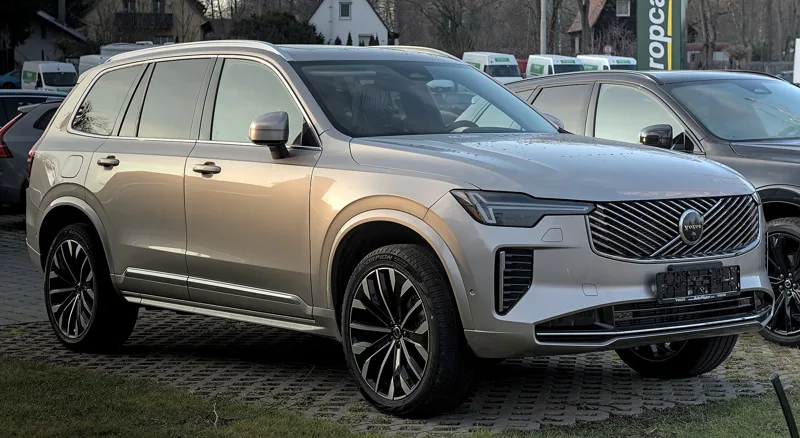
The 2026 facelift, launched in August 2025, redesigned the front grille with a criss-cross pattern, added smoked-effect LED tail lamps and fitted newly designed 19-inch alloy wheels. Inside, an 11.2-inch touchscreen and an upgraded digital instrument cluster arrived, together with new upholstery such as Nordico synthetic leather.
No mechanical changes came with the 2026 update. The changes went deeper into the look and the cabin than into the drivetrain, so the car's character stayed largely the same. The 2.0-litre turbocharged petrol engine with a 48V mild-hybrid system still produced 250 hp and 360 Nm of torque, and the 8-speed automatic and all-wheel drive stayed standard across the range. The plug-in variants kept their earlier powertrain specifications.
The 2028 facelift was revealed on 15 September 2026. The front fascia was reworked with an updated grille and bumper, and the headlights gained new matrix LEDs with a reshaped design. The tailgate and rear light signature changed too, and a new Heather Bronze colour joined 20 to 21-inch wheel options.
Inside, most of the cabin carried over, although the materials around the air vents and in the door panels were updated and soft ambient lighting was added. On the safety side the front bumpers gained ultrasonic and radar sensors, with additional cameras that allow a movable all-round camera view. Buyers comparing the plug-in versions will notice that the electric figures change most in this update, while the combined output holds steady.
Volvo XC60 specifications
| Specification | Detail |
|---|---|
| Generation | Second generation from 2017 |
| Platform | Scalable Product Architecture (SPA) |
| Engine (2026 facelift) | 2.0-litre turbocharged petrol with 48V mild hybrid |
| Output (2026 facelift) | 250 hp and 360 Nm of torque |
| Transmission | 8-speed automatic |
| Drive | All-wheel drive standard |
| Plug-in battery (2028) | 41.2 kWh, flat-mounted |
| Plug-in range (2028) | Up to 78 miles (126 kilometres) |
| Plug-in charging (2028) | 7.2 kW, 6 hours from 0-100% |
| Euro NCAP (2008, first generation) | Five stars, 37 of 37 points |
| Trim levels | Core, Plus and Ultimate from 2023 |