A small Ford-and-Mazda-platform wagon, a diesel plug-in hybrid with a 1,200 km range and a luxury V90 that closed six decades of Volvo station wagons.
The Volvo V50, V60 and V90 were the company's modern estate cars. The V50 was a small wagon on a Ford and Mazda platform from 2003, the V60 a compact executive wagon from 2010 with a diesel plug-in hybrid, and the V90 a luxury wagon from 2016. The last V90 was built in October 2025.
The last Volvo V90 was built in October 2025, closing a run of Volvo station wagons that had lasted more than six decades. Volvo gave its shift of focus to electric vehicles and SUVs as the reason.
The V50, V60 and V90 were three of Volvo's modern estates. A small family wagon on a shared Ford and Mazda platform, a compact executive wagon that offered a diesel plug-in hybrid and a mid-size luxury wagon each had a different job.
What was the Volvo V50?
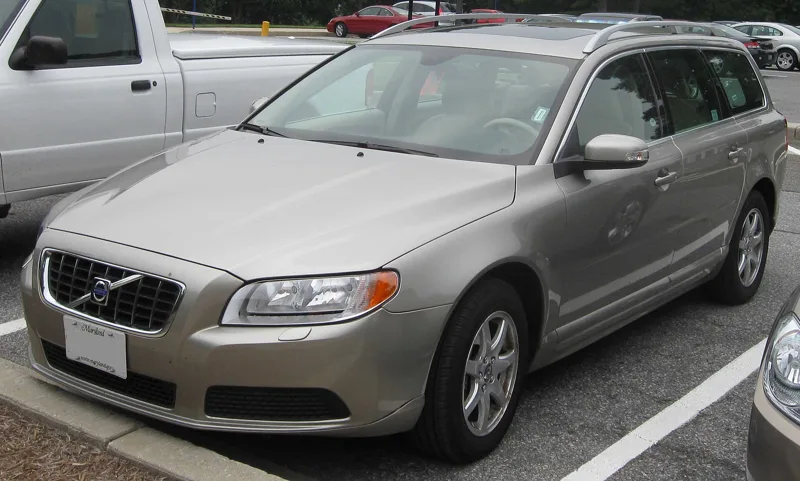
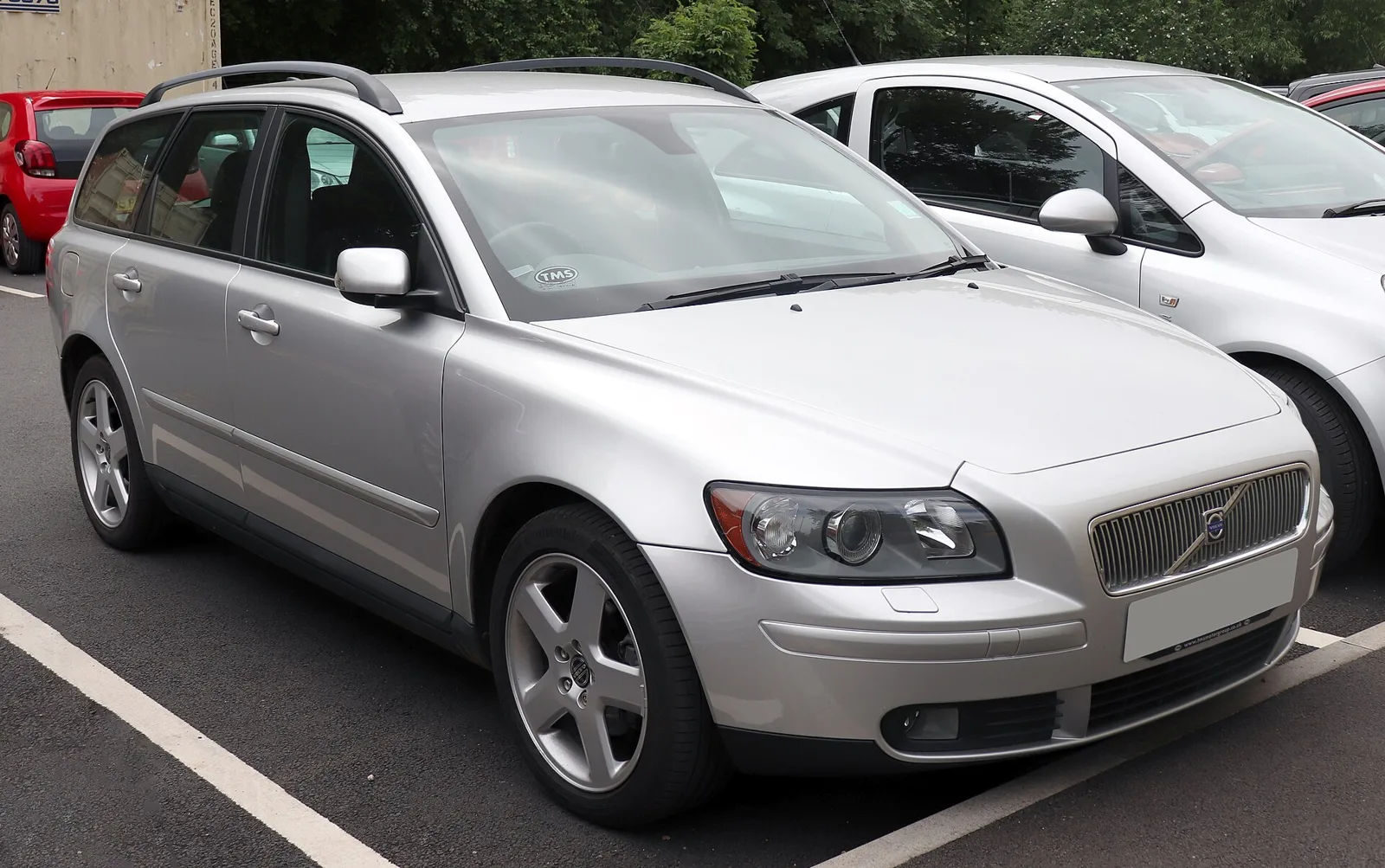
The Volvo V50 was the station wagon version of the S40 small family car, unveiled at the 2003 Bologna Motor Show. Both were assembled in Ghent, Belgium. They used the Global C-car Platform, which Volvo shared with Ford and Mazda and which also underpinned the European second-generation Ford Focus and the Mazda3.
Inside, the V50 had theatre lighting, a floating centre console and the Volvo Intelligent Vehicle Architecture system. Production ran from 2003 to 2012 and totalled 519,007 cars as of 31 December 2012.
Engines and the US years
The V50 T5 AWD combined all-wheel drive with a 2.5-litre straight-five petrol engine with a gently boosted turbo, four-valve heads and variable camshaft timing, and it made 220 PS (162 kW; 217 hp) and 320 N m (236 lb ft). In Europe there was also a 2.4-litre turbocharged D5 diesel with 180 PS (132 kW; 178 hp) and 350 N m (258 lb ft).
In the United States, Volvo restricted the V50 PZEV to states that demanded such low-emission cars, among them California, Florida, Arizona, New York and Oregon. Volvo Cars Special Vehicle built a V50 SV concept with 340 hp (254 kW) for the 2004 Specialty Equipment Market Association show in Las Vegas.
The 2008 model year brought a new front end, small interior changes, optional active xenon headlights and audio upgrades. The T5 gained power and torque, and the D5 could be had with a six-speed manual along with a 1.8-litre Flexifuel engine. By 2009 the US T5 was available only as an automatic AWD in R-Design trim, while European buyers could still choose manual or automatic. From the 2010 model year the five-cylinder D5 diesel disappeared, leaving only smaller four-cylinder diesels.
In 2010 a larger, circular Volvo logo appeared on the grille, and the US briefly offered a manual gearbox with the T5 AWD. For 2011 North America lost the naturally aspirated five-cylinder, all-wheel drive and manual gearbox, leaving only a front-drive automatic T5 in base and R-Design trims. That was the last model year for the V50 in the United States and Canada.
The V50 arrived in 2003, and the last V90 left the line in October 2025.
What is the Volvo V60?
The V60 is a compact executive station wagon related to the S60 saloon. It was first released in autumn 2010, facelifted in 2014 and has been in its second generation since 2018. Both generations offer a Cross Country version with 60 mm (2.4 in) more ground clearance and ride height.
V60 Polestar and Ocean Race
Volvo unveiled the V60 Polestar in 2013, a limited version reworked by Polestar and sold from 2014 in a few markets. It had a retuned engine with 350 PS, Ohlins dampers, six-piston Brembo brakes and new anti-roll bars. Outside it gained 20-inch wheels and different front and rear splitters, and inside it had contrasting stitching. Early cars came in black metallic or Rebel Blue, with white and silver added later. For the 2017 model year, in 2016, a new 2.0-litre four-cylinder turbo replaced the old 3.0-litre six.
In February 2014 came the V60 Ocean Race Edition, with special alloy wheels and a cargo cover printed with the course of the 2014 to 2015 Volvo Ocean Race. Buyers had a choice of four colours, one being the signature Ocean Race Blue, and the cabin had themed details and contrast stitching.
What was the Volvo V60 plug-in hybrid?
The V60 Plug-in Hybrid was a diesel-electric estate, shown in pre-production form at the Geneva Motor Show in March 2011. Volvo developed it with the Swedish energy supplier Vattenfall, and the price was around 50,000 euros (40,000 pounds, US$64,600). A 2.4-litre five-cylinder D5 turbodiesel with 215 hp and 440 N m drove the front wheels through a six-speed automatic, while an electric motor of 70 hp and 200 N m, called ERAD for Electric Rear Axle Drive, drove the rear axle from a 12 kWh lithium-ion battery.
| Estate | Engine | Output |
|---|---|---|
| V50 T5 AWD | 2.5-litre five-cylinder turbo petrol | 220 PS (162 kW; 217 hp), 320 N m |
| V50 D5 | 2.4-litre five-cylinder turbodiesel | 180 PS (132 kW; 178 hp), 350 N m |
| V60 Polestar | Retuned petrol engine | 350 PS |
| V60 Plug-in Hybrid | 2.4-litre D5 plus 70 hp rear motor | 215 hp diesel, 440 N m |
| V60 T8 Recharge (Malaysia) | 2.0-litre turbo and supercharged four, rear motor | 407 PS (299 kW; 401 hp), 640 N m |
Volvo expected up to 50 km (31 mi) on electricity alone, a fuel economy figure of 124 miles per gallon of gasoline equivalent (1.8 L/100 km) and average CO2 emissions of 49 g/km. Three buttons on the instrument panel set the mode. Pure runs on the electric motor as much as possible, with range depending on terrain, climate and driving style. Hybrid, the default at start-up, blends diesel and electric power. Power optimises the system for performance, and the electric motor's quick torque helped the car to 100 km/h in 6.1 seconds. Total range was up to 1,200 km (750 mi).
Sales and recognition
In September 2012 Volvo announced that the first 1,000 units had sold out before 2013 model year cars reached dealers, and it raised production of the 2014 model year to 5,000 units for 2013. Those first 1,000 were the Pure Limited edition, in electric silver with aerodynamic 17-inch wheels, integrated tailpipes and glossy black bodywork details. An R Design version followed in April 2014.
Deliveries began in Sweden at the end of 2012 and in the United Kingdom in June 2013. As of December 2014 the Netherlands led registrations with 9,707 units, followed by Sweden with 1,388. Only the Mitsubishi Outlander P-HEV sold better among European plug-in hybrids in 2013 and 2014, and the V60 slipped to fifth in 2015. Sales in Europe reached 19,571 by December 2015. The car made the final three for the 2013 World Green Car of the Year, and in 2011 the Middle East Motor Awards named it their Car of the Year.
V60 Cross Country
A taller Cross Country model joined the V60 line in 2015 and found buyers in North America and Europe; all-wheel drive was standard in North America.
The second-generation V60
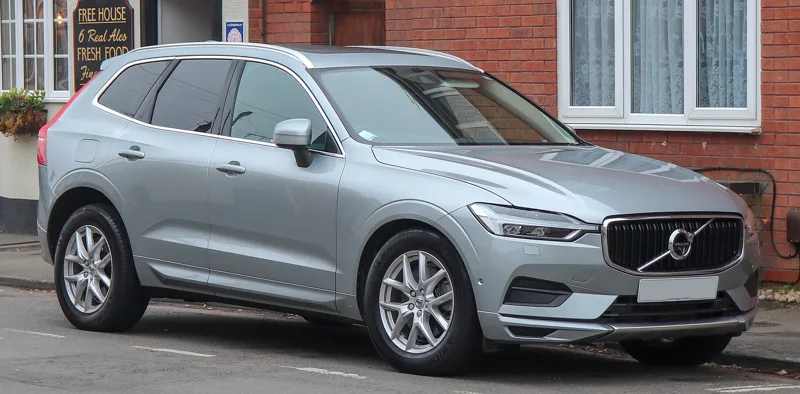
The second-generation V60 went on sale in July 2018 on the Scalable Product Architecture platform shared with the S60 and S90 saloons and the XC60 and XC90 SUVs. It is built in both Sweden and Belgium.
The US range narrowed. Since 2021 the V60 has been sold there only as a Cross Country with a single gasoline T5 powertrain, with a Polestar Engineered upgrade as an option. Mild hybrids were added in 2022 and replaced the conventional petrol engines in 2023. In Europe, Volvo offers two petrol engines, two diesels and two plug-in hybrid powertrains. The Malaysian facelift comes in a single T8 Recharge Inscription version, a 2.0-litre turbocharged and supercharged four-cylinder with a rear electric motor, all-wheel drive, 407 PS (299 kW; 401 hp), 640 N m (472 lb ft) and a claimed electric range of 49 km (30 mi). A later long-range version with a bigger battery went beyond 90 km.
Trim names also changed. Before 2022 the choices were Momentum, R-Design, Inscription, Cross Country and Polestar. For 2022 Volvo moved to Core, Plus and Ultimate, cutting the optional extras so production could be streamlined. In July 2024 the UK switched to Plus and Ultra trims, both mild-hybrid or plug-in hybrid.
What was the Volvo V90?
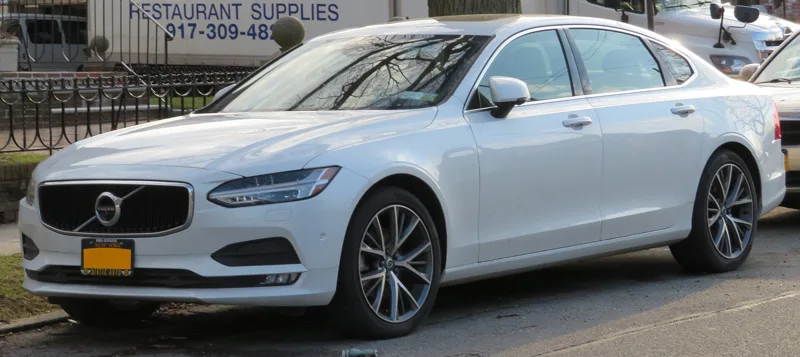
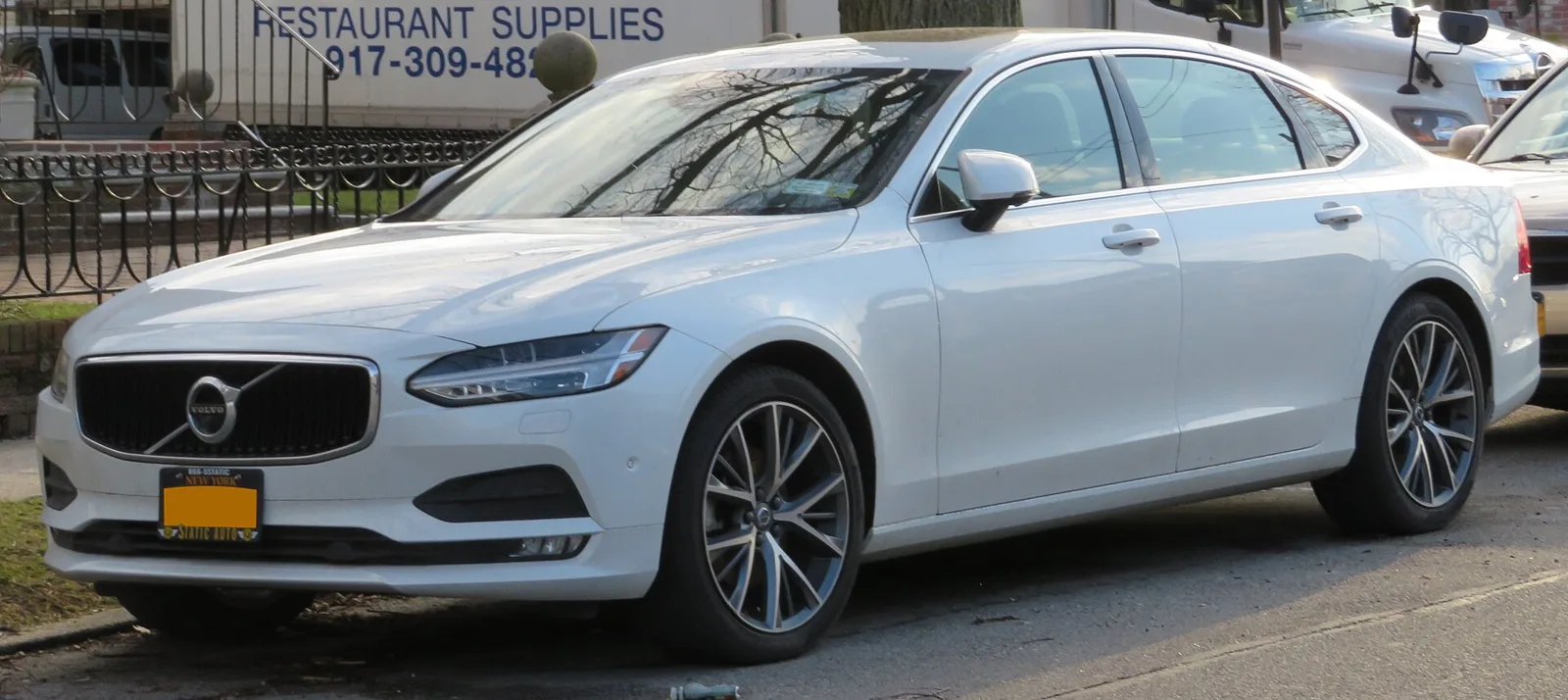
The V90 was a mid-size luxury wagon built from 2016 to 2025. Volvo revealed it at the Geneva Motor Show in March 2016, two months after introducing the S90 saloon, and the last car was built in October 2025.
Only 2.0-litre four-cylinder petrol and diesel engines from the VEA (Drive-E) family were offered. The more powerful petrols were compound charged, as was the T8 plug-in hybrid. The D5 diesel used Volvo's PowerPulse technology, designed to eliminate turbo lag, together with the i-Art injection system.
Cross Country and the Ocean Race car
The V90 Cross Country was previewed before the 2016 Paris motor show. It was a raised, all-wheel-drive V90 for rough terrain, unsealed roads and light off-road use. On 30 October 2017 Volvo announced a special V90 Cross Country for the 2017-18 Volvo Ocean Race, with orange touches on the bumpers, carbon fibre interior trim, orange stitching and seams, orange seat belts and a detachable flashlight in the boot. American buyers took 84 in all, 41 sold as 2018 models and 43 as 2019 models. Seven of the 2018 cars had built-in rear child booster seats, and one of the 2019 cars did.
Facelift and the end
Photographs of a refreshed V90 leaked in February 2020 together with the S90, showing sequential LED tail lights and a chrome garnish on the front bumper of Inscription versions. The mild hybrid arrived in 2022, using an electric supercharger in place of the belt-driven one, plus a belt-driven starter-generator unit. By 2023 Volvo removed conventional engines in the United States, making mild hybrids the base choice there. In July 2024 the V90 returned to the UK in T6 Plus and T8 Ultra trims, available only as plug-in hybrids.
The US had already lost the car. There it was only available by special order, with dealers concentrating on the V90 Cross Country, and in 2021 Volvo said the V90 would no longer be offered there, with 2021 the last model year. Globally, the V90 was discontinued in 2025.