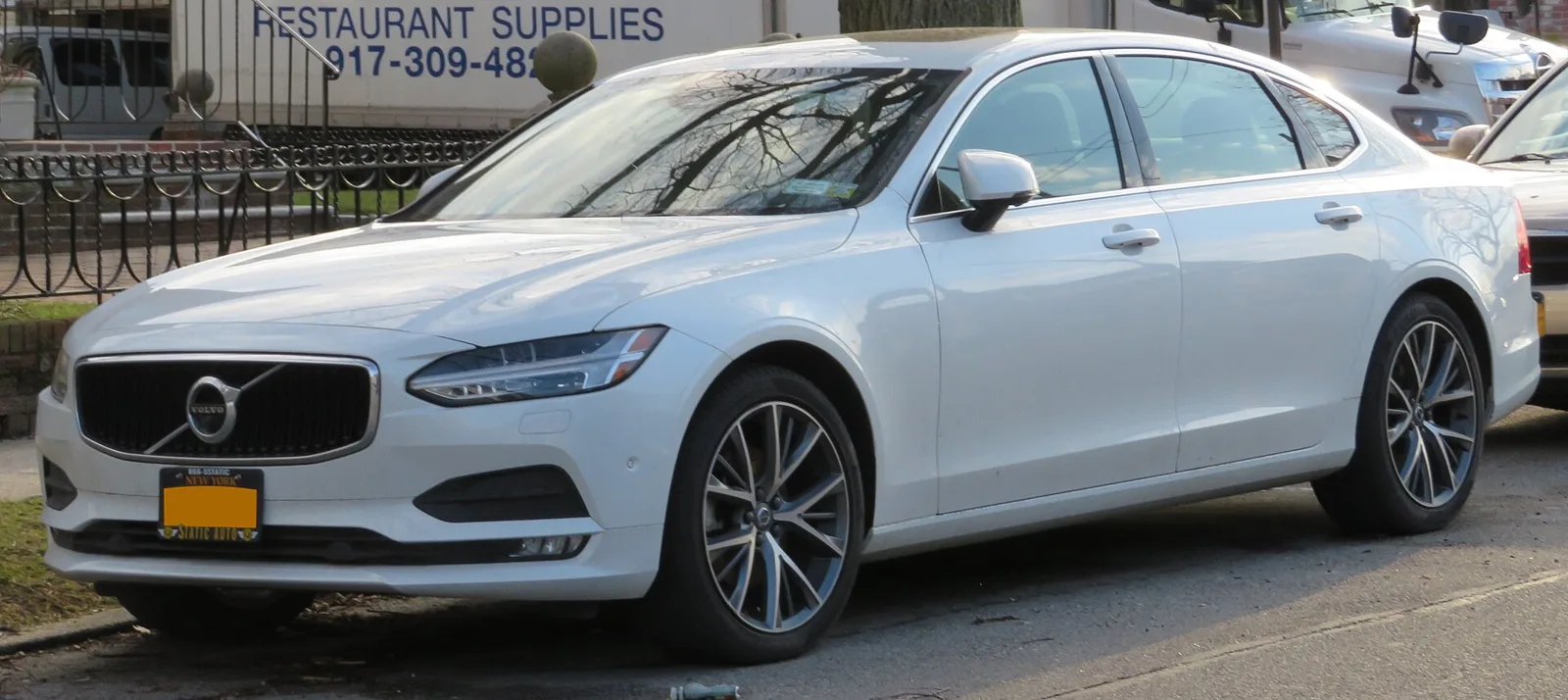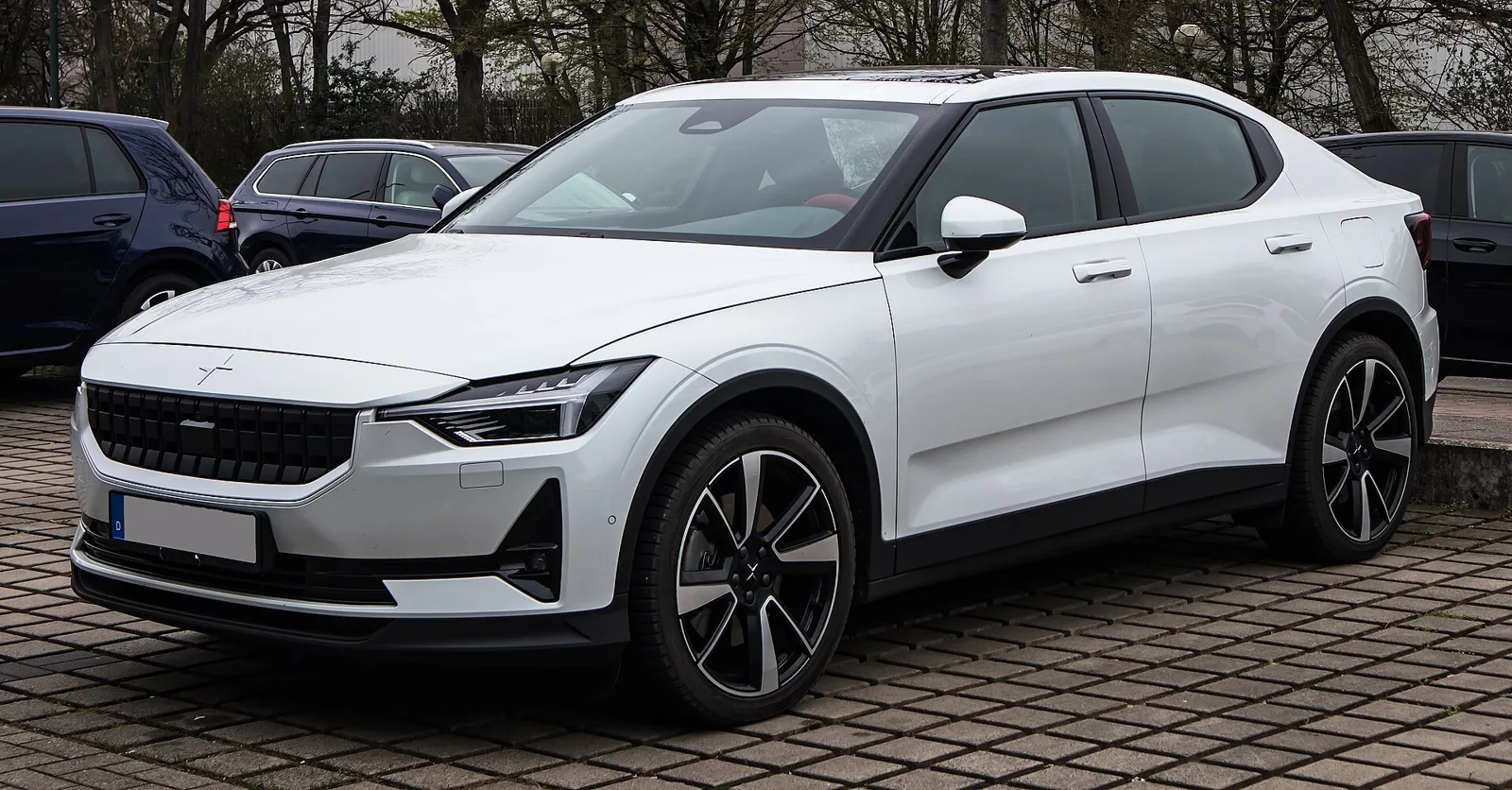
A limited-run plug-in hybrid, a mass-production liftback and a crossover with no rear window: how the Polestar 1, 2 and 4 differ in body, power and origin.
The Polestar 1 was a limited-run plug-in hybrid sports car, with 1,500 built from 2019 to 2022. The Polestar 2 is an electric liftback made since March 2020, and the Polestar 4 is a 2023 electric crossover with up to 544 hp and a 102 kWh battery.
Polestar built exactly 1,500 examples of its first car over three years, all of them left-hand drive, and the very last run of that car amounted to only 25 matte-gold cars. For a company that now sells liftbacks and crossovers, it is a modest start. The story of the Polestar 1, the Polestar 2 and the Polestar 4 is the story of a performance badge that grew into a full brand, and of how the cars differ in body style, power and place of birth.
Polestar is an affiliate of Geely Holding and Volvo Cars. It was once a brand of Volvo Cars, and the Polestar 1 was the first car it produced after becoming an independent car maker in June 2017.
Polestar 1 history: from Volvo Concept Coupe to gold farewell
The Polestar 1 began as Volvo's Concept Coupe of 2013, styled by the German designer Thomas Ingenlath, who had previously held senior design roles at Audi, Volkswagen and Skoda. Ingenlath said the car took inspiration from the Volvo P1800 and that a designer should reflect the vital parts of a company's heritage. The production car made its world premiere at the Shanghai Auto Show on 17 October 2017, after a trail of teasers on Instagram from 2 to 16 October. By June 2019 it was in the final stages of development as a prototype, with production set for a new Polestar factory in Chengdu, China, the company's first.
The Polestar 1 production run was strictly limited: 1,500 cars between 2019 and 2022, left-hand drive only, at an original price of $156,500. In April 2021 the final version was shown at the Shanghai show. It differed from the standard car only in its matte-gold paint, 25 were made, and each carried a $5,000 premium over the base price. Production ended in 2022. The exterior design, together with that of the Concept Coupe, later fed into the Volvo S60.
Polestar built 1,500 examples of its first car, and only 25 of the matte-gold farewell edition.
How the Polestar 1 plug-in hybrid works
The Polestar 1 is a two-door plug-in hybrid sports car built on Volvo's Scalable Product Architecture. Compared with the S90, which shares that platform, the wheelbase was shortened by 7.9 in (200 mm) and around 7 in (180 mm) was removed from the rear overhang.
Think of it as two cars joined together. At the front, a twincharged 2.0-litre four-cylinder petrol engine from the Volvo XC90 T8 drives the front wheels through an eight-speed automatic. At the back, two electric motors drive the rear wheels. An Integrated Starter Generator sits on the engine, filling in torque during gear changes, and adds 68 hp (51 kW; 69 PS) to give the front axle 326 hp (243 kW; 331 PS) and 321 lb ft (435 Nm). Each rear motor makes 116 hp (87 kW; 118 PS), so the rear axle gets 232 hp (173 kW; 235 PS) and 354 lb ft (480 Nm). Together the system makes 619 hp (462 kW; 628 PS) and 738 lb ft (1,001 Nm), a little above the 600 hp (450 kW; 610 PS) rated at the car's announcement. Planetary gear sets between the motors allow torque vectoring, the same trick racing cars use to balance acceleration and stability in corners. Polestar claims 0-100 km/h in 4.2 seconds.
The battery matters as much as the engine. A 34 kWh pack arranged as three stacks in two packs sits behind the rear seats and along the central tunnel. On the NEDC cycle it gave an electric range of 150 km (93 mi), which Polestar said was the largest of any plug-in hybrid then on sale. Under the US EPA cycle the range falls to 52 mi (84 km), with an equivalent of 58 mpg-e. On petrol alone the car is rated at 26 mpg-US (9.0 L/100 km), good for an estimated 417 mi (671 km) in total. A side effect of all those batteries is a boot of only 4.3 cu ft (0.12 m3).
Underneath, the front suspension uses double wishbones, which helps counter torque steer, and the rear has an integral link layout with a transverse composite leaf spring. The Polestar 1 was the first car with Ohlins Continuously Controlled Electronic Suspension, which adapts to the road and the driver's chosen setting. Akebono supplied six-piston front calipers milled from solid aluminium and gripping 400x38mm discs. Almost all the upper body panels are carbon fibre reinforced polymer, and Polestar says steel would have added 500 lb (230 kg). An active rear spoiler rises above 100 km/h (62 mph) and retracts below 70 km/h (43 mph), and a fixed panoramic glass roof runs from windscreen to rear window. Tyres measure 275/30 R21 at the front and 295/30 R21 at the rear. Inside, buyers got leather and a carbon fibre wing across the dashboard, with a Bowers and Wilkins sound system.
Polestar 2 range: the liftback that made Polestar a mass-market maker
The Polestar 2 is a battery electric five-door liftback, classified as a sedan, built on the CMA platform. Production started in March 2020 at the Luqiao CMA Super Factory in Zhejiang, China. European cars travel by train to Shanghai and by ship to Zeebrugge in Belgium, where they are approved under European rules before moving to the destination country.
It was the second Polestar after the Polestar 1 and the first battery electric car and mass-production model. Its design traces back to the Volvo Concept 40.2 that Ingenlath unveiled in 2016 alongside the Concept 40.1, which later formed the basis of the XC40. When Volvo decided that year to focus on small crossovers, Polestar picked the 40.2 for itself, and Volvo's exterior design chief, Maximilian Missoni, altered the taillights, grille and wheels to set it apart. It was also the first car with Google's Android Automotive system built in. The production version was unveiled on 27 February 2019 in an internet livestream, then shown publicly at the Geneva Motor Show that month, with a starting price of US$49,900 in October 2021.
A facelift for the 2024 model year was revealed in January 2023. The entry car switched from front-wheel drive to rear-wheel drive, and the single motor rose to 299 hp (303 PS; 223 kW) and 361 lb ft (489 Nm), which is 68 hp and 118 lb ft more than before and cut 1.1 seconds from the 0-60 mph time, which is now 5.9 seconds. The long-range battery grew to 82 kWh. Dual-motor cars gained 13 hp and 79 lb ft, for 421 hp (427 PS; 314 kW) and 546 lb ft (740 Nm), with a 0-60 mph time of 4.3 seconds. They also use an asynchronous front motor that can disengage the front axle to improve efficiency and range. The grid-like grille gave way to a covered nose with sensors and a camera.
Earlier, from September 2021 to March 2022, a single-motor Standard Range car with a 64 kWh CATL battery and 165 kW (224 hp) was available in Europe, and it is still the only single-motor Standard Range version in China. From the 2025 model year, only dual-motor cars are available in North America.
The BST edition 270 arrived in June 2022 and the BST edition 230 in March 2023, with the facelift grille insert. These specials sit 25 mm (0.98 in) lower, with Ohlins dampers that are adjusted by hand, stiffer springs and Pirelli P ZERO tyres. Both motors were retuned to give 470 hp (477 PS; 350 kW) and 502 lb ft (681 Nm).
Safety kit is thorough. The car disconnects its battery pack automatically after a collision, a block at each front end absorbs the forces of a Severe Partial Overlap Crash, a centre airbag protects against far-side impacts and a monitoring system warns of drowsy steering. Its speed-limit information did not satisfy Euro NCAP's requirements, while the automatic emergency braking avoided collisions in nearly all test situations. In October 2020, Polestar recalled every Polestar 2 over a software defect that caused loss of power. The cars could not take over-the-air updates at that time, so they all went to a service centre. A second recall for faulty inverters came later that month.
By the ISO 14044 method, the Polestar 2 has lower life-cycle emissions than the XC40 once it has covered more than 35,000 to 80,000 kilometres (22,000 to 50,000 mi), depending on conditions.
Polestar 4 vs Polestar 2: the crossover with no rear window
The Polestar 4 is a battery electric compact luxury crossover SUV sold since 2023 and first made by Geely Holding in Hangzhou Bay, China. It is the third vehicle on the rear- and all-wheel-drive Sustainable Experience Architecture, the SEA platform that also underpins the Zeekr 001 and Volvo EX30. Polestar unveiled it at Auto Shanghai in April 2023, and it entered production in the fourth quarter of that year. It sits between the smaller Polestar 2 liftback and the larger Polestar 3 mid-size luxury crossover, in the D-segment.
Its most striking feature is the lack of a rear window. A camera on the roof takes its place. Polestar calls it the fastest production car the brand has made, with 0-62 mph in 3.8 seconds. Buyers pick a rear-wheel-drive Single Motor with 272 hp (203 kW) and 343 Nm (253 lbf ft), a top speed of 180 km/h (110 mph) and a 0-62 mph time of 7.4 seconds, or a Dual Motor all-wheel-drive car that produces 544 hp (406 kW) and 686 Nm (506 lbf ft), reaches 200 km/h (120 mph) and takes 3.8 seconds. Both models use a 400 V, 102 kWh lithium nickel manganese cobalt battery.
Every car gets a 15.4-inch landscape touchscreen running Android Automotive, a 10.2-inch digital driver display and a 14.7-inch head-up display. Buyers can add a glass roof that runs the full length of the car and a digital rear-view mirror, and the interior uses 100 per cent recycled polyester, according to Polestar. Wheels measure 20 to 22 inches. The car became available in Europe, Canada and Asia-Pacific from late 2023.
Polestar 4 SUV, and why it will not come to America
A second body style followed in 2026. CEO Michael Lohscheller first described the Polestar 4 SUV on 18 February, promising estate-like space with SUV versatility, and the car was fully revealed on 2 September 2026. Unlike the coupe SUV, it has a rear window. Renault Korea builds it at Busan alongside the coupe, which is now called the Polestar 4 Coupe. UK sales began at the reveal, and Europe comes first, followed by Canada, Korea and Asia-Pacific, including Australia and New Zealand.
The United States is not on that list. In February 2026 Lohscheller said the car was absolutely coming to America to rival the Chevy Blazer EV and Subaru Trailseeker, with a fourth-quarter arrival. Polestar then withdrew from the US market entirely. The Department of Commerce's Bureau of Industry and Security refused authorisation to sell new vehicles from the 2027 model year under the Connected Vehicle Rule, which restricts vehicles with Chinese-linked software and hardware on national security and data grounds. Polestar did not secure a waiver, and its US sales end after the 2026 model year.
Polestar models side by side
| Model | Body | Power | Top output | Built |
|---|---|---|---|---|
| Polestar 1 | Two-door sports car | Plug-in hybrid, 34 kWh battery | 619 hp (462 kW) | 1,500 cars, 2019 to 2022 |
| Polestar 2 | Five-door liftback | Electric, 82 kWh long-range battery | 421 hp (314 kW) dual motor, 2024 model year | Since March 2020 |
| Polestar 4 | Coupe SUV and SUV | Electric, 102 kWh battery | 544 hp (406 kW) dual motor | Since late 2023 |
What these Polestar models mean for buyers
The three cars suit different jobs. The Polestar 1 was only ever a collector's piece, limited to 1,500 cars and priced from $156,500. The Polestar 2 is the mass-production one, with a choice of single and dual motors, and any used example should be checked for the October 2020 recalls. The Polestar 4 is the roomier and quicker option, and its range of 272 hp or 544 hp shows how wide the gap is between its two versions. Anyone in the United States will find that the Polestar 4 SUV, and new Polestars generally, are not available after the 2026 model year.
A second-generation Polestar 2 is due in 2027
A second-generation Polestar 2 was announced in February 2026 for a 2027 launch, and unlike its predecessor it will be developed on an electric car platform. The Polestar 4 SUV starts reaching customers in Europe first, with other regions to follow.