A subcompact executive car with two generations, a five-cylinder T5 and a Super Touring racing record before the V40 hatchback took over.
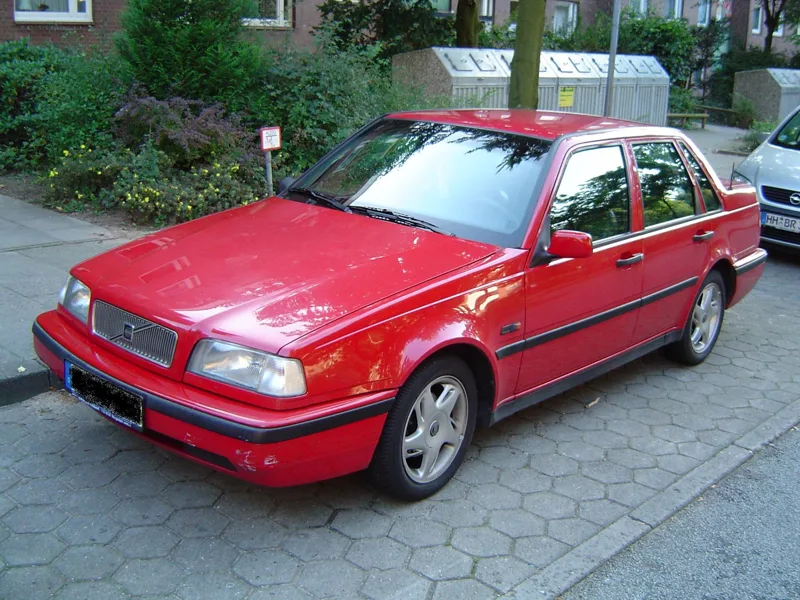
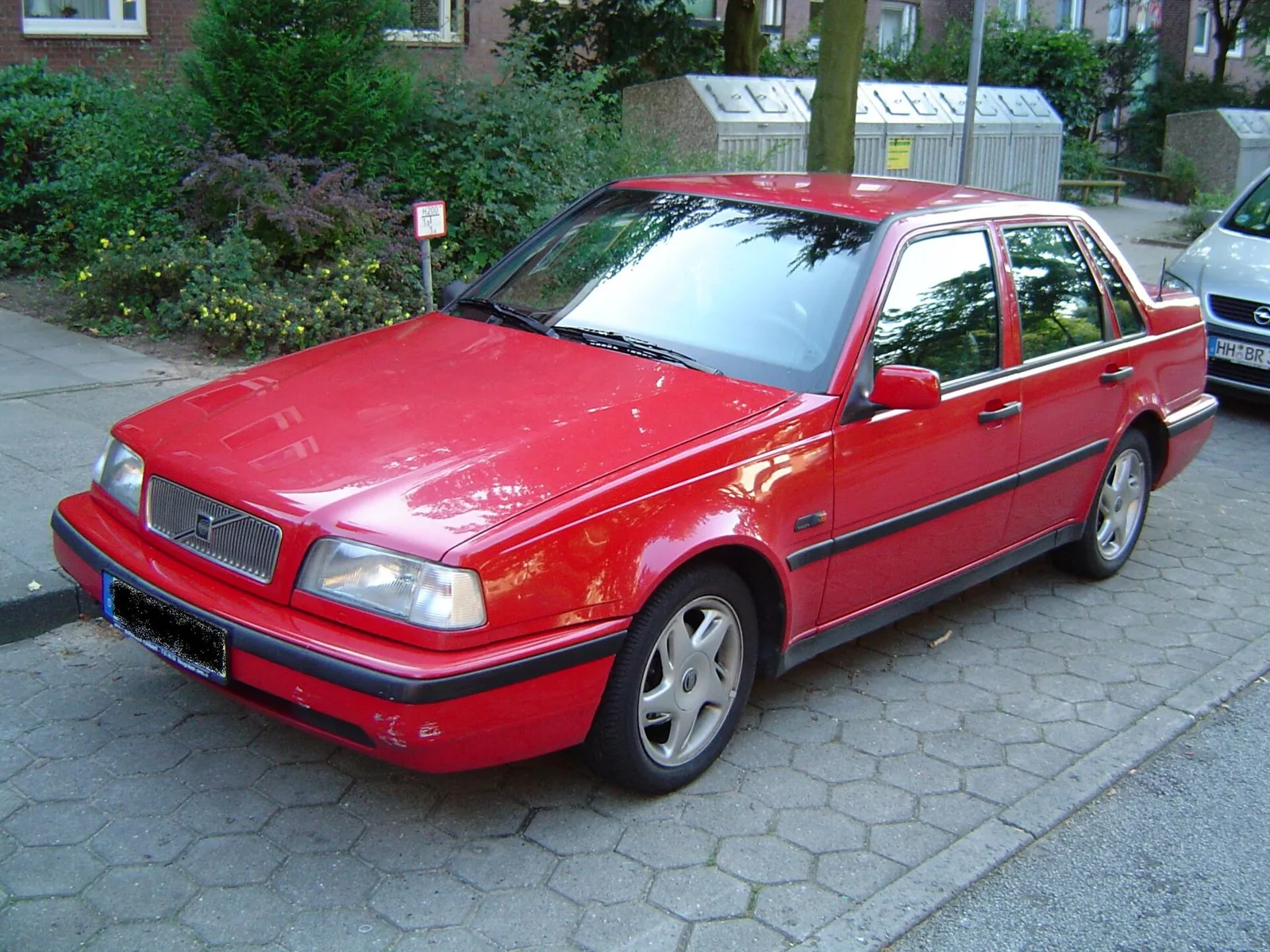
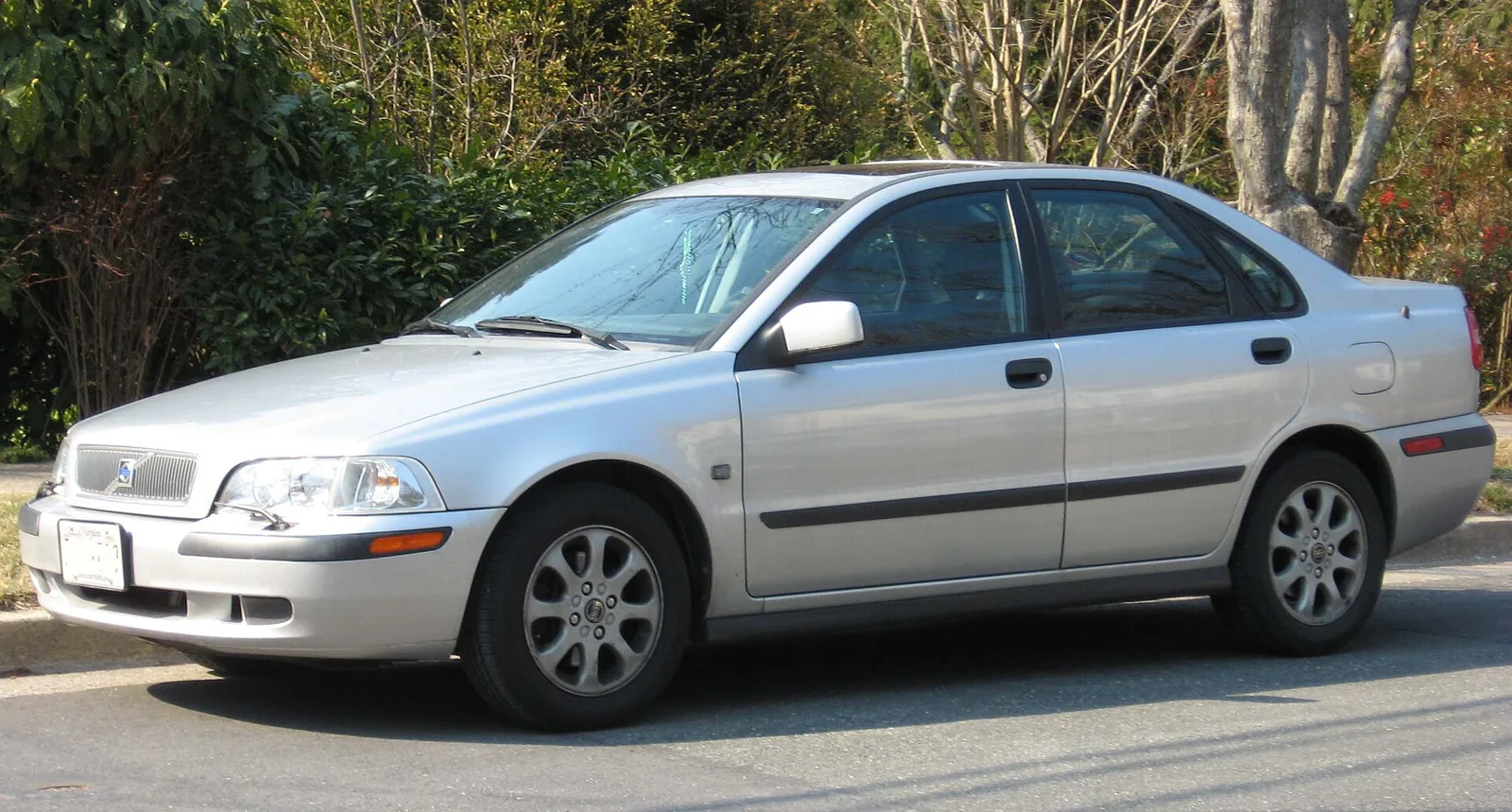
The Volvo S40 was a subcompact executive saloon built by Volvo Cars from 1995 to 2012, with an estate version that became the V50. It was offered with four-cylinder and five-cylinder engines across two generations. Volvo replaced the range with the V40 hatchback in 2012, ending the S40 line.
Between 1995 and 2012 Volvo sold the S40 as a more affordable route into its compact executive range. Two generations were built, and the estate version was renamed the V50 for the second. The story runs from a Dutch factory to Super Touring racing and finally to the V40 hatchback that replaced the range.
What was the Volvo S40 designed to do?
The S40 was Volvo's more mainstream alternative to the 850 and later the S60, pitched at a lower price bracket. Volvo positioned it against premium-leaning small family cars such as the Volkswagen Jetta, and against some mass-market large family cars. The range was built to win buyers who wanted a premium badge in a smaller car.
Volvo's design director, Peter Horbury, led the first model, and the V40 estate was the first whole model introduced under his direction. The 400 Series contributed just one unit to the newcomer, its 1.9 turbo diesel.
A compact executive Volvo that showed the brand could build a credible premium car in a smaller size.
The 1995 launch and the V40 estate
Volvo released its new series in August 1995. Audi already held the S4 name, so the saloon became the S40 and the estate the V40. Both were built at the Nedcar factory in Born in the Netherlands, a plant whose lineage began in the early 1970s with a collaboration with DAF.
The range shared a platform with the Mitsubishi Carisma, a car that later formed the basis of the Proton Waja. The V40 had a drag coefficient of 0.32 and was crowned the most beautiful estate car on the planet by an Italian award panel. The launch debuted at Frankfurt in September 1995, and the V40 followed at the Bologna Motor Show that December.
The RAC judged that the range convinced buyers Volvo could make a credible compact executive car. North America received the range for the 2000 model year, where the 1.9 litre turbo was the only engine on offer.
What changed in the 2000 and 2002 updates?
The July 2000 Phase II update brought larger brake discs, a wider track, new front suspension and steering, and larger tyres. A minor facelift then changed the front wings, bumper and indicators. In late 2002 the range gained an egg crate grille, a three-spoke steering wheel and side-impact curtain airbags.
The 2002 update also gave the instruments four dials.
Which engines did the S40 use?
The first generation used four-cylinder engines in several sizes, including a 1.6 litre (1587 cc), a 1.8 litre that later grew to 1783 cc, and a 2.0 litre (1948 cc). The petrol units were Volvo Modular engines first seen in the 960, and Mitsubishi supplied a 1.8 litre direct injection petrol unit. A Renault-sourced 1.9 turbo diesel completed the choice.
The 2.0T sat at the top of the motor range and was rounded down and badged 1.9T. It was the only engine offered in North America, where the five-speed automatic was the sole gearbox. In Europe a five-speed manual was widely available, so buyers there had more choice.
The second generation introduced Volvo's modular five-cylinder engine, which first appeared in the 850 for 1992. The top T5 used a 2521 cc five-cylinder with a high pressure turbo. Transmissions were developed with Getrag at Volvo's transmission centre in Sweden, and the all wheel drive system came from Haldex Traction.
How did the second generation differ?
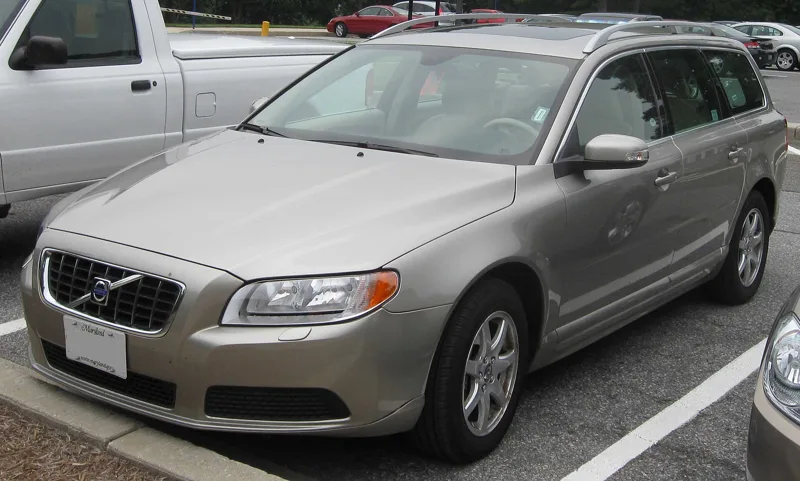
Unveiled at Frankfurt in September 2003, the second generation sat on the Volvo P1 platform and was built at Ghent in Belgium. Its chassis was largely developed by Volvo, though similar mechanical parts appeared in the Mazda3 and Ford Focus. Production in calendar 2003 reached 4,566 examples.
An April 2007 facelift brought emergency brake lights that flash during hard braking and optional bi-xenon headlights. An optional blind spot camera sat in the mirrors. The T5 received a new engine, the B5254T7, and the 2.0 diesel Powershift arrived in February 2008.
The 2010 range added a more complete set of engines, including 1.6, 2.0 and T5 petrol units alongside the DRIVe, D2, D3 and D4 diesels. The 2.0F flexible-fuel engine could run on petrol or E85, and the DRIVe included a start-stop system to cut fuel use and emissions.
How did the S40 perform in touring car racing?
The S40 was homologated for Super Touring racing on 1 January 1997. Tom Walkinshaw Racing ran it in the British series from 1997 to 1999, and Rickard Rydell won the 1998 title. The same year, Rydell and Jim Richards won the AMP Bathurst 1000 in Australia.
Volvo Dealer Racing took the car into the Australian Super Touring Championship in 1998 and 1999. By its second season the team had delivered the manufacturers' title to Volvo. The car also appeared in Sweden's domestic series and, in 2003, in Norway.
How did the S40 sell and how was it marketed?
Total S40 sales for 1995 to 2012 reached 602,910, with the first generation alone accounting for 576,543 built. The V40 estate recorded 423,491 units in total. The S40 was also the first Volvo car launched in China through the Changan Ford Mazda joint venture, with production beginning in March 2006.
Volvo's advertising for the second generation included a documentary-style film of eight minutes, credited to a fictitious Venezuelan filmmaker called Carlos Soto. The film was set on 25 October 2003, when 32 people supposedly bought an S40 at one local dealership in a small village south-east of Stockholm. It was later disclosed that Spike Jonze had directed it.
Chinese buyers had petrol choices of 2.0, 2.4 and 2.5 litres, and a six-speed dual clutch gearbox was offered.
What replaced the S40?
The S40 had been on sale since August 1995, when the first generation launched. Production ended in May 2012, and Volvo replaced the car with the V40 five-door hatchback that same year. In the United States and Canada, 2011 was the last model year for the S40.
Volvo later previewed a future 40 series with the Concept 40.1 SUV and the Concept 40.2 sedan in 2016. The XC40 launched in 2017 as the main compact model, followed by the Polestar 2 in 2020 as a sedan-like alternative. The electric EC40 followed in 2023.
How did the S40 fare on safety?
Euro NCAP awarded the S40 four stars, making it the first car to reach that rating. Side-impact curtain airbags arrived with the 2002 update, and the later cars offered a blind spot camera and bi-xenon headlights as options. Both were optional extras on top of the standard specification.
The blind spot camera sat on the side mirrors and alerted the driver to vehicles passing alongside. Emergency brake lights were part of the 2007 facelift, flashing rapidly during hard braking to warn the traffic behind.
What are the Volvo S40 specifications?
| Specification | Detail |
|---|---|
| First generation | 1995-2004, S40 saloon and V40 estate |
| Second generation | 2003-2012, built on the Volvo P1 platform in Ghent |
| First generation total | 576,543 built |
| V40 total | 423,491 built |
| Total S40 sales | 602,910 (1995-2012) |
| Top T5 engine | 2521 cc five-cylinder with high pressure turbo |
| T5 output | 227 hp (169 kW) at the crank |
| Drivetrains | M66W with front wheel drive, M66C with all wheel drive |
| Euro NCAP | First car to earn a four-star rating |
| First generation engines | 1.6 (1587 cc), 1.8 (1731 cc, later 1783 cc), 2.0T (1948 cc), 1.9 T4 (1855 cc, later 1948 cc), 2.0 (1948 cc), 1.9 turbo diesel |
| North American gearbox | Five-speed automatic only |
| Special editions | Super Tourer (Australia, 2000), Sports Pack (2003), Xi (Phase 1 and 1.5 cars) |
| Production ended | May 2012 |
| Successor | V40 five-door hatchback, 2012 |