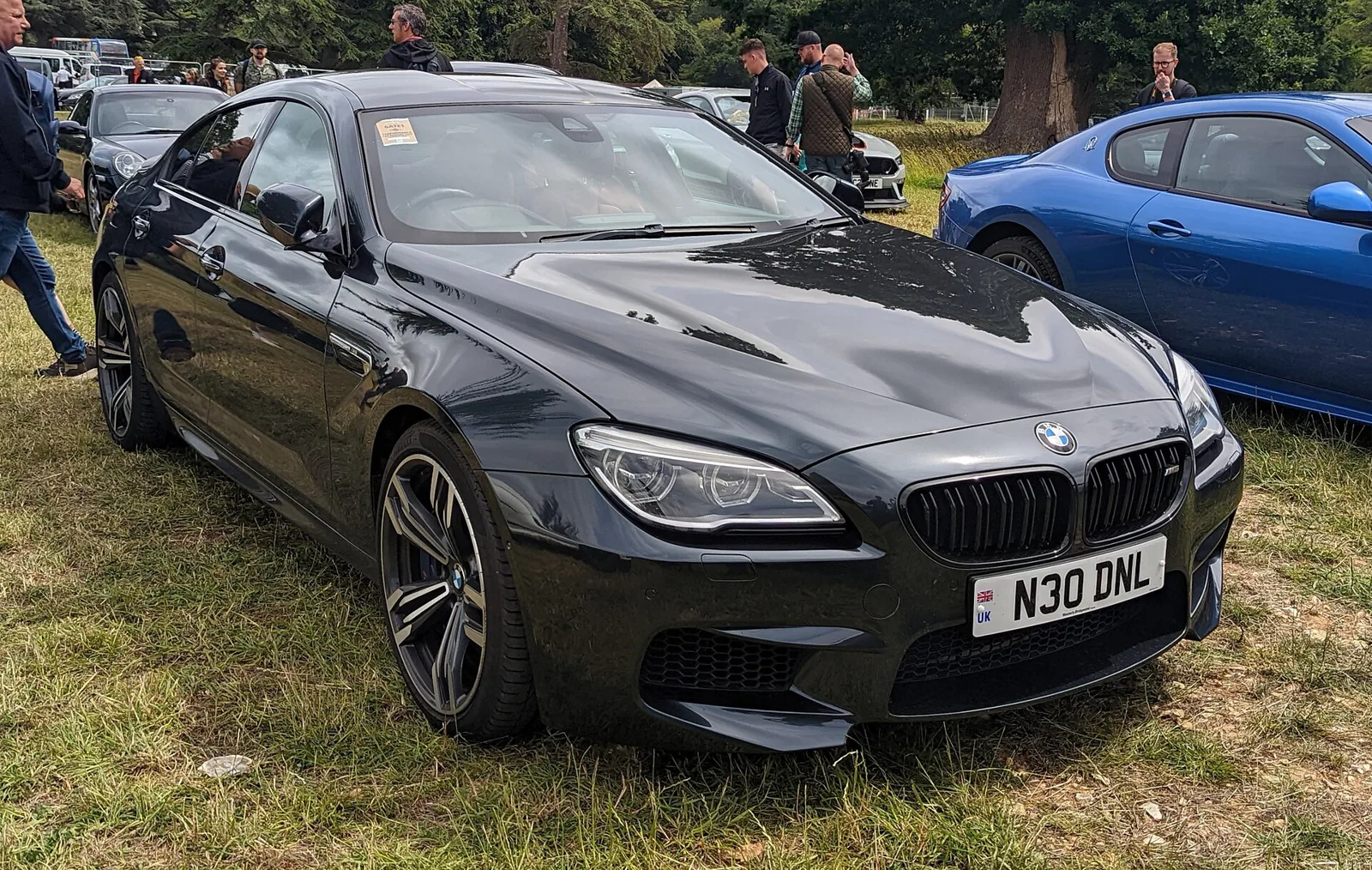
Three generations of the M6 brought a straight-six, a V10 and a twin-turbo V8 to the 6 Series, plus GT3 and GTLM racing cars.
The BMW M6 was the performance version of the 6 Series, built under BMW M from 1983 to 2019. It came as a coupe, convertible and Gran Coupe across three generations. The E63 used a V10 and the F06 used a twin-turbo V8, and production ended in 2019 when the M8 arrived.
The BMW M6 was the performance-focused version of the 6 Series, sold under the BMW M sub-brand between 1983 and 2019. It appeared as a coupe, a convertible and a fastback Gran Coupe, and every one of the first three 6 Series generations received an M6. Production finished in 2019, when the BMW M8 succeeded it.
Where did the M6 name begin?
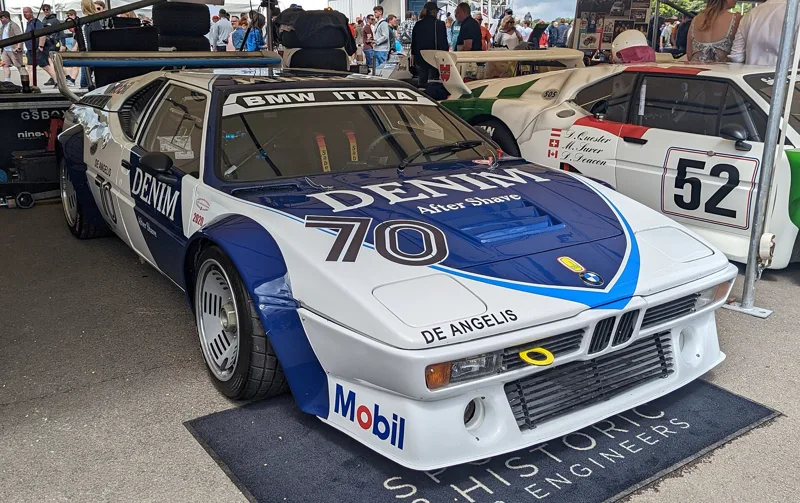
The lineage starts in 1983 with the M635CSi, a member of the E24 6 Series family. Buyers in most countries saw that badge, while North America and Japan received the car under the simpler M6 name. Its engine, the M88/3 straight-six, was adapted from the unit found in the BMW M1, and the model stayed in production until 1989.
On European cars the M88/3 ran without a catalytic converter. Peak output at 6,500 rpm was 282 hp, or 210 kW and 286 PS. Torque came in at 340 Nm, or 251 lb ft, peaking at 4,500 rpm. The North American engine was the catalysed S38B35, which made 256 hp (191 kW; 260 PS), with 330 Nm (243 lb ft) of torque at the same engine speeds.
A 5-speed Getrag 280 manual was the only gearbox in the range. The E24 also picked up larger front brakes, a rear lip spoiler, a bigger front air dam and BBS RS wheels. Its suspension was revised to sit 10 mm lower, and by the 1988 and 1989 model years the car had become a world car, with identical bumpers and aerodynamic treatments in every market.
Catalysed engines reached European cars from the summer of 1987, which brought the continental specification into line with the North American one. From that point the engines matched in specification, so the main differences between the markets lay in the bumpers and the weight.
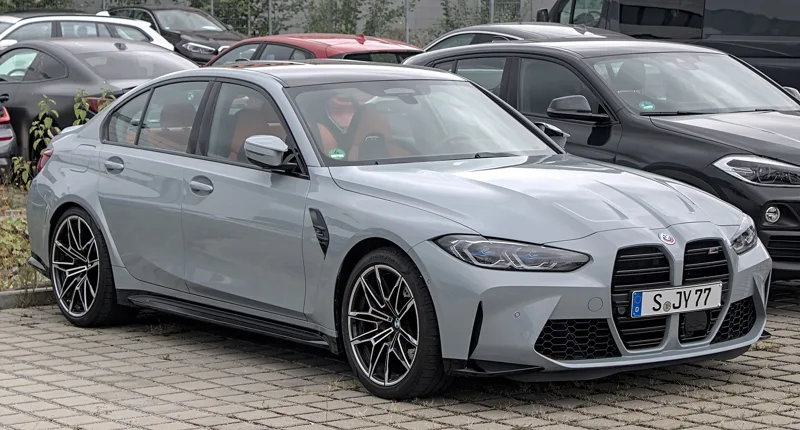
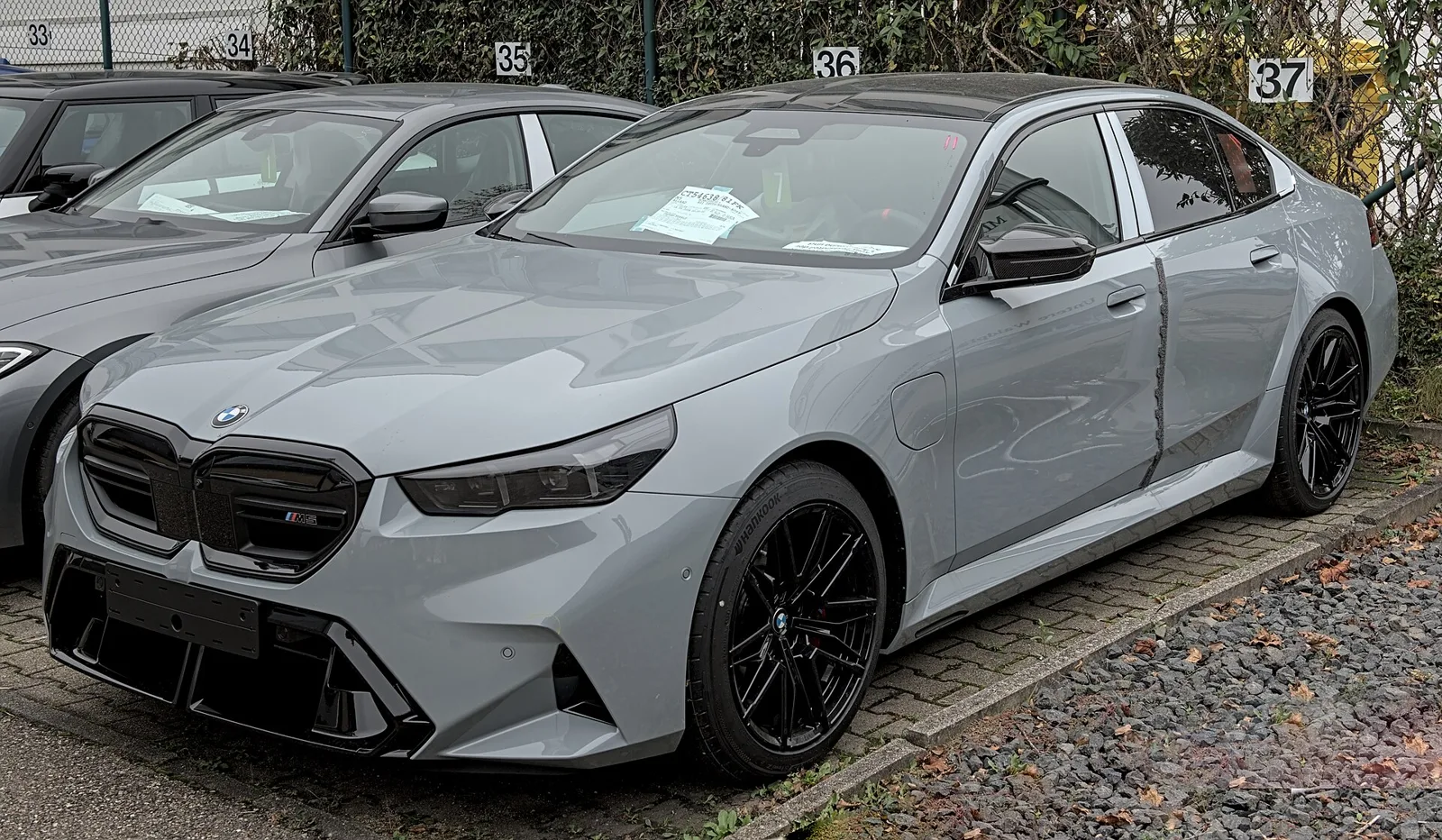
From an E24 straight-six to an F06 twin-turbo V8, the M6 carried the same high-performance badge through three generations.
How fast was the E24 M6?
BMW timed the European M635CSi at 5.8 seconds from rest to 97 km/h, while the North American version took 6.8 seconds. Its maximum was 255 km/h (158 mph), which put it second only to the M1 among BMWs at the time. A quarter mile took 14.5 seconds, and 161 km/h (100 mph) arrived in 15 seconds.
Weight was a second point of difference. In 1987 the M635 CSi weighed 1,515 kg, or 3,340 lb, while the M6 weighed 1,619 kg, equal to 3,569 lb. North American cars were stretched by their elongated bumpers to 4,923 mm (193.8 in) in length, which made them noticeably longer than their European counterparts.
Across the whole E24 run, 5,855 cars were built, and 1,677 of them went to North America. Production finished in 1989, and the name then sat idle until 2004.
What changed when the E63 M6 arrived in 2005?
The M6 returned in 2005 after 16 years away, as a coupe with the E63 code and a convertible with the E64 code. Under the bonnet sat the BMW S85 V10 from the E60 M5, paired with the SMG-III automated manual gearbox. Exterior styling was overseen by Karl Elmitt.
Two power levels were available through the car's modes. The P400 setting gave a rated 294 kW (394 hp), while P500 lifted it to 373 kW (500 hp). The manufacturer quoted 4.6 seconds for 0-100 km/h, and electronic limiting held the top speed at 250 km/h (155 mph) unless the M-driver's package raised the limit to 305 km/h (190 mph).
The coupe weighed 1,785 kg (3,935 lb), against 2,005 kg (4,420 lb) for the convertible. The coupe alone carried a roof of carbon fibre, a feature never before offered on a regular production car from BMW, and the E46 M3 CSL was the last car to wear one. Aluminium doors and bonnet, plus thermoplastic quarter panels, added to the saving.
A six-speed manual became available in North America from 2007. Only 701 examples left the factory with that gearbox, split between 323 coupes and 378 convertibles, so the manual cars form a limited group within the E63 run.
How did the Competition Package change the M6?
From 2009 buyers could order a Competition Package with lower suspension at both ends, plus wider wheels and Pirelli P Zero Corsa tyres. Only 100 special edition cars carried the Competition name, finished in Frozen Gray Metallic paint with Merino leather trim.
The package also reworked ABS, stability control and the M Differential for cornering. The exterior gained a new bonnet with precision lines and redesigned wheels, while the special edition added custom floor mats labelled M6 Competition. The special edition was announced alongside the package, so the two can be considered together.
The 2014 Competition Package fitted a more aggressive exhaust with black tips, firmer springs, dampers and anti-roll bars, and more direct steering. Its twin-turbo V8 rose to 423 kW (567 hp) with 680 Nm of torque, and coupe and Gran Coupe bodies reached 0-100 km/h in 3.9 seconds. The 2016 update lifted the engine to 441 kW (591 hp) and 700 Nm, and the sprint fell to 3.8 seconds.
What did the F06 generation bring to the M6?
The F06 generation was based on the F12, F13 and F06 6 Series and shared its S63 twin-turbo V8 and 7-speed M-DCT gearbox with the F10 M5. Coupe and Gran Coupe models reached 0-100 km/h in 4.2 seconds, while the convertible needed 4.3 seconds. Electronic limiting capped the top speed at 250 km/h (155 mph).
The nose gained an M kidney grille bearing an M6 badge, which paid tribute to the first generation. Lead exterior designer Nader Faghihzadeh worked on the F12, F13 and F06 6 Series. Curb weights were 1,850 kg (4,070 lb) for the coupe, 1,950 kg (4,299 lb) for the Gran Coupe and 2,055 kg (4,531 lb) for the convertible.
The differential was an electronically actuated Active M limited slip unit. Owners could also order M Performance Parts: black kidney grilles, a lighter sport exhaust, and carbon components for the diffuser, spoiler, steering wheel and gear selector. The F06 cars were offered as a coupe, a Gran Coupe and a convertible, which gave buyers three body choices in one generation.
What are the BMW M6 specifications?
| Specification | Detail |
|---|---|
| Engine (E24, Europe) | M88/3 straight-six, peak 282 hp (210 kW; 286 PS) at 6,500 rpm |
| Engine (E24, North America) | S38B35 straight-six, 256 hp (191 kW; 260 PS) |
| Engine (E63) | BMW S85 V10, 294 kW (394 hp) in P400 mode, 373 kW (500 hp) in P500 mode |
| Engine (F06) | S63 twin-turbo V8, 423 kW (567 hp) in the 2014 Competition |
| Transmission | 5-speed Getrag 280 manual (E24); SMG-III (E63); 7-speed M-DCT (F06) |
| 0-100 km/h | 4.6 seconds claimed (E63); 4.2 seconds coupe (F06) |
| Top speed | 250 km/h (155 mph) standard, 305 km/h (190 mph) with the M-driver's package |
| Curb weight | 1,785 kg (3,935 lb) coupe (E63); 1,850 kg (4,070 lb) coupe (F06) |
| Production | 5,855 E24 cars; 9,087 E63 coupes; 5,065 E63 convertibles |
The E24 figures in the table are for the European car unless a North American version is named. Acceleration for the E63 is a manufacturer claim, and the 2014 and 2016 Competition figures apply to the coupe and Gran Coupe only.
How did the M6 perform in motorsport?
BMW Motorsport began developing the M6 GT3 around early 2015 to replace the Z4 GT3, which had raced since 2010. The race car's engine stayed close to the road car, and the first roll-out took place at Dingolfing in May 2015. The car was revealed near the end of that year.
Rowe Racing won outright at the 2016 24 Hours of Spa. Philipp Eng, Maxime Martin and Alexander Sims shared the car. The same car also won in the VLN, Italian GT and Super GT championships.
How was the M6 GT3 built to FIA rules?
The M6 GT3 was engineered to match FIA GT3 specifications, and the factory built an FIA-approved safety cell as part of that work. The engine stayed virtually unchanged from the production M6 and M5, with only modifications for motorsport use. That approach kept the racing car close to the road model it came from.
The first roll-out at Dingolfing in May 2015 marked a milestone in development, and the finished car was revealed near the end of the same year. The conversion from road car to race car was therefore compressed into a single year of work before the 2016 season.
The M6 GTLM was the racing version built for the IMSA WeatherTech SportsCar Championship, and it was meant to replace the Z4 GTE. BMW Team RLL entered the cars from 2016 and recorded no wins in that debut season. The car earned four class wins in 2017 before the M8 GTE replaced it for 2018.
When did M6 production finally end?
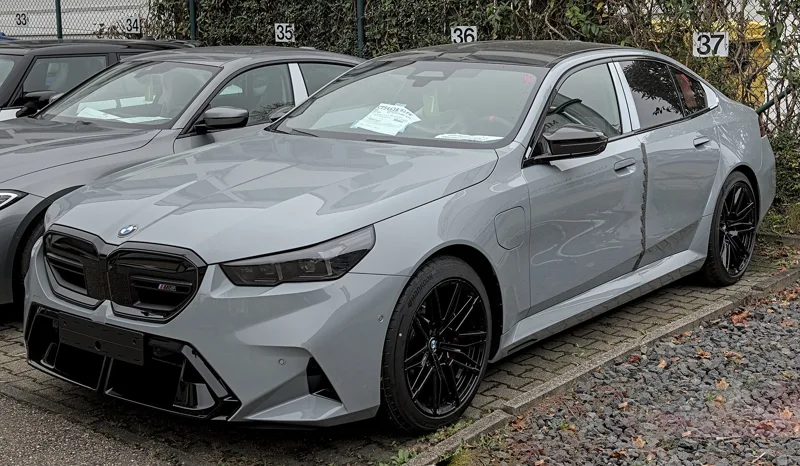
BMW announced in September 2010 that E63 production had ended, after five years of sales totalling 9,087 coupes and 5,065 convertibles. The F06 generation then carried the name from 2012. Production ended in 2019, and the BMW M8 became the car that followed the M6 in the range.
How did the three generations compare?
The E24 relied on a straight-six, the E63 on a V10 and the F06 on a twin-turbo V8. Each generation kept the M6 badge, while body styles, gearboxes and output changed from one to the next. The list below summarises the three in turn.
- E24 (1983 to 1989): straight-six, 5-speed manual, 5,855 cars built, 1,677 imported to North America.
- E63 and E64 (2005 to 2010): S85 V10 with SMG-III gearbox, coupe and convertible, 9,087 coupes and 5,065 convertibles sold.
- F06, F12 and F13 (2012 to 2019): S63 twin-turbo V8 with 7-speed M-DCT, coupe, Gran Coupe and convertible.
Read together, the generations show the engine changing each time: a straight-six, then a V10, then a twin-turbo V8. The gearbox moved from a 5-speed manual to the SMG-III and finally to a 7-speed M-DCT.
.jpg)