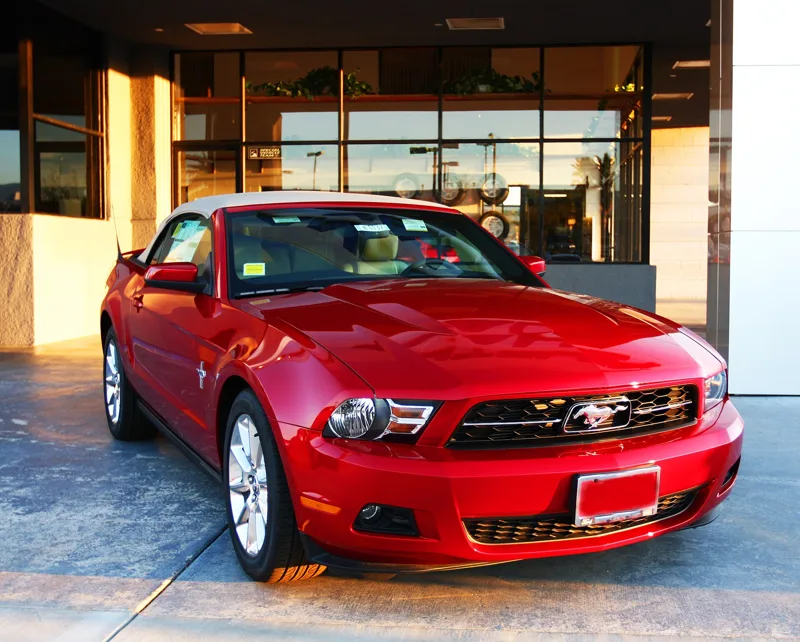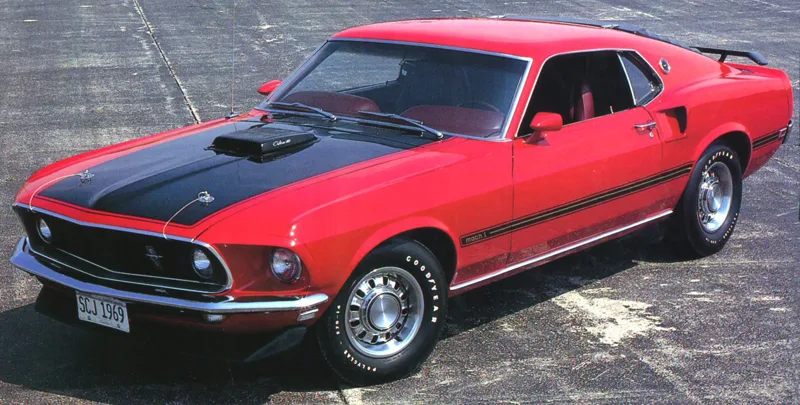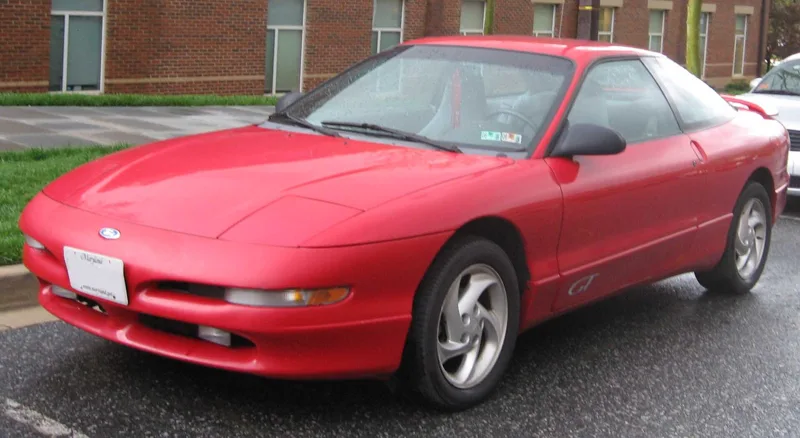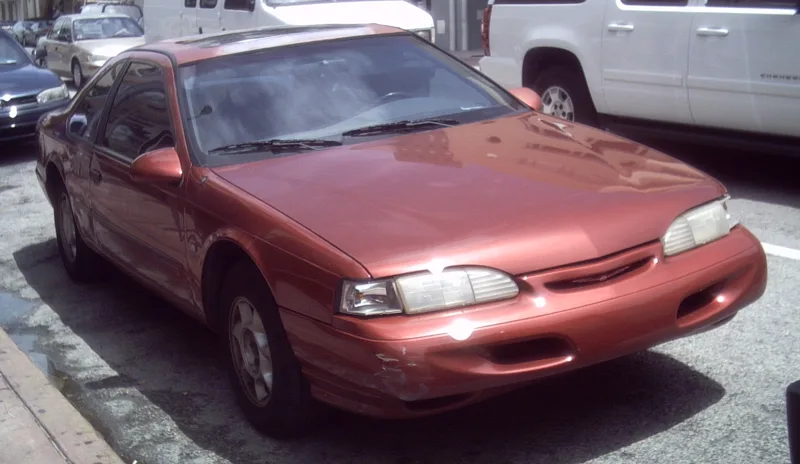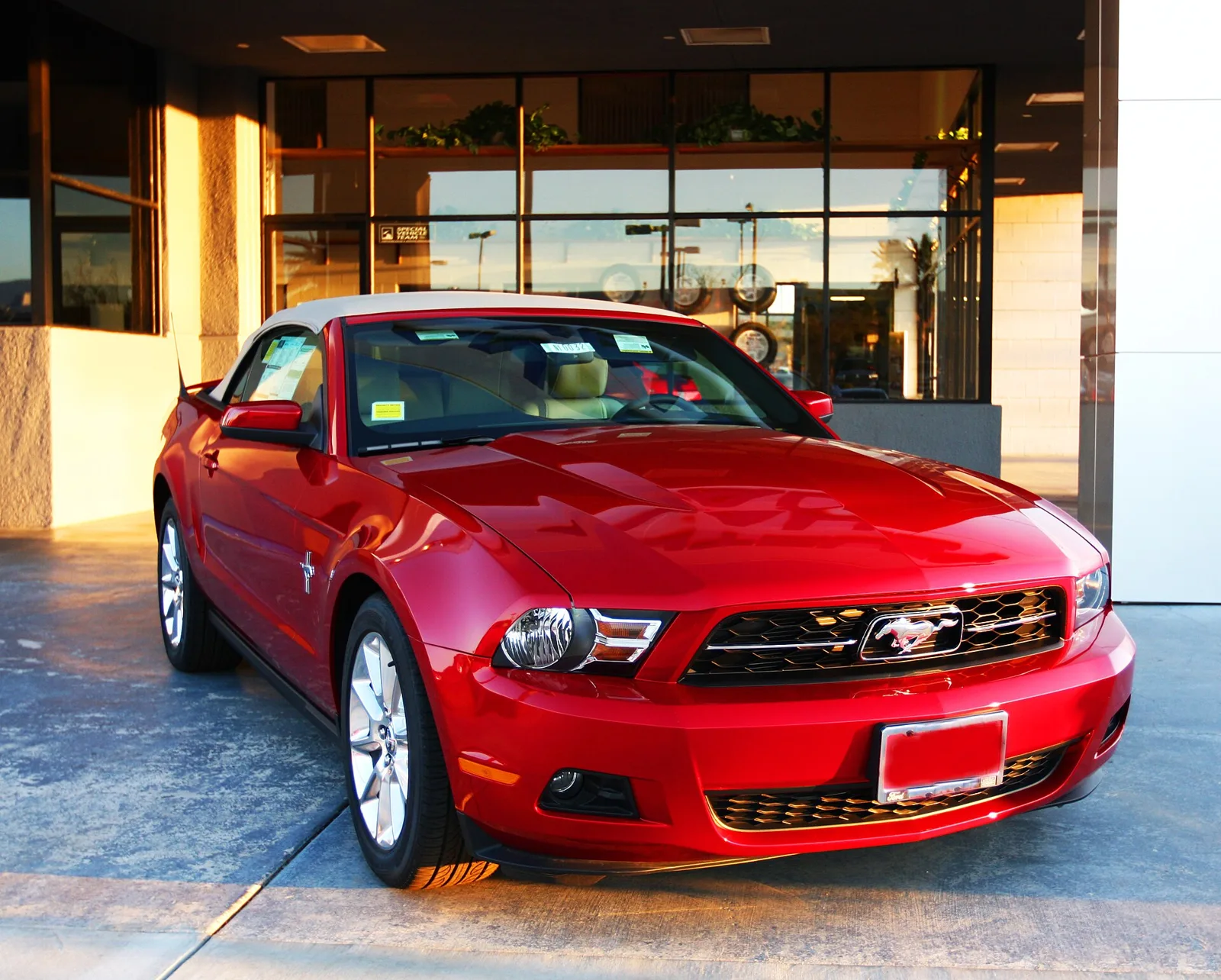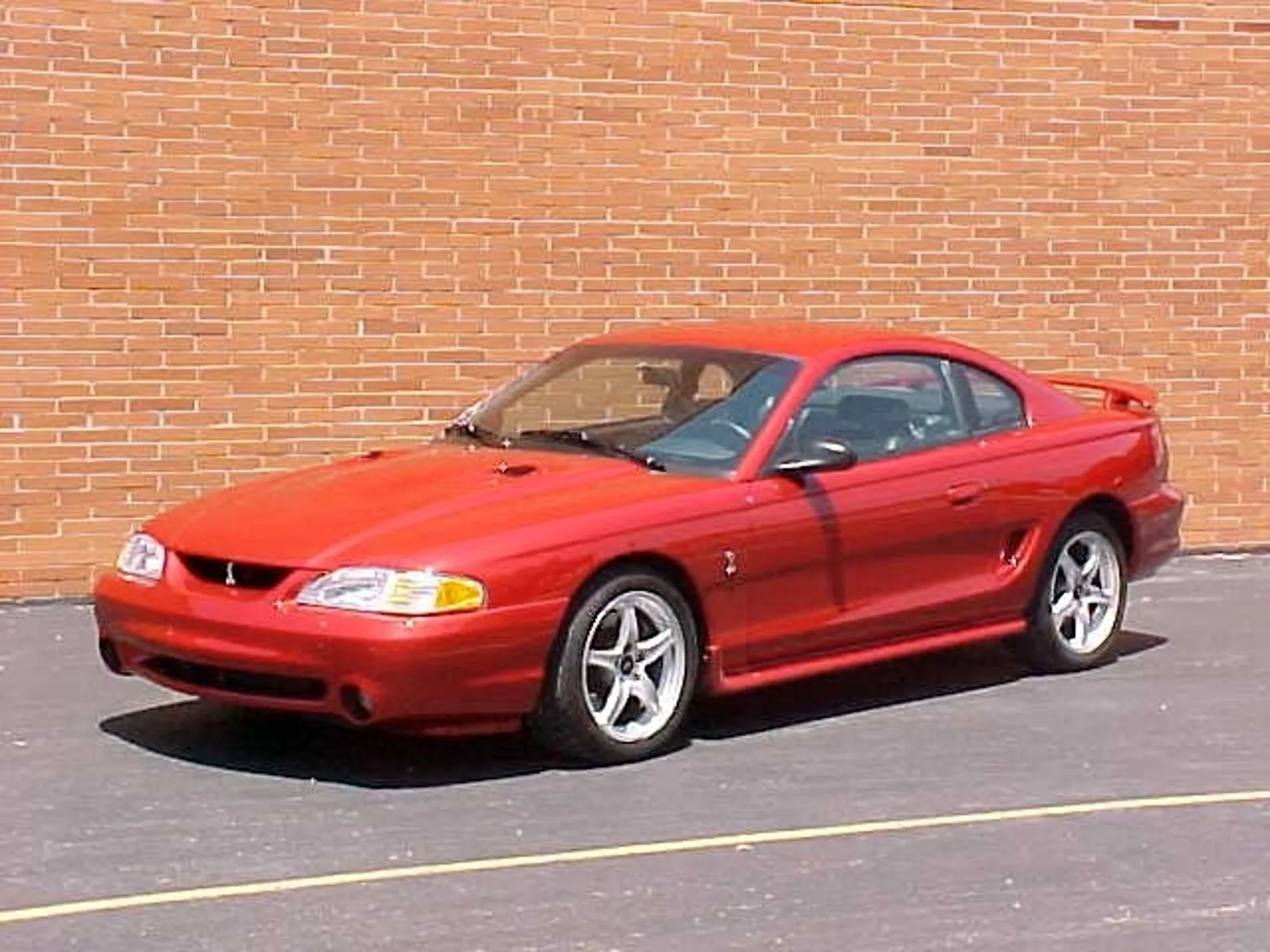
From the 1993 5.0 V8 to the supercharged 2003 Terminator, the top Mustang of the SVT era, with its Cobra R race cars and special editions.
The SVT Mustang Cobra was Ford's top-of-the-line Mustang from 1993 to 2004, built by the Special Vehicle Team. Its engines ran from a 5.0 V8 to a supercharged 4.6-litre V8, and its Cobra R race cars were built in three limited runs.
The SVT Mustang Cobra was the top Mustang built by Ford's Special Vehicle Team from the 1993 to the 2004 model years. It sat above the GT and the Mach 1, and its Cobra R variant, a race-ready but street-legal car, appeared on three occasions in limited numbers.
Across twelve model years the Cobra moved from a 5.0-litre pushrod V8 to a supercharged 32-valve engine. Its story is a run of engine changes, a few cancelled plans and special editions, each of which said something different about the car.
What was the SVT Cobra?
The Cobra was a high-performance Mustang from the Special Vehicle Team, or SVT. It was unveiled at the 1992 Chicago Auto Show as the first vehicle of Ford's new SVT division, and its job was to show what that division could do.
The Cobra was the most powerful Mustang in the lineup. Its successor, the Mustang Shelby GT500, arrived for the 2007 model year.
The Cobra went from a 5.0 pushrod V8 to a supercharged Terminator and was never quite the same car twice.
How did the 1993 Cobra differ from the GT?
The 1993 car looked much like that year's GT, but its engine was different. Its exterior differences were modest. The 5.0 V8 made 235 hp (238 PS; 175 kW), and its torque of 280 lb-ft (380 N-m) arrived at 4,000 rpm.
Road and Track clocked the quarter mile at 14.5 seconds and 98 mph (158 km/h) at the trap; the car reached 60 mph in 5.9 seconds. It was also the first factory Mustang to wear 17-inch unidirectional wheels.
The short block came from the GT, but SVT added GT-40 High Flow cast-iron heads milled for 62.5 cc chambers. Cobra roller rockers with a 1.7 ratio were made for Ford by Crane Cams, and larger 24 lb/hr injectors fed the engine alongside a 2.75-inch airflow meter.
SVT valved the Tokico shocks for the car itself, and its linear-rate springs were a touch softer than the GT's progressive units. A smaller front anti-roll bar and stiffer rear bushings finished the chassis.
What made the 1993 Cobra R so unusual?
The 1993 Cobra R opened a run of three special Cobra R models. The R stood for Race, and the car went without a radio, speakers, air conditioning, fog lights, a rear seat and much of its carpet. The deletions took 450 pounds off the car, though competition hardware put some back.
A strut tower brace and V-braces tied the body and subframes together. The Eibach springs were too firm for ordinary roads but suited a circuit, and the car ran adjustable Koni shocks and struts.
The brakes were a memorable part of the package. The car had 13-inch Kelsey-Hayes vented front rotors and 10.5-inch vented rears. Neil Ressler, one of SVT's founders, later said he had paid for them out of his own engineering budget, since he wanted a fast car that could also stop.
Many Cobra Rs ended up with collectors and were never driven hard, although several raced in IMSA and SCCA events. A total of 107 were built, all in Vibrant Red Clearcoat, and Ford positioned the model as a best-of-the-last send-off for the Fox-bodied Mustang. SVT claimed 0-60 mph in 5.7 seconds and 140 mph (225 km/h) at the top end.
How did the 1994 Cobra and the Indy pace car come about?
The SN-95 Mustang arrived in December 1993, the first major redesign since the 1979 model year. Its GT was rated at 215 hp (160 kW), while Camaro Z/28 and Firebird models came with 275 hp (205 kW) as standard. The replica gave buyers the pace car look in a limited edition.
The 1994 Cobra showed up partway through the year, carrying the 1993 unit unchanged. Using the GT-40 heads and a Cobra-specific upper intake, output rose to 240 hp (179 kW; 243 PS). Ford published its own figures, but a magazine test recorded 5.7 seconds and a quarter mile of 13.87 seconds, with 99.49 mph (160.11 km/h) at the finish.
The Cobra began as a coupe. Its convertible arrived as the 1994 Indy 500 Pace Car Replica, tied to the 78th Indianapolis 500 on May 29, 1994. Jack Roush modified three pace cars, and Parnelli Jones, a 1963 Indy winner, drove one of them. A total of 1,000 replicas were built in Rio Red with saddle leather.
The 1994 Cobra also had its own front fascia with round foglights, complex-reflector headlights, Cobra badges, an LED stop lamp in the spoiler, a 160 mph speedometer and bigger brakes.
What changed in 1995?
The 1995 Cobra was mostly a carryover. It gained a chrome SVT badge on the decklid and small vertical spats that guarded the lower body against stones. The convertible returned in a run of 1,003 cars, all black with saddle leather.
That year also offered a removable hardtop for the convertible, costing $1,825 and adding 90 pounds. It was a one-year option, and only 499 convertibles received it. Fitting it needed two people.
The biggest news was the return of the Cobra R. It swapped the 5.0 for an SVT-modified Windsor V8 rated at 300 hp (224 kW; 304 PS), with a Tremec 3550 five-speed and a 22-gallon fuel cell. The rear seat, radio, power windows and air conditioning were removed.
Only 250 were built, all in white with a tiered fibreglass hood, and buyers had to hold a competition licence or run a race team. Ford kept 18 for its press and engineering fleets.
Why did the modular engine matter?
For 1996 Ford retired the 5.0 in favour of an aluminium 4.6-litre DOHC modular V8. It was smoother and slightly more economical, and from that year each Cobra engine was assembled by a two-person team at the Romeo Engine Plant in Michigan, with a plate bearing the builders' names.
The Romeo unit's output was 305 hp (227 kW) and torque of 410 N-m (300 lb-ft), and Ford's own figure for 0-60 mph was 5.9 seconds. Car and Driver went quicker in its December 1995 test, reaching 60 mph in 5.4 seconds and covering the quarter mile of 14.00 seconds, at 102 mph. Teksid, which supplies Ferrari and Formula One teams, cast the block in Italy.
The 1996 model also brought the Mystic Cobra, a coupe with colour-shifting BASF paint that moved from green through amber and gold to purple. It cost $815 as an option, and 1,999 were built, most with black leather seats.
The 1997 car was a carryover, with the honeycomb grille removed to let more air into a larger radiator. The 1998 car lost its digital clock pod and kept the last return-style fuel system.
What went wrong with the 1999 Cobra?
The 1999 Cobra received the New Edge look that came with the refreshed fourth-generation car. A first for production Mustangs, the 1999 Cobra carried independent rear suspension. Its upgraded 4.6-litre engine made 320 hp (324 PS; 239 kW) and 430 N-m (317 lb-ft) of pull.
Owners soon noticed that 0-60 mph times trailed the 1998 car. Dyno tests put the real output nearer 285 hp, while Ford had claimed 15 hp more than the 1998 engine. On August 6, 1999, Ford halted sales of unsold cars and recalled those already sold, then changed the intake, some computer parts and the exhaust to reach a true 320 hp.
The Cobra came back in 2001 with those fixes, but the episode had already reshaped the model's plans.
What was the 2000 Cobra R?
The 2000 Cobra R was a run of 300, and it was the only Cobra built that year. Its 5.4-litre DOHC V8 peaked at 385 bhp (390 PS; 287 kW), reached near the top of the rev range, and delivered 385 lb-ft (522 N-m) by 4,500 rpm, with a 6,500 rpm redline. Independent dyno tests suggested the figures were conservative.
Its engine block was cast iron, based on the 5.4-litre unit used in Ford trucks. Its cylinder heads were later used, slightly modified, on the Ford GT. A Tremec T-56 six-speed sent power through 3.55 gears, and Ford gave the car a top speed of 177 mph (282 km/h).
The Cobra R had a taller power-dome hood, a tall rear spoiler, Bilstein dampers, Brembo front calipers and Eibach springs that dropped it 1.5 inches at the front and 1.0 inch at the rear. It rode on 18-inch silver five-spoke wheels, and its interior had no radio, air conditioning, cruise control or rear seat.
Why was the standard 2000 Cobra cancelled?
A standard 2000 Cobra had been planned to follow the 1999 model, but the backlash over that car led Ford to drop it. The 2000 Cobra R therefore became the only Cobra for the year, even though brochures for the standard car had gone to print in December 1999.
That brochure showed a coupe and a convertible in six colours, including a Mystic Gold that would have shifted from burnt orange to gold, yellow and pale green. Only a few Mystic Gold examples were made, and Ford changed its paint process for 2001, so the paint was most likely discarded.
How did the 2001 Cobra fix the earlier faults?
The 2001 Cobra skipped the 2000 model year to address the faults of the 1999 car. The engine block moved from the Teksid unit to the Windsor Aluminum Plant block, which is regarded as weaker, so some cars later received Teksid blocks as replacements.
Owners had reported a ticking or pinging noise from the driver's-side head. Ford traced it to poor cooling around cylinders six to eight, which made the valves seat badly, and a service bulletin led to replacement heads with better coolant flow.
The car also gained Cobra-specific seats with Alcantara inserts, a rear bumper that said COBRA, a redesigned wheel and a better audio unit. A Tremec TR-3650 took over from the T-45, the axle shafts went from 28 to 31 splines, and the headlights gained black backgrounds, a look first seen on the 2000 Cobra R.
The 2001 Cobra needed 5.4 seconds for 0-60 mph and 13.8 seconds for the quarter mile, and it was electronically limited to 150 mph.
Was there an Australian Cobra?
About 100 Cobras were partly built in the United States and shipped to Australia, where Ford Tickford Experience converted and finished them. The programme was a $4 million effort by Ford Australia to counter the Holden Monaro, which later became the basis of the Pontiac GTO.
The conversion moved the steering wheel to the right, changed the windscreen wipers and added driving lights to meet Australian rules. The cars were based on the 2001 specification.
What was the 2003 Terminator Cobra?
The 2003 Cobra arrived with a supercharged 4.6-litre V8 having 32 valves and DOHC heads delivering 530 N-m (390 lb-ft) and 390 hp (291 kW). The SVT team led by John Coletti nicknamed it Terminator, and it moved to a cast-iron block with Zollner pistons and Manley H-beam rods to cope with the extra power.
An Eaton M-112 roots-type supercharger supplied 8 psi of boost. A lightweight aluminium flywheel fed a Tremec T-56 six-speed, and the 3.55 rear axle stayed. The car reached 60 mph in 4.5 seconds, and the quarter mile fell in 12.67 seconds, with 110.11 mph at the finish. It was governed to 153 mph, but a stock car could go much faster still with the governor removed.
Camilo Pardo, who also worked on the Ford GT, shaped the car. Its features included a new nose with an integrated spoiler and brake ducts, a rear fascia with a black insert, a composite bonnet with functional extractors and five-spoke 17 x 9-inch wheels. The 2003 and 2004 cars also used standard red Mustang taillights.
What was the 2003 10th Anniversary Cobra?
The 10th Anniversary Cobra celebrated a decade since the first SVT Mustang Cobra. It had seven-spoke dark argent 17-inch wheels, a dark charcoal cabin with Colorado Red leather on the seats, red brake calipers and special badges on the decklid and floor mats.
SVT built 2,003 of them in June and July 2003: 1,003 coupes, plus 1,000 convertibles. The package cost $1,495, and it introduced grip humps on the steering wheel, at roughly the 10 and 2 o'clock marks, a feature the Mystichrome car later repeated.
What changed for the 2004 Cobra?
The 2004 car was a carryover with a slightly updated exhaust and rumours of a gain of more than 20 horsepower. A newly integrated shift light removed the $1,000 gas guzzler tax that the 2003 car had paid, and Sirius satellite radio was offered across the Ford range.
The 2004 Cobra was built between November 2003 and March 2004, a short run. The Mustang left Ford's historic Dearborn plant for the last time, and production of the all-new 2005 car moved to Flat Rock, Michigan.
The Mystichrome Cobra premiered in New York in 2003, next to the 40th Anniversary Mustang. Its ChromaFlair paint shifted from topaz green to cobalt blue, royal purple and deep onyx black, and it cost about $150 a pint. A total of 1,010 were built, split between coupes and convertibles, and the appearance package cost $3,650.
What were the Cobra's key figures?
| Years | Engine | Output |
|---|---|---|
| 1993 to 1995 | 5.0 V8 | 235 hp (238 PS; 175 kW) in 1993; 240 hp (179 kW) in 1994 |
| 1995 Cobra R | SVT-modified Windsor V8 | 300 hp (224 kW; 304 PS) |
| 1996 to 1998 | 4.6 L DOHC modular V8 | 300 lb-ft (410 N-m); 305 hp (227 kW) |
| 1999 to 2001 | 4.6 L DOHC V8, upgraded | 317 lb-ft (430 N-m); 320 hp (324 PS; 239 kW) |
| 2000 Cobra R | 5.4 L DOHC V8 | 385 lb-ft (522 N-m); 385 bhp (390 PS; 287 kW) |
| 2003 to 2004 | Supercharged 4.6 L DOHC V8 | 390 lb-ft (530 N-m); 390 hp (291 kW) |