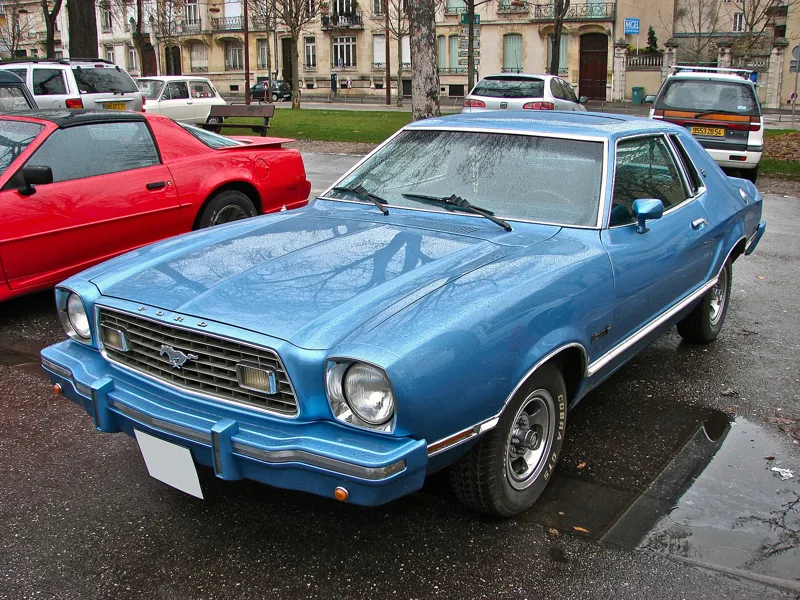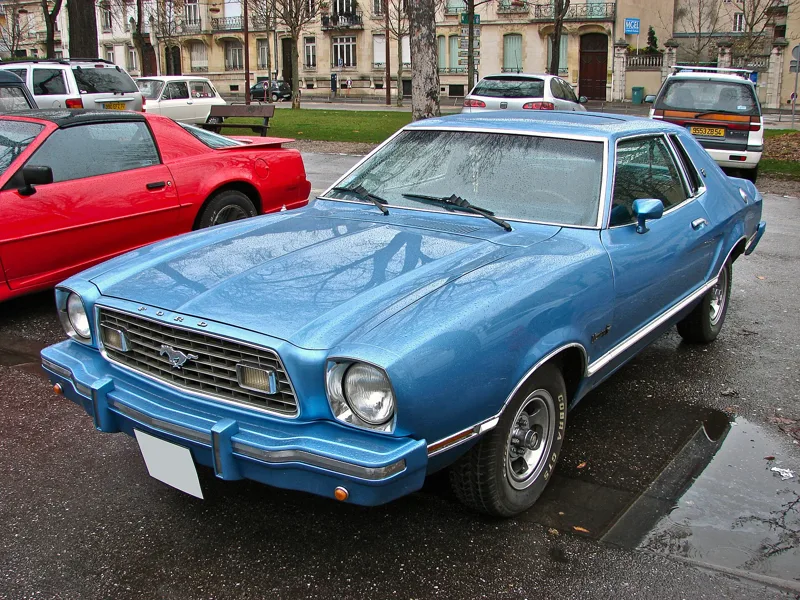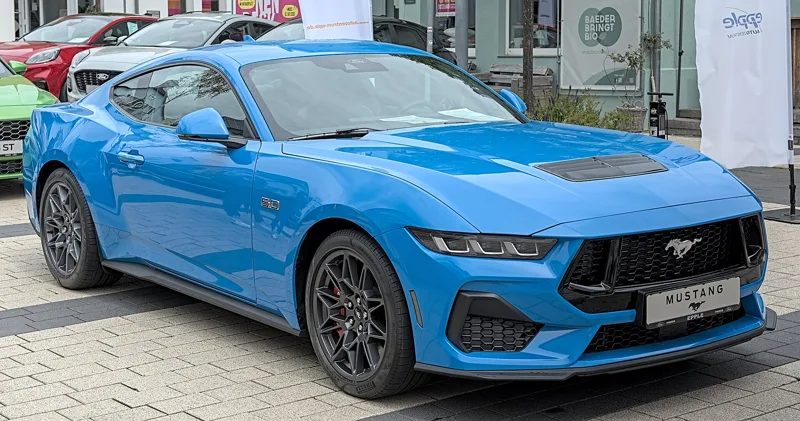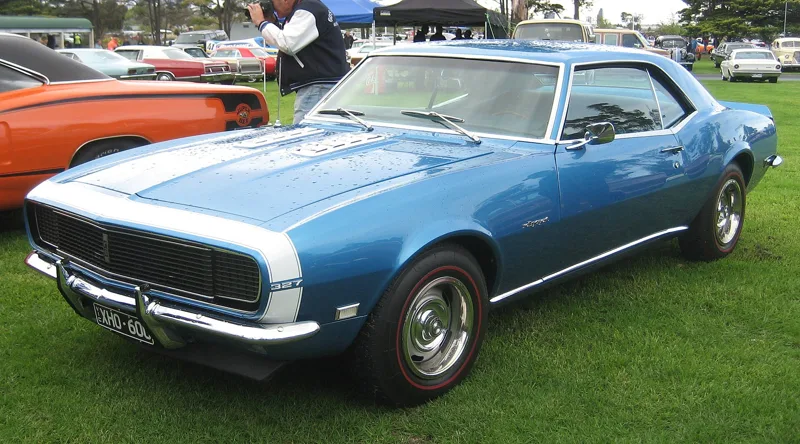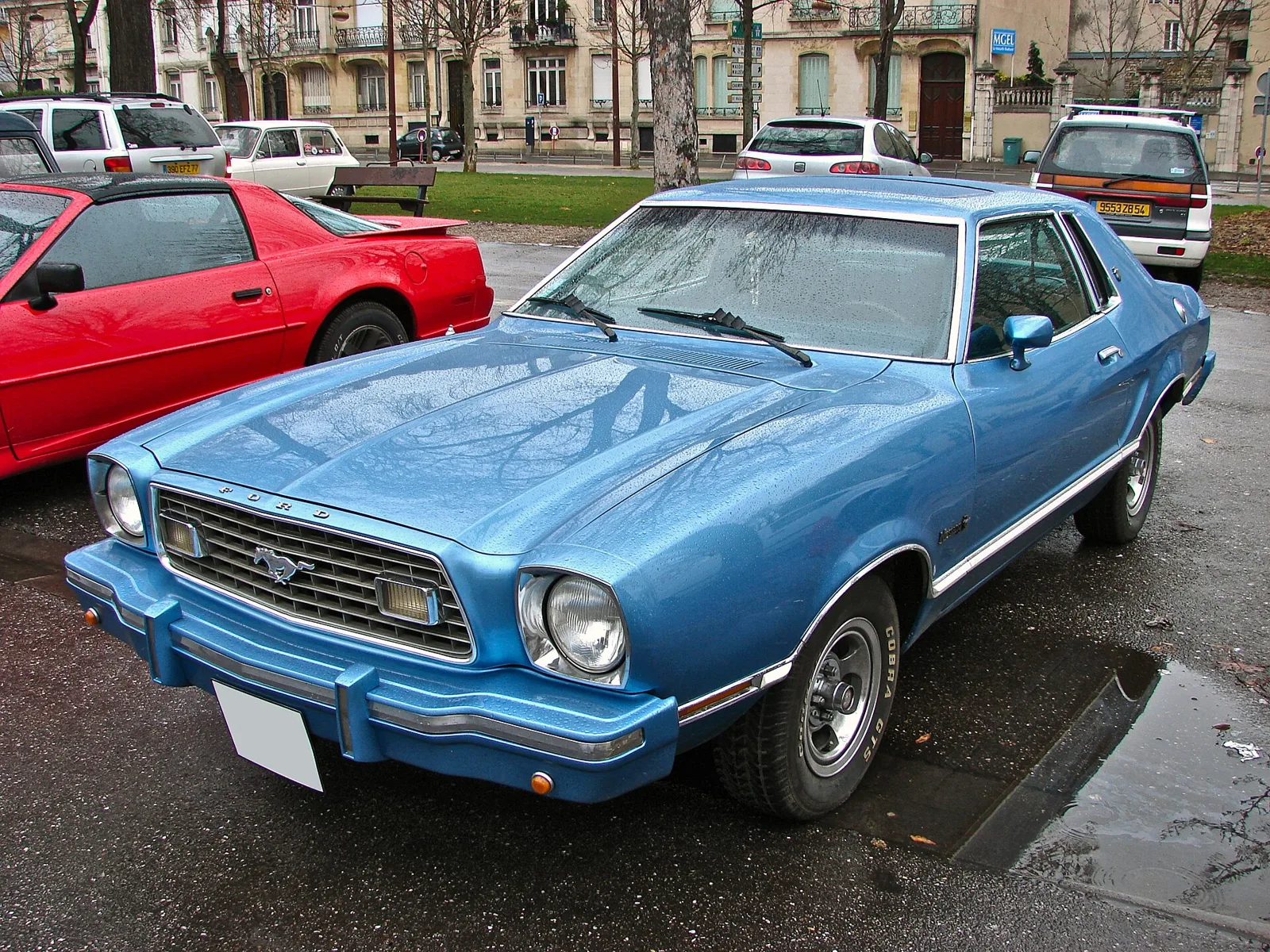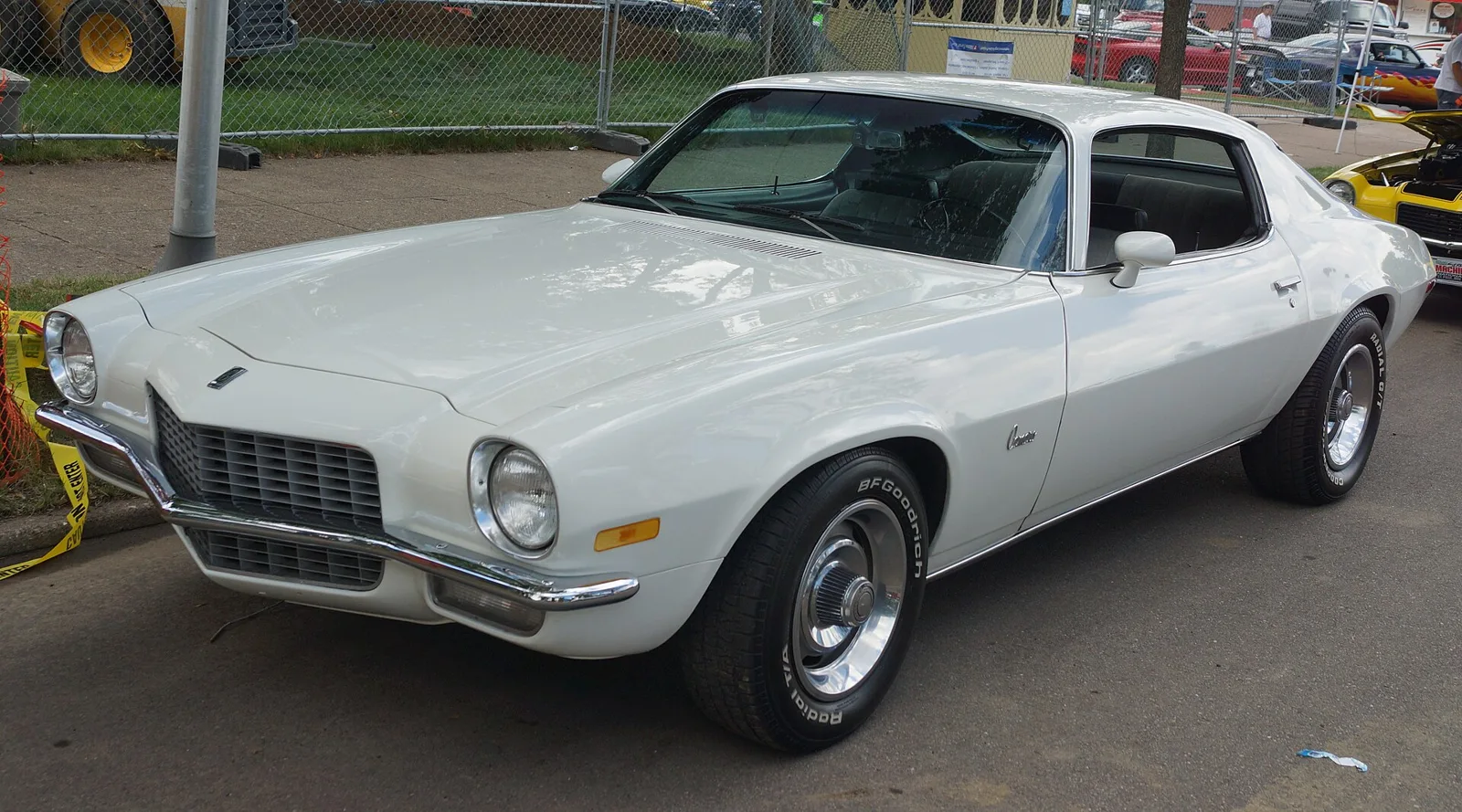
GM kept big V8s in its 1970s pony car while Ford built a smaller Mustang II on Pinto parts, and the two went head to head in the same dealer showrooms.
The second-generation Chevrolet Camaro ran from 1970 to 1981 and kept V8 power through the emissions years, peaking at over 150,000 sales in 1974. The Ford Mustang II arrived in September 1973 on a Pinto platform, sold 385,993 cars in its first model year and won Motor Trend's 1974 Car of the Year.
The second-generation Chevrolet Camaro and the Ford Mustang II were the two pony cars of the 1970s, and they competed for buyers as the oil crisis reshaped the market. The Camaro was longer, lower and wider than its predecessor, and it kept big V8s for a while. The Mustang II went the other way, shrinking onto a subcompact platform and selling into the same shrinking pony car market that hit the Camaro's sales in the early 1970s.
How was the Camaro's second generation built?
Chevrolet introduced the second-generation Camaro in the spring of 1970. Build information for the first cars went to the assembly plants in February of that year. It was longer, lower and wider than the first Camaro, though the convertible was dropped and never returned in this generation. GM engineers described it as much more of a driver's car than its predecessor.
The layout was familiar: a unibody with a front subframe, an A-arm front end with coil springs, and leaf springs at the rear. The chassis was refined for comfort and road-holding, and the base models gained better sound-proofing and ride isolation. The company's experience racing the first Camaro had fed directly into the steering, braking and balance of the new car.
Two 1970s pony cars: one that kept big V8s into the emissions years, and one that shrank onto a Pinto platform for the oil crisis.
Which engines did the 1970 Camaro offer?
Most of the drivetrain carried over from 1969. The six-cylinder grew from 230 cu in (3.8 L) to a 250 cu in (4.1 L) unit rated at 155 hp (116 kW). The SS 396 used a 396 cu in big block, the L78, rated at 350 hp (261 kW). From 1970 the nominal 396 displaced 402 cu in (6.6 L), but Chevrolet kept the badge, and the single four-barrel Holley version put out 375 bhp (380 PS; 280 kW), peaking at 5,600 rpm, with torque of 415 lb-ft (563 N m) at 3,600 rpm.
The Z/28 Special Performance Package, priced at US$572.95, was the headline. It came with a new LT-1 350 cu in (5.7 L) V8 rated at 360 hp (268 kW) and 380 lb-ft of torque. The LT-1 was a Corvette engine built from the ground up with premium parts, and it outperformed the smaller 302 cu in V8 of the first-generation Z/28. It was the first Z/28 that could be ordered with the Turbo Hydramatic 400 automatic as an alternative to the four-speed manual.
Why did the 1971 Camaro lose power?
A federal emissions mandate required engines to run on low-lead or unleaded fuel, which forced compression ratios down. The LT-1 dropped from 360 hp gross to 330 hp gross, or 275 hp net, as its compression fell from 11.0:1 to 10.3:1. The 1970 model is generally regarded as the most desirable early second-generation Camaro, because later performance was reduced by emissions controls and federal bumpers. The 396 went from 350 hp to 300 hp gross, after its compression fell from 10.25:1 to 8.5:1.
Sales were hit by a 67-day corporate-wide strike at GM that coincided with the 1971 launch in late September 1970. High insurance rates for performance cars and falling interest in the pony car market added to the pressure. Rumours of cancellation after 1972 began to circulate.
How did the 1972 strike affect the Camaro?
The UAW strike at the Norwood, Ohio plant ran for 174 days in 1972. Norwood built both the Camaro and the Firebird, and 1,100 incomplete Camaros had to be scrapped because they could not meet the 1973 federal bumper standard. Some at GM seriously considered dropping the Camaro and Firebird, but loyal followers convinced the company to keep them.
Chevrolet still built 68,656 Camaros in 1972. Only 970 SS 396s were made that year, which was the last year for the SS 396 and SS 350 and the last year a big block was offered from the factory. The badge changed from Z/28 to Z28, and ratings moved from gross to SAE net, which cut the LT1 to 255 net hp.
What did the 1973 and 1974 Camaros change?
The 1973 Camaro gained a standard impact-absorbing front bumper to meet the 5 mph test, and a Type LT model with a quieter, better-equipped interior and variable-ratio steering. The Super Sport package was dropped, and the big block was gone. The Z28's 350 V8 made 245 hp (183 kW; 248 PS) and switched to hydraulic lifters. Power windows came back as an option for the first time since 1969, and sales rose to 96,751 units.
The 1974 Camaro grew seven inches (180 mm) longer, with new bumpers and a forward-sloping grille, and its round taillights gave way to rectangular wraparound lamps. It was the last year with a flat rear window and thick roof pillars. Camaro sales topped 150,000, and 13,802 of them were Z28s, the highest second-generation Z28 total to that point, despite the energy crisis. Ford downsized the Mustang that year, and Mercury upsized the Cougar into a personal luxury car.
What was the Mustang II, and why did Ford build it?
The Mustang II was a pony car built from 1973 to 1978, with a front-engine, rear-wheel-drive layout and seating for four in a two-door coupe or a three-door hatchback. Lee Iacocca oversaw its development, and Ford described it as an entirely new kind of pony car. It was named Mustang II because it was designed for an era of high gas prices and fuel shortages.
It arrived on September 21, 1973, just as the Arab oil embargo began. It was 490 lb (222 kg) lighter and almost 19 inches (483 mm) shorter than the 1973 Mustang. Ford based it on the subcompact Pinto platform, using rack-and-pinion steering and an exclusive subframe to isolate the front suspension and engine mount.
How did the Mustang II and Camaro position themselves?
Rather than compete against the larger Camaro and Pontiac Firebird, the Mustang II was aimed at sporty subcompacts such as the Buick Skyhawk, the Oldsmobile Starfire, the Pontiac Sunbird and the Chevrolet Monza. It also took on 2+2 import coupes, including the Toyota Celica, the Datsun 240Z, the Mazda RX-3 and the Ford Capri, which Mercury sold in the United States as a captive import.
Lee Iacocca had first wanted a Mustang based on the Maverick, but those plans gave way to a Pinto-based car. Iacocca expected a high level of fit and finish, and he wanted the car to be a little jewel. Its styling was influenced by the Italian coachbuilder Ghia, which Ford had recently bought, and it kept the long-hood, short-deck look of the original.
How did the Mustang II sell?
The Mustang II sold 385,993 cars in its first model year alone, against 134,867 for the 1973 Mustang. Over four years it passed 1.1 million sales, and Motor Trend named it its 1974 Car of the Year. In 1974 it reached 296,041 units, the sixth-best-selling Mustang of all time, while 1975 brought 199,199, the ninth-best total.
Its base engine was a 140 cu in (2.3 L) SOHC four, the first fully metric engine built in the United States. A 171 cu in (2.8 L) V6 was the only other engine offered in 1974, and for that year alone no V8 was available. Packages ran from the base Hardtop and 2+2 hatchback to the Ghia luxury group and the V6-powered Mach 1.
What happened when the Mustang II got a V8?
For 1975 Ford re-engineered the bay to accept a 302 cu in (4.9 L) V8, limited to a two-barrel carburetor and rated at a net 140 hp (104 kW; 142 PS). Road & Track measured 0 to 60 mph in 10.5 seconds, with a top speed of 106 mph (171 km/h). Consumer Guide found the V8 sluggish and said the extra weight hurt the handling.
A 2.3 L MPG model arrived mid-year with a catalytic converter and a 3.18:1 rear axle, claiming EPA estimates of 23 mpg city and 34 mpg highway. After 1975 all base 2.3 L Mustang IIs were called MPG. By then the car's sales had fallen by nearly half from the 1974 level, Consumer Guide reported.
Which Camaros and Mustang IIs were built for 1975 and 1976?
The Camaro's 1975 catalytic converter came with GM's new Efficiency System, which allowed longer maintenance intervals and retuned engines. The Z28 was dropped for 1975 despite its sales of more than 13,000 cars in 1974. The two 350 V8s were rated at 145 hp (108 kW; 147 PS) and 155 hp (116 kW), now net figures that include all accessories and emissions equipment.
For 1976 the Mustang II offered the Stallion appearance group and the Cobra II package, with a black grille, a simulated hood scoop, spoilers and dual racing stripes. Cobra II echoed the original Shelby Mustangs, and Consumer Guide called it an instant success that helped sales.
Specifications side by side
| Feature | Chevrolet Camaro (second generation) | Ford Mustang II (second generation) |
|---|---|---|
| Years built | 1970 to 1981 | 1973 to 1978 |
| Introduced | Spring 1970 | September 21, 1973, for the 1974 model year |
| Body styles | Two-door coupe; convertible dropped | Two-door coupe and three-door hatchback |
| Platform | GM F-body unibody | Subcompact Pinto platform |
| Base engine | 250 cu in (4.1 L) six, 155 hp (116 kW) in 1970 | 140 cu in (2.3 L) SOHC four |
| Top engine | LT-1 350 cu in (5.7 L), 360 hp (268 kW) in 1970 | 302 cu in (4.9 L) V8, 140 hp net (104 kW; 142 PS), 1975 |
| Big block | 402 cu in (6.6 L) 396, 375 bhp (380 PS; 280 kW) | Not offered |
| Automatic | Turbo Hydramatic 400 with the Z/28 | Not listed |
| Performance figure | Not listed | 0 to 60 mph in 10.5 seconds (Road & Track, 302 V8) |
| Sales peak | Over 150,000 in 1974 | 385,993 in its first model year |
| Awards | Not listed | Motor Trend Car of the Year for 1974 |
| Strikes | 67-day strike in 1971; 174-day strike at Norwood in 1972 | Not listed |
| Emissions era | Compression cut in 1971; catalytic converter in 1975 | Catalytic converter on the 2.3 L MPG from 1975 |
Which pony car suits which buyer?
The Camaro suits a buyer who wanted a V8 pony car through the early 1970s, when the LT-1 and the big block were still available, and who was prepared to accept the falling power of the emissions years. Its Z28 sales held up well through 1974.
The Mustang II suits a buyer who wanted fuel economy and a smaller car, with a four or V6 base and a V8 only from 1975. Its sales record was the stronger of the two in its first years,
On the evidence here, the two cars did not compete on the same ground. The Camaro stayed larger and more powerful, while the Mustang II moved to the smaller, fuel-efficient end of the market. A buyer who wanted performance would look at the Camaro, while one wanting economy would look at the Mustang II.