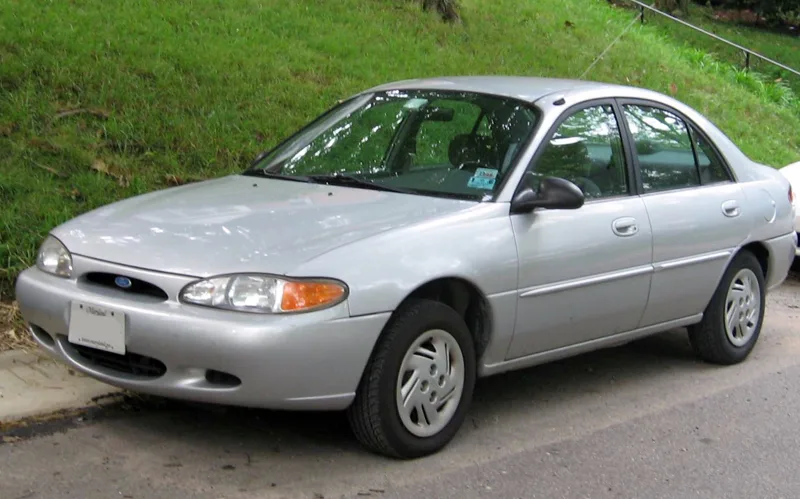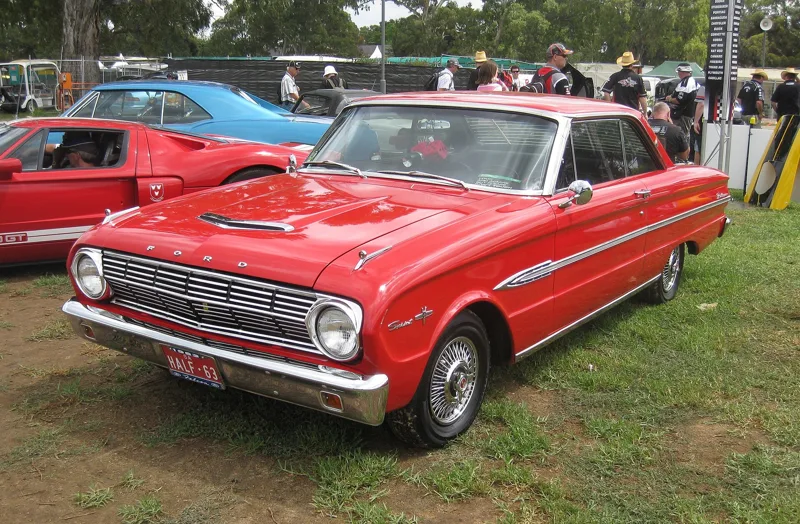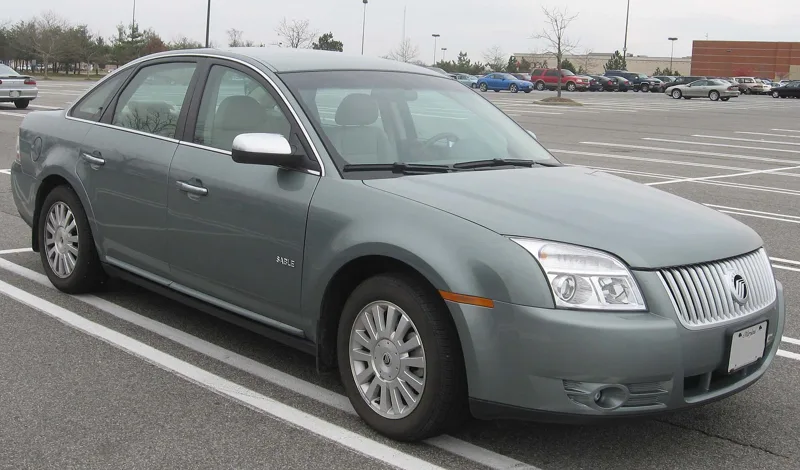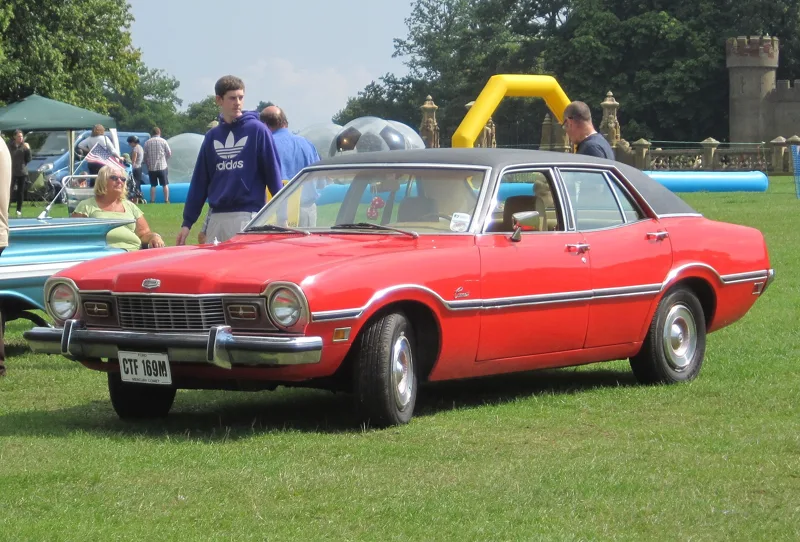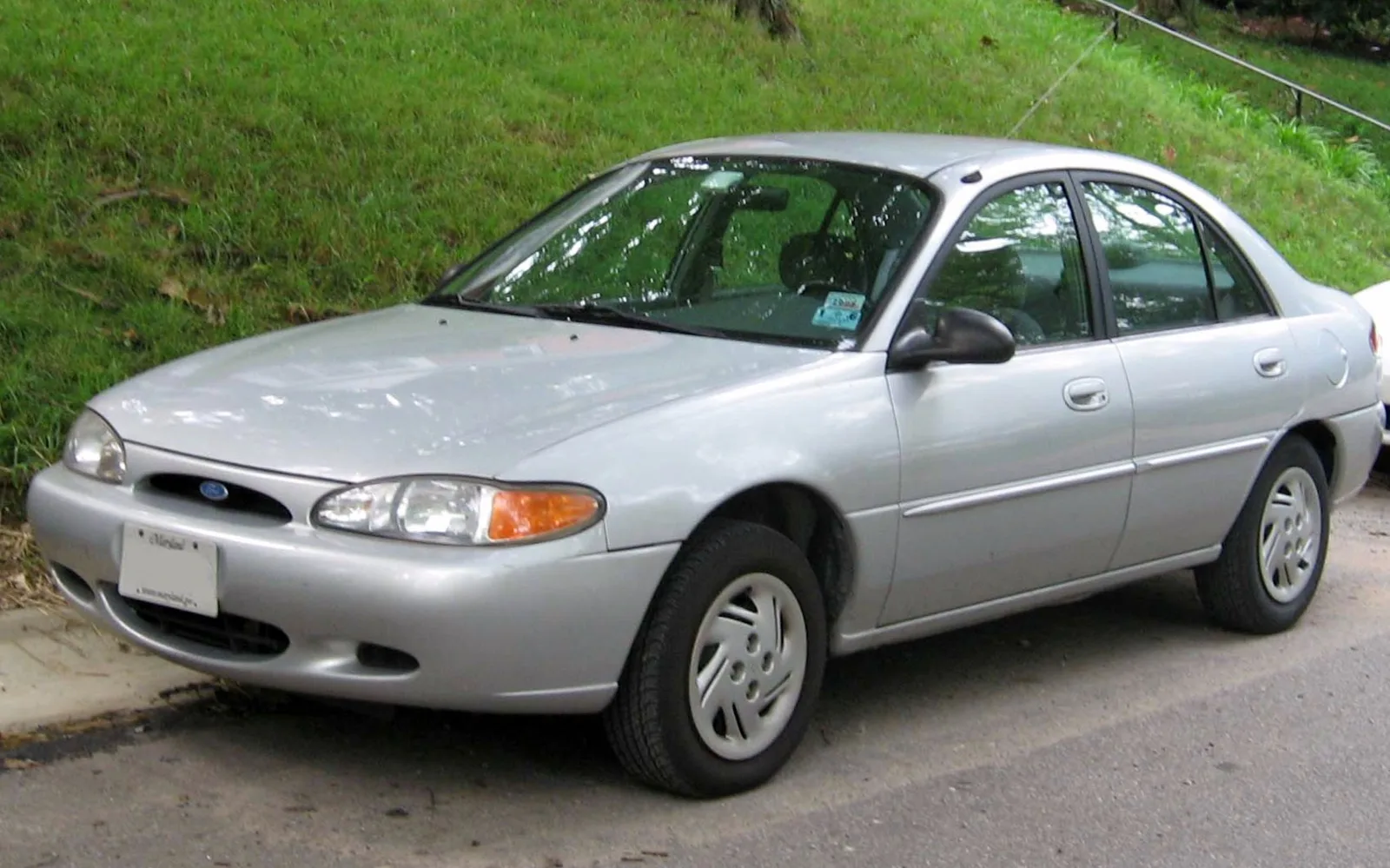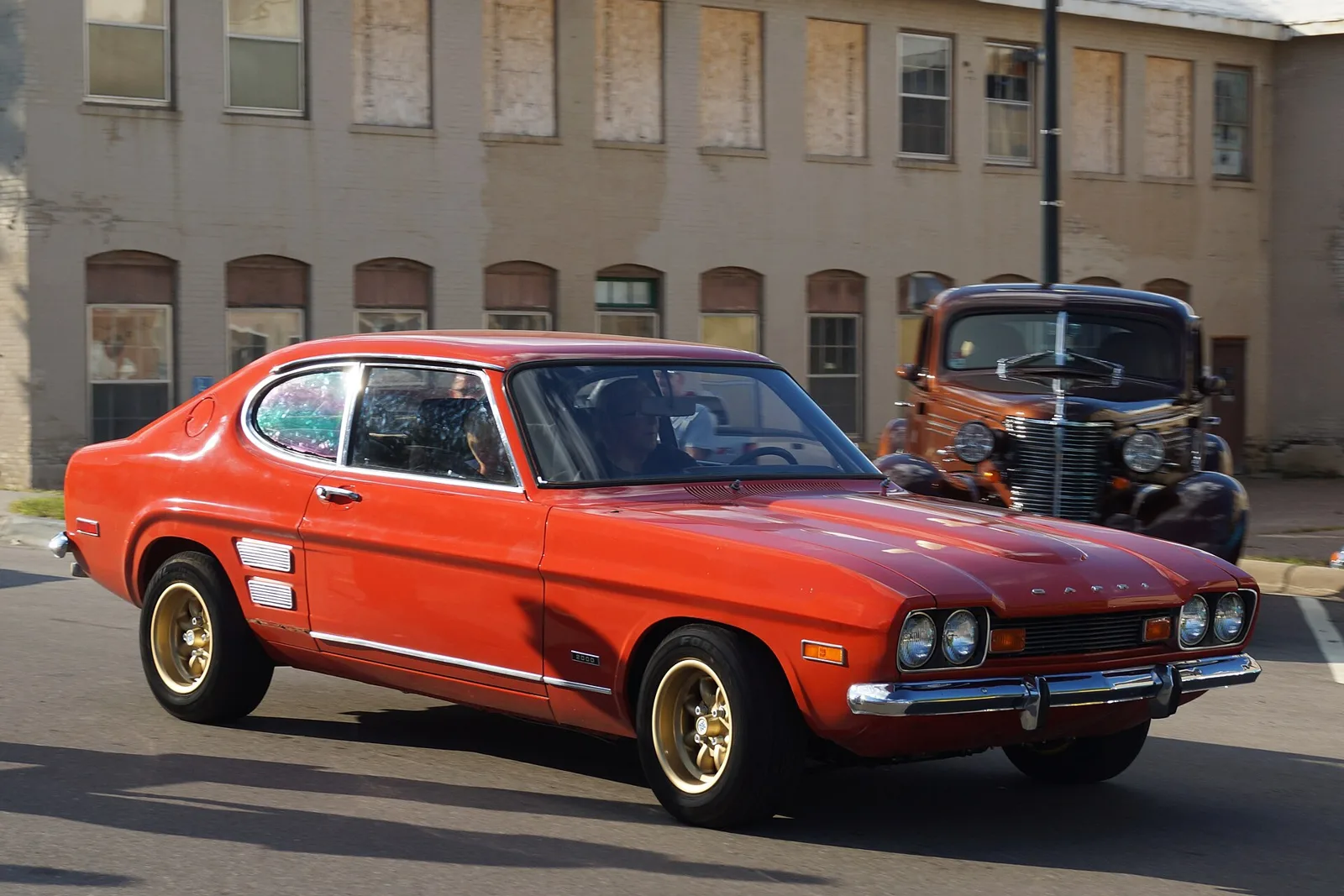
Three generations of a sporty nameplate sold by Lincoln-Mercury, from a Cologne-built import to a Fox-platform pony car and an Australian-built roadster.
Across three generations between 1970 and 1994, Lincoln-Mercury's Capri began as a Cologne-built import, became a Mustang-based pony car in 1979 and ended as an Australian-built two-seat roadster. Sales in the 1970s reached 513,500 cars.
Lincoln-Mercury, the Ford Motor Company division, sold the Capri across three generations, with the first arriving in 1970. The first two generations were built in Europe and the United States, and the third was a roadster built by Ford of Australia. Each generation changed the car's role, from a captive European import to a Mustang-based pony car and then a two-seat roadster.
What is the Mercury Capri?
The Capri was a sport compact that Lincoln-Mercury sold from 1970 to 1978 without any Ford or Mercury divisional branding. It was a captive import, built by Ford of Europe and sold under the Capri name. From 1979 to 1986 the second generation became a proper Mercury, a badge-engineered variant of the contemporary Ford Mustang. The third generation was a roadster that Ford of Australia built for export to the United States.
The sequence is unusual because the name moved between markets as often as it moved between platforms. The car was known as the Ford Capri in Europe, Australia and most other markets, while in North America it carried the Mercury badge for most of its life.
A captive European import, a Mustang twin and a roadster built in Australia, all sold under one sporty name.
Where did the Capri name come from?
The name derives from the Italian island of Capri. The 1952 Lincoln Capri was the first use of the nameplate, serving as a trim level until 1959. From 1962 to 1964 Ford of Britain sold a Consul Capri two-door hardtop, and in 1966 and 1967 Mercury used the name as the standard trim of its Comet.
Ford of Europe developed the Capri two-door coupe in 1968 as its European answer to the Mustang. Like the Mustang, it had a long bonnet, a short deck and a fastback-style roofline. The European car was designed by Ford of Britain with locally sourced components from the Cortina MkII and the Escort, and its plans dated back to 1964.
How did the first-generation Capri change for America?
The first-generation Capri was built by Ford of Europe in Cologne, Germany, and it reached Lincoln-Mercury dealers in April 1970. Mercury sold it without any divisional identification, and it was priced at $2,300 at launch, or $19,068 in 2025 dollars. It was far smaller than the Mercury Cougar and Montego.
Several minor revisions adapted the European car for the American market. The two rectangular headlights gave way to four circular headlamps, which also appeared on some upscale European models. The change was needed because the rectangular lighting did not meet FMVSS 108. The car also gained grille-mounted turn signals, side marker lights and Rostyle wheels as standard equipment.
The Capri was sold as an economical sporty coupe with no upscale trim levels in North America. The European variants had trims such as GT, RS, L, XL and XLR, but none of these were offered in the United States.
What engines did the first-generation Capri use?
The Capri first used a 1.6 L Kent crossflow inline-four, and it received a 2.0 L OHC inline-four for 1971. Its powertrain was shared with the Ford Pinto, which made the engine range familiar to American buyers. For 1972 Mercury offered a 2.6 L Cologne V6 as an option, making the Capri the first American-market vehicle marketed by Ford Motor Company with a V6.
The V6 grew to 2.8 L for 1974, when Ford revised the castings for both the engine block and the cylinder heads. In the same period the Capri received bumper changes to meet the 5-mph standards. In 1973 the front bumper was reinforced with a steel tube, and for 1974 the car took body-coloured plastic bumpers at both ends.
A Mercury version of the Mustang II, badged as a Capri, was briefly considered. Its proposal used the Mustang II's 2+2 body with a rounded rear quarter window and bodyside sculpting. The strong sales of the European Capri as a captive import shelved those plans.
How did the Capri II change in 1976?
The Capri II reached American showrooms as an early 1976 model after the 1974 redesign of the European car. Lincoln-Mercury skipped the 1975 model year entirely and renamed the Capri the Capri II, again without divisional identification. The Capri II adopted a hatchback roofline, which marked a clear departure from its predecessor.
To suit the American market the Capri II carried quad sealed-beam headlamps, grille-mounted turn signal lamps, 5-mph bumpers and body-coloured side mirrors. It used the 2.3 L OHC engine as standard, with a 2.8 L V6 offered as an option. The engine choice kept the car consistent with the Pinto, the Mustang II and the Mercury Bobcat.
Why did Mercury stop importing the Capri?
Lincoln-Mercury ended imports of the Capri II from Ford of Europe after the 1977 model year. Unsold examples were sold during the 1978 model year, and the car was not replaced in the American market by an imported successor. The end of the import marked the close of the first chapter of Capri sales in North America.
Across the 1970 to 1978 period Lincoln-Mercury sold 513,500 Capri and Capri II models. At its peak the Capri's yearly sales in North America were the highest of any import except the Volkswagen Beetle. Lincoln-Mercury sold nearly 120,000 V6 Capris in 1973 alone, which shows how strong demand was at the time.
What did the second-generation Mercury Capri look like?
For the 1979 model year the Capri became part of the Mercury model line, as Lincoln-Mercury ended captive imports and created a Mercury counterpart of the 1979 Ford Mustang. It shared the Fox platform with the Mustang, and it was the first Mercury pony car since the 1970 Mercury Cougar. The car was offered solely as a three-door hatchback.
The Capri had its own front fascia, a vertically mounted grille and dark-tinted tail lights with horizontally ribbed lenses. Its wheel openings were slightly flared, with widened front and rear fenders, instead of the wide flares of the Mustang. For 1983 the hatchback was redesigned with a large compound-curve bubble-back rear window and new tail lights, rear bumper cover and grille.
For 1984 the Capri RS received a front air dam with fog lamps, similar to the one used on the Mustang Cobra and GT from 1980 to 1982. The 1986 car gained the federally mandated high-mounted centre brake lamp. Trims included the base Capri, Capri Ghia, Capri L, Capri GS, Capri RS and Capri Turbo RS.
The second generation shared its powertrains with the Mustang, offering inline-four, inline-six, V6 and V8 engines. The Mustang SVO was the single Mustang with no Capri counterpart. Production of the second generation ran through the 1986 model year, and Mercury then pulled the car for 1987.
Which special editions did the second generation receive?
The JPS Capri II and Capri II S arrived in 1976 and 1977, finished in black or white with gold striping and gold badging. In Europe the JPS car celebrated the John Player Special-sponsored Team Lotus Formula 1 team and copied its black and gold livery. In the United States, anti-tobacco advertising laws forced the name to change to Capri II S.
Black Magic cars, built from 1981 to 1983, wore black paint, gold striping and gold TRX wheels, plus a gold cat's head on each front valance. The 1983 Crimson Cat used bright red paint with gold striping. The 1984 Charcoal Turbo RS used a Garrett 60 turbocharger and a 3.45:1 limited-slip rear axle, and it was finished in charcoal and silver.
The Mercury Motorsport Capri of 1985 was built as a pace car replica for the Detroit Grand Prix and the MotorCity 100. The cars were modified by the American Sunroof Company, and fewer than 50 were built. They were sold only in Michigan and Ohio, which has made them highly sought after by collectors.
How did the Capri perform in racing?
Second-generation cars won the Trans Am Series championship in 1984 and 1985, using an aftermarket V8. Jack Roush's team ran a 5.0 L Capri, and Wally Dallenbach Jr. drove it to the 1985 Sports Car Club of America Trans Am title.
That record gave the nameplate a motorsport identity in the mid-1980s, alongside its role as a road car.
What was the ASC McLaren program?
The ASC McLaren brand was a joint specialty vehicle programme run from 1984 to 1990 by the American Sunroof Company, McLaren Performance Technologies and the engineer Peter Muscat. It turned Ford's Fox-body cars into hand-built two-seat roadsters and tuned sport coupes, with the Capri as the launch platform.
The programme began when Muscat designed a custom two-seat convertible for his wife, who was not allowed to park her personal Mercedes-Benz SL in the company lot. Ford declined to build the concept itself because it already made the Mustang convertible, so the work was passed to ASC for coachbuilding and to McLaren for performance engineering. The Capri was picked to revive the model's sluggish sales.
The 1982 Jubbu prototype turned a Fox-body coupe into a low-slung roadster, and it set the signature custom leather seating and flat-deck top storage. The 1983 engineering mule established a 20-degree windshield rake, a shortened glass frame and heavy underbody bracing. Completed cars had their factory roofs removed, box-section subframe connectors fitted and the windshield angled back two degrees.
McLaren re-engineered the suspension with tuned springs, Tokico gas shocks and heavy-duty sway bars, and it fitted custom BBS-style mesh wheels. The coupes carried BFGoodrich Comp T/A radials in 225/50/15 instead of the standard 225/60/15, which raised the effective gear ratio from 3.08:1 to about 3.35:1. The cars were among the quickest Ford products of 1985 and 1986, with zero to sixty times under six seconds.
Production moved from the Capri to the Mustang GT in 1987. Licensing and royalty disputes between Muscat and ASC ended the partnership after 1990. A later record-keeping loss also made the 1984 and 1985 cars hard to trace, because the factory build records were destroyed in a dispute.
How did the Mustang built in Mexico relate to the Capri?
The third-generation Ford Mustang was built at the Cuautitlan Izcalli plant outside Mexico City from 1979 to 1984, in both hatchback and notchback coupe forms. From 1981 to 1984 the plant combined Mustang components with parts from the Mercury Capri. The Mexican Mustangs used Capri taillights and, from 1982 to 1983, the Capri's front fascia with Ford badging.
From 1983 to 1984 the facility built a Mustang hatchback with Capri front and rear fenders, along with the Capri's bubble-back rear hatch. The arrangement shows how closely the two cars were linked through the Fox platform.
What was the third-generation Capri?
For the 1991 model year the Mercury Capri returned to the division after a five-year break, as a two-door roadster. It was designed to compete with the Mazda MX-5 Miata and the Toyota MR2. Like the first generation it was a captive import, produced by Ford of Australia alongside the Ford Capri and the Ford Falcon, and it was intended for American exports.
The third-generation car was derived from the Australian Ford Laser, which was sold in the United States as the first-generation Mercury Tracer. It shared drivetrain commonality with the Mazda 323. Ford of Australia added a driver-side airbag to meet passive restraint rules that did not apply at home, and the dashboard gauges were changed to non-metric readings.
The Capri adopted a front-wheel-drive powertrain, a major departure from the MX-5. The MX-5 was strictly a two-seater, but the Capri was a 2+2 with small rear seats that folded to reach the boot. A removable hardtop was offered, similar to the MX-5's.
Only two trims were offered for the whole run. The base car had a 100 hp Mazda 1.6 L DOHC inline-four, and the XR2 used a turbocharged version of the same engine rated at 132 hp. A five-speed manual was standard on both, with a four-speed automatic on the base cars. The XR2 received 15-inch alloy wheels in 1992, and for 1994 the car gained new tail lights, bumpers and wheel designs.
How did critics receive the Capri?
Road and Track gave the 1970 Capri a generally warm reception, arguing that styling and image sell cars and that Lincoln-Mercury had a real winner. Its 1972 reviewers called the Capri 2600 V6 an outstanding car, and they expected dealers to struggle to meet demand for it.
The magazine's later verdicts were just as positive. Its 1974 review described the V6 as attractive, solid and fast, with precise handling and quick stopping. Its review of the Capri II V6 praised it as a quality European car at a realistic price, with the hatchback body adding practicality.
The car also had a small place in popular culture. It appeared in the 1982 film The First Time, in which a grandmother gives her granddaughter the Capri after she buys a new Corvette and teaches her to drive a manual.
Key specifications at a glance
| Item | Figure |
|---|---|
| Generations | Three, 1970 to 1994 |
| Captive import origin | Ford of Europe, Cologne |
| Launch price (1970) | $2,300 |
| Sales, 1970 to 1978 | 513,500 Capri and Capri II |
| Second-generation platform | Fox, shared with Mustang |
| Third-generation engine | 100 hp 1.6 L DOHC; XR2 132 hp |
| Third-generation transmission | Five-speed manual; four-speed automatic on base cars |
| Final year | 1994 |
What is the Capri's legacy?
The Capri's legacy is a nameplate that moved between Europe, North America and Australia while keeping a sporty identity. Its European roots gave the first car its character, the Mustang link shaped the second, and the Australian roadster carried the name into the 1990s.