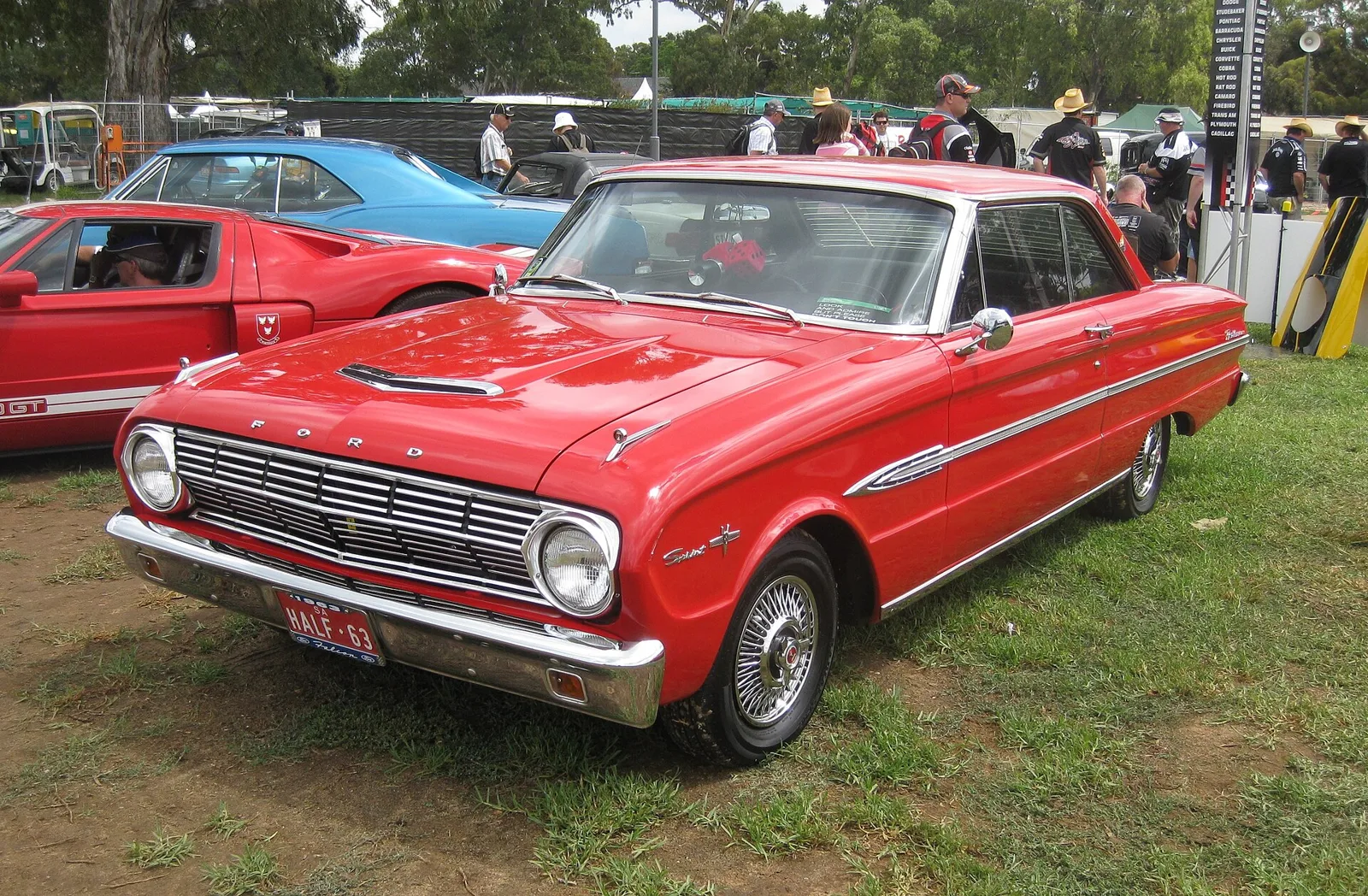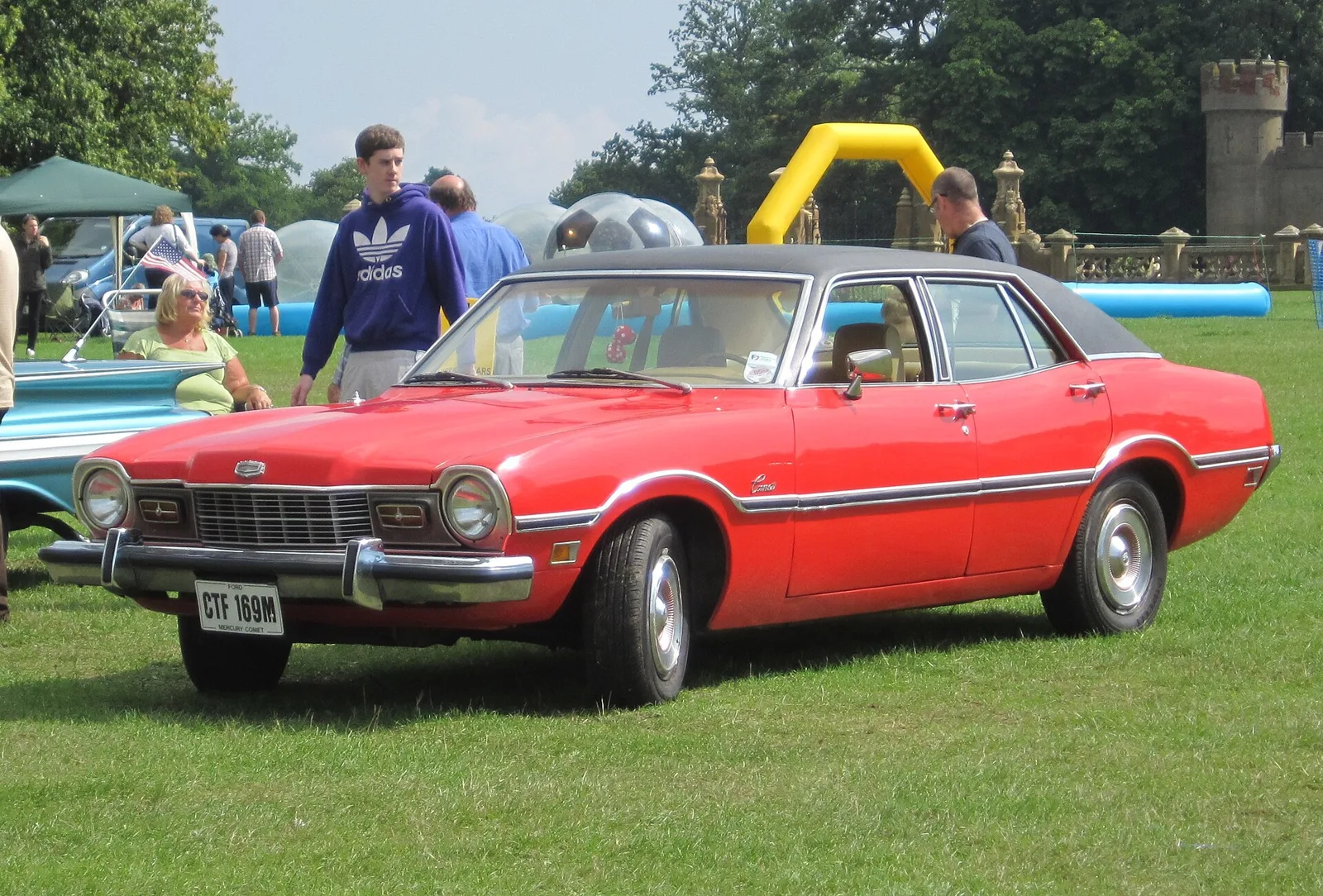
A 1960 Falcon-based compact, a 1960s intermediate with a 427 racing history and a 1971 Maverick revival that ran until 1977.
The Mercury Comet was a compact and intermediate car built by Mercury from 1962 to 1969 and from 1971 to 1977. It began as a 1960 Falcon-based compact, moved to the Fairlane intermediate platform in 1966, and returned in 1971 on the Maverick compact platform.
The Mercury Comet was a car that changed shape several times. Mercury built it from 1962 to 1969 and again from 1971 to 1977, and in those years it moved from a compact based on the Ford Falcon to an intermediate, then back to a compact on the Maverick platform.
Where did the Mercury Comet come from?
The Comet was first intended as a 1960 Edsel, but Edsel had been shut down by November 1959, so the car went to the Lincoln-Mercury division. It was released in March 1960, built on the Ford Falcon platform and sold through Lincoln-Mercury dealers.
The name had belonged to the Comet Coach Company, a maker of ambulances and hearses, and Ford bought it in 1959. Its naming followed the Space Race style of the period, and it sat alongside the Mercury Meteor in the range.
Early Comets carried better interior trim than the Falcons they were based on, and their wheelbase was a little longer. The sedans were stretched five inches, while the wagons kept the original length.
An Edsel-born compact that spent its life changing platforms, from Falcon to Fairlane to Maverick, and still left a 427 racing legacy.
How did the first Comet differ from the Falcon?
The first Comets were released without any divisional badge, carrying only Comet emblems. They were sold through Lincoln-Mercury-Comet dealers and were not branded as Mercury Comets until the 1962 model year, a treatment similar to the Valiant's early days without Plymouth badging.
Pre-production cars carried a split grille following Edsel's pattern. At launch that grille gave way to a design better suited to Mercury's themes, but the canted elliptical taillights of the Edsel prototype survived, still carrying the Edsel part number.
Some components were carried over from Edsel's 1959 inventory, such as the parking lamps and dashboard knobs. Keys for 1960 and 1961 cars were modelled on Edsel keys, with the middle bar of the E taken out so the shape read as a C.
What engines did the early Comets use?
Under the bonnet of the 1960 car sat a 144 cid Thriftpower six fed by one Holley carburettor, rated at 90 hp (67 kW). That single-barrel setup kept the engine simple. Buyers could choose a three-speed manual or a two-speed Comet-Drive automatic.
The 1961 model raised the six to 170 cid and 101 hp (75 kW) after complaints about the earlier engine's performance. A four-speed manual also became available, although it lacked first-gear synchromesh.
The 1963 chassis was reworked to accept an optional 260 cid V8 from the Fairlane, which made 164 hp (122 kW) through a two-barrel carburettor.
What was the S-22 package?
The S-22 was a sport option from 1961, limited to the two-door sedan. It shared the regular Comet's mechanicals, and its only changes were S-22 badging, bucket seats and a centre console. Its S-22 badging was the main visual clue.
Six bullet-shaped taillights marked the 1962 S-22, and the ordinary Comets made do with four oval units plus two optional flat reverse lights. The same year the Comet Villager wagon arrived, essentially a Custom four-door with simulated woodgrain side panels.
The 1962 cars also renamed the automatic transmission. The Comet Drive became the Merc-O-Matic, a name unique to the Comet even though it matched the unit fitted to the larger Mercurys.
Why was the 1964 Comet a big change?
Squarer lines defined the 1964 Comet, which kept the 1963 unibody underneath. Compared with the round-bodied 1960 to 1963 cars, the new shape was much more angular. The new Falcon shared its basic lines, yet the grille took cues from the Lincoln Continental.
The model designations were changed too. The performance version, previously the S-22, became the Cyclone, and the Caliente, 404 and 202 replaced the Custom and base models. With the 144 six gone, the 170 became the entry-level engine.
The two-door station wagon was discontinued, but the top-of-the-line Villager continued. The two-door hardtops also gained a sharper-cornered version of the fastback roofline that Ford had introduced on its full-size models in mid-1963.
Did the Comet race in 1964?
Ford built about 50 Comet Cyclones in 1964, each fitted with the company's racing 427 engine with two carburettors, similar to the Ford Thunderbolt. The Cyclones competed in A/FX on 10-inch tyres, where they dominated in the way the Thunderbolts did in Super Stock.
Ronnie Sox and Don Nicholson were among the drivers, and Wild Bill Shrewsberry took part as well. Shrewsberry, who worked alongside Jack Chrisman, still owns his original 427 car, a Caliente.
What changed for 1965?
For 1965 the Comet received new styling front and rear, including stacked headlights like those on contemporary full-size Fords, Pontiacs and Cadillacs. The base six grew from 170 to 200 cid, and it still used a single-barrel carburettor.
The 289 V8 came in three ratings: 200 hp with a two-barrel, 225 hp with a four-barrel, and the high-performance 271 hp version borrowed from the Ford Mustang, which was paired with a four-speed manual.
The optional automatic changed to a three-speed Merc-O-Matic, essentially a Ford C4 unit, with the standard transmission remaining a column-shifted three-speed manual.
What was the Comet like in 1966 and 1967?
From 1966 the Comet became a mid-sized car, built on the Fairlane's chassis. The Cougar took over the platform shared with the Mustang, and the Comet wagon debuted a tailgate that could either drop or swing sideways. Those were the last changes to the mid-sized line before 1968.
New engines for 1966 included a 390 cid V8 with a two-barrel rated at 265 hp, a four-barrel version rated at 275 hp, and a 335 hp unit that was standard on the Cyclone GT. A Cyclone GT convertible led the field as the 1966 Indianapolis 500 pace car.
By 1967 only the base 202 sedans still carried the Comet name. Other models used their former subseries names, and the mid-sized line ran from the Capri and Caliente up to the Cyclone and Cyclone GT. That spread of trims made the mid-sized range more varied than before.
How rare is the 1967 Comet 427?
Only 60 cars received the 427 cubic-inch FE side-oiler V8 in 1967. Of these, 51 carried the dual four-barrel R code, and nine had the single four-barrel W code. For a car this size, the engine was an unusual choice, and the numbers reflect that.
Of the 427 cars, six were Capris and four were Calientes, and no convertible received the engine. The sole W-code Capri is considered the rarest Mercury ever built.
Each 427 car had a four-speed Toploader gearbox, a 9-inch rear end geared 3.89:1 and the Traction-Lok limited-slip unit. Mercury removed sound deadening to save about 150 pounds, and some cars had their batteries moved to the boot to shift weight over the rear wheels for better traction in drag racing.
What did the 1968 and 1969 Comets look like?
In 1968 Mercury's mid-sized models drew on the full-size Mercury look, and used the chassis and many components of Ford's Fairlane and Torino. The base Comet became a two-door coupe, while the Montego took over from the Capri and the Montego MX from the Caliente.
A 302 V8 with 210 hp replaced the 289 midway through 1968. For 1969 the grille was revised and the headlight surrounds were removed, while the taillights were slightly restyled.
The 1969 model was the last year the Comet name graced a mid-sized Mercury. A four-door sedan was planned for that year but never offered, and the Cyclone Spoiler and Cyclone CJ joined the range at the top.
Why did the Comet name lapse before 1971?
After 1969 the Comet name was suspended, because the base model of Mercury's intermediate line had become the Montego. The Montego name had replaced the Comet in that role. The Cyclone name carried on through 1971, but the Comet itself was absent until the next generation arrived.
The name came back for 1971 on a Mercury-badged Maverick compact. It used most of the Maverick's sheet metal, with a different grille, taillights and hood, and its chassis traced back to the original Falcon.
How did the Comet change in 1971?
The base engine was a 170 cid six rated at 100 hp (75 kW). Optional engines were a 200 cid six at 115 hp (86 kW) and a 302 V8 with a two-barrel carburettor rated at 210 hp (157 kW).
The Comet came as two- and four-door sedans, with a muscle-car style GT model available as a two-door sedan until 1975. The GT added a blacked-out grille, dual body-side stripes, high-back bucket seats and a simulated hood scoop.
Power ratings moved only slightly over the years. By 1972 the 170 six had fallen to 82 hp (61 kW), the 200 six made 91 hp (68 kW), and the 302 V8 was rated at 138 hp (103 kW).
Why did the Comet end in 1977?
Ford had first planned to replace the Comet and Maverick for 1975 with redesigned models. The decision was then made to build the more upmarket Mercury Monarch and American Ford Granada alongside the original cars, which kept them in production a while longer.
The Monarch and Granada had more standard and optional equipment and were treated as luxury compacts. The Comet itself was discontinued after the 1977 model year to make room for the Mercury Zephyr for 1978.
The Comet GT ended in 1975, although its features stayed available through the Sports Accent option group in 1976 and 1977.
What was the Cyclone?
The Cyclone was the performance version of the Comet, built from 1964 to 1971. It mirrored the Comet's changes, and its last year came in 1971, when the car was folded into the Montego range. Its engine options and trims sat above the standard Comet in every year.
How long did a Comet last on the road?
In July 2010 USA Today reported on Rachel Veitch, a 91-year-old Florida driver who still drove her 1964 Comet Caliente every day. She had bought the car new, and it had covered over 562,000 documented miles. Her case was notable for the distance alone.
The car was retired in 2012 after 576,000 miles, when Veitch decided to stop driving because her eyesight had become too weak.
What are the Mercury Comet specifications?
| Generation | Years | Platform | Notable engine |
|---|---|---|---|
| First | 1960 to 1963 | Ford Falcon, stretched five inches for sedans | 144 cid six, 90 hp (67 kW) |
| Second | 1964 to 1965 | Redesigned Falcon-based unibody | 289 cid V8, up to 271 hp (202 kW) |
| Third | 1966 to 1967 | Ford Fairlane intermediate | 390 cid V8, up to 335 hp |
| Fourth | 1968 to 1969 | Fairlane-based intermediate | 428 cid V8, 335 hp (250 kW) |
| Fifth | 1971 to 1977 | Ford Maverick compact | 302 cid V8, 210 hp (157 kW) |