A first-lap pileup thinned the field to seven finishers, and a scoring dispute still colours the rookie winner's victory.
The 1966 Indianapolis 500 was the 50th running of the race, held on Monday, 30 May 1966. Graham Hill won it as a rookie, after a first-lap pileup eliminated eleven starters and a scoring dispute with Jim Clark that has been debated ever since.
The 1966 Indianapolis 500 was the 50th International 500-Mile Sweepstakes, run on Monday, 30 May at the Indianapolis Motor Speedway. Graham Hill won it as a rookie, but the race is equally remembered for a first-lap pileup that eliminated eleven starters and a scoring dispute that lingered long after the flag.
Why was the 1966 race unusual before the start?
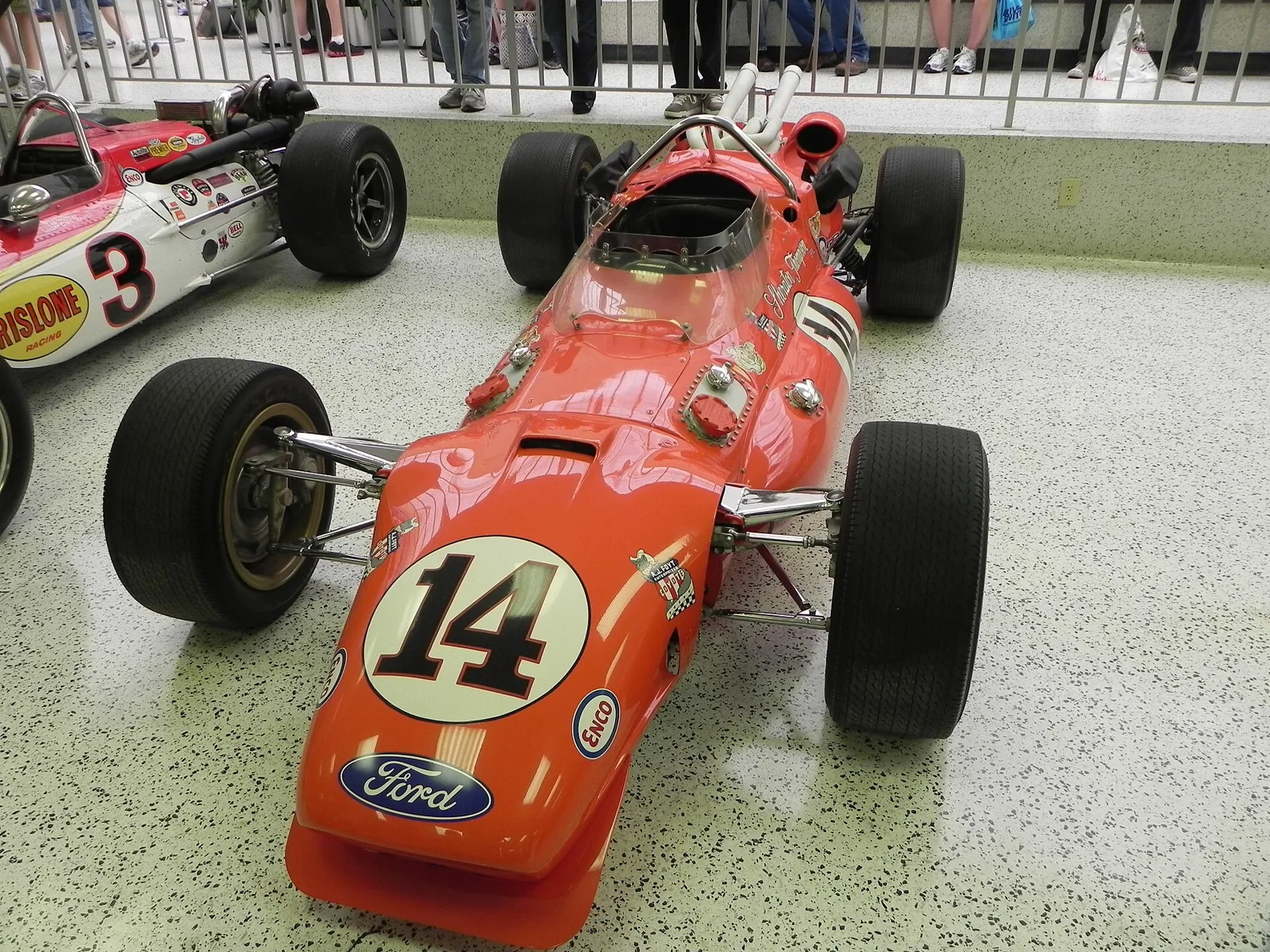
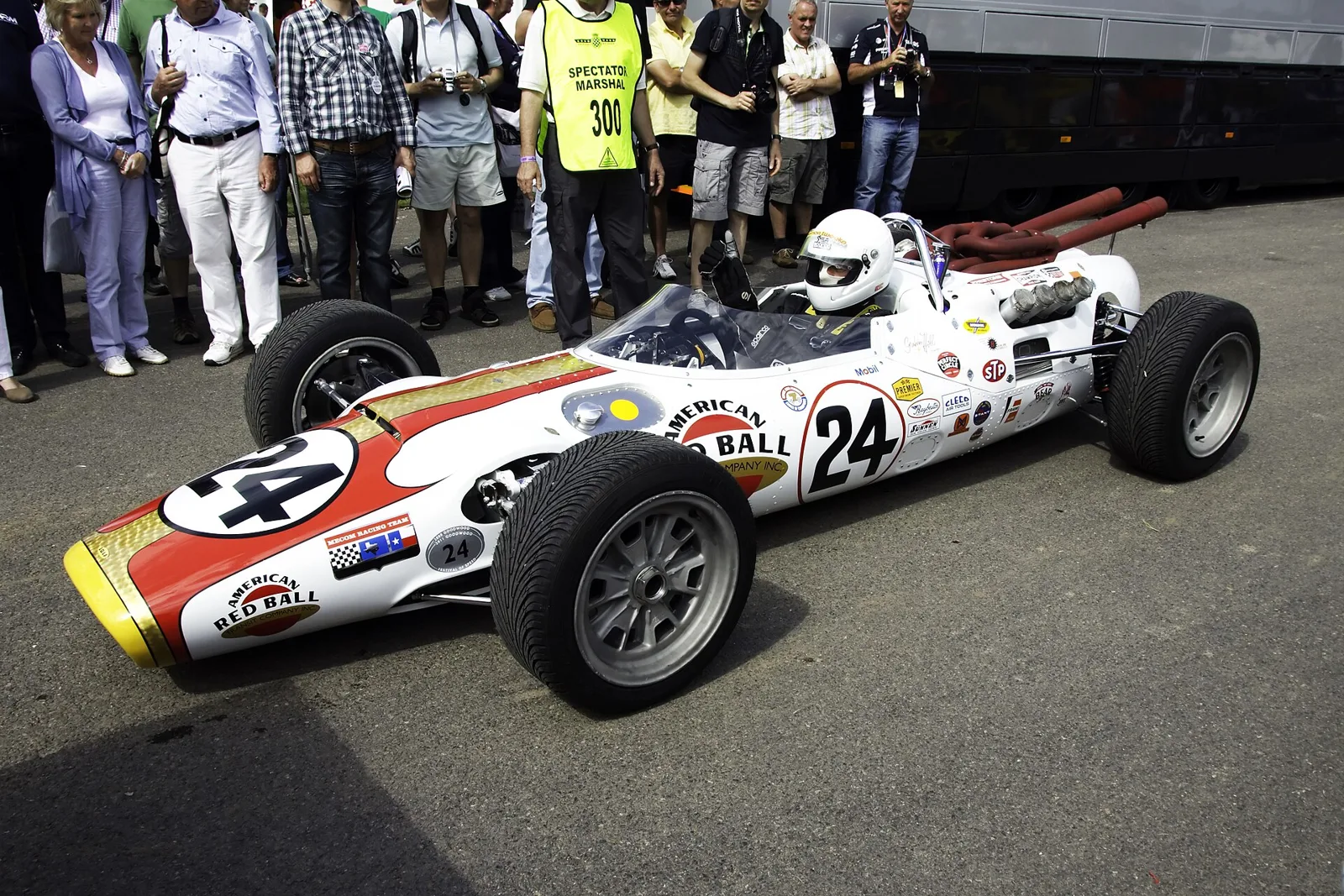
The 50th running carried extra weight, and the race was held in a year when the event also celebrated the 150th anniversary of Indiana statehood. The Mecom team had lost Walt Hansgen, who died in a test crash at Le Mans on 3 April. Graham Hill was brought in as a late replacement.
The Mecom Racing Team had planned to field Hansgen, Rodger Ward and Jackie Stewart. Johnny Rutherford, a three-year veteran, was also missing, having been injured in a serious crash at Eldora on 3 April.
Eleven starters out on the first lap, seven cars at the finish and a rookie winner whose result still sparks debate.
How did qualifying shape the grid?
Mario Andretti took pole with a four-lap average of 165.889 mph. That figure followed a practice run in which he had pushed the unofficial track record to 167.411 mph on 13 May. Pole day was not without tragedy, and the rest of the field was filled over several days.
Practice began on 30 April amid cold and rain, which kept most cars off the track. Chuck Hulse was the fastest car over the first weekend at 149.8 mph. Art Pollard became the first rookie to pass the 145 mph rookie test, and Andretti turned a practice lap of 164.5 mph early in the month. Jim Clark's best practice lap was 165.7 mph.
On pole day, 18 cars completed qualifying runs. Andretti's best single lap was a record 166.328 mph, and A. J. Foyt crashed on pole day before qualifying on the next day at 161.355 mph. Chuck Rodee backed into the wall on a warm-up lap in turn one, and he died of his injuries at hospital.
The later days produced their own twists. Al Unser qualified at 162.272 mph and was the fastest of the day. Bobby Grim qualified his front-engined roadster at 158.367 mph, the only car of its kind in the field. Ronnie Duman and Larry Dickson bumped their way into the field, while Greg Weld wrecked two cars during bump-day qualifying.
What happened at the start?
Billy Foster spun into the outside wall as the green flag fell, and sixteen cars were caught up in the pileup. Eleven of the 33 starters were eliminated in the first-lap accident, and the restart went off with only 22 cars.
Foster had been jockeying for position when he nearly touched wheels with Gordon Johncock, and he lost control of his car. The drivers scrambled out of their machines to avoid a fire, although no significant fire broke out. A. J. Foyt was the only driver casualty, hurting his hand while climbing the catch fence. One spectator was also hit by a wheel from the crash.
Of the sixteen cars involved, eleven were damaged beyond repair. The red flag stayed out for about 1 hour and 24 minutes while the track was cleared. When the race restarted, the field took warm-up laps and went off single file, and the yellow came out almost at once after Johnny Boyd crashed in the first corner.
How did Ruby and Stewart shape the race?
Lloyd Ruby led the early half, but a bad pit stop cost him several laps and he finished 11th. Jackie Stewart then took over, leading 40 laps in the second half. His race ended when low oil pressure forced him out with ten laps to go, after a broken scavenge pump had cut the oil supply.
Stewart had been leading by a little over a lap when the oil pressure fell. He parked his car in turn four and tried to push it back to the pits before giving up and walking back to the garage area. Graham Hill inherited the lead and held it to the finish, leading the final ten laps.
Hill's win made him the first rookie winner since 1927. Stewart, though he did not finish, completed enough laps to be classified sixth, and he was voted rookie of the year ahead of Hill. Dan Gurney's car had dropped out in the opening-lap crash, so the Wood Brothers' pit work for him went unused.
Who really won the 1966 race?
Official and unofficial timing both recorded Hill ahead of Jim Clark, but Clark's team believed they had won. Clark had spun twice during the race and still finished second. The scoring pylon changed frequently during the afternoon, which deepened the confusion for spectators and crews alike.
Clark's crew contended that he had lost little track position in his spins and that they were still ahead of Hill at the finish. Unofficial scoring showed Hill 41.13 seconds ahead of Clark, and the official results released the next morning kept the same order. Colin Chapman and Andy Granatelli, the Lotus entrants, declined to file an official protest.
Hill called the race uneventful and said he was puzzled and surprised to be the winner. The IMS Radio Network scoring also had him first, and the apparent controversy faded quickly without any official action. Years later the question was still discussed among racing fans.
Theories have since suggested that a lap was miscounted. One points to Al Unser, whose crash on lap 161 may have been logged against Clark because the two cars were painted much alike. Another suggests Gordon Johncock, who had restarted from the pit lane after his first-lap damage, might have been the rightful winner in terms of elapsed time.
What was the final order?
| Place | Driver | Detail |
|---|---|---|
| 1 | Graham Hill | Rookie winner, led the final ten laps |
| 2 | Jim Clark | Spun twice; disputed the result |
| 3 | Jim McElreath | Third overall |
| 4 | Gordon Johncock | First-lap damage and a pit-lane restart |
| 6 | Jackie Stewart | Parked late with oil pressure failure, rookie of the year |
Only seven cars were still running at the end, the fewest finishers in the history of the race.
How was the 1966 race broadcast?
The IMS Radio Network carried the race, with Sid Collins as chief announcer, and it reached more than 725 affiliates in all 50 states. An estimated 100 million listeners heard the race on radio. Len Sutton replaced Fred Agabashian as driver expert, after Agabashian's sponsor links caused a conflict.
Closed-circuit television showed the race in nearly 200 theatres, and it was the first time the feed had been sent to Europe by satellite, using the Early Bird satellite. ABC's Wide World of Sports aired a later edition on June 4, with Chris Schenkel anchoring the telecast.
What did the 1966 race leave behind?
The 1966 race is remembered for its rookie winner, its thin finishing order and a scoring question that never changed the official result. Hill's rookie win, the first by a rookie since 1927, is part of the lasting record, and only seven cars finished, the fewest ever.
The controversy has kept the race in the conversation for years. Because the official review confirmed Hill, the dispute has remained a matter of debate rather than a formal change to the record books.