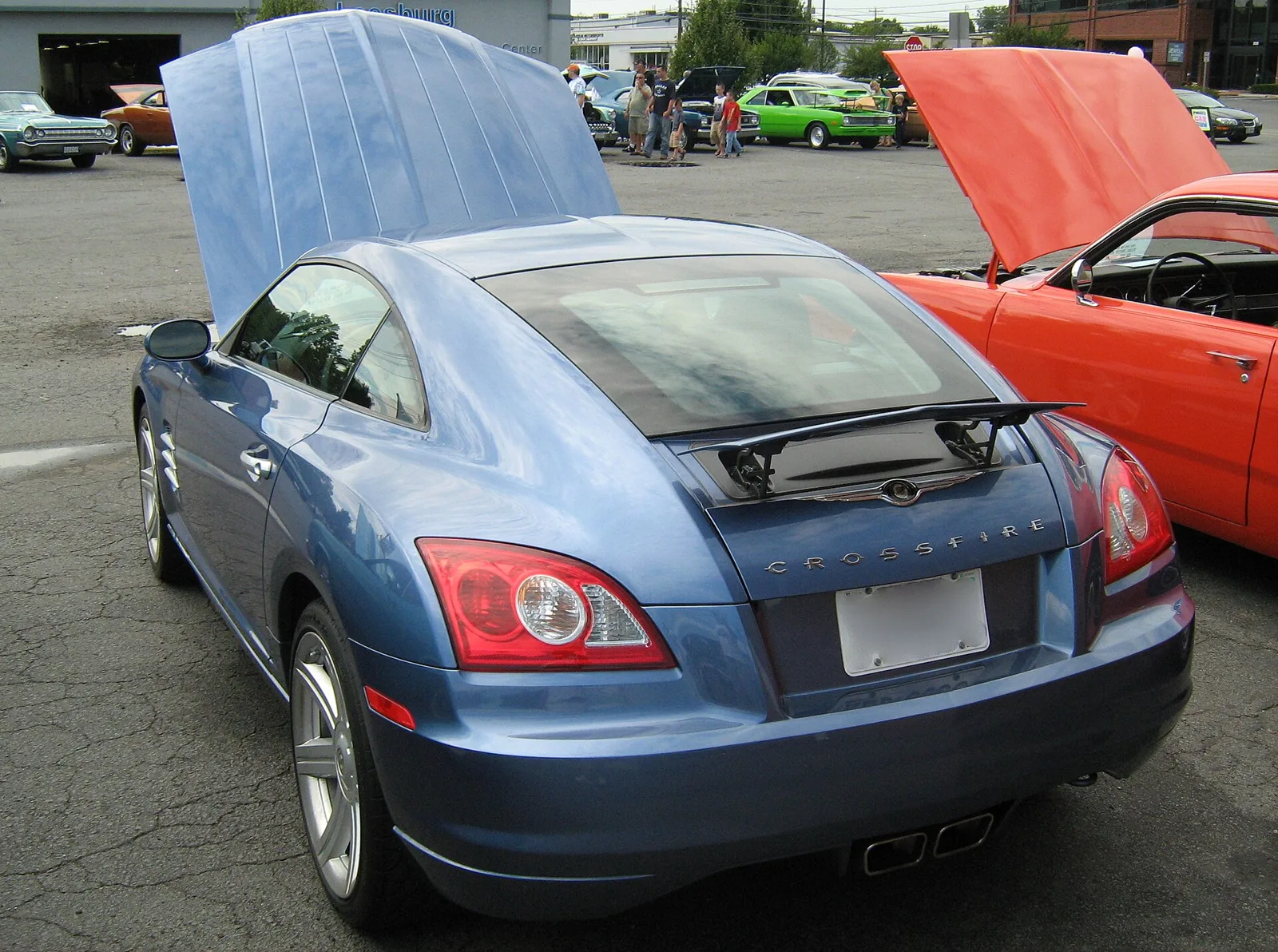
How a spoiler disrupts airflow, why it is often mistaken for a wing, and where the real aerodynamic benefit comes from.
Spoilers are added to cars to reshape airflow, reducing lift, turbulence or drag, though many on road cars are styling features. A wing, by contrast, is built to create downforce and usually adds drag. Race teams tune spoilers and wings to each track and driver.
A spoiler is an aerodynamic device meant to disrupt unfavourable airflow over a moving vehicle, usually the lift, turbulence or drag that the body would otherwise create. Front spoilers are often called air dams and sit under the nose. Many spoilers fitted to road cars do little for aerodynamics, because they were added mainly for styling.
What is a spoiler on a car?
A spoiler is an aerodynamic device that breaks up the airflow over a vehicle so that it produces less lift, less turbulence or less drag. Its name describes the job it does rather than a fixed shape. Spoilers are frequently fitted to race cars and high-performance sports cars, and they have become common on ordinary passenger vehicles as well.
The term is often used loosely as if it meant wing, but the two are different. An automotive wing is designed to generate downforce as air flows around it, pressing the car onto the road. A spoiler simply disrupts existing airflow patterns. Rather than reducing drag, a wing usually increases it, because generating downforce is itself a source of resistance.
Most spoilers were added for looks, and only the best-engineered ones change how the air behaves.
How does a spoiler change airflow?
A spoiler works by adding turbulence to the flow that passes over it. The turbulence spoils the smooth laminar flow and provides a cushion for the boundary layer that clings to the bodywork. Because the spoiler is an application rather than a specific shape, its operation depends on the particular effect it is meant to counter.
Aerodynamics matters most at high speed. A car must first be stable through its mechanical grip, which comes from the chassis, suspension and tyres. Aerodynamic aids then supply the balance and stability needed at higher speeds. At low speed a spoiler has little effect, and a poorly chosen design can reduce stability or efficiency once the car is moving quickly.
How do spoilers work in racing?
In racing, spoilers form part of a package that includes the body and chassis. Race tracks demand different configurations because speeds and layouts vary, and teams often tailor devices to the preferences of a particular driver in pursuit of faster lap times. Drag and downforce both rise with the square of velocity, so setup choices become more important as speed increases.
At speeds below about 120 mph (190 km/h) the emphasis shifts, and the balance between grip and drag becomes the main concern. On short oval tracks, downforce is crucial for corner grip, but too much drag hurts acceleration out of corners and top speed on the straights. Teams therefore use relatively large rear wings and front splitters, and balance the two carefully.
Road courses mix high-speed straights, tight corners and changes in elevation. Teams there often use adjustable elements, such as wings and flaps, to fine-tune the car for each section of the lap. Above about 120 mph, as on superspeedways, even small changes in configuration can dramatically alter handling and performance.
Do road car spoilers improve performance?
Not usually. Many spoilers on passenger vehicles are meant to reduce drag and improve fuel efficiency, and front spoilers beneath the bumper mainly reduce the air passing under the car. Rear spoilers can help a car with a steep roofline by making the air see a more gradual slope, which delays flow separation and reduces lift.
Still, the spoilers on many upmarket models provide little or no aerodynamic benefit. Some manufacturers have said openly that their spoilers are for looks only. Real drag reduction also depends on the sides of the car, and designs that shrink the cross-section at the rear, such as a boat-tail, do more to reduce the wake than a spoiler alone.
What was the Breedlove and AMC Javelin story?
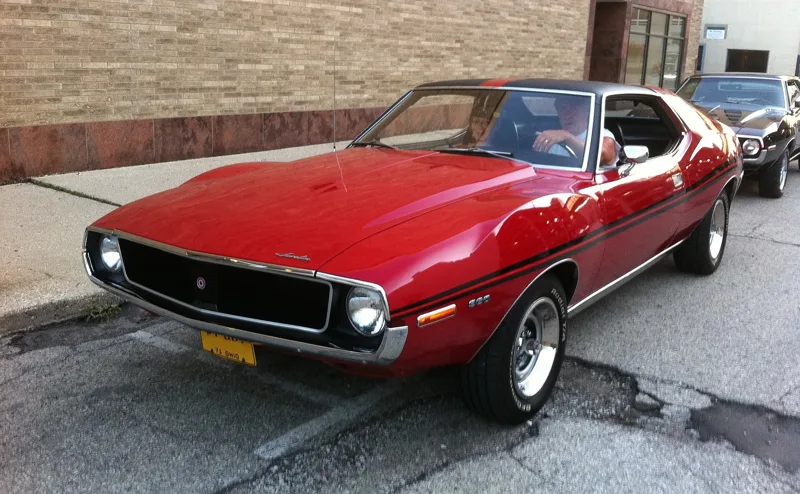
In 1968 Craig Breedlove set a flying mile record of 161.7335 mph (260.28 km/h) at the Bonneville Salt Flats, driving a prepared production AMC Javelin with a 304 cu in (5.0 L) V8. The car carried Breedlove's unique roof-mounted spoiler, and it showed how a spoiler could be part of a serious speed effort rather than a styling exercise.
AMC stylists later made a streamlined fibreglass airfoil above the rear window, which became a factory option on 1969 Javelins. Car Life magazine tested it and found no improvement in reducing lift at speeds below 115 mph (185 km/h). In 1970 AMC swapped it for an oversized ducktail on the trunk lid, styled by Mark Donohue and Roger Penske. The ducktail then became standard on every 1971 through 1974 AMX model after it proved itself on the track.
What are spoilers made from?
Spoilers are usually made from lightweight polymer-based materials, and each option trades cost, durability and weight in a different way. The table compares the four materials most often used in car spoilers, along with their main strengths and drawbacks.
| Material | Strengths | Drawbacks |
|---|---|---|
| ABS plastic | Inexpensive, and widely cast by original equipment makers with fillers for stiffness | Becomes frail with age as volatile phenols evaporate |
| Fibreglass | Durable and easy to work, with low material costs | Labour-intensive, so unprofitable for large-scale production |
| Silicone | Extremely plastic in form and tolerant of high temperatures, with a long lifetime | Used mainly by some accessory makers |
| Carbon fibre | Lightweight and durable | Expensive and heavy on manual labour, so hard to build at scale |
Carbon fibre is the premium option, which is why it appears mainly on competition and high-end sports cars. The large amount of manual labour it requires keeps it from being used widely on mass-market automobile parts.
What types of spoiler are there on road vehicles?
Front spoilers, sometimes called air dams, sit under or integrate with the front bumper. In racing they control the handling dynamics of the air ahead of the car, improving drag or creating downforce. On passenger vehicles they more often direct air into the engine bay to help cooling.
Pickup trucks use two other forms. A bed spoiler attaches to the top of the bed rails near the rear and, used with a bed cover, reduces the air profile of the drop from the tailgate. A cab spoiler works in the same way but targets the drop from the cab to the cargo bed.
What are active spoilers?
An active spoiler adjusts while the vehicle is moving, changing its effect according to conditions. Most are rear spoilers that retract into the body at low speed and rise once the car passes a set speed. The Bugatti Veyron used an active spoiler of this kind, and an electric motor usually deploys it on the basis of speed, driver setting or other inputs.
Active spoilers offer benefits that fixed designs cannot. They keep the bodywork clean and uncluttered at low speed, when the car is most likely to be seen. Designers can also use a hiding spoiler to improve high-speed aerodynamics without changing the car's appearance, as Porsche did with the 911 and Audi with the TT. Some active front spoilers extend toward the road to reduce drag at high speed, and a retractable front unit can avoid scraping on kerbs.
Powered fans offer a related approach. The Chaparral 2J used fans to increase downforce, which improves traction and handling in a manner similar to a spoiler acting through ground effect. Research on fans for altering vehicle aerodynamics continues.
Where did the whale tail come from?
When the Porsche 911 Turbo debuted in August 1974 with large, flared rear spoilers, they were quickly dubbed whale tails. The spoilers reduced rear-end lift so the car would not oversteer at high speed, and their rubber edges were thought to be pedestrian friendly. From 1978 the rear spoiler was redesigned and dubbed the tea tray, a boxier unit with raised sides that housed the intercooler.
The design traces back to race cars. A version was originally created for the Porsche 930 and Porsche 935 race cars in 1973, and a smaller duck tail, known in German as the Burzel, appeared on the 911 Carrera RS in the same year. Ernst Fuhrmann, then technical director of Porsche, oversaw the design. In 1976 a rubber chin spoiler was added to the front to offset the more effective rear unit.
The whale tail became a fashion statement. The name has been applied to large rear spoilers on the Ford Sierra RS Cosworth, the Chevrolet Camaro and the Saab 900, and to the rear of tricycles, trucks and boats.
Where else are spoilers used?
Heavy trucks use spoilers on the top and sides of the cab to reduce drag from the trailer behind them. Trailers can also carry underside spoilers angled outward to deflect air from the rear wheels. Trains may use spoilers to induce drag, acting like an air brake, and the Japanese prototype Fastech 360 was designed for 400 km/h (250 mph).
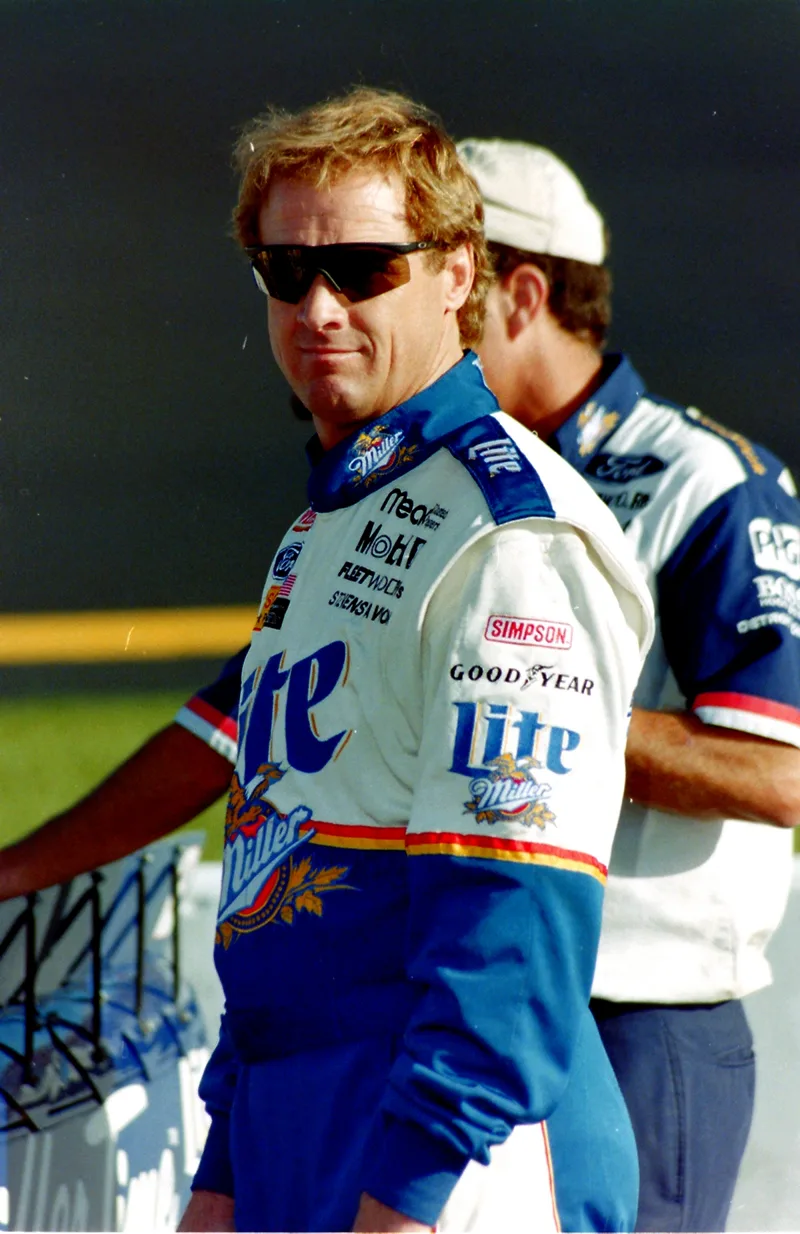
Some modern race cars use a passive roof flap. The car's body generates downforce going forward, but when it runs in reverse the body produces lift instead. Flaps recessed into a roof pocket deploy under the low pressure there and counteract some of that lift. NASCAR introduced these devices in 1994 following Rusty Wallace's crash at Talladega.