How Saab's quirky front-engined compact became a turbo icon, how the classic gave way to the GM-built New Generation, and why its engineering still draws owners.
The Saab 900 was a Swedish compact that became a mid-sized car in its second generation, built from 1978 to 1998. Its classic form had an engine mounted backwards and a transaxle that formed the oil pan. The New Generation, built with General Motors, sold 273,568 units before the 9-3 took over.
The Saab 900 was a compact car in its first series and a mid-sized car in its second, built by the Swedish maker from 1978 to 1998. The classic model used a longitudinal engine mounted at an angle and an unusual transaxle that formed part of the oil pan. The New Generation car that followed was built on a General Motors floor pan, and the 900 name was retired in 1998 when the 9-3 arrived.
What was the Saab 900?
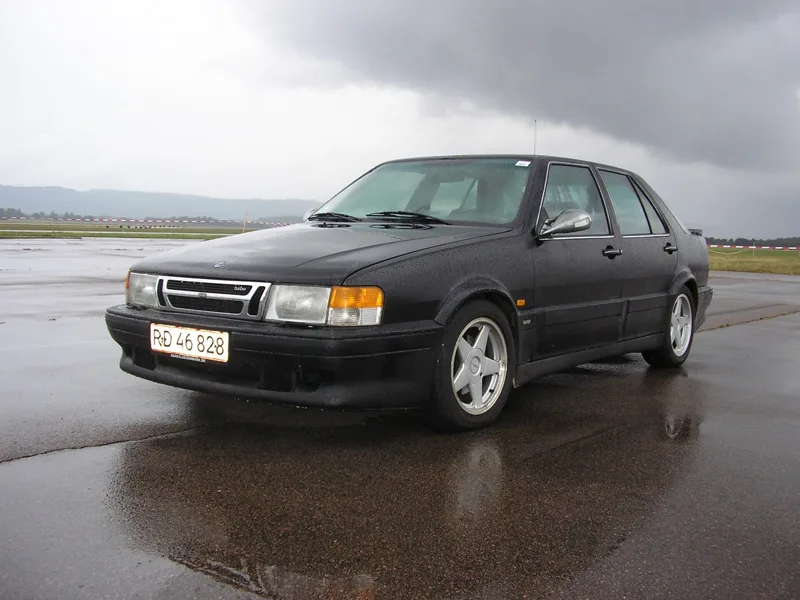
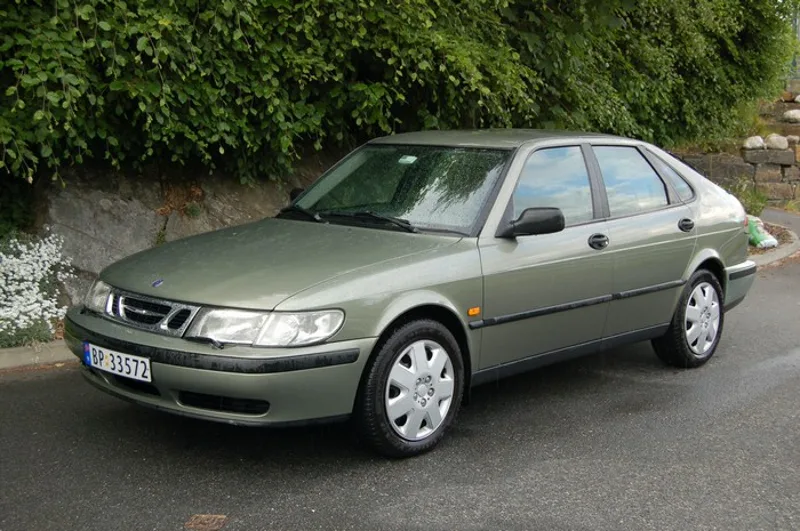
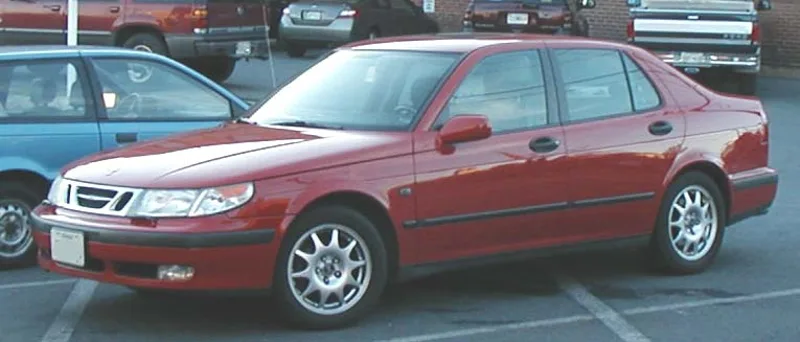
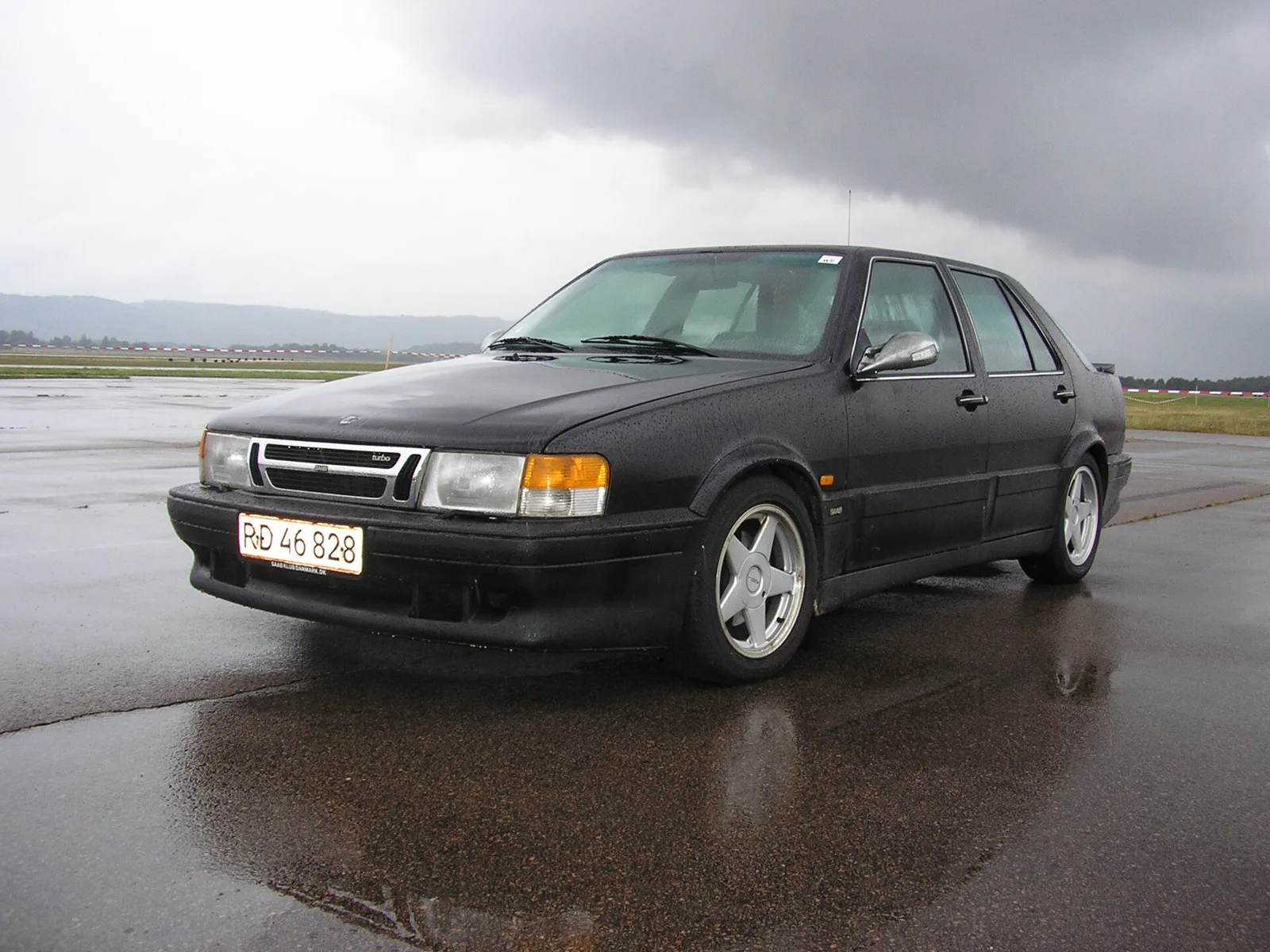
Two cars shared the 900 name. The first generation ran from 1978 to 1993, and the second from 1993 to 1998, when a larger body replaced the compact one. The first, called the classic, took its basic layout from the Saab 99. The second, the New Generation or NG, was a new design with a GM platform and transverse engines.
The 900 was a car with personality. Its turbocharged versions in particular became popular with enthusiasts, and its odd engineering choices gave it a loyal following that still exists among owners and collectors.
A backwards-mounted engine, a transaxle that doubled as an oil pan, and turbo boost that listened for knock.
How was the classic 900 engineered?
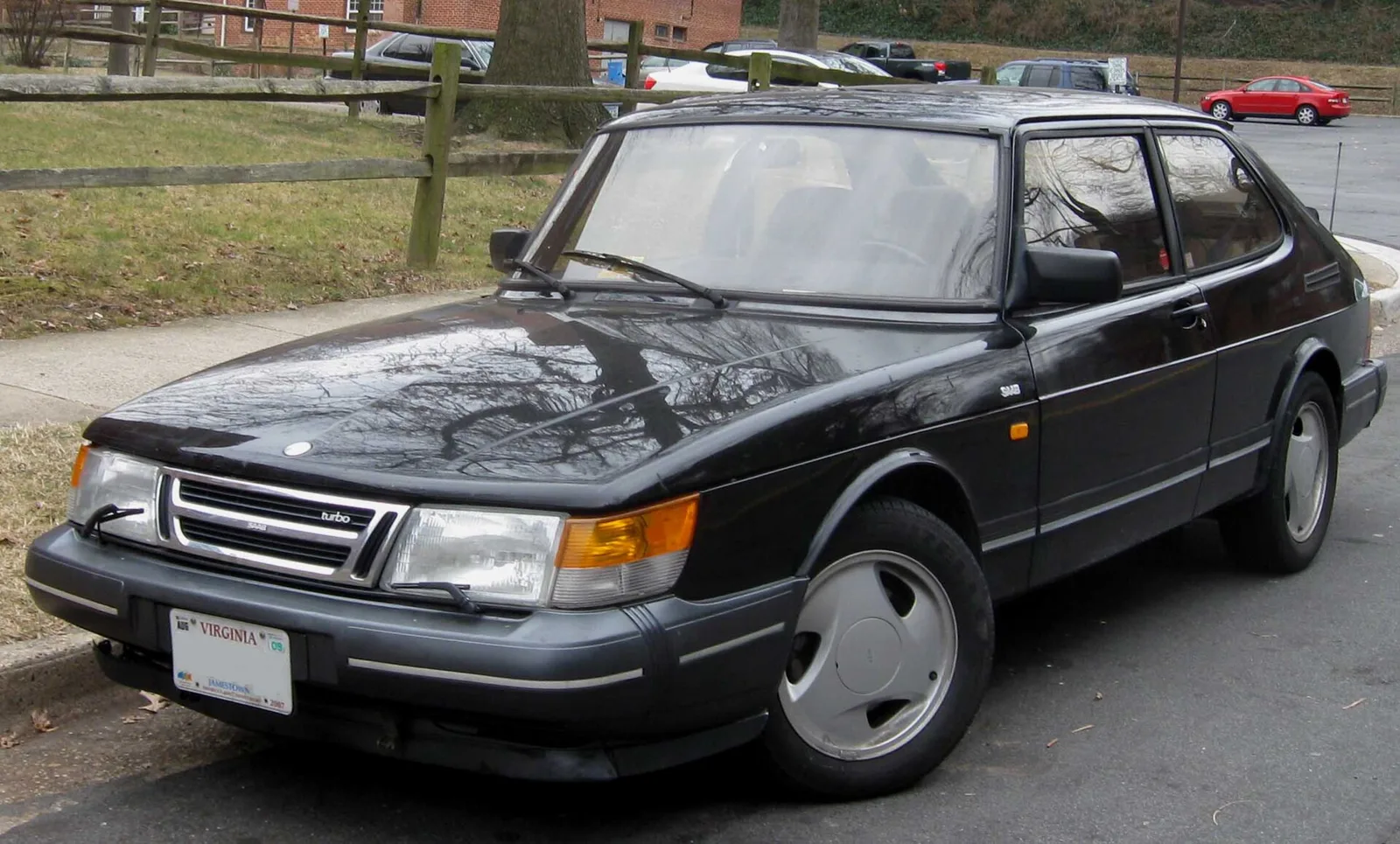
The classic 900 was based on the Saab 99 chassis but had a longer front end. That extra length met upcoming US frontal crash regulations and gave room for turbocharged engines, air conditioning and other equipment that the 99 had not been designed to carry. The body came in two- and four-door sedans, three- and five-door hatchbacks and, from 1986, a convertible.
The engine was a longitudinally mounted inline four canted at 45 degrees, and it was installed in a way that broke with convention. The B engine sat backwards, so power left the crankshaft at the front of the car. The transaxle bolted directly to the bottom of the engine and formed the oil pan, although it kept its own separate oil supply. Chain-driven primary gears carried the drive down and back to the transmission.
At the front, the car used double wishbone suspension, while the rear was a beam axle stabilised with a Panhard rod. Its rear arrangement used two Watt's-style linkages at either end of the axle, an approach that had appeared on the Alfa Romeo Alfasud back in 1971. The windscreen was deeply curved for visibility, and the dashboard curved round to reach every control easily.
Saab placed the controls and gauges by how often a driver used them and how important they were. The radio sat high on the dash so that drivers could reach it with the smallest glance from the road. The doors undercut the body sweep, which formed a tight seal when closed and kept water and debris out of the cabin.
How did the 900 engine line-up develop?
The 900 started in 1979 with several versions of the B engine in Europe. The GL had a single carburettor and 100 PS, the GLs had twin carburettors rated at 108 PS, and the fuel-injected EMS and GLE were rated at 118 PS. The 900 Turbo was rated at 145 PS, and its grille was different from the naturally aspirated models, which had a hexagonal central element.
In the American market the range was narrower because stricter emissions rules ruled out carburettor engines. The 900 arrived there with a fuel-injected engine and a Turbo, and output was lower than in other markets because of the emissions equipment. Later, the engine line-up was simplified with the arrival of the H engine in 1981, which was more robust and lighter than the B engine while keeping the same power output.
The 16-valve DOHC B202 appeared in Europe in 1984, and it gave the Turbo 16 a 175 PS output. A special high-performance model, called the Aero in Europe and the SPG in North America, followed with a body kit and a higher output. The 1985 model year removed the two-carburettor engine in every market, and in 1990 a low-pressure turbo engine rated at 141 PS became available in Europe.
What did the 900 get from its turbo controls?
Saab's Automatic Performance Control, known as APC, arrived in 1982 and changed how a turbo engine behaved. It used a knock sensor on the intake side of the block. If the engine began to knock, APC opened a wastegate to reduce boost pressure, which allowed different octane grades of fuel to be used without damage.
That system made turbocharging safer and more flexible than its rivals, particularly in the early 1980s. Some Aero, Carlsson and commemorative models carried special APC controllers in red and black enclosures that gave more boost. By 1983 Saab had sold 100,000 turbo-charged cars, a figure that shows how widely the approach was embraced.
Turbo hardware also changed over the years. Saab first used an oil-cooled Garrett T3, then water-cooled T3s from 1988 through 1990, before Mitsubishi TE-05 units arrived. The TE-05 was slightly smaller than the T3, which improved throttle response and spool-up, and it kept the Garrett T3 exhaust flange pattern.
How did the classic 900 change over time?
The classic 900 evolved through a long series of changes. Five-speed gearboxes arrived in 1980, first in the EMS and Turbo. A four-door sedan was introduced for 1981, first shown at the 1980 Geneva show, and the H engine replaced the B engine in the same year. The H engine had no countershaft and an ignition distributor driven directly from the camshaft.
In 1983 Saab introduced asbestos-free brakes, an industry first, and the following year the 16-valve engine reached Europe. The 1985 model year simplified the naming, while 1986 brought a 16-valve naturally aspirated engine and the convertible. A facelift for 1987 changed the grille, headlamps and bumpers, and in 1988 catalytic converters became available on European injected engines.
Anti-lock brakes arrived in 1989 and were standard on Turbos. From 1990 the North American cars received ABS and driver airbags as standard, and in 1991 the 2.1-litre B212 engine joined the range. Production of the classic ended on 26 March 1993, after a total of 908,817 units, including 48,888 convertibles.
What were the Aero and SPG models?
The Aero, called the SPG in North America, was the high-performance option of the classic range. It added a body skirt, sport suspension with shorter, stiffer springs and shocks, and sway bars that reduced body roll. The Aero was the first Saab delivered with the 160 hp 16-valve turbo engine, and its body kit wrapped around the car with specialty wheels.
Production was extremely limited. Saab built 29 prototype Aero and SPG cars in a mother-of-pearl white, but the paint proved too hard to repair and was never sold to the public. In total 7,625 SPGs were built and imported to North America over six years, and the final year of production in the US was 1991. Aeros were equally rare elsewhere, especially those with leather and air conditioning.
Which special editions did Saab build?
Several special editions gave the 900 extra character. The Carlsson was produced in honour of Erik Carlsson, with 600 examples built over three years from 1990 to 1992, each with a body kit, twin chrome exhausts and a whaletail rear spoiler. Its 185 hp came from an upgraded Red APC turbo engine.
The 1988 Springtime in Sweden models were a unique dealer gift. Saab commissioned 288 special convertibles, one for each US dealer, as part of the company's 1988 Dealer Meeting. Each had Aero-style bodywork, three-spoke wheels and a special emblem on the glovebox door, and dealers paid for their own cars. Ordinary 900 convertibles carried an AERO and CABRIO sticker, which some owners later mistake for proof of a Springtime car.
Commemorative 1993 Turbo hatchbacks were built to celebrate the model, with 314 cars for the US market. The following year 500 Commemorative convertibles were the last classic convertibles built. In Australia, the Enduro was a 1980 Turbo conversion assembled by Saab Scania Australia, with fibreglass wheel arches and a body kit, and only eleven were built.
How did the classic 900 perform?
Performance varied by model. The 900i produced 118 PS and went from 0 to 100 km/h in 11.4 seconds, with a top speed of 175 km/h. The 900 Turbo produced 145 PS, reached 100 km/h in 9.5 seconds and topped out at 202 km/h. The Turbo 16 S was the fastest of the three, with 175 PS, a time of 8.5 seconds to 100 km/h and a top speed of 217 km/h.
Those figures were achieved by a car that remained conservative in its basic chassis. Saab kept much of the undercarriage unchanged to save money across the classic's production run, and that made its later development more about engines and equipment than about the car's underpinnings.
Why did Saab build the New Generation 900?
Saab had spent years trying to develop a successor to the classic, with internal projects called X 68 and Project 102. Both were abandoned on cost grounds. A breakthrough came with talks with General Motors, which led to the founding of Saab Automobile AB in January 1990, with GM taking 50% of the company.
The deal gave Saab access to the GM2900 mid-size platform, designed for transverse engines and front-wheel drive. The Vauxhall Cavalier III and Opel Vectra A used the same platform, and GM brands such as Holden and Saturn later did too. Swedish engineers changed a great deal of the platform to meet Saab's standards, adding reinforcements to the doors and other body parts for better crash safety.
Saab designed the New Generation's exterior and interior in Trollhattan and developed the V4 engines, the manual transmission, much of the chassis and the electronics in-house. Pre-production started on 10 May 1993, with a target of cutting production time to 40 hours. The car made its debut on 21 July 1993 before 35,000 residents of Trollhattan, and more than 3,000 orders arrived in its first ten days.
How was the NG 900 built and sold?
The New Generation 900 came as a five-door hatchback, a three-door coupe and a convertible, with no sedan version. The closed bodies were built at the Trollhattan plant, while the convertible was made at Valmet in Uusikaupunki, Finland. The NG was shorter than the 9000 but had a longer wheelbase, which gave three adults room on the rear bench.
Once the roof is unlocked by hand, a button lowers the fabric top with electric motors, and the process takes roughly 40 seconds. Six electric motors power the top and the hardtop cover. Saab also introduced a three-point belt for the centre rear seat, which was secured to a sturdy crossbar, a safety feature that the 9000 lacked.
In its first full year, 1994, the NG ranked third in Sweden with 10,791 sales and a 6.9% share. Sales helped Saab recover from a low of 71,000 units in 1994 to more than 100,000 cars a year by 1997, and the company posted its first operating profit in 1995.
What engines did the NG 900 use?
The NG offered two trim levels, S and SE, and a base 900i in some markets. The four-cylinder engines drove their valves with a chain, while the V6 used a timing belt. The table lists the main engines and their performance.
| Engine | Output | 0-100 km/h | Notes |
|---|---|---|---|
| B206i, 1985 cc | 133 PS | 11.5 seconds | Last Saab engine without balance shafts |
| B204i, 1985 cc | 130 PS | 11 seconds | Short gearing aids acceleration but costs fuel at speed |
| B234i, 2290 cc | 150 PS | 10 seconds | Most popular option, with low fuel use |
| B204L turbo, 1985 cc | 185 PS | 8.5 seconds | Garrett turbo, also used in the 9000 and later 9-3 |
| B258i V6, 2498 cc | 170 PS | 9.2 seconds | Standard traction control |
What was the Sensonic clutch?
The Sensonic clutch was offered on Turbo models only. It kept a manual gear lever but removed the clutch pedal, replacing it with electronics that controlled the clutch faster than most drivers could. Moving the gear lever triggered a motor that worked a hydraulic actuator on the clutch master cylinder.
The system had a safety feature of its own. With the car in gear but stationary, the clutch engaged only when the throttle was applied. If neither brake nor accelerator was pressed, a warning tone sounded and the engine was shut off after seven seconds. A hill-start function was printed in the owner's manual, but it was never implemented on a production car. Sensonic production ended when the 900 was replaced in 1998.
What did the NG 900 add in technology?
The NG introduced the Saab Information Display, or SID, on S and SE models. It showed live information such as fuel efficiency and outside temperature, and it also controlled warnings for turn signals and the horn. Base cars had a digital clock and a mechanical odometer instead.
Saab also developed a Night Panel feature, which dimmed most instrument lights to reduce distraction at night. Darkened gauges lit up again when they needed attention, such as a sudden rise in engine speed or a fuel level below 15 litres. The feature was later renamed Night Panel in the 9-3 and 9-5.
How did the Saab 900 end?
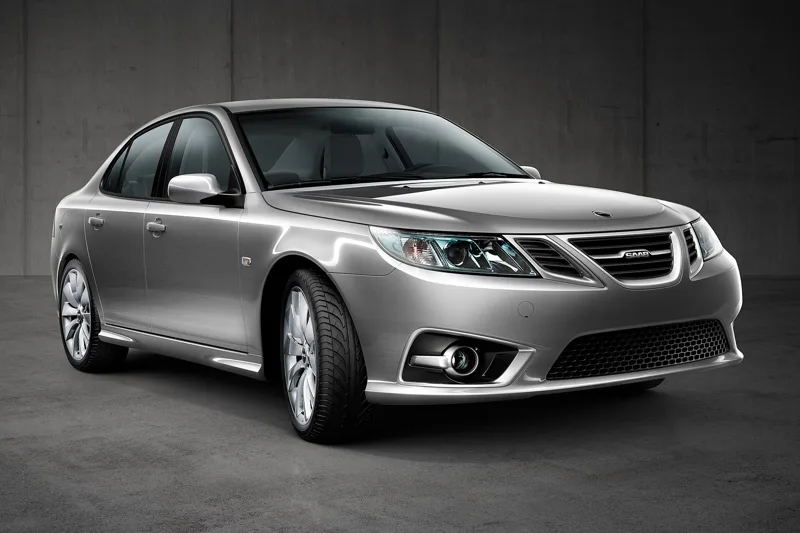
The NG 900 was built from summer 1993 to the end of 1997, with a total of 273,568 units. Of those, 91,560 went to the US market. The name was dropped in 1998, when the 9-3 replaced it. The 9-3 was more of a visual and technical facelift of the NG than a wholly new car, but Saab marketed it as a new model and unveiled it at the Detroit Motor Show.
The end of the 900 also linked to larger corporate changes. In January 2010 General Motors sold the intellectual property rights to the New Generation 900 and related models to the Beijing Automotive Group for US$197 million. The deal covered three vehicle platforms, along with two transmissions and two engine families.
What is the 900's legacy?
The 900 left a mark in motorsport and popular culture. Saab 900 Turbos competed in a one-make UK championship from 1986 to 1988, and Damon Hill was among the drivers to win races in it. Haruki Murakami's short story Drive My Car features a yellow Saab 900 Turbo, and the film adaptation uses the same car, in red, as a major part of the story.
On television, Jerry Seinfeld drove a black classic convertible in season 5 and then a black NG convertible in later seasons, with the NG appearing in several plots. Owners and collectors still value well-kept examples, particularly turbo models with documented history. Authentic Springtime in Sweden cars are prized, and buyers are urged to check for the glovebox badge, the original window sticker and matching VINs.