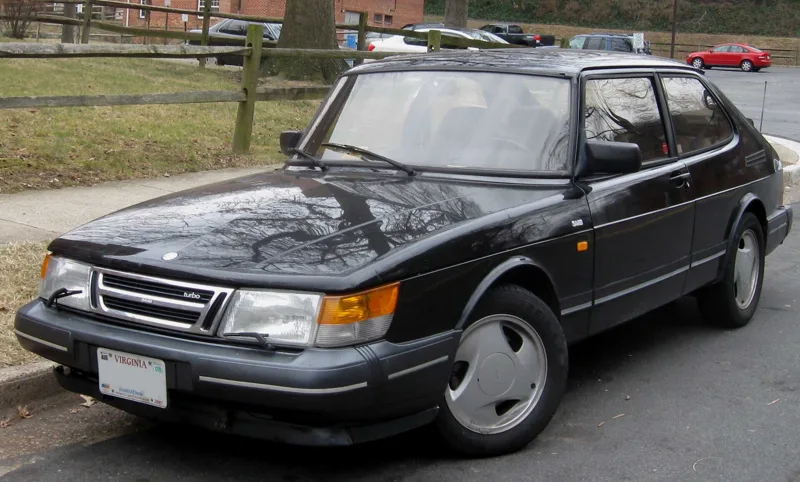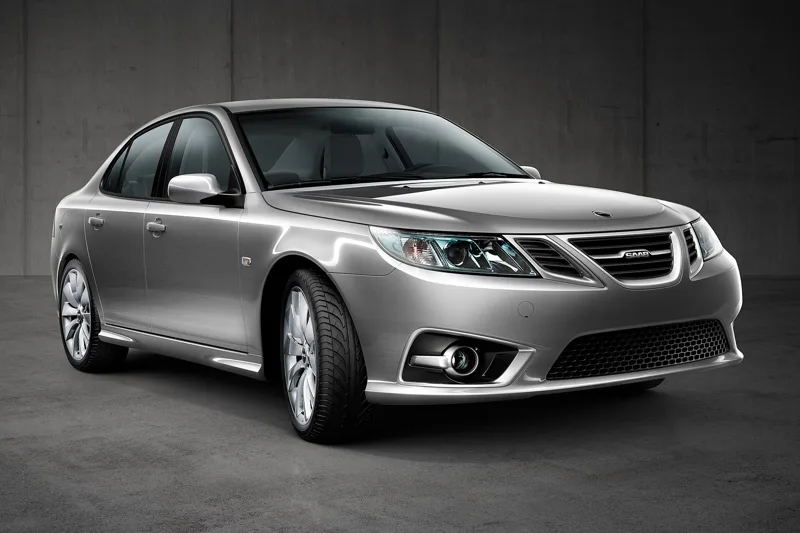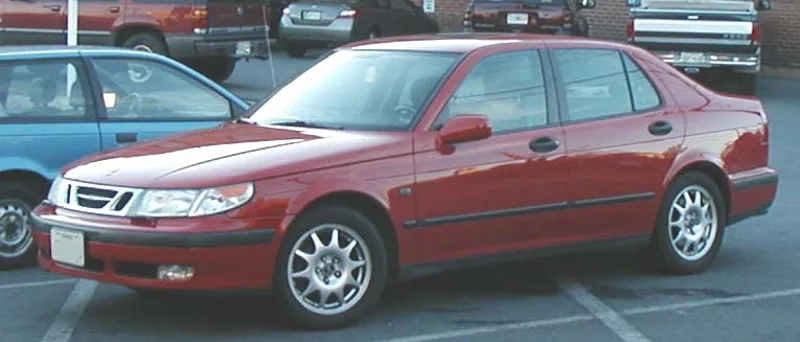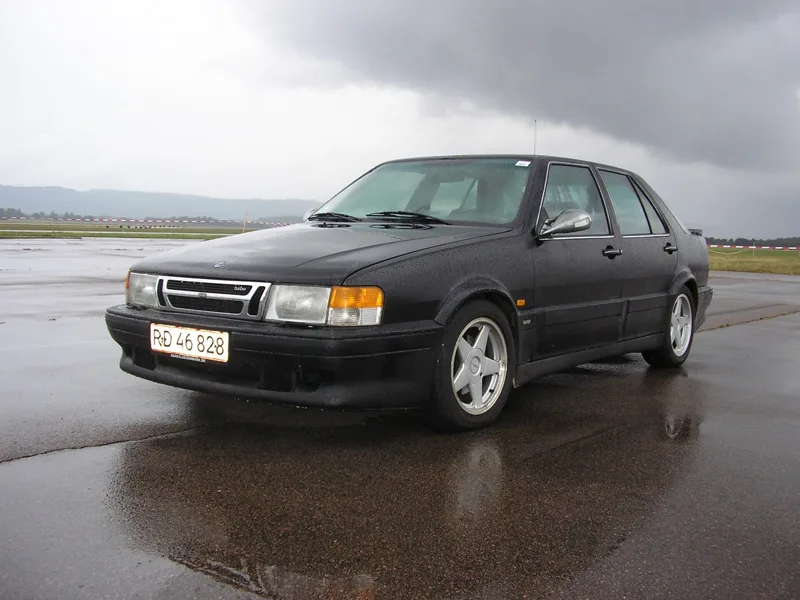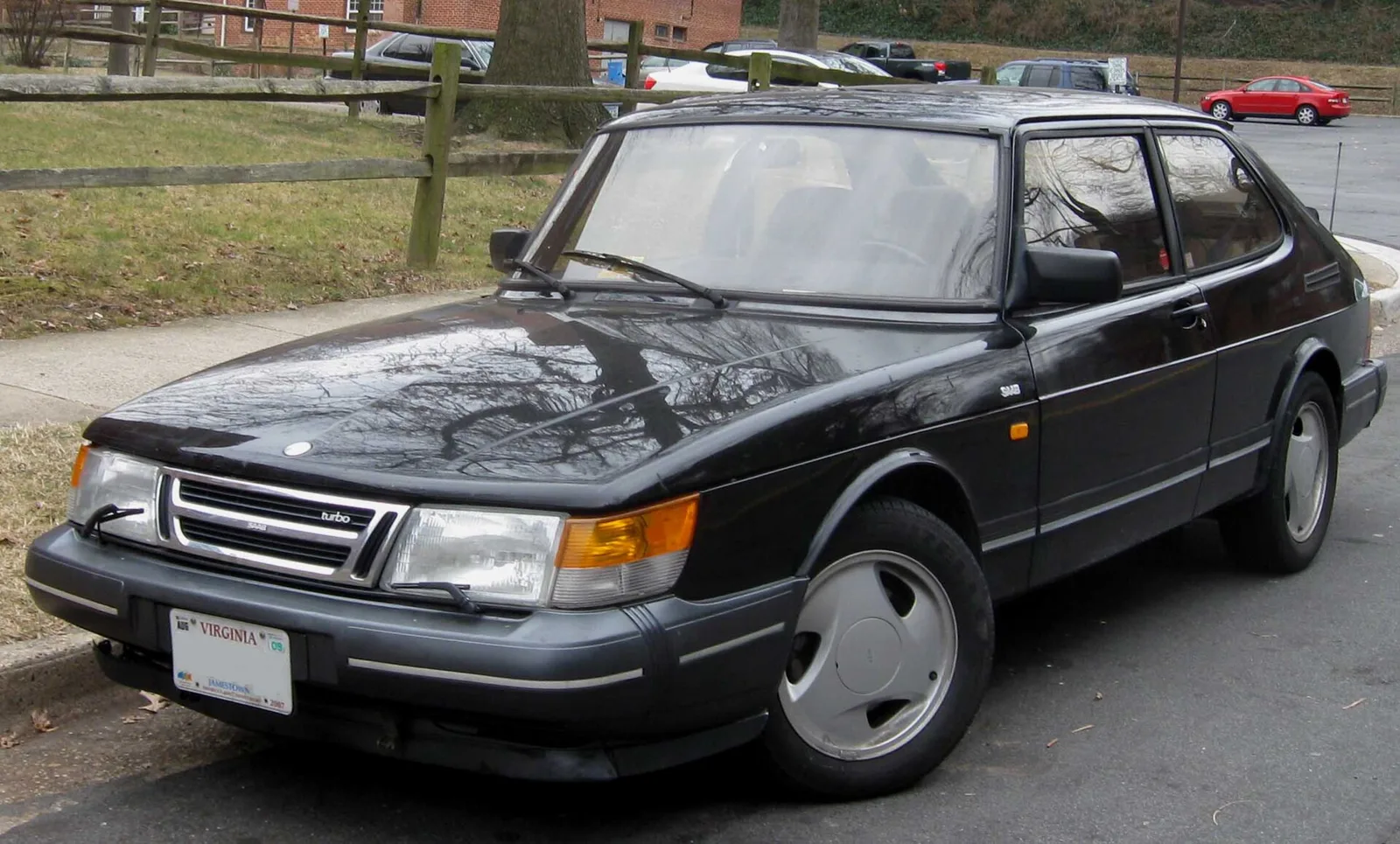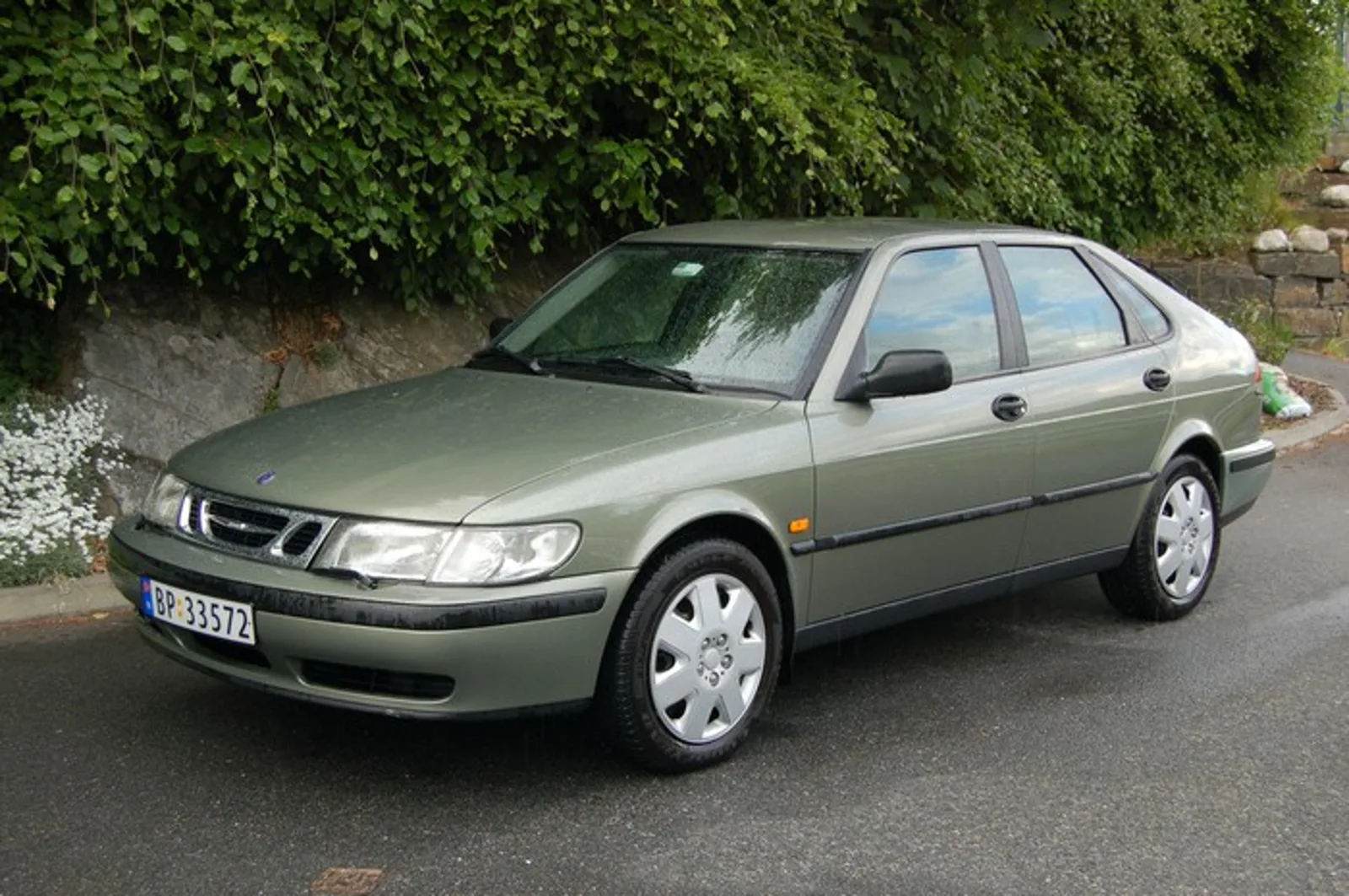
A revised second-generation Saab 900 badged as the 9-3 and built from 1998 to 2003, with Saab's first diesel, a Viggen flagship and a convertible.
The Saab 9-3 YS3D was a revised Saab 900 built from 1998 to 2003. It came as a hatchback, estate-style coupe and convertible, with the 169 kW Viggen as its flagship and Saab's first diesel was offered from launch. The second-generation car replaced the closed bodies in 2002, and the convertible followed a year later.
Saab built the YS3D as its first 9-3 between 1998 and 2003, in five-door, three-door and two-door convertible bodies. Under the skin it was a revised second-generation Saab 900, and like the 900 before it, it has ties to the Opel Vectra A, which rests on the same underpinnings.
Where did the 9-3 come from?
The car grew out of the second-generation Saab 900, which arrived in 1993 as the first new Saab model after General Motors took a partial stake in 1989. In March 1998 Saab revised that car for Europe, gave it the internal code YS3D and the sales name 9-3, and kept the closed models on sale until 2002.
The first 900 had been the core model of the Swedish marque for 16 years. The second 900 was based on the GM2900 platform and shared numerous components with the Opel Vectra A. Almost 275,000 of that second-generation 900 were built in a little under five years, and enthusiasts often viewed its closeness to Opel critically.
A revised Saab 900 that took the 9-3 name and brought Saab its first diesel.
What changed on the outside of the 9-3?
Outwardly the 9-3 was a close relative of the 900. Saab nevertheless claimed more than 1,100 changes under the sheet metal, and the visible ones were modest: larger front and rear bumpers that reach further down, revised black plastic trim and a rear number plate moved up to the height of the rear lights.
The radiator grille was redrawn in the traditional Saab pattern, but its frame outline was aligned with the first Saab 9-5, which had appeared a year earlier. The body, largely shared with the second 900, was designed by Bjorn Envall and Einar Hareide, and the drag coefficient was 0.34 for the closed models.
Was the cabin new in the 9-3?
The interior kept the layout of its predecessor, but the speedometer was new. It was asymmetrically divided, borrowed from the larger 9-5, and its scale is more widely spaced up to 140 km/h than above that speed. Saab described this as a safety feature, since readings are clearer at lower speeds and drivers would be discouraged from going faster.
The concept did not convince everyone. Cars sold in North America kept an evenly scaled speedometer. The ignition lock sat in the centre console, as is usual at Saab, and the seats and headrests were redesigned. Side airbags, integrated into the new seats, were fitted as standard for crash safety.
Which engines did the 9-3 offer?
Petrol buyers chose from Saab's own four-cylinder engines. Apart from the base unit, the 2.0-litre engines were turbocharged, with outputs from 110 kW (150 PS; 148 hp) to 151 kW (205 PS; 203 hp), while the 2.3-litre engines of 1998 to 2000 included the strongest B235 at 169 kW (230 PS; 227 hp). The 2.2-litre diesel, developed by Steyr-Puch, was reserved for the closed bodies.
The base 2.0-litre engine was the only one without turbocharging, producing 96 kW (131 PS; 129 hp). Saab dropped the Opel six-cylinder V engine of its predecessor with the model change. The diesel had a Bosch VP44 injection pump and two balancer shafts. It produced 85 kW (115 PS; 114 hp) at first, and this rose to 92 kW (125 PS; 123 hp) for model year 2001.
Petrol models offered either a manual five-speed or a four-speed automatic, and the diesels had no automatic option. Saab returned to hydraulic clutch operation, abandoning the cable clutch used on the NG 900. Trionic 5 engine management was used from the start, and it was replaced by Trionic 7 from model year 2000.
What made the Viggen the flagship?
The Viggen was the most powerful 9-3, offered across all three bodies. The name recalls the Saab JA 37 Viggen fighter jet of 1967. It developed from the Saab 900 SVO concept car shown in 1995, and the production car was built with the British motorsport firm Tom Walkinshaw Racing (TWR).
Its B235R four-cylinder produced 165 kW (224 PS; 221 hp) at first and 169 kW (230 PS; 227 hp) in a later version. The chassis was tuned for that output, with newly designed springs and dampers. Europe received the Viggen from May 1999 until early 2001, while North America kept it until 2002, with a slightly different engine. Production totals are uncertain: one source gives 4,474 cars, and others more than 6,000.
Did the convertible share the 9-3's development?
It did. Unlike the first 900, whose open version came years after the basic model, the convertible of the second 900 and the 9-3 was part of development from the outset, so the open body was never an afterthought. Valmet in Uusikaupunki, Finland, built it, and it seats four.
The fabric roof is operated hydraulically as standard. With the roof closed the car is a two-door notchback, and when the roof is down it folds completely into the bodywork. This takes 80 litres off the boot. First-generation convertibles were petrol only, and the Viggen engine was available in the convertible up to model year 2000. A diesel convertible arrived only with the second generation, in 2006. The final convertibles were sold as a Last Edition, with Viggen bumpers and side sills but without the Viggen engine.
How long was the first 9-3 built?
The first 9-3 was built from 1998 until production ended on 25 April 2003, after 433,445 units. Three- and five-door cars came almost entirely from the Trollhattan plant, while the convertibles and all Viggen models were built by Valmet in Finland.
Swedish output stopped in April 2002. The Finnish plant carried on with convertibles until early 2003, and it also turned out some closed cars for Scandinavia, without Viggen kit, until that same year. In total Valmet built 7,789 cars in Finland. Trollhattan built the three- and five-door cars, while Valmet handled the convertibles and the Viggen. The second-generation YS3F appeared in September 2002, before its predecessor's production had finished, as a notchback on the GM Epsilon platform. That successor was a completely new design rather than an update of the YS3D.
What did the 9-3 cost when new?
At market launch the five-door with the B204E turbo, rated at 113 kW (154 PS; 152 hp), cost 45,650 Deutsche Mark (DM). The 9-3 convertible was priced at 60,150 DM. A comparably powerful Audi A4 cost 800 DM more, while the Audi Cabriolet was 3,000 DM cheaper. Prices of that period were quoted in Deutsche Mark, and the comparisons show how the 9-3 stacked up against a German rival at launch.
How did the 9-3 fit into the Saab range?
The 9-3 took its name from the system Saab had introduced with the 9-5 in 1997, so the revised 900 entered the range under a new badge. Its closed bodies stayed on sale until 2002, when the all-new second generation took over, and the convertible remained one year longer, as the open version of the YS3F followed it.
Within the range the Viggen stood at the top, and the diesel was limited to the closed bodies. Engine management began with Trionic 5 when production started, and Trionic 7 replaced it from model year 2000.
Saab 9-3 YS3D specifications
| Specification | Detail |
|---|---|
| Production | 1998 to 2003; first series 433,445 units, ended 25 April 2003 |
| Body styles | Five-door hatchback, three-door estate-style coupe, two-door convertible |
| Drag coefficient | 0.34 closed models; 0.31 Viggen |
| Seats | Five in closed models, four in the convertible |
| Base 2.0-litre | 96 kW (131 PS; 129 hp), not turbocharged |
| Turbo 2.0-litre | 110 kW (150 PS; 148 hp) to 151 kW (205 PS; 203 hp) |
| 2.3-litre (140 cu in) | B234 and B235 engines, 1998 to 2000; strongest 169 kW (230 PS; 227 hp) |
| Diesel | 2.2-litre (134 cu in); 85 kW (115 PS; 114 hp), then 92 kW (125 PS; 123 hp) |
| Transmission | Five-speed manual or four-speed automatic; diesel automatic not offered |
| Convertible boot | 80 litres less with the roof stowed |
| Launch prices | 45,650 DM hatchback; 60,150 DM convertible |